The Drought-Proof Trees California Gardeners Wish They’d Planted Sooner
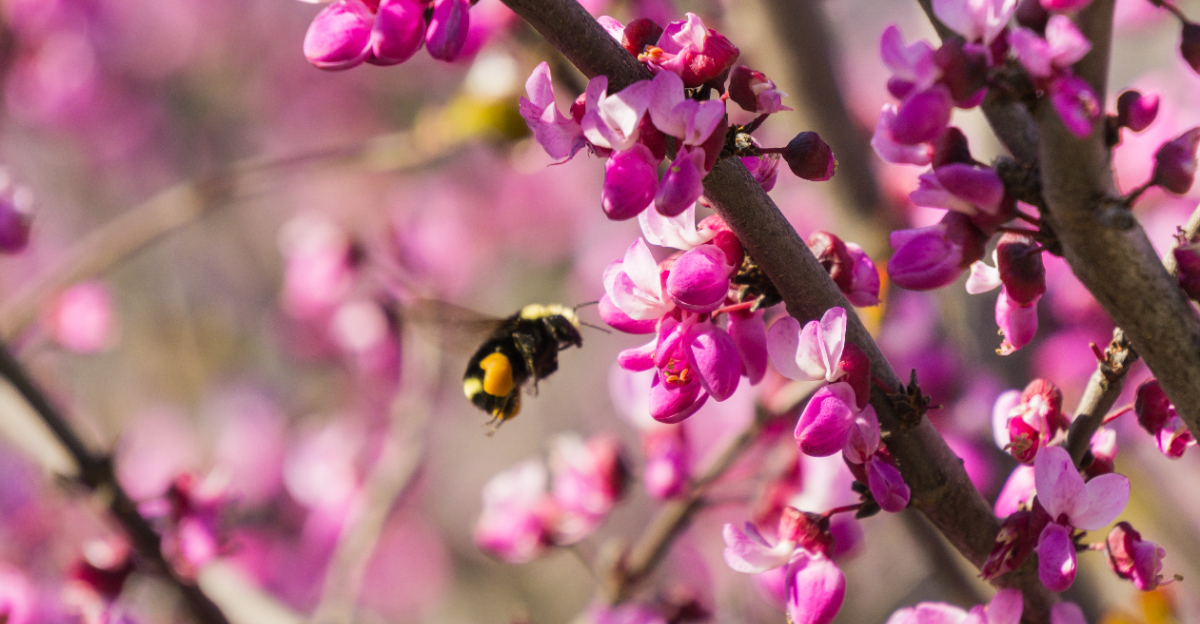
Your California yard can look fine in spring, then summer arrives and starts to send invoices.
The sun gets sharper. Rain vanishes. The hose comes out more often. Suddenly, that attractive tree near the patio looks less like a feature and more like a very leafy subscription service.
Some trees handle this season with far less fuss.
They do not need constant rescue once their roots settle in. They fit California’s long dry stretch better, offer shade, help wildlife, and can make the garden feel calmer when the forecast turns relentlessly sunny.
The curious part is that several of the best choices rarely get the attention of flashier nursery favorites.
So which tree could make you wish you had planted it ten years ago?
The answer depends on your space, soil, and part of California. Some want broad acreage. Others slip neatly into smaller yards. A few even treat summer like a cue to change costumes.
Your future shade may start with one surprisingly patient choice in the right spot.
1. Plant Blue Oak For The Driest Sites
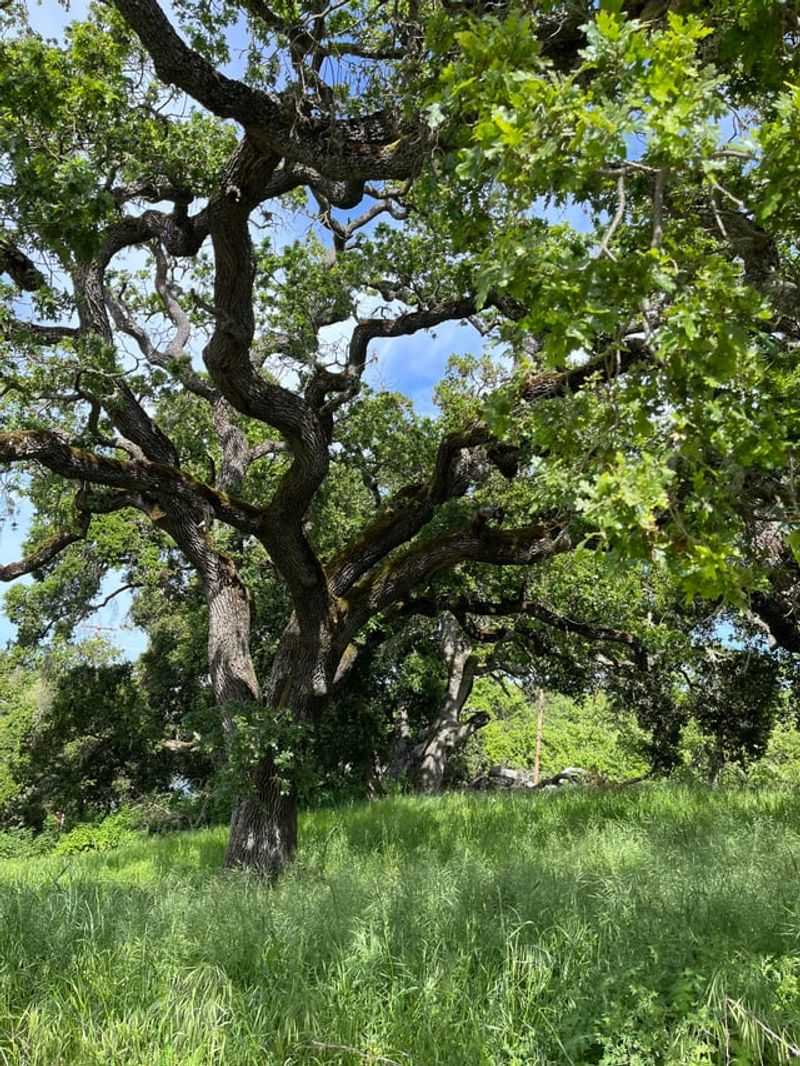
August can make a California foothill look almost toasted.
Grass turns pale gold. Heat hangs over the slope. Yet one broad native can stand there with remarkable composure. Blue oak, or Quercus douglasii, comes from exactly this sort of country.
Its blue-green leaves give the tree its name. Its native range covers the inner Coast Ranges and the foothills around the Central Valley. That background makes it a strong match for full sun, long dry summers, and soil that drains well.
Give it room before you give it a shovel.
A mature tree can spread about 30 to 50 feet. Growth tends to be slow, often under a foot per year. That pace may test an impatient gardener, but blue oak plays the long game better than most patio trends.
Young trees still need regular deep water through establishment, usually for the first two to three years. After that period, well-sited trees can need very little summer irrigation.
More water is not always more kindness here. Frequent summer irrigation around an established root zone can raise the risk of root problems, especially where soil stays damp.
Blue oak also drops its leaves in winter. That seasonal rest helps it cope with dry conditions.
So give it sun, drainage, space, and patience. This oak is not in a hurry. Frankly, after a California summer, somebody in the yard should know how to conserve energy.
2. Give Coast Live Oak Room To Spread
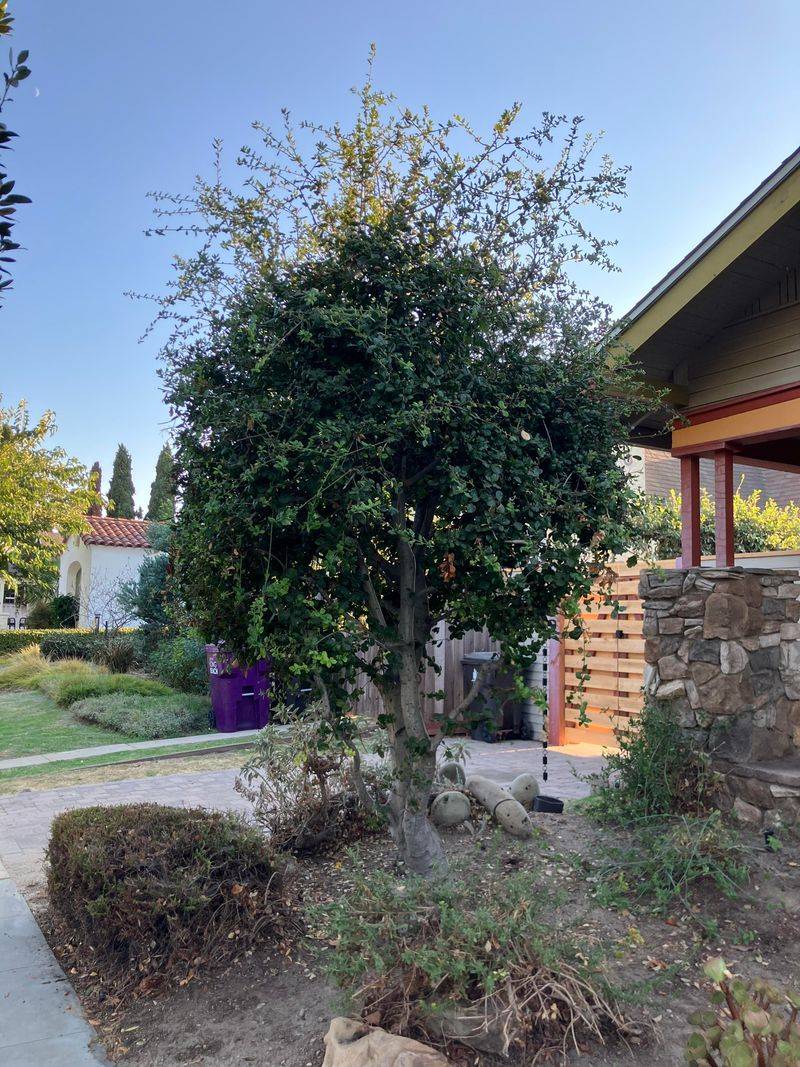
Shade can feel like a luxury by midafternoon, and coast live oak knows how to deliver it on a grand scale.
A mature Quercus agrifolia forms a dense evergreen canopy that can cool a large patch of ground. Birds, beetles, and other wildlife also make use of that layered shelter.
For coastal and foothill gardens from Mendocino County south toward Baja California, it can become a serious landscape anchor.
The catch arrives with a tape measure.
This oak can spread 70 feet or more. Heavy horizontal limbs may reach far beyond the trunk, so a tight spot near a house, driveway, septic area, or narrow side yard can become awkward later.
Your California Garden Changes Every Week. Your Plan Should Too.
Gardening in California changes quickly throughout the season. Every Friday you’ll receive a simple weekly plan showing exactly what to plant, prune, fertilize, harvest, and protect so you never miss the right timing.
Give the canopy space before it ever needs to negotiate with a roof.
Root-zone care matters just as much. Compacted soil, paved surfaces, lawn close to the trunk, and frequent summer irrigation can stress mature trees. Moist conditions near the root collar can also favor root disease.
During the first years, use deep, spaced-out irrigation. That helps roots reach farther into the soil rather than stay near the surface.
After roughly three to five years, a coast live oak in a suitable climate may need little or no extra summer water.
Keep mulch away from the trunk itself, and avoid unnecessary disturbance beneath the canopy.
This is not the tree for a gardener who enjoys constant fuss. Give it elbow room and sensible care early. Later, the reward can be a backyard shade department with very generous office hours.
3. Reserve Valley Oak For Broad Open Ground
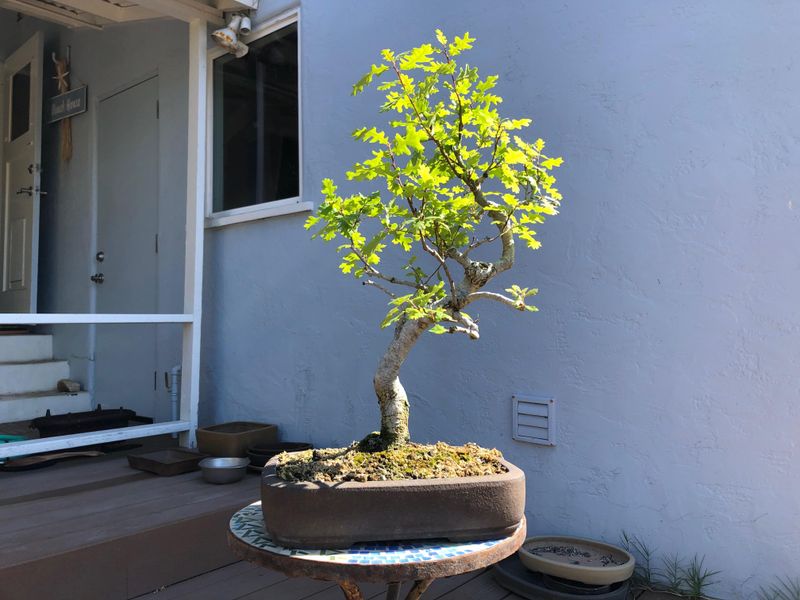
Some yards need a tree. Some trees need an estate.
Valley oak sits firmly in the second group. Quercus lobata can reach around 70 feet tall and spread nearly as wide. Old specimens in the Sacramento Valley have lasted for centuries, so this is not a casual little corner filler.
Space comes first.
Large rural properties, parks, ranchland, and creek corridors suit this California native far better than a standard suburban lot.
Deep alluvial soil gives its roots the room they need to reach moisture that can linger well below the surface after rain disappears.
Soil depth matters too.
Thin ground over hardpan can limit root development. Heavy clay with poor drainage can also create stress. Valley oak performs best where roots can travel through deep, well-drained soil.
Young trees need help before that deep-rooted independence develops. Provide thorough irrigation during the first two to three years.
During the first dry season, deep water every two to three weeks can support establishment. Reduce that help as the root system matures.
Once settled into an appropriate site, valley oak can handle California’s dry summer pattern with little extra water.
Now for the cleanup note. Leaves and acorns can pile up. Pools, gutters, and patios may not appreciate the seasonal delivery.
Place this oak where litter can simply become part of the landscape.
A valley oak does not merely fill space. It can define it. Just make sure your property and the tree agree on who gets the bigger half.
4. Use Desert Willow In Hot Inland Gardens
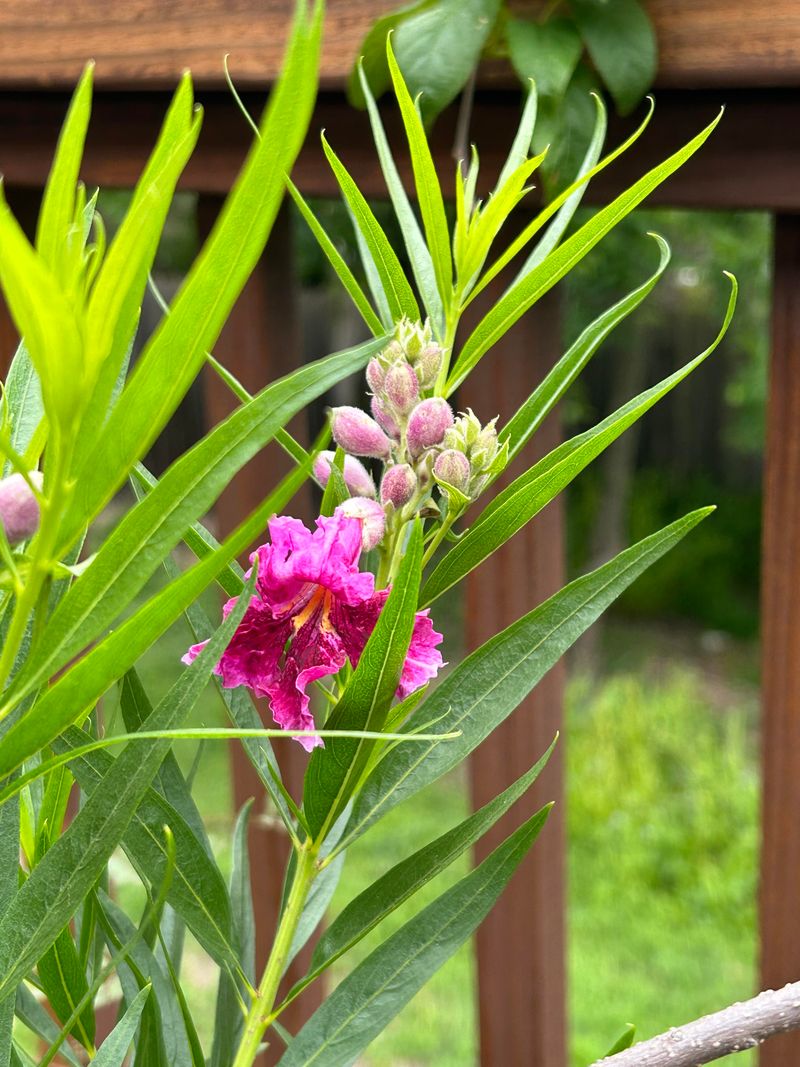
Some trees tolerate summer heat. Desert willow seems almost offended that you thought heat might be a problem.
Despite the name, Chilopsis linearis is not a true willow. It also wants little to do with soggy ground. Full sun, sharp drainage, and hot inland weather suit it far better.
Then the flowers arrive.
From late spring through summer, trumpet-shaped blooms can cover the branches in shades of pink, lavender, white, or deep rose.
Hummingbirds and native bees often visit the flowers, which gives the tree action even when the yard looks ready for a siesta.
Its narrow leaves create light, filtered shade rather than a heavy ceiling. That can work beautifully near a patio where you want relief from the sun without a gloomy feel.
Desert willow comes from dry washes and arroyos across the Mojave Desert and beyond. Its preferences make perfect sense once you know that background.
Choose a site with excellent drainage. Soil that stays wet after rain can cause trouble, especially heavy clay.
Water the tree regularly through its first two seasons. Once established, it can cope with long dry periods on much less irrigation.
Winter brings another surprise. Desert willow drops its leaves, so bare branches are part of its seasonal routine.
Cool, foggy coastal gardens may not offer the heat or drainage it prefers.
For hot inland yards, though, this tree can turn brutal summer weather into flower season. Apparently, someone forgot to tell it July was supposed to be difficult.
5. Choose California Buckeye For Seasonal Shade
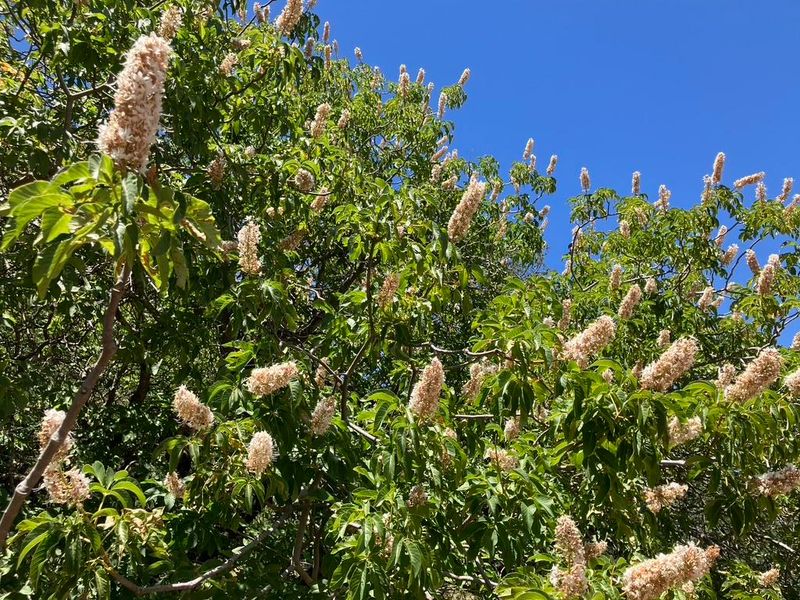
Late summer can make a California buckeye look suspiciously bare.
New gardeners sometimes see those empty branches and assume something went wrong. The tree may simply be on schedule.
Aesculus californica can shed its leaves during midsummer, well before autumn arrives. That early dormancy helps reduce water loss during the hottest and driest part of the year.
In other words, the tree reads the water bill and clocks out early.
The bare structure has its own appeal. Smooth, pale branches create a sculptural silhouette that can look dramatic through late summer and fall.
Spring brings the bigger performance.
Tall spikes of white to pale pink flowers appear from March through June. Native bees, butterflies, and hummingbirds may visit the blooms. Smooth seeds follow later in the year.
Those seeds need sensible placement. All parts of California buckeye can be toxic when eaten, so keep seeds away from children and pets.
The plant can also pose problems for non-native honeybees, while native bees have a long ecological relationship with it.
This species naturally occurs across the Coast Ranges, Sierra Nevada foothills, and edges of the Central Valley, often on dry slopes below about 4,000 feet.
Expect roughly 15 to 30 feet in height and width.
Once established in a suitable part of its native range, California buckeye can need almost no summer irrigation.
Plant it where its bare-season form feels intentional. Few trees can lose their summer outfit and make the whole thing look like excellent drought sense.
6. Add Western Redbud For Small Yard Color
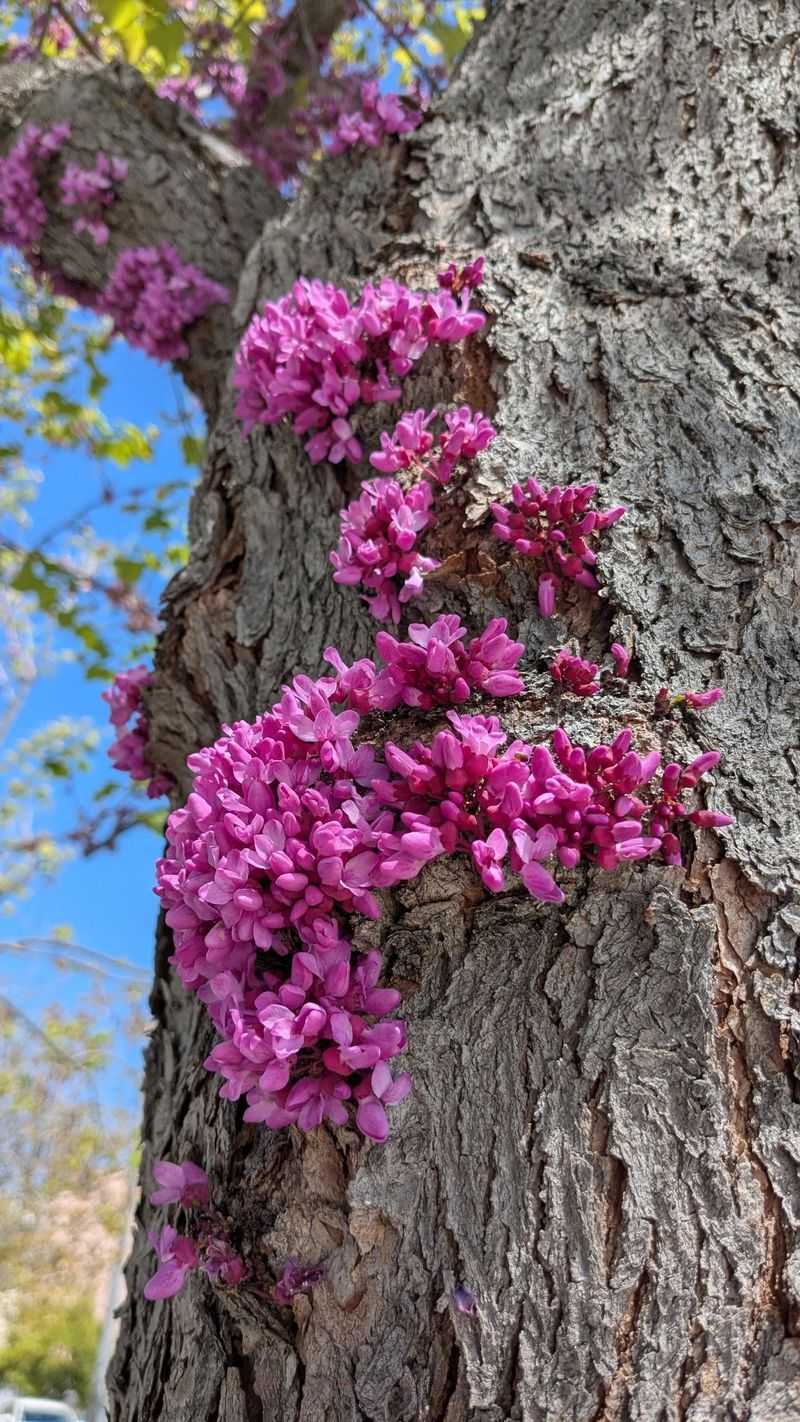
Before the leaves even bother to show up, western redbud starts the party.
Bare branches can erupt with vivid magenta-pink flowers from late winter into spring. That color alone can turn a modest front yard into the neighborhood conversation piece.
Cercis occidentalis also solves a common California garden problem: limited space.
At roughly 10 to 18 feet tall and wide, it fits many smaller yards, side spaces, and places where a large oak would simply take over.
Its native range includes foothill and canyon habitats in the Sierra Nevada, inner Coast Ranges, and parts of the Transverse Ranges.
After the flowers fade, heart-shaped blue-green leaves provide filtered summer shade. Flat seed pods remain later in the year and add another layer of texture. Birds may also make use of them.
The tree drops its leaves in the colder part of the year. That bare framework sets the stage for the next flower display.
Give western redbud full sun to light shade and soil with decent drainage. It can tolerate some clay, provided water does not sit around the roots.
Regular irrigation helps during the first two to three years. After establishment, trees in suitable foothill climates can become quite drought-adapted.
Keep cuts light. Heavy cuts may remove wood that would carry the next round of flowers.
This small tree refuses to act small. It saves space, handles dry conditions, then arrives in spring dressed like it has somewhere considerably fancier to be.
7. Train Toyon Into An Evergreen Tree
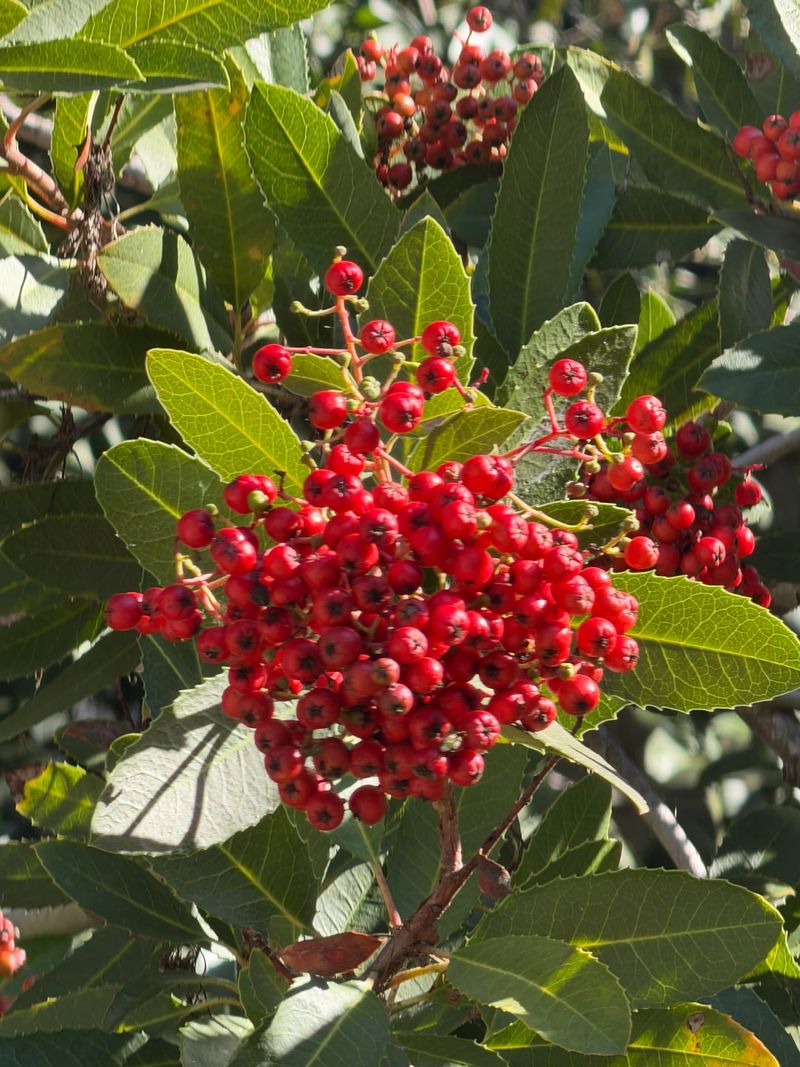
Nursery tags introduce toyon as a shrub. Your garden does not have to leave the story there.
With patient, selective cuts during the first few years, Heteromeles arbutifolia can develop into a handsome small multi-trunk tree. That gives gardeners an evergreen option with year-round structure and strong California credentials.
Toyon occurs across much of the state. It thrives on dry slopes, chaparral margins, and oak woodland edges from northern regions south into Baja California.
That natural habitat explains its comfort with dry summers.
Young plants still need regular deep irrigation during establishment, usually for two to three years. Mature plants on suitable sites can manage long dry stretches with far less help.
The seasonal display shifts through the year.
Clusters of small white flowers appear in early summer and attract native bees plus other beneficial insects. By late fall and winter, bright red berries take over. Cedar waxwings, American robins, and other birds often feast on the crop.
Toyon was once called California holly, and its abundance around Southern California hills is often linked to the name Hollywood.
For tree form, select two to four upright stems. Remove lower side branches little by little across several seasons.
Skip constant hedge-style cuts. That can remove flower buds that form on older wood.
Keep dry debris away from the base, and give the canopy sensible clearance from structures.
Toyon does not need a strict haircut. Give it a thoughtful trim and some freedom, and this “shrub” may join the tree category anyway.