The Florida Berry Bush That Keeps Mockingbirds Fed Through August Heat
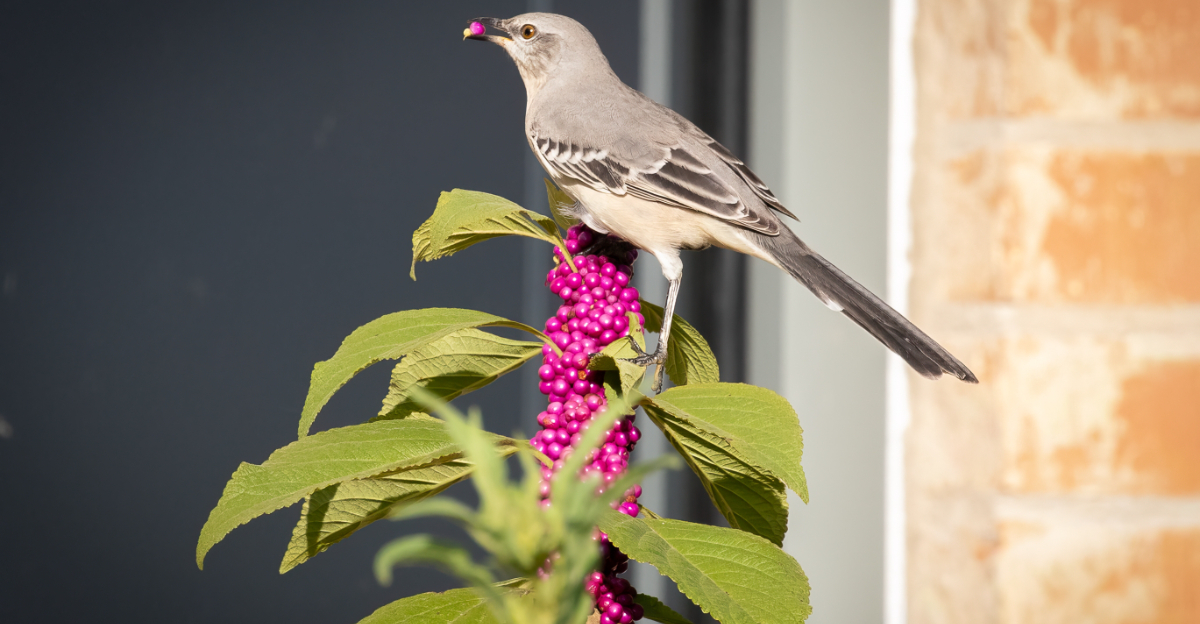
August is a hard month to feed a mockingbird in Florida. The easy season is behind them.
Heat has pushed many food sources past their productive window. The birds that stayed through summer are working a landscape that offers considerably less than it did two months ago.
American beautyberry did not get that memo. It peaks in August.
Those electric purple berry clusters arrive at the exact point in the season when mockingbirds need them most. A yard with a mature beautyberry becomes something territorial and loud in the best possible way.
Mockingbirds find it fast. They defend it aggressively.
They return daily through the stretch of summer that most fruiting plants have already abandoned. A shrub that looks spectacular and keeps one of the yard’s most entertaining birds fed through August heat earns its spot without any further argument.
1. Beautyberry Loads Its Stems With Purple Fruit In Late Summer
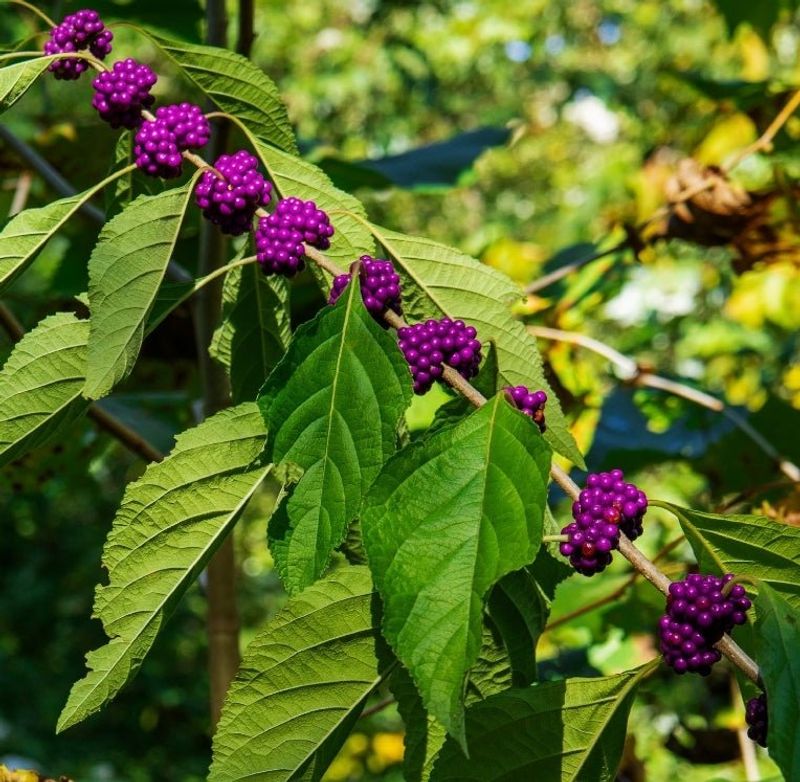
Somewhere between midsummer and early fall, something remarkable happens along the arching stems of American beautyberry. Dense clusters of small, jewel-like drupes begin forming in rings that wrap tightly around the stem at each leaf node.
The effect looks almost too vivid to be real, like someone painted each cluster with a bold purple brush.
Botanically speaking, these fruits are drupes rather than true berries, though most gardeners simply call them berries out of habit. The fruiting window typically stretches from August through fall, with peak color often arriving right when the summer heat feels most relentless.
Timing can vary depending on the plant’s age, location, and that year’s rainfall patterns.
White and pink-fruited varieties do exist, but the electric purple form is by far the most common in Florida landscapes. Each cluster holds dozens of small fruits pressed together in a tight ring.
Watching those rings multiply along every stem shows just how productive beautyberry can be. A healthy, well-placed shrub can produce an impressive amount of fruit in a single growing season.
2. Mockingbirds Zero In As The First Clusters Ripen
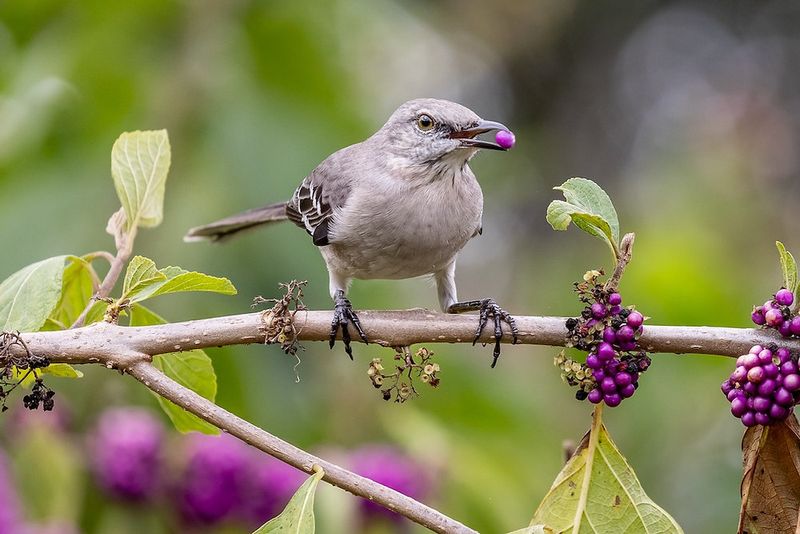
A mockingbird scanning a yard from a fence post does not miss much. Once the first beautyberry clusters shift from green to purple, those sharp eyes tend to take notice fairly quickly.
Mockingbirds are well-documented consumers of beautyberry fruit. They often arrive to inspect the ripening clusters before most Florida gardeners even notice the color change.
That said, visits are not guaranteed on any particular day or hour. Bird behavior depends on what else is available in the surrounding area, how ripe the fruit actually is, and how much competition exists from other wildlife.
Catbirds, robins, cedar waxwings, and brown thrashers also feed on beautyberry, so the shrub tends to attract a rotating cast of visitors rather than just one species.
Mockingbirds are territorial by nature, which sometimes means one bird claims a shrub and chases off competitors for stretches of time. Watching that behavior unfold from a window or a quiet spot in the yard can be genuinely entertaining.
Your Florida Garden Changes Every Week. Your Plan Should Too.
Gardening in Florida changes quickly throughout the season. Every Friday you’ll receive a simple weekly plan showing exactly what to plant, prune, fertilize, harvest, and protect so you never miss the right timing.
The fruit becomes the stage, and the birds write their own unpredictable script around it each season.
3. Full Sun Packs More Fruit Onto Every Arching Branch
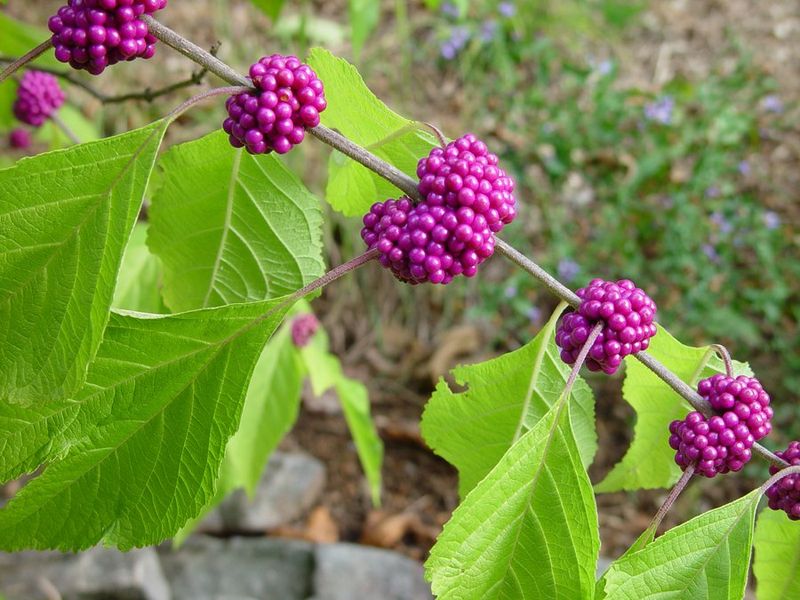
Light availability plays a real role in how productive a beautyberry shrub becomes. Plants grown in full sun, meaning around six or more hours of direct light daily, tend to develop denser fruit clusters and more of them per stem.
The arching branches spread wider and carry a heavier fruit load than those grown in lower light conditions.
Beautyberry does tolerate partial shade, and it will still produce fruit in those conditions. However, a shrub tucked under a heavy tree canopy may fruit more sparsely than one planted at the edge of the yard where morning and afternoon sun reach it freely.
Partial shade is a reasonable compromise in hot climates, but stronger light generally rewards you with a showier display.
Mature shrubs can reach six to eight feet tall and spread just as wide, so choosing the right spot from the beginning matters. Arching branches need room to extend naturally without being crowded by fences or other plants.
A location with good light and enough open space allows the shrub to develop its full, graceful form. It also helps maximize the fruit production that attracts birds.
4. Established Shrubs Handle August Heat With Less Fuss
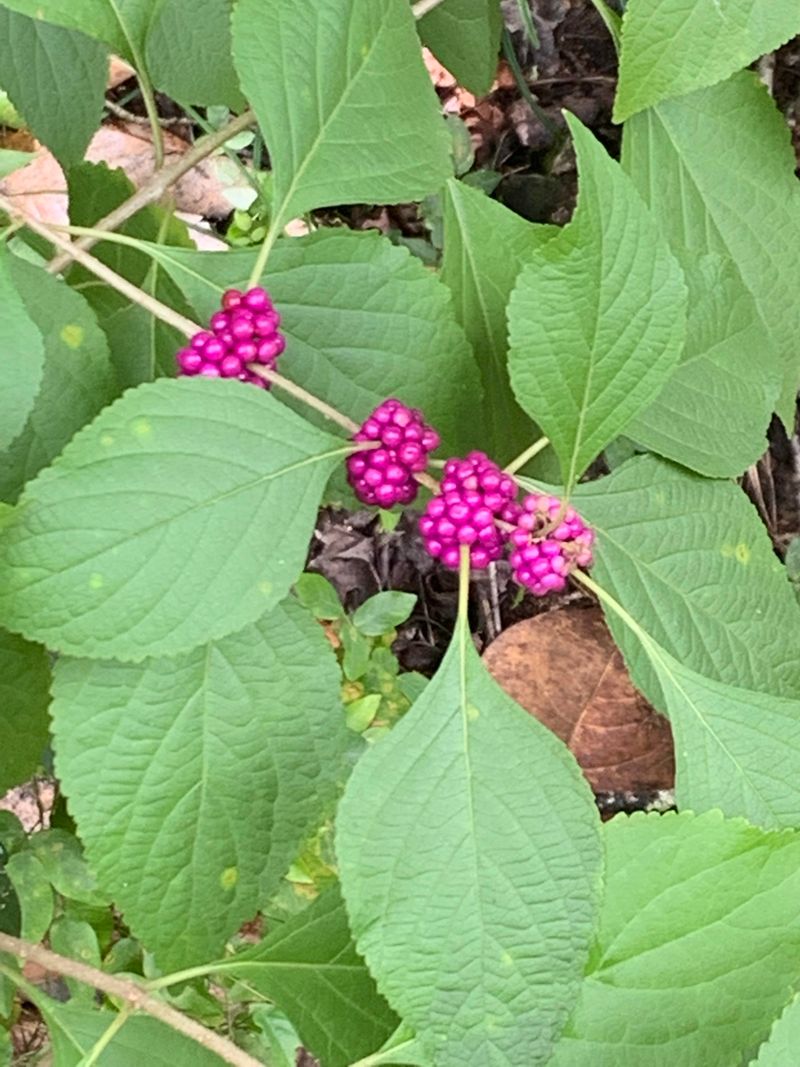
Once a beautyberry shrub has had a year or two to push roots deep into the soil, it becomes a much more self-sufficient plant.
Established shrubs develop a useful level of drought tolerance that helps them push through the long, hot stretches that Florida summers routinely deliver.
August heat that wilts other plants often leaves a rooted-in beautyberry looking relatively unfazed.
Newly planted shrubs are a different story. Young plants need consistent moisture while their root systems are still developing.
Check the soil every few days rather than relying on a fixed watering calendar. Stick a finger a few inches into the ground near the base of the plant.
If the soil feels dry at that depth, water slowly and deeply rather than giving it a quick surface rinse.
Beautyberry grows in a range of soil types, from sandy to clay-heavy, which adds to its practical appeal. One condition it does not handle well is salt exposure, so coastal locations with salt spray are not ideal placements.
Inland yards and garden beds away from salt sources give this shrub the best chance to establish quickly and fruit reliably through warm seasons.
5. Heavy Pruning Now Can Cost You The Berry Display
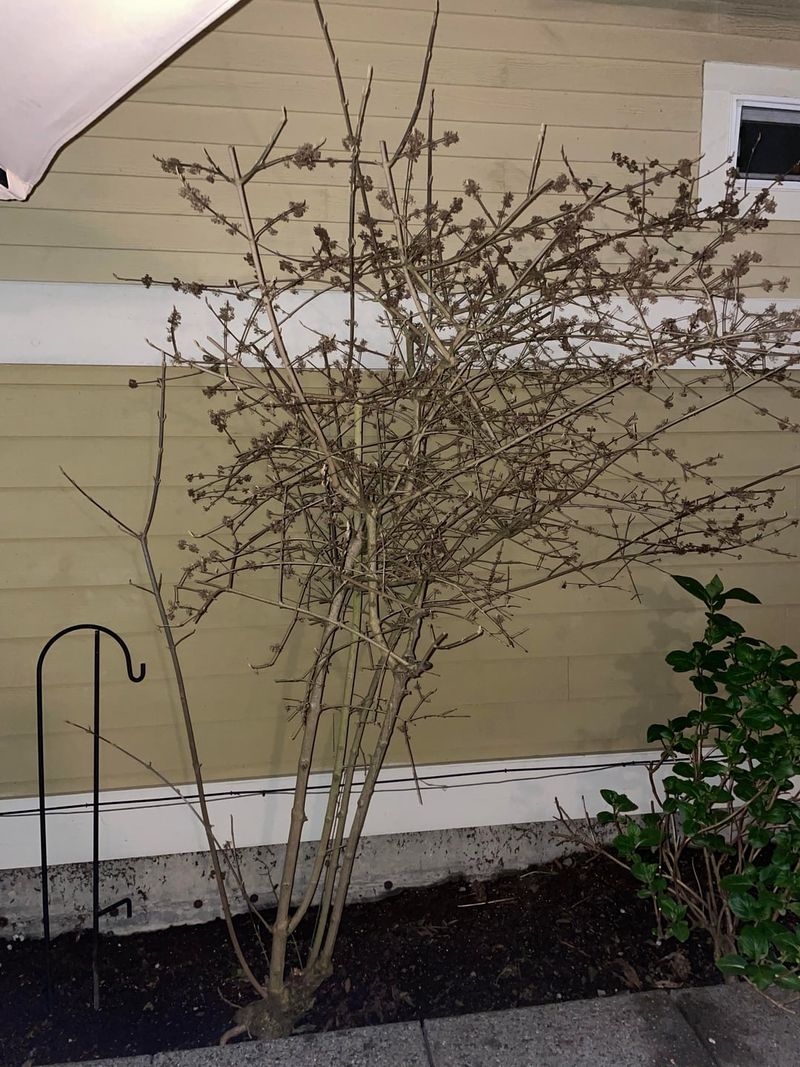
Timing a pruning session poorly on a beautyberry can wipe out the very display you were hoping to enjoy.
Beautyberry produces its flowers and fruit on new growth, meaning the stems that grew earlier in the season are exactly the ones now carrying those developing clusters.
Cutting those stems back heavily in August removes the fruit before birds ever get a chance to find it.
Light cleanup is a different matter. Snipping off a broken branch, removing a stem that is blocking a pathway, or tidying a small amount of declined wood will not ruin the season’s display.
The goal in August is minimal interference rather than shaping or size control.
Major pruning is best saved for the period between late fall and late winter, after the fruit has been consumed or dropped and before new growth pushes out in spring.
Hard pruning during that window encourages vigorous new stems and can actually improve the following year’s fruit production.
Pruning at the right time works in your favor, but cutting back hard during peak fruiting season works against both you and the wildlife relying on those clusters. Patience here pays off in a bigger show next season.
6. Dense Branches Offer More Than A Quick Bird Meal
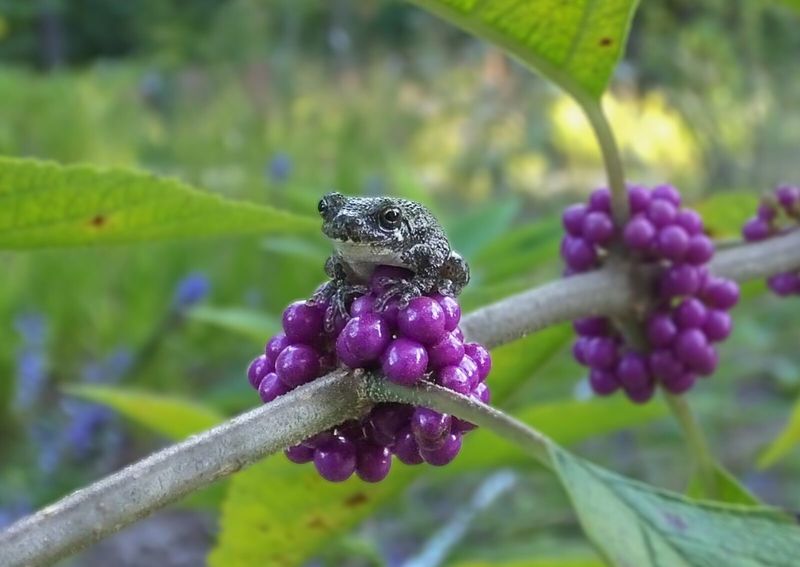
A beautyberry shrub contributes more to a Florida yard than a seasonal fruit supply. Its loose, arching structure creates a layered, informal shape that adds visual interest to the landscape.
It also gives birds a place to pause, preen, and move through with some cover from the open sky. That kind of structural value is easy to overlook but genuinely useful for backyard wildlife.
Earlier in the season, before the fruit develops, beautyberry produces small pink to lavender flowers that attract native bees and other pollinators. The blooms are modest compared with the fruit display.
Even so, they add another layer of ecological value when pollinators are actively foraging. Supporting pollinators at the flowering stage and birds at the fruiting stage makes this shrub productive across a longer stretch of the year.
Wildlife value comes from both what a plant provides and how it is structured within the landscape. A shrub planted near other native plants, low groundcovers, or a water source creates a more complete habitat patch than one standing alone in a bare mulched bed.
Beautyberry fits naturally into that kind of layered planting approach without requiring much fuss from the gardener.
7. One Native Shrub Can Keep Backyard Traffic Busy For Weeks
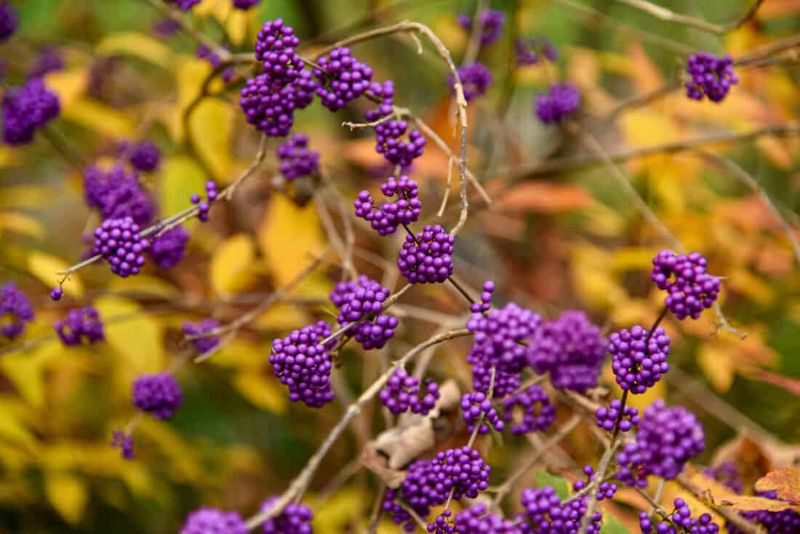
Fruit clusters on a beautyberry do not disappear overnight. When wildlife pressure is moderate and weather conditions cooperate, the clusters can remain on the stems for several weeks.
This creates an extended window of activity rather than a single frantic feeding event. That gradual availability keeps bird traffic returning to the same shrub across a longer portion of the fall season.
Ripening rarely happens all at once across an entire shrub. Different clusters on different branches may reach peak color and softness at slightly different times, which spaces out the feeding opportunities in a natural way.
Birds tend to sample clusters as they ripen rather than stripping every stem in one visit.
Mature beautyberry shrubs can reach six to eight feet in both height and spread under good conditions. That size means each plant can carry a substantial number of fruiting stems, giving multiple birds room to feed without constant conflict.
Before planting, measuring the available space and accounting for that mature spread prevents the shrub from being crowded or pruned too aggressively later.
A plant with enough room to arch and spread freely will almost always outperform one that is constantly being cut back to fit a space that is too small.
8. Leave The Fruit In Place And Let Mockingbirds Find It
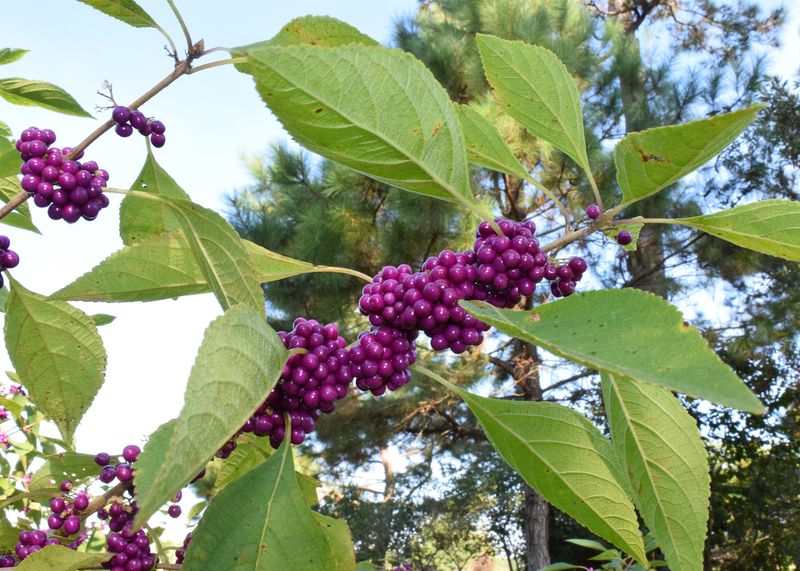
The most bird-friendly thing a Florida gardener can do with a beautyberry in August is simply step back. Leaving the fruit on the shrub rather than harvesting clusters for wreaths or arrangements keeps the food supply available for the birds that have been waiting for it.
Those clusters are far more valuable on the stem than in a vase.
Pesticide use near wildlife plantings is worth reconsidering as well. Spraying insecticides around a fruiting shrub can reduce the insects that birds also rely on and may affect the shrub’s pollinator visitors.
Spot-treating specific problems away from the shrub is a more targeted approach than broad spraying across the entire planting area.
A shallow dish of clean, fresh water placed near the shrub can increase bird activity. Clean and refill it regularly so it does not become a breeding site for mosquitoes.
Watching from a window or a chair set back from the shrub gives birds the space they need to feel comfortable feeding without disturbance.
The best task for August may genuinely be the simplest one: leave the fruit alone, keep the water clean, and let the season unfold on its own terms.