The Set-And-Forget Shrubs Replacing Boxwoods In Ohio Front Yards
Boxwoods built their reputation on reliability and have been spending the last decade cashing it in.
Disease pressure, winter damage, and a maintenance demand that never quite ends have turned Ohio’s most dependable foundation shrub into a recurring conversation about whether it is worth the trouble anymore.
For a growing number of Ohio front yards, the answer has quietly become no. The shrubs replacing them are not compromises. Several outperform boxwood on every practical measure.
Better disease resistance, stronger winter hardiness, and a growth habit that holds its shape without demanding a pruning schedule to stay presentable.
A front yard shrub that looks good, stays healthy, and does not require a seasonal intervention plan is not a fantasy in Ohio.
It is just a plant selection decision that boxwood loyalty has been delaying for longer than it should have.
1. Inkberry Holly Keeps The Evergreen Look With Less Shearing
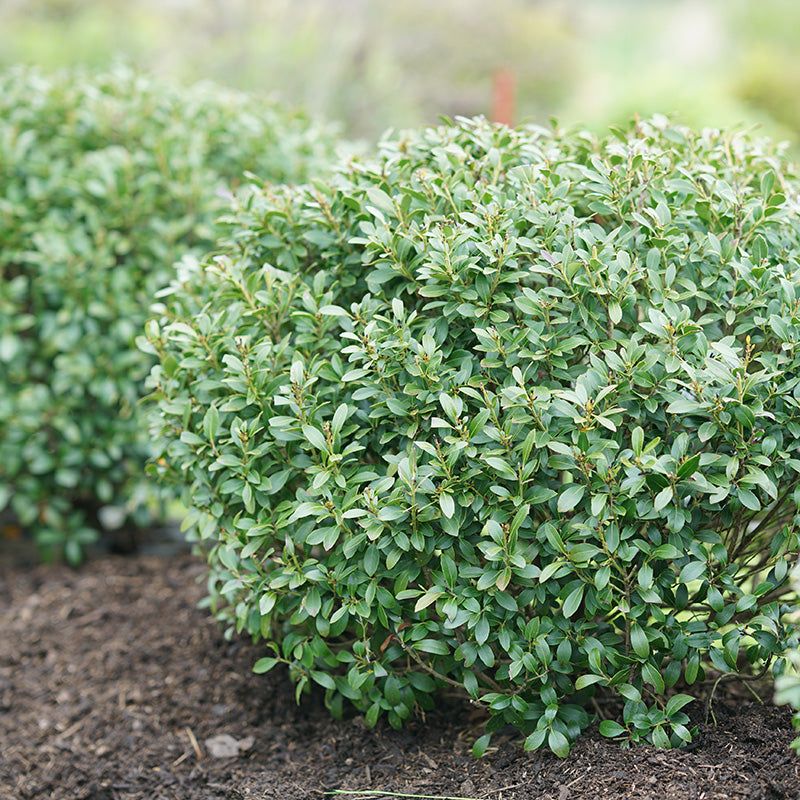
Glossy, dark green leaves and a naturally rounded form make inkberry holly a genuine evergreen stand-in for boxwood. Ilex glabra is native to eastern North America and grows well across Ohio in USDA hardiness zones 4 through 9.
It holds its foliage all year, so it still provides structure during the gray winter months.
The cultivar ‘Shamrock’ is a solid choice for foundation planting. It matures to roughly 3 to 4 feet tall and equally wide, which suits placement beneath windows or along a low porch.
That compact size comes from the cultivar itself, not the straight species, which can reach 6 to 8 feet.
Inkberry holly prefers moist, acidic soil with a pH between 4.5 and 6.0. Poorly drained or alkaline soil can cause yellowing leaves and slow growth.
Adding organic matter at planting helps in heavier clay sites common across Ohio.
Ilex glabra is dioecious, meaning male and female flowers grow on separate plants. ‘Shamrock’ is a female selection, so a nearby male inkberry is needed for reliable berry production. Without a pollinator, berry set may be sparse.
Poorly sited plants in heavy shade can become open and leggy near the base over time. Occasional light pruning in early spring helps maintain density.
Pest and disease pressure is generally low, making this a practical, lower-maintenance evergreen option.
2. Dwarf Mugo Pine Holds Its Shape Without Constant Trimming
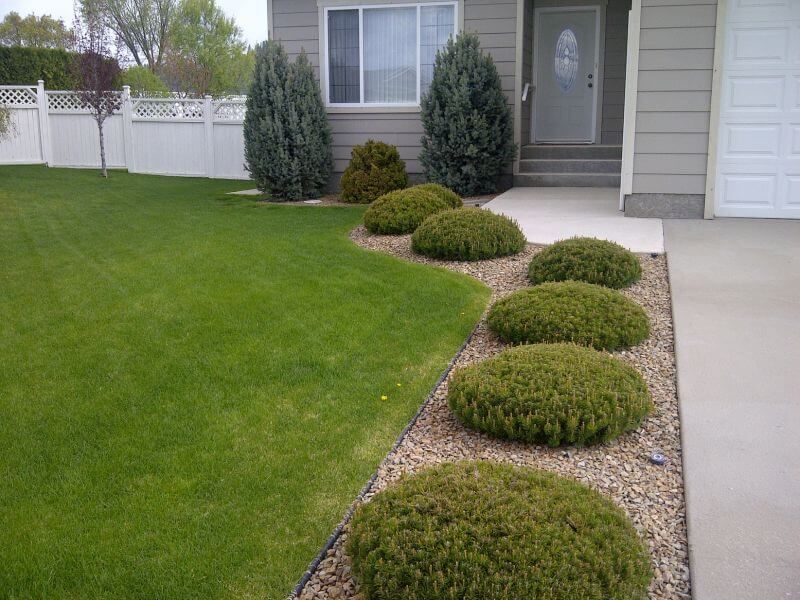
Few evergreens bring the same sturdy, sculptural quality to a front bed as a well-chosen dwarf mugo pine. The cultivar ‘Mops’ is one of the most widely verified compact selections of Pinus mugo.
It grows very slowly, reaching a mature size of roughly 3 feet tall and 3 to 4 feet wide over many years.
That slow growth rate is a genuine practical advantage. ‘Mops’ rarely needs shearing to stay within its space, which sets it apart from fast-growing shrubs that quickly outpace a foundation planting.
It is rated for USDA zones 2 through 8, making it well suited to Ohio winters.
Full sun and well-drained soil are important requirements. Soggy soil or standing water around the roots creates serious problems over time.
Raised beds or slopes work well for this reason.
Your Ohio Garden Changes Every Week. Your Plan Should Too.
Gardening in Ohio changes quickly throughout the season. Every Friday you’ll receive a simple weekly plan showing exactly what to plant, prune, fertilize, harvest, and protect so you never miss the right timing.
Candle pruning, which involves pinching back the new spring growth before needles fully open, can encourage a denser habit. Ohio State University Extension supports this technique as a light, optional practice.
It is not the same as shearing into old wood, which should be avoided because mugo pine does not reliably push new growth from bare, needleless stems.
Pine sawfly and Zimmermann pine moth are occasional concerns in the Midwest. Inspecting plants each spring allows for early action if either pest appears.
Overall, ‘Mops’ is a reliable, low-trim evergreen for sunny Ohio foundation beds.
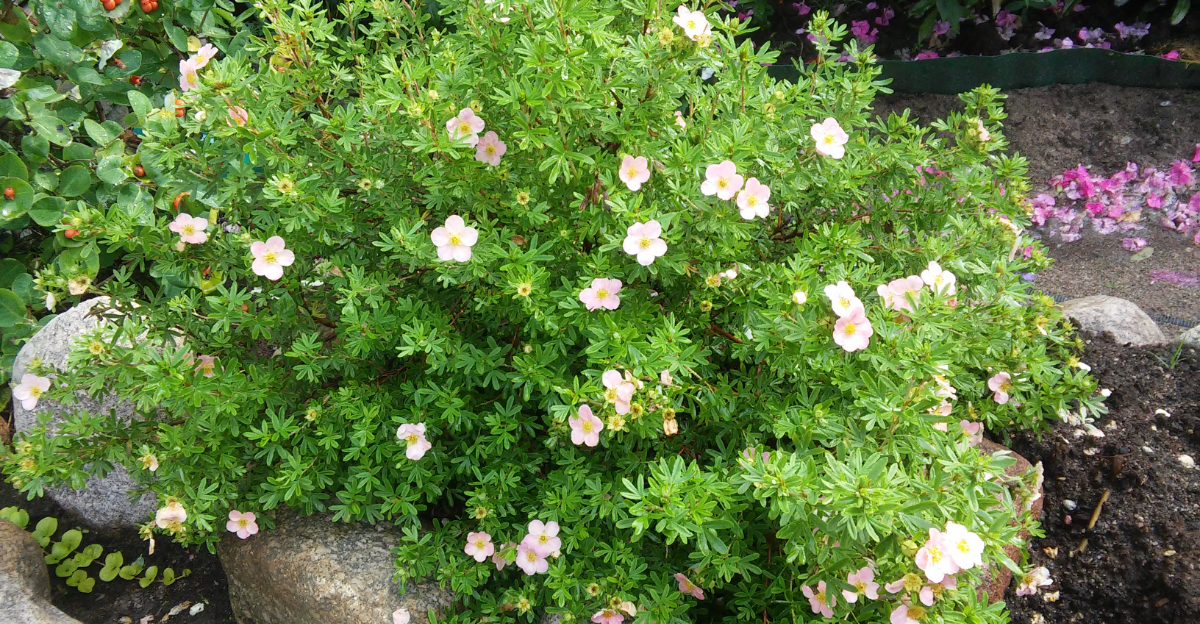
3. Shrubby Cinquefoil Trades Formal Green For Months Of Flowers
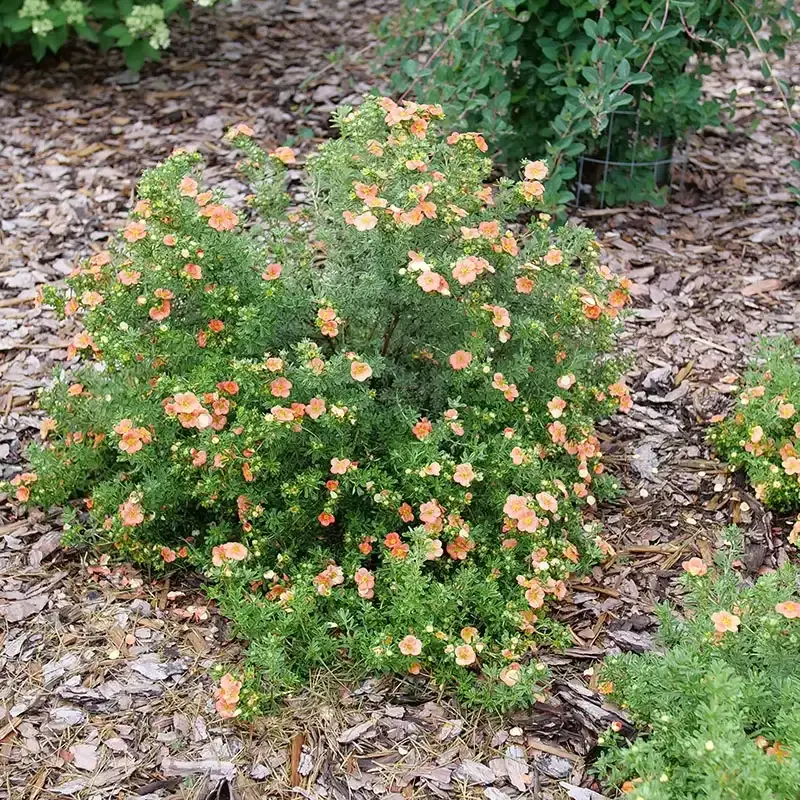
Bright flowers from late spring through early fall make shrubby cinquefoil a cheerful alternative to the evergreen formality of boxwood.
The plant is currently accepted under the scientific name Potentilla fruticosa, though some sources also list it as Dasiphora fruticosa.
Both names appear in reputable horticultural references, so either may appear on nursery tags.
Shrubby cinquefoil is deciduous, so it will not provide a year-round green screen. That trade-off is real and worth considering before planting it along a front foundation where winter structure matters.
Its fine-textured foliage and twiggy branching do give it some visual interest even without leaves.
The compact cultivar ‘Goldfinger’ matures to about 3 to 4 feet tall and 4 feet wide. That size works well in a front bed with adequate horizontal space.
Placing it too close to a walkway or steps will require more pruning as it fills out.
Full sun produces the strongest flower display. Flowering tends to decline noticeably in sites with more than a few hours of shade each day.
Well-drained soil is preferred, and the plant handles dry spells reasonably well once established.
Routine shearing is not recommended. Cutting out a few of the oldest stems at the base every few years, a practice called rejuvenation pruning, keeps the plant vigorous and floriferous.
Pest and disease problems are rarely serious for this tough, adaptable shrub.
4. Dwarf Ninebark Brings Rich Foliage Without A Tight Pruning Schedule
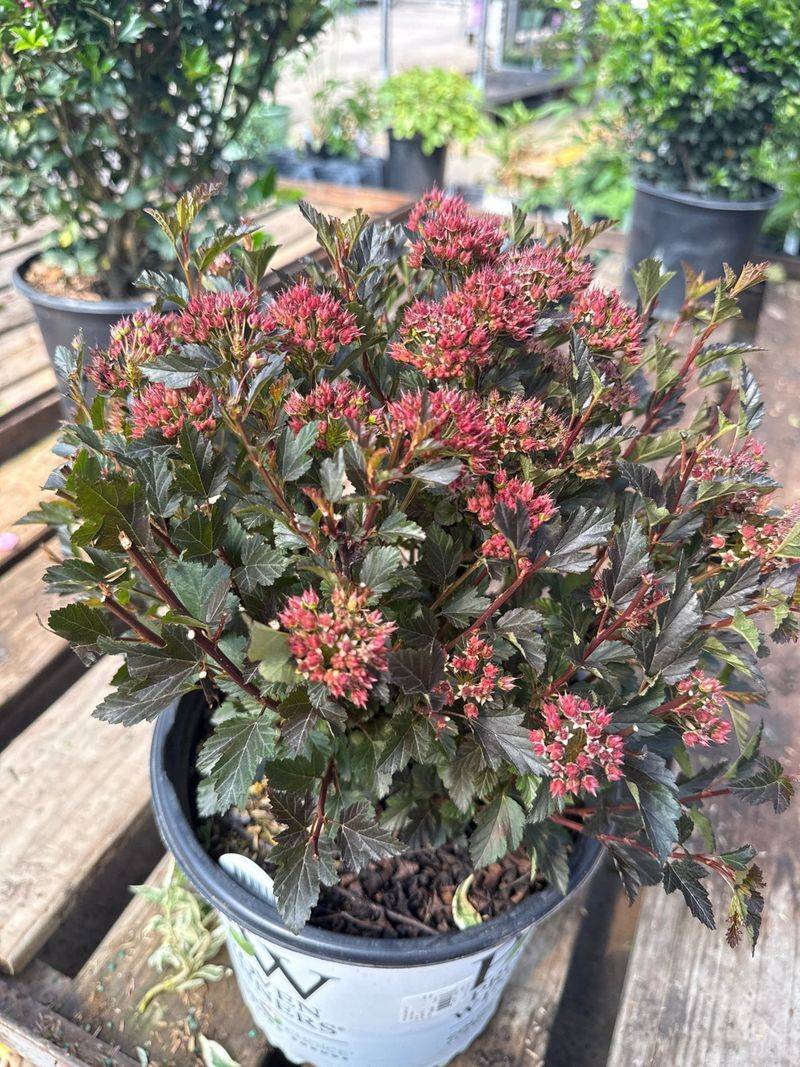
Rich burgundy foliage that holds its color from spring through fall gives dwarf ninebark a presence that few other compact shrubs can match.
Physocarpus opulifolius is a native Ohio species, and the straight species can easily reach 8 to 10 feet tall, which is far too large for most foundation plantings.
Selecting a verified compact cultivar matters enormously here.
‘Tiny Wine’ is a well-documented dwarf selection that matures to approximately 3 feet tall and 4 feet wide. That size fits comfortably beneath a standard window.
Its peeling, cinnamon-toned bark adds winter interest after the leaves have dropped, which is a detail worth appreciating on a bare January morning.
Small white to pale pink flower clusters appear in late spring and attract various native bees. The flowers are followed by reddish seed capsules that add texture through summer.
These ornamental features come without any special effort on the gardener’s part.
The deepest foliage color develops in full sun. Plants in heavy shade tend to produce greener, less vibrant leaves.
Partial shade is tolerable but may soften the dramatic color that makes this cultivar so appealing.
Powdery mildew can appear in humid summers, especially in sites with poor air circulation. Spacing plants properly and avoiding overhead irrigation helps reduce that risk.
Pruning should focus on removing crossing branches or occasional renewal cuts, not on shearing it into a formal shape.
5. Compact Black Chokeberry Adds Berries And Bold Fall Color
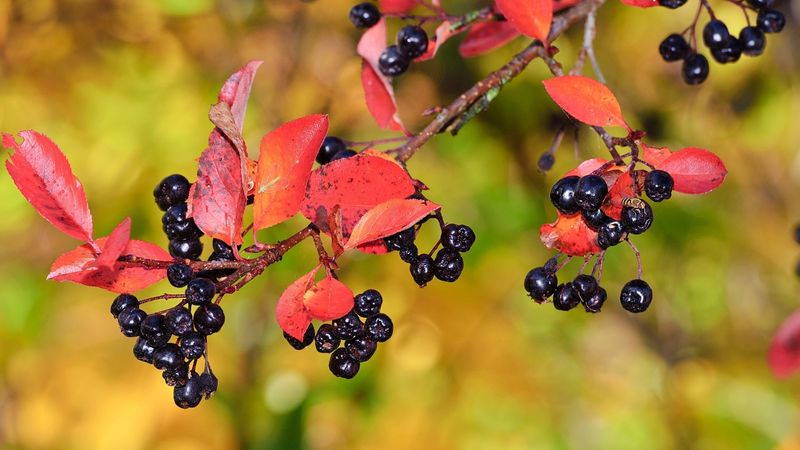
Watching a chokeberry shrub move through its seasons is genuinely rewarding. White flower clusters open in spring, glossy dark berries develop through summer, and the foliage turns a vivid red-orange in autumn.
Aronia melanocarpa is a native Ohio shrub, and birds are known to feed on the fruit when other food sources become scarce.
The straight species can reach 6 feet tall and spread into colonies through suckering, which makes it too large and wide-ranging for most tidy foundation beds.
The cultivar ‘Low Scape Mound’ is a genuinely compact selection that matures to about 1.5 to 2 feet tall and 2 to 3 feet wide.
Those dimensions make it one of the smallest verified chokeberry options available.
Aronia melanocarpa is self-fertile, so a single plant can produce fruit without a second plant nearby. Berry production may still improve with multiple plants in the area.
The fruit is astringent raw but attracts wildlife and is used in jams and juices.
Full sun encourages the best flower display and fall color. Partial shade is tolerated, though color intensity and fruit set may both be reduced.
The plant adapts to a range of soil types, including moist or periodically wet conditions.
Chokeberry is deciduous and offers no evergreen substitute for boxwood in winter. Occasional sucker removal around the base of even compact cultivars may be needed to maintain a clean edge in a formal front-yard setting.
6. Dwarf Fothergilla Delivers Spring Blooms And Fiery Autumn Leaves
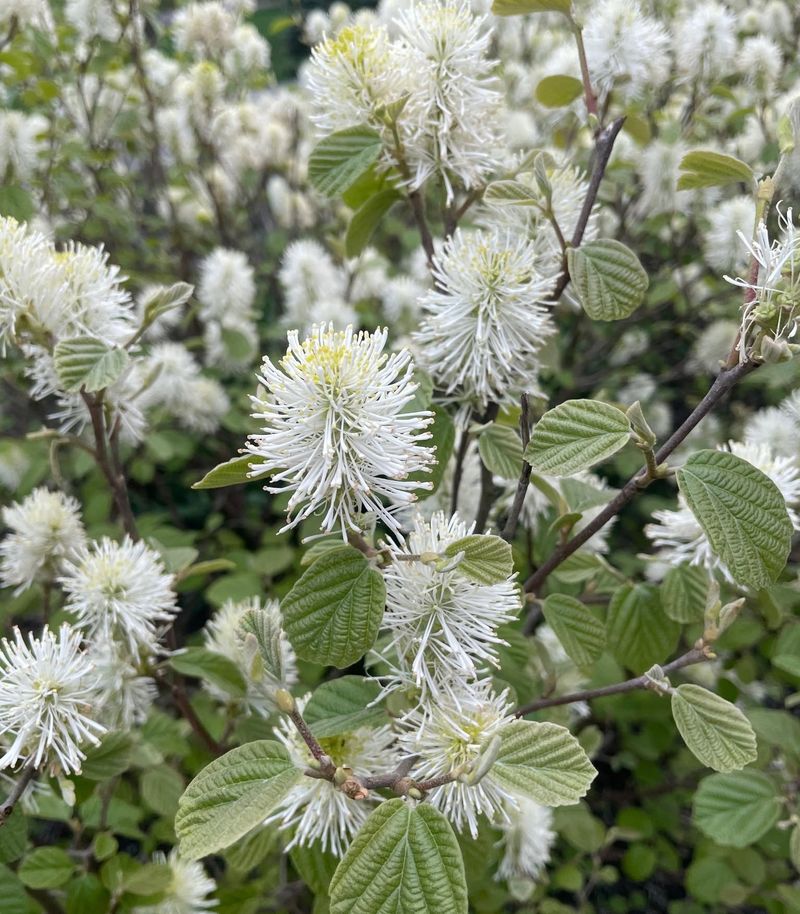
Honey-scented white flowers shaped like tiny bottlebrushes appear in early spring before the leaves fully open. Fothergilla gardenii, commonly called dwarf fothergilla, is a native shrub with a strong spring display.
It also offers some of the most vivid fall foliage of any compact landscape plant. The botanical identity matters here because nurseries sometimes sell hybrid plants under similar names.
Fothergilla gardenii typically matures to 2 to 3 feet tall and 2 to 4 feet wide. It is rated for USDA zones 5 through 8, covering most of Ohio.
That size suits a front foundation bed or a mixed planting near a low porch wall.
Fall color ranges from yellow and orange to deep red, often with multiple colors visible on the same plant at once. The display varies from year to year depending on weather conditions, so expecting the exact same show every autumn is not realistic.
Dry summers followed by cool fall nights tend to produce the most intense color.
Moist, well-drained, acidic soil is preferred. Heavy clay that holds standing water is a poor match and can cause root problems over time.
Amending the planting hole with organic matter improves drainage and helps establish the plant in Ohio’s variable soils.
Pruning needs are minimal when the shrub has adequate room to spread. Removing the oldest stems occasionally supports renewal.
Formal shearing would destroy the naturally arching, open form that makes fothergilla visually distinct from boxwood.
7. New Jersey Tea Stays Neat While Supporting Summer Pollinators
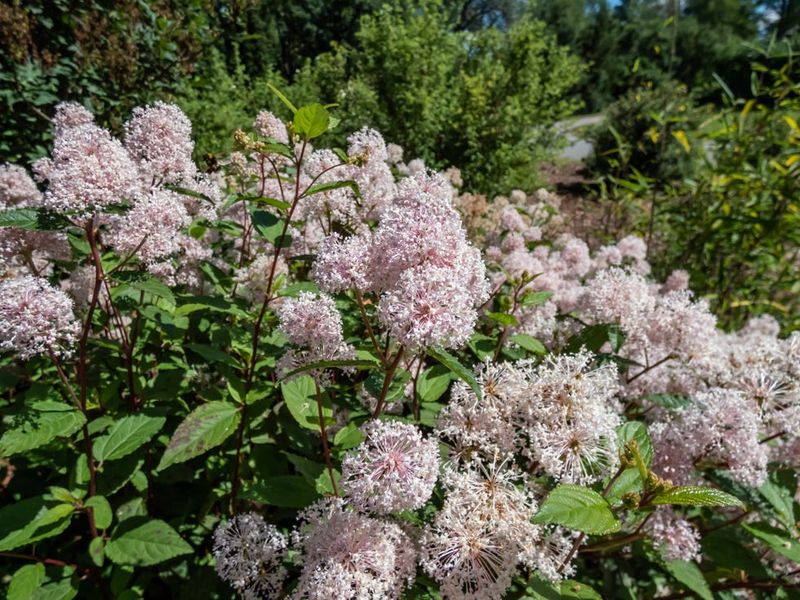
Clusters of small, creamy white flowers cover New Jersey tea in early to midsummer, arriving at a time when many other shrubs have already finished blooming. Ceanothus americanus is a native North American species with a long history on the continent.
Colonial-era settlers brewed its leaves as a tea substitute, which is how the common name stuck.
Mature plants typically reach 3 to 4 feet tall and 3 to 5 feet wide, forming a naturally low, rounded mound. That shape works well in a front yard where a structured but informal appearance is welcome.
Full sun and well-drained soil are important for strong growth and reliable flowering.
The white flower clusters attract various bees, wasps, and butterflies during summer. Saying it guarantees pollinators in every garden overstates the case, but it is a reliably attractive plant for beneficial insects when sited in sun.
Shading reduces both flowering and insect activity.
New Jersey tea develops a deep, woody taproot over time. That root system improves drought tolerance once the plant is fully established, which usually takes two to three growing seasons.
Moving an established plant is difficult and rarely successful, so choosing the right location from the start is critical.
Regular watering during the first two seasons gives the root system time to develop. After that, the plant handles dry periods reasonably well.
Pruning should be light and corrective rather than routine, preserving the natural mounding form that suits it best.
8. Compact Fragrant Sumac Fills Sunny Beds With Easy Fall Color
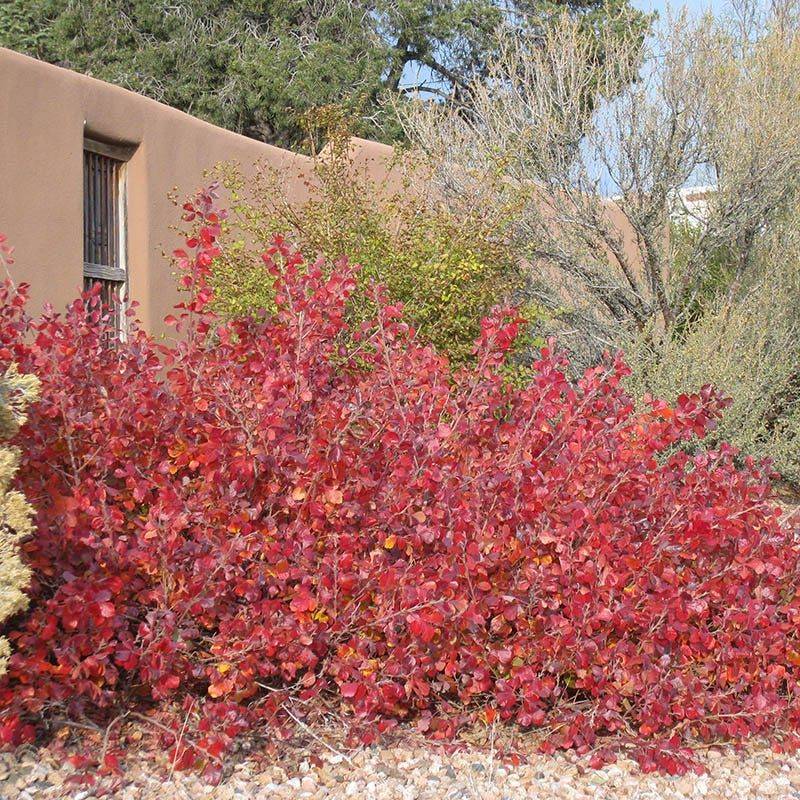
Rhus aromatica ‘Gro-Low’ is a compact cultivar of fragrant sumac that spreads wide and low. It works well across sunny slopes or foundation beds and is known for reliable fall color and strong adaptability.
Its three-part leaves emit a faint citrus scent when brushed or crushed, which is a small but pleasant surprise for anyone tending the bed.
‘Gro-Low’ matures to roughly 2 feet tall but spreads 6 to 8 feet wide. That horizontal reach is the most important dimension to understand before planting.
A shrub this wide can easily overwhelm a narrow walkway or crowd neighboring plants if spacing is based on nursery-pot size rather than mature spread.
Fall foliage shifts through orange, red, and burgundy tones as temperatures drop. The display is generally reliable, though intensity varies with weather conditions.
Small yellow flowers appear in early spring before the leaves open, followed by fuzzy red fruit clusters that some bird species visit.
Stems that contact moist soil can root at the nodes, gradually extending the plant’s reach. In open beds this is rarely a problem, but along a defined edge it may require occasional attention.
Periodic stem removal at the perimeter keeps the planting tidy without heavy labor.
Full sun to partial shade suits this cultivar, and it handles dry, rocky, or sandy soil with little complaint. Avoid soggy sites.
Selecting shrubs by their verified mature dimensions, not their pot size at the nursery, is the single most practical habit any Ohio gardener can develop.