The Hard-Water Clue Michigan Container Gardeners See On Pots Before Plants Struggle
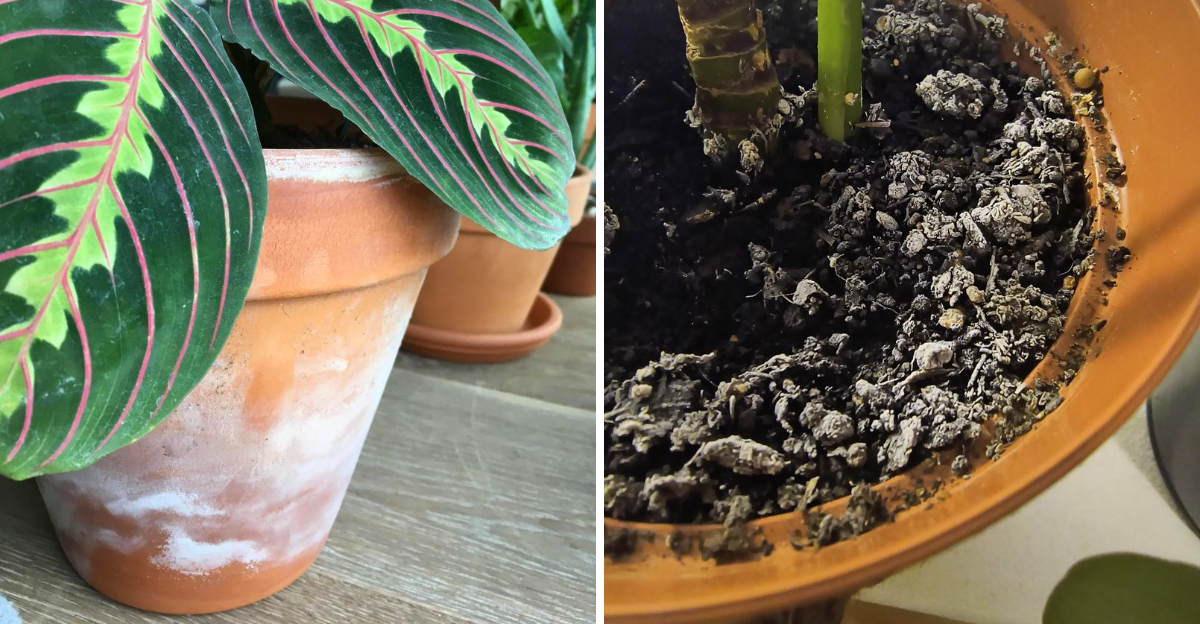
That white crusty buildup on the outside of a Michigan container is not a design feature, and it is not nothing either.
It is the pot trying to tell you something, and the message is worth paying attention to before the plants inside start making the same point in less subtle ways.
Hard water, fertilizer salts, and evaporation all contribute to that chalky residue in slightly different ways, and Michigan tap water in many areas carries enough dissolved minerals to leave visible deposits on pots, saucers, and potting mix surfaces fairly quickly.
Recognizing what that buildup actually means, and where it tends to show up first, gives container gardeners a real head start on keeping patio pots, porch planters, and indoor houseplants in genuinely good shape before any real stress sets in.
1. White Crust On The Pot Rim
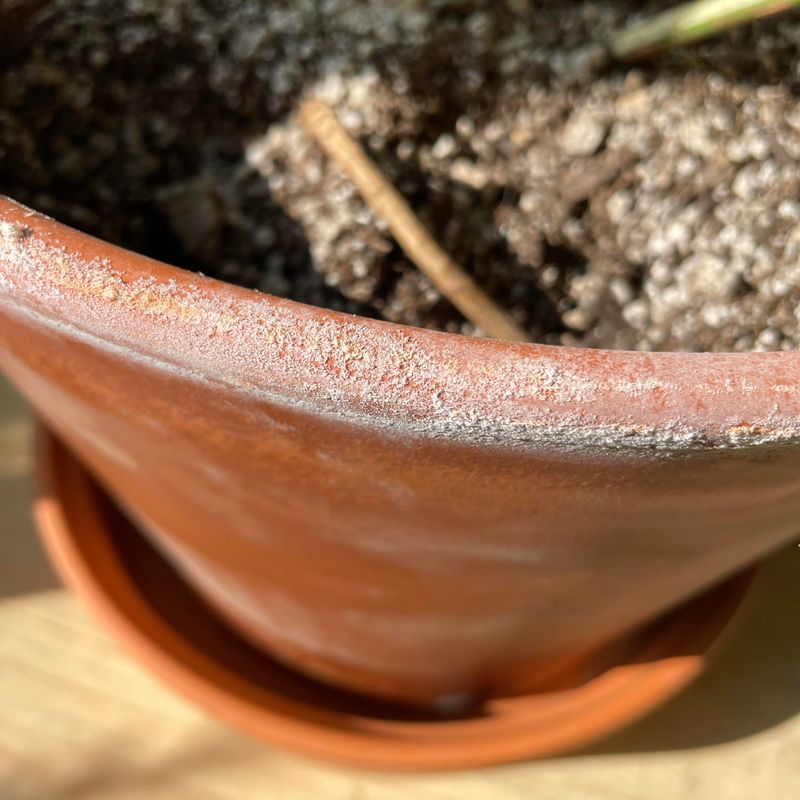
A white ring around the top edge of a terra-cotta pot is one of the most recognizable sights for Michigan container gardeners who water regularly.
That pale, chalky line forms when water carrying dissolved minerals or fertilizer salts moves upward through the porous clay walls and then evaporates, leaving the solids behind.
Terra-cotta is especially prone to this because the material naturally draws moisture outward.
The rim crust is not a sign that your plant is already in trouble, but it is worth paying attention to. When the buildup is thin and appears only occasionally, it usually means mineral concentrations in your water or fertilizer mix are at a manageable level.
When the crust becomes thick, flaky, or starts to look almost layered, that suggests salts or minerals have been accumulating for a while without being flushed out.
Many Michigan homeowners notice this white line first on pots kept on sunny patios or covered porches where evaporation happens quickly.
Glazed ceramic pots show it less often because the surface is less porous, though it can still appear near the rim if drainage is slow.
Checking the rim of each container during a regular watering round is a simple habit that takes only a few seconds and can help you catch mineral buildup early, before it reaches levels that may eventually affect root health or soil chemistry in your containers.
2. Chalky Buildup Near Drainage Holes
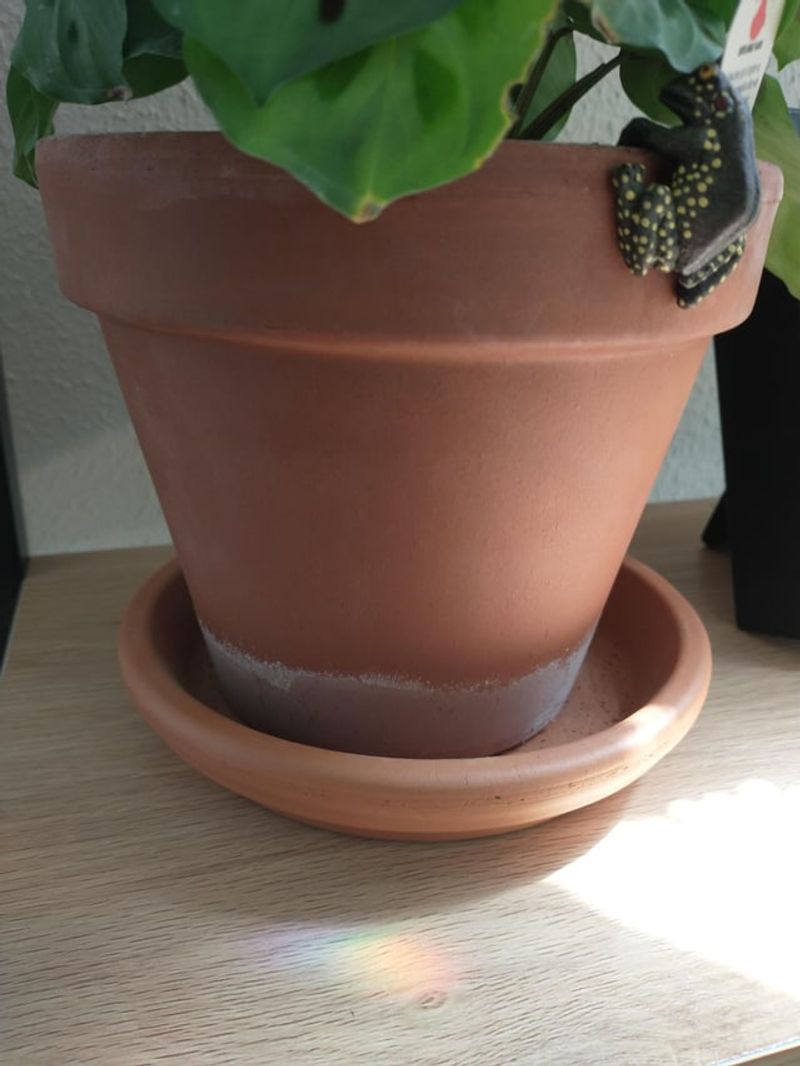
Flip almost any pot that has been sitting on a Michigan patio or porch for a full growing season, and you may notice a white, powdery or crusty residue gathered right around the drainage holes.
Water moves through the potting mix and exits at the bottom, carrying dissolved minerals and fertilizer salts with it.
When that water slows down, pools briefly near the holes, and then evaporates, the solids it carried get left behind.
This type of buildup near drainage holes can sometimes reduce how freely water moves out of the pot over time.
If the crust becomes thick enough, it may slow drainage slightly, which can contribute to soggy soil conditions that roots do not handle well for extended periods.
Catching it early gives you the chance to gently clean around the holes before drainage becomes noticeably restricted.
Your Michigan Garden Changes Every Week. Your Plan Should Too.
Gardening in Michigan changes quickly throughout the season. Every Friday you’ll receive a simple weekly plan showing exactly what to plant, prune, fertilize, harvest, and protect so you never miss the right timing.
A soft brush, an old toothbrush, or even a damp cloth works well for removing light deposits from drainage areas without damaging the pot. For heavier buildup, a brief soak in a diluted white vinegar solution can help loosen mineral crust on clay or ceramic containers.
Michigan gardeners who grow container vegetables, herbs, or annual flowers through a full outdoor season tend to find this residue most noticeable by late summer.
Repeated watering and fertilizing over several months leave their mark gradually, and the lower portion of each pot is usually where the buildup becomes hardest to ignore.
3. White Crust On The Potting Mix
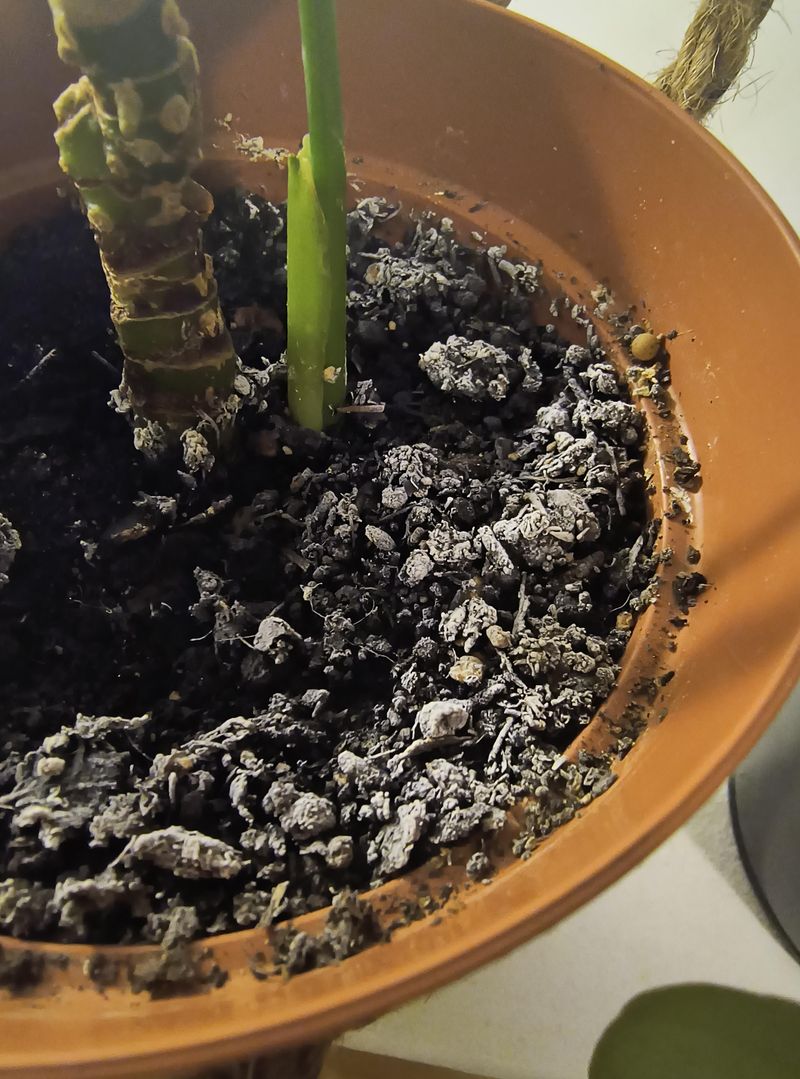
Spotting a pale, whitish layer sitting right on top of the potting mix is something many Michigan houseplant owners and outdoor container gardeners come across at some point.
The surface of the soil can develop this thin crust when water evaporates repeatedly from the same spot, especially in containers that receive consistent top watering.
Minerals from hard tap water and salts from fertilizers both have a tendency to concentrate near the soil surface as moisture escapes upward.
A light surface crust does not necessarily mean the roots below are being harmed right now. Potting mix naturally holds some salts and minerals without causing problems for most plants at low concentrations.
The concern grows when the crust becomes thick, covers the entire surface, or appears alongside other signs like leaf tip browning or slowed growth, because that combination can suggest salt levels in the soil are rising above what the plant handles comfortably.
One practical response gardeners often find helpful is allowing water to flush all the way through the pot and out the drainage holes when watering, rather than adding just enough to moisten the top layer.
This flushing action carries some of the accumulated salts and minerals down and out of the container.
Scraping away the top half-inch of old potting mix and replacing it with fresh mix is another option when surface buildup has become noticeable on indoor plants or long-term container residents on a Michigan porch or balcony.
4. Gray-White Deposits On Pots
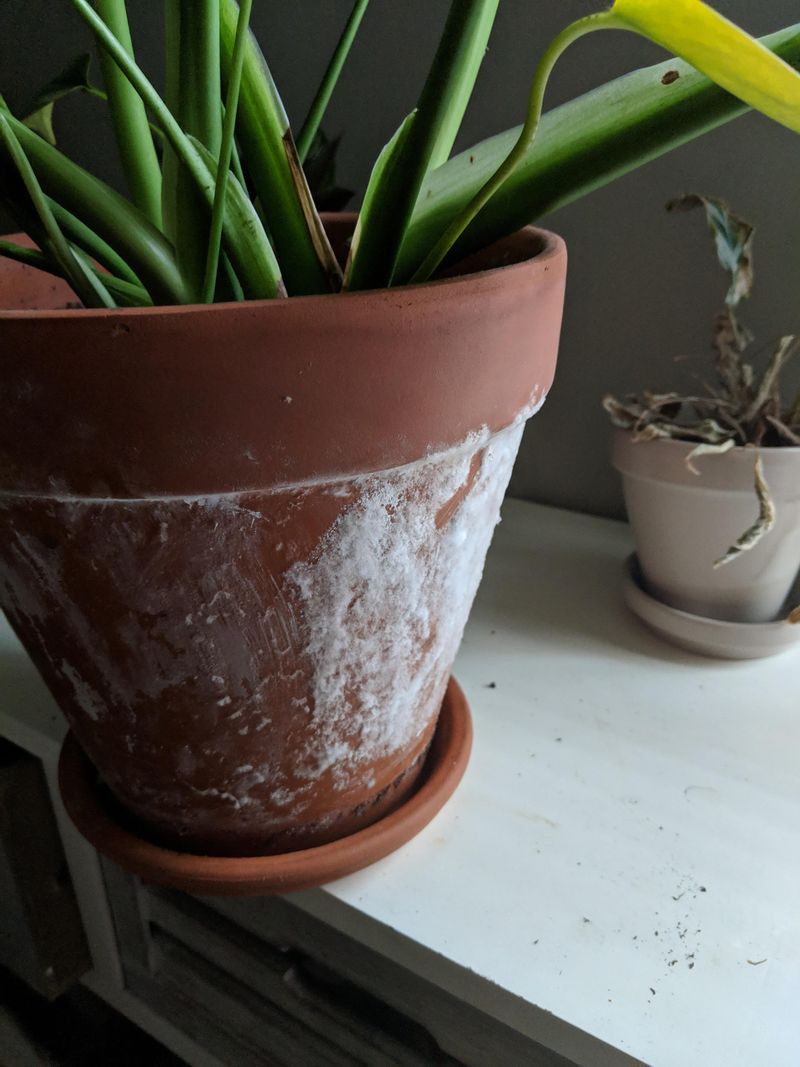
Gray-white streaks or patches on the outer walls of a container have a slightly different look than the bright white crust that forms on pot rims, and they tend to catch gardeners off guard the first time they notice them.
These streaks usually appear when water seeps through a porous container wall or runs down the outside surface and evaporates, leaving behind a faint mineral trail.
The color can range from chalky white to a dull grayish tone depending on the mineral content of the water source.
Michigan has significant variation in water hardness across different municipalities and private well systems, so the shade and thickness of these deposits can differ quite a bit from one neighborhood to another.
A home in a region with particularly hard tap water may see heavier streaking on unglazed clay pots within just a few weeks of regular watering.
Homes using softened water through a salt-based system may notice less mineral streaking but could see other salt-related residues instead.
These gray-white wall deposits are mostly a cosmetic concern on their own, but they do signal that your water is leaving a measurable mineral footprint on everything it touches, including your potting mix.
Wiping down the outside of pots with a damp cloth or sponge keeps them looking tidy and gives you a regular chance to inspect each container up close.
Noticing changes in how quickly deposits return after cleaning can also tell you something useful about your current watering frequency or fertilizer schedule.
5. Crystalline Residue, Not Fuzzy Mold
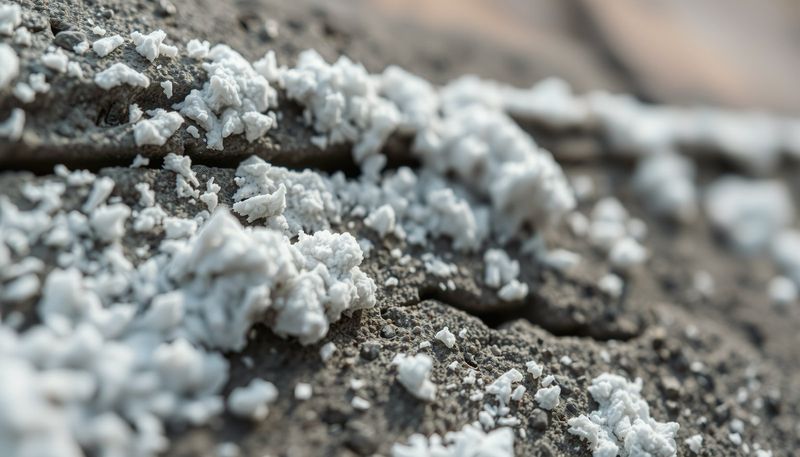
Knowing the difference between mineral or salt residue and actual mold growth can save Michigan container gardeners a fair amount of unnecessary worry. Crystalline residue tends to look dry, hard, and sometimes slightly shiny when light hits it at an angle.
It may feel gritty or powdery when rubbed between your fingers, and it does not wipe away in soft, fuzzy clumps the way mold does.
Fuzzy white or gray mold on potting mix usually looks soft and cloud-like, and it tends to appear when soil has stayed too wet for too long in a low-airflow environment.
Mineral and salt deposits, by contrast, form as water evaporates and leaves dry solids behind, so they are most common in spots where drying happens repeatedly.
Understanding which one you are looking at helps you respond appropriately rather than treating a mineral deposit like a fungal problem or missing an actual mold issue.
For gardeners who keep houseplants near windows or grow herbs on indoor countertops through the winter, both situations can occur, sometimes even on the same container at different times.
If you are unsure which type of residue you are looking at, try pressing a fingertip lightly onto the white patch.
A crystalline deposit will feel firm and dry, while active mold will feel softer and may leave a slight impression. Getting familiar with this simple check makes routine pot inspections quicker and more informative for any Michigan home gardener.
6. Water Rings On Saucers
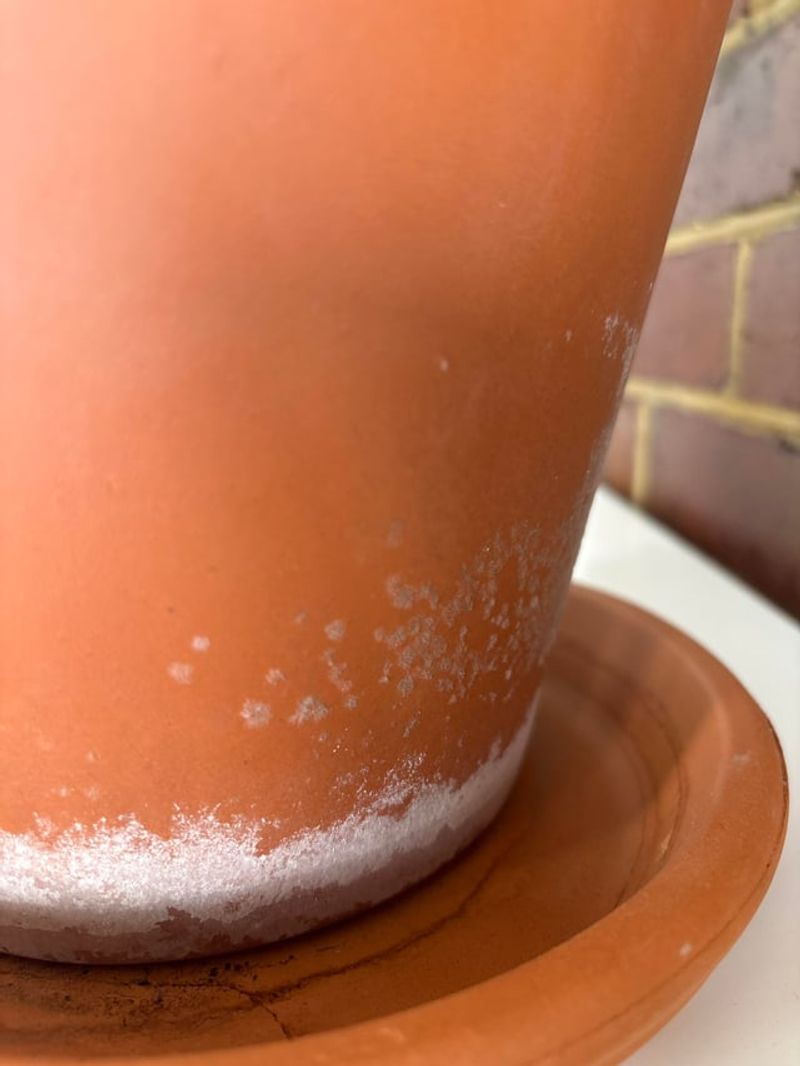
Saucers collect the water that drains out of containers, and in many Michigan homes they sit quietly under pots for weeks without being emptied or rinsed.
As that collected water slowly evaporates, it leaves behind a ring of white or cloudy mineral residue right on the saucer surface.
These water rings are easy to overlook because they form gradually and are often hidden beneath the pot itself.
The minerals and salts that form saucer rings come from the same sources as other container deposits, either hard tap water, fertilizer runoff, or a combination of both.
When a saucer holds standing water for extended periods, plant roots near the bottom of the pot can sometimes sit in that water, which can affect root health over time if it becomes a consistent pattern.
Saucer rings are a useful reminder to check how long water is pooling beneath each container.
Emptying and rinsing saucers after watering is a straightforward habit that many experienced Michigan container gardeners follow, particularly during summer when plants may be watered several times a week.
For indoor plants on windowsills or shelving, a quick wipe with a damp cloth after emptying the saucer removes mineral rings before they build up into a thick crust that becomes harder to clean.
Keeping saucers clean also makes it easier to notice if drainage from a particular pot has slowed down, which can be another early clue worth investigating in your container garden routine.
7. Buildup That Keeps Coming Back
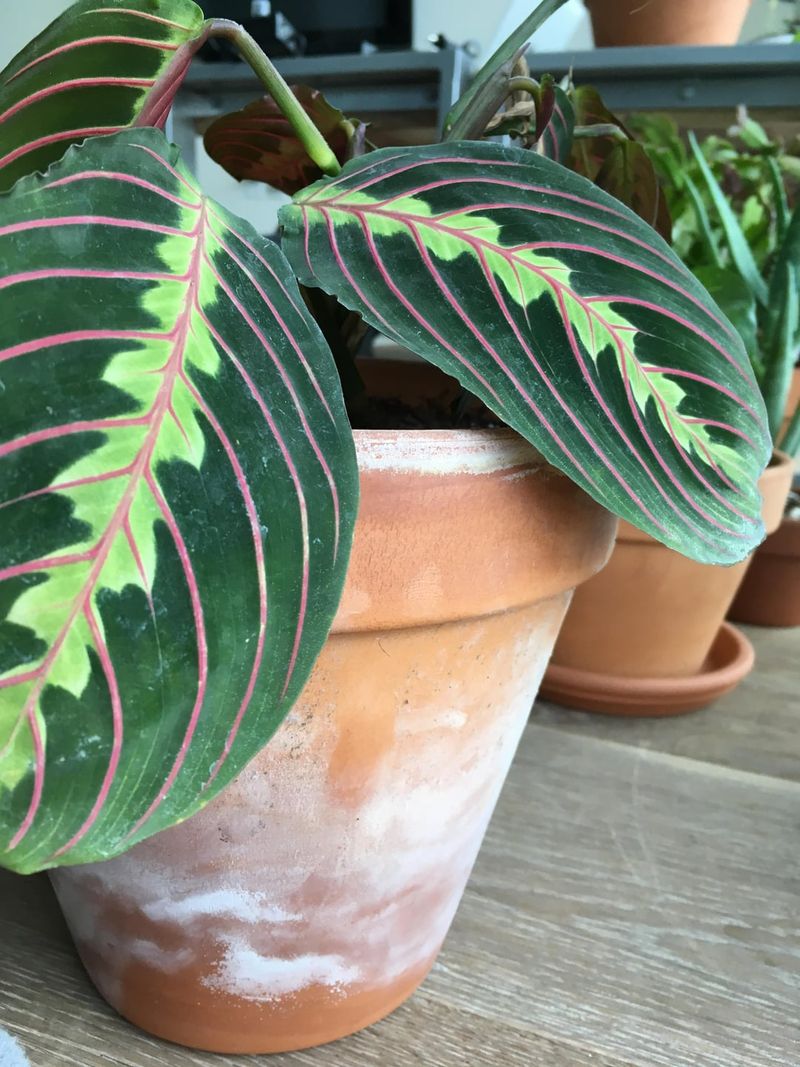
Scrubbing the white crust off a pot only to find it has returned a few weeks later is a familiar experience for many Michigan container gardeners.
Recurring buildup is one of the more telling signs that the source of the minerals or salts is ongoing, meaning it is not just a one-time residue from a particular batch of fertilizer or a single heavy watering session.
When deposits come back quickly and consistently, the pattern itself becomes the clue worth investigating.
Recurring buildup most often points to a combination of factors working together, such as hard tap water used regularly, a fertilizer applied frequently at full strength, slow drainage that keeps water sitting in the pot longer, or a saucer that holds standing water between waterings.
Identifying which of these factors applies to your specific setup is more useful than simply cleaning the pot again without changing anything.
Diluting liquid fertilizer to half strength, flushing containers with plain water every few weeks, and making sure saucers are not keeping pots sitting in pooled water are all practical habits worth building into a regular container care routine.
These habits work best when applied consistently across the season rather than only after buildup becomes visible, since gradual prevention tends to be easier on roots than periodic heavy correction.
Switching from tap water to collected rainwater for some containers is another option some Michigan gardeners explore when hard water seems to be the primary contributor to stubborn, fast-returning mineral deposits on their patio or porch pots.
8. Plant Stress Can Follow Later
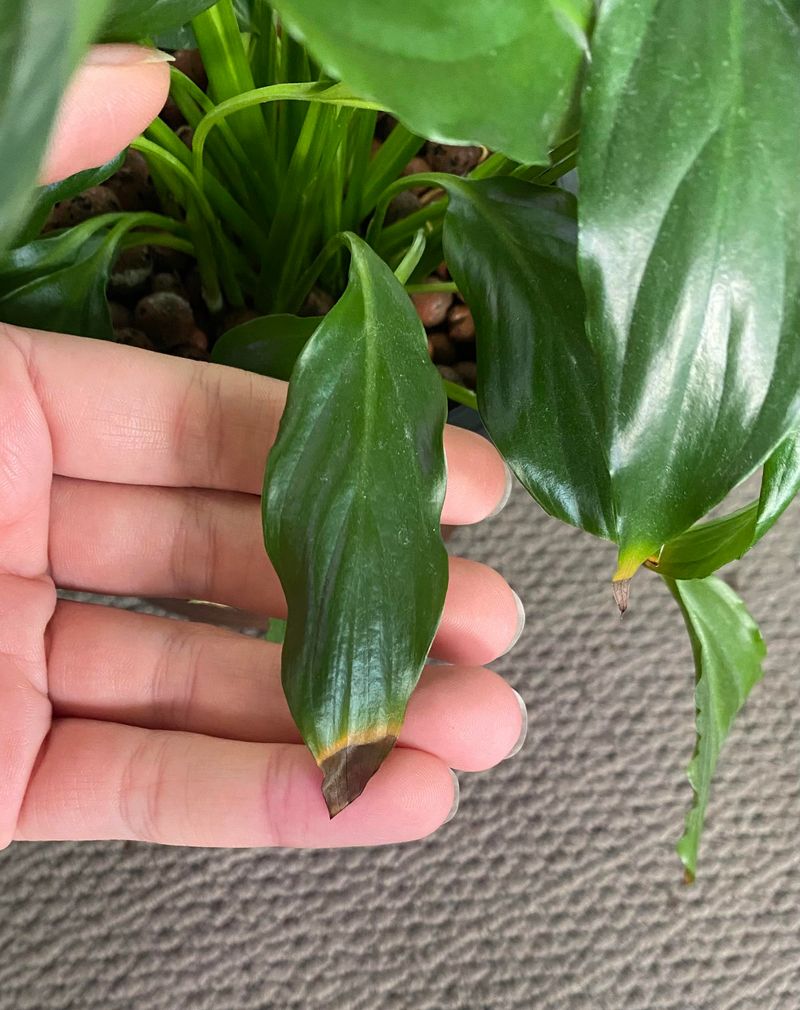
White buildup on a container does not mean a plant is already struggling, but it can be an early signal worth taking seriously before stress symptoms show up on the plant itself.
Leaf tip browning, yellowing on older leaves, slowed new growth, or wilting that does not resolve after watering are signs that can appear after mineral or salt concentrations in the potting mix have been building for a while.
Catching the buildup early gives Michigan gardeners a window to adjust their care routine before the plant reaches that point.
High salt concentrations in potting mix can interfere with how roots take up water, essentially making it harder for the plant to absorb moisture even when the soil feels damp.
This is sometimes described as a kind of drought stress that happens from the inside out, where the plant shows signs of water shortage even though the pot is not dry.
Container plants grown in tight root spaces with limited soil volume are more vulnerable to this effect than plants grown in the ground.
Michigan gardeners growing annuals, herbs, container vegetables, or houseplants through a long season should treat visible mineral and salt deposits as a prompt to review their watering depth, fertilizer frequency, drainage quality, and saucer habits.
Making small adjustments early, such as flushing the pot more thoroughly or reducing fertilizer application, is far less disruptive to the plant than waiting until visible stress symptoms appear and require more significant intervention to address.