Why Arizona Gardeners Are Burying Mini Ollas In Vegetable Buckets
Hot summer weather can make growing vegetables in buckets much harder than it looks. Soil dries quickly, and keeping moisture steady becomes one of the biggest challenges.
A small clay pot buried inside a container is changing how some gardeners handle this problem. Mini ollas are bringing an old watering idea into smaller spaces where vegetables are grown.
Instead of adding water only from above, this method delivers moisture in a different way. That simple change is why more container growers are becoming interested.
Arizona gardeners are using this technique during the hottest part of the year when every drop matters. It offers a new way to think about caring for bucket vegetables.
The hidden system beneath the soil is what makes this approach so interesting.
Once you see how mini ollas work, it becomes clear why they are gaining attention.
1. Mini Ollas Release Water Slowly Into The Soil
Unglazed clay has a quiet superpower. Water seeps through its porous walls at a pace that matches what plant roots can actually absorb.
No flooding, no runoff, just a steady trickle where it counts most.
Ollas work because clay is naturally permeable. When soil around the buried pot gets dry, suction pulls moisture outward through the walls.
When soil moisture rises, the flow slows down on its own. It self-regulates without any gadgets or timers.
Bucket gardens benefit from this because containers lose water fast. Heat radiates through plastic walls, and surface evaporation pulls moisture upward away from roots.
Burying a mini olla sends water directly downward, right into the root zone where plants need it.
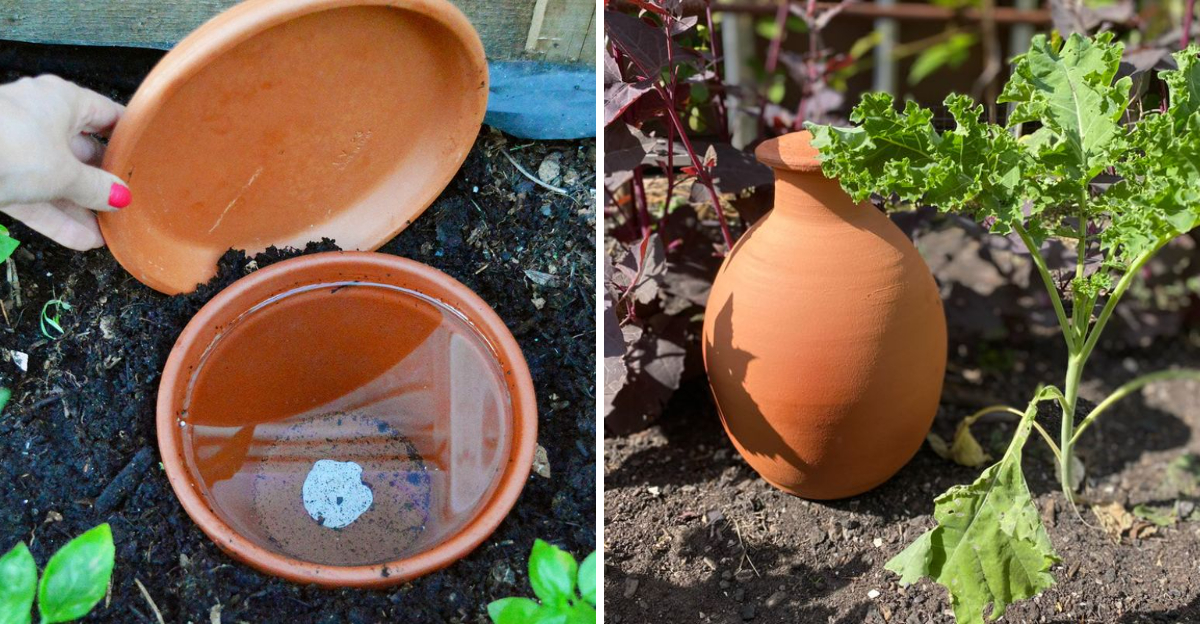
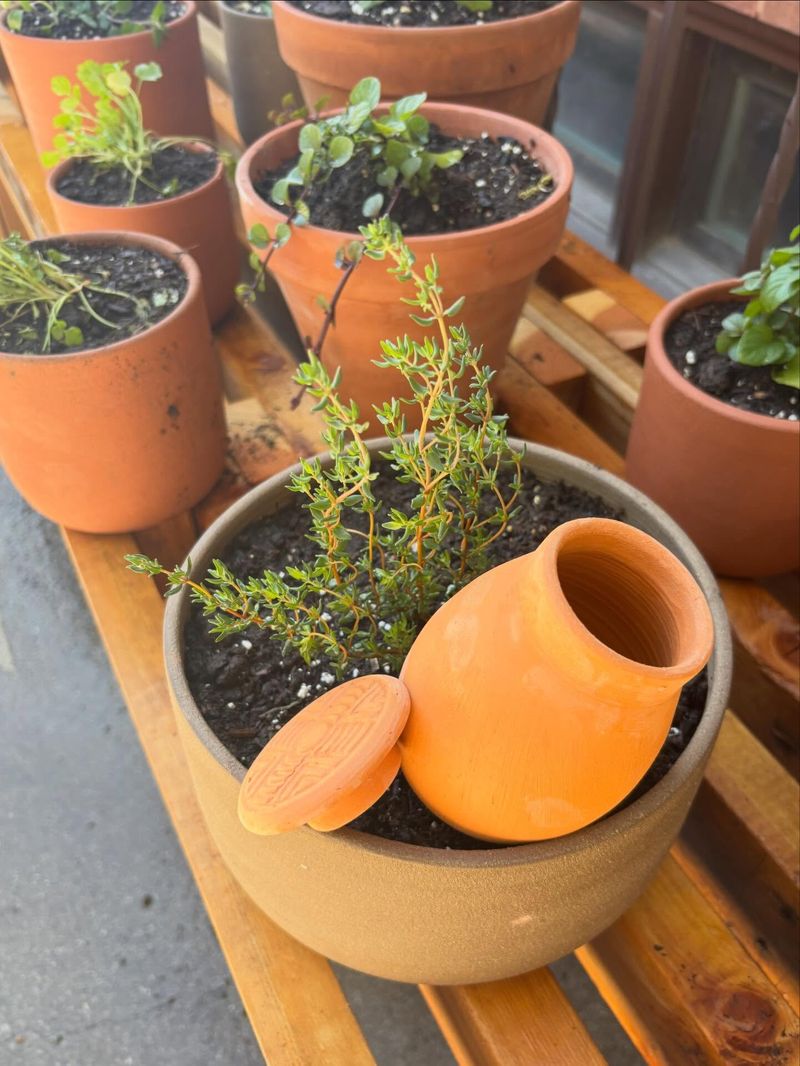
In a typical plastic bucket, a small unglazed clay pot with a plugged drainage hole works as a basic olla. Fill it with water, cap the top loosely, and let the clay do the rest.
Refill every few days depending on heat and plant size.
Roots actually grow toward buried ollas over time. That natural pull toward moisture encourages deeper, stronger root systems.
Stronger roots help plants handle heat stress better, which matters a lot during summer growing seasons in hot, dry climates.
2. Fewer Watering Sessions Save Time Each Week
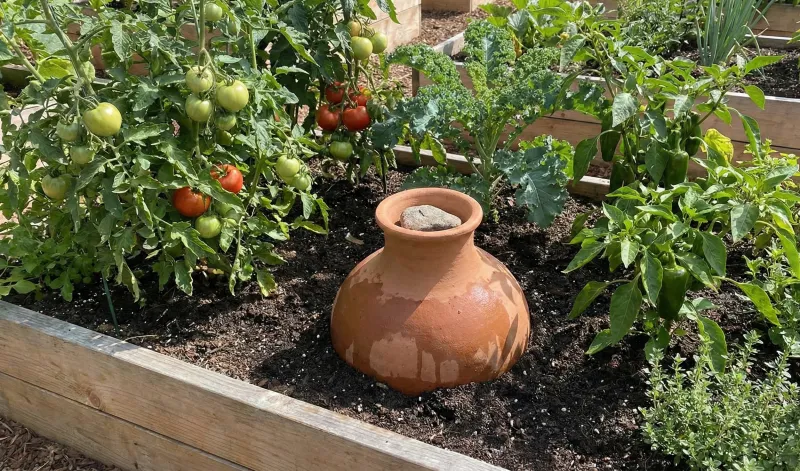
Watering every single day wears you out fast. When summer temperatures push past 105 degrees, stepping outside twice a day just to water containers gets old quickly.
Mini ollas change that routine in a practical way. A single fill can keep soil moisture stable for two to three days, depending on plant size, temperature, and how porous the clay is.
That means fewer trips outside during the hottest parts of the day.
Container vegetables like peppers and eggplants are thirsty plants. Without an olla, a bucket can dry out in under 24 hours during peak summer heat.
With a buried clay pot releasing water slowly, that same bucket holds usable moisture much longer.
Saving time is one benefit, but saving water matters just as much. Slow subsurface release reduces surface evaporation significantly.
Water goes straight to roots instead of evaporating off the top inch of soil before roots ever reach it.
Your Arizona Garden Changes Every Week. Your Plan Should Too.
Gardening in Arizona changes quickly throughout the season. Every Friday you’ll receive a simple weekly plan showing exactly what to plant, prune, fertilize, harvest, and protect so you never miss the right timing.
Busy gardeners with multiple buckets can set up several ollas at once and check them every couple of days. Refilling takes a minute or two per pot.
Compared to hand-watering each container daily, the time savings add up noticeably across a full growing season. Fewer sessions also means less soil disruption and less physical effort overall.
3. Plant Roots Stay Moist For Longer Periods
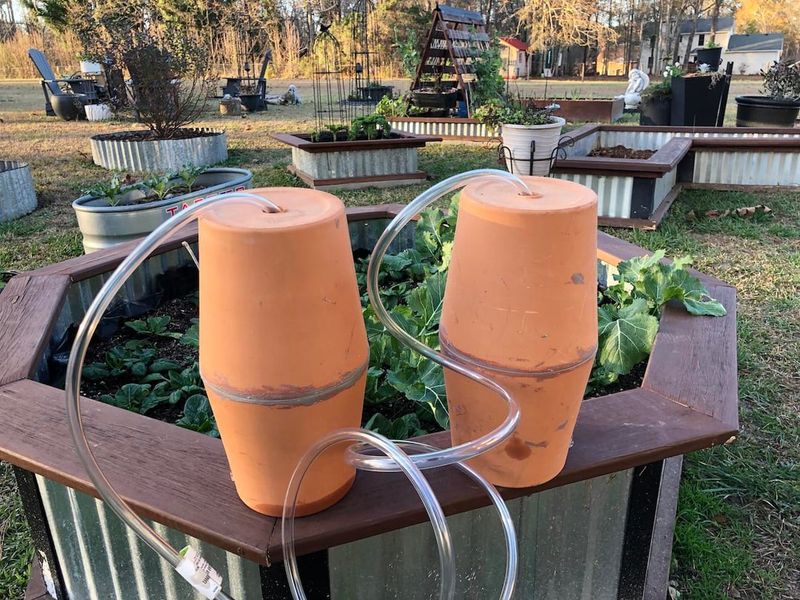
Roots need consistency, not just occasional flooding. Wet-dry cycles stress plants more than most gardeners realize.
When soil swings from soaked to bone dry repeatedly, roots struggle to keep up.
A buried olla smooths out that cycle. Moisture releases gradually, keeping the root zone at a steadier level throughout the day.
Plants spend less energy managing stress and more energy producing fruit and foliage.
In bucket gardens, root space is already limited. Containers restrict how far roots can travel to find water.
Placing a mini olla in the center of the bucket puts moisture exactly where roots are concentrated, which helps plants make the most of limited space.
Tomatoes, cucumbers, and squash are especially sensitive to moisture swings. Inconsistent watering can cause blossom drop and cracked fruit.
Steadier soil moisture reduces those problems, though other factors like nutrition and temperature also play a role.
Clay pots work best when buried at least halfway into the soil. That depth keeps more surface area in contact with the root zone.
A shallow placement limits how much moisture the clay can distribute effectively.
Gardeners in hot desert regions often notice that plants near buried ollas show less wilting during afternoon heat.
4. Simple Clay Pots Make Low-Cost Ollas
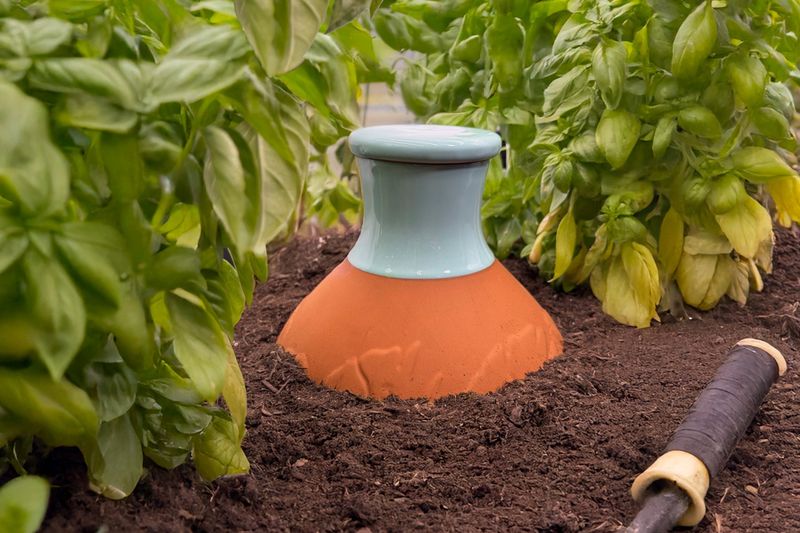
You do not need specialty irrigation gear to try this method. Basic unglazed terracotta pots from any garden center or hardware store work well as DIY mini ollas.
Most cost between one and three dollars each.
The key detail is using unglazed clay. Glazed pots seal the surface and block water from seeping through.
Unglazed terracotta stays porous, which is exactly what makes the slow-release process work.
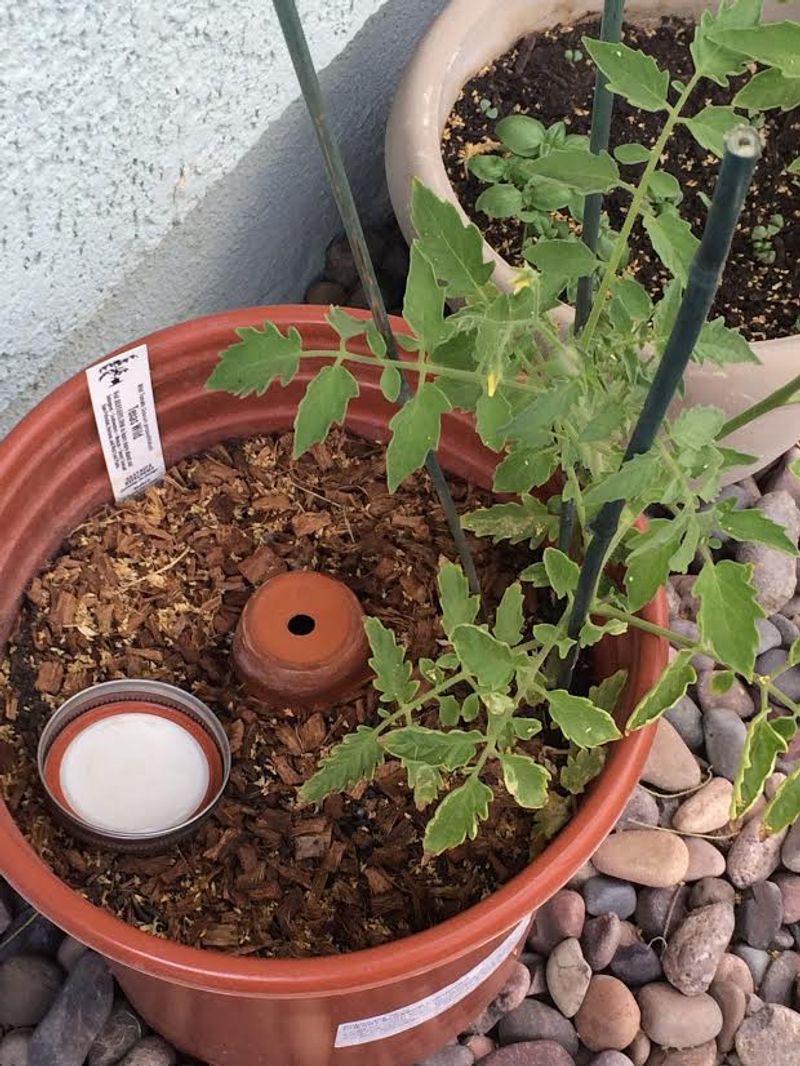
To convert a small pot into an olla, plug the drainage hole at the bottom. A wine cork, waterproof sealant, or even a small stone pressed firmly into place can work.
The goal is to hold water inside long enough for it to seep through the walls rather than drain straight out.
Once the hole is plugged, drop the pot into the bucket before filling with soil. Bury it so the rim sits just above the soil surface.
That exposed rim makes refilling easy without digging around roots.
A loose lid or small saucer placed over the top opening slows evaporation from inside the pot. It also keeps debris and insects out of the reservoir.
Any flat piece of stone or broken terracotta works fine as a cover.
One small pot per five-gallon bucket is a reasonable starting point.
5. Bucket Gardens Hold Moisture More Efficiently
Plastic buckets are not ideal moisture holders on their own. Heat conducts through dark plastic fast, warming the soil and accelerating evaporation from every direction.
Roots near the bucket walls can dry out hours before roots in the center do.
Adding a buried olla shifts where moisture comes from. Instead of watering from the top down, water moves outward from the center of the bucket.
That pattern reaches more of the root zone more evenly.
Raised beds and in-ground gardens can buffer temperature swings better than containers can. Bucket gardens in Arizona face more extreme moisture loss because the soil volume is small and surrounded by heat-absorbing walls.
Ollas help offset that limitation without requiring expensive equipment.
Pairing an olla with quality potting mix improves results further. Mixes that include coir or perlite hold moisture longer than dense or compacted soils.
Good drainage still matters, but moisture retention and drainage can work together with the right soil blend.
Grouping buckets together also helps. Clustered containers create a small microclimate that slightly reduces heat exposure on the outer walls.
Combined with buried ollas, grouped buckets tend to maintain soil moisture more steadily than isolated ones.
Bucket placement matters too. Morning sun with afternoon shade reduces total heat load on containers.
6. Fill The Reservoir Before It Runs Dry
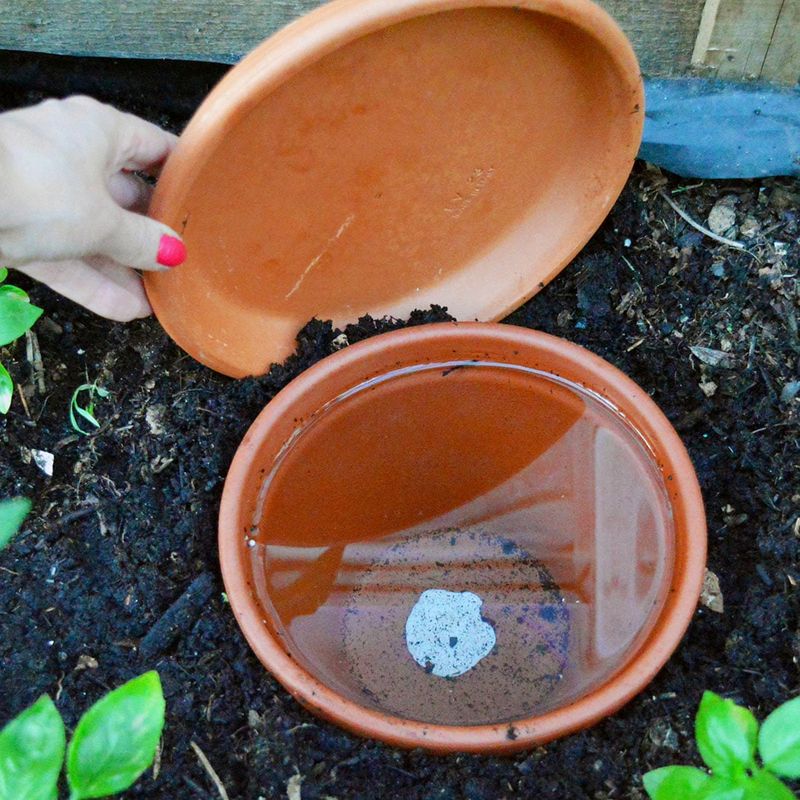
Letting an olla run completely empty defeats the purpose. When the clay dries out fully, it temporarily loses its moisture gradient with the surrounding soil.
Refilling after a full dry-out takes longer to re-establish that slow seep.
Checking the reservoir every two to three days is a reasonable habit in warm weather. During extreme heat waves, daily checks make more sense.
A quick look at the water level takes seconds and keeps the system working smoothly.
Stick a finger into the soil about two inches down near the olla. If it feels barely damp, refill the pot soon.
If it still feels moist, you likely have another day before it needs attention. That simple check is more reliable than guessing based on weather alone.
Filling the olla slowly prevents overflow. Pouring too fast causes water to spill over the rim and run across the soil surface rather than seep through the clay walls.
A slow, steady pour fills the reservoir without wasting water.
In very hot stretches, a five-gallon bucket with an active vegetable plant may need the olla refilled every one to two days. Smaller pots with less root mass tend to need less frequent refills.
Track your specific setup for a week or two and you will quickly learn its rhythm.
7. Vegetables Grow Better With Steady Moisture
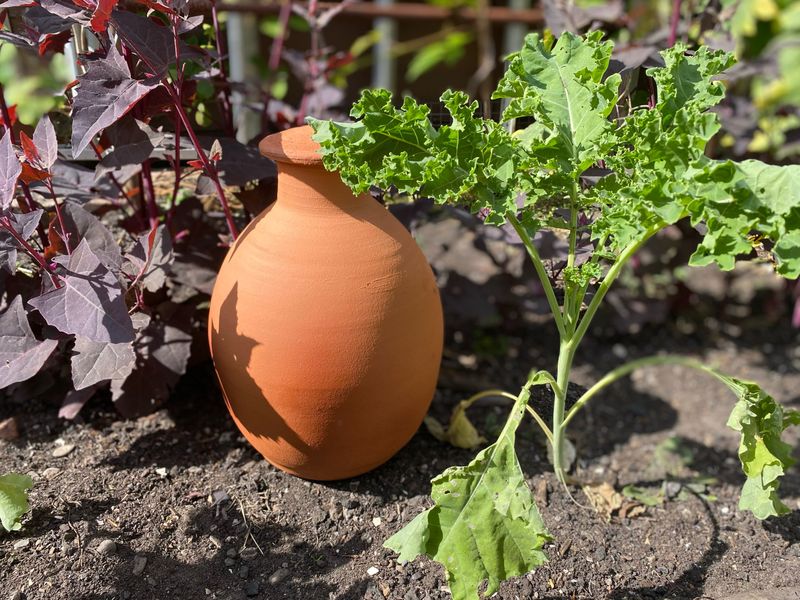
Steady moisture is one of the most underrated factors in vegetable gardening. Plants that get consistent water at the root level tend to produce more reliably than plants that swing between dry and wet conditions.
Tomatoes are a clear example. Uneven watering is a common cause of blossom end rot and fruit cracking.
Both problems become less likely when soil moisture stays relatively stable, though soil calcium levels and other factors also contribute.
Peppers respond well to consistent moisture too. Stressed pepper plants drop flowers before they set fruit.
Keeping roots steadily moist during flowering periods gives plants a better chance of holding onto those blooms and producing a decent harvest.
Leafy greens grown in buckets can bolt quickly when moisture swings happen during warm weather. Consistent root moisture slows that process somewhat, extending the harvest window in spring and fall growing seasons.
Herbs like basil and parsley also benefit from steady watering. Basil especially tends to wilt dramatically when soil dries out in hot conditions.
A small olla in a basil bucket can keep the plant looking healthy through stretches of heat that would otherwise cause visible stress.
Gardeners across the Southwest, including many in Arizona, have reported noticing a difference in plant health after switching to olla-based watering in their container setups.