10 Arizona Desert Trees You Plant This Fall That Shade Your Roof By Summer
A shaded roof in July can feel like a gift from the sky when the thermometer reads 110. The good news is that fall is the best time to plant trees in Phoenix and Tucson, because cool months let roots grow deep before the heat returns.
Pick the right fast-growing desert tree now, and it can start casting real shade by next summer. Here are ten tough, water-wise picks that also invite birds, bees, and other helpful wildlife into your yard.
1. Desert Museum Palo Verde
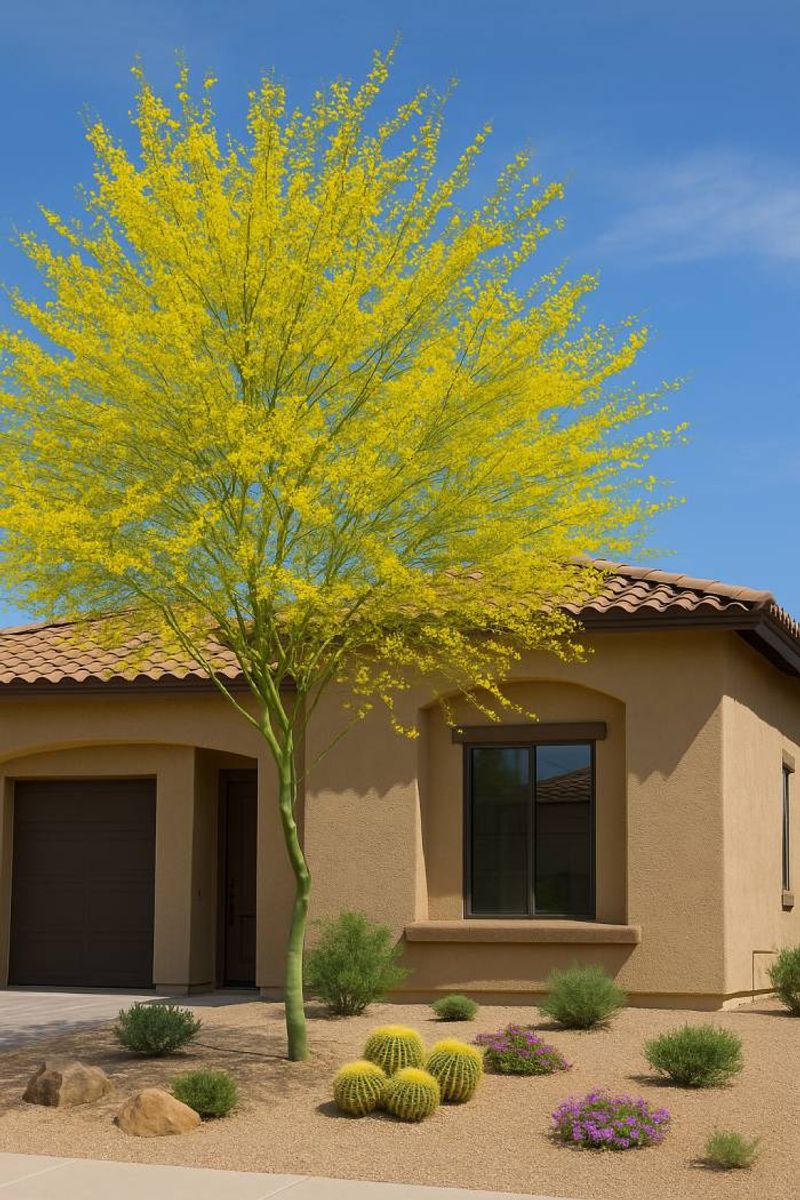
Ask any Phoenix landscaper for a speed demon, and the Desert Museum Palo Verde usually tops the list. It can add three to five feet of height in a single year, so a fall planting often throws filtered shade across a roofline by the following summer.
Unlike its wild cousins, this hybrid is thornless, which makes pruning and patio life much friendlier. Its smooth green bark even does photosynthesis, a clever trick that helps it keep going when leaves drop during drought.
Once roots settle in, it gets by on surprisingly little water.
Spring through summer, the canopy explodes in bright yellow flowers that pull in native bees and butterflies. Verdins and hummingbirds may tuck nests into the branches, turning your yard into a small bird hotel.
That kind of activity can bring natural predators that help keep bugs in check.
Plant it in sandy or well-draining soil, though it handles some clay too. Give deep, slow soaks every week or two through winter and its first summer, then stretch the schedule.
Place it at least 10 to 15 feet from the house so the canopy can shade the roof without crowding the walls.
2. Blue Palo Verde
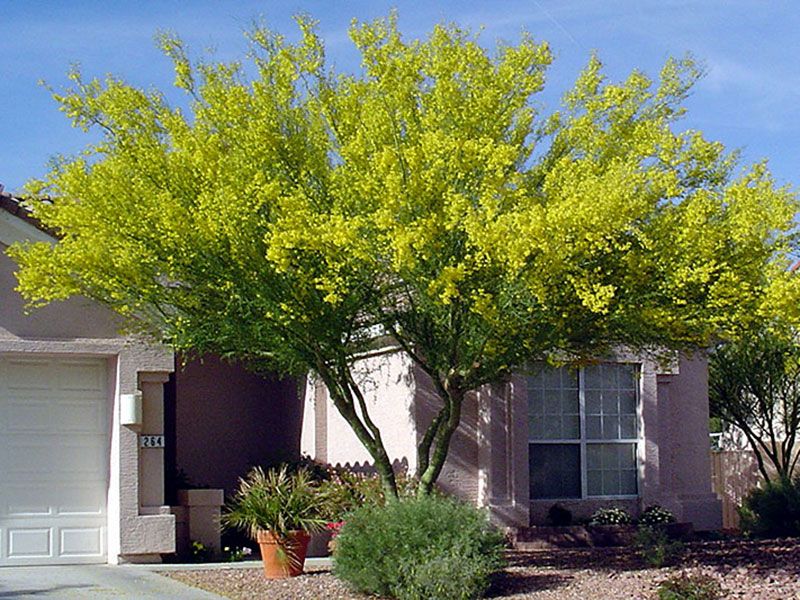
Arizona picked its state tree for good reason. The Blue Palo Verde has survived Sonoran summers for thousands of years, and it grows fast enough to earn a spot near your roof.
Look closely and you will notice the bark carries a soft blue-green tint. In spring, the whole tree turns into a golden cloud of blossoms so thick that sidewalks below look painted yellow.
Bees swarm the flowers, hummingbirds visit often, and the seed pods later feed quail, doves, and small mammals.
Shade from this tree is light and dappled rather than heavy. That can actually be a plus, since plants underneath still get a little sun and air moves freely through the canopy.
It handles alkaline soil, reflected heat off walls, and long dry spells once it is established.
Young trees do need some shaping. Prune in late winter to pick a few strong main branches, which helps the canopy hold up against monsoon gusts.
The small thorns mean you will want gloves for that job. After the first couple of years, a deep drink once a month in summer is often plenty, making it one of the most water-thrifty shade options around.
3. Velvet Mesquite
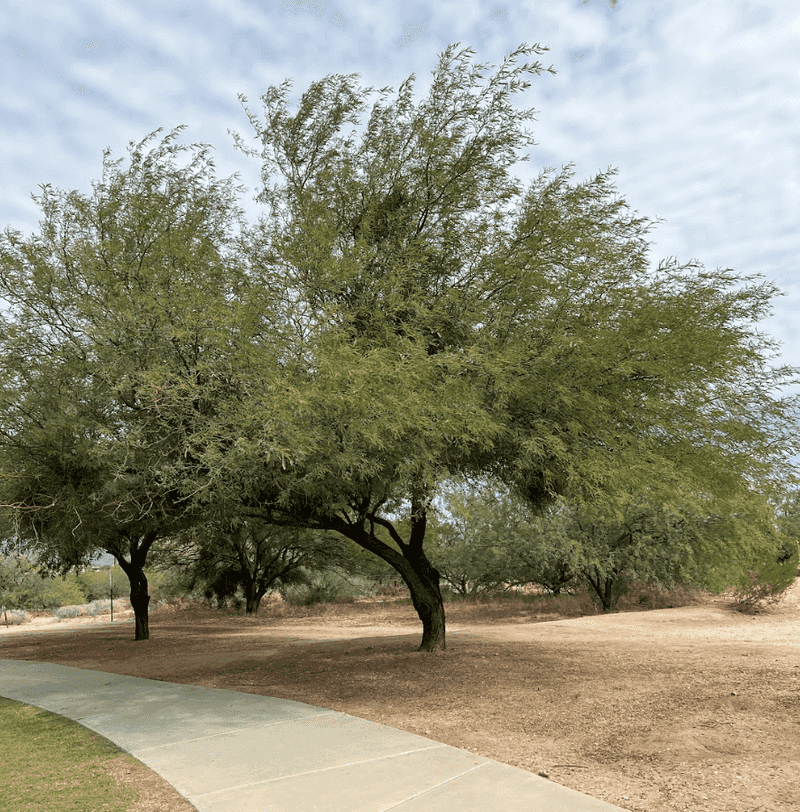
Picture a roadrunner darting out from under a wide, lacy canopy with a lizard in its beak. That scene plays out often around Velvet Mesquite, one of the most wildlife-friendly trees you can grow in the low desert.
Your Arizona Garden Changes Every Week. Your Plan Should Too.
Gardening in Arizona changes quickly throughout the season. Every Friday you’ll receive a simple weekly plan showing exactly what to plant, prune, fertilize, harvest, and protect so you never miss the right timing.
Of all the natives here, mesquite gives some of the densest shade. Mature trees can spread 30 to 40 feet across, and with regular deep water early on, they fill out quickly.
Its roots dive deep in search of moisture, which is why wild mesquites survive where almost nothing else does.
Those sweet seed pods feed birds, rabbits, and ground squirrels. The steady parade of critters can draw roadrunners, which are known to snack on insects, lizards, and even scorpions.
No tree promises a pest-free yard, but mesquite can make your space more appealing to these helpful hunters.
Fun fact: people in the Southwest have ground mesquite pods into sweet flour for centuries. For your yard, plant it well away from pools and pipes, and train it to a single trunk or a few sturdy ones.
Avoid overwatering, since too much can cause shallow roots and weak wood that struggles in monsoon wind.
4. Desert Willow
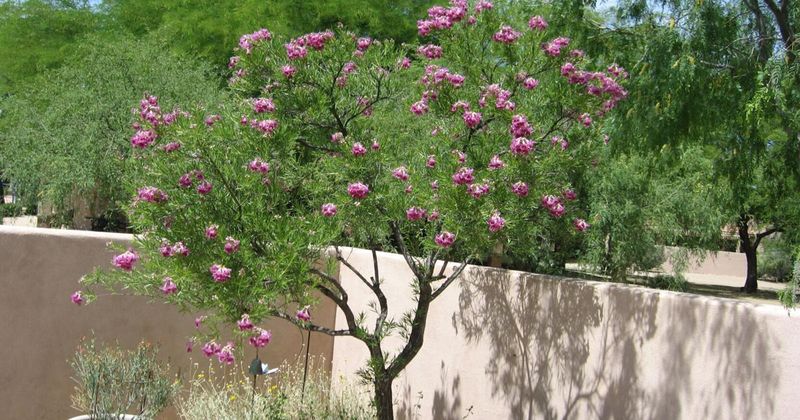
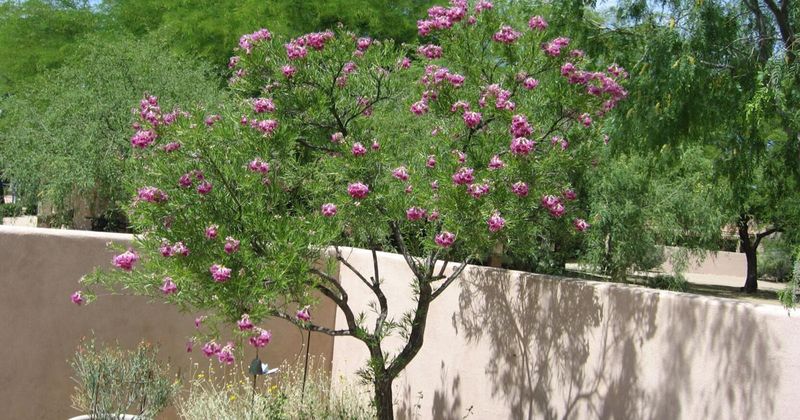
Hummingbird lovers, meet your new favorite tree. Desert Willow blooms with orchid-like trumpet flowers in pink, purple, or white from late spring deep into fall, and hummingbirds treat it like a nonstop snack bar.
Despite the name, it is not a true willow at all. It is actually related to catalpa trees, and it earned its nickname from the long, skinny leaves.
Growth runs about two to four feet a year, so a fall planting can offer soft, dappled shade by the next hot season.
Because it drops its leaves in winter, it works beautifully on the south or west side of a home. Summer shade blocks harsh sun, and winter sun can warm the house when you actually want it.
That seasonal swap may help trim cooling and heating costs.
Bees and butterflies share the blossoms with hummingbirds, and small birds use the branches for shelter. It handles sand, clay, and triple-digit days with modest water once rooted.
For a fuller look, pick a named variety like Bubba or Timeless Beauty, which tend to bloom heavily. Trim off old seed pods if you prefer a tidier look and even more flowers.
5. Arizona Ash
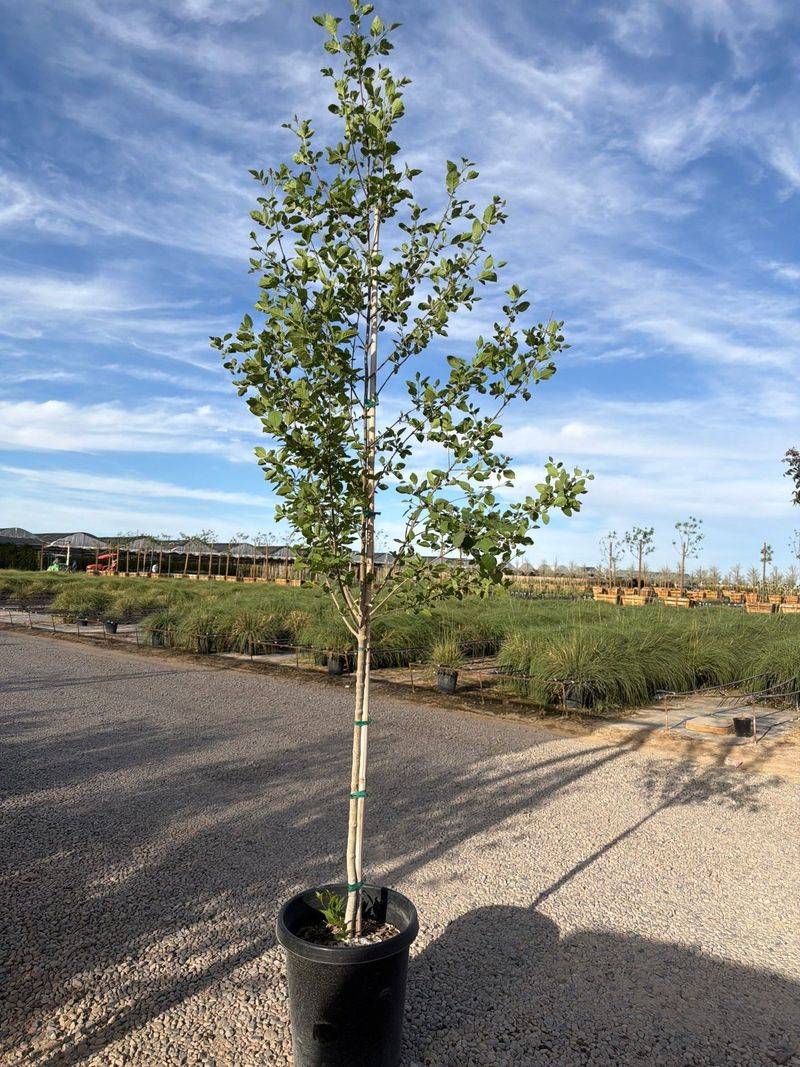
Some folks want dappled light. Others want a deep, cool pool of shade that drops the temperature on their patio and roof.
For that second group, Arizona Ash delivers.
Also called velvet ash, this native grows along desert streams and washes, so it naturally likes a bit more water than palo verde or mesquite. In return, it can put on about three feet a year and eventually reach 30 to 50 feet tall with a thick, leafy crown.
That broad canopy blocks a lot of summer sun from hitting shingles and tile.
Wildlife gets plenty out of it too. Small spring flowers feed bees and butterflies, and seed-eating birds pick through the winged seeds.
It is also a host plant for the two-tailed swallowtail, Arizona’s state butterfly, so you may spot caterpillars munching leaves.
Plan for regular deep watering, especially in its first few summers, and group it with other moderate-water plants on the same drip line. Leaves drop in fall, which lets winter sun reach your home.
Look for improved selections such as Fan-Tex, which tend to be more heat tolerant, and plant it at least 20 feet from the foundation.
6. Willow Acacia
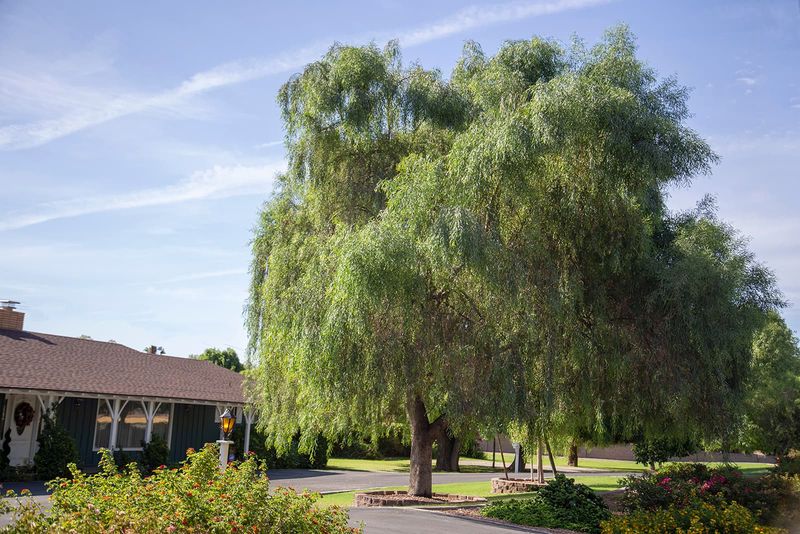
Need shade that sticks around all year? Willow Acacia keeps its long, drooping leaves through winter, giving a graceful, weeping look that softens hard desert edges.
It comes from Australia, not Arizona, but it has proven itself in Phoenix for decades. It shrugs off reflected heat from walls, driveways, and pavement, which makes it a smart pick for that blazing west-facing side of the house.
Growth can hit two to five feet a year, filling in fast.
In fall and winter, fluffy cream-colored puffball flowers appear and carry a light, sweet scent. Bees and butterflies visit them at a time when little else is blooming.
The tough foliage is also less tempting to rabbits, so young trees are not as likely to get nibbled.
Its upright shape fits smaller yards and narrow side spaces better than wide mesquites. Keep in mind that evergreen trees block winter sun too, so it works best where year-round shade is welcome, like over a pool equipment pad or a hot bedroom wall.
Well-draining, alkaline soil suits it fine. Water deeply and not too often, and it should stay sturdy against monsoon gusts.
7. Chinese Pistache
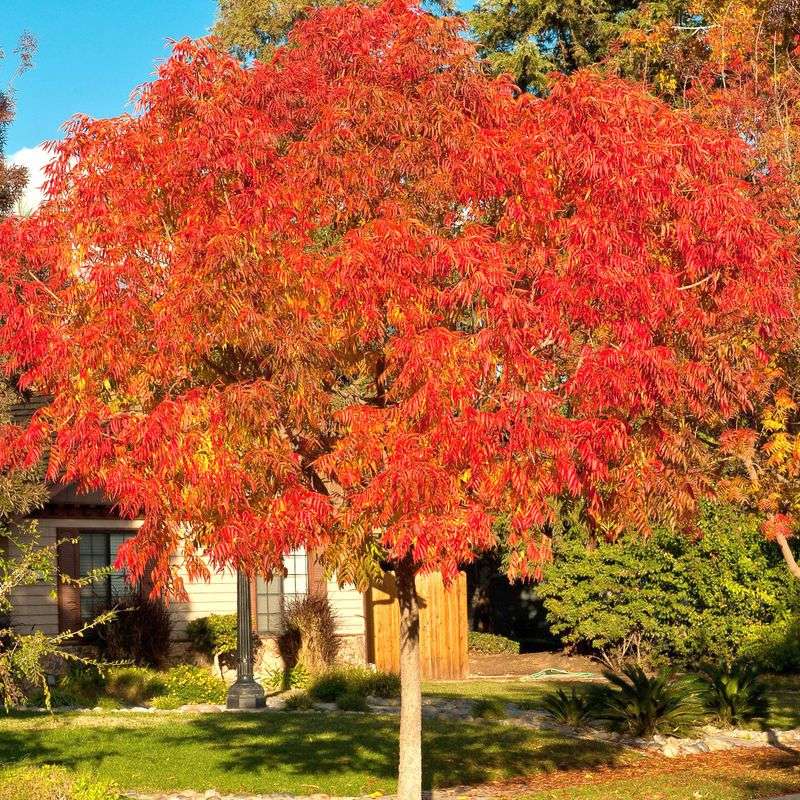
Missing fall color since moving to the desert? You are not alone, and Chinese Pistache might be the fix.
When nights cool off in late November, its leaves blaze into orange, scarlet, and gold, a rare show in the Valley.
Beyond good looks, this tree is built for heat. It grows about two to three feet a year and forms a rounded, umbrella-shaped crown that throws solid shade over roofs and patios.
Once roots settle, it handles drought, wind, and brutal summers with little complaint.
Soil is rarely an issue. Compacted, poor, or alkaline ground works as long as water drains well.
It also resists most pests and diseases, which means fewer headaches and less spraying.
Female trees make small red berries that birds enjoy, while male trees skip the fruit for a cleaner look. Either choice drops leaves in winter, letting warm sun back onto your home.
Give it deep watering during the first two summers and a light shaping cut while young. Plant it 15 to 20 feet from the house to leave room for that umbrella spread, and you will enjoy both cooler summers and a little autumn magic.
8. Chinese Elm
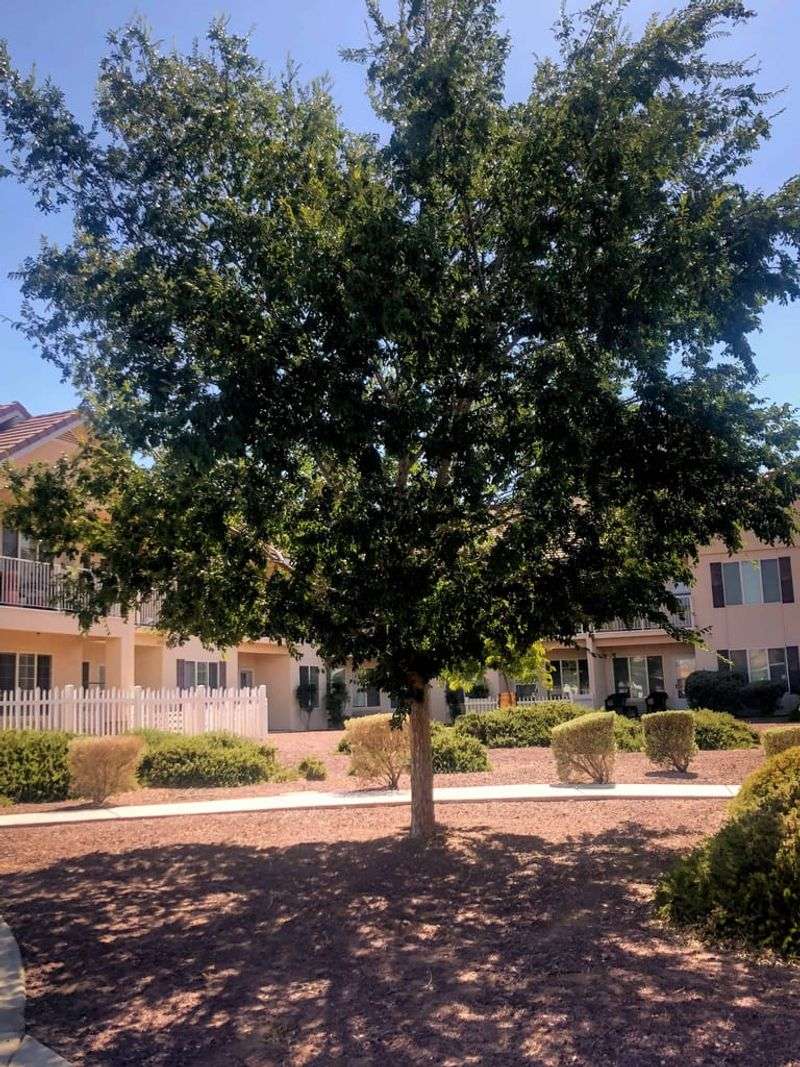
Old Phoenix neighborhoods are full of big, arching Chinese Elms, and there is a reason homeowners kept planting them. They are dependable, fast, and generous with shade.
Also called lacebark elm, this tree has patchy, peeling bark in shades of tan, gray, and orange that looks almost like a camouflage pattern. Its branches spread wide and graceful, eventually reaching 40 to 50 feet.
That broad umbrella can cover a big chunk of roof, which may noticeably lower attic heat.
It stands up well to wind, dust, and city conditions. Unlike American elms, it resists Dutch elm disease, and it handles alkaline soil with ease.
Birds nibble the flat, papery seeds, and caterpillars feeding on the leaves provide food that songbirds carry to their young.
Here is a helpful tip: in the low desert it often stays semi-evergreen, holding many leaves through mild winters. Plant it where year-round cover is useful.
Water deeply every week or two during the first summers, then taper off as it matures. Prune in winter to thin crowded limbs so monsoon winds can pass through instead of pushing hard against a dense canopy.
9. Tipu Tree
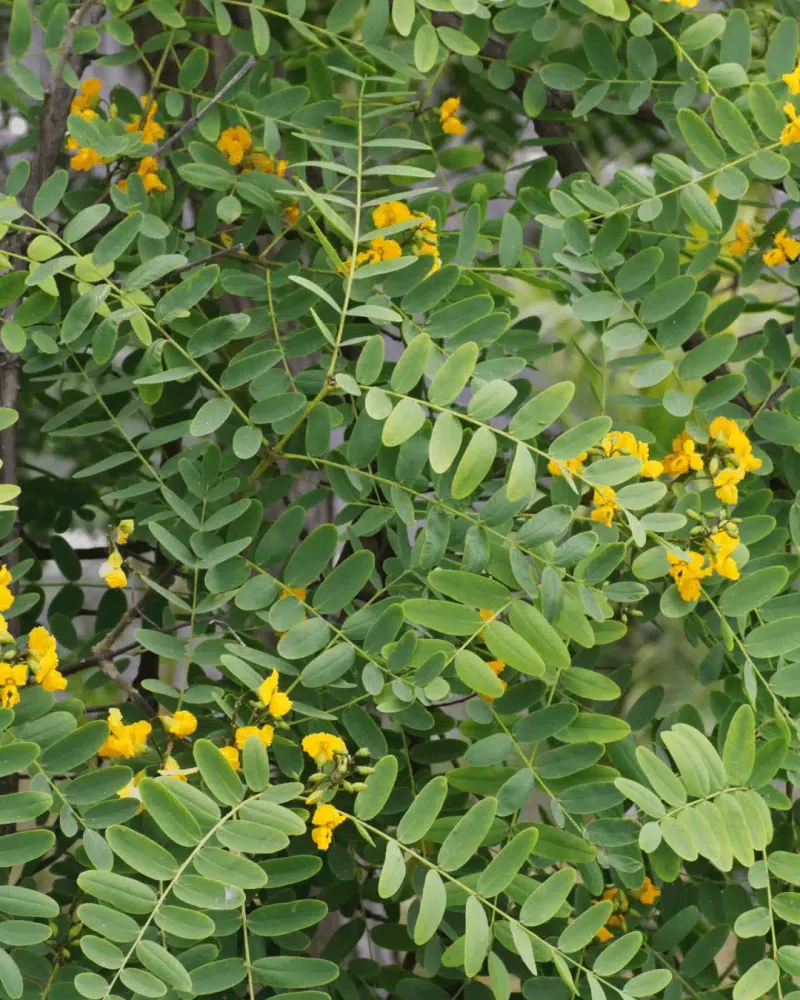
If patience is not your strong suit, the Tipu Tree may be your match. It is one of the fastest growers on this list, sometimes gaining three to six feet in a year.
Hailing from South America, the Tipu forms a broad, flat-topped canopy that reads like a giant green umbrella. In late spring, clusters of apricot-yellow flowers appear, adding color and drawing bees.
Many Valley homeowners pick it specifically to shade a roof or driveway in record time.
Speed comes with a few trade-offs, and honesty helps here. It drops winged seed pods and flowers, so plan on some cleanup, and avoid planting it right over a pool.
The wood can be brittle, so thoughtful pruning matters to keep limbs strong during monsoon storms.
Hire a certified arborist or learn proper thinning cuts, and avoid topping the tree. Water deeply and not too often, which encourages sturdy roots instead of shallow ones.
It tolerates heat, drought, and poor soils well once established. Give it plenty of space, about 20 feet from the home, and it may reward you with more shade in two summers than slower trees provide in five.
10. Sissoo
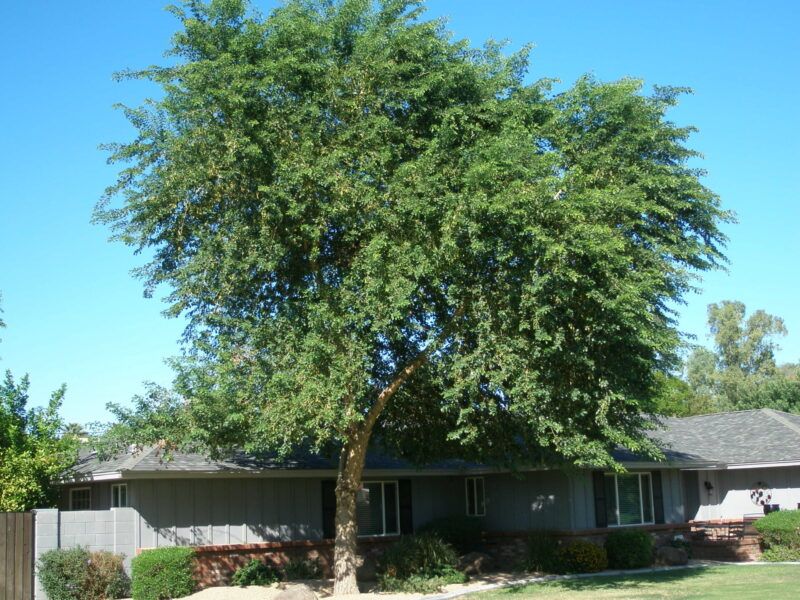
Glossy, round leaves that shimmer in the breeze give the Sissoo a lush, almost tropical feel. It is surprising a tree this green can thrive in 115-degree heat, but it truly does.
Also known as Indian Rosewood, it grows roughly three to five feet a year and creates a dense canopy with cool, deep shade. As a legume, it pulls nitrogen from the air and adds it to the soil, which can benefit nearby plants.
Birds perch and shelter in the thick foliage, and its small flowers attract pollinators.
Now for the big caution. Sissoo roots are strong and wide-reaching, and they can lift sidewalks, crack pool decks, and bother foundations.
That is why placement is everything with this tree.
Plant it at least 25 to 30 feet from your home, walls, and pipes, perhaps in a large backyard corner where its shade can still stretch toward the roof. Deep, occasional watering pushes roots downward rather than sideways.
Leaves may thin briefly in a cold snap, so young trees might appreciate frost cloth on the chilliest winter nights. Placed wisely, it can become the coolest spot in the yard.