The California Groundcovers That Stop Weeds Along Driveways Without Any Spraying
Bare strips beside a driveway rarely stay bare for long. Once weeds find open soil, they can keep returning through cracks, gravel edges, and neglected corners where spraying becomes an endless chore.
Groundcovers offer a different approach by occupying that space before unwanted plants can.
The best choices spread thickly enough to shade the soil and leave fewer openings for new seedlings to take hold.
California driveways add extra stress because reflected heat can punish plants that would thrive elsewhere in the yard.
That means success depends on choosing varieties that tolerate tough conditions without creeping into pavement or becoming difficult to control themselves.
A well-planted edge can reduce weeding while making the driveway look more finished, all without relying on repeated herbicide applications.
1. Elfin Thyme Staying Tiny And Seriously Dense
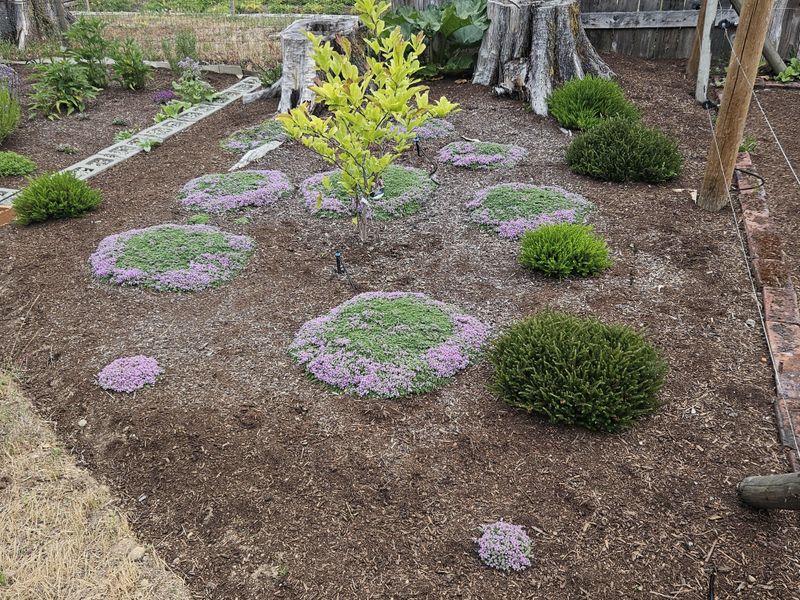
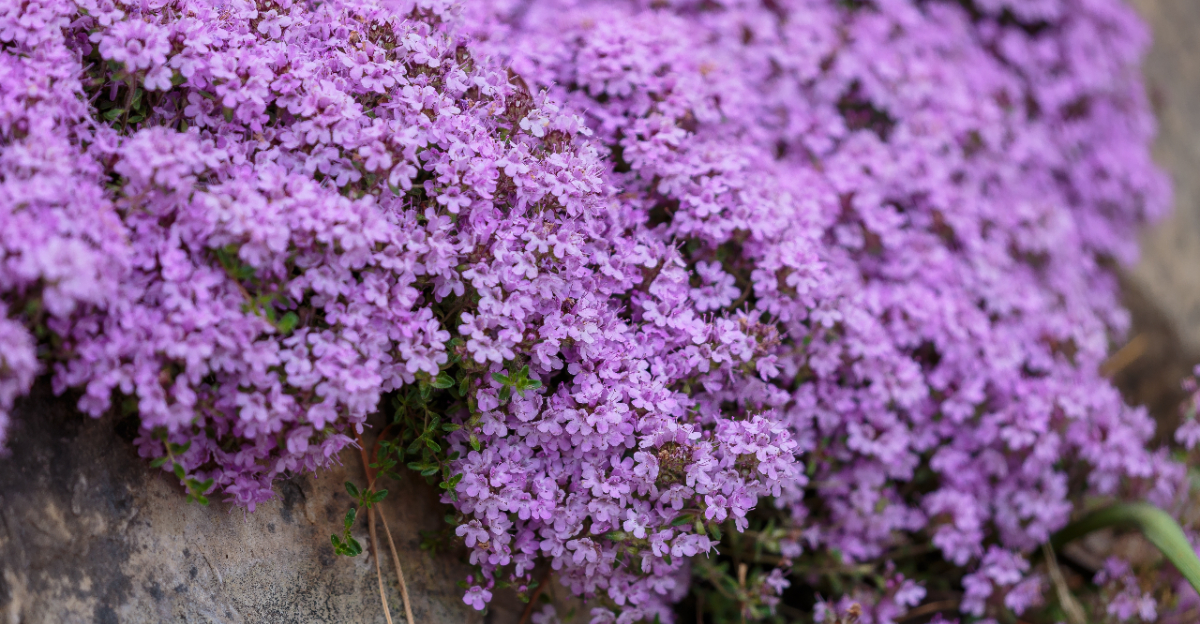
Few groundcovers pack as much weed-fighting power into such a small package as Elfin Thyme. This miniature variety of thyme grows only about an inch or two tall, but it spreads outward in a thick, tight mat that gives weeds almost zero room to breathe.
It is one of the most reliable low-growers you can plant along a driveway edge.
Elfin Thyme loves full sun and handles dry, rocky, or sandy soil with ease. Once it gets established, it barely needs any water at all.
That makes it a great fit for those hot, exposed strips of ground right next to pavement, where most plants would struggle or burn out quickly.
The tiny leaves stay green nearly year-round, and in late spring, the plant bursts into small pink or lavender flowers that attract bees and look surprisingly charming.
The foliage also releases a mild herby scent when you brush against it, which is a nice bonus near a walkway.
Planting is simple. Space small starts about six to eight inches apart and water them in well.
Within one growing season, they will knit together into a solid carpet. After that, maintenance is almost nothing.
You might trim the edges once or twice a year, but that is really about it. For a no-spray, low-effort weed barrier, Elfin Thyme is hard to beat.
2. Woolly Thyme Softening Hot Driveway Borders
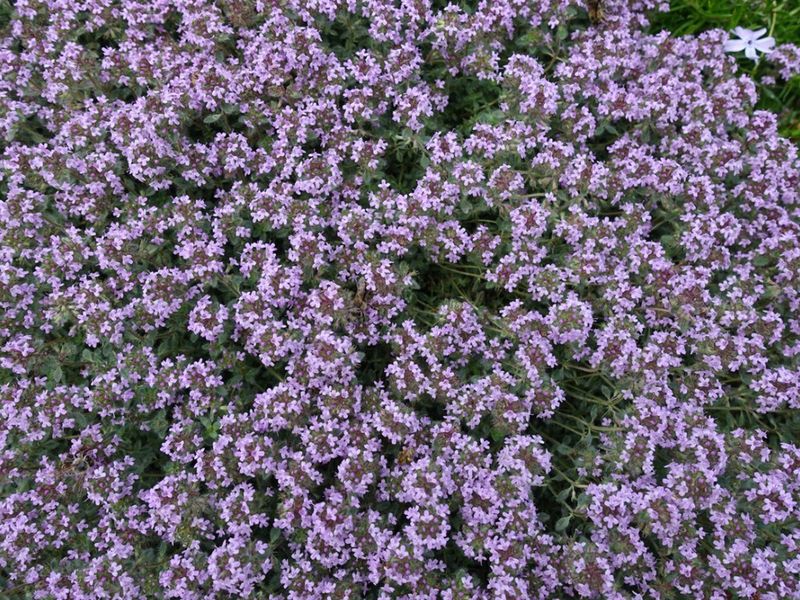
Running your hand across Woolly Thyme feels a little like touching velvet. The leaves are covered in fine silver-green fuzz that gives the plant a soft, almost cushiony look.
That texture is not just for show. It actually helps the plant survive intense heat by reflecting sunlight and holding moisture close to the leaf surface.
Along driveway borders, where heat bounces off pavement and soil dries out fast, Woolly Thyme performs better than almost any other groundcover. It spreads steadily and forms a mat that is dense enough to block most weed seeds from reaching the soil below.
It grows only about two to three inches tall, so it never looks messy or overgrown.
This plant thrives in poor, well-drained soil and full sun. It actually prefers tough conditions over rich, moist garden beds.
Overwatering is one of the few things that can set it back, so planting it along a hot, dry California driveway strip is pretty much ideal.
Your California Garden Changes Every Week. Your Plan Should Too.
Gardening in California changes quickly throughout the season. Every Friday you’ll receive a simple weekly plan showing exactly what to plant, prune, fertilize, harvest, and protect so you never miss the right timing.
In late spring and early summer, small pink flowers appear above the fuzzy foliage, drawing in pollinators and adding a pop of soft color. The plant stays attractive even when it is not blooming.
Space transplants about eight to ten inches apart for the best coverage. Once established, Woolly Thyme needs almost no attention, making it a smart and beautiful long-term solution for weed control.
3. Stonecrop Making Dry Soil Harder For Weeds To Claim
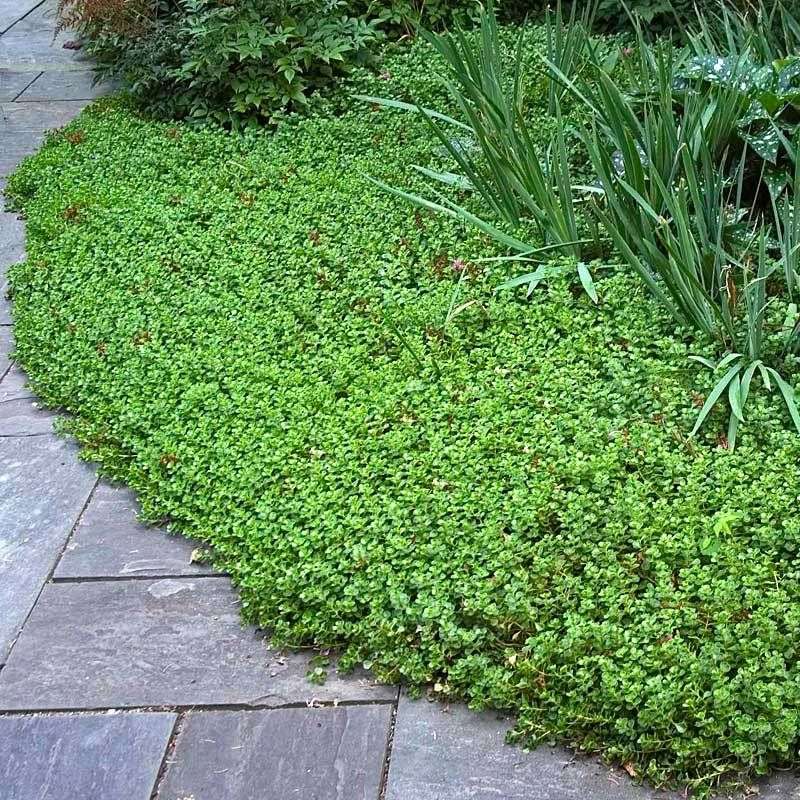
Stonecrop is the kind of plant that thrives where others give up. It belongs to the sedum family, and it stores water right inside its thick, fleshy leaves.
That means it can handle weeks without rain and still look great. For dry, gravelly soil along a driveway, it is one of the best choices you can make.
What makes Stonecrop so effective at blocking weeds is how it colonizes the ground. It spreads by sending out low stems that root wherever they touch soil.
Over time, it fills in bare patches and creates a layer so dense that weed seeds cannot find a foothold. The plant essentially claims the ground before weeds get the chance.
There are many varieties to choose from, and most stay under six inches tall. Some have green leaves, others turn red or purple in cooler months, which adds seasonal color to your driveway edge.
The low, spreading types like Sedum acre or Sedum spurium work especially well as a weed-suppressing mat.
Stonecrop grows best in full sun and poor, fast-draining soil. It does not need fertilizer, and it rarely needs watering once established.
Plant it in spring or fall, spacing starts about ten inches apart. Within a single season, you will see it start to spread and fill in.
It is tough, adaptable, and surprisingly good-looking for a plant that asks for almost nothing in return.
4. Blue Chalk Sticks Creating A Thick Succulent Carpet
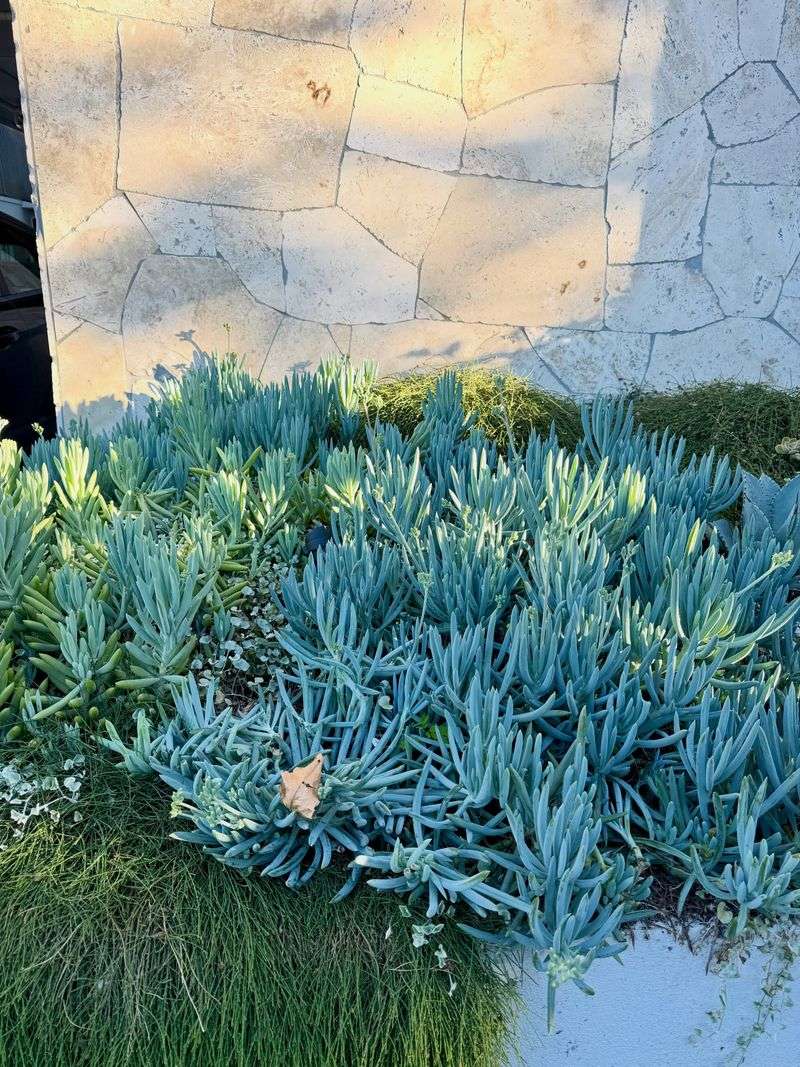
There is something eye-catching about Blue Chalk Sticks that makes people stop and stare. The plant gets its name from its powdery blue-gray leaves, which look almost painted on.
They grow in a rosette shape and spread outward to form a dense, low carpet that is both striking and incredibly practical along driveway edges.
As a succulent, Blue Chalk Sticks stores water in its leaves and stems, making it naturally drought-tolerant. It thrives in full sun and sandy or rocky soil.
Those are exactly the conditions found along most driveways, where pavement reflects heat and soil tends to dry out fast. The plant handles all of that without complaint.
The thick growth habit is what makes it such a good weed blocker. The leaves overlap and spread close to the ground, leaving very little open soil for weed seeds to land on.
Over time, a well-established patch of Blue Chalk Sticks becomes nearly impenetrable for weeds trying to push through from below or above.
Plant starts about twelve inches apart in spring for the best results. You do not need to amend the soil or add fertilizer.
In fact, too much water or rich soil can make the plant leggy and less compact. Keep watering minimal once plants are settled in.
Occasional trimming of old or straggly stems helps keep the carpet looking neat and tidy throughout the year.
5. Lippia Filling Bare Soil Before Weeds Move In
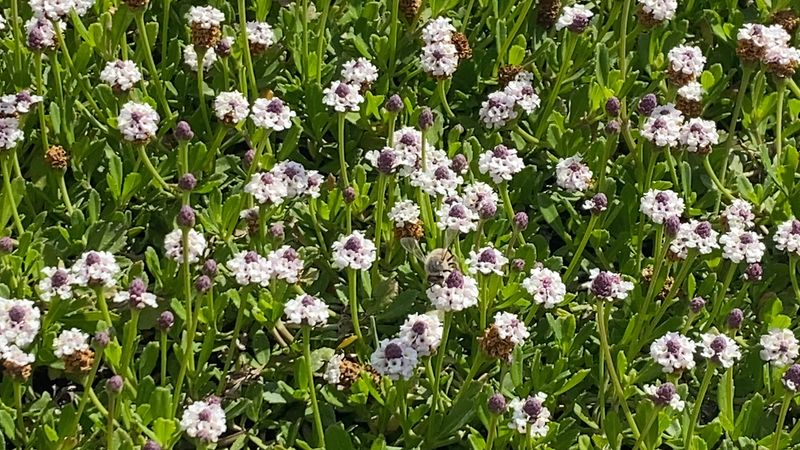
Speed is one of Lippia’s biggest strengths. Also known as Phyla nodiflora or frog fruit, this tough little groundcover spreads fast across bare soil, which is exactly what you want when you are trying to beat weeds to the punch.
It can cover a wide strip of ground in a single growing season, leaving almost no room for unwanted plants.
Lippia grows flat against the ground, rarely reaching more than two inches tall. That low profile means it never looks scraggly or wild, even when it is spreading quickly.
It works well along driveway edges, in parking strips, and in any sunny, dry area where weeds tend to sneak in and take over.
One of the most practical things about Lippia is its ability to handle foot traffic. It bounces back quickly after being stepped on, which makes it useful in areas where people occasionally walk across the edge of the driveway.
The tiny white flowers that appear throughout the warm months are also a favorite with bees and butterflies.
Lippia prefers full sun and tolerates poor, dry soil. It needs regular water to get established, but once it has settled in, it becomes quite drought-tolerant.
Plant starts or plugs about eight to twelve inches apart in spring. Within a few months, you will have a dense, living mat that actively keeps weeds from gaining any ground along your driveway.
6. Roman Chamomile Softening Driveway Edges With Fragrance
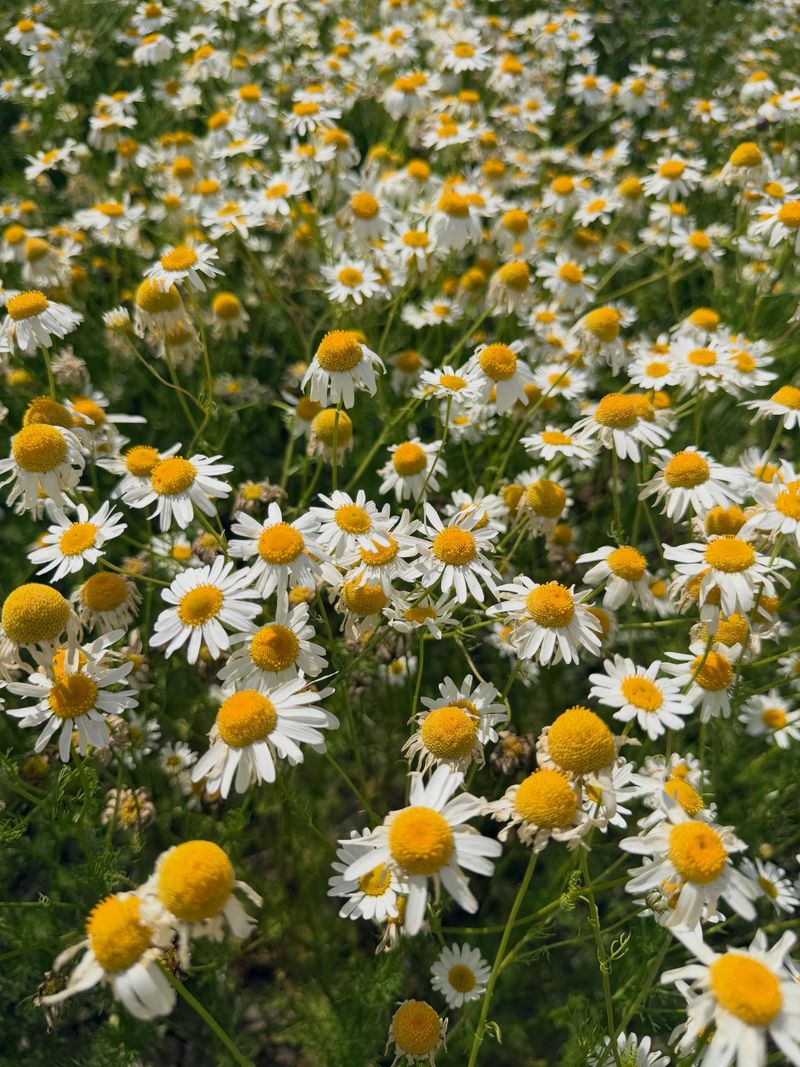
Walking past Roman Chamomile after a light rain is one of those small garden pleasures that is hard to describe. The feathery leaves release a sweet, apple-like scent that drifts through the air and makes the whole driveway area feel fresh and welcoming.
But this plant does more than smell good. It is a genuinely effective weed suppressor too.
Roman Chamomile grows in a low, spreading mound that stays under six inches tall. The foliage is fine-textured and bright green, which gives driveway borders a soft, lush appearance.
It fills in steadily and forms a mat dense enough to shade out many common weeds. The plant is not the fastest spreader, but it is consistent and reliable once it gets going.
It prefers full sun to light shade and grows best in well-drained soil. It handles dry conditions reasonably well once established, though it appreciates occasional watering during hot summer stretches.
In late spring and early summer, small white daisy-like flowers appear above the foliage, adding a cheerful touch to the driveway edge.
Plant starts about eight to ten inches apart in spring or early fall. Trim the plant lightly after flowering to keep it compact and encourage fresh growth.
Roman Chamomile does best when it is not overwatered or planted in heavy clay soil. Give it good drainage and a sunny spot, and it will reward you with fragrant, weed-blocking coverage that looks as good as it smells.
7. Creeping Phlox Packing Spring Color Into Tight Spaces
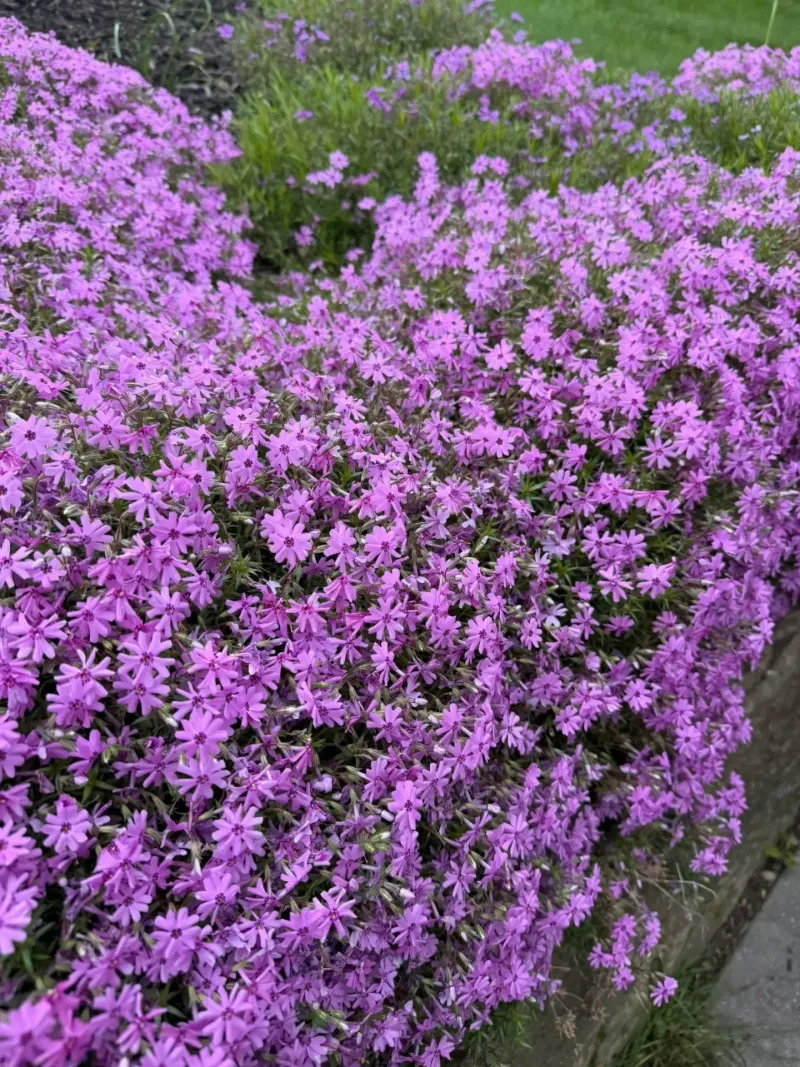
Few groundcovers put on a spring show quite like Creeping Phlox. When it blooms, the plant practically disappears under a blanket of flowers in shades of pink, purple, white, or lavender.
It is one of those plants that makes neighbors stop and ask what it is, because the display is so bold and cheerful it looks almost too good to be real.
Beyond the beauty, Creeping Phlox is a serious weed fighter. The stems spread outward and root as they go, building a thick, interlocking mat that covers soil tightly.
Even when it is not in bloom, the needle-like evergreen foliage stays dense and low, blocking light from reaching weed seeds below the surface.
This plant loves full sun and well-drained soil. It handles dry spells well once established and does not need much fertilizer to stay healthy and full.
Along driveway edges, where soil is often thin and drainage is fast, Creeping Phlox settles in nicely and spreads without becoming invasive or hard to manage.
Plant transplants about twelve to fifteen inches apart in fall or early spring. Water regularly during the first season to help roots establish.
After that, the plant takes care of itself for the most part. A light trim after the spring bloom keeps it tidy and encourages denser growth.
For a groundcover that combines serious weed control with stunning seasonal color, Creeping Phlox delivers on every level.
8. Ajuga Filling Cooler Driveway Corners Fast
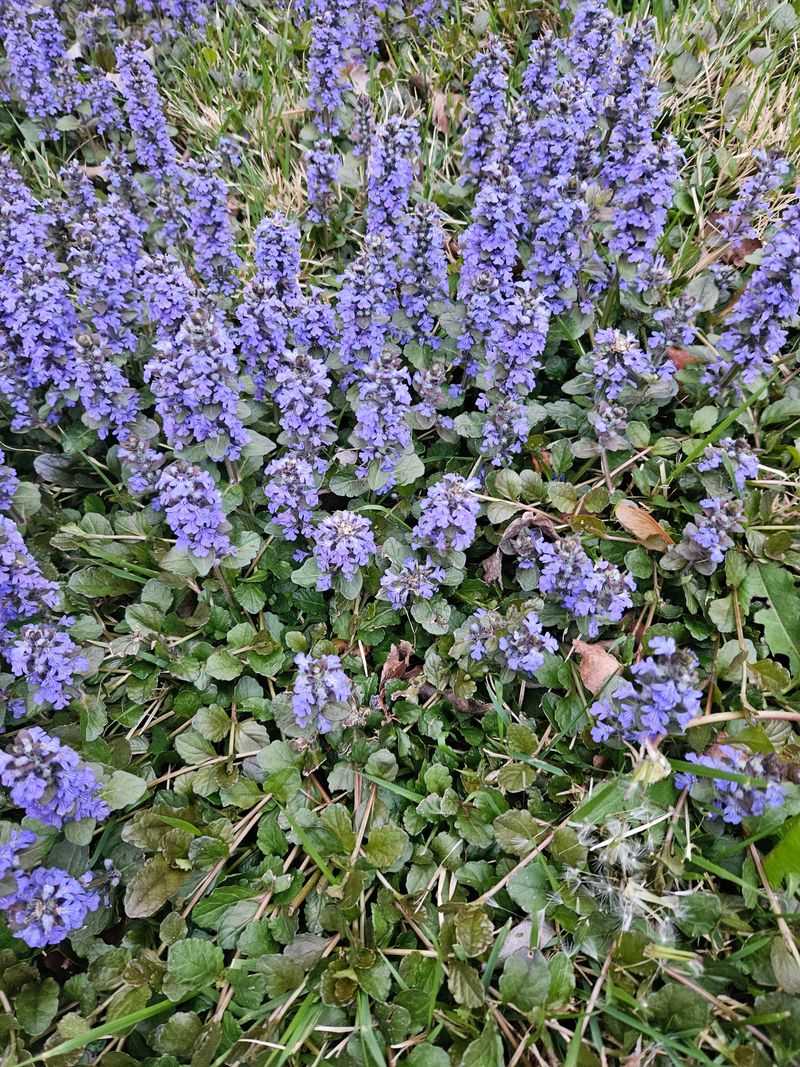
Most groundcovers struggle in shade, but Ajuga actually thrives in it. Also called Bugleweed, this low-growing plant is one of the fastest spreaders you can find for cooler, shadier spots along a driveway.
It sends out runners in every direction and fills in bare ground with surprising speed, which makes it very effective at crowding out weeds before they get a chance to establish.
The foliage is one of Ajuga’s standout features. Depending on the variety, leaves can be deep green, bronze, burgundy, or even multicolored with cream and pink edges.
That rich color makes the plant look intentional and polished, not like something that just wandered in on its own. It stays attractive year-round, even through mild winters.
During spring in California, short spikes of bright blue or purple flowers rise above the foliage and create a lovely contrast. Pollinators love the flowers, so planting Ajuga along your driveway is also a small boost to your local garden ecosystem.
After blooming, the plant goes right back to its main job of spreading and covering ground.
Plant Ajuga about six to nine inches apart in partial to full shade. It tolerates some sun but tends to look its best in shadier spots.
Water regularly during establishment, then ease off as the plant fills in. Ajuga prefers moist, well-drained soil and grows well under trees or along north-facing driveway borders where other groundcovers often fail.
9. Mazus Creating A Tight Mat In Moist Spots
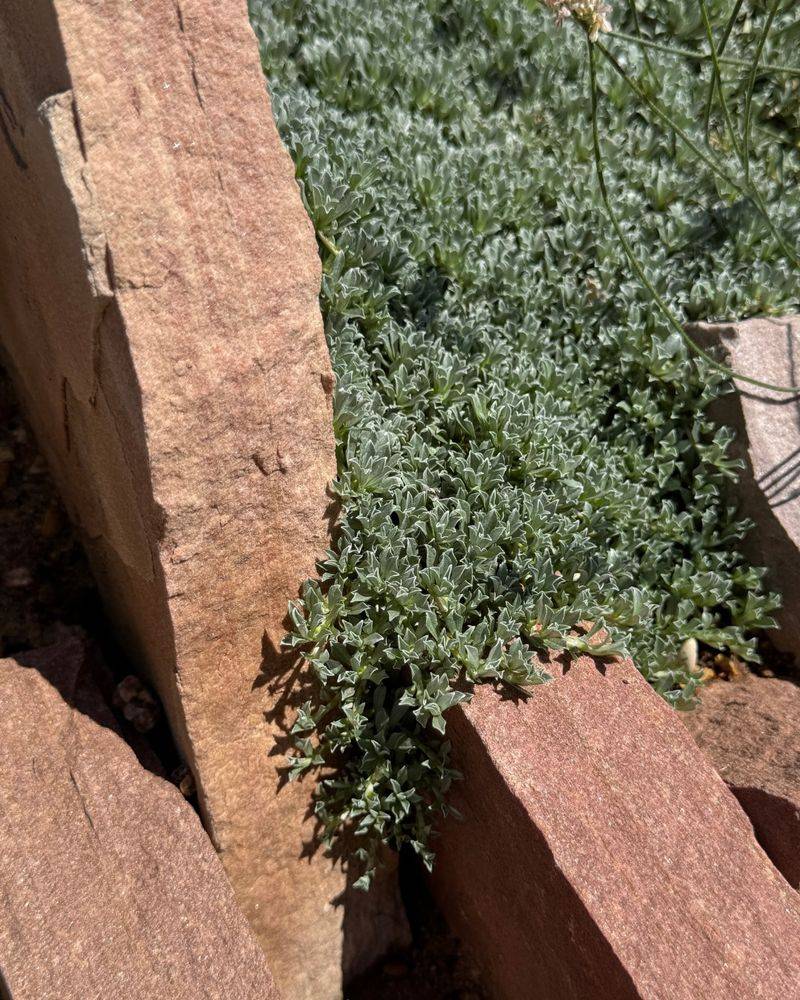
Moist, low-lying strips along a driveway can be tricky to plant. Many groundcovers rot or struggle when drainage is slow, but Mazus actually enjoys a little extra moisture.
This tiny creeping plant forms one of the tightest, most even mats of any groundcover on this list, making it an excellent choice for spots where water tends to collect after rain.
Mazus reptans grows only about an inch or two tall and spreads by creeping stems that root as they move along the soil surface. The result is a smooth, dense carpet that leaves almost no open ground for weeds.
It is the kind of plant that quietly takes over bare patches without ever looking messy or out of control.
In spring, the plant produces small purple or white flowers with yellow and white markings at the center.
They are tiny but surprisingly detailed up close, and they appear in such large numbers that the whole mat seems to light up for a few weeks.
After blooming, the green foliage takes back over and holds its color well through California summer.
Plant starts about six inches apart in a spot that gets partial sun to light shade. Mazus can handle full sun in cooler areas but may need more water if the soil dries out quickly.
It grows well between stepping stones, along shaded driveway borders, and in any low spot where moisture lingers. Once established, it spreads on its own and rarely needs attention.
10. Sea Thrift Staying Compact Along Hot Pavement
Hot pavement, poor soil, and salt-laden air are conditions that would stress most plants, but Sea Thrift was practically built for them.
Native to coastal cliffs and rocky shorelines, this compact little plant has adapted over thousands of years to handle tough, exposed conditions.
That natural resilience makes it a surprisingly good fit for the harsh environment right next to a driveway.
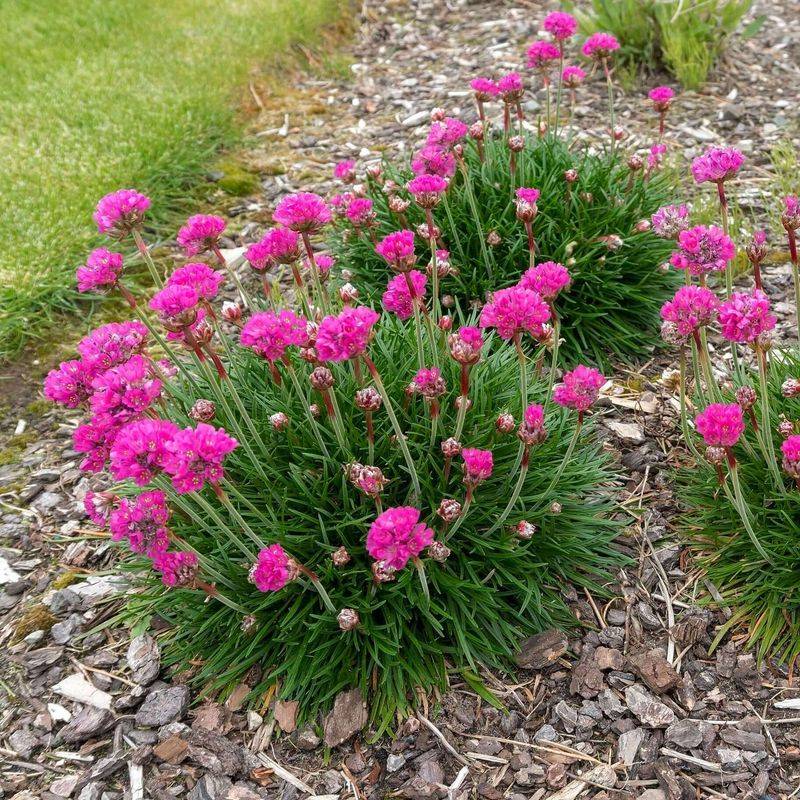
Sea Thrift, known botanically as Armeria maritima, forms tight, grass-like clumps that stay low and tidy. The foliage is narrow and dark green, and it holds its shape throughout the year without much trimming or attention.
The clumps spread slowly but steadily, and when planted close together, they form a dense border that keeps weeds from moving in along the pavement edge.
In spring and early summer, round, pompom-like flowers rise above the foliage on slender stems. The blooms are usually bright pink, though white varieties exist.
They are cheerful and eye-catching, and they bring pollinators to the area without any extra effort on your part.
Plant Sea Thrift about eight to ten inches apart in full sun and well-drained soil. It handles drought well once established and actually prefers lean soil over rich, heavily amended beds.
Avoid overwatering, especially in summer, as wet roots in warm weather can cause problems. Cut back the spent flower stems after blooming to keep the plant looking tidy and to encourage another flush of growth later in the season.