What It Really Means When An Armadillo Shows Up In Your North Carolina Garden
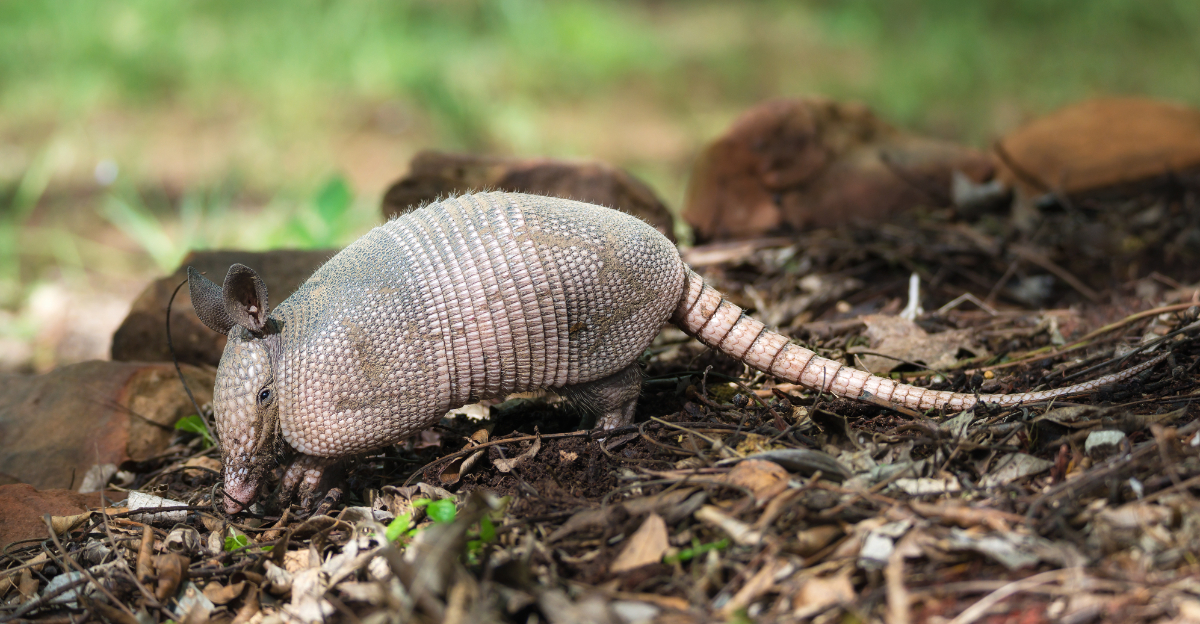
An armadillo appearing in a North Carolina garden is usually searching for grubs, insects, and earthworms hiding just beneath the soil surface.
These animals have a strong sense of smell, allowing them to detect food sources several inches underground without any visible surface signs.
Small, cone shaped holes scattered across a garden bed are a telltale sign of recent armadillo digging activity.
While their digging can disturb shallow rooted plants, armadillos actually help reduce populations of harmful grubs and insects over time.
These nocturnal animals are generally harmless to people and pets, preferring to avoid confrontation whenever possible.
Treating soil for grubs, when confirmed as the food source, often reduces armadillo interest in a particular area.
Covering vulnerable beds with a light barrier can also help protect specific plants without harming the animal.
Understanding their behavior helps put minds at ease rather than viewing every visit as unwelcome intrusion.
1. Armadillos Are Becoming More Common In North Carolina
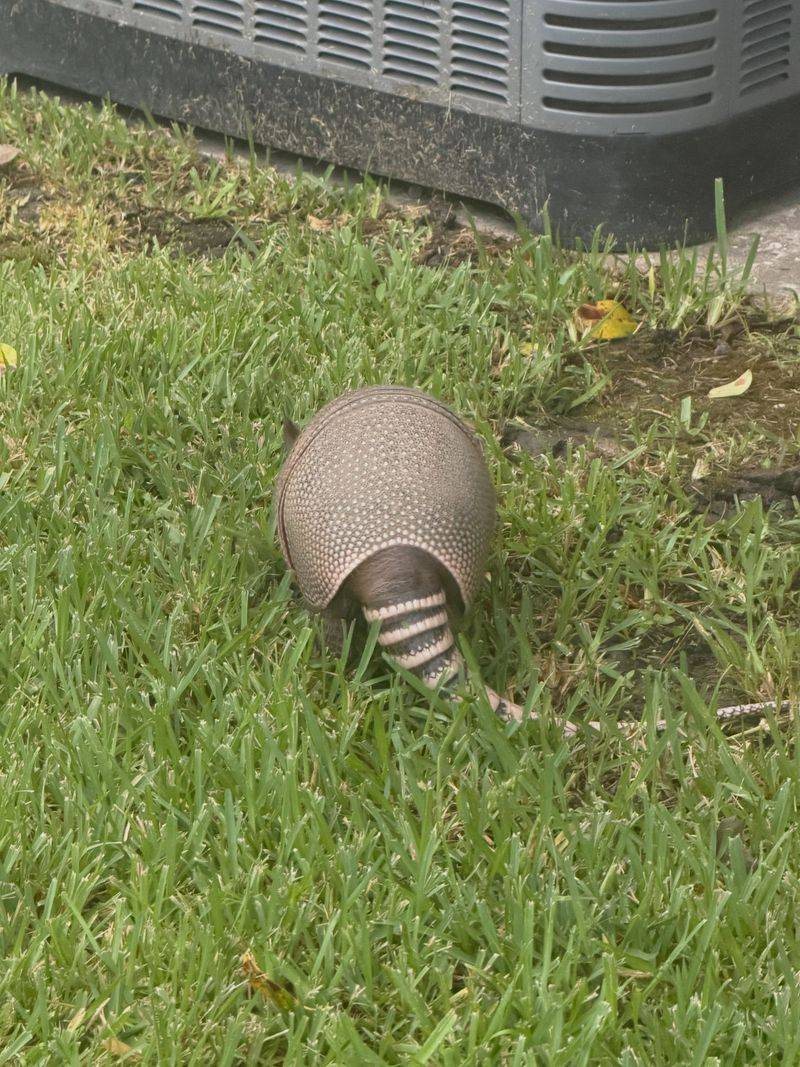
Not long ago, seeing an armadillo in North Carolina would have been genuinely shocking.
Today, wildlife biologists confirm that the nine-banded armadillo has been steadily expanding its range northward from the Deep South, and North Carolina is now firmly within that expanding territory.
Sightings have been documented across many counties throughout the state, from the coastal plains to the Piedmont region.
Armadillos originally lived in Central and South America, but over the past century they pushed into the southern United States and have been moving north ever since.
Warmer winters connected to shifting climate patterns have made states like North Carolina far more hospitable to these animals than they once were.
Wildlife researchers at the North Carolina Wildlife Resources Commission have been tracking this expansion carefully. Finding one in your yard is not a random fluke.
Armadillos follow food sources and suitable habitat, and the gardens, lawns, and wooded edges of North Carolina properties offer both.
The animal is not lost or sick just because it wandered into a suburban garden. Healthy armadillos are naturally curious foragers that cover large areas each night in search of a meal.
Knowing that this species is actively establishing itself in your state helps put the sighting in perspective. Your garden is not cursed or infested.
You are simply living in a region where armadillos are now a regular part of the local wildlife mix, and learning a little about them goes a long way toward handling the situation calmly and wisely.
2. Your Garden May Simply Be A Good Feeding Spot
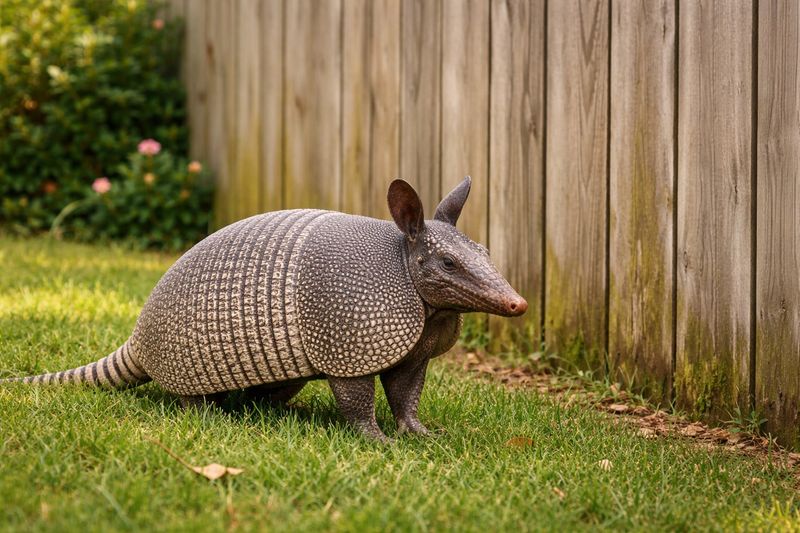
Armadillos are not interested in your tomatoes or your prize-winning roses. What draws them straight to a garden is something far less glamorous: bugs.
Specifically, armadillos spend most of their active hours rooting through soil in search of beetles, grubs, earthworms, ants, and other small invertebrates that live just beneath the surface.
A well-maintained garden bed is basically a buffet for an armadillo with a good nose. Their sense of smell is remarkably sharp.
Armadillos can detect insects buried several inches underground, which explains why they dig with such determination even in spots that look perfectly clean to human eyes.
Your North Carolina Garden Changes Every Week. Your Plan Should Too.
Gardening in North Carolina changes quickly throughout the season. Every Friday you’ll receive a simple weekly plan showing exactly what to plant, prune, fertilize, harvest, and protect so you never miss the right timing.
Mulched garden beds, moist soil near irrigation zones, and compost-rich planting areas are especially attractive because they tend to host higher concentrations of the exact creatures armadillos crave.
Here is the reassuring part: an armadillo visiting your garden does not mean you have a severe pest problem. Grubs and earthworms exist in almost every healthy lawn and garden.
A foraging armadillo is simply responding to a food source that is naturally present, not one that has grown out of control.
In fact, some gardeners find a small silver lining in knowing the armadillo is consuming beetle grubs that would otherwise damage grass roots. Still, the digging that comes with the feeding can cause real frustration.
Understanding that food is the primary motivation helps you focus your response on making your garden less appealing as a feeding ground rather than assuming something is seriously wrong with your soil or plants.
3. Small Holes Are A Common Sign Of Armadillo Activity
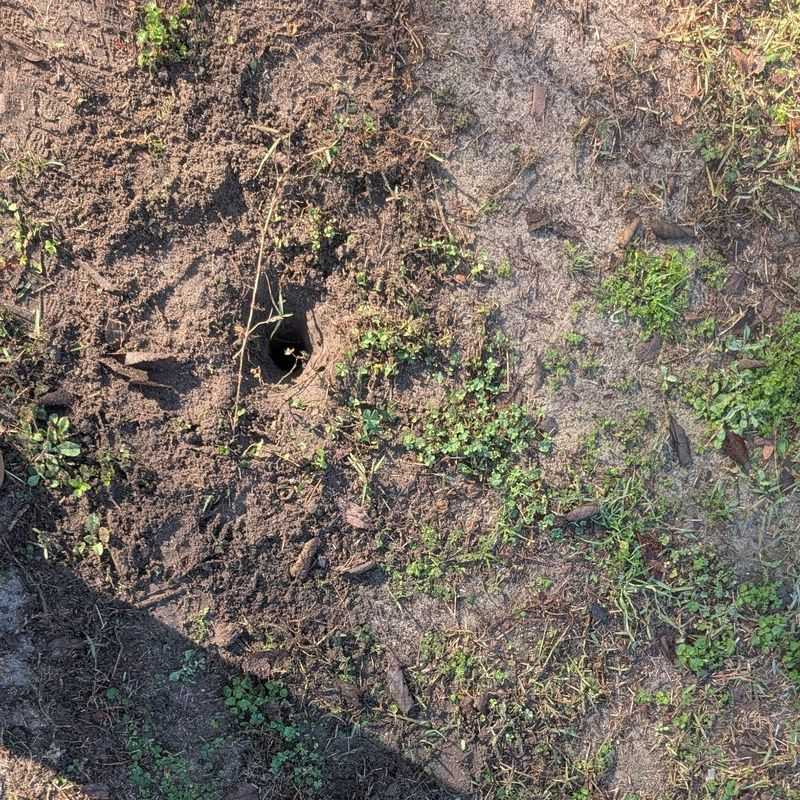
One of the clearest ways to confirm an armadillo visited your garden is to look for a very specific type of hole.
Armadillo digging marks are usually shallow, cone-shaped, and about three to five inches wide.
Unlike mole tunnels that run underground, armadillo holes go straight down into the surface soil and do not leave raised ridges or tunnels. You might find several scattered across a lawn or clustered near a garden bed in a single night.
Flower beds with loose, rich soil tend to show the most visible damage simply because the ground is easier for the animal to break into.
Mulched areas are also common targets because the mulch is soft and holds moisture, which encourages the insects armadillos are hunting.
Spotting a cluster of these small pits near your plants is a reliable sign that an armadillo was actively foraging in that spot recently.
Interestingly, armadillos also dig burrows for shelter, and these are much larger, sometimes up to eight inches wide and several feet deep.
If you find a large tunnel entrance near a fence line, under a deck, or along a slope, that is a different kind of activity worth noting.
Most garden holes, though, are feeding holes and are much smaller in scale. Checking your garden in the early morning after a warm night is often the best time to spot fresh digging.
Armadillos are most active at night and in the early morning hours, so evidence of their visit is usually freshest right at sunrise when dew still clings to the disturbed soil.
4. Damaged Plants Are Often Accidental
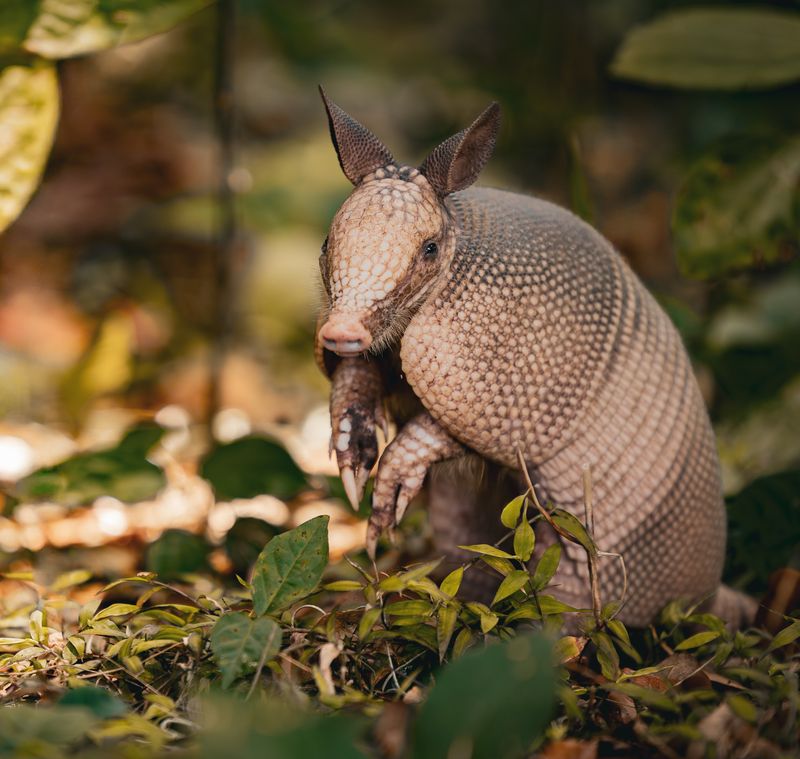
Gardeners sometimes panic when they find an uprooted plant or a disturbed flower bed, assuming the armadillo deliberately targeted their prized plants.
The truth is far less dramatic. Armadillos are after the soil-dwelling insects beneath your plants, not the plants themselves.
Any damage to roots, bulbs, or ornamental specimens happens as a side effect of their digging, not as an intentional act of garden destruction.
Picture an armadillo pressing its snout against the ground, smelling a fat grub just three inches below the surface.
The fact that a petunia or a small shrub is sitting right above that grub is completely irrelevant to the animal.
It digs where the food is, and if a plant root gets disturbed in the process, that is simply collateral damage from a focused forager doing what instinct tells it to do.
Shallow-rooted plants, recently transplanted seedlings, and loosely planted bulbs are most vulnerable because they have less grip in the soil.
Established plants with deep root systems usually survive an armadillo encounter without serious harm, though the soil around them may need to be pressed back down and watered.
Acting quickly after you notice digging can save most plants that were only partially disturbed.
Gently press the soil back around any affected roots as soon as possible and give the area a thorough watering. Most plants bounce back well once their roots are resettled.
Knowing the damage was accidental also means you can focus your energy on prevention rather than frustration, which makes the whole situation a lot easier to manage going forward.
5. One Sighting Does Not Mean You Have Several Armadillos
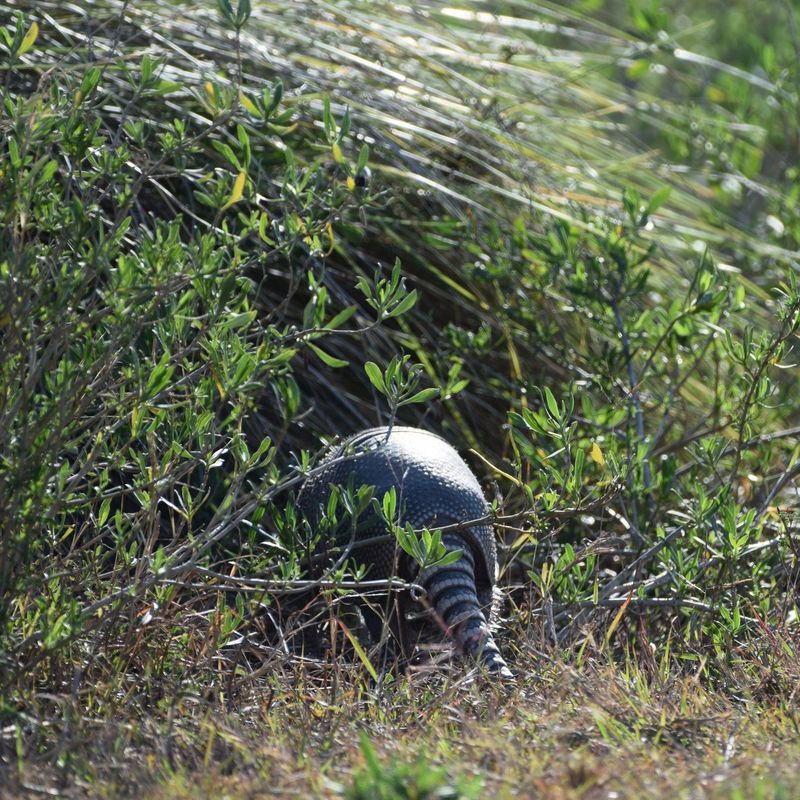
Catching a glimpse of one armadillo shuffling through your yard at dusk can feel alarming, especially if you immediately start imagining a whole family of them setting up permanent residence in your garden beds.
Most of the time, that is not what is happening. Armadillos are largely solitary animals, and a single individual covering a wide territory at night is far more common than a group taking over one location.
A foraging armadillo can travel a significant distance in a single night, moving through multiple properties as it searches for food. Your garden might be just one stop on a much longer nightly route.
Unless you are seeing fresh digging and signs of activity on a regular basis, there is a reasonable chance the animal simply passed through and may not return for days or even longer.
Before assuming you have a resident armadillo, watch for repeated patterns. Check the garden each morning for fresh holes.
Set up a simple trail camera if you want concrete evidence of how often the animal is visiting and whether it is always the same one.
Consistent nightly activity in the same spots is a stronger indicator of a regular visitor than a single sighting or one set of holes.
Armadillos do establish home ranges and can become regular visitors to a reliable food source, so staying observant is smart.
However, jumping straight to heavy-duty removal methods after one sighting is usually unnecessary and can be a waste of time and money.
Give it a few days, keep watching, and let the evidence guide your next move rather than letting one surprise sighting drive your response.
6. Barriers Can Protect Vulnerable Garden Beds
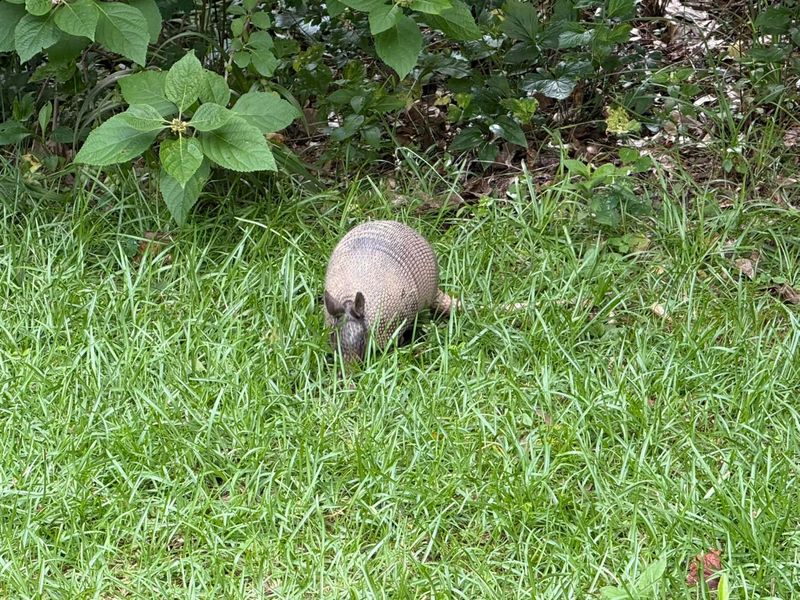
If an armadillo has found your garden once, there is always a chance it comes back, especially if the food source that drew it in the first place is still available.
One of the most reliable and humane ways to protect specific planting areas is to use physical barriers.
A well-placed fence or wire mesh can make a garden bed much less accessible and encourage the animal to forage elsewhere instead. Hardware cloth with a small mesh size works well around raised beds and flower borders.
The fencing does not need to be tall since armadillos are not great climbers, but it should extend a few inches below the soil surface to prevent the animal from simply rooting under the edge.
Burying the bottom of the fence four to six inches underground significantly improves its effectiveness against persistent diggers.
For smaller, high-value areas like herb gardens or ornamental beds with recently planted bulbs, a simple wire cage or cloche placed directly over the soil can offer strong protection without major installation effort.
Many garden centers carry ready-made options that are easy to set up and remove when you need to tend the plants.
Armadillos tend to follow the path of least resistance when foraging. If one section of the yard becomes difficult to access, the animal will usually move on to easier ground.
Barriers are not a guaranteed permanent solution since determined animals can sometimes find gaps, but they are one of the most practical and affordable first steps any North Carolina gardener can take to protect the spaces that matter most.
7. Avoid Handling An Armadillo
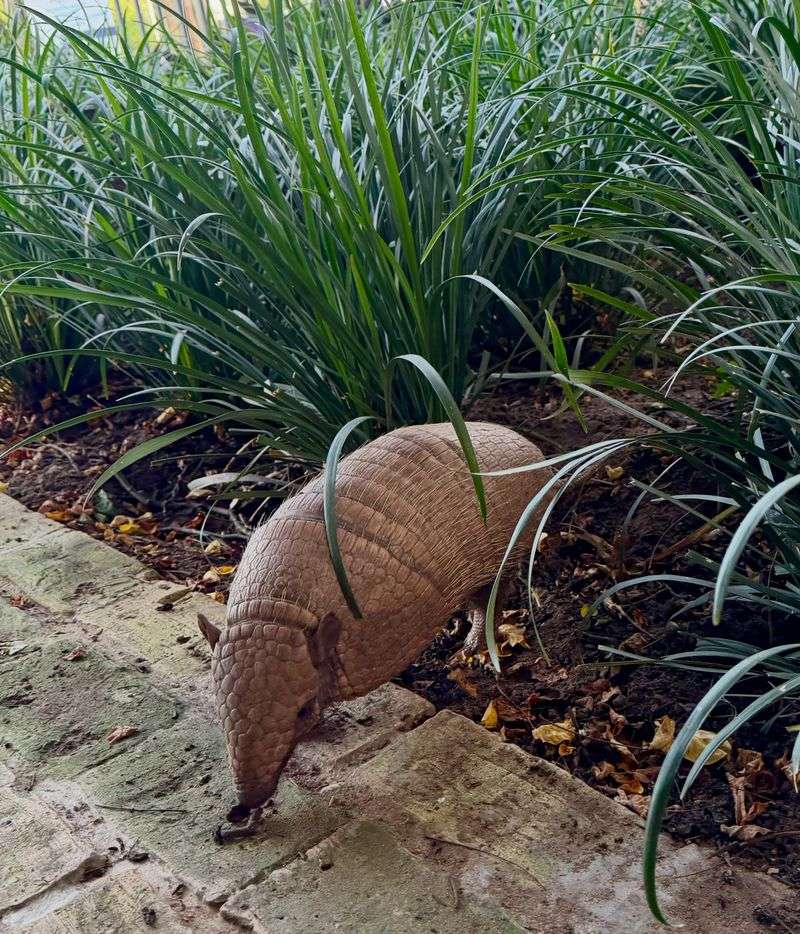
Armadillos might look almost cartoonishly harmless with their armored shells and slow, bumbling walk, but wild animals always carry unpredictable risks, and armadillos are no exception.
One fact that wildlife health officials consistently highlight is that nine-banded armadillos are the only known non-human animal species capable of naturally carrying Mycobacterium leprae, the bacterium responsible for leprosy in humans.
Transmission through casual contact is considered rare, but the risk is real enough that direct handling is strongly discouraged.
If you spot an armadillo in your garden, the safest response is to observe it from a distance and let it move on at its own pace.
Trying to pick it up, chase it, or corner it is unnecessary and can stress the animal, which may cause it to scratch or squirm in ways that increase any contact risk.
Armadillos are surprisingly quick when startled, and their claws are strong enough to break skin. Wearing gardening gloves when working in any area an armadillo has recently disturbed is a smart precaution.
The soil it has turned over could contain traces of the animal’s saliva or waste, so protecting your hands while replanting or filling in holes is a reasonable habit to build.
Wash hands thoroughly after any garden work in affected areas. Children and pets should also be kept away from any armadillo spotted on the property. Dogs in particular may try to chase or corner the animal, which is not good for either party.
Teaching kids to appreciate wildlife from a respectful distance is a valuable lesson that applies well beyond armadillos and keeps everyone safer in the long run.
8. Report Your North Carolina Armadillo Sighting
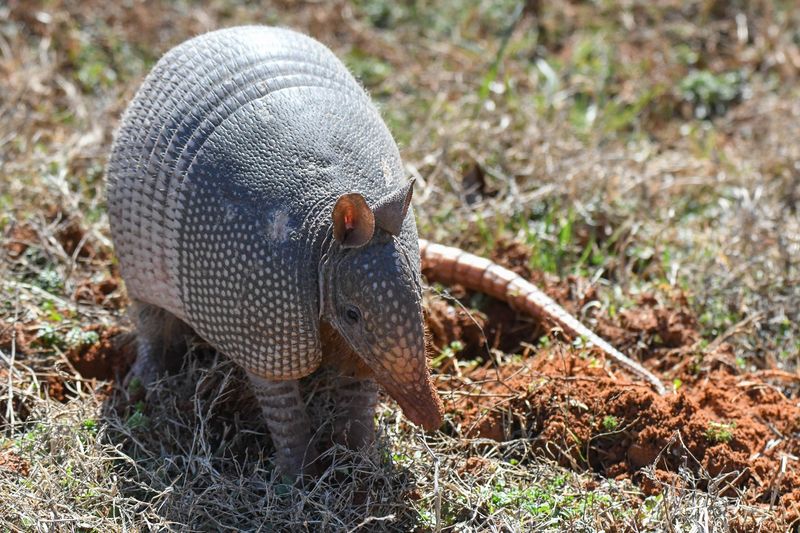
Seeing an armadillo in your North Carolina garden is not just a personal curiosity. It is actually useful scientific data.
Wildlife biologists in North Carolina are actively tracking how far north nine-banded armadillos are moving.
They rely on local citizens to report any sightings of the animals. Every confirmed report helps the scientists map out exactly where the armadillos now live across the state. If you spot one, try to snap a clear photo before the animal moves on.
A good photograph showing the armadillo in your yard with some identifiable background detail can serve as strong documentation. Note the date, the time of day if possible, and your general location, including your county.
All of that information is genuinely helpful to researchers who are monitoring range expansion in real time.
The North Carolina Wildlife Resources Commission has reporting tools and contact options available through their official website.
Submitting a sighting report takes only a few minutes and contributes directly to the wildlife data that informs conservation planning and public education across the state. Your backyard observation becomes part of a larger scientific story.
Citizen science contributions like armadillo sighting reports have helped wildlife agencies across the Southeast track how quickly this species moves into new territory.
North Carolina is at the current edge of that range, which makes every confirmed sighting especially meaningful.
Reporting your encounter costs nothing, takes very little time, and connects your personal garden experience to something genuinely bigger.
It is one of the most useful things a North Carolina gardener can do after an unexpected armadillo visit.