Your Central Florida Lawn Is Browning For A Reason The Heat Advisory Isn’t Telling You
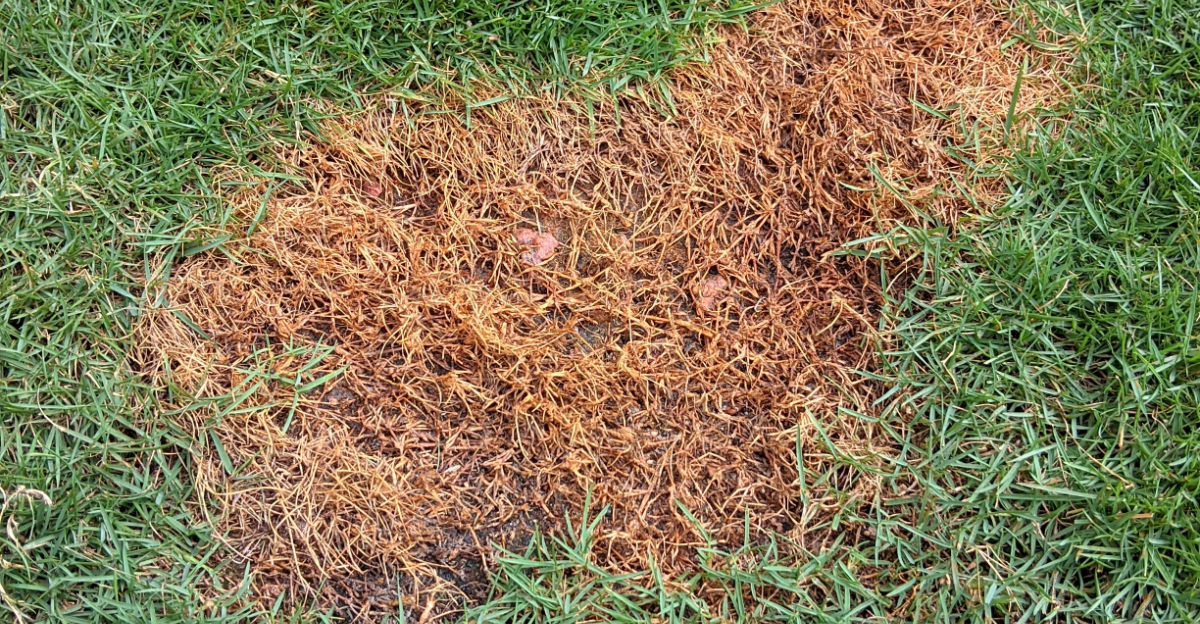
A heat advisory explains the temperature. It does not explain why one Central Florida lawn stays green through it while the one next door goes brown by Thursday.
The heat is the same on both properties. What is happening underneath the surface is not.
Central Florida lawn browning during a heat advisory is almost never just about heat. Soil compaction, thatch buildup, irrigation timing, root depth.
Each one changes how a lawn handles the same advisory in a completely different way. The homeowner who blames the heat advisory and waits for it to lift is skipping the part where the lawn was already compromised before the temperatures climbed.
The advisory revealed a problem. It did not create it.
What is actually behind Central Florida lawn browning during heat events is specific, diagnosable, and fixable. The heat advisory is just the moment it becomes impossible to ignore.
1. The Browning Starts Underground Weeks Before You Notice
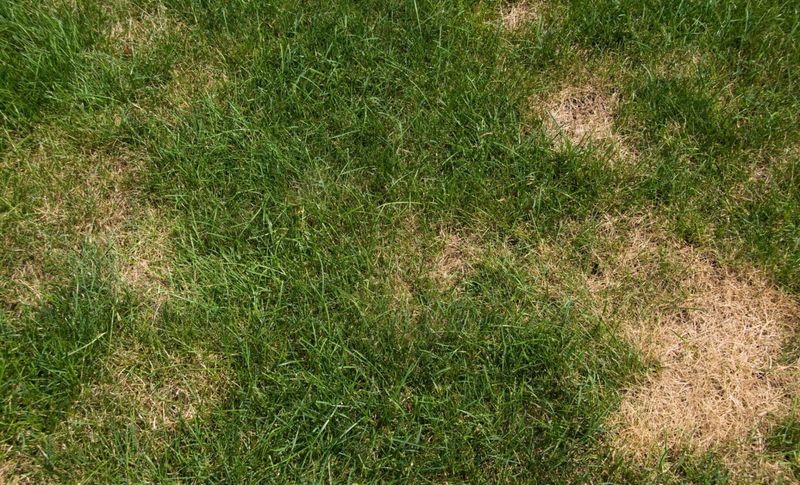
Walk barefoot across your lawn on a hot August morning and the grass might feel crunchy underfoot, yet the soil just below could be soaking wet. That disconnect is one of the earliest clues that something is wrong at the root level.
A disease called take-all root rot, caused by the fungus Gaeumannomyces graminisgraminis var. , attacks root tissue rather than leaf blades.
Because the damage happens underground first, the grass above can appear to wilt from thirst while the soil stays saturated. Roots that are struggling simply cannot pull water or nutrients upward the way healthy roots do.
The result looks exactly like drought stress, which makes the diagnosis easy to miss.
According to University of Florida IFAS research, root activity from this pathogen can occur well before any visible leaf symptoms develop.
There is no single universal timeline, but the delay between underground damage and surface browning can be significant.
By the time you notice yellow or thinning patches, the roots may already be severely compromised.
One practical step you can take right now is to push a screwdriver into the soil of a brown area and a green area nearby. If both feel equally moist, the problem likely is not a lack of water.
That simple test can stop you from adding irrigation that the roots do not need.
2. August Rain Gives Take-All Root Rot Its Biggest Opening
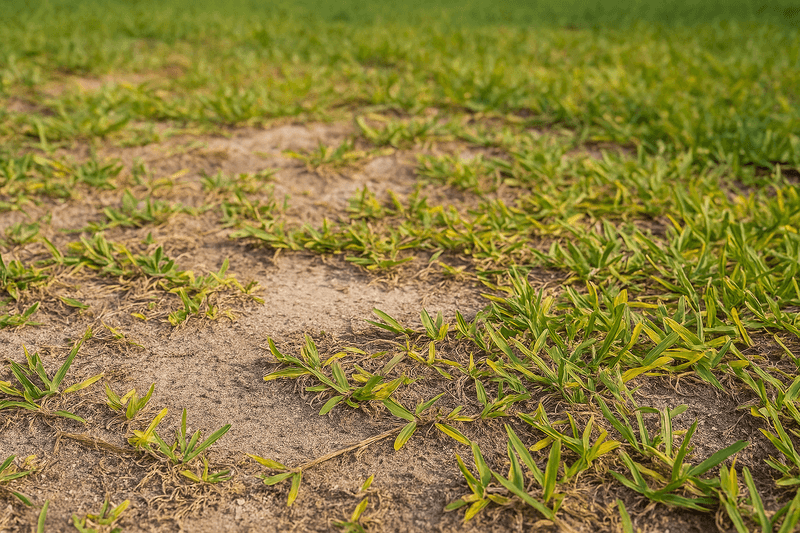
Summer in Central Florida is not just hot, it is relentlessly wet. Afternoon thunderstorms roll through almost daily in July and August, dropping heavy rain on turf that may already be saturated from the previous day’s storm.
That repeated cycle of soaking and partial drying creates exactly the kind of stressed, waterlogged root zone where take-all root rot tends to gain traction.
Poor drainage makes the situation worse. Low spots in the yard, compacted soil, and areas shaded by fences or structures tend to dry out more slowly.
Those patches often show browning first, and homeowners sometimes assume those spots simply need more water because they look worse than the rest of the lawn.
Your Florida Garden Changes Every Week. Your Plan Should Too.
Gardening in Florida changes quickly throughout the season. Every Friday you’ll receive a simple weekly plan showing exactly what to plant, prune, fertilize, harvest, and protect so you never miss the right timing.
Take-all root rot is commonly observed during summer and into early fall across warm-season turfgrass regions. Prolonged wet periods combined with turf that is already under stress from heat, shade, or other pressures create conditions that favor disease development.
Not every rainy August will produce an outbreak, but the risk climbs when soil stays wet for extended stretches.
A useful homeowner action is to walk your yard after a heavy rain and note where water pools or drains slowly. Improving those drainage patterns can reduce the moisture stress that makes turf vulnerable in the first place.
Options include aeration, grading, or targeted landscaping adjustments.
3. St. Augustinegrass Can Look Thirsty While Its Roots Stay Wet
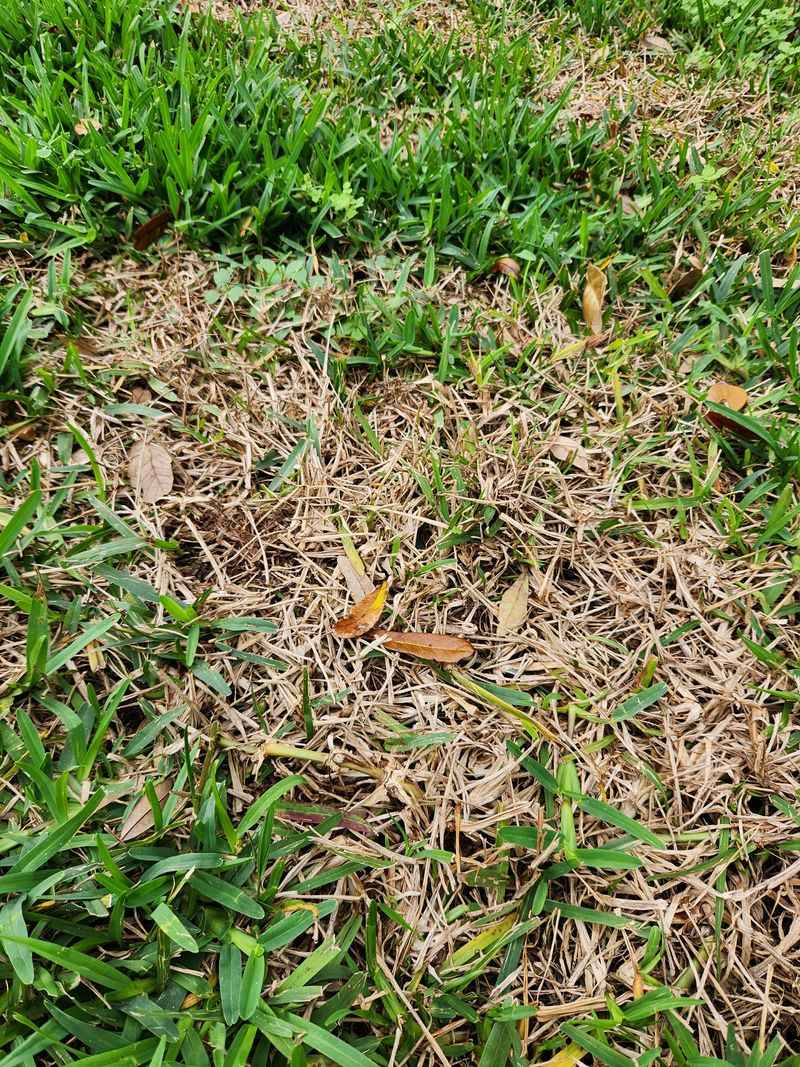
St. Augustinegrass is the most common lawn grass across Central Florida, and it has a particular talent for looking drought-stressed even when the soil beneath it is soaking.
Leaves fold inward, color shifts from green to yellow or light tan, and patches thin out in irregular shapes.
Those same symptoms also describe what happens when roots are too damaged to absorb moisture from wet soil.
That visual similarity is where many homeowners get tripped up. Seeing wilted, off-color grass often triggers the instinct to water more.
However, adding irrigation to an already saturated root zone can worsen the oxygen-poor conditions that favor disease. Checking soil moisture before turning on sprinklers is a habit worth building every single week during summer.
Worth noting is that take-all root rot can affect other warm-season turfgrasses beyond St. Augustinegrass. Bermudagrass and zoysiagrass can also show similar symptoms under the right conditions, so the species growing in your yard does not rule out the diagnosis.
The key is to avoid making irrigation decisions based on leaf color alone.
Before assuming your lawn is thirsty, press your finger or a moisture meter probe about two inches into the soil of the affected area. If the soil feels damp or wet, hold off on watering.
Then look at the roots, because that is where the real story is being told.
4. Short Blackened Roots Reveal What The Heat Cannot
Healthy turfgrass roots are firm, white or light tan, and extend several inches into the soil. When you pull a plug from a thriving section of lawn, those roots resist a little before releasing, and the stolons snap cleanly.
Roots affected by take-all root rot look completely different, and that contrast is one of the most telling things you can examine without any lab equipment at all.
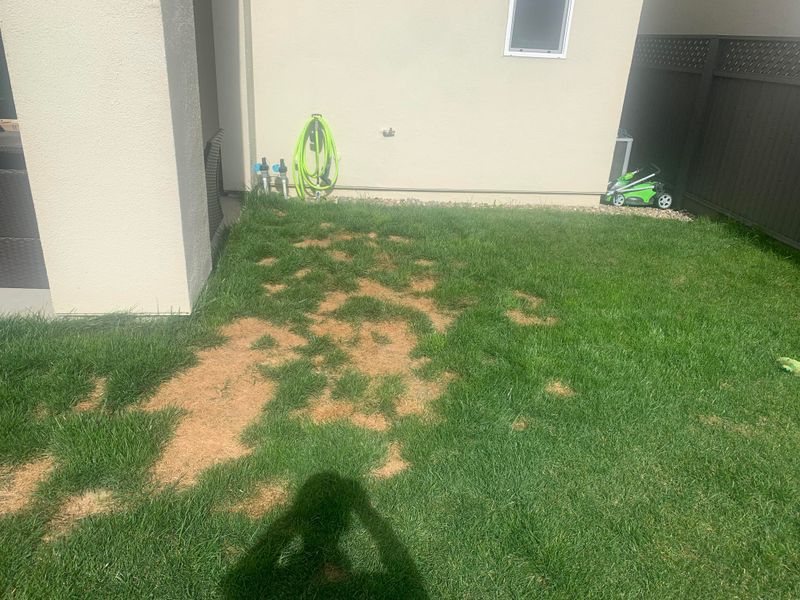
Damaged roots tend to be shortened, dark brown to black in color, and soft or mushy in texture. The root system may have almost completely collapsed in severely affected areas, leaving the grass with almost nothing anchoring it to the soil.
A light tug on the grass blades in a brown patch can sometimes pull the plant free with very little resistance.
To inspect your turf, use a hand trowel or flathead screwdriver to lift a small section from the edge where brown and green areas meet. That transition zone often shows the most informative root condition.
Compare what you find there to a sample pulled from a clearly healthy part of the lawn nearby.
Root color alone cannot confirm the specific pathogen causing the problem. Several issues can produce darkened roots, including other root rots and prolonged waterlogging.
If the cause remains unclear after your inspection, contact your local UF/IFAS Extension office or send a sample to a diagnostic lab for a more reliable answer.
5. Scalping The Lawn Adds Stress At The Worst Possible Time
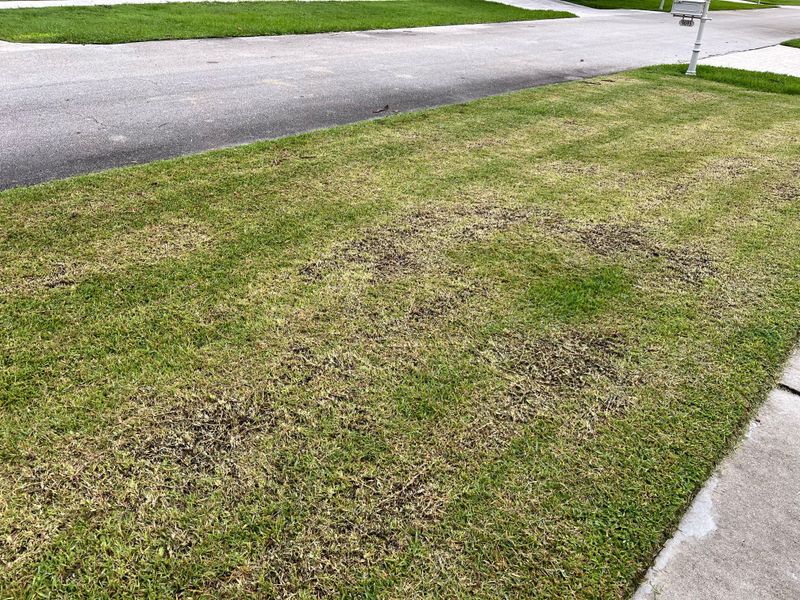
Mowing feels productive. On a Saturday morning when the lawn looks shaggy and overgrown, firing up the mower and cutting it down to a tidy height feels like good lawn care.
But cutting off too much grass at once, especially during the height of summer stress, can push already-weakened turf over the edge at the worst possible time.
The one-third rule is a foundational mowing guideline: never remove more than one-third of the leaf blade in a single mowing session. Cutting more than that forces the plant to redirect energy away from root maintenance and toward regrowing leaf tissue.
For turf already fighting root damage from disease or wet soil, that energy shift can slow recovery considerably.
Correct mowing height depends on the specific grass type and cultivar in your yard. St. Augustinegrass, bermudagrass, and zoysiagrass each have their own recommended mowing ranges.
Even within those species, different cultivars may have slightly different needs. Check with your local Extension office or the sod variety’s care guide for the right target height for your specific lawn.
One action worth taking before the next mow is to check your mower blade sharpness. A dull blade tears grass tissue rather than cutting it cleanly, leaving ragged edges that are more vulnerable to stress and infection.
Keeping the blade sharp is a simple way to reduce one more source of unnecessary pressure on compromised turf.
6. Extra Irrigation Keeps A Rain-Soaked Root Zone In Trouble
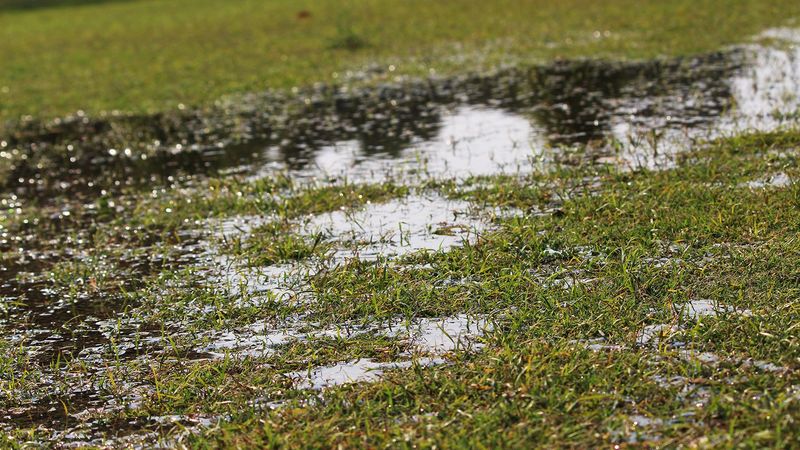
Sprinkler systems set to run on a fixed calendar schedule are one of the most common contributors to summer lawn problems in Central Florida.
When afternoon thunderstorms drop an inch of rain three days in a row, a timer that triggers irrigation anyway keeps the root zone perpetually saturated.
Roots need both water and oxygen, and waterlogged soil squeezes out the air those roots depend on.
Soil that stays wet for extended periods becomes oxygen-poor, which stresses root tissue and makes turf more susceptible to pathogens that thrive in those conditions. Irrigation on top of already-wet soil does not help a struggling lawn recover.
Adjusting your system to respond to actual soil moisture rather than a preset schedule can make a meaningful difference.
Rain sensors are a simple and affordable upgrade that can prevent your system from running right after a storm. Soil-moisture-based controllers go a step further, only triggering irrigation when the soil genuinely needs it.
Both options are worth considering if your current setup runs regardless of recent rainfall.
Poor drainage is a separate issue that turning off the sprinklers alone will not fix. If your yard consistently holds water after rain, the underlying cause may be soil compaction, grading problems, or inadequate drainage infrastructure.
Addressing that root cause will do more for long-term turf health than simply adjusting your irrigation timer and hoping for the best.
7. The Wrong Fertilizer Can Make Recovery Even Harder
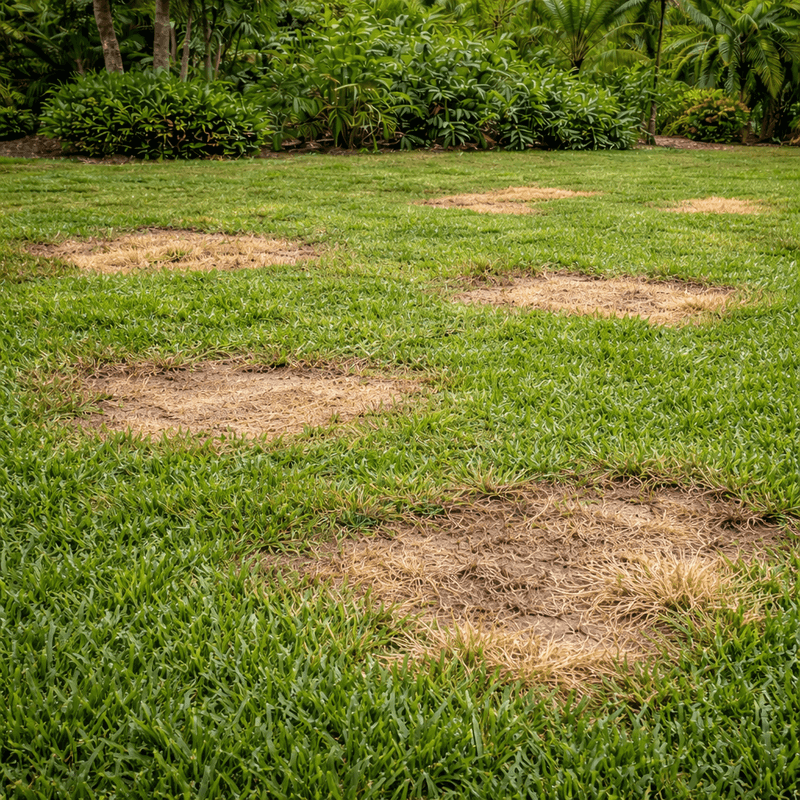
When a lawn starts looking pale and thin, the instinct to pour on fertilizer is understandable. Green color in grass is associated with nitrogen, and a quick application feels like a logical fix.
But pushing rapid top growth with heavy fertilizer is not a straightforward solution when the root system is already compromised. It can actually create additional stress for the plant.
Damaged roots have a reduced ability to absorb nutrients efficiently. Applying heavy nitrogen to turf with a weakened root system may push soft, lush leaf growth that the roots cannot sustain.
That new growth can be more vulnerable to further stress, and excess nitrogen sitting in wet soil can also contribute to other problems in the root zone.
Many Florida counties have rainy-season fertilizer restrictions in place, typically limiting or prohibiting nitrogen and phosphorus applications during summer months. These rules exist partly because nutrients applied during heavy rain periods can wash off into waterways.
Check your county’s specific ordinances before applying anything during the summer rainy season.
Current UF/IFAS guidance emphasizes keeping nutrient applications balanced and appropriate for the season. Potassium can support stress tolerance in turf, but rates and timing matter.
Rather than guessing, get a soil test through your local Extension office. It can show what your lawn actually needs before you spend money on products that may not help.
8. A Brown Lawn Needs A Diagnosis Before It Needs Fungicide
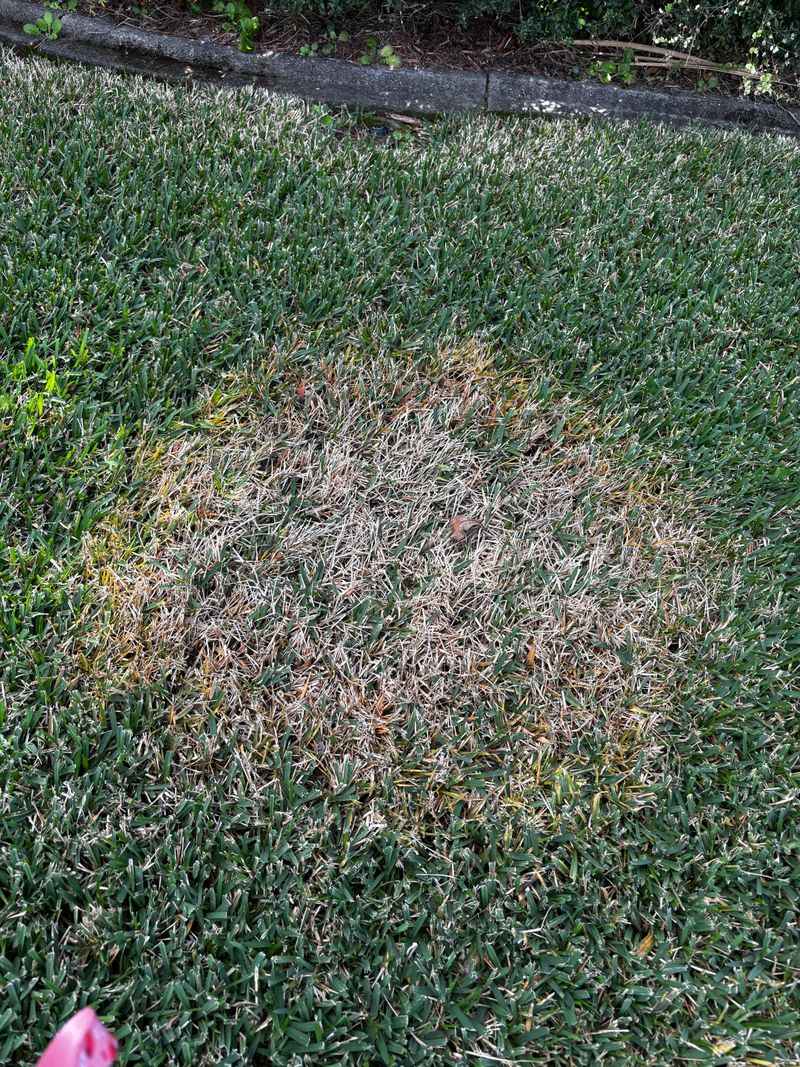
Grabbing a bag of fungicide at the hardware store can feel like taking action, and sometimes it is the right move. But fungicides work only when the product is correctly matched to the actual pathogen causing the problem.
Applying the wrong product wastes money and time, and it does nothing to address the real cause of the brown patches spreading across your yard.
Brown turf in August can come from a long list of sources. Chinch bugs feed on St. Augustinegrass and create irregular brown patches that spread outward from hot, sunny areas.
Gray leaf spot creates lesions on leaf blades during humid weather. Pythium root rot is a separate disease from take-all root rot, caused by a different organism and requiring different management.
Heat stress and irrigation problems can mimic all of them.
Before reaching for any product, spend time examining the evidence your lawn is already showing you. Check roots at the edge of affected patches.
Review your irrigation schedule and recent rainfall totals. Consider your mowing history and fertilizer timing.
Look at where the brown areas are located relative to shade, drainage, and sprinkler coverage.
When the cause stays unclear after your own inspection, the most useful next step is contacting your local UF/IFAS Extension office or a licensed lawn care professional. Getting an accurate diagnosis first means any treatment you apply has a real chance of working.
Correcting moisture and stress issues may be the single most effective August response you can take.