What Yellow Leaves On Your Michigan Phlox Are Actually Trying To Tell You
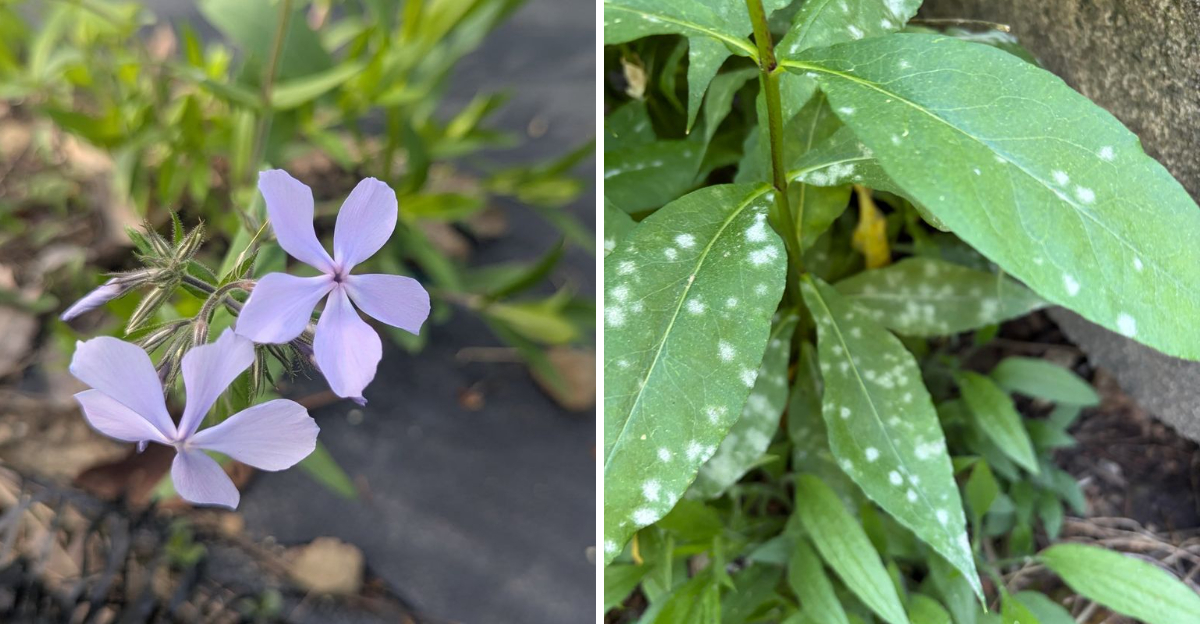
Yellow leaves on Michigan phlox are rarely a diagnosis by themselves.
They are more like clues scattered across the plant.
One clump may fade from the bottom upward. Another may turn pale all at once. A third may stay green on top while lower leaves develop powdery patches, dark spots, or soft stems near the soil.
Those patterns matter.
Phlox can yellow from mildew, root stress, saturated soil, pH problems, nutrient imbalance, or simple crowding that traps humidity around the foliage. Reaching for fertilizer before reading the pattern can make the real problem harder to solve.
So what should you look at first?
Start with where the yellowing begins, then move down toward the crown, roots, and soil. Check moisture, airflow, and any visible coating on the leaves before changing the feeding schedule.
Michigan weather can swing from wet and humid to hot and dry quickly.
The plant usually tells you what changed.
You just need to read the yellow leaves in the right order before making the next move.
1. Powdery Yellow Leaves Point Toward Mildew
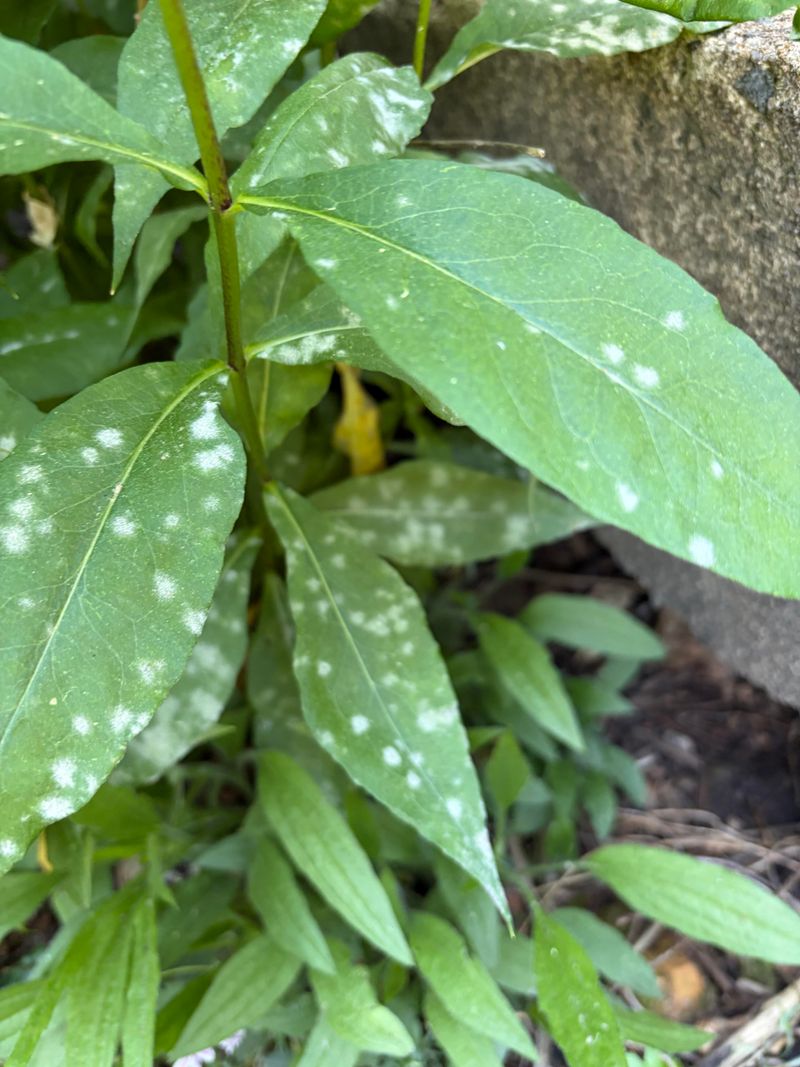
A dusty white coating changes the diagnosis immediately.
Garden phlox is highly prone to powdery mildew, especially during warm Michigan weather when dense foliage and humid air keep the canopy comfortable for fungal growth.
Yellowing often follows after the pale coating has already started spreading across the leaves.
Look at the lower and inner foliage first.
Those areas receive less airflow and often show symptoms before the top of the plant. White or gray patches may appear on the upper leaf surface, followed by yellow margins, pale tissue between veins, and early leaf drop as the problem progresses.
Fertilizer will not solve that pattern.
Extra nitrogen can push soft, fresh growth while the mildew remains active, giving the plant more vulnerable tissue without removing the original stress.
Open the clump instead.
Remove badly affected leaves once the foliage is dry, improve spacing around crowded stems, and direct future irrigation toward the soil rather than over the canopy. Clean tools before moving to another plant.
A mild case may look ugly without seriously threatening the whole clump, so avoid treating every pale leaf like an emergency.
The powder is the important clue.
Yellow leaves plus that flour-dusted appearance usually mean the plant wants better airflow and disease management, not another scoop of plant food.
2. Bottom-Up Yellowing Points Toward Root Or Moisture Stress
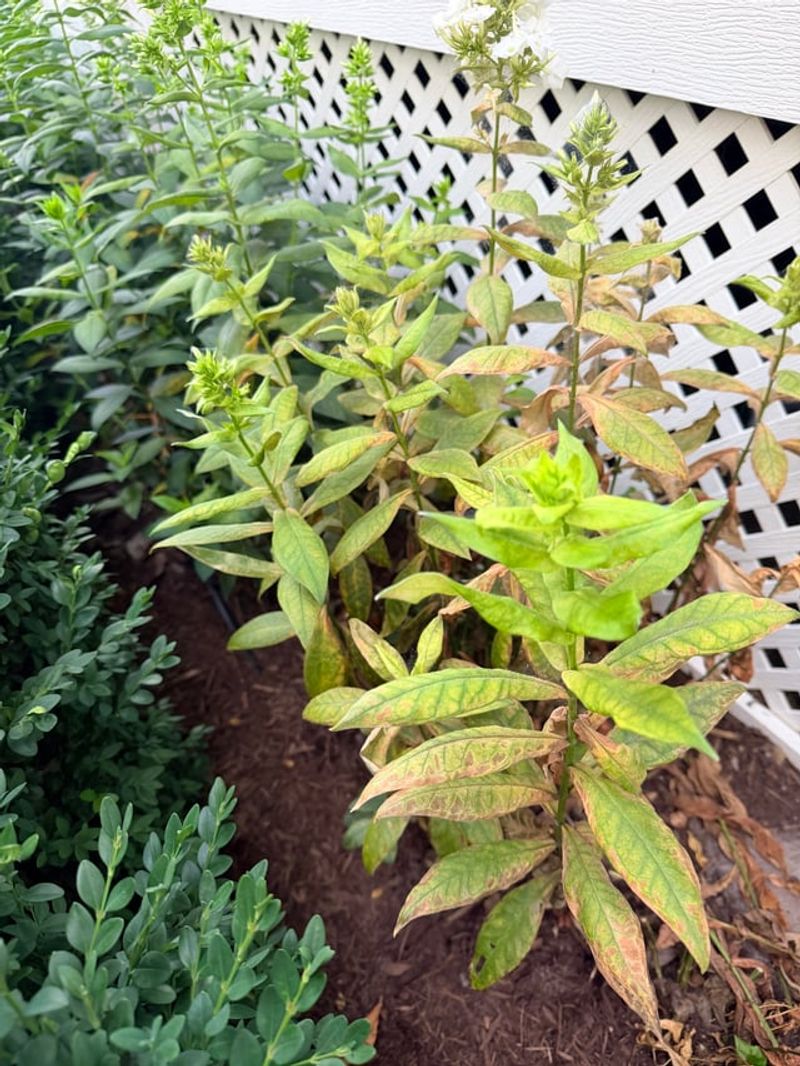
Where the color change begins can narrow the problem quickly.
Older leaves near the bottom often show stress first when roots struggle to move water and nutrients efficiently. On phlox, that can happen after prolonged rain, compacted soil, poor drainage, or the early stages of a root problem.
Watch the direction of travel.
A few yellow lower leaves that stay isolated may simply reflect normal aging late in the season. Yellowing that steadily climbs from the base toward healthier upper foliage deserves a closer look at the soil.
Push a finger several inches into the root zone.
Cool, damp soil long after rain suggests excess moisture. Dry, crumbly soil points toward the opposite problem. Both extremes can leave the lower leaves looking tired because the roots cannot keep the plant supplied evenly.
Your Michigan Garden Changes Every Week. Your Plan Should Too.
Gardening in Michigan changes quickly throughout the season. Every Friday you’ll receive a simple weekly plan showing exactly what to plant, prune, fertilize, harvest, and protect so you never miss the right timing.
Check nearby plants too.
One struggling clump surrounded by healthy phlox may have a localized drainage issue, root injury, or compacted pocket beneath it. Several plants fading in the same pattern can point toward a broader bed condition.
Do not diagnose from color alone.
The direction of yellowing gives you a map, not the final answer.
Start at the oldest leaves, trace the pattern upward, then check what is happening below them. Phlox is often remarkably literal about root stress. The first leaves to complain are usually the ones closest to retirement anyway.
3. Whole-Plant Fading Says The Roots Need Inspection
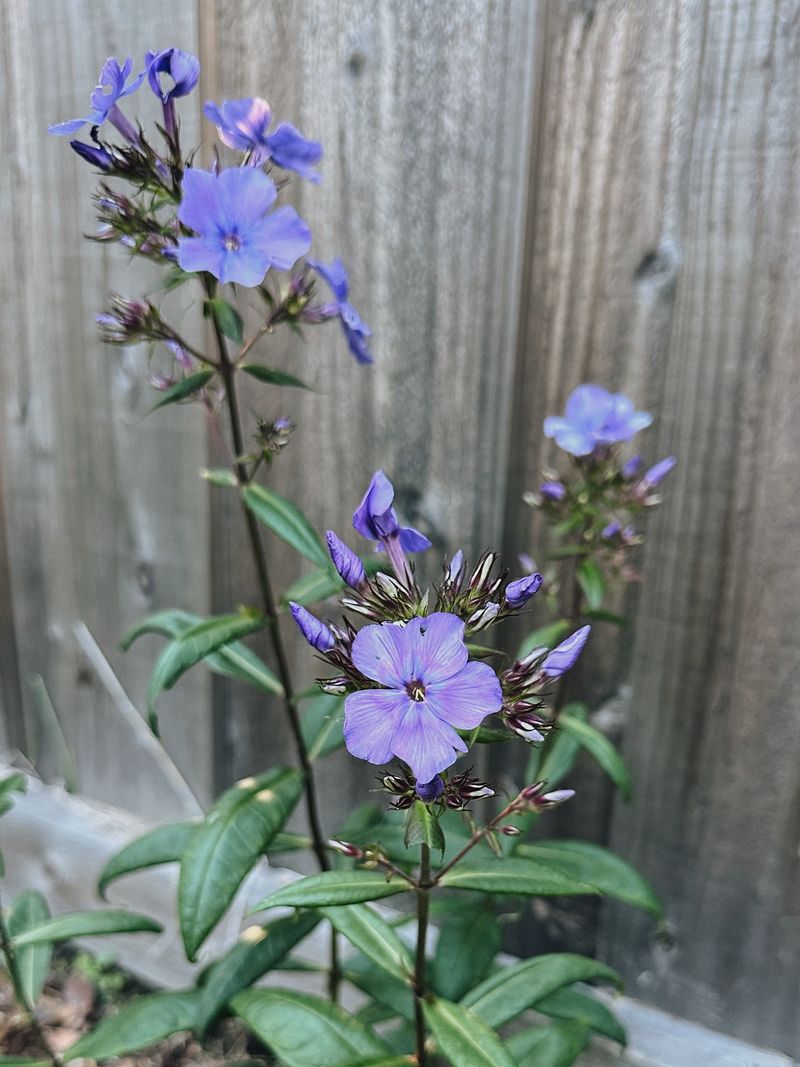
A phlox clump that turns pale from top to bottom is sending a different message.
Uniform fading suggests the problem is affecting the entire plant rather than one patch of foliage. Roots deserve attention because they control the supply of water and nutrients to every stem above them.
Michigan clay can make this especially noticeable.
Heavy soil may stay saturated well after a storm, leaving roots with too little oxygen. The plant can look nutrient-starved even while plenty of minerals remain in the soil because damaged or stressed roots cannot absorb them efficiently.
Inspect the site before lifting anything.
Look for puddling, runoff, compacted ground, or a low spot where water collects. A plant sitting in consistently wet soil already has a strong explanation for widespread yellowing.
A severely declining clump may justify a careful root check.
Healthy roots should feel firm and show pale or light-colored tissue. Soft, dark brown, collapsing, or sour-smelling roots point toward deterioration below ground.
Avoid tearing apart a mildly stressed plant just to satisfy curiosity.
Root inspection is most useful after persistent whole-plant decline, especially once drainage problems are already suspected.
The important lesson is simple.
A uniformly pale phlox may not be hungry at all. The pantry can be full while the delivery system is broken. Fixing drainage and root conditions comes before adding more nutrients to soil the plant cannot use properly.
4. Blackened Roots Can Signal A Serious Root Disease
Some yellowing patterns lead to a problem that cannot be identified confidently from the leaves alone.
Black root rot is one possibility when a phlox becomes stunted, pale across much of the plant, and weak despite reasonable care. The most useful clues appear below the soil.
Affected roots can become dark brown to black.
They may also feel brittle, hollow, or less substantial than the firm roots on a healthy plant. Top growth often looks generally weak rather than showing one tidy stripe or patch of yellow.
Do not label every dark root as black root rot.
Wet soil, physical damage, and other root diseases can create similar symptoms. A proper diagnosis matters before major treatment decisions or changes to the whole bed.
Remove a clearly failing plant only after documenting the symptoms.
Take photos of the foliage, crown, and roots, and consider submitting a sample to a diagnostic laboratory when the cause remains uncertain. That is especially useful when several plants begin showing the same decline.
Drainage still matters regardless of the final diagnosis.
Persistently wet soil creates poor conditions for healthy roots and can make disease problems harder to manage.
Once a serious root disease is confirmed, sanitation and site correction become more important than fertilizer.
Yellow leaves may be the first thing you notice, but blackened roots tell the deeper story. At that point, the problem is no longer cosmetic foliage color.
5. Yellowing With Soggy Soil Means Watering Should Pause
A pale phlox beside wet soil does not need a sympathy drink.
Too much water and too little water can both produce drooping and yellow leaves, which makes the soil check essential before any irrigation decision.
Push a finger about two inches into the bed.
Dry, crumbly soil suggests the plant may be short on moisture. Wet soil that clings heavily to your finger a day or more after rain suggests the roots need air rather than another soaking.
Michigan soils vary widely.
Sandy ground can dry quickly during summer heat, while heavy clay in other parts of the state may remain saturated long after the surface appears normal. One fixed watering schedule cannot serve both conditions well.
Water deeply once the root zone actually begins drying.
That encourages roots to use a broader soil volume and avoids repeated shallow wetting around the crown. During rainy stretches, turn off automatic irrigation and let the weather handle the job.
Mulch can help balance moisture swings.
Use two to three inches of shredded bark or wood chips over the root zone, with a clear gap around the stems. That slows evaporation during dry weather without pressing damp material against the crown.
The yellow leaves are asking for a moisture check, not more water by default.
Sometimes the smartest thing you can do with the hose is leave it exactly where it is.
6. Yellow Tissue Between Green Veins Points Toward A Soil Chemistry Problem
Not every pale phlox has damaged roots or fungal disease.
The pattern inside each leaf can point toward nutrient availability. Yellow tissue between veins while the veins remain noticeably greener is called interveinal chlorosis, and soil pH can play a major role.
A nutrient may be present but unavailable.
In alkaline soil, certain minerals become harder for roots to absorb even when a soil test shows that the element exists in adequate amounts. Adding more fertilizer can therefore miss the real problem entirely.
Test before treating.
A soil test gives you information about pH and nutrient levels, which is far more useful than guessing from leaf color. Phlox generally performs best in soil that stays around slightly acidic to neutral rather than strongly alkaline.
Avoid throwing iron, magnesium, or general fertilizer at every yellow leaf.
Different deficiencies can create overlapping symptoms, and excess amendments can create new imbalances or raise soluble salt levels around the roots.
Look at the whole pattern.
Interveinal yellowing across newer or broader portions of the plant deserves a soil test, especially when moisture and drainage seem normal and no disease coating is visible.
Soil chemistry is the quiet explanation gardeners often miss.
The nutrients can be sitting right beside the roots like groceries behind a locked door. The useful fix is finding the key, not piling more bags on the porch.
7. Yellowing Inside A Dense Clump Signals Poor Airflow
A mature phlox clump can become its own weather system.
Dozens of stems packed together trap humid air, block light from the interior leaves, and slow drying after rain or morning dew. That combination can produce yellow foliage even before a major disease outbreak becomes obvious.
Look into the middle of the plant.
Interior leaves that stay pale, damp, or powdery while the outside remains greener point toward crowding. Stems pressed against a fence, wall, or neighboring perennial can show the same one-sided pattern.
Thin selectively rather than shearing the whole plant.
Remove weak, damaged, or tightly crowded stems and leave the strongest growth spaced enough for air to move between them.
Early spring is the easiest time for major thinning, but a few problem stems can come out during the growing season once foliage is dry.
Water at the base.
Overhead irrigation adds another layer of leaf wetness to an already humid canopy. Keeping water off the foliage helps the plant dry faster and reduces conditions that favor mildew.
Spacing new plants properly prevents the problem from returning immediately.
Phlox looks impressive in a thick mass, but there is a point where abundance stops helping.
Yellow inner leaves can be the plant’s way of asking everyone to move over a little. A few open gaps often improve both the look of the clump and the health of the foliage.
8. Repeated Mildew Yellowing Says The Cultivar May Be The Problem
Some phlox plants develop mildew every summer no matter how carefully the bed is managed.
That pattern can tell you something important about the plant itself.
Cultivars differ in their susceptibility to powdery mildew. One variety may stay relatively clean in the same bed where another turns white and yellow by August year after year.
Good care still matters.
Sun, spacing, airflow, and dry foliage can reduce disease pressure, but they cannot completely erase a strong genetic tendency toward mildew. Repeated problems under otherwise reasonable conditions make cultivar resistance worth considering.
Do not replace the entire bed at once.
Introduce one or two more resistant selections and compare how they perform beside the older plants over a full season. That gives you useful evidence from your own Michigan garden rather than relying only on a nursery tag.
Keep records of timing.
A cultivar that looks excellent until late September may be perfectly acceptable, while one that begins declining in June creates a much longer maintenance problem.
Resistance does not mean immunity.
Even tougher selections can show symptoms during severe disease weather, but the difference in foliage quality can still be substantial.
Yellow leaves that return every year on the same named variety may be giving you the simplest diagnosis of all.
The gardener may be doing everything reasonably well. The phlox just arrived with a more dramatic relationship to mildew than its neighbors.