The California Groundcover That Stops Erosion Better Than Ivy Ever Did
Ivy became a familiar answer for difficult California slopes because it spreads quickly and covers bare ground with little encouragement.
The problem is that aggressive growth can create a maintenance headache while offering less ecological value than many native alternatives.
A better option is gaining attention for its ability to form a dense, low layer that helps protect exposed soil without swallowing everything around it. Its roots hold the ground in place, and its evergreen foliage keeps slopes covered through much of the year.
It also fits naturally beneath trees and in partially shaded areas where erosion can be especially frustrating.
For homeowners trying to stabilize a bank without replacing one invasive problem with another, this native groundcover offers a more balanced solution.
The comparison becomes especially interesting once you look at how each plant behaves after several seasons in the landscape.
1. Evergreen Currant Spreading Into A Tough Living Mat
Most California groundcovers either spread too slowly or take over everything around them. Evergreen Currant finds a middle ground that most plants never manage to hit.
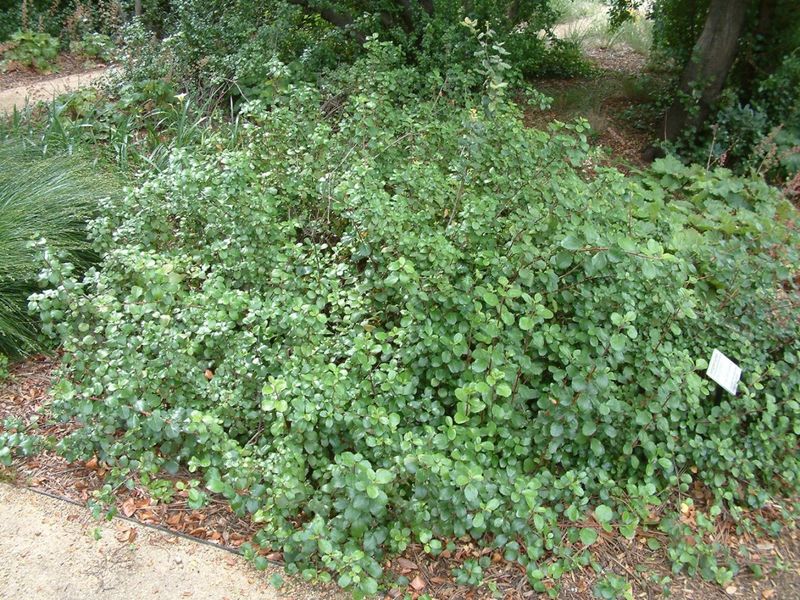
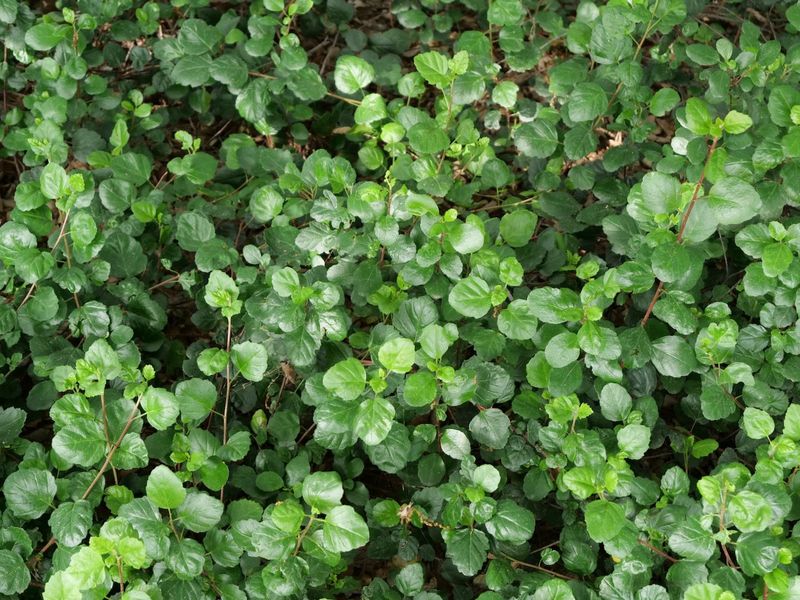
It creeps outward steadily, layering its stems as it goes, and builds a thick mat of coverage that is tough to beat.
Each stem arches out from the center and roots where it touches the ground. Over time, this creates a woven network of plant material that locks together like a natural carpet.
The mat can reach six to ten feet wide, covering large patches of bare soil without needing much help from you.
What makes this spreading habit so useful is how dense the mat becomes. Weeds struggle to push through it.
Rain hits the leaves instead of bare dirt, which slows runoff and reduces erosion. The whole surface becomes one connected, living layer that protects soil from every angle.
Planting a few starts a few feet apart is usually all it takes. Within two to three years, those small plants will have joined together into one solid mat.
Gardeners often say it looks like someone laid down a green blanket across the ground. The coverage is even, low, and clean.
It does not pile up or get leggy like some shrubs do. It just keeps spreading outward in a steady, manageable way that makes it one of the most reliable groundcovers available.
2. Shallow Roots Helping Hold Loose Soil In Place
Loose soil on a slope is always at risk. When rain hits it hard, the top layer can slide, wash away, or crack.
A plant with a strong root system is one of the best tools for stopping that from happening. Evergreen Currant grows a fibrous, shallow root network that spreads wide rather than deep.
Those shallow roots weave through the top few inches of soil. They grab onto particles and hold them in place, even when water moves fast across the surface.
This kind of root structure is actually better for slope stabilization than deep roots alone, because it covers more ground area and binds more soil at once.
Your California Garden Changes Every Week. Your Plan Should Too.
Gardening in California changes quickly throughout the season. Every Friday you’ll receive a simple weekly plan showing exactly what to plant, prune, fertilize, harvest, and protect so you never miss the right timing.
On sandy or loamy hillsides, this matters a lot. Sandy soil does not stick together well, and even light rain can start moving it.
When Evergreen Currant roots spread through that loose material, they act like stitching in fabric, holding everything together.
Homeowners dealing with erosion often spend money on retaining walls or imported ground covers that do not last. This native plant offers a living solution that gets stronger every year.
As the roots expand and the stems root down in new spots, the coverage just keeps improving. You get a plant that earns its place in the yard by doing real work.
It stabilizes your soil quietly, season after season, without asking for much in return.
3. Slopes Getting Covered Without The Ivy Takeover
Ivy has a reputation for being a quick fix on slopes, but it rarely stays where you put it. It climbs fences, smothers shrubs, and creeps into areas you never intended it to reach.
Removing it once it gets established is a serious chore. Evergreen Currant covers slopes just as well without any of those headaches.
Unlike ivy, it does not vine up vertical surfaces. It stays low and horizontal, hugging the ground as it spreads.
This makes it much easier to manage along property lines, near trees, or around other plants you want to protect. You get the coverage without the constant trimming and pulling.
Slopes are actually where this plant performs best. The low-growing stems follow the contour of the land, filling in gaps as they go.
Rain that would normally carve channels through bare soil gets slowed down by the dense leaf cover. The soil underneath stays in place, even during heavy storms.
Another bonus is that Evergreen Currant does not create the fire and pest problems that ivy is known for. Ivy’s thick mats can hide rats and other rodents, and dry ivy burns fast.
Evergreen Currant stays open enough to avoid those problems. For anyone who has fought ivy on a slope and lost, switching to this native plant feels like a genuine relief.
You get the slope covered, the erosion stopped, and your weekends back.
4. Glossy Leaves Keeping Bare Ground Hidden Year-Round
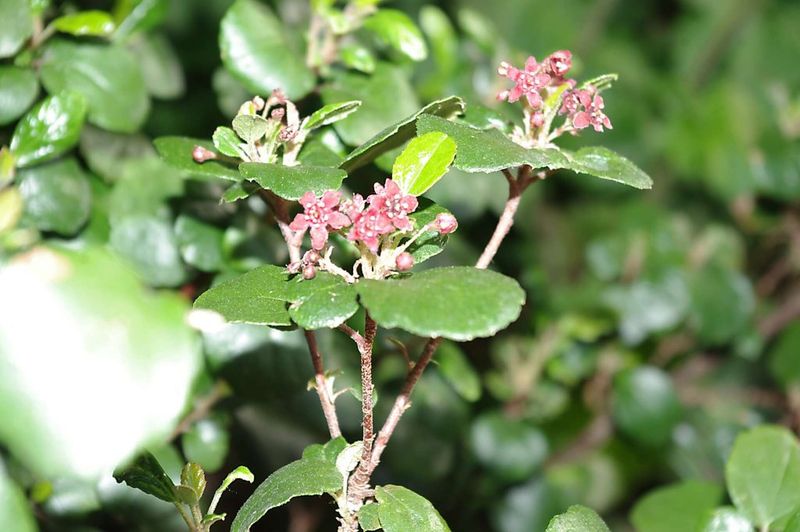
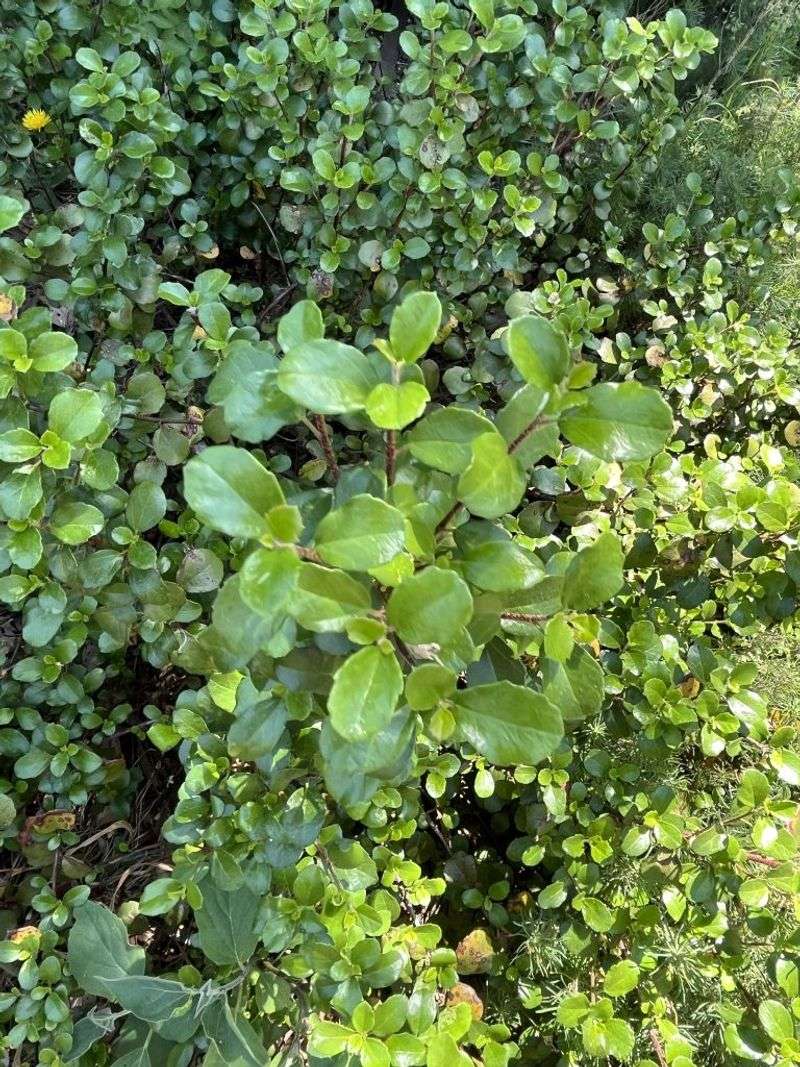
One of the first things people notice about Evergreen Currant is the shine on its leaves. The foliage has a deep, dark green color with a glossy surface that catches light in a way that feels lush and polished.
Even in dry summer months, the leaves hold their color and stay on the plant.
That year-round leaf retention is a big deal in a garden. Many plants drop their leaves in winter or go dormant in summer, leaving bare patches of soil exposed.
Bare soil is vulnerable soil. It erodes faster, dries out faster, and invites weeds.
Evergreen Currant keeps the ground covered through every season.
The leaves also have a pleasant fragrance when brushed or crushed lightly. Some people describe the scent as slightly spicy or resinous.
It is subtle but noticeable, and it adds a sensory element to the garden that most groundcovers do not offer.
From a visual standpoint, this plant looks like it belongs in a well-designed landscape. The glossy leaves contrast nicely with dry grasses, rocks, or wood mulch.
It does not look weedy or messy the way some fast-spreading plants can. Landscape designers often use it for this reason.
You get practical erosion control wrapped in a plant that actually looks good doing its job. For gardeners who want function and beauty in the same package, this plant delivers both without compromise.
5. Dry Shade Is Where This Native Really Shines
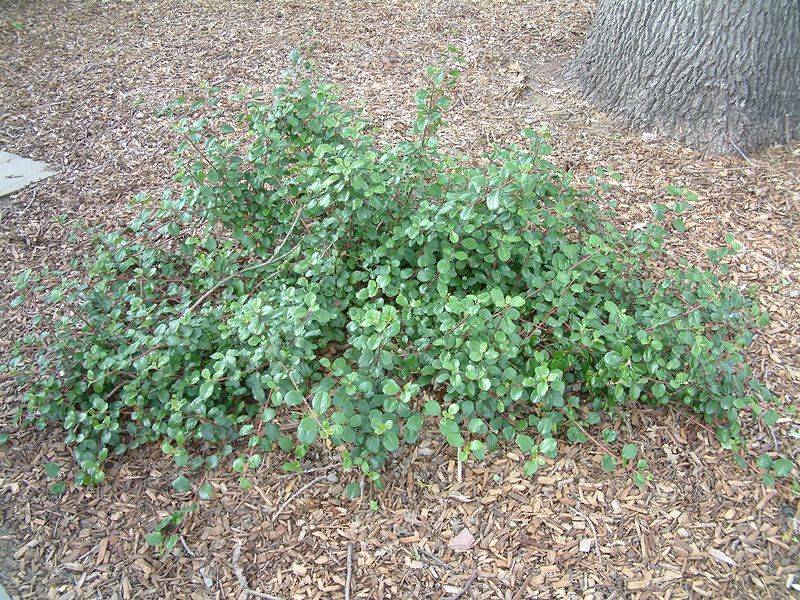
Dry shade is one of the hardest planting conditions in any garden. Most plants want either shade with moisture or sun with dryness.
Very few handle both at once. Evergreen Currant is one of the rare exceptions, and it actually thrives in that tough combination.
Under oak trees is a classic example. Oaks create deep shade, and their roots pull most of the moisture from the surrounding soil.
Planting under them is tricky because most groundcovers either need more water or more light. This native plant evolved in exactly those kinds of conditions, which is why it does so well there.
The plant naturally grows along shaded canyon floors and under chaparral canopies where moisture is limited. That background means it comes prepared for the challenge.
Its root system knows how to find water efficiently, and its leaves are built to hold moisture rather than lose it quickly.
Gardeners who have tried hostas, ferns, or other shade-loving plants under their oaks and watched them struggle will appreciate what Evergreen Currant brings to the table. It does not need irrigation once settled in.
It does not go yellow from lack of light. It just grows, spreads, and covers the ground the way you hoped it would.
For shaded slopes and dry garden corners that have stumped you for years, this is the plant that finally makes sense.
6. Low Growth Making It Easy To Use Under Trees
Height matters a lot when you are choosing what to plant under trees. Something too tall blocks views, competes with the tree, or just looks awkward.
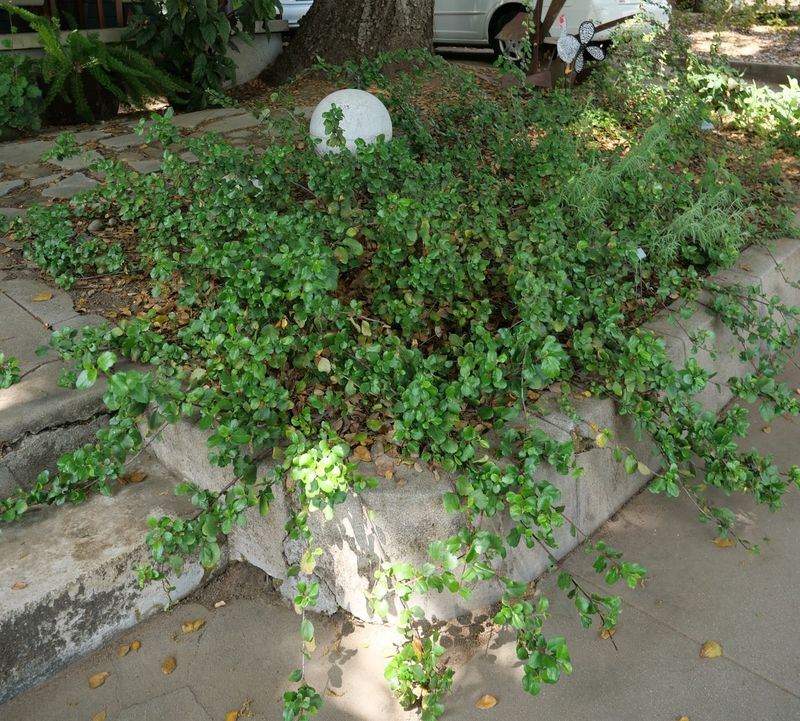
Evergreen Currant stays low, usually between one and two feet tall, which makes it a natural fit beneath large trees where space is limited vertically.
That low profile also means it does not shade itself out or get leggy. The stems stay close to the ground, and the leaves spread outward rather than upward.
You end up with a tidy, even layer of green that fits neatly under the tree canopy without crowding it.
Maintenance under trees is often a pain. Mowing is hard because of surface roots.
Mulch blows around. Bare soil compacts and erodes.
A living groundcover like this one solves all those problems at once. It protects the soil, adds organic matter as leaves break down, and keeps the area looking clean without much effort from you.
Another practical point is that it will not harm the tree. Some groundcovers climb trunks or compete aggressively for nutrients.
Evergreen Currant is well-behaved enough to spread around a tree without threatening it. It coexists rather than competes.
Arborists and native plant enthusiasts often recommend it specifically for this reason. If you have a big oak, sycamore, or other native tree with bare soil underneath, this low-growing plant is one of the smartest choices you can make for that space.
7. Once Established It Handles Summer Dryness Well
Summer in Southern California can be brutal for plants. Months go by without rain, temperatures climb, and soil turns to dust.
Most garden plants need regular watering to survive that stretch. Evergreen Currant is different because once it gets established, it can handle the dry season with very little help.
The key word is established. During the first year or two, you will need to water it regularly to help the roots settle in.
After that, the plant builds up enough of a root system to tap into deeper soil moisture on its own. Many gardeners report watering it only once or twice a month in summer after the first two seasons.
That kind of drought tolerance is rare in a plant that also stays evergreen. Most drought-tolerant plants go dormant or look rough during summer.
This one keeps its glossy leaves and its ground-covering spread even through the hottest months. That consistency is one of the things that sets it apart.
For homeowners trying to cut their water bills, this is a meaningful benefit. Replacing a thirsty lawn or high-water groundcover with Evergreen Currant can reduce irrigation needs significantly.
Water agencies in Southern California sometimes even offer rebates for replacing turf with drought-tolerant natives. This plant often qualifies.
You save water, lower your bills, and still have a yard that looks healthy and well-kept through every season of the year.
8. Native Wildlife Getting More From It Than Ivy
Ivy is everywhere in older gardens, but local wildlife does not get much from it. The berries ivy produces are mildly toxic to many native birds.
The thick mats it creates are better known for harboring rats than for supporting biodiversity. Evergreen Currant offers something genuinely different.
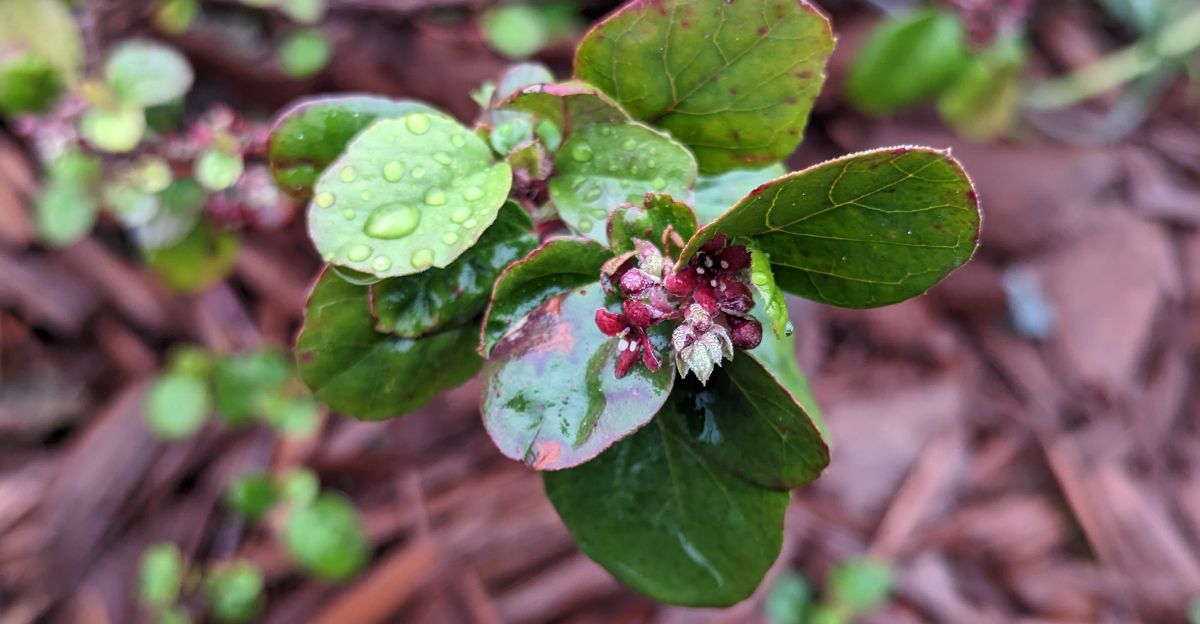
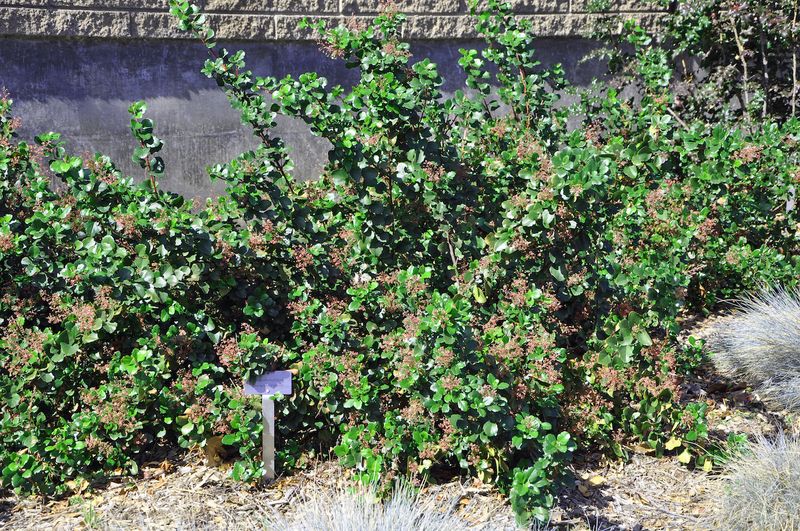
Small red berries appear on this plant in spring and early summer. Native birds love them.
Thrushes, towhees, and other ground-feeding birds will pick them right off the stems. The berries are also edible for humans, though they are tart and small.
The point is that the plant gives back to the ecosystem in a way that ivy never could.
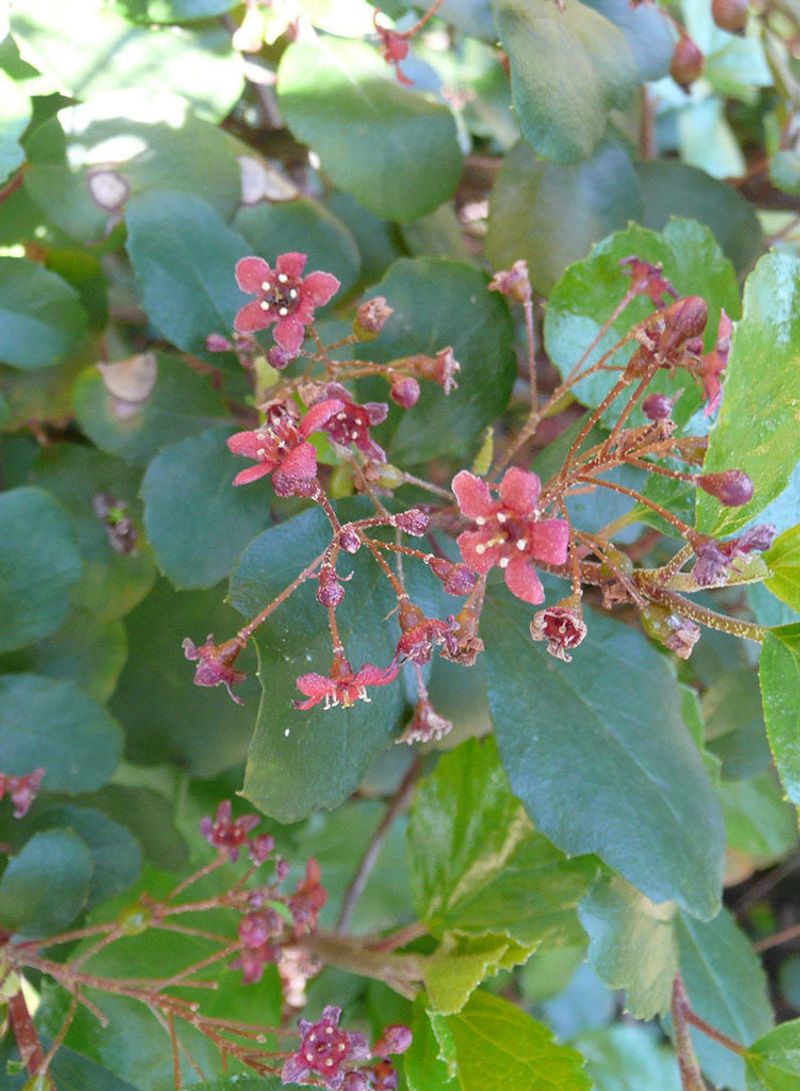
Beyond berries, the flowers attract pollinators. Tiny pinkish-red blooms appear in late winter to early spring, often before most other plants are flowering.
That timing matters because pollinators need early food sources. Hummingbirds in particular are drawn to these flowers, and watching them hover over a carpet of Evergreen Currant is a real treat.
The dense mat also provides shelter for small lizards, beneficial insects, and ground-nesting birds. It creates habitat at ground level, which is something a lot of gardens lack.
Choosing this plant over ivy is not just a practical gardening decision. It is a way of making your yard a more welcoming place for the native species that live around you.
That is a simple swap with a genuinely big impact on your local environment.