Native Florida Trees To Grow Instead Of Laurel Oak Near The House
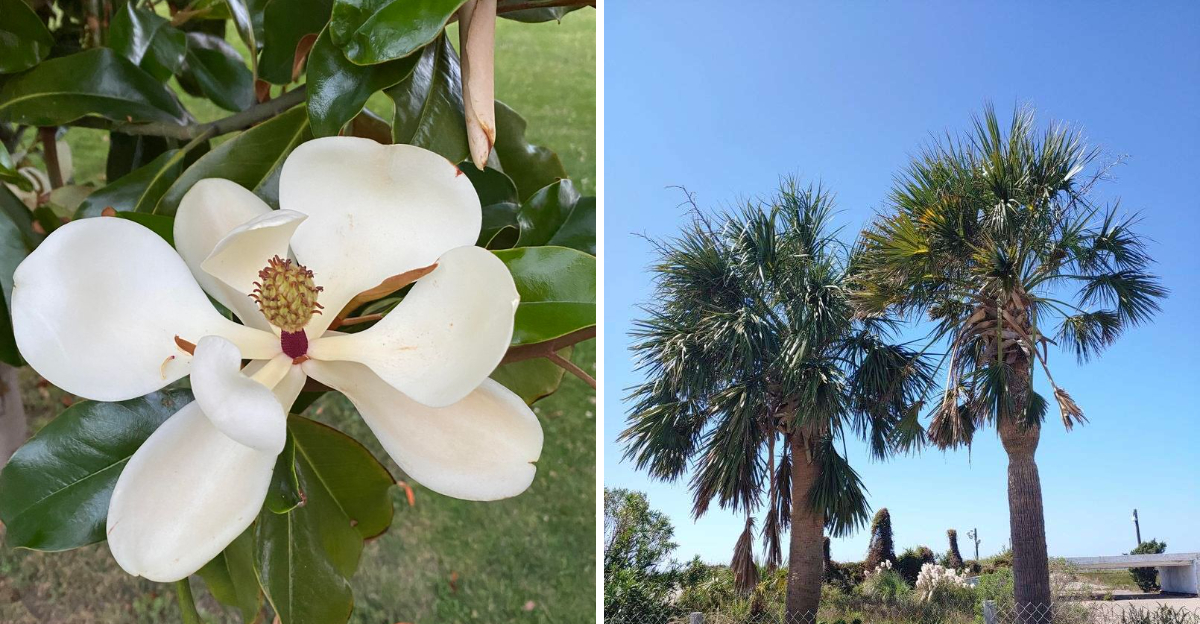
A large tree beside a Florida house can feel reassuring until storm season makes every heavy limb look a little too close to the roof.
Laurel oak grows fast and creates shade quickly, but mature trees can develop broad, heavy canopies that become difficult to manage in tight residential spaces.
Replacing one with a better-matched native gives you a chance to rethink size, wind exposure, drainage, roots, and long-term clearance before the next tree ever goes in the ground.
So which Florida natives make better choices near a home?
The answer depends on how much room you actually have. Live oak and Southern magnolia need wide setbacks.
Sweetbay magnolia and yaupon holly fit smaller spaces more comfortably, while bald cypress belongs where the soil stays wet. Sabal palm keeps the trunk footprint narrow.
The goal is not finding a tiny tree.
It is choosing one whose mature shape, root zone, and storm behavior fit the site without forcing the house to share more space than it should. For decades ahead.
1. Give Live Oak Plenty Of Breathing Room
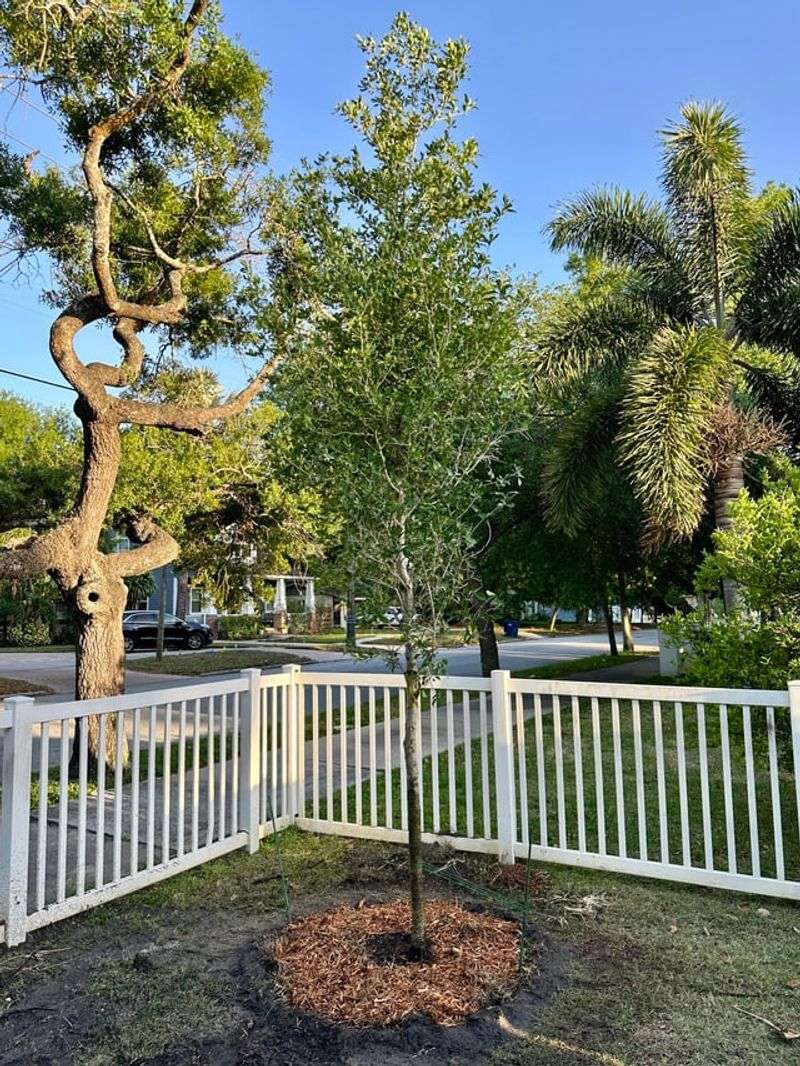
Southern live oak, Quercus virginiana, is one of Florida’s most durable native shade trees, but it only becomes a smart near-house choice when the site gives it serious room.
A mature canopy can spread 60 feet or more, sometimes much wider on old specimens. That broad crown creates exceptional shade, yet it also means the tree should never be squeezed into a narrow strip beside a roof, driveway, or utility line.
Give the trunk a generous setback from structures.
The exact distance depends on the lot, mature canopy direction, nearby pavement, and professional site assessment. The larger point is simple: plant for the tree you will have in 30 years, not the one arriving from the nursery.
Live oak earns praise for strong wood and good wind performance compared with many common landscape trees.
No large tree is storm-proof, though, and proper structure still matters. Young trees benefit from thoughtful pruning that encourages well-spaced scaffold branches instead of crowded attachments.
Wildlife adds another reason to make room.
Acorns feed squirrels, deer, and many birds, while the sprawling branches create nesting and shelter opportunities.
Use live oak as a major landscape anchor away from the house rather than a close foundation tree. Give it space, and it can provide decades of shade without turning every hurricane forecast into a roofline inspection.
2. Choose Sand Live Oak Where Space Allows
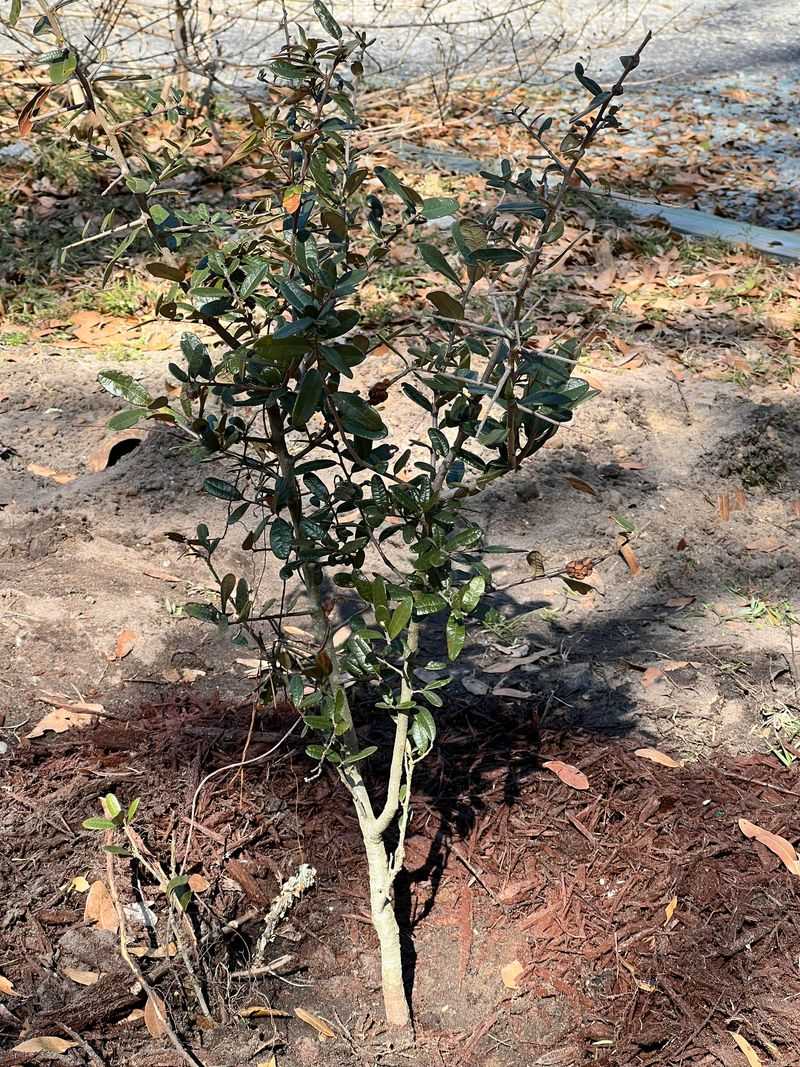
A yard built on dry sand calls for a tree that already understands the assignment.
Sand live oak, Quercus geminata, is native to scrubby and sandy parts of Florida and handles lean, well-drained ground far better than many moisture-loving landscape trees.
It stays smaller than a typical Southern live oak, which can make it easier to place on a moderate-sized property.
Mature trees often reach roughly 20 to 40 feet tall.
The crown can still spread broadly, so this is not a plant for a tight foundation bed. Give it clear space from walls, roof edges, sidewalks, and driveways before the canopy and roots begin expanding.
Your Florida Garden Changes Every Week. Your Plan Should Too.
Gardening in Florida changes quickly throughout the season. Every Friday you’ll receive a simple weekly plan showing exactly what to plant, prune, fertilize, harvest, and protect so you never miss the right timing.
The leaves help separate it from Southern live oak.
They tend to be narrower, with slightly rolled edges and a tougher texture suited to dry conditions. The evergreen canopy keeps useful screening and shade through most of the year.
Acorns support birds and mammals, adding real habitat value to a residential yard.
Establishment water remains important during the first seasons. Once the root system spreads into suitable sandy soil, the tree handles dry periods with much less attention than a newly planted specimen.
Sand live oak makes the most sense in central and north Florida landscapes that already resemble its natural habitat.
It is not a miniature oak. It is simply a more compact native with the toughness to handle sandy ground without demanding constant rescue from the hose.
3. Use Bald Cypress On Moist Ground
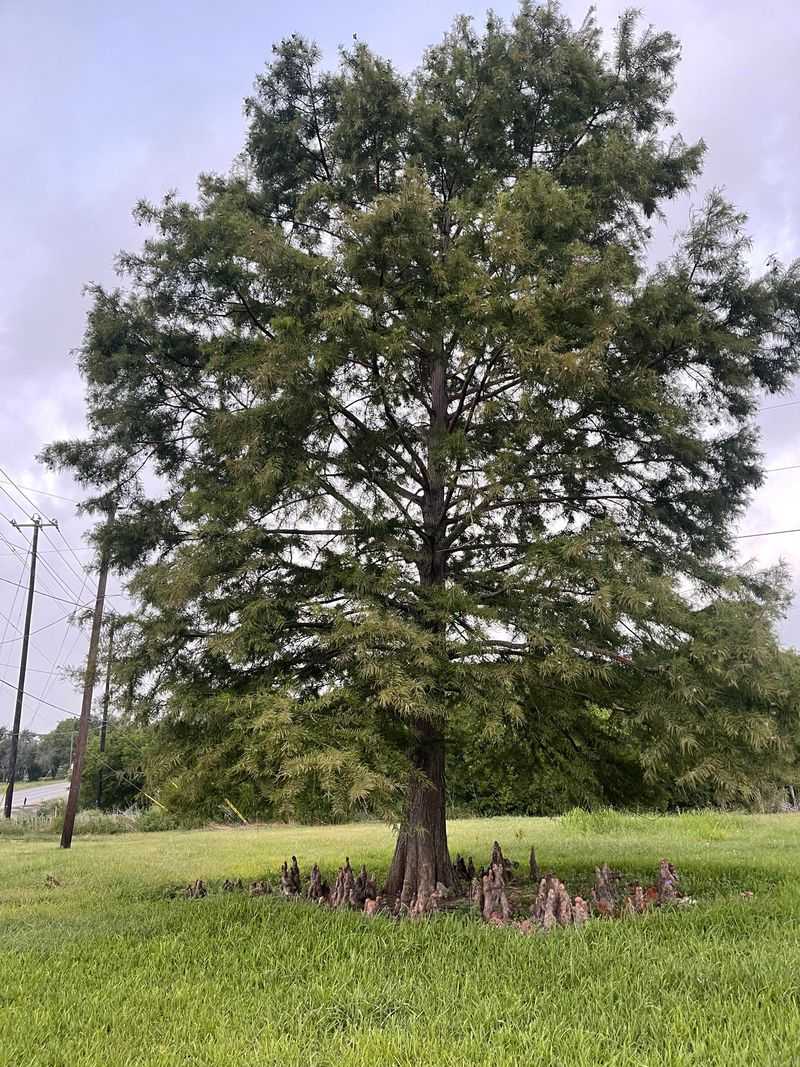
Some Florida lots have one corner that never seems to dry on schedule.
Bald cypress, Taxodium distichum, can turn that problem area into an advantage. This native tree tolerates moist soil, seasonal flooding, drainage swales, pond edges, and other sites that would leave many common shade trees struggling.
The tree can eventually reach 50 to 70 feet or more.
Its crown stays narrower than a sprawling live oak, but the height still requires clear space from utility lines and roofs. Use it in an open wet zone rather than pressing it against the house.
Bald cypress is a deciduous conifer.
The soft green needles shift toward rusty orange or copper before dropping, giving Florida gardens a brief autumn look that many evergreen landscapes lack.
Roots deserve planning.
Older trees can form cypress knees in wet sites, and those woody projections may become awkward around turf, walkways, or mowing routes. A rain garden, naturalized low area, or pond margin gives them much more freedom.
The seeds provide food for wildlife, and the tree’s strong form makes it a valuable long-term landscape feature.
Drainage problems near a foundation should be solved separately rather than using a tree to absorb them.
For a naturally damp area farther from the house, though, bald cypress can replace a problematic large tree with one actually suited to the moisture pattern. Sometimes the wettest corner deserves the toughest specialist.
4. Plant Southern Magnolia With A Wide Setback
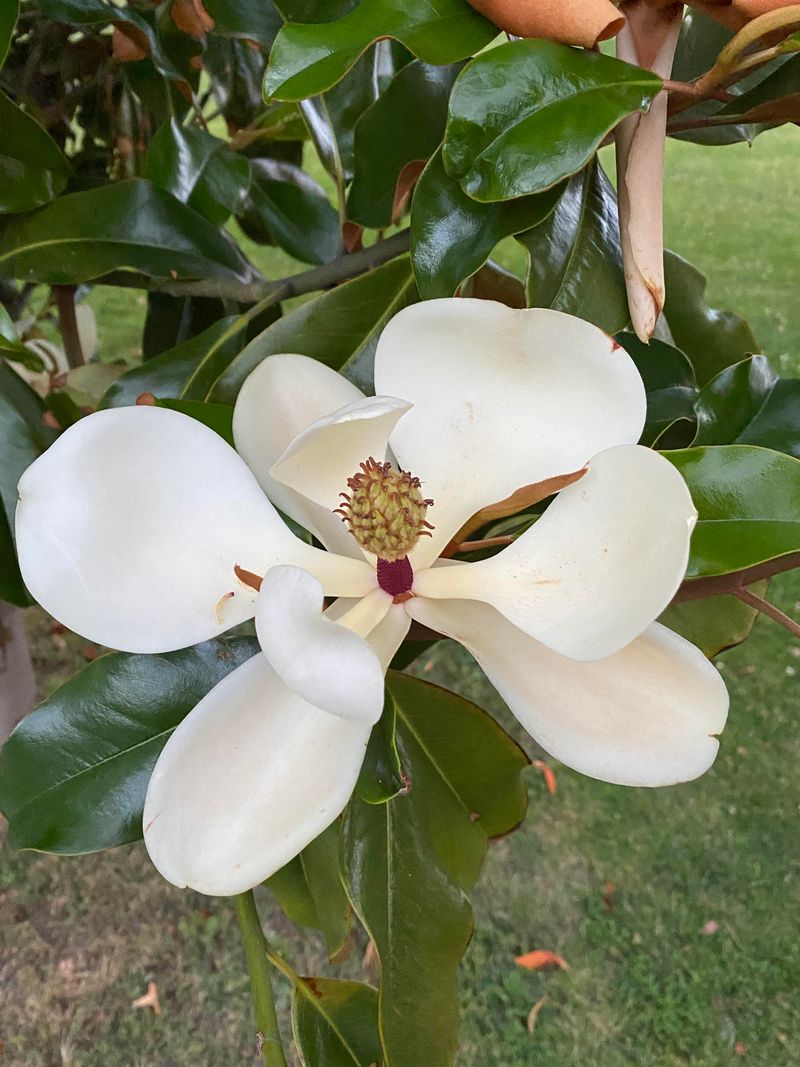
Southern magnolia, Magnolia grandiflora, can make a Florida yard feel established long before the rest of the landscape catches up.
Large glossy leaves stay evergreen, and creamy white flowers bring fragrance and serious visual impact through the warm season. The catch is mature size.
A full-grown tree can reach 60 to 80 feet tall with a canopy 30 to 40 feet wide or more.
That scale demands a broad setback from the house, pavement, pool decks, and utility lines.
The tree works best as an anchor in a large lawn, side yard, or open boundary rather than as a replacement planted in the same tight spot where a laurel oak caused concern.
Leaf drop happens throughout the year.
Those tough leaves, seed structures, and flower debris can become annoying near gutters, pools, or frequently swept patios. Place the tree where natural litter can settle into a bed instead of becoming a weekly cleanup job.
Birds use the bright red seeds, while dense evergreen branches provide shelter.
Slightly acidic, well-drained soil suits Southern magnolia well across much of Florida. Young trees appreciate steady moisture during establishment, then become more tolerant of ordinary dry stretches.
This native brings beauty without pretending to be small.
Give it enough land to become the grand tree it wants to be, and the house gets to admire the canopy instead of negotiating with it.
5. Try Yaupon Holly For A Smaller Evergreen
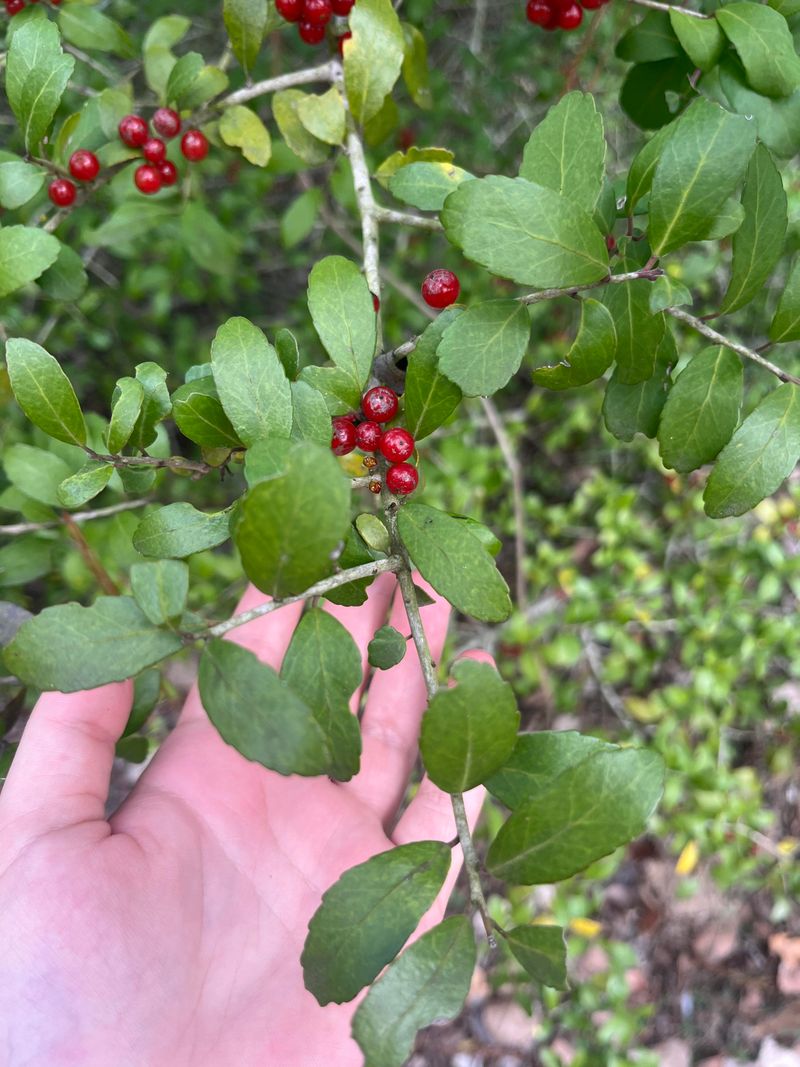
A smaller footprint changes the entire conversation near a Florida home.
Yaupon holly, Ilex vomitoria, usually matures around 15 to 25 feet tall in tree form, making it far easier to place near residential structures than a broad-canopied oak or magnolia. It can grow as a multi-stemmed shrub or be trained into a tidy small tree.
Evergreen leaves provide year-round structure.
The plant accepts full sun or partial shade and tolerates a wide range of Florida soils, including sandy sites and areas that experience occasional moisture.
That adaptability makes it useful around mixed residential conditions where one side of the house may be drier than another.
Fruit adds seasonal interest.
Female plants can produce clusters of red or orange berries when a compatible male grows nearby. Cedar waxwings, mockingbirds, bluebirds, and other birds quickly notice the display.
Pruning flexibility is another advantage.
Yaupon can stay natural, form a screen, or carry a more defined tree shape without the enormous structural demands of a large shade tree. Avoid constant tight shearing when a looser form fits the site.
Smaller does not mean plant it against the wall.
Leave enough clearance for the mature crown, airflow, maintenance access, and roots.
For homeowners replacing laurel oak specifically because the old tree overwhelmed the house, yaupon offers a useful reset. You still get a native evergreen with wildlife value, just without assigning half the yard to one future canopy.
6. Use Sweetbay Magnolia In Damp Areas
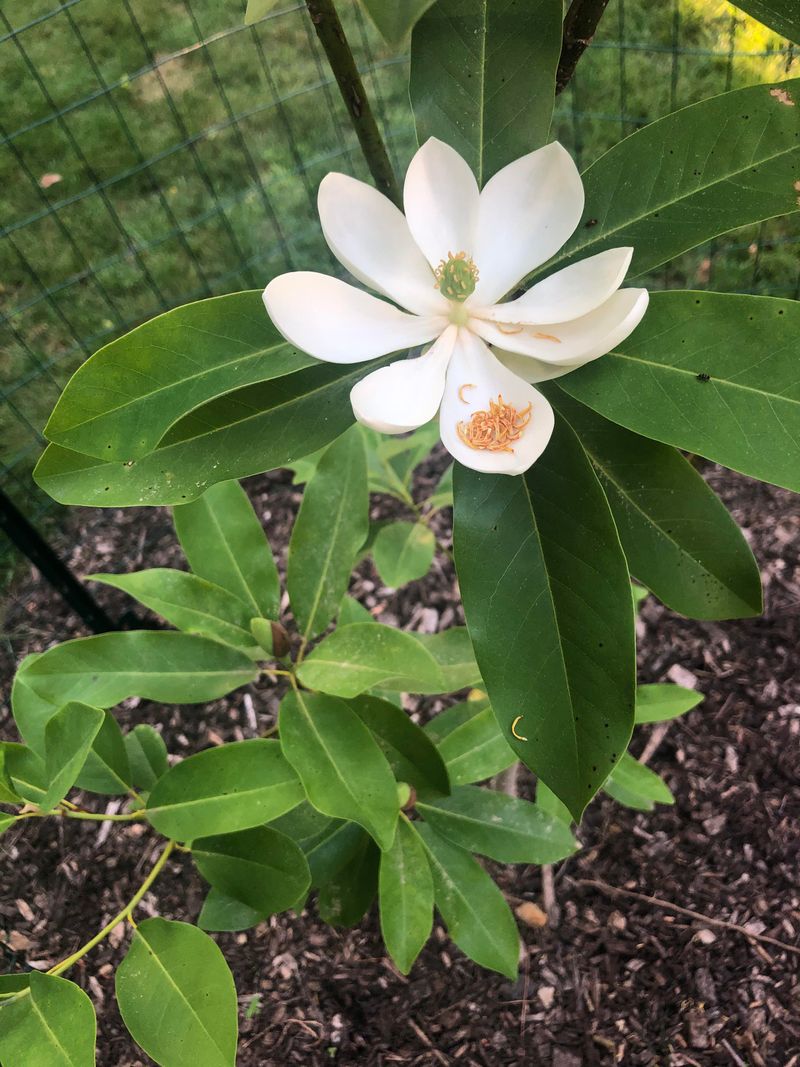
Sweetbay magnolia, Magnolia virginiana, brings the fragrance of a magnolia without the enormous crown of its Southern cousin.
Depending on region and site, it often matures around 10 to 35 feet tall. That more moderate scale makes it useful for smaller Florida properties, especially where the soil stays moist and a towering shade tree would be too much.
Creamy white flowers appear from late spring into summer.
The leaves have silvery undersides that flash in a breeze, giving the canopy a lighter look than the heavy foliage of Southern magnolia.
Regional behavior changes across the state.
Sweetbay can remain evergreen in warmer parts of Florida, while colder northern areas may see more seasonal leaf drop.
Moist, slightly acidic ground suits it particularly well.
Rain-garden edges, pond margins, and low sections of a yard can support this tree without the constant drainage anxiety that comes with plants adapted to drier soil.
Standing water right beside a foundation is still a site problem that deserves correction on its own.
Give sweetbay reasonable clearance from walls and rooflines. Its smaller canopy is easier to accommodate, not invisible.
Birds and small mammals use the red seeds that follow the flowers, adding habitat value without requiring a giant tree footprint.
For a damp Florida yard where laurel oak feels oversized, sweetbay magnolia offers a much gentler combination of height, fragrance, wildlife value, and manageable structure.
7. Let Sabal Palm Keep The Footprint Narrow
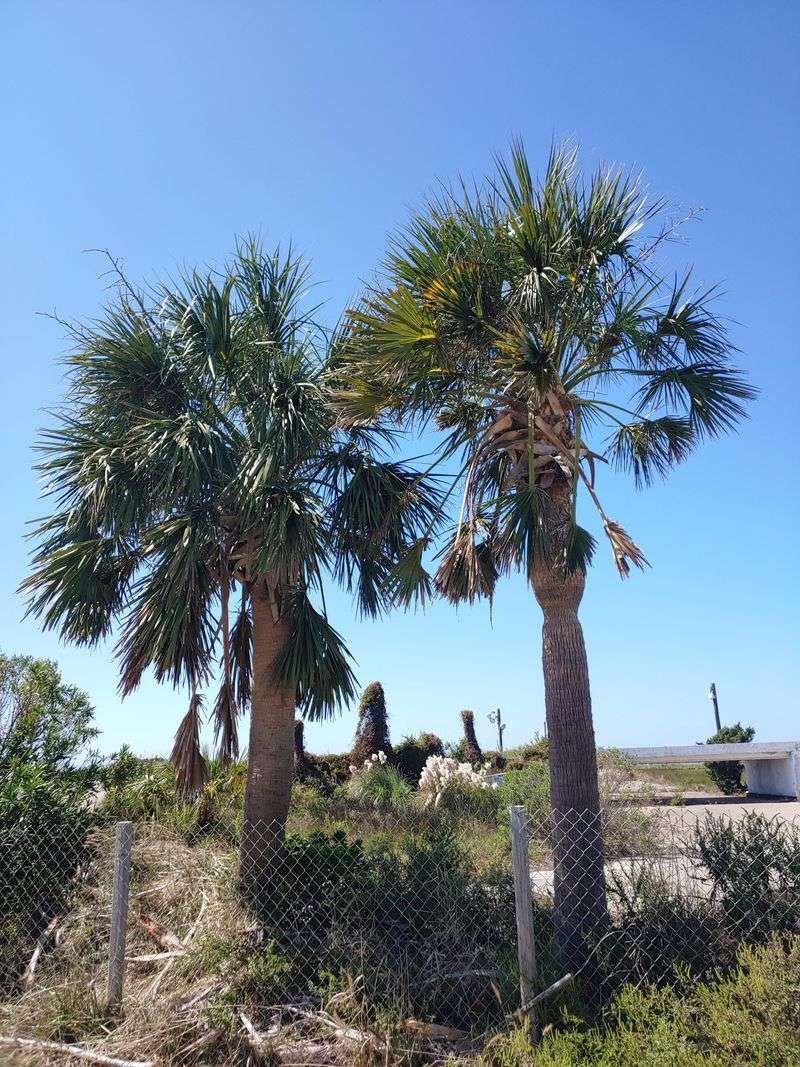
Tight lots create a problem that broadleaf trees cannot always solve.
Sabal palm, Sabal palmetto, keeps a narrow trunk while lifting its crown high above the ground, which makes it useful where horizontal planting space is limited.
Florida’s state tree also brings a landscape character that feels completely at home across much of the state.
Mature palms commonly reach 40 to 50 feet or more.
The trunk may stay relatively slim, but the crown still needs open air around it. Keep fronds clear of roofs, power lines, balconies, and other structures as the palm gains height.
Storm performance is one of its strengths.
The flexible form and native adaptation allow sabal palms to handle Florida wind better than many poorly structured ornamental trees, though severe storms can damage any plant.
Avoid unnecessary over-pruning.
Removing too many green fronds weakens the palm and strips away part of the crown it uses to produce energy. Brown, fully spent fronds are the more appropriate cleanup target.
Small dark fruits feed birds and other wildlife, and mature trunks can provide habitat opportunities over time.
Sabal palm works especially well where a homeowner wants vertical presence without a huge spreading root-and-canopy footprint near the house.
It will not create the same broad shade as a laurel oak.
That can be exactly the advantage. Sometimes the safest replacement is the tree that knows how to grow up without also trying to grow across the roof.