One August Watering Habit Sets Newly Planted Ohio Trees Back For Months
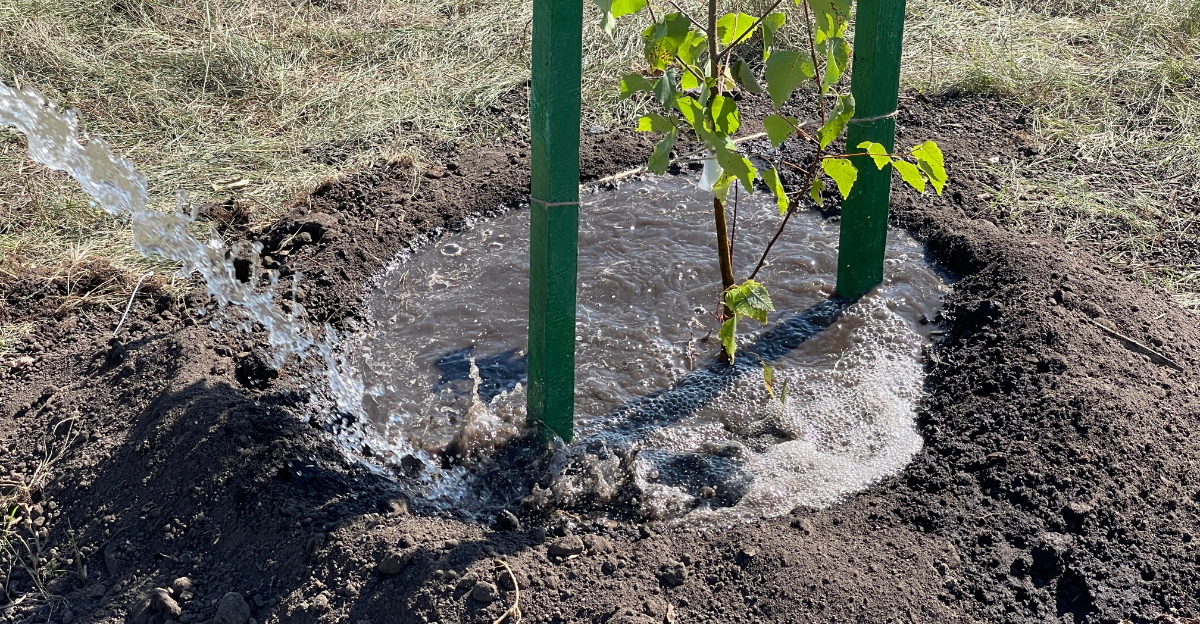
A newly planted Ohio tree in August is already working harder than it looks. Establishing roots in summer heat, managing moisture loss through leaves it cannot yet fully support, and doing all of it in soil that dries faster than any other time of year.
One watering habit makes that situation significantly worse. It feels responsible.
It looks like attentive care. And it sets the root development of a newly planted tree back in ways that do not surface until months later when the damage is already done and the cause is no longer obvious.
New trees planted in August need water differently than established trees, differently than the rest of the garden, and differently than the schedule that worked for the last planting.
Applying the wrong approach to the right intention is one of the more common ways Ohio trees enter their first winter already compromised.
The habit is specific. So is the fix.
1. A Quick Sprinkle Can Leave The Root Ball Thirstier Than It Looks
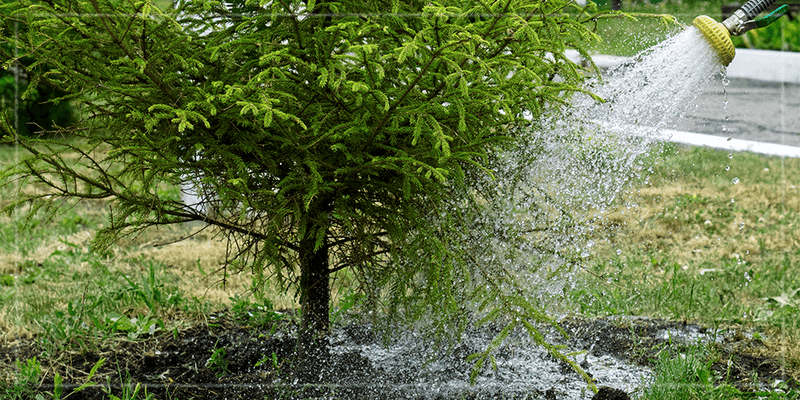
Dark, damp-looking soil around a young tree can create a false sense of security. Soil near the surface absorbs a small amount of water quickly, turning visibly darker within seconds.
But that color change says very little about what is happening a few inches down, where the root ball actually sits.
A quick pass with a hose or a brief sprinkler cycle may wet only the upper layer of soil. The root ball itself, which still holds most of the tree’s active roots during early establishment, can remain much drier than the surrounding surface suggests.
Ohio State University Extension guidance says the original root ball deserves special attention in newly planted trees. Their roots have not yet spread far into the surrounding soil.
Repeated shallow watering compounds the problem over time. Each session gives the surface a drink without pushing moisture down to where roots can use it.
Soil type, flow rate, slope, and compaction all affect how far water actually travels before it stops moving downward. A slow trickle on loose soil behaves very differently than a fast spray on packed clay.
Damp surface soil, a moist root ball, moist surrounding backfill, and saturated soil are four very different conditions. Treating them as the same thing leads to watering decisions based on appearance rather than actual moisture levels where roots need it most.
2. Check The Root Ball Before You Reach For The Hose
Pulling out the hose on a schedule feels responsible, but a calendar cannot tell you what the soil already contains. Checking actual moisture before adding more water is one of the most practical habits an Ohio homeowner can build around a newly planted tree.
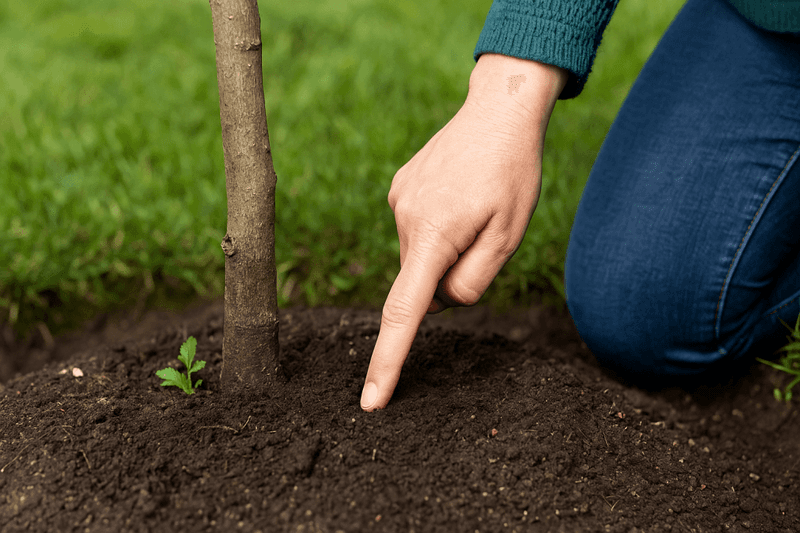
A simple and reliable method is to press two or three fingers a few inches into the soil near the edge of the root ball. If the soil at that depth feels cool and slightly damp, the root ball likely still has adequate moisture.
If it feels dry and crumbly even an inch or two down, watering is probably needed. University extension resources consistently point to this kind of direct tactile check as more reliable than visual surface observation alone.
Your Ohio Garden Changes Every Week. Your Plan Should Too.
Gardening in Ohio changes quickly throughout the season. Every Friday you’ll receive a simple weekly plan showing exactly what to plant, prune, fertilize, harvest, and protect so you never miss the right timing.
Rainfall complicates the picture in both directions. A brief afternoon shower may darken the soil without delivering meaningful moisture to the root zone.
Conversely, a slow, soaking rain over several hours can penetrate much more deeply. Do not assume either way without checking below the surface after rain.
Wilted or drooping leaves sometimes lead Ohio homeowners to water immediately, but wilting can have several causes. Heat stress, root damage, and excess soil moisture can all produce similar symptoms.
Checking soil moisture directly gives you a more reliable starting point than reading the leaves alone before deciding whether to water.
3. Slow Watering Gives Moisture Time To Reach The Roots
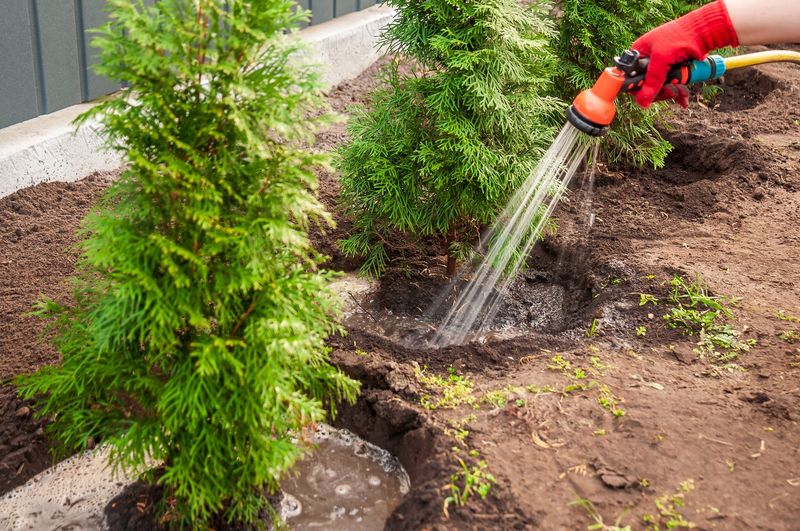
Speed matters more than most people realize when applying water to a newly planted tree. When water hits soil faster than it can absorb, the excess runs sideways across the surface or pools briefly before evaporating.
Very little of it reaches the root zone.
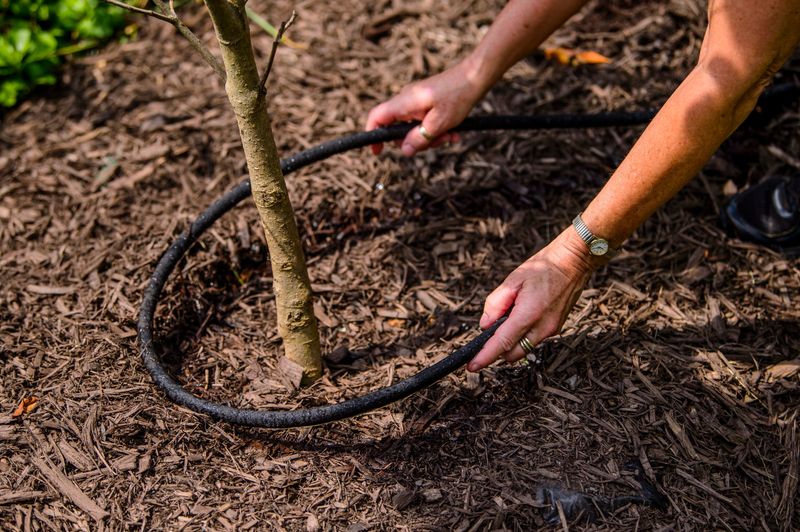
Applying water slowly gives the soil time to pull moisture downward through infiltration. A garden hose turned down to a slow, steady trickle placed near the root ball can be far more effective than the same amount of water sprayed quickly over a wider area.
Drip irrigation and tree watering bags work on a similar principle, releasing water gradually so the soil can absorb it at a natural pace.
Tree watering bags are not a universal solution. They work best for certain tree sizes and setups, and they require regular refilling to remain useful.
Still, the core idea behind them, slow and sustained delivery, reflects sound horticultural practice for newly planted trees.
Compacted or very dry soil can resist infiltration even when water is applied slowly. In those situations, water may begin to run off before soaking in.
Pausing mid-session and allowing the soil to absorb what has been applied before continuing can help. The distinction worth holding onto is that delivering water slowly is not simply a matter of leaving the hose on longer at the same high flow rate.
4. Soak The Planting Area Instead Of Wetting Only The Surface
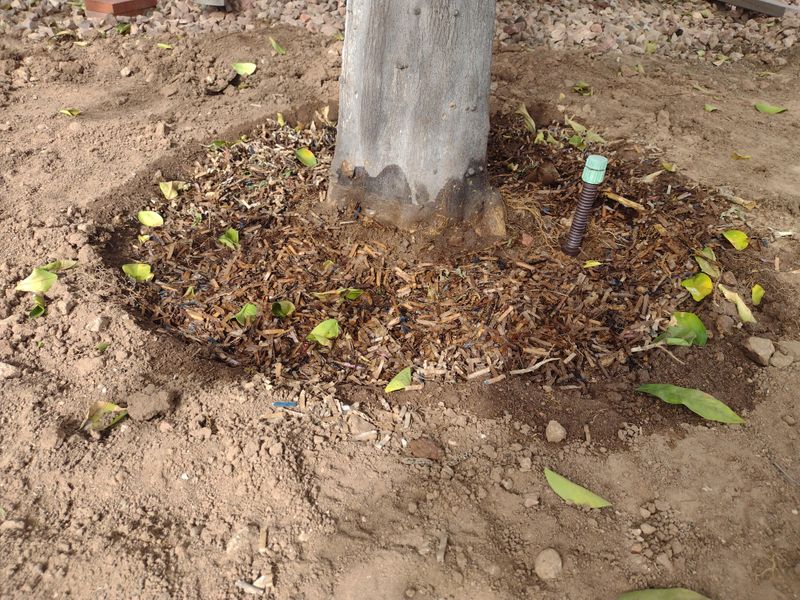
Most of a newly planted tree’s roots are still concentrated within or very close to the original root ball after planting. Roots need time to grow outward into the surrounding backfill soil, and that process takes more than a few weeks.
Watering strategy should account for both the root ball and the area around it.
Applying water only directly against the trunk misses much of the root zone, and keeping that area constantly wet can create other problems. Spread water across a broader area, from the trunk to roughly the outer edge of the planting hole and slightly beyond.
This encourages roots to grow into the surrounding soil as the tree establishes.
Soil texture in the surrounding backfill affects how water moves. Sandy soil drains quickly and may dry out faster than the root ball.
Heavy clay soil holds moisture longer but may also restrict how easily water moves through it. Neither extreme behaves the same as a loamy, well-structured soil.
Understanding your Ohio site’s drainage helps you decide where and how long to apply water during each session.
Poor drainage in the planting area can cause water to collect rather than soak in. That is a separate concern from shallow watering, and it calls for different attention.
Placement of water matters as much as volume. Getting moisture to the right location is just as important as making sure enough is applied.
5. Hot August Weather Changes How Often A Young Tree Needs Water
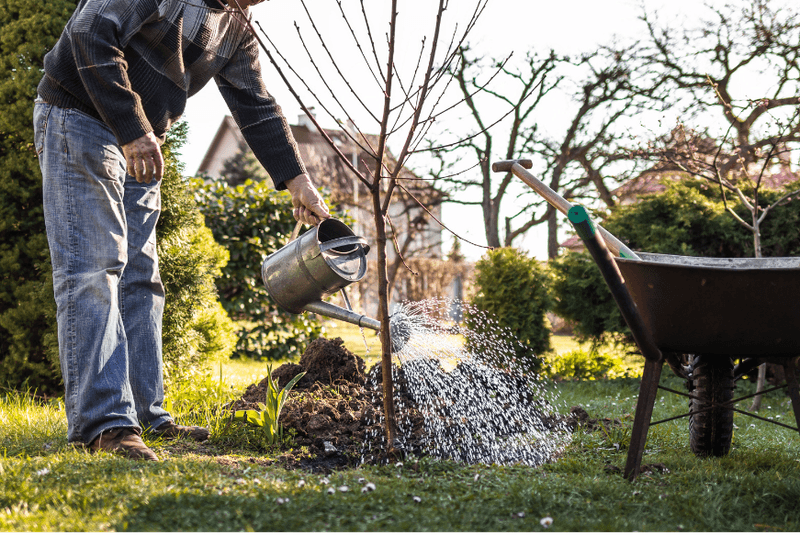
Soil moisture does not stay constant on its own. Heat, wind, and sun exposure all pull moisture out of the ground faster than cooler or calmer conditions would.
When those factors are intense, a tree that was adequately watered two days ago may need attention sooner than expected.
OSU Extension guidance notes that newly planted trees may need frequent watering during their first few weeks. This is especially true under warm and dry conditions.
That is not a license to water on autopilot. It is a signal to check soil moisture more often and respond to what you find rather than sticking to a fixed schedule.
Several factors interact to determine how quickly the root zone dries out. These include tree size, root ball size, soil type, drainage, mulch coverage, sun exposure, and whether recent rainfall was light or substantial.
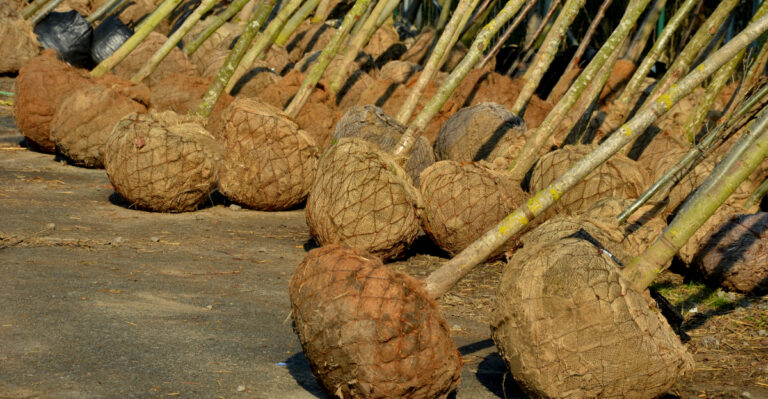
A small container-grown tree in a shaded spot with mulch will dry out more slowly than a large balled-and-burlapped tree in full sun on a breezy hillside.
As weeks pass and roots begin to grow into the surrounding soil, the tree draws from a larger volume of soil moisture. That shift, from a concentrated root ball to a broader root system, generally means watering can become less frequent over time.
Soil checks remain the most reliable guide throughout that transition, regardless of what the Ohio weather report says.
6. Mulch Helps Hold Moisture Where New Roots Can Reach It
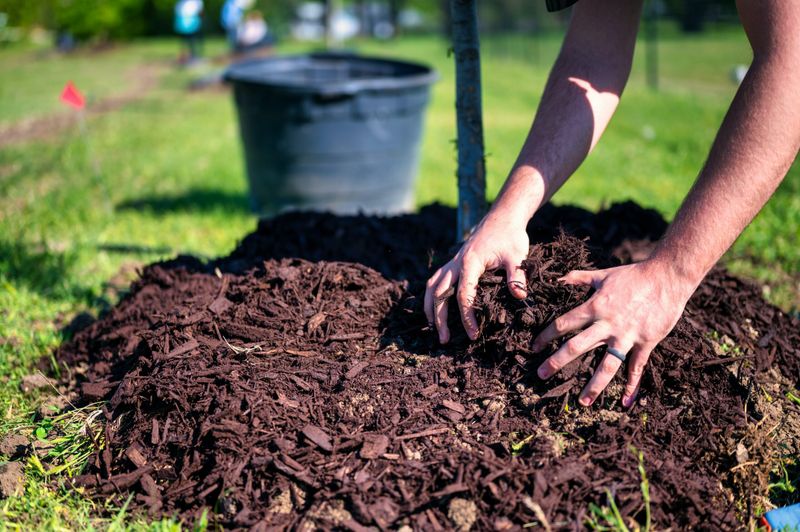
Bare soil around a newly planted tree loses moisture to evaporation much faster than mulched soil does. A properly applied mulch ring can slow that loss significantly, giving roots more time to absorb moisture between watering sessions.
OSU Extension recommends applying a two-to-four inch layer of organic mulch, such as wood chips or shredded bark, around newly planted trees.
The mulch should spread outward from the tree to cover a wide area, ideally matching or exceeding the width of the canopy.
Keeping the mulch several inches away from the actual trunk matters. Piling mulch directly against the bark can trap moisture against the wood and interfere with the root flare, which is the area where the trunk widens at the base.
Very deep mulch layers can also cause problems. Mulch piled too thick may prevent water from reaching the soil below.
It can also hold excessive moisture near the surface and create conditions unfavorable for root health. Two to four inches, applied correctly, is enough to moderate soil temperature and reduce moisture loss without those drawbacks.
Grass growing close to the trunk competes with the tree’s roots for water and nutrients. Extending the mulch ring outward removes that competition within the most critical zone.
Mulch does not replace watering, but it makes each watering session more effective by reducing how quickly the soil dries out afterward.
7. Too Much Water Can Be Just As Hard On A New Tree
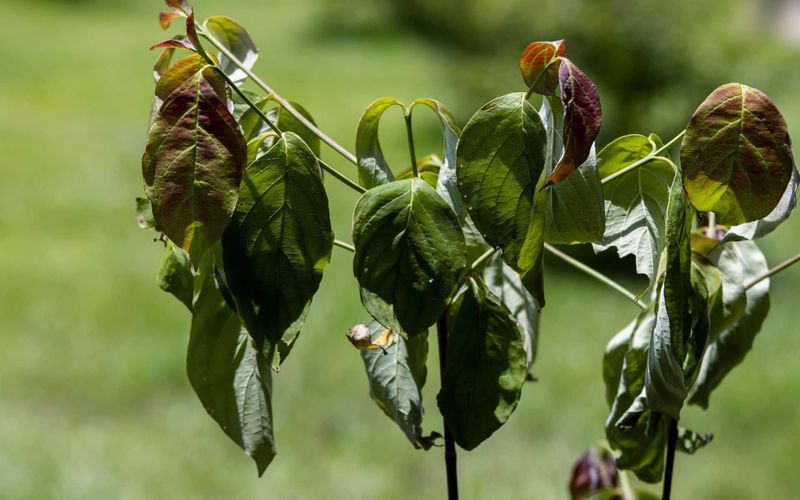
Reading an article about dry root balls and shallow watering can make it tempting to overcompensate. Flooding the planting area or keeping the root zone perpetually saturated creates a different set of problems, and it does not fix what shallow watering caused.
Roots require oxygen as well as moisture. Soil that stays saturated for extended periods can limit the oxygen available to roots.
That stress can affect root function in ways that look surprisingly similar to drought stress from the outside.
Yellowing leaves, wilting, and slow growth can appear under both conditions, which is why checking soil moisture directly matters more than reading symptoms alone.
Heavy or poorly drained soils stay wet longer after rain or watering. A site that already drains slowly may not need additional water as soon as a well-drained sandy site would.
Knowing your soil and drainage situation helps you avoid adding water when the root zone is already holding more than enough.
Deep watering and saturated soil are not the same thing. Applying enough water to penetrate several inches into the root zone is appropriate.
Keeping that zone wet around the clock is not the goal. Letting the soil partially dry between waterings, while monitoring to make sure it does not become bone dry, gives roots access to both moisture and air.
Checking before watering remains the most reliable way to stay on the right side of that line.
8. Keep Checking Moisture Long After The Leaves Look Fine
A tree that leafs out fully and holds its color through summer can look completely settled. Appearances at the canopy level do not always reflect what is happening underground.
Root establishment continues long after the tree stops showing visible signs of stress.
Research and extension guidance consistently note that tree establishment takes considerably longer than one growing season. Larger transplanted trees generally require more time than smaller ones.
A tree with a large root ball removed at planting starts with a significant reduction in its root system relative to its canopy size. Rebuilding that balance takes time, and the process depends heavily on consistent soil moisture during the growing season.
Late summer and fall are not seasons to abandon moisture monitoring. OSU Extension guidance supports continued watering of newly planted trees into fall, until the ground freezes, particularly during dry stretches.
Roots continue to grow and expand as long as soil temperatures remain suitable, even after leaves have dropped.
As roots grow outward into surrounding soil, the tree gradually draws from a larger area. That expansion is what true establishment looks like below ground.
Watering can become less frequent as that happens, but the transition should be guided by soil checks rather than by the calendar.
Root systems that expand steadily through consistent moisture management are better positioned to handle future dry periods on their own. That outcome takes patient, attentive care over more than one season.