9 Native Ohio Plants To Grow Instead Of Invasive Bradford Pear
Bradford pear had a moment. A long one.
Decades of spring bloom, tidy form, and reliable fall color built a loyalty that proved remarkably resistant to the evidence piling up against it. The evidence won eventually.
Ohio has been watching Bradford pear escape cultivated landscapes and establish in natural areas with a persistence that no amount of good intentions at the planting stage ever prevented.
The tree that looked responsible in the nursery became a problem that spreads itself without asking permission.
Ohio native trees that fill the same role are not consolation prizes. Several bloom earlier and more dramatically in spring.
A few offer better fall color. All of them belong in this landscape in a way Bradford pear spent its entire career pretending to.
The replacement conversation has been happening for years. For anyone still holding onto a Bradford pear, it is worth having one more time with the right information.
1. Downy Serviceberry Brings Back The White Spring Flowers
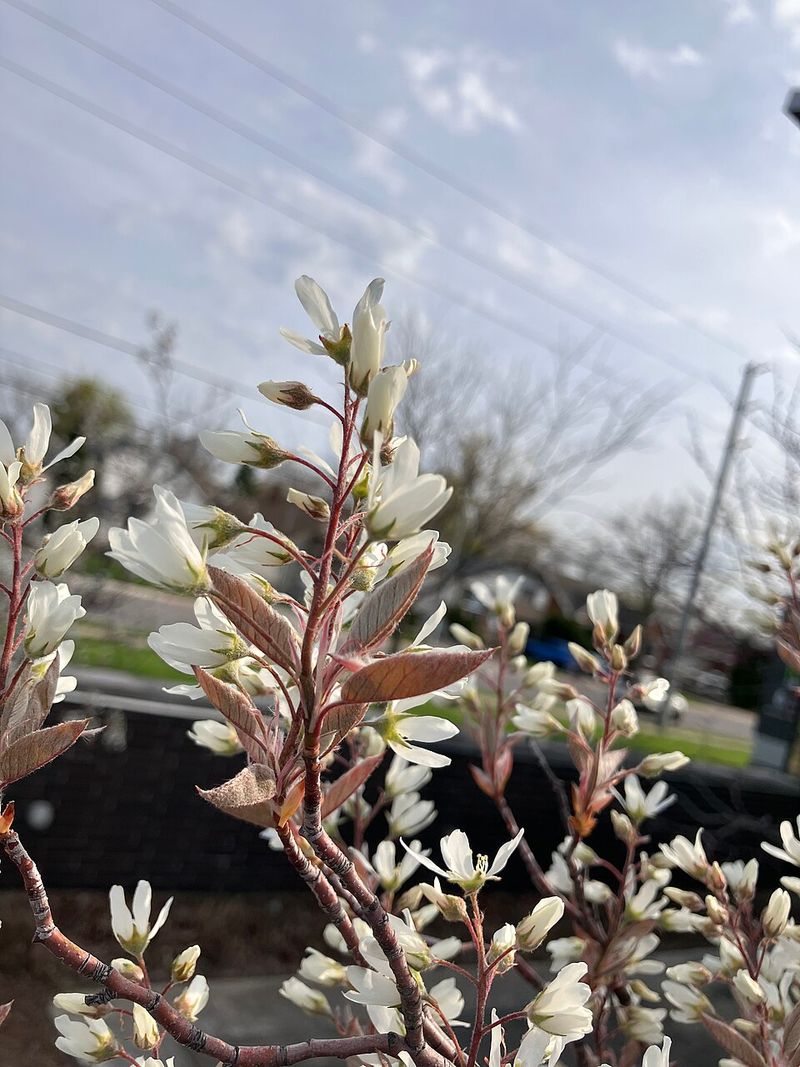
Few small trees put on a white spring show as early as Amelanchier arborea, commonly called downy serviceberry. Its clusters of delicate white flowers often open before the leaves fully emerge, creating a soft, lacy effect in late March or April.
That timing and color make it the most visually familiar swap for someone who loved Bradford pear’s spring display.
Downy serviceberry typically grows between 15 and 25 feet tall, sometimes reaching 30 feet in ideal conditions, with a spread of 15 to 20 feet. It can be trained as a small single-trunk tree or left to develop a natural multi-stemmed form.
Both habits work well in residential yards, and the layered branching adds winter structure after the leaves drop.
By early summer, small reddish-purple fruit ripen on the branches. Birds, including thrushes and waxwings, feed on this fruit readily.
The foliage turns shades of orange, red, and yellow in fall, adding a second season of color.
Downy serviceberry grows best in full sun to partial shade and prefers moist, well-drained, slightly acidic soil. It tolerates some clay but struggles in poorly drained spots.
One meaningful tradeoff compared with Bradford pear is that birds often strip the fruit quickly, so the ornamental fruiting period can be brief.
2. Eastern Redbud Trades White Blooms For A Brighter Spring Show
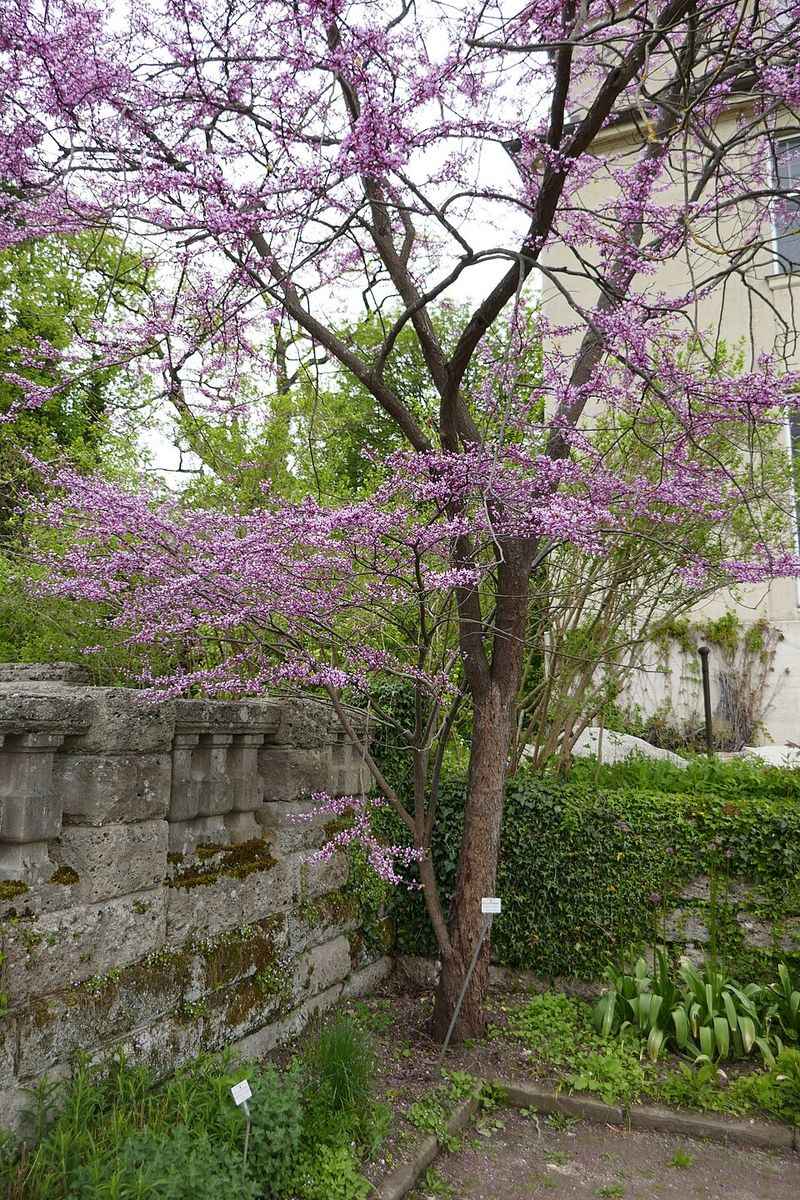
Vivid rosy-pink flowers covering bare branches in April make Cercis canadensis one of the most striking spring-flowering trees in the region. The color is completely different from Bradford pear’s white clusters, so this is not a visual copy.
It is a bolder, warmer spring statement that suits yards where a pop of color matters more than a white cloud of blooms.
Eastern redbud is native to Ohio and grows naturally along woodland edges and stream corridors. In the landscape it typically reaches 20 to 30 feet tall with a spread that can match or exceed its height.
That size places it comfortably in a medium residential yard, though it may be too wide for narrow tree lawns or tight side yards.
Your Ohio Garden Changes Every Week. Your Plan Should Too.
Gardening in Ohio changes quickly throughout the season. Every Friday you’ll receive a simple weekly plan showing exactly what to plant, prune, fertilize, harvest, and protect so you never miss the right timing.
Flowers emerge directly from the branches and trunk, a trait called cauliflory, which gives the tree an unusual and eye-catching texture. Flat seed pods follow the flowers and persist into winter, adding subtle structural interest.
Redbud grows best in full sun to light shade and prefers moist, well-drained soil. It does not perform well in heavy, compacted, or consistently wet ground.
A site with some afternoon shade can reduce stress in hotter, drier summers. Redbud tends to be relatively short-lived compared with larger canopy trees.
It often peaks around 20 to 25 years, a practical tradeoff worth considering before planting.
3. Flowering Dogwood Gives Smaller Yards Four Seasons Of Interest
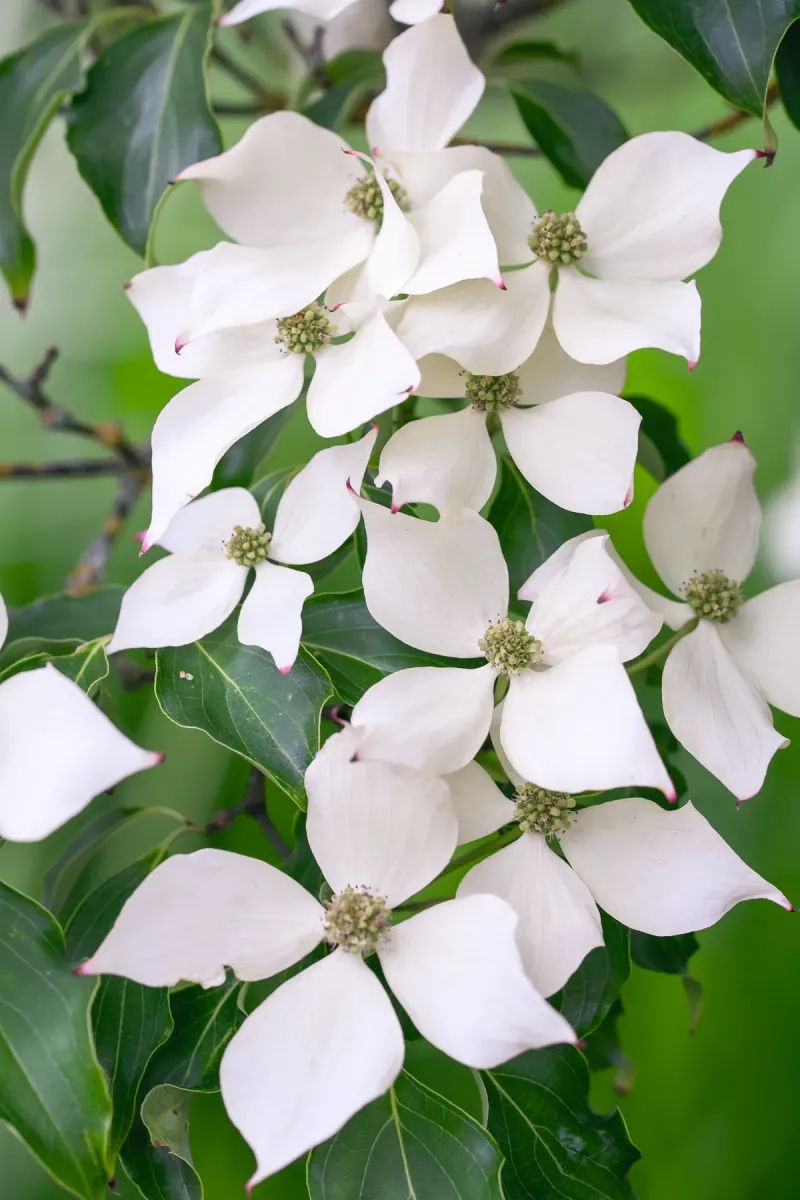
Layered horizontal branches, showy spring bracts, bright fall berries, and textured bark give Cornus florida a presence that changes meaningfully with every season.
The large white structures visible in spring are actually bracts, not true petals, surrounding a small cluster of flowers at the center.
That distinction does not reduce the ornamental impact, which is considerable in April and May.
Mature flowering dogwood typically reaches 15 to 30 feet tall with a similar or wider spread. That size fits many residential yards well, though the canopy can eventually shade out plantings beneath it.
The horizontal branching pattern is part of its appeal and sets it apart from the upright oval shape Bradford pear once provided.
Site selection matters more for this species than for most on this list. Flowering dogwood performs best in partial shade to full sun with good air circulation, moist but well-drained acidic soil, and mulched root zones.
It struggles in compacted soil, reflected heat from pavement, and sites with poor drainage.
Dogwood anthracnose, caused by the fungus Discula destructiva, is a serious concern in shaded, humid sites. Choosing a sunny or partially sunny location with good airflow reduces that risk significantly.
Fall color runs from deep red to burgundy, and the glossy red fruit clusters attract several bird species through late fall. The tradeoff is that this tree demands a well-chosen site to stay healthy long term.
4. American Hornbeam Fits Where A Massive Shade Tree Never Could
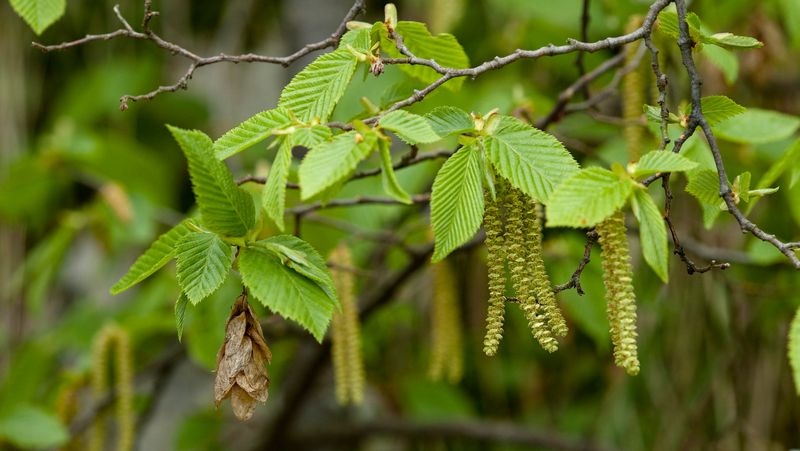
Smooth, gray, sinuously fluted bark gives Carpinus caroliniana a sculptural quality that few small trees can match. That trunk texture, sometimes compared to flexed muscle, is visible year-round and becomes especially striking in winter.
This is not a tree chosen for spring flowers. It earns its place through form, fine texture, and a quiet, steady presence in the landscape.
American hornbeam is native across much of the eastern United States, including Ohio. It grows naturally along stream banks and in moist woodland understories.
In the landscape it typically reaches 20 to 35 feet tall, sometimes less, with a broad, irregular crown. Growth is slow, which is a real tradeoff for anyone wanting quick results.
This species is genuinely shade tolerant, making it useful beneath taller trees or on the north side of structures where other ornamentals struggle.
It also performs well along moist edges and in low spots that drain reasonably well, though it is not suited to prolonged standing water.
Fall color ranges from yellow to orange and occasionally red, adding seasonal interest without being the tree’s primary selling point. Small nutlets attached to leafy bracts provide some food value for birds and small mammals.
Someone planting American hornbeam is prioritizing native understory character and refined scale over any comparison with Bradford pear’s flowering season.
5. Eastern Hophornbeam Handles A More Understated Landscape Role
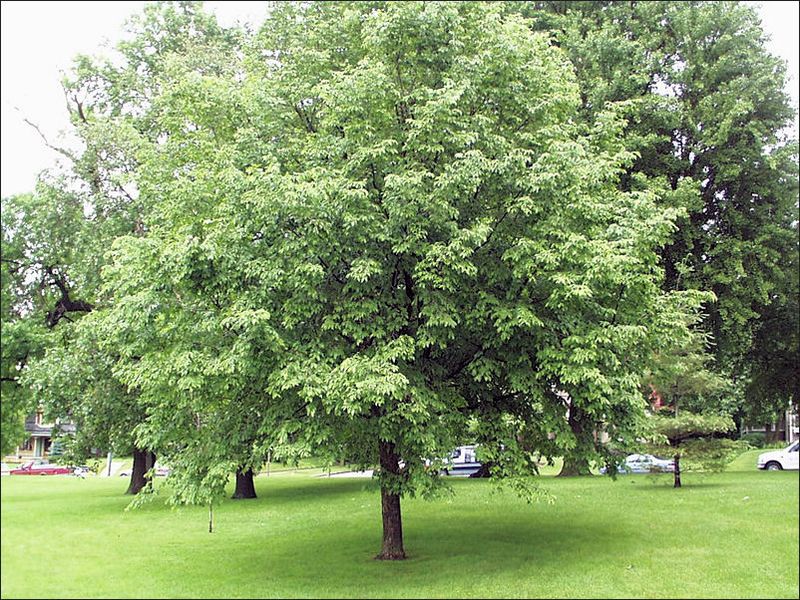
Shreddy, grayish-brown bark and papery hop-like fruit clusters give Ostrya virginiana a quiet but distinctive character that rewards close attention. The fruit structures, which resemble hops used in brewing, hang in clusters through late summer and into fall.
They are not flashy, but they add textural interest that stands apart from most ornamental trees.
Eastern hophornbeam is native to Ohio and is sometimes confused with American hornbeam because both are small native understory trees. The differences matter in practice.
Hophornbeam has shreddy, rougher bark compared with hornbeam’s smooth fluted surface. It also tends to tolerate drier, more upland conditions better than its relative, making it a useful choice for sites that are not consistently moist.
Mature height typically falls between 25 and 40 feet, with a spread of 20 to 30 feet. Growth is slow, often just a few inches per year, so patience is necessary.
That slow pace is the most significant tradeoff for most homeowners.
Full sun to partial shade suits this tree well. It adapts to a range of soils, including drier, rocky, or sandy ground, as long as drainage is adequate.
Fall color is a modest yellow. Wildlife value includes seeds eaten by various bird species and small mammals.
Someone choosing hophornbeam is selecting a long-lived, structurally interesting native tree rather than a seasonal flower substitute.
6. American Plum Adds Spring Flowers With Fruit Later In The Year
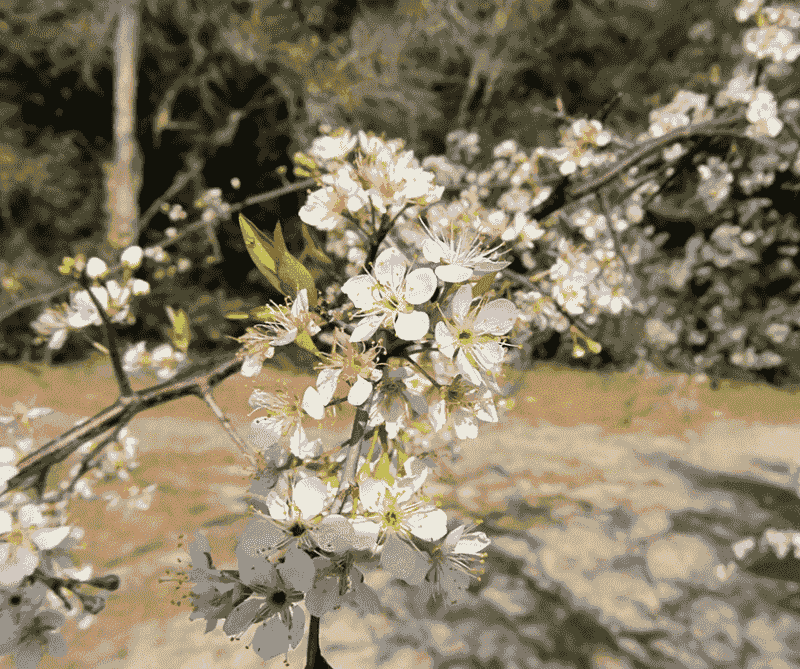
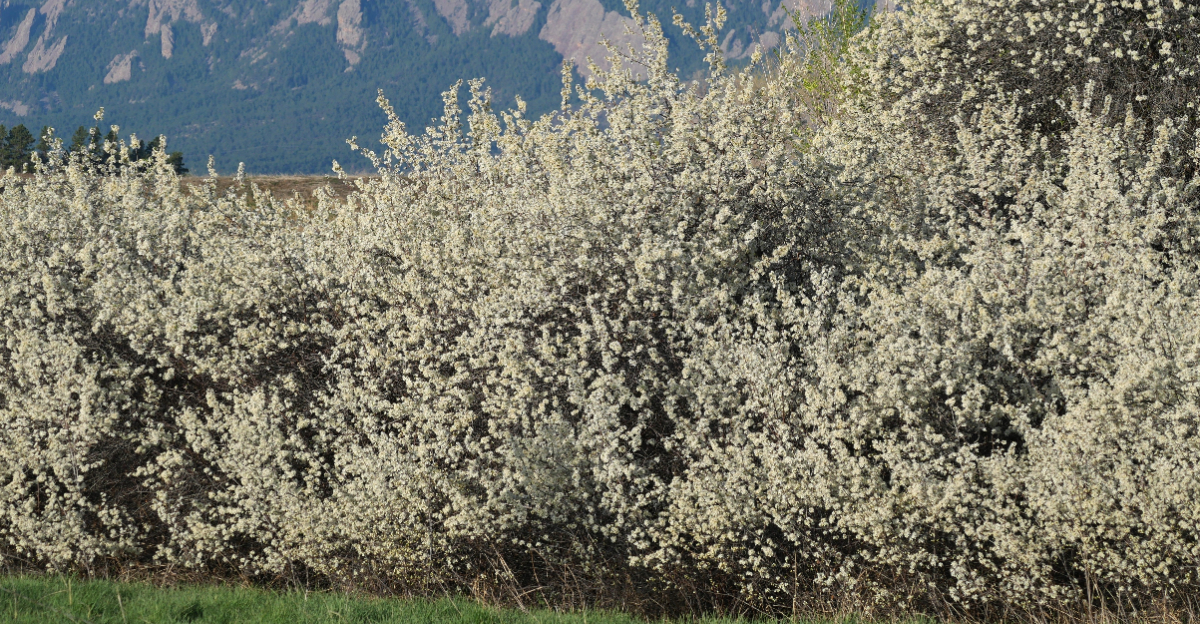
Clusters of small white flowers cover the branches of Prunus americana in April, just before or as the leaves emerge. The effect is bright and noticeable, arriving at roughly the same time as Bradford pear’s bloom.
That makes American plum one of the more comparable spring-flowering alternatives on this list. The flowers also carry a light fragrance, which Bradford pear notably lacks.
American plum is native to Ohio and grows naturally in thickets along woodland edges, roadsides, and disturbed ground. In the landscape it typically reaches 15 to 25 feet tall.
It tends to spread by root suckers and can form a dense colony over time. That suckering habit is important to understand before planting.
In a naturalistic setting or along a property edge, a spreading thicket can be desirable. Near a sidewalk, driveway, or foundation, it becomes a management problem.
Small yellow to red plums ripen in late summer. The fruit is edible and attracts a range of wildlife, including several bird species and mammals.
Full sun encourages the best flowering and fruit production. American plum is adaptable to many soil types and tolerates moderately dry conditions once established.
The tradeoff is clear: this plant suits informal, naturalistic, or larger-scale settings far better than tight urban lots. It is a spring flower and wildlife plant first, and a tidy ornamental specimen second.
7. Chokecherry Gives Wildlife More Than Bradford Pear Ever Offered
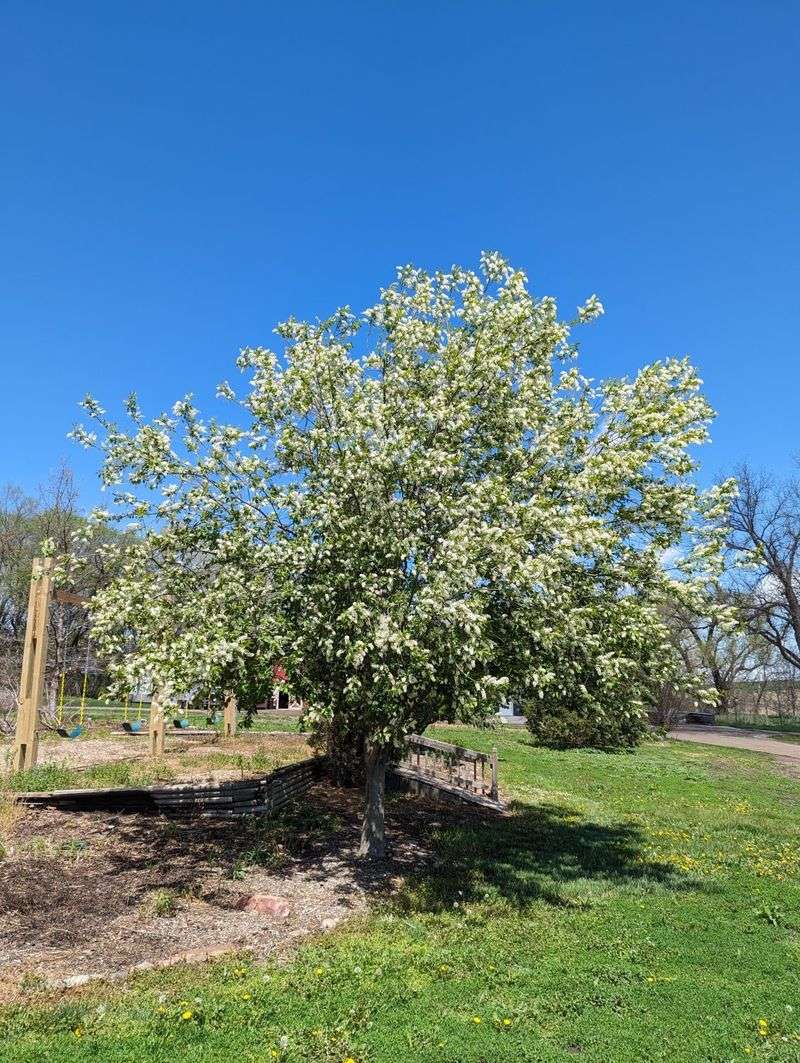
Long, cylindrical clusters of small white flowers appear on Prunus virginiana in May, followed by dark red to nearly black fruit by late summer.
That fruit is a documented food source for a wide range of bird species, including robins, cedar waxwings, and several thrush species.
The ecological role this plant fills is genuinely different from what Bradford pear provided.
Chokecherry is native to Ohio and grows naturally at woodland edges, along stream banks, and in open disturbed areas. It typically reaches 20 to 30 feet in height and often develops a multi-stemmed, shrubby form.
Like American plum, it spreads by root suckers and can form colonies. That behavior makes it most suitable for naturalistic plantings, larger properties, or habitat-focused areas rather than formal front yards.
Full sun to partial shade suits chokecherry well. It is adaptable to a range of soils and moisture levels, though it performs best in moist, well-drained ground.
Chokecherry can be susceptible to tent caterpillars and black knot fungus, so site conditions and occasional monitoring matter.
This is not the right plant for someone who wants a neat, single-trunk ornamental near a front entrance. It fills a different role: a productive, wildlife-supporting edge plant with genuine seasonal interest from flowers through fruit.
Choosing it means prioritizing habitat function over ornamental formality.
8. Downy Hawthorn Keeps The Flowers And Adds Better Habitat Value
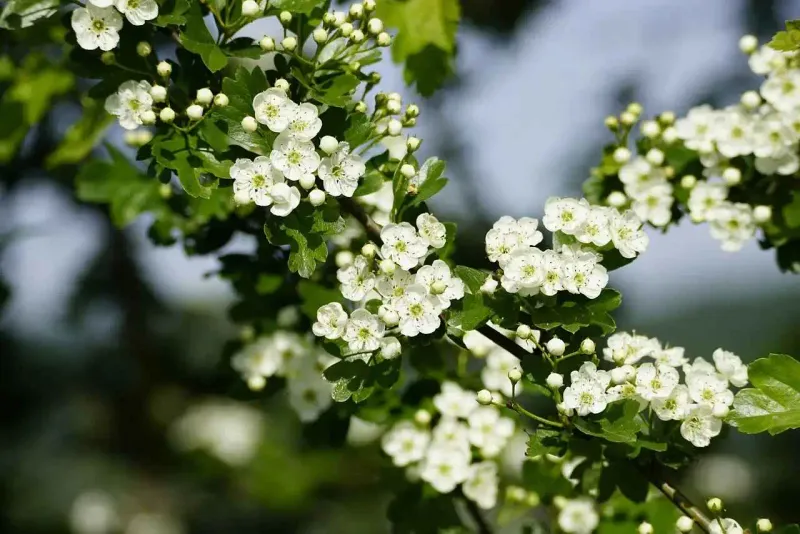
Clusters of white flowers in May give Crataegus mollis a spring presence that connects it most directly to the visual appeal Bradford pear once offered. The flowers are followed by large, red, apple-like fruit called haws that ripen in late summer and persist into fall.
Several bird species eat those haws, including cedar waxwings, robins, and various thrushes. That gives the tree a productive ecological role through multiple seasons.
Downy hawthorn is native to Ohio and typically reaches 20 to 35 feet tall with a broad, rounded crown of similar spread. It grows well in full sun and tolerates a range of soil types, including clay, as long as drainage is reasonable.
Moisture adaptability is one of its practical strengths.
The thorns are a serious practical consideration and should not be overlooked. Downy hawthorn produces stout thorns that can reach an inch or more in length.
Planting it near walkways, play areas, or tight entrances creates real hazards. It suits open lawn areas, property edges, and larger landscapes where clearance from foot traffic is not an issue.
Fall color tends toward yellow to orange. The dense, thorny branching also provides nesting cover and protection for small birds.
The tradeoff compared with Bradford pear is clear: more habitat value and seasonal interest, but thorns that demand careful placement decisions.
9. Blackgum Is The Pick When Fall Color Matters As Much As Spring
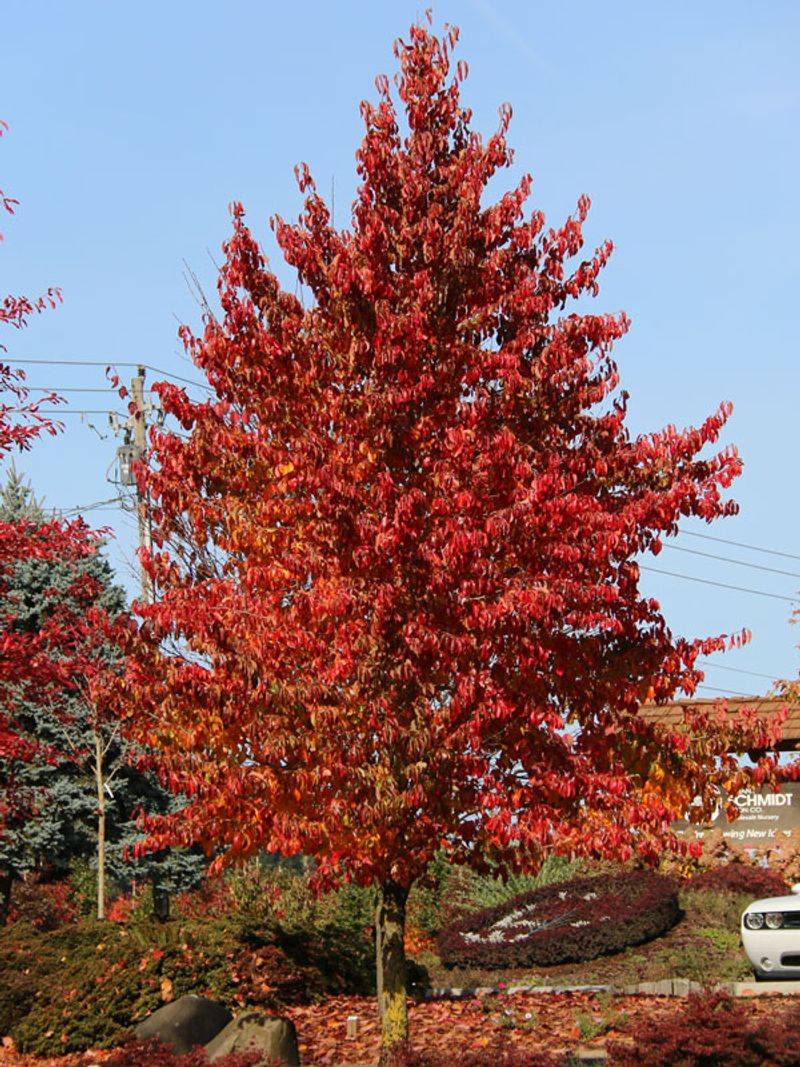
Scarlet, orange, and sometimes purple fall foliage make Nyssa sylvatica one of the most visually dramatic trees in the region during autumn. The color arrives reliably and early, often before many other trees have begun to change.
That fall performance is the central reason to choose this tree, and it is worth being direct: blackgum is the least direct Bradford pear substitute on this list.
Blackgum is native to Ohio and grows naturally in moist forests, bottomlands, and upland woods. Mature trees typically reach 30 to 50 feet tall, sometimes taller, with a spread of 20 to 35 feet.
That size puts it in a different category from Bradford pear’s more compact form. It is not a fit for small front yards or sites beneath utility lines.
Spring flowers are small and inconspicuous, attracting bees but offering no visual substitute for Bradford pear’s white bloom. Small, dark blue-black fruit ripen in fall and are eaten by several bird species, including wood ducks, robins, and woodpeckers.
Full sun to partial shade suits blackgum, and it grows best in moist, acidic, well-drained to moderately wet soil.
Young trees can be slow to establish and are sometimes sensitive to transplanting, so proper planting depth and consistent moisture during the first few years matter.
A gardener choosing blackgum is making a long-term investment in fall color and native canopy presence rather than a seasonal flower display.