Why Salal Is One Of The Toughest Plants For Dry Oregon Shade
A shaded Oregon backyard can look calm while a battle is happening under the surface.
Tall conifers pull moisture from the soil, summer rain nearly disappears, and roots from established trees occupy the ground where smaller plants are expected to survive.
By August, a spot that seemed merely shady in spring can feel almost hostile. Lawn thins out. Tender perennials fade. Fresh mulch keeps disappearing beneath needles and leaves.
Yet some woodland corners remain covered in glossy green growth with barely any attention.
That contrast is worth noticing.
The plants that succeed there are not necessarily the ones with the biggest flowers or the fastest nursery growth.
They tend to understand lean soil, filtered light, seasonal drought, and competition at root level in ways many garden favorites never will.
So what makes one low evergreen especially suited to that difficult combination?
The answer lies in how it grows, spreads, holds foliage, and fits beneath the Oregon canopy that makes so many other groundcovers struggle through the driest part of summer.
1. Let Salal Handle Dry Shade Naturally
Dry shade under mature Oregon trees is not empty space. It is a root competition zone.
Salal, Gaultheria shallon, is well suited to that kind of woodland setting because it naturally grows beneath conifers and other forest trees across western Oregon.
Once established, it can tolerate the combination of shade and summer dryness far better than many ornamental groundcovers that expect regular irrigation.
Establishment still matters.
New plants need dependable moisture while roots spread into surrounding soil. During the first one or two dry seasons, check the root zone regularly and water deeply enough to reach below the surface.
A young salal planted in June and forgotten in July has not suddenly become a forest veteran.
After establishment, irrigation can usually become less frequent on suitable sites.
Cool shade, organic surface litter, and a broad root zone all help the plant ride through Oregon’s dry summer pattern. Hot inland locations or exposed slopes may still need occasional supplemental water during extended dry spells.
Avoid pushing salal into blazing afternoon sun simply because the species is tough.
The plant is at its best where light is filtered, roots stay relatively cool, and the soil drains without drying to powder every week.
Dry shade is difficult because most plants are asked to live on leftovers. Salal is one of the rare shrubs that already knows the menu.
2. Keep Evergreen Foliage Under The Canopy
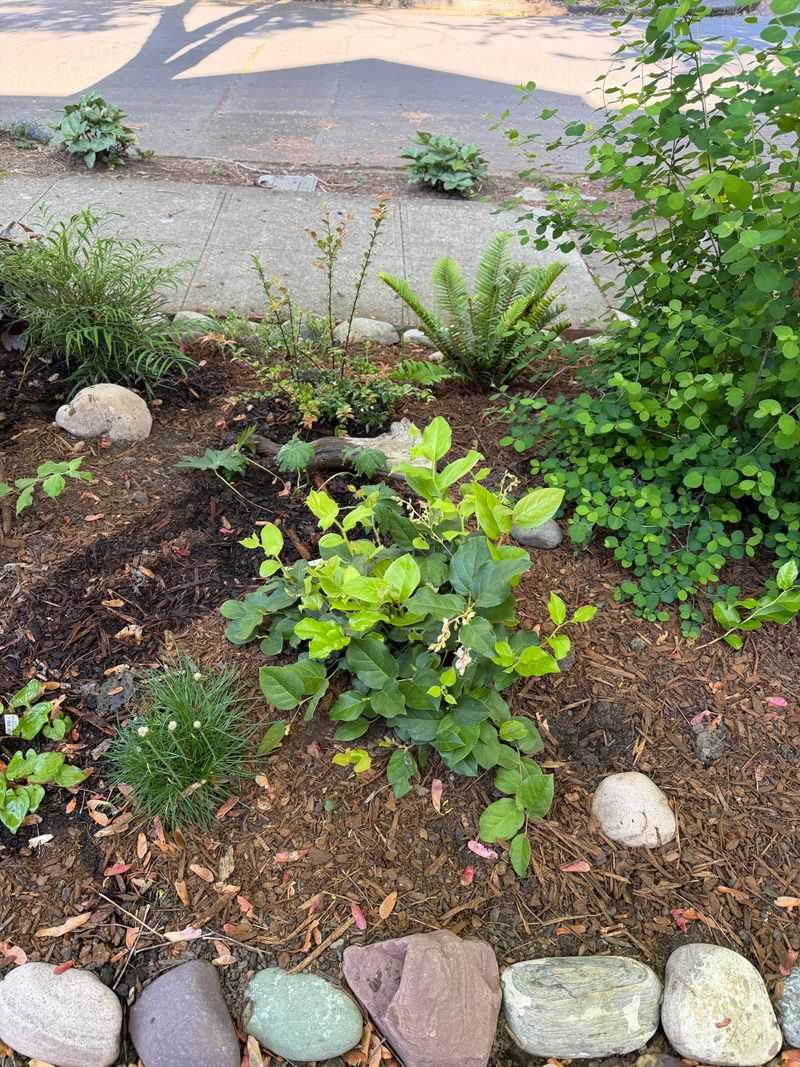
One reason salal works so well beneath trees is that it keeps doing its visual job through winter.
The broad, leathery leaves remain evergreen, giving shaded beds structure after deciduous shrubs and perennials have finished for the year.
In a dark Oregon corner, that steady foliage can make the difference between a planted understory and a patch that looks abandoned from November through February.
Height changes with the site.
In leaner, sunnier, or drier conditions, salal may stay relatively low and compact. In richer soil with dependable shade and more moisture, established plants can become much taller and more shrub-like.
Your Oregon Garden Changes Every Week. Your Plan Should Too.
Gardening in Oregon changes quickly throughout the season. Every Friday you’ll receive a simple weekly plan showing exactly what to plant, prune, fertilize, harvest, and protect so you never miss the right timing.
That flexibility matters because the same species can behave like groundcover in one yard and a substantial thicket in another.
The leaves help explain some of that toughness.
They are thick, glossy, and built to persist rather than being replaced every season. Their deep green surface also holds up well against the muted light beneath conifers, where pale foliage can disappear visually.
Use mature size as a planning tool.
A salal planted three feet from a walkway may eventually lean into that space on a favorable site. Give the colony room to develop instead of treating each nursery pot as a permanently tidy mound.
Evergreen does not mean motionless.
Salal changes slowly through the year, but it never completely leaves the stage. In an Oregon shade garden, reliable foliage can be more useful than one spectacular week of bloom.
3. Use Its Colonies To Cover Bare Ground
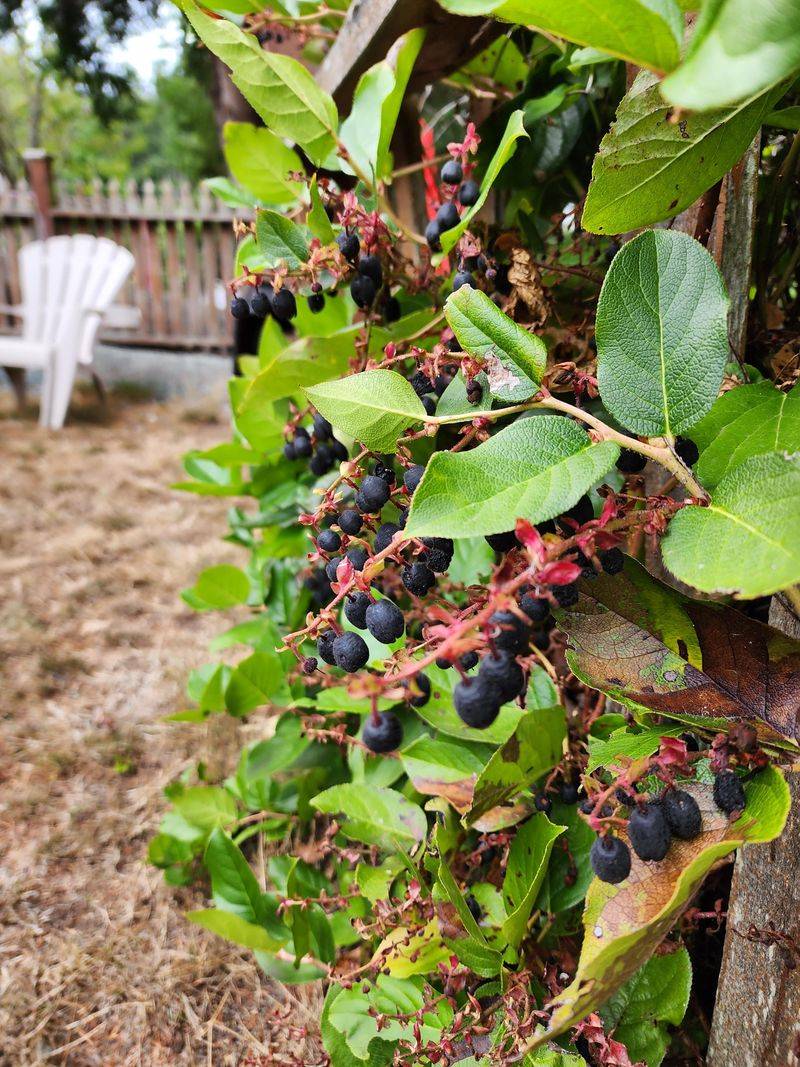
Salal does not fill bare ground by racing across the surface in one season.
It spreads gradually through underground rhizomes, sending up new shoots as the colony expands. That habit is useful beneath mature trees where lawn struggles and repeated replanting becomes expensive.
Over time, several well-placed plants can begin to read as one connected understory rather than separate shrubs.
Patience is part of the bargain.
A new planting may look sparse for the first year or two, especially where root competition is strong. Good establishment water and weed control help the young plants build enough root mass to begin moving outward.
Once the colony thickens, bare soil becomes less obvious.
Dense evergreen foliage shades the ground, while stems and leaf litter soften the open spaces between trunks. The effect feels far more natural beneath firs and maples than forcing turf into a site that never wanted to be a lawn.
Do not expect salal to smother every weed automatically.
Persistent weeds can still emerge through gaps, especially before the colony closes. Hand removal is easiest while the planting is young and the rhizome network remains simple.
The payoff comes with time.
A mature patch can cover awkward banks, woodland edges, and broad shaded strips with far less visual fuss than a collection of individual perennials.
Salal is not a speed solution. It is a long-game groundcover that slowly convinces bare soil to stop being the main feature.
4. Let Pink Flowers Feed Spring Visitors
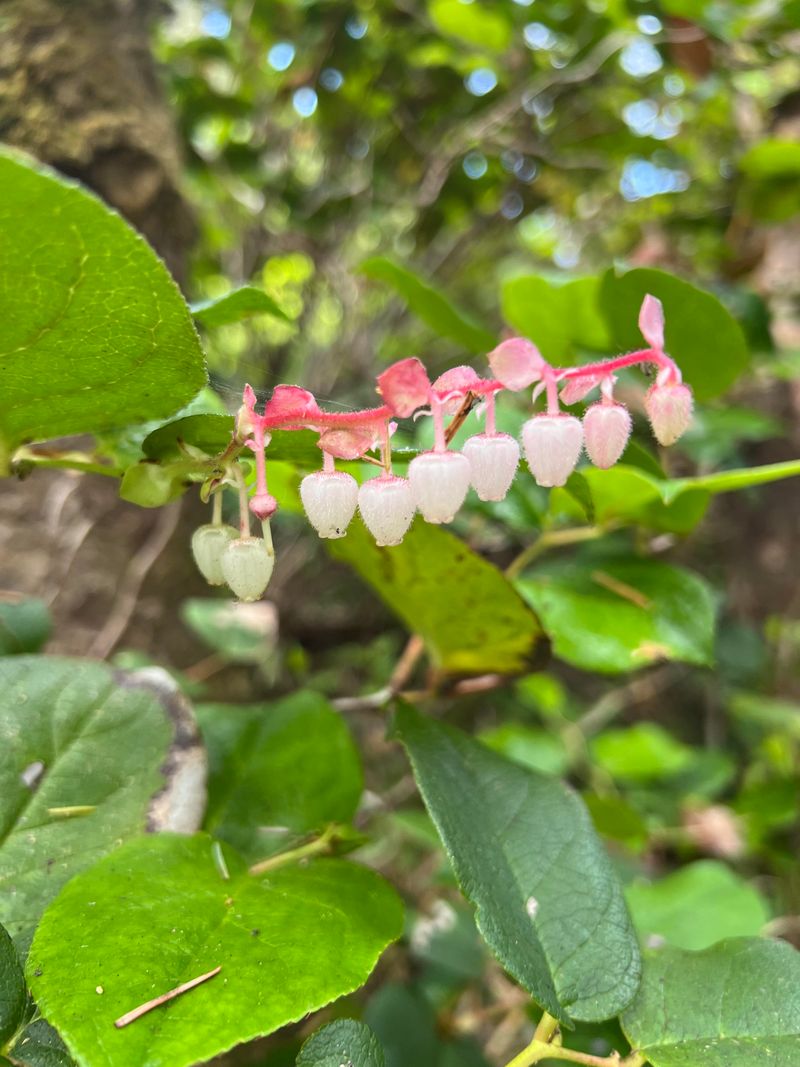
Salal’s spring flowers are easy to miss from the patio and much harder to ignore once you kneel beside the plant.
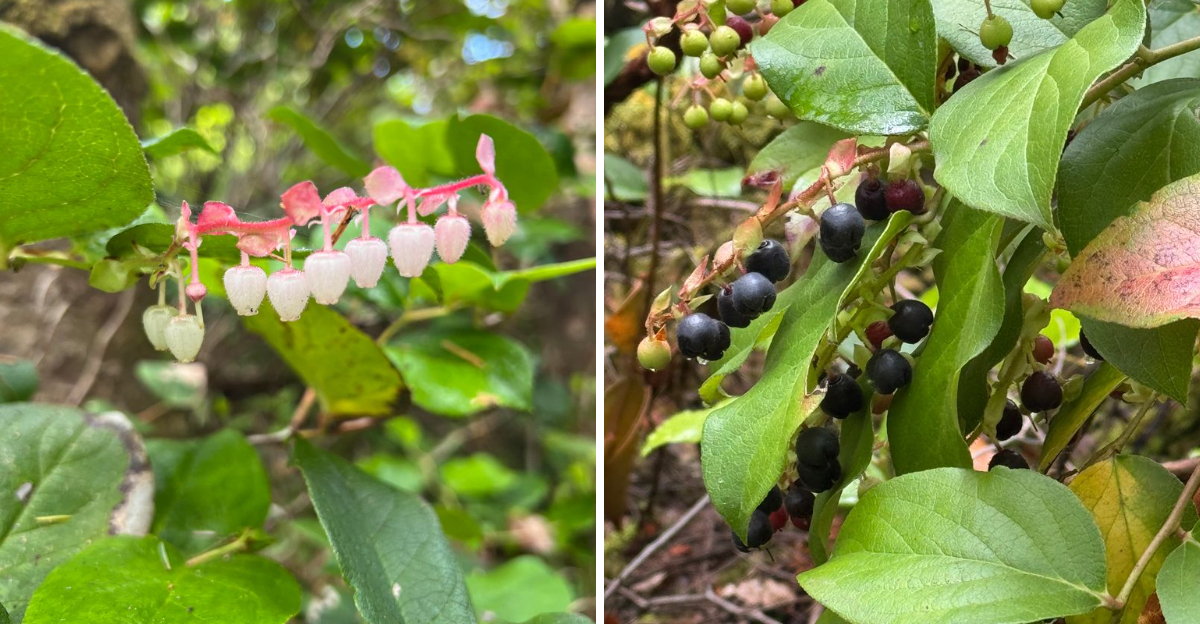
Small urn-shaped blooms hang from arching clusters, usually in white to soft pink tones. They are not oversized or flashy, but they add a delicate layer of interest to an evergreen shrub that already earns its space through foliage.
Pollinating insects notice them too.
Bees and other visitors use the flowers during the spring and early-summer bloom period. In a shaded Oregon garden, that matters because dense tree cover can limit the number of flowering plants that perform well at ground level.
Let the flower clusters stay on the plant.
Cutting them for tidiness removes the fruit that follows later in the season. A naturalized planting benefits more from letting the full cycle play out from bloom to berry.
Pair salal with plants that extend the flowering calendar.
Native currants, woodland perennials, and other shade-tolerant species can provide bloom before or after salal, giving insects a longer sequence of resources.
Keep expectations realistic.
Salal will not turn a dark conifer understory into a pollinator meadow. Its contribution is smaller and quieter, but that does not make it meaningless.
The best woodland gardens often work through accumulation.
One shrub flowers here, another opens later, and a fern fills the space between them. Salal’s little pink bells are part of that layered rhythm, proving that useful flowers do not always need to shout.
5. Leave Purple Berries For Wildlife
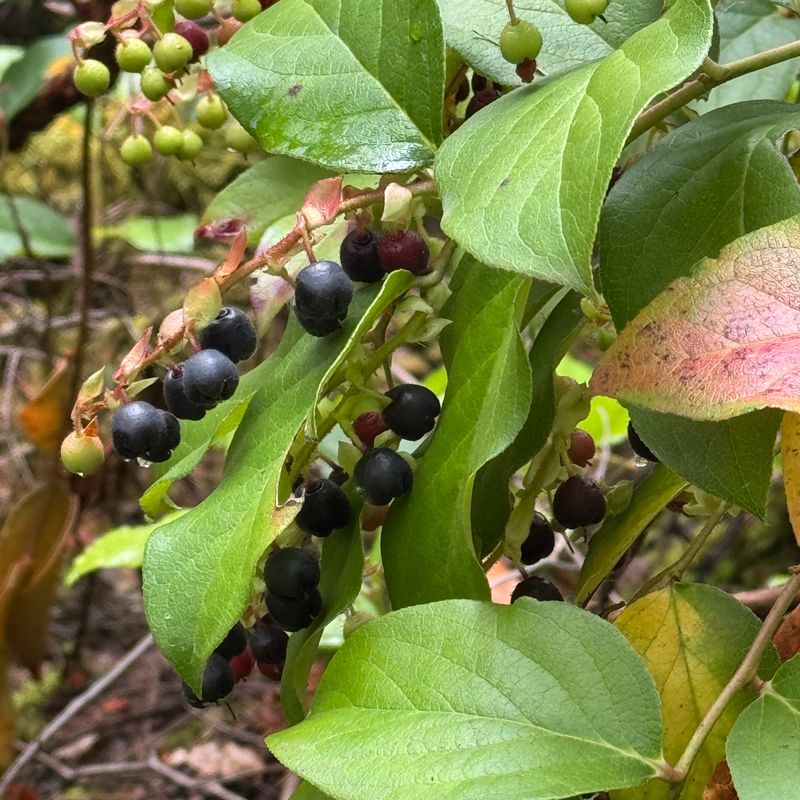
By late summer, salal shifts from flowers to dark fruit.
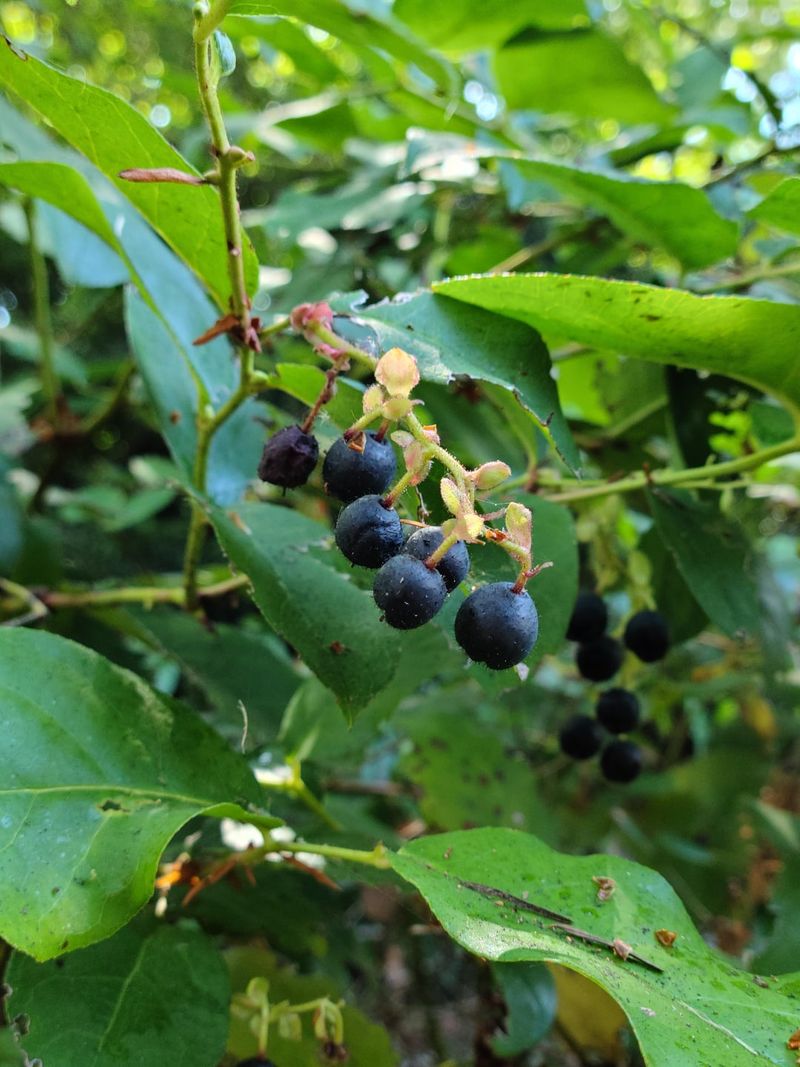
The berries mature from reddish tones toward purple-black, standing out against glossy evergreen leaves. Birds and mammals use the fruit, making a mature patch more than a decorative carpet beneath trees.
Leaving the berries in place extends the plant’s wildlife value into the later season.
Salal can contribute one more food source while the surrounding landscape moves toward autumn.
The berries also carry deep cultural significance in the Pacific Northwest.
Indigenous peoples have long gathered and used salal fruit as food. Gardeners sometimes sample ripe berries too, though the plant’s ecological role matters more in most landscapes.
Avoid trimming the shrub immediately after flowering.
That removes developing fruit and shortens the seasonal sequence that makes salal interesting. Pruning is better reserved for boundary control, damaged stems, or places where the colony has grown beyond its allotted space.
Fruit production can vary by light, plant vigor, and growing conditions.
A heavily shaded patch may not perform exactly like one receiving brighter filtered light, so berry abundance should be treated as a bonus rather than a fixed annual guarantee.
Salal already covers soil and holds evergreen foliage. The berries add another reason to leave the plant a little less polished.
A woodland edge does not need to look clipped to look cared for. Sometimes the birds are handling the final harvest.
6. Give Salal Room To Spread Underground
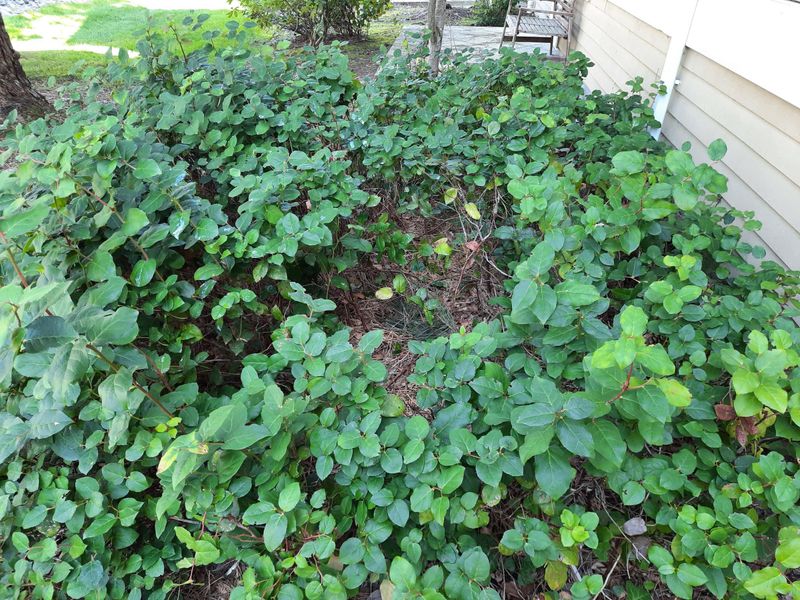
The same rhizomes that make salal useful as groundcover can become frustrating beside a narrow path.
Established plants expand laterally, sending new shoots beyond the original crown. On a broad woodland bank, that is exactly what the gardener wants. Along a formal border, the same habit can turn into regular edge work.
Choose the planting zone with future width in mind.
Wide strips beneath conifers, naturalized fence lines, and transitions between lawn and woodland give salal enough room to move without creating constant conflict. Tight raised beds and tiny pockets between paving are much less forgiving.
Young nursery plants are usually the easiest way to establish a new patch.
Large pieces dug from an old colony can lose significant roots and may recover slowly. Starting with healthy container plants gives the new planting a cleaner beginning.
Do not crowd the first plants simply to make the bed look finished.
The empty space between them is temporary on a suitable site. Allowing room for expansion reduces future competition and makes the eventual colony look more natural.
Mark hard boundaries before planting.
A walkway, lawn edge, utility access zone, or neighboring perennial bed should have a clear line that can be monitored as runners approach.
Salal does not spread because it is badly behaved. It spreads because that is how it survives and occupies woodland ground.
Give it a three-foot prison, and the rhizomes may spend years filing botanical appeals through the edging.
7. Control Runners At The Garden Edge
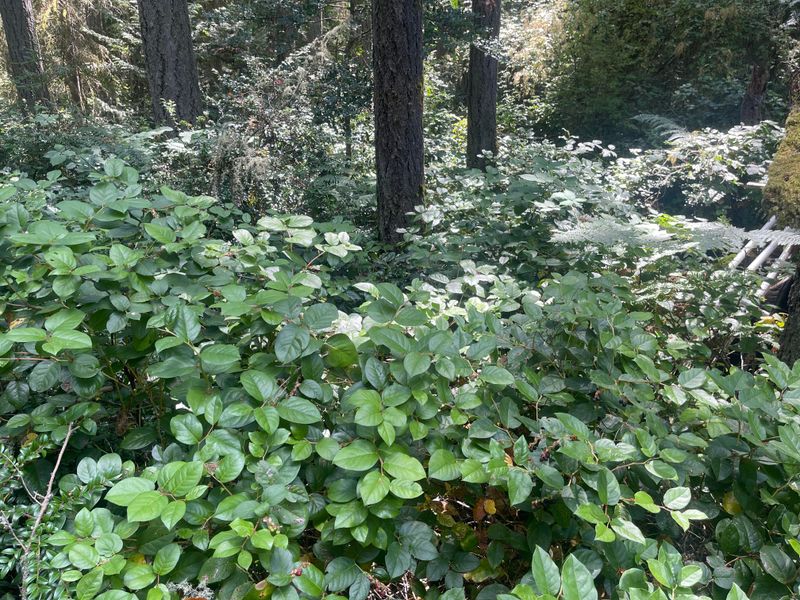
Salal is easiest to manage where gardeners watch the perimeter rather than constantly cutting the top.
Rhizomes do the spreading underground, so shearing the foliage does little to stop the colony from advancing.
A cleaner strategy is to inspect the edge during the growing season and deal with new shoots before they become part of a larger network.
Use a sharp spade for boundary work.
Slice down between the main colony and an unwanted runner, lift the advancing piece, and remove the connected rhizome section where practical. Working from the outside keeps disturbance away from the established center.
Physical edging can slow the job.
A buried barrier along a formal bed or pathway may reduce how often runners cross the line, though no shallow edging should be treated as permanent containment.
Regular inspection remains easier than discovering years of growth beneath neighboring plants.
Avoid deep cultivation through the whole patch.
Tilling or aggressively digging inside an established colony damages roots and rhizomes that support the plants you intend to keep. Salal responds better to selective edge control than repeated underground demolition.
Top pruning still has a role.
Remove damaged stems, open a path, or shorten growth that leans where it is unwelcome. Just remember that the scissors are shaping the visible plant, not negotiating with the rhizomes.
A few minutes with a spade each season beats turning a mature woodland patch into an excavation project after the runners have crossed several borders.
8. Pair It With Ferns And Oregon Grape
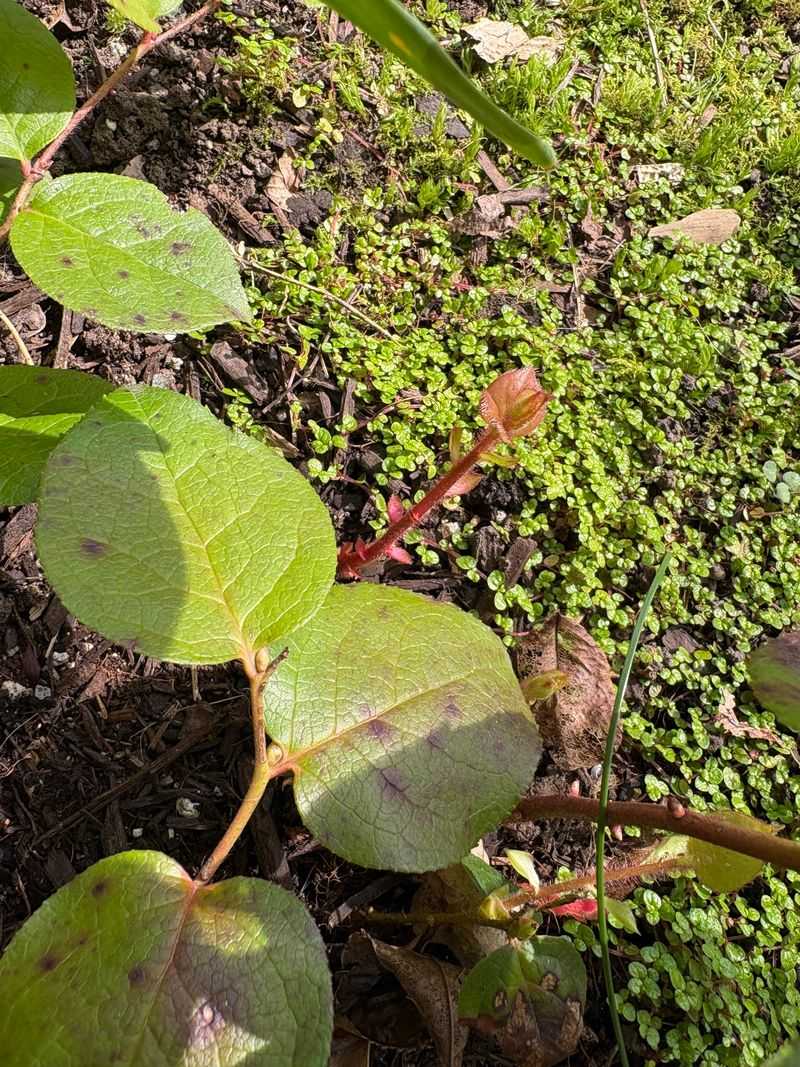
Salal looks most convincing when it is part of an understory rather than the only plant beneath the trees.
Sword fern adds upright, feathery texture against salal’s broad leaves. Low Oregon grape can contribute another evergreen layer, yellow flowers, and blue fruit.
Together, the plants create a more varied woodland floor than one species planted from fence to fence.
Match each plant to the exact spot.
Sword fern handles shade well but appreciates moisture during establishment. Low Oregon grape can tolerate dry woodland conditions once settled. The shared theme is compatibility with a Pacific Northwest understory, not identical care.
Leave breathing room between young plants.
A natural woodland does not begin as an instant solid mat. Space allows every species to develop its own form and gives the gardener access for weeding and watering during the early years.
Use fallen needles and leaves as part of the design where practical.
Organic litter helps protect the soil surface and makes the planting feel connected to the canopy overhead. Keep heavy piles away from crowns and trunks rather than clearing every leaf for tidiness.
A layered planting also spreads risk.
One dry summer, pest issue, or storm does not leave the ground plane dependent on one species.
Salal provides the evergreen backbone. Ferns supply texture. Oregon grape adds another shape and season.
The result looks less like a groundcover project and more like a small piece of Oregon woodland behind the house.