How To Renovate Your Michigan Strawberry Bed Now That The Season Is Wrapping Up
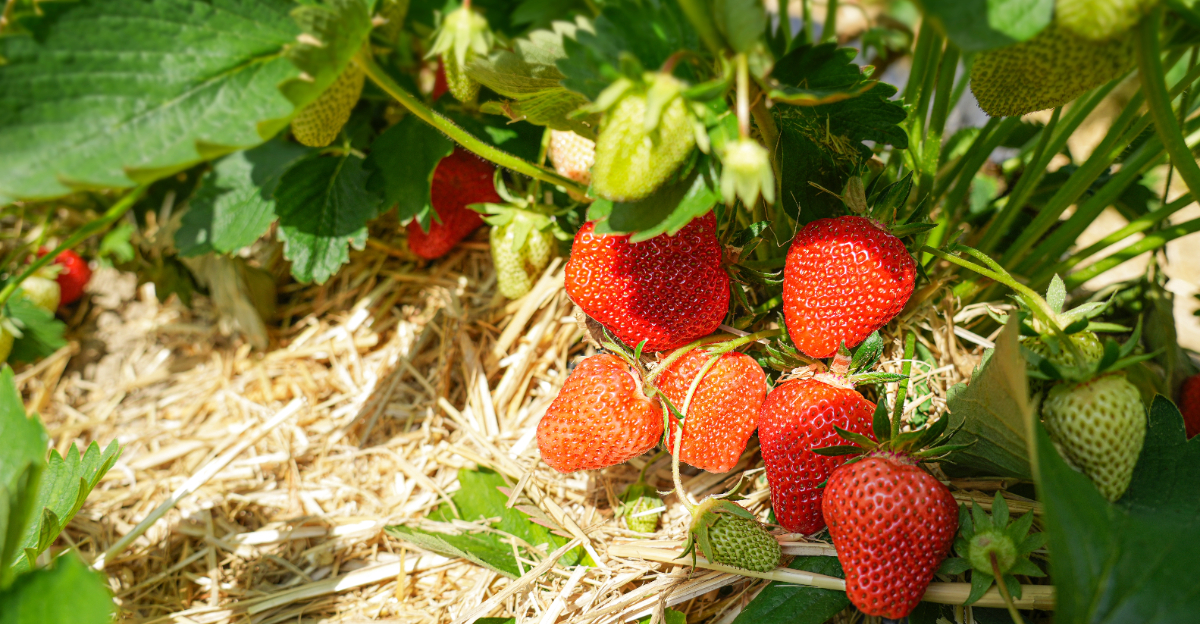
A Michigan strawberry bed can look completely spent once the last berries disappear and the leaves begin losing their clean spring color.
Rows that seemed tidy in June may sprawl into the paths. Older foliage can look tired, weeds suddenly become obvious, and runners seem determined to claim every open inch of soil.
The patch may still be green, yet the next harvest is already being shaped by what happens during this quiet stretch after fruiting.
That is where timing becomes surprisingly important.
A hard cleanup can help one kind of strawberry bed and work against another. The same task can also be useful in early July and far less helpful several weeks later, once the plants have moved deeper into recovery and crown development.
So what deserves attention first?
The answer depends on the strawberry type, how recently harvest ended, and how much healthy growth the bed has already rebuilt. Get those details right, and a rough-looking patch can enter fall far stronger than it appears at first glance.
1. Renovate June Bearing Beds Right After Harvest
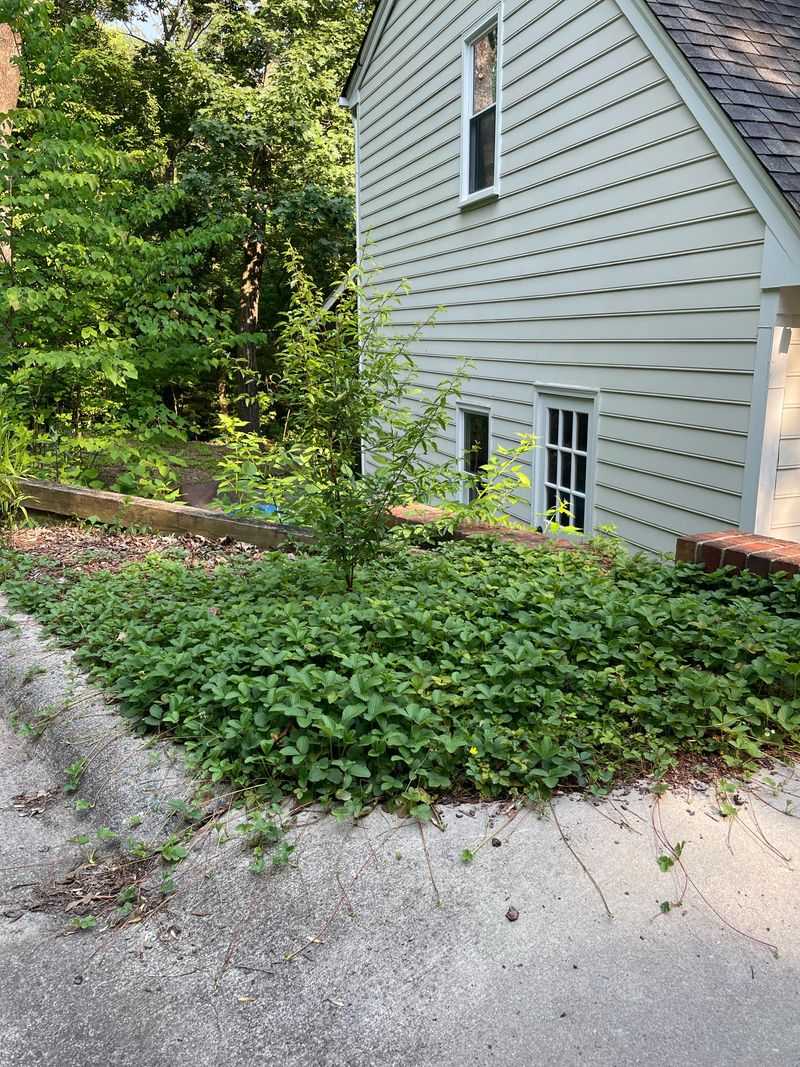
Traditional renovation belongs to June-bearing strawberries grown in a matted-row system.
Those beds produce their main crop in early summer, then use the rest of the season to rebuild leaves, crowns, runners, and flower buds for the following year.
The best window opens immediately after harvest. Michigan guidance repeatedly calls for renovation as soon as picking ends, which usually places the work in late June or early July for many southern and central plantings.
Northern sites and later cultivars can run later, but the principle stays the same: early renovation gives the plants more time to recover.
That timing matters in August.
A bed that was already renovated in July should now be in regrowth mode, with moisture, weed control, and healthy crown development taking priority.
A June-bearing bed that somehow missed renovation should not automatically receive the same aggressive mowing and tilling routine used six weeks earlier.
By mid-August, the safer home-garden approach is to preserve healthy foliage, control weeds, guide useful runners, and keep the root zone supplied with moisture while the plants build strength for next year.
This is a practical inference from late-summer reports showing active crown development and continued regrowth at this point in the season.
Day-neutral and everbearing strawberries belong on a different schedule because they can continue flowering and fruiting beyond the June-bearing harvest period.
Before the mower comes out, identify the strawberry type and read the calendar. Renovation is a reset button, but pressing it late can turn a useful tool into very bad timing.
2. Mow Leaves Without Cutting The Crowns
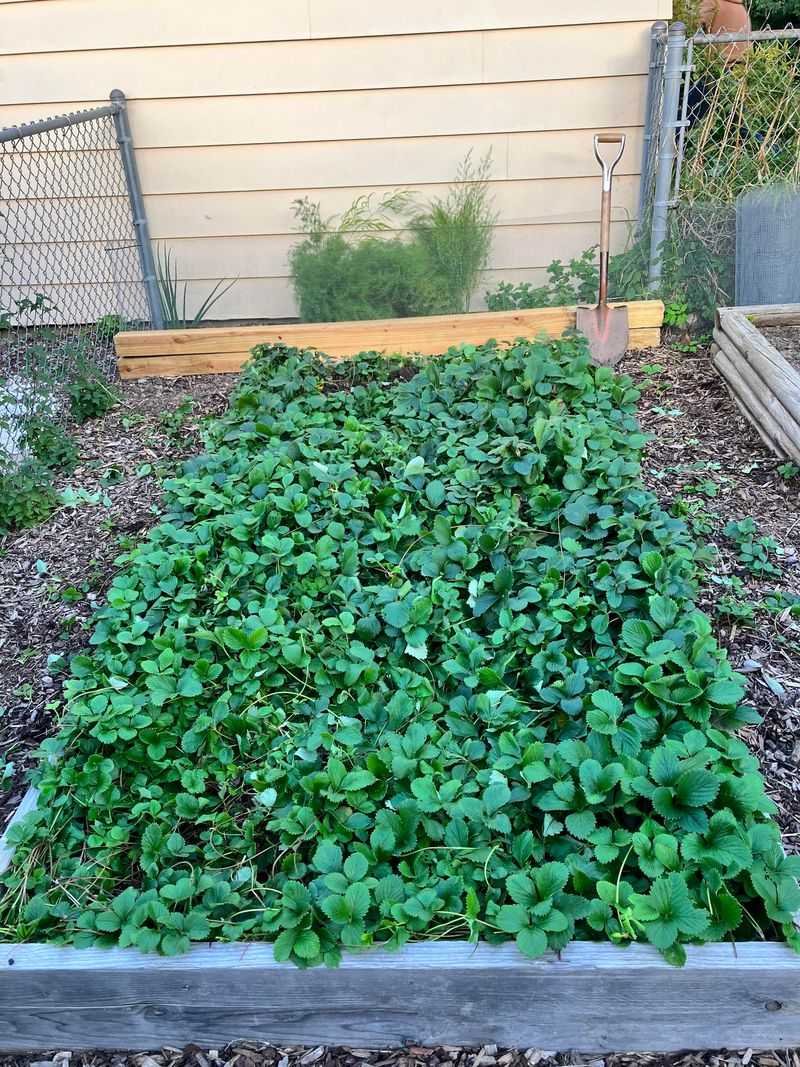
Right after a June-bearing harvest, mowing can remove much of the tired foliage and make the rest of renovation easier. The cut also opens the row so weeds, crowns, and excess runners are easier to see.
The crown is the part that cannot be sacrificed.
Set the mower high enough to remove leaves without slicing into the short, thick crowns at soil level. Exact mower height varies because crowns sit at different heights and beds are rarely perfectly level.
Your Michigan Garden Changes Every Week. Your Plan Should Too.
Gardening in Michigan changes quickly throughout the season. Every Friday you’ll receive a simple weekly plan showing exactly what to plant, prune, fertilize, harvest, and protect so you never miss the right timing.
Check several plants by hand before making the first pass rather than trusting one setting across the whole patch.
Rake away heavy clippings after the cut. Removing old foliage can reduce the amount of diseased tissue left in the bed, but mowing is not a cure for every strawberry disease.
Healthy crowns still need good moisture, airflow, and follow-up care as new leaves emerge. Removing infected plant debris after harvest can be part of disease management.
A bed renovated weeks ago should not be mowed again in mid-August simply because the fresh leaves look uneven.
Those leaves are now doing valuable work for the crowns. Late-season scalp jobs remove photosynthetic tissue at the exact point the plants need to rebuild reserves.
Use the mower once, at the proper postharvest stage, then let the new canopy develop.
The finished bed may look startlingly bare for a moment. That is normal after timely renovation. The important part is what remains below the blades: intact crowns ready to produce the foliage that carries the planting toward fall.
3. Narrow Matted Rows Before They Spread Wider
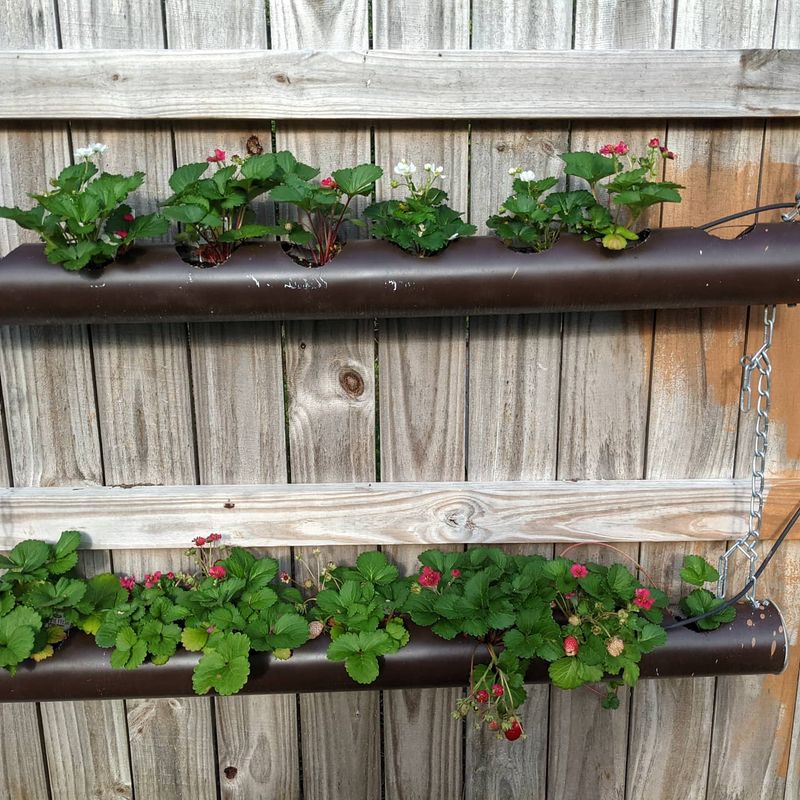
A matted row earns its name quickly once runners start rooting wherever they touch open soil. By harvest time, the original strip can spread into the walkway and become so wide that the center stays crowded and difficult to manage.
Renovation brings that width back under control.
Michigan field guidance commonly narrows June-bearing matted rows to roughly 10 to 12 inches after harvest.
Home gardeners can use a spade, hoe, or careful tilling along the edges instead of farm equipment. The goal is to keep a productive central strip while removing plants that wandered far into the path.
Narrowing does more than make the bed look organized.
A tighter row gives new leaves more room, keeps walking space open, and makes later weed control and runner placement easier.
The surviving crowns can then send daughter plants into the freshly opened parts of the row rather than stacking new growth on top of an already crowded interior.
By mid-August, a row renovated earlier may already be filling back in. At that point, avoid another major narrowing pass unless runners have clearly crossed the intended boundary.
Preserve well-rooted daughter plants inside the row and remove or redirect the ones heading into traffic. Late-summer reports show healthy renovated rows continuing to fill as runners root and crowns strengthen.
The strawberry patch does not need to resemble a military formation.
It needs enough order that sunlight, water, and hands can still reach the crowns. A row allowed to become one giant green rug may look vigorous, but next June’s picking basket usually appreciates a little breathing room.
4. Remove Weeds Before Runners Fill Back In
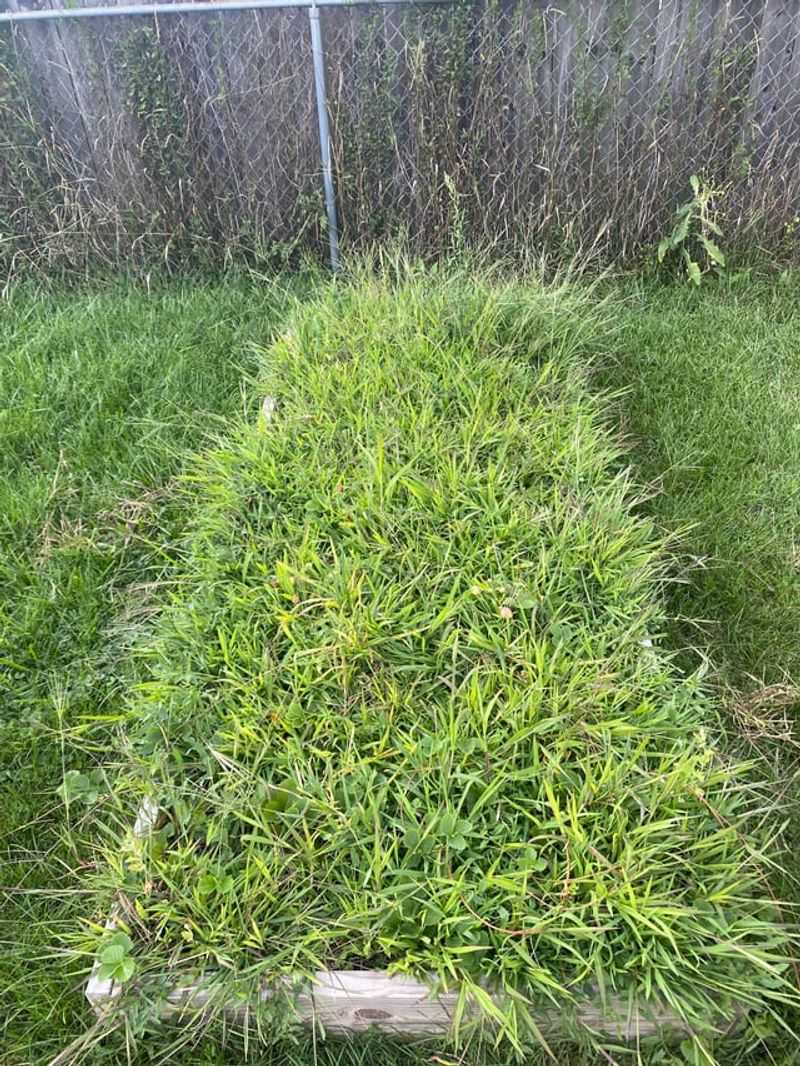
Renovation briefly exposes soil that has been hidden beneath strawberry leaves and runners, which makes weed control much easier than it was during harvest.
Use that opening before the row closes again.
Pull or dig perennial weeds with as much root as practical, and remove annual weeds before they scatter another crop of seed.
Shallow cultivation can handle small seedlings between rows, but keep tools away from strawberry crowns and newly rooted daughter plants.
Deep, enthusiastic hoeing can solve the weed problem and create a strawberry problem in the same afternoon.
Late summer still deserves attention.
By August, renovated beds can have strong new foliage while weeds compete for the same moisture needed for crown development.
Michigan reports from late summer repeatedly note that weed pressure can remain a problem in renovated plantings, so a July cleanup should not be treated as the final inspection of the year.
Home growers using an herbicide need a product specifically labeled for strawberries and the exact site, weed, rate, and timing on that label.
Farm renovation recommendations do not automatically translate into a safe backyard spray program. Product labels and crop timing need to control the decision.
Hand removal is slower, but it gives the gardener excellent control around valuable crowns.
Work through the patch after rain or irrigation when stubborn roots release more easily, then stop before the soil becomes churned around the strawberries.
The goal is a cleaner bed, not an archaeological excavation with strawberries as collateral damage.
5. Apply Renovation Fertilizer At The Right Rate
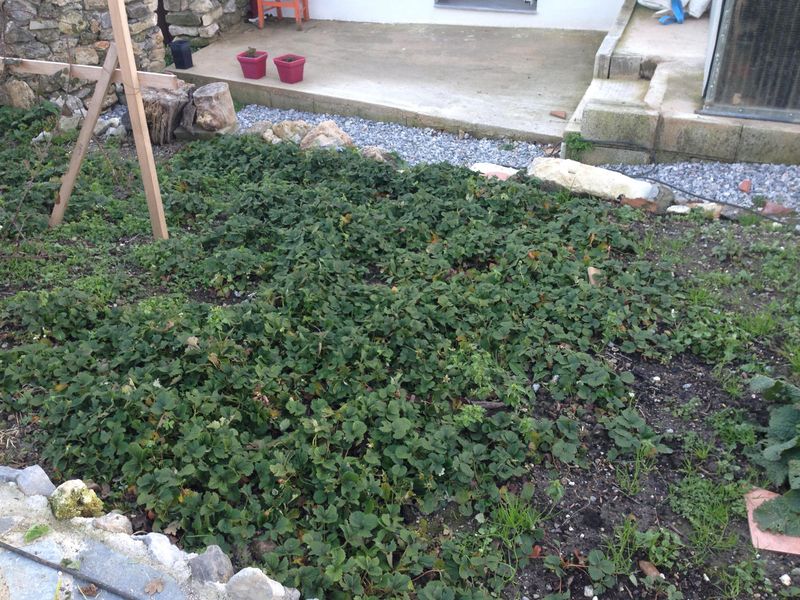
Postharvest nutrition can help a timely renovated bed rebuild, but fertilizer is one place where a universal scoop causes trouble.
The useful target is healthy recovery, not a burst of oversized leaves.
Renovated June-bearing plants need enough fertility to produce new foliage and strong crowns after harvest.
A soil test is the best guide for phosphorus, potassium, pH, and broader nutrient needs, while nitrogen decisions should account for bed age, soil, previous fertilizer, and plant vigor.
Soil testing helps show which nutrients are actually needed and can prevent unnecessary applications.
Avoid copying an exact commercial-field rate into a small home patch without converting the area and checking the product analysis.
Ten pounds of one fertilizer blend does not supply the same nutrients as ten pounds of another. More fertilizer also does not make a late renovation catch up with the calendar.
Timing deserves extra caution in August.
A bed renovated promptly in early summer may already have received its postharvest feeding. Do not automatically repeat that application simply because the leaves are green and growing.
Excess nitrogen can create overly dense foliage, and fertilizer does not correct moisture stress, crowding, or weak establishment.
Water granular fertilizer off foliage and into the root zone after a justified application, following the product label.
The bag is not a recovery accelerator. It is one tool in a larger renovation plan. Healthy strawberries need roots, moisture, space, and time along with nutrients, and fertilizer cannot substitute for any of the other four.
6. Water After Renovation To Restart Growth
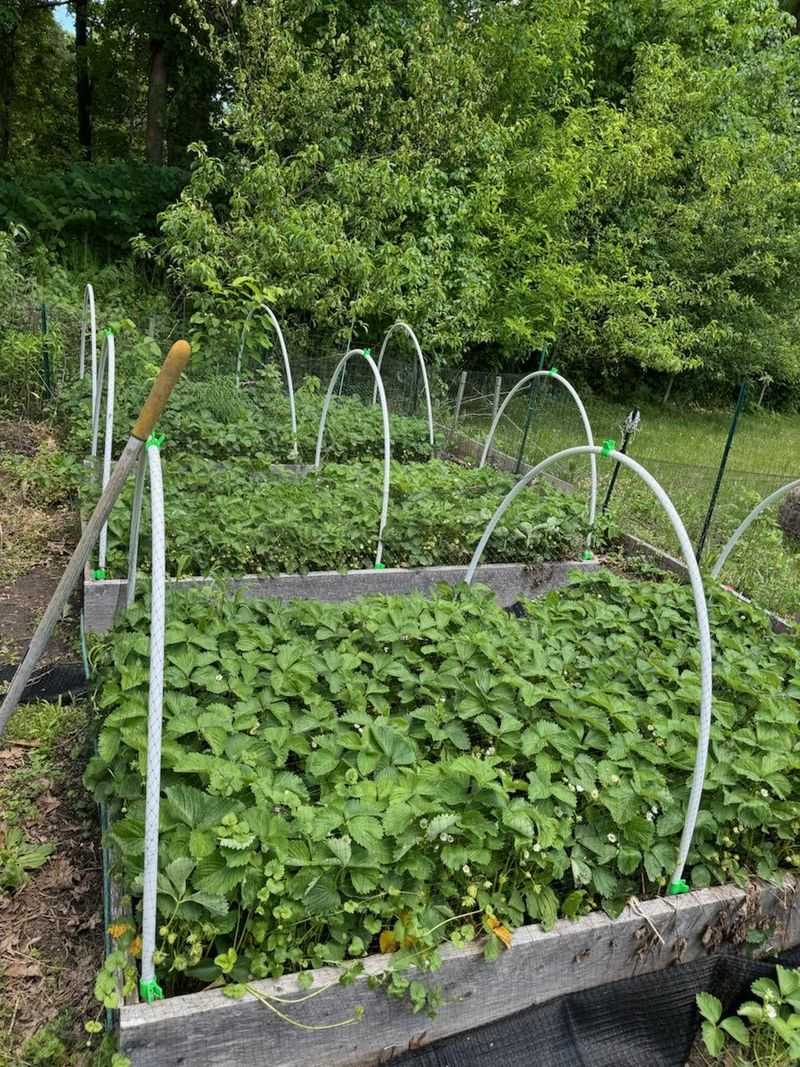
Moisture becomes especially important after renovation because the crowns are trying to replace leaves and establish new runner plants during some of Michigan’s warmest weather.
Check the soil rather than watering by habit.
A renovated bed with dry soil can stall, while a saturated bed creates a different kind of root stress. Push a finger or trowel a few inches into the row and water deeply when the root zone begins to dry.
Rainfall may cover part of the need one week and almost none of it the next.
July and August can change quickly.
Late-summer field reports from Michigan repeatedly show stronger regrowth where renovated strawberries received enough rain or irrigation, while dry beds lagged behind.
This period is also important for the formation of strong crowns for the following crop.
Aim water at the soil when practical.
Drip lines, soaker hoses, or careful ground-level watering can supply the root zone without turning every irrigation into an extended leaf-wetting event.
Renovated fields are repeatedly advised to receive adequate irrigation after the postharvest work so regrowth can continue.
Keep the crowns visible and avoid burying them beneath wet mulch or soil.
The goal is steady recovery, not swamp conditions. A strawberry bed can forgive an ugly haircut after harvest. It has a much harder time rebuilding that haircut with an empty water tank.
7. Guide New Runners Back Into The Row
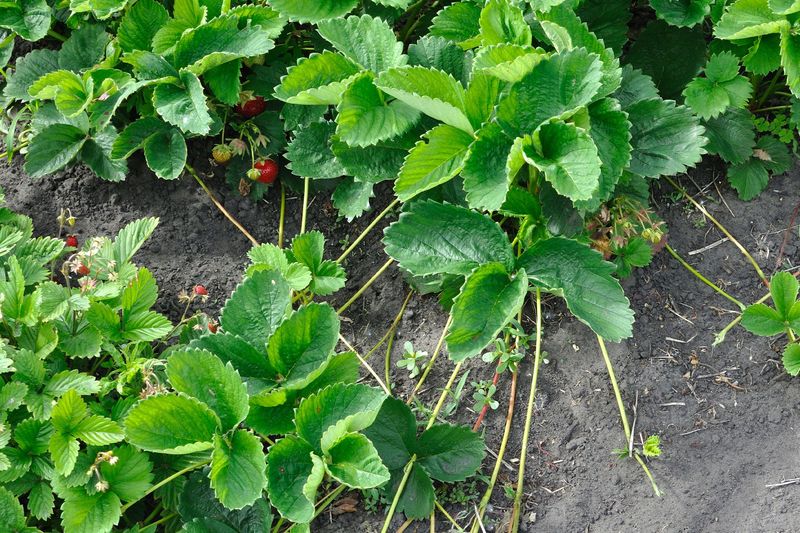
Runners are how a June-bearing matted row repairs the open space created during renovation.
Each runner can produce daughter plants, and those young crowns help build the row that will carry next season’s crop.
The useful job is not saving every runner. It is putting enough healthy daughters in the right places without letting the planting reclaim the entire walkway.
Guide flexible runners back toward open soil inside the row.
A small landscape staple, bent wire, or a little soil contact can hold a node in place while roots form. Leave established daughter plants alone once they have rooted well. Tugging them around after roots anchor can undo weeks of useful growth.
Late summer is a particularly important time to look at row fill.
Michigan reports from August describe renovated strawberries continuing to produce runners and form strong crowns where moisture remains adequate.
Beds with dry soil fill more slowly, which makes irrigation and runner placement work together rather than as separate chores.
Remove runners that head repeatedly into the path or into a neighboring crop.
Crowding every daughter into the center creates another overgrown mat before fall even arrives. The goal is a filled row with recognizable boundaries, not maximum plant count.
By September, the bed should look renewed rather than freshly stripped. Renovated rows have been observed filling back in with healthy crowns as late summer progresses.
That transformation is the payoff from good renovation. The mower creates space, but runners decide how intelligently the strawberries use it.