What To Do For Georgia Hydrangeas During This Stretch Of 95-Degree Heat
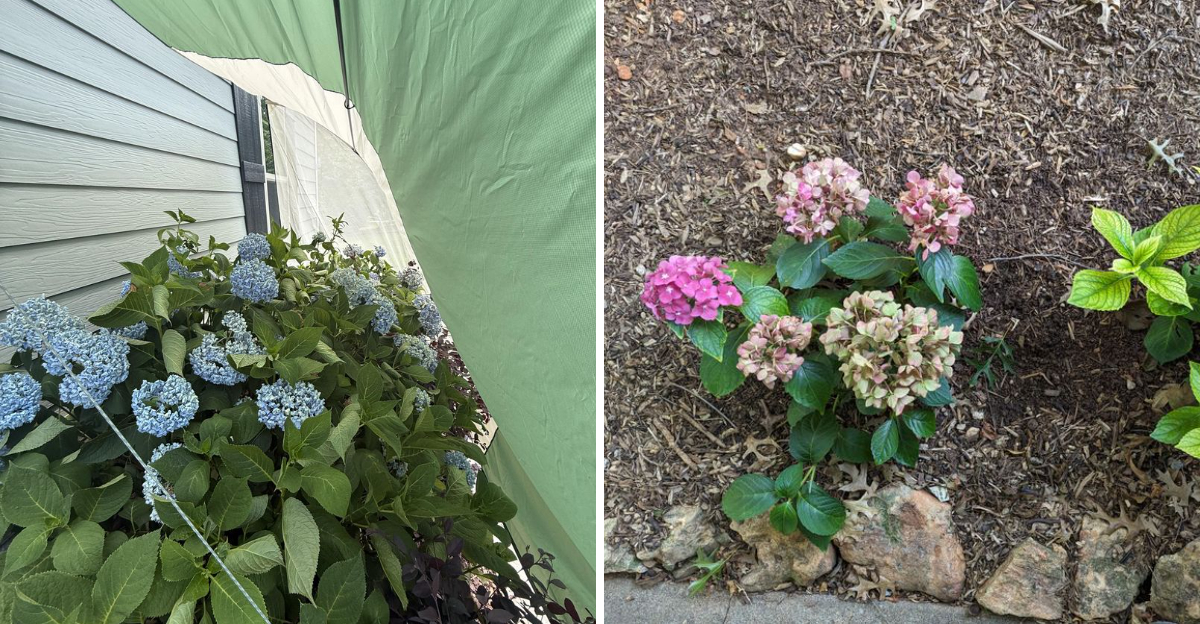
A Georgia hydrangea can look healthy at breakfast and completely defeated by late afternoon during a stretch of 95-degree heat.
Leaves sag. Flower heads droop. Stems lose their posture, and the entire shrub can seem to change within a few hours.
The instinct is immediate: something must be wrong, and something needs to happen before sunset.
That is where the trouble starts.
The same dramatic appearance can come from very different conditions, and the hottest moment of the day does not always reveal which one is happening.
One shrub may recover as evening settles in. Another may still look weak the next morning. A third may be reacting less to the air temperature than to something happening around its roots.
So which plant is truly struggling?
The answer hides in timing, location, weather, and a handful of clues that are easy to miss when the leaves are hanging low.
During a Georgia heat wave, the most alarming moment can also be the least useful one for judging what comes next.
1. Check Hydrangeas Early In The Morning
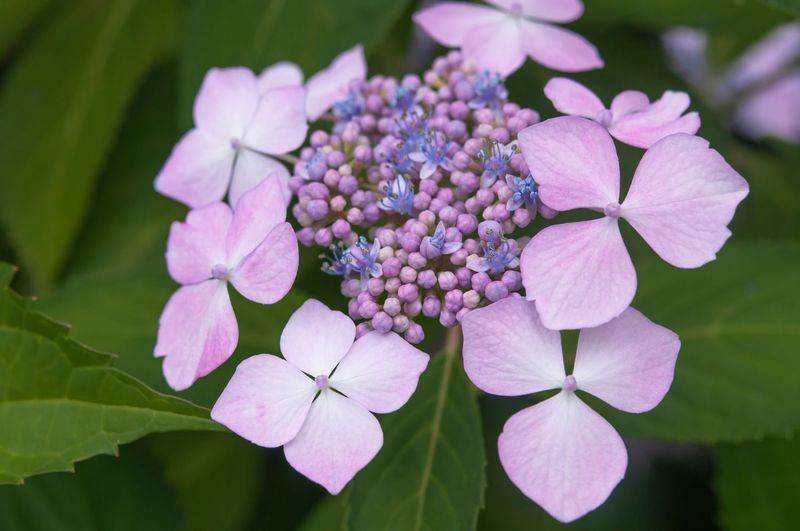
The most useful hydrangea inspection happens before Georgia heat reaches full strength.
Check the shrub early in the morning, after the plant has had the coolest part of the night to recover.
Upright leaves and firmer stems at that hour suggest the plant regained water balance after yesterday’s heat. A shrub that still looks limp before the day warms deserves a closer soil check instead of another guess.
Bigleaf hydrangeas are especially sensitive to hot, dry, exposed sites.
They prefer morning sun, afternoon shade, and moist, well-drained soil, which explains why the same plant can look comfortable at 8 a.m. and miserable several hours later on a west-facing exposure.
Do not use afternoon appearance alone as the watering trigger. High heat raises water loss through the leaves, and temporary wilting can occur even while the root zone still holds moisture.
Heat-care guidance for Georgia landscapes specifically warns against overwatering plants simply because they droop late in the day.
Make the morning check a short routine during a 95-degree stretch. Look at leaf posture, feel the soil beneath the mulch, and compare the plant with the previous morning.
Hydrangeas have a flair for afternoon drama. Morning is when the performance review becomes useful.
2. Water Deeply When The Root Zone Dries
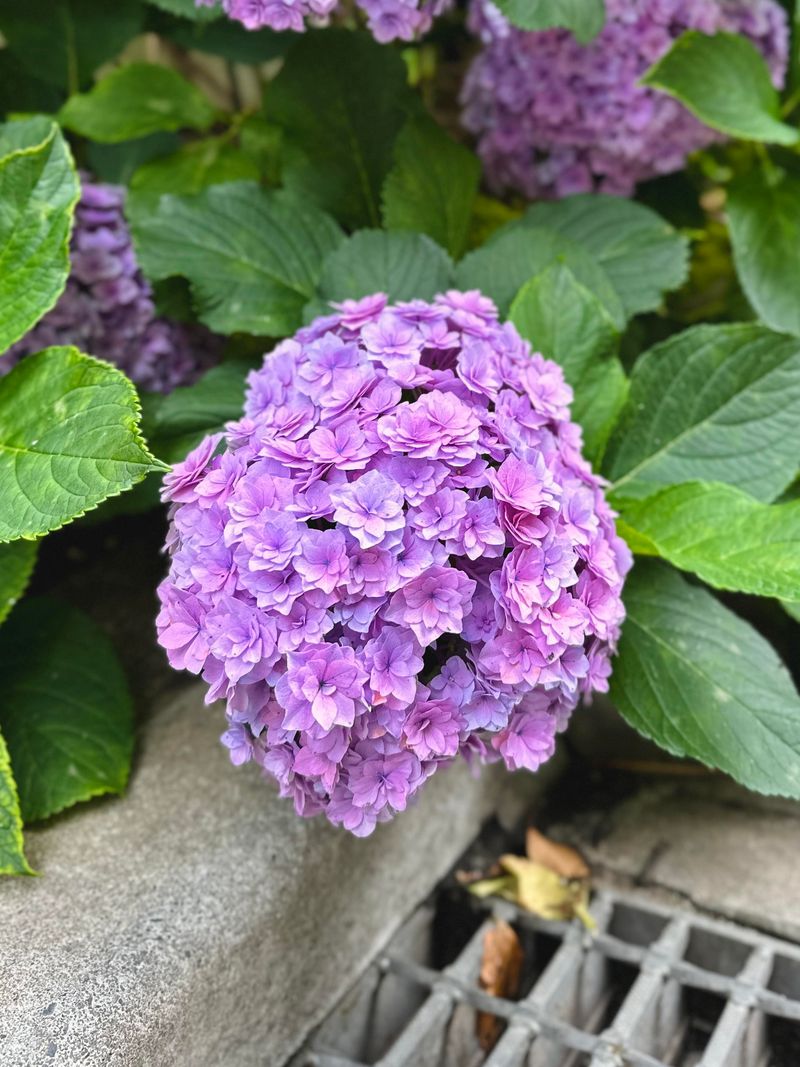
Water works best after the soil confirms that the root zone is actually drying.
Pull mulch aside near the outer half of the shrub and check several inches down with a finger, trowel, or soil probe.
Cool, moist soil means the plant may not need another soaking yet. Dry soil at root depth is the cue to water slowly and thoroughly rather than flicking the hose across the surface for a minute.
Bigleaf hydrangea is a water-demanding shrub, but it still performs best in moist, well-drained soil rather than constantly saturated ground. New ornamental plantings also need moisture without a permanently soggy root zone.
Apply water across the root area, not only at the main stem. A soaker hose, drip line, or gentle hose flow at soil level can deliver moisture efficiently while reducing unnecessary leaf wetness.
Your Georgia Garden Changes Every Week. Your Plan Should Too.
Gardening in Georgia changes quickly throughout the season. Every Friday you’ll receive a simple weekly plan showing exactly what to plant, prune, fertilize, harvest, and protect so you never miss the right timing.
Georgia soil changes the timing. Sandy ground can lose moisture quickly, while clay may stay damp much longer after a storm or deep irrigation. That makes a fixed daily schedule less useful than an actual soil check.
Water deeply enough to wet the active root zone, then check again before repeating the process.
The hose should answer evidence, not panic.
3. Stop Chasing Every Afternoon Wilt
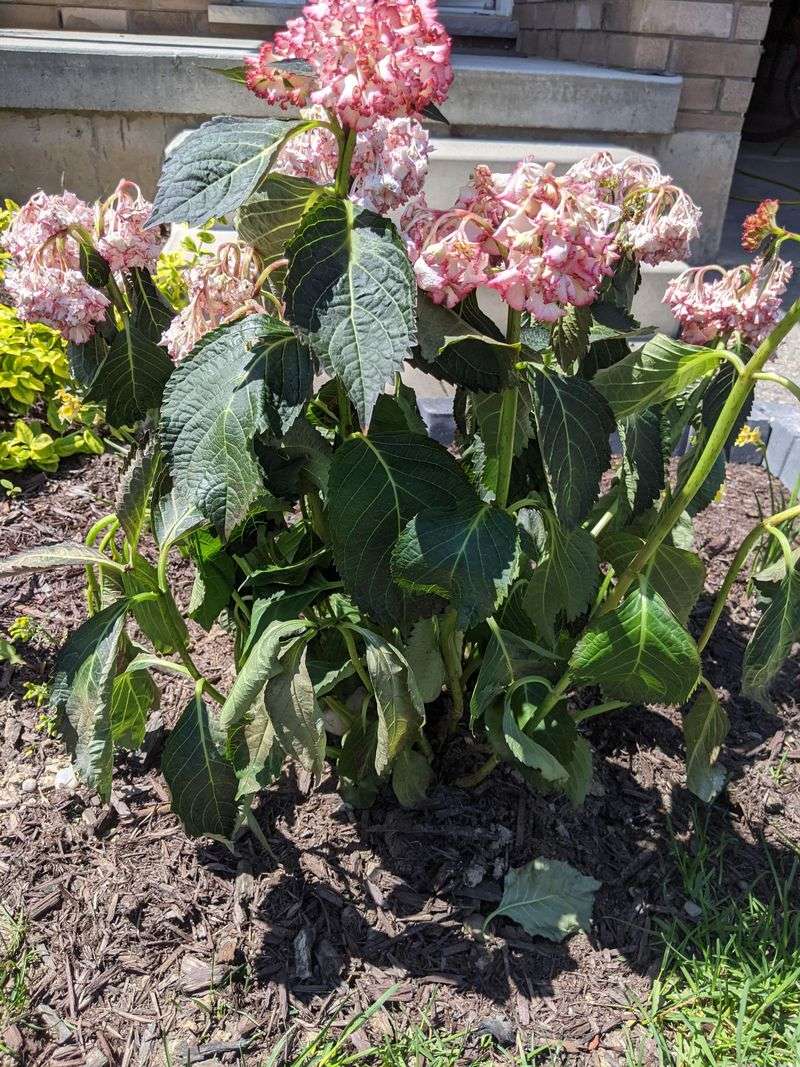
A hydrangea that droops at four in the afternoon is not automatically asking for more water.
High temperatures can push water loss through leaves faster than roots can replace it for part of the day.
That temporary imbalance can make a shrub look alarmingly limp even while the soil remains adequately moist. Georgia heat guidance warns homeowners not to respond to every late-day wilt with extra irrigation.
Watch what happens after the strongest sun passes.
A plant that regains its posture later in the evening or by the next morning may simply be reacting to the hottest part of the day.
A shrub that remains wilted through the cool morning hours, especially with dry soil beneath the mulch, deserves prompt watering and a closer look at the site.
Repeated severe afternoon wilt still deserves attention even when recovery occurs.
Bigleaf hydrangeas prefer protection from hot, dry exposure, so a plant that collapses daily against a west-facing wall may be dealing with more heat than good watering alone can solve.
Avoid turning the bed into a puddle just to keep leaves upright at peak heat. Saturated soil can limit oxygen around roots and create another form of stress.
Let the plant finish its afternoon performance before sending in the rescue crew.
Soil moisture and morning recovery tell a much clearer story than one dramatic snapshot taken under a 95-degree sun.
4. Mulch To Slow Summer Moisture Loss
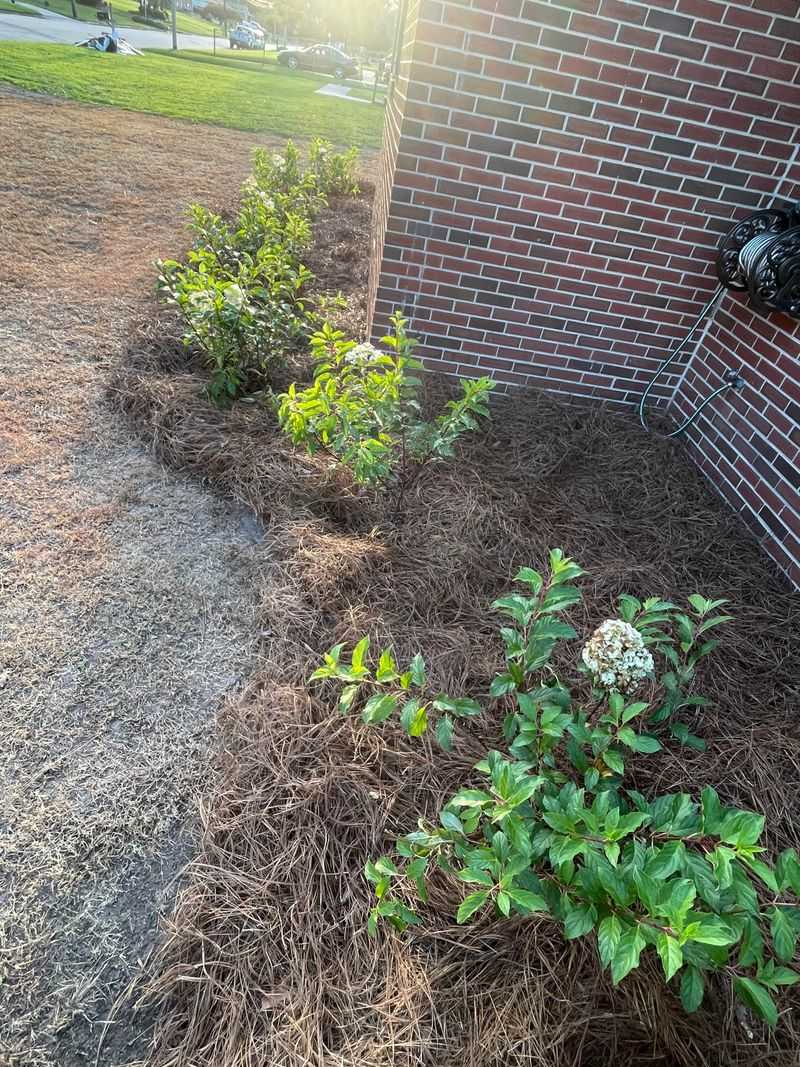
A good mulch layer can make a noticeable difference during a Georgia heat stretch because hydrangea roots benefit from steadier moisture and temperature.
Organic mulch helps hold water in the soil, reduce weed competition, and insulate roots from summer temperature extremes. Pine straw, pine bark, hardwood chips, and fallen leaves all fit that role in Southern landscapes.
Check the existing layer before adding more.
Bigleaf hydrangeas can benefit from several inches of organic mulch over the root zone, but the material should stay off the main stems and crown. A broad layer over the soil is useful. A damp mound pressed against living stems is not.
Refresh bare patches where soil is exposed to direct sun, especially beneath the canopy. Keep the layer loose enough for rain and irrigation to move through instead of packing it into a dense mat.
Mulch works best when it protects soil without interfering with water and air movement.
Mulch cannot replace water during a prolonged dry spell. It simply helps the soil retain more of the moisture already supplied by rain or irrigation. That difference becomes valuable when afternoons stay near 95 degrees for several days.
Avoid decorative stone around a heat-stressed hydrangea in a hot exposure. Rock and gravel can absorb and reradiate heat into the landscape.
Pine straw is not glamorous technology. It is just a very effective roof for the root zone.
5. Give Hot Exposures More Afternoon Shade
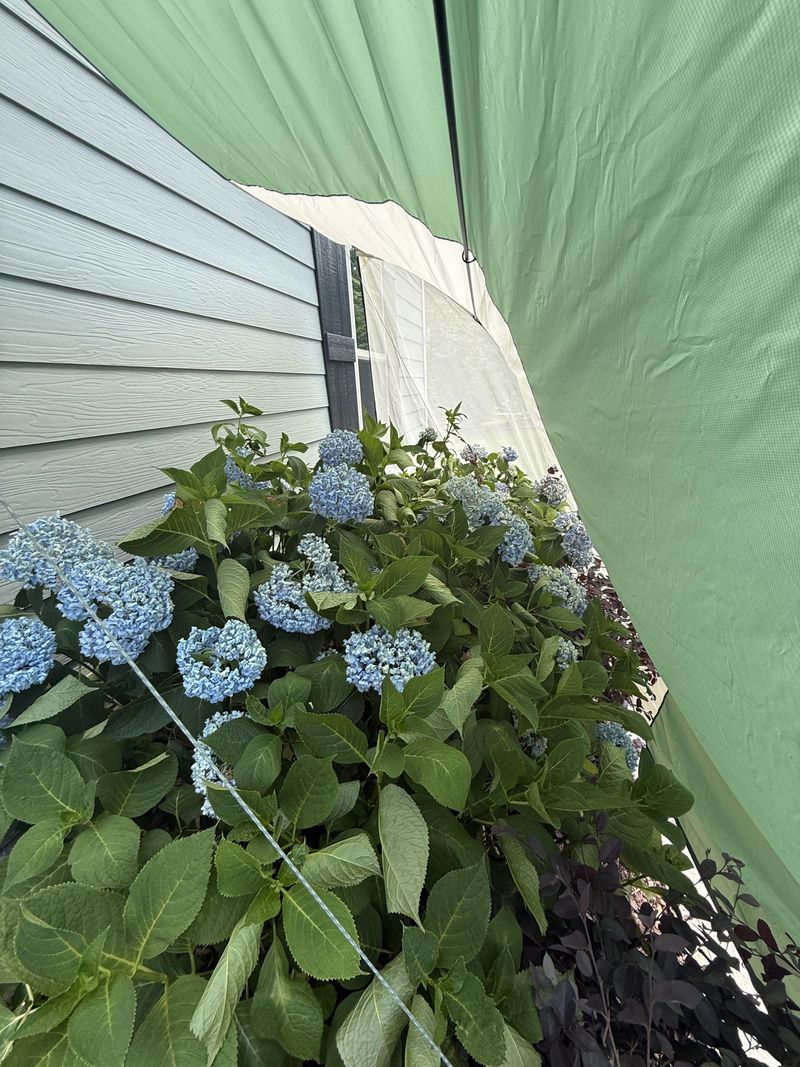
Some hydrangeas are struggling less with the temperature reading than with the exact place where they are planted.
Bigleaf hydrangeas prefer morning sun and afternoon shade and should be protected from hot, dry, exposed sites.
A shrub beside west-facing brick, stone, or pavement can face direct sun plus reflected heat during the harshest part of a Georgia afternoon.
Temporary shade can reduce that exposure during a severe hot spell.
A shade screen secured above or west of the shrub can block part of the late-day sun without wrapping the foliage.
Keep air moving around the leaves and remove the temporary setup once the extreme weather passes. The goal is relief from the strongest exposure, not permanent darkness.
Container hydrangeas offer an easier option. Move the pot to a bright location with afternoon protection, then monitor moisture closely because containers can dry faster than garden soil.
Bigleaf hydrangeas grow successfully in containers, but the limited root volume requires closer attention during extreme heat.
Do not move an established in-ground shrub during a heat wave just because the site is imperfect. Major transplanting adds root disruption when the plant is already coping with heat.
Use temporary shade as a short-term buffer, then consider a better long-term site during cooler weather.
Sometimes the hydrangea is not overly sensitive. The west wall simply turned August into a second sun with a mortgage.
6. Keep Deep Cultivation Away From The Roots
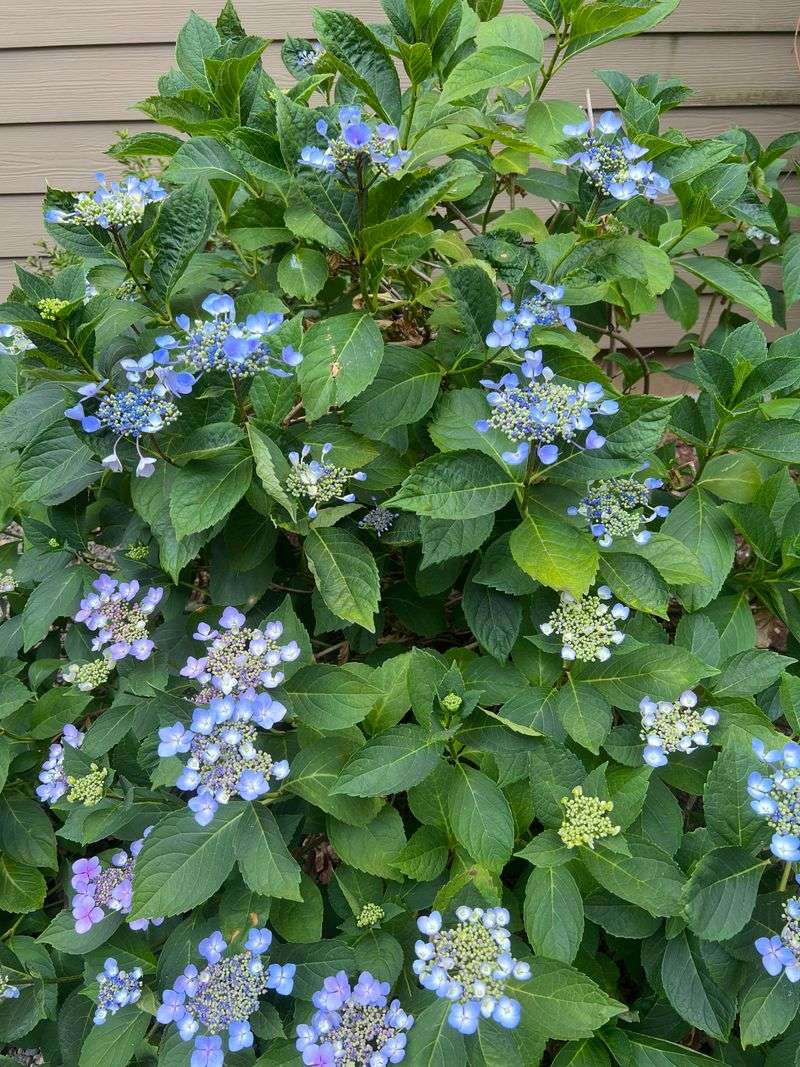
Leave hoes, tillers, and deep cultivation away from the root zone while the shrub is under heat stress.
Hydrangeas can have shallow root systems that benefit from mulch and protected soil.
Aggressive digging around an established shrub can damage fine roots responsible for water and nutrient uptake, exactly the roots that matter most during hot, dry weather.
Handle weeds with shallow, careful methods.
Pull small weeds by hand after rain or irrigation, when roots release more easily. Use mulch to suppress new seedlings and reduce the need for repeated soil disturbance.
Organic mulch also helps conserve moisture and moderate temperature around ornamental roots.
Avoid piling fresh soil over the crown in an attempt to cover exposed roots. The top of a shrub root ball belongs near soil level, and overly deep planting can restrict oxygen movement to roots.
Postpone major bed renovation until cooler weather whenever practical. Adding edging, moving large stones, or digging new plants into the same root zone can wait until the heat stretch breaks.
The goal during 95-degree weather is stability.
Keep the soil protected, the weeds manageable, and the root area undisturbed enough to keep supplying the canopy. A hydrangea already coping with intense heat does not need a surprise excavation project beside its feet.
The shovel can have the week off. The roots have enough work scheduled.
7. Check New Plants More Often Than Old Shrubs
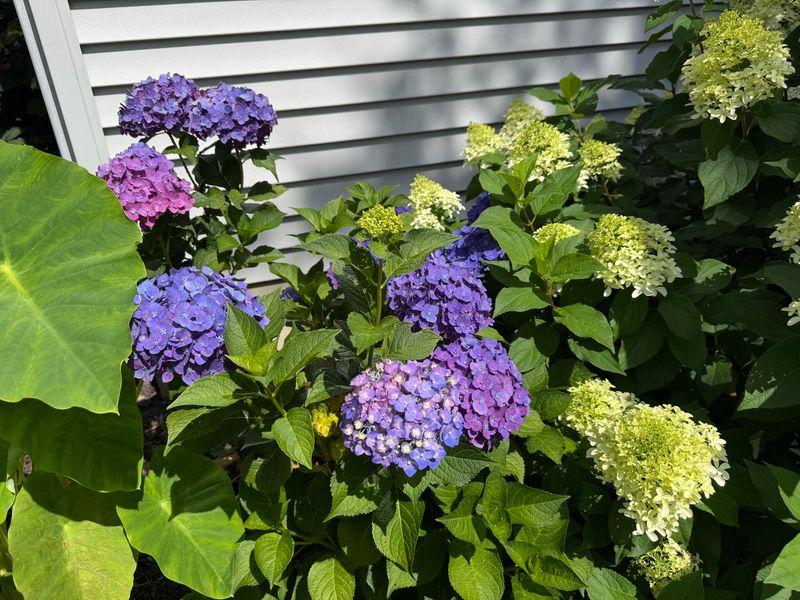
New hydrangeas deserve much closer attention than shrubs that have occupied the same Georgia bed for years.
A recent transplant still depends heavily on the original root ball while new roots begin to enter surrounding soil.
That smaller working root zone can dry quickly during extreme heat, even when the wider bed still feels moist. Newly planted trees and shrubs need regular water during establishment, with soil moisture used to guide frequency.
Check the root ball itself, not only the soil a foot away.
Nursery potting mixes and Georgia native soil can hold water very differently. A root ball can become dry while adjacent clay remains damp, and a dry root ball can become difficult to rewet after transplanting.
Water slowly enough to wet both the original root mass and the surrounding soil. Then check again rather than assuming yesterday’s irrigation reached every part of the planting hole.
Keep mulch over the broader root zone and maintain afternoon protection where the site allows. Skip fertilizer meant to force rapid growth during the hottest stretch.
Newly planted shrubs need root establishment more than a flush of tender top growth, and general-purpose granular fertilizer is best delayed until plants establish.
An older shrub has a much larger soil volume to explore. A six-week-old transplant is still living out of a packed suitcase.
Treat those two plants differently, especially when every afternoon lands near 95 degrees.
8. Let Soil Drain Before Watering Again
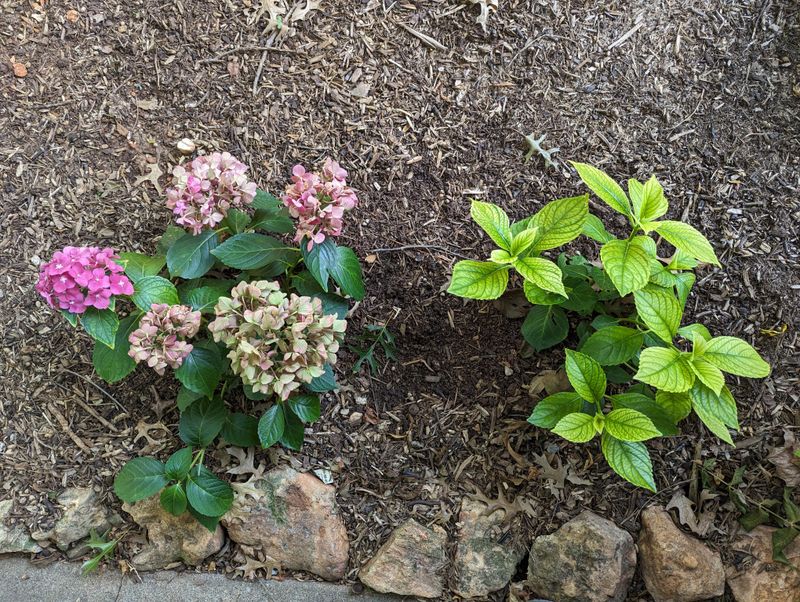
More water is not helpful once the soil is already saturated.
Georgia clay can hold moisture for a long time, especially after a thunderstorm followed by another round of irrigation.
Roots still need oxygen, so soil that remains waterlogged can create stress even while the leaves above look wilted from heat. Newly planted shrubs should stay moist without remaining excessively wet during establishment.
Check drainage before adding another soaking.
Probe beneath the mulch and look at the soil texture. Sticky, saturated soil that stays wet from the previous watering needs time to drain.
Cool soil with usable moisture is also a reason to wait. Soil moisture should guide irrigation frequency rather than a rigid calendar.
Pay attention to water that arrives without the hose.
Downspouts, roof runoff, low spots, compacted clay, and irrigation from nearby turf can all keep one hydrangea wetter than expected.
A plant at the bottom of a slope may receive far more water than another shrub only a short distance away.
Long-term drainage trouble needs a site solution, not repeated emergency watering.
Bigleaf hydrangeas prefer moist, well-drained soil, and ornamental shrubs on poorly drained sites need planting and grading choices that preserve suitable root conditions.
During the heat stretch, avoid major digging around stressed roots. Redirect obvious runoff where practical and let saturated ground lose excess water before the next irrigation.
A hydrangea can wilt with too little water and struggle with too much.
The soil gets the deciding vote.