Why Barred Owls Are Moving Into More Ohio Backyards
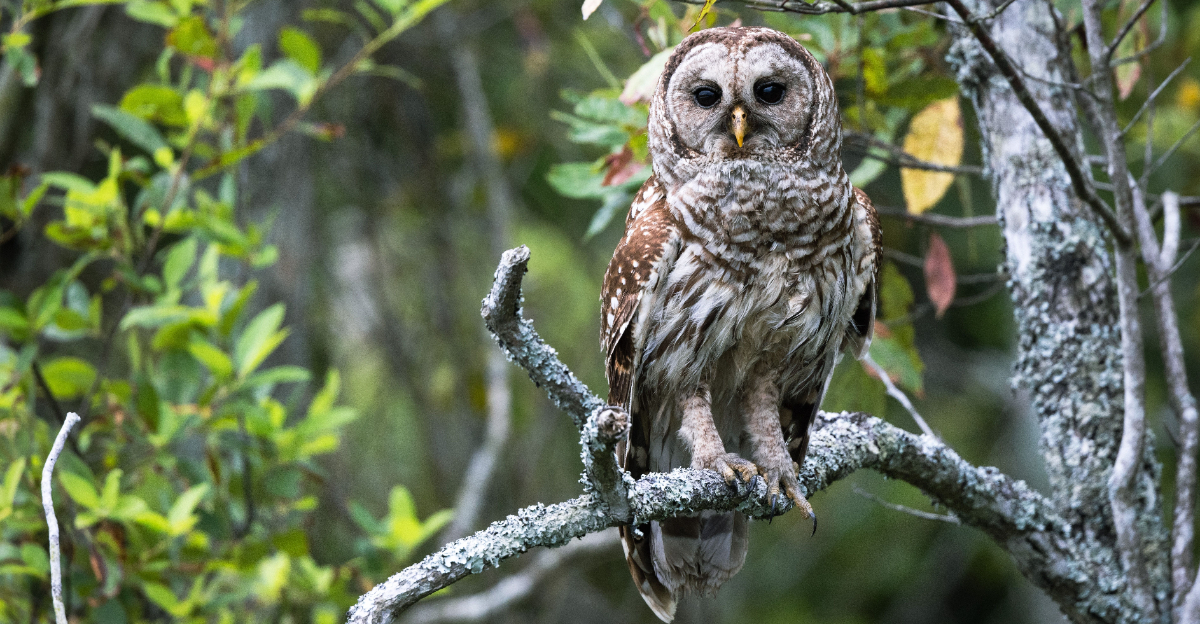
Barred owls are showing up in Ohio backyards and the people hearing them at midnight are not imagining things.
That call, loud enough to wake someone through closed windows, belongs to a bird that was supposed to stay in deep forest and apparently never got the message.
Something changed. Not the owl.
The landscape. Ohio suburban neighborhoods planted decades ago have matured into something barred owls recognize as workable territory.
The canopy filled in, the prey moved with it, and a bird that required forest interior conditions found those conditions in places nobody expected. Wildlife researchers have been tracking this shift with real interest.
The yards barred owls are choosing, the trees they claim, and what their expanding presence signals about Ohio’s changing suburban ecosystem tells a story that goes well beyond a surprising midnight sighting. They are here.
The question worth asking is why now and why this yard
1. Older Neighborhood Trees Are Finally Big Enough To Interest Barred Owls
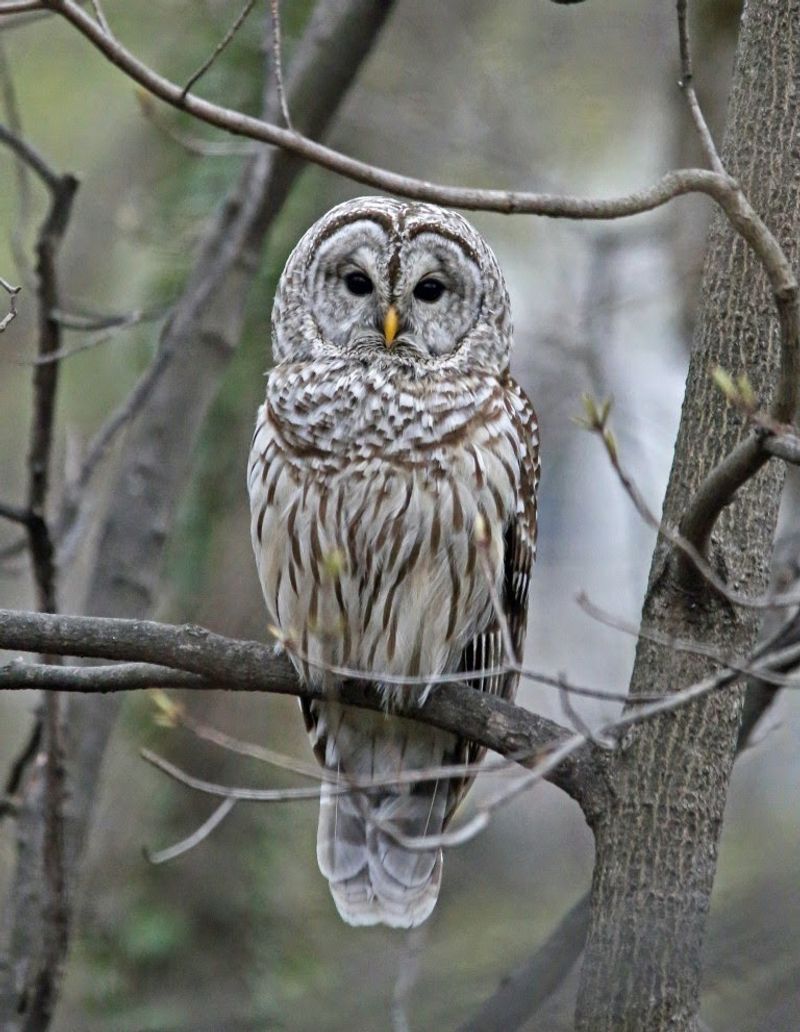
A street planted with young saplings decades ago looks very different today. Given enough time, those trees can develop wide trunks, spreading crowns, and the kind of structural complexity that certain wildlife species depend on.
Barred Owls are strongly associated with forests that have large, well-established trees. According to the Cornell Lab of Ornithology, they favor mature woods, often near water, with large trunks and a relatively open understory beneath a closed canopy.
What makes an older residential area potentially interesting to these birds is not the houses themselves. It is the vegetation that has had decades to develop.
As neighborhoods age, street and Ohio yard trees can grow large enough to provide perching branches and shaded roost sites. Over time, some also develop the structural decay that creates natural cavities.
None of this happens quickly, and not every old neighborhood reaches this threshold.
Historical state bird observations have noted a connection between maturing urban and suburban tree cover and increased Barred Owl presence in those areas. That pattern reflects habitat change over time rather than any sudden shift in owl behavior.
A neighborhood where the trees have finally grown tall enough to form a real canopy may simply offer more of what this species has always sought. Tree species, trunk diameter, and natural decay all influence whether a given tree becomes genuinely useful to an owl.
2. Backyards Near Creeks And Woodlots Sit Closer To Prime Owl Habitat
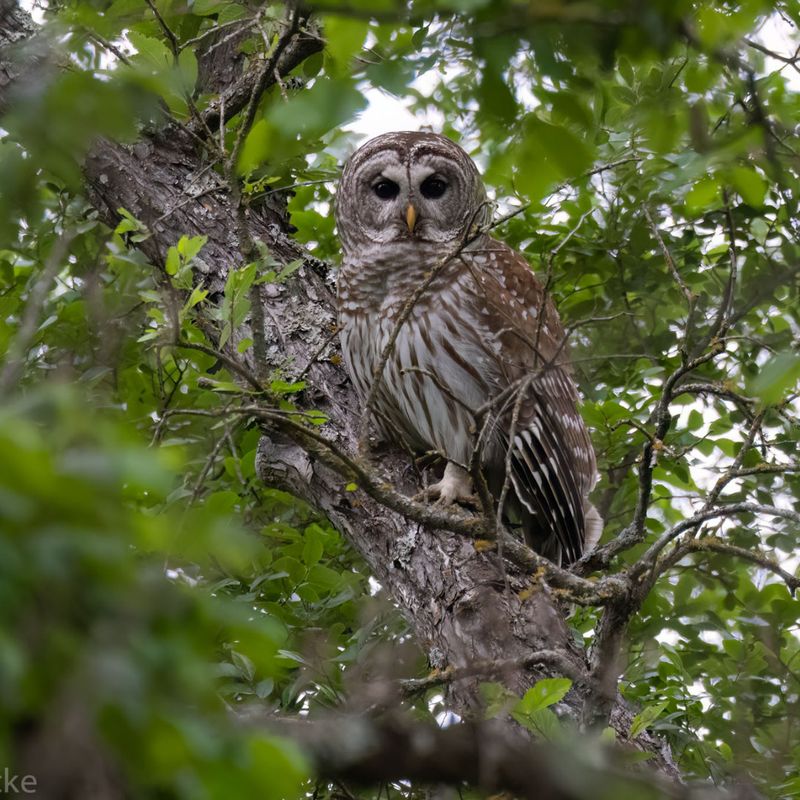
Location within the broader landscape often matters more than what a single Ohio yard contains. Barred Owls have a well-documented association with wooded areas near water.
Cornell Lab of Ornithology describes their preferred habitat as including bottomland forest, wooded swamps, and stream corridors where large trees grow close to water.
A property that backs up to one of these features sits at the edge of genuinely suitable owl territory.
A creek running behind a row of houses does more than add a pleasant sound. It creates a corridor of trees and dense vegetation that an owl can use for roosting, moving through the landscape, and finding prey near the water’s edge.
Your Ohio Garden Changes Every Week. Your Plan Should Too.
Gardening in Ohio changes quickly throughout the season. Every Friday you’ll receive a simple weekly plan showing exactly what to plant, prune, fertilize, harvest, and protect so you never miss the right timing.
Amphibians, crayfish, and small mammals tend to be more abundant near streams, which adds to the hunting value of these zones. The yard itself may be a small extension of that larger habitat band.
A small decorative pond or a birdbath does not replicate these conditions. The relevant factor is a connected strip of wooded, natural, or semi-natural land with real ecological depth.
Parks, greenways, and preserved woodlots near residential areas can serve a similar function. When those features exist within or adjacent to a neighborhood, some properties may fall naturally within the range an owl already travels.
The yard becomes one piece of a much larger picture, not the destination itself.
3. Large Tree Cavities Give These Owls Something Young Yards Cannot
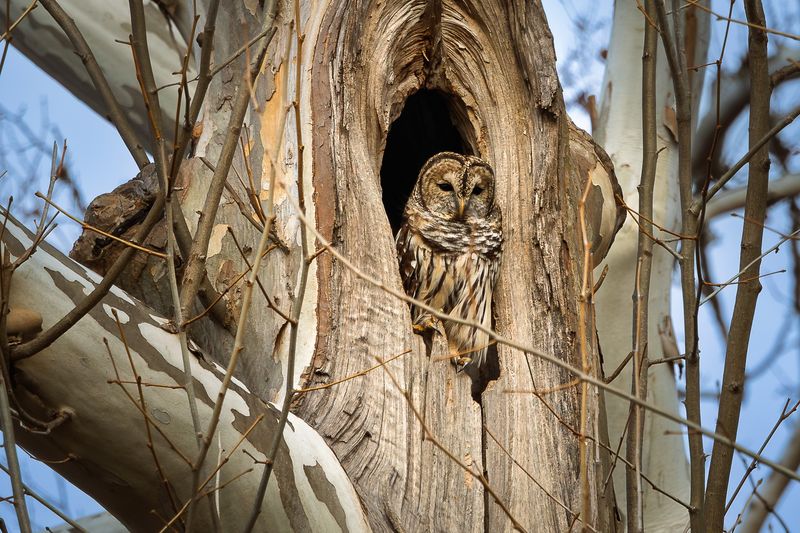
High up in an old oak or sycamore, a dark opening in the trunk can represent years of slow natural change. Large cavities develop after a tree has grown for many years and experienced decay or physical damage.
A broken limb or fungal activity in the heartwood can help create them. Barred Owls do not excavate their own nest holes.
They rely on existing cavities, and the ones they prefer tend to be found only in trees with significant age and size.
According to Cornell Lab of Ornithology, Barred Owls commonly nest in natural tree cavities. They may also use large open-topped broken trunks or, in some cases, the abandoned platform nests of other species.
A properly designed and placed nest box can occasionally be used as well, though a box alone does not guarantee occupancy.
The actual nest is often located somewhere within a broader territory, which means a bird seen in an Ohio yard may be nesting in a different tree entirely.
Not every cavity in a neighborhood tree signals an active nest. Cavities serve as roost sites and shelter during poor weather too.
If a cavity tree poses a safety concern near a home or walkway, a qualified arborist should evaluate it. Wildlife value and human safety are both real considerations, and one does not automatically outweigh the other.
A careful assessment helps make that call responsibly.
4. A Yard With Plenty Of Prey Can Become Part Of A Nightly Hunting Route
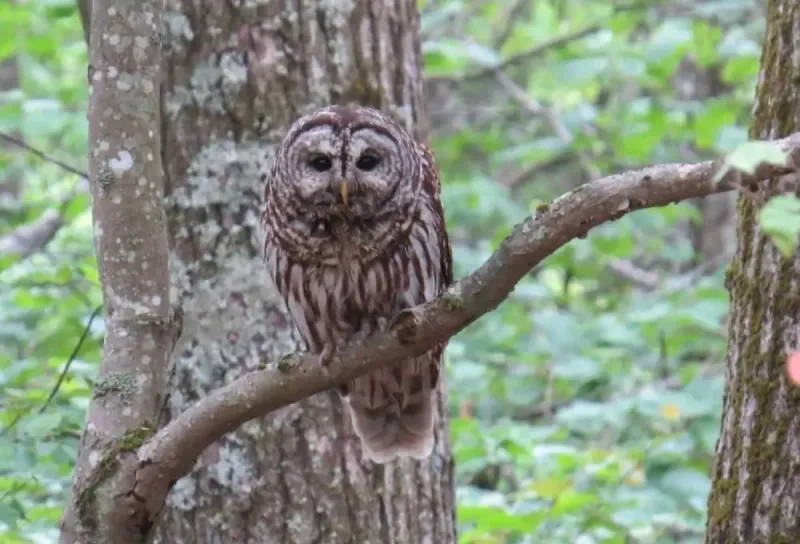
Few raptors eat as wide a variety of prey as the Barred Owl. Cornell Lab of Ornithology describes a broad diet that includes mice, voles, squirrels, and chipmunks.
Barred Owls also eat birds, amphibians, reptiles, and invertebrates. Near water, they will also take crayfish and occasionally small fish.
This range of food sources means many different landscapes can offer something worth hunting.
An Ohio yard with dense ground cover, a weedy edge, or proximity to a creek bank may provide foraging opportunities that become part of a regular route. Barred Owls typically hunt from perches, watching and listening before dropping toward prey below.
Woodland edges, open areas near tree lines, and stream margins tend to be productive hunting zones. A residential property that borders any of these features can fall within that range naturally.
Seeing an owl hunt near a home does not signal a rodent problem. These birds pursue whatever prey is available and abundant, and their diet shifts with the seasons and local conditions.
Leaving prey animals out to attract an owl is not recommended, and feeding wildlife in general tends to create more problems than benefits. A yard with natural ground cover and native plantings near wooded edges may already offer useful habitat.
It can become a worthwhile stop on a longer nightly circuit through established territory.
5. Quiet Mature Trees Offer Daytime Roosts Close To Homes
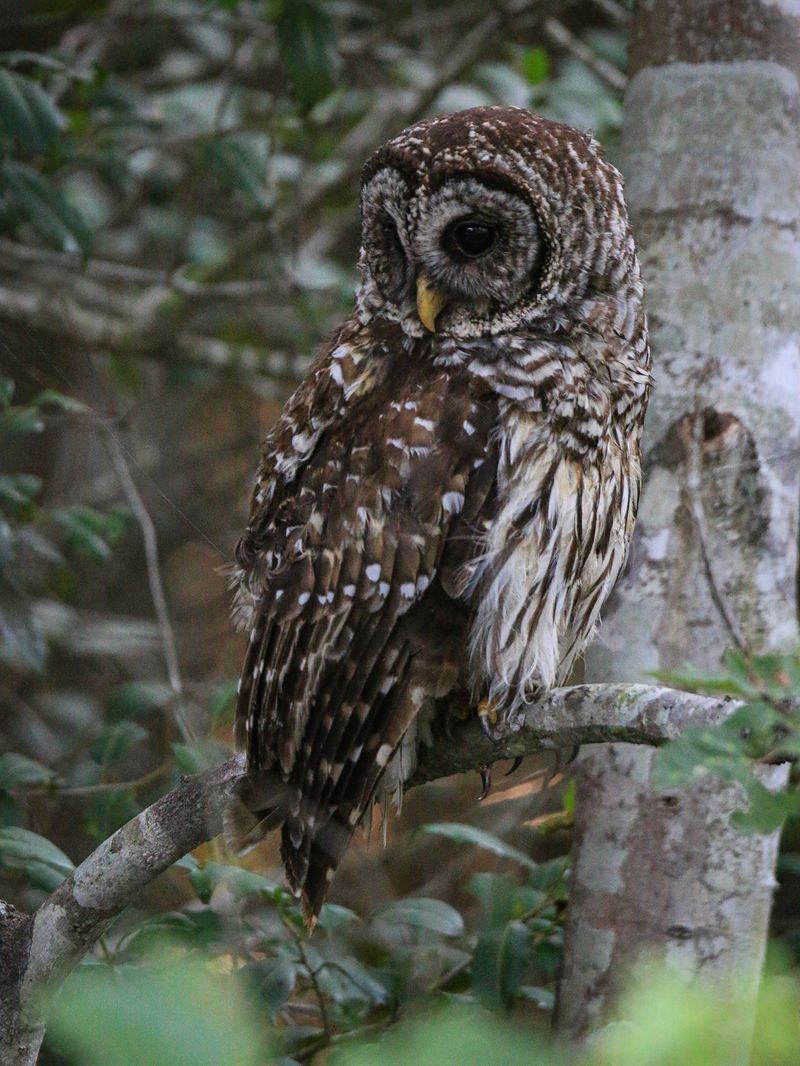
Spotting a large owl sitting perfectly still in an Ohio backyard tree during the middle of the afternoon can stop a person in their tracks. What looks unusual is often completely normal.
Barred Owls rest during daylight hours and can be remarkably hard to spot when settled against the rough bark of a large trunk or tucked into dense foliage.
A property with tall, well-developed trees provides exactly the kind of sheltered perch they prefer for daytime rest.
Cornell Lab of Ornithology notes that Barred Owls can sometimes be active during the day, particularly around dawn and dusk, but they primarily hunt at night. A bird sitting quietly on a branch in daylight is most likely roosting rather than behaving abnormally.
Calm, still posture in a shaded spot is typical roosting behavior and not a reliable sign of illness or injury on its own.
Approaching a roosting owl for a closer look can cause unnecessary stress and may push the bird from a site it uses regularly. Watching from a respectful distance with binoculars is a much better approach.
Repeated disturbance at a roost site is worth avoiding. If an owl appears injured, cannot fly, or is clearly distressed on the ground, contact a licensed wildlife rehabilitator.
Do not attempt to handle the bird yourself.
6. Suburban Woodlots Can Act Like Extensions Of Larger Forests
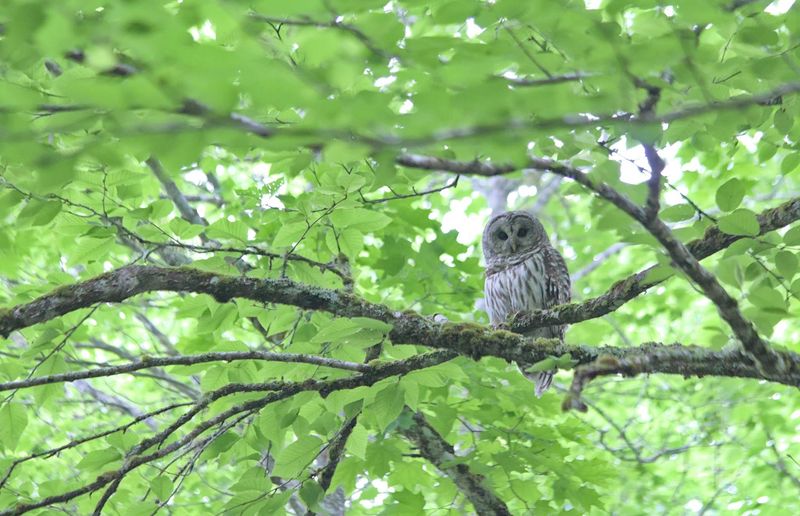
A chain of small wooded properties, a greenway along a stream, and a neighborhood park may not look like a forest from the street. From the perspective of a wide-ranging bird, though, they can function as connected patches of usable habitat.
Landscape ecologists use the term connectivity to describe how well different habitat areas link up across a broader region. Even imperfect connections can allow wildlife to move, rest, and find resources across a patchwork landscape.
Barred Owls can hold territories that cover a substantial area and may move among several wooded patches within that range. Cornell Lab of Ornithology notes that home ranges can vary considerably depending on habitat quality and prey availability.
A bird seen in one yard may have roosted in a park two blocks away the night before. By morning, it may have hunted along a creek corridor on the other side of the neighborhood.
This does not mean every suburban woodlot supports an owl. Forest removal reduces habitat, and small isolated patches surrounded by pavement offer far less than connected corridors with real ecological depth.
The relevant point is that mature, connected tree cover across a neighborhood can sometimes function as part of a larger habitat network. An Ohio homeowner who sees an owl in the yard may be watching a bird that ranges well beyond their property line and has been doing so long before anyone noticed.
7. One Backyard Sighting Does Not Mean A Pair Is Nesting There
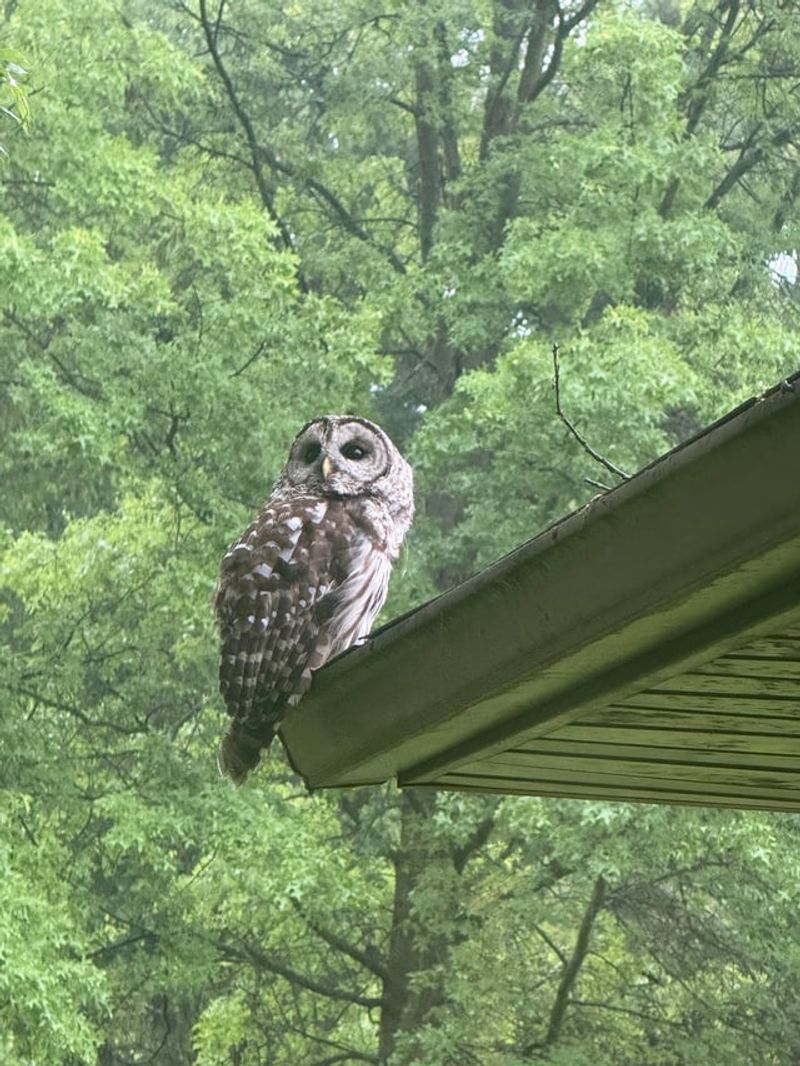
A single unexpected sighting can feel significant, and it is a genuinely interesting observation. What it does not do on its own is confirm that a pair of owls has claimed the property as a nest site.
A bird passing through may be hunting, roosting temporarily, moving through part of a larger territory, or, in some cases, a young bird dispersing from where it hatched. Each of those situations looks similar from a backyard window.
Actual nesting evidence requires more than one visit. Signs of nesting may include the repeated presence of a pair over an extended period or adults carrying food.
The distinctive begging calls of young owls later in the season can offer another clue. Even then, the nest itself may be located in a different tree some distance away.
Presence in a yard does not establish where the nest is, or whether one exists at all.
Aggressively searching for a nest or following an owl through the woods can disturb a territorial bird. Repeatedly using recorded calls to provoke a response can do the same.
Hearing an owl call regularly from the same area over several weeks is a reasonable sign of local presence. It is not, by itself, proof of nesting on the property.
Enjoying the observation from a comfortable distance gives the bird space and still provides a genuinely rewarding wildlife experience.
8. Many Barred Owls Stay Near The Same Territory All Year
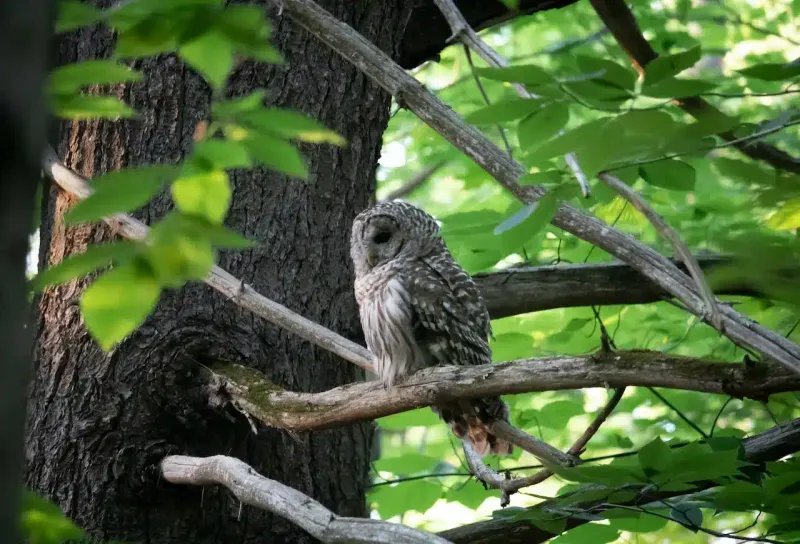
A familiar call drifting through the neighborhood on a cold January night carries a different kind of meaning once you understand the bird behind it. Barred Owls are generally sedentary.
Cornell Lab of Ornithology describes them as non-migratory birds that tend to remain within established territories year round. A pair that uses an area in summer is likely using the same general range in winter, even if they are less conspicuous during certain months.
Repeated sightings in the same neighborhood over many months may involve the same individual or pair. They do not necessarily represent a series of different birds passing through.
Without individual identification, such as a leg band or unique markings, it is impossible to confirm this with certainty. Still, the pattern of repeated local presence fits what is known about this species and its attachment to established territories.
What looks like owls moving into more yards may partly reflect changes in the habitat. In some neighborhoods, trees have simply grown large enough to become usable within areas the species already occupies.
Older residential areas may gradually meet enough of the species’ needs to become part of a territory’s edge. Developed canopies, nearby wooded corridors, and access to water all contribute.
The owl was not necessarily waiting for an invitation. The habitat simply took time to reach a point where it offered something worth using consistently through all four seasons.