Blue Jays Don’t Visit An Ohio Yard By Accident, Here’s Why They Choose Yours
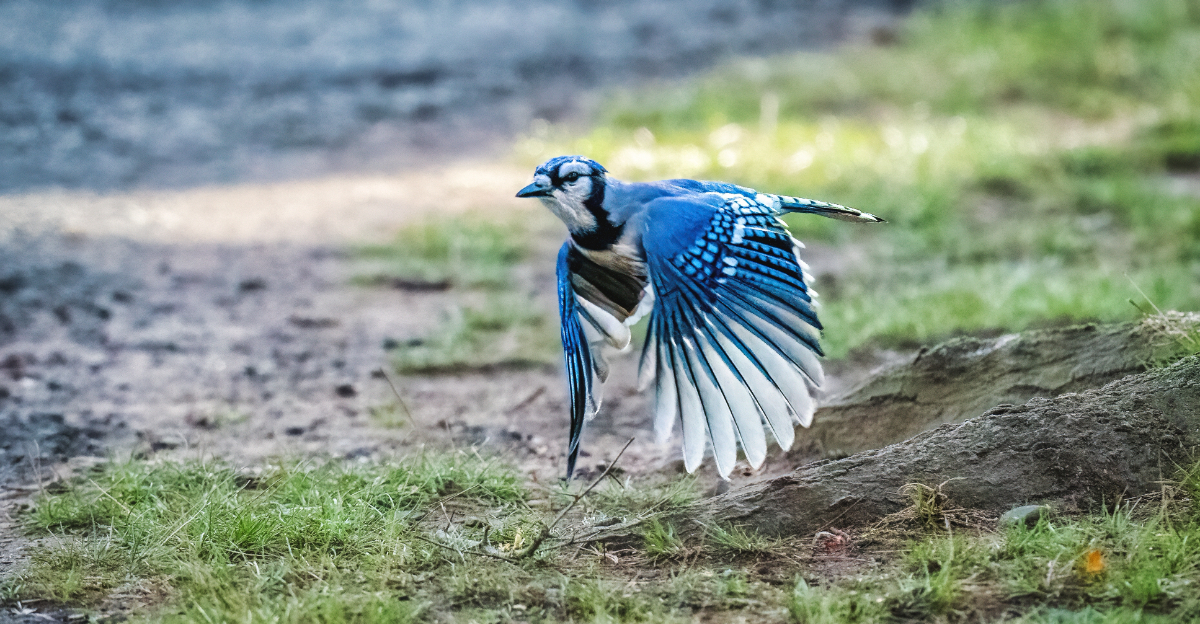
Blue jays are loud, obvious, and completely unbothered by the opinions of every other bird at the feeder. They arrive like they own the yard because, as far as they are concerned, they do.
But they chose this yard. Not the one next door.
Not the one down the street with the bigger oak tree. This one, specifically, and blue jays do not make that choice casually.
Every blue jay visit is an assessment that the yard passed. Food availability, canopy structure, the presence of specific trees that blue jays have been tracking across Ohio landscapes since long before anyone was planting native gardens with them in mind.
The yard that gets blue jays regularly is doing something right that most Ohio yards are not. The bird is the evidence.
What it found here, and why it keeps coming back, is a more deliberate story than it appears.
1. Oak Trees Give Blue Jays One Of The Foods They Value Most
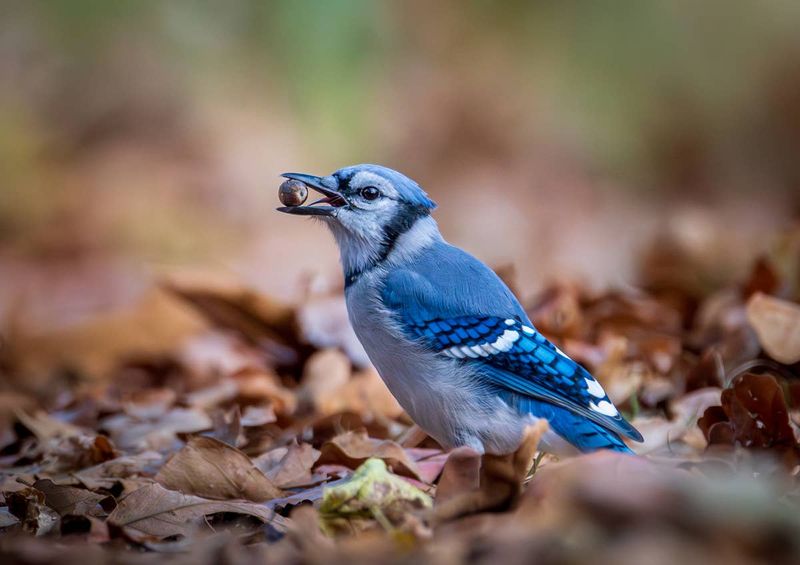
An acorn disappearing beneath a pile of leaf litter is one of the quieter signs that a Blue Jay has been working your yard.
Cornell Lab of Ornithology notes that acorns make up a significant portion of the Blue Jay diet, and the species has a well-documented association with oak habitat.
An Ohio yard containing a mature oak, or one located near oaks on neighboring lots or along wooded streets, may fall naturally within a feeding area these birds already use.
Jays do not simply eat acorns on the spot. They are capable of carrying several at once using a throat pouch, then storing them in the ground or under debris for later retrieval.
This caching behavior is well supported by research, though the exact number of acorns any individual bird stores varies.
A study involving radio-tagged birds documented impressive caching totals, but that finding should not be generalized to every jay in every yard.
Not every cached acorn is recovered, and some germinate over time, which connects jays loosely to oak dispersal. Still, that ecological relationship is a side effect of caching, not a deliberate act.
If your property has a native oak like a bur oak or red oak, it may already be part of a local feeding route. Young oaks take years to produce meaningful crops, so existing trees matter most in the short term.
2. Peanuts And Sunflower Seeds Can Put Your Yard On Their Feeding Route
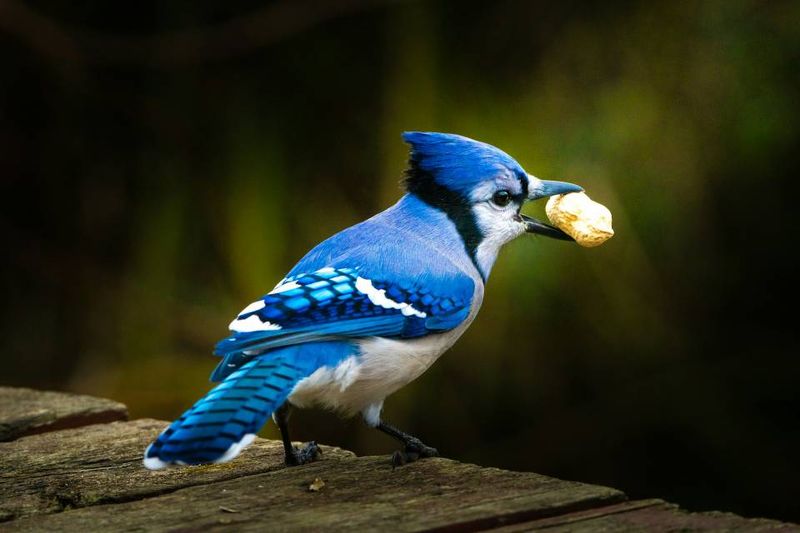
Watching a jay grab a whole peanut from a tray and carry it off without pausing to eat is one of the more striking things a backyard feeder can offer.
Project FeederWatch data consistently lists Blue Jays among the species that use peanuts and sunflower seeds at feeding stations.
Both foods provide the caloric density that a relatively large, active bird can use throughout the day.
Tray feeders and hopper-style feeders tend to work better for jays than small tube feeders, simply because the birds are large and need room to land and maneuver. Offering unsalted, unflavored peanuts in the shell or shelled is appropriate.
Your Ohio Garden Changes Every Week. Your Plan Should Too.
Gardening in Ohio changes quickly throughout the season. Every Friday you’ll receive a simple weekly plan showing exactly what to plant, prune, fertilize, harvest, and protect so you never miss the right timing.
Salted, seasoned, or otherwise processed peanut products meant for human snacking are not suitable and should be avoided. Black-oil sunflower seeds are widely documented as a feeder food that many jay-sized birds use regularly.
A reliable food source does not guarantee that the same individual returns every time. However, a well-stocked feeder can make an Ohio yard part of a broader feeding circuit that local birds use repeatedly.
Keeping feeders clean matters too. Project FeederWatch recommends regular cleaning to reduce the buildup of mold and bacteria.
An empty feeder on occasion will not harm healthy wild jays, since feeders supplement rather than replace their natural diet. Consistency over time is what can make a property more regularly useful.
3. Tall Branches Give Jays A Safe Place To Watch Before Dropping Down
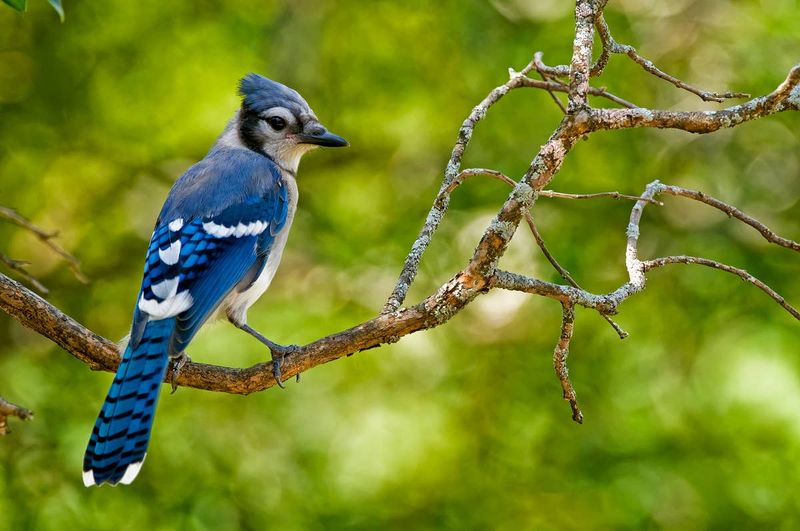
High above a feeding station, a jay may pause on an exposed branch for several seconds before dropping down. That pause is not decorative.
Elevated perches give birds a wider view of the space below, and Blue Jays, like many corvids, tend to approach food sources with some degree of caution.
Cornell Lab describes the species as alert and observant, qualities that fit well with the way they use vertical structure around a yard.
Tall deciduous trees near a feeder can serve as staging points between flights. A bird may land in the canopy, scan the area, then move to a lower branch before reaching the feeder itself.
This kind of step-down approach is common in yards with layered tree structure. Open Ohio yards with no nearby branches may feel less useful to a bird that prefers to approach food from cover.
Feeder placement near trees does carry one tradeoff worth considering. Windows can pose a collision risk when feeders are positioned at certain distances from glass.
The American Bird Conservancy recommends placing feeders either very close to windows, within about three feet, or much farther away. This reduces the risk of birds building up enough speed to cause harm on impact.
Getting the placement right protects the birds while still making the feeding area accessible. Nearby branches can remain part of the approach without creating unnecessary hazards.
4. Dense Trees And Shrubs Make A Yard More Useful Than An Open Lawn
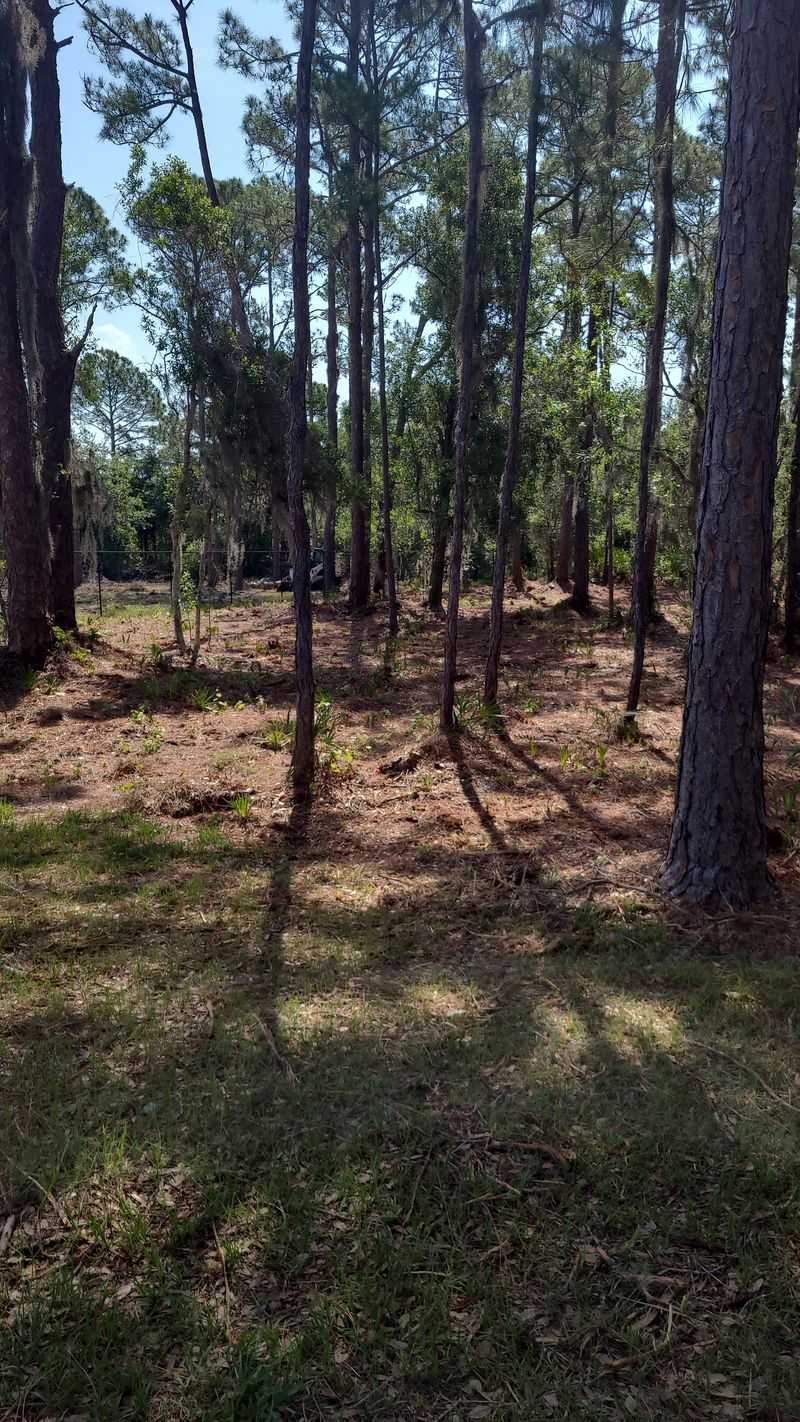
A wide open lawn offers very little to a bird that nests in trees, forages through canopy edges, and moves between wooded patches. Cornell Lab describes Blue Jays as birds of forest edges and mixed woodlands, as well as wooded suburban neighborhoods.
A yard with mature trees, layered shrubs, and some structural complexity simply provides more of what the species already seeks in its normal range.
Woody vegetation can serve several functions at once. Trees and larger shrubs offer potential nest sites, perching spots, travel corridors, and in some cases food in the form of seeds or insects.
Blue Jays build open cup nests in trees, typically placing them in a fork or along a branch with decent cover. Spotting a jay in your yard does not mean a nest is nearby, but a yard with suitable trees is more likely to fall within an area where nesting could occur.
An open lawn is not without value, but it provides fewer of the resources relevant to this species. Adding native woody plants where space allows can increase the structural variety of a yard over time.
Native shrubs and understory trees suited to the region tend to support a broader range of insects and seeds. That can make the space more useful to birds moving through.
An Ohio yard at the edge of a wooded street or near a park may already benefit from surrounding habitat that extends well beyond the property line.
5. Fresh Water Can Give Jays Another Reason To Stop Between Feeding Trips
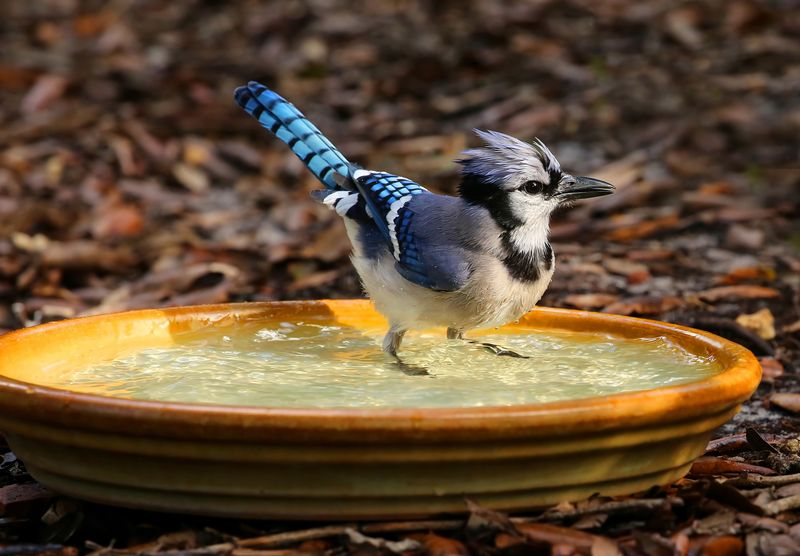
Not every stop a jay makes in a yard is about food. A shallow birdbath placed in a visible, accessible spot can give a passing bird one more reason to linger.
Cornell Lab notes that Blue Jays, like most birds, need reliable access to fresh water for drinking and bathing. A yard that offers both food and water covers more of what a bird might need within a single stop.
Birdbath design matters more than many people expect. A depth of roughly one to two inches works well for most songbird-sized birds, and a textured or rough basin bottom gives birds better footing.
Placement in a spot with some nearby perches allows birds to approach gradually rather than landing directly in an exposed open area. Moving water, such as a dripper or small fountain, may draw more attention than still water, though still water that is kept clean can work well on its own.
Keeping the water fresh is the most important maintenance step. Stagnant water can harbor bacteria and attract mosquitoes.
Cornell and Project FeederWatch both recommend changing birdbath water frequently and scrubbing the basin regularly to prevent buildup.
No specific cleaning chemical dilution should be invented here, so following current guidance from those sources directly is the best approach.
A birdbath does not promise repeated jay appearances, but it adds one more resource to an Ohio yard that may already offer several others.
6. A Reliable Food Source Can Bring The Same Local Jays Back Again
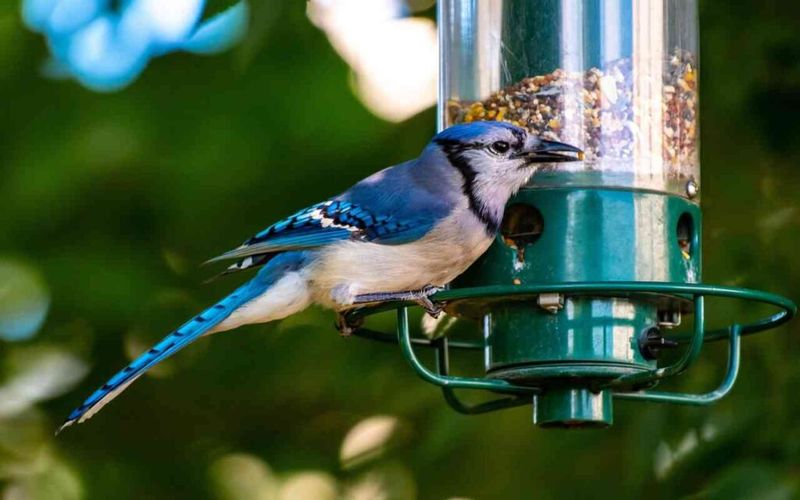
Carrying food away from a feeder rather than eating it on the spot is one of the more telling behaviors a jay displays at a feeding station. The bird is not being wasteful.
Jays routinely transport food to cache it elsewhere, retrieving it later when other sources are scarce. A feeder that stays stocked gives local birds a predictable resource to return to, and that predictability can shape their movement patterns over time.
Repeated appearances at the same feeder may involve the same individual, members of a small local group, or different birds using the same dependable resource.
Without a band or other individual marking, it is not possible to confirm which scenario is playing out on any given day.
What can be said is that a yard offering consistent food tends to see more regular use than one where the feeder runs dry unpredictably.
Jays may also carry feeder food to spots near the yard and store it in soil, leaf litter, or bark crevices. This is normal caching behavior, not a sign that the bird is hoarding or taking more than its share.
The relationship between a bird and a feeder is fundamentally about resource availability. A yard that provides reliable, appropriate food within habitat these birds already use can reasonably expect repeat visits.
No feeder, however, can guarantee which individuals appear or how often they show up.
7. Loud Calls Do Not Always Mean The Jays Are Warning You About Danger
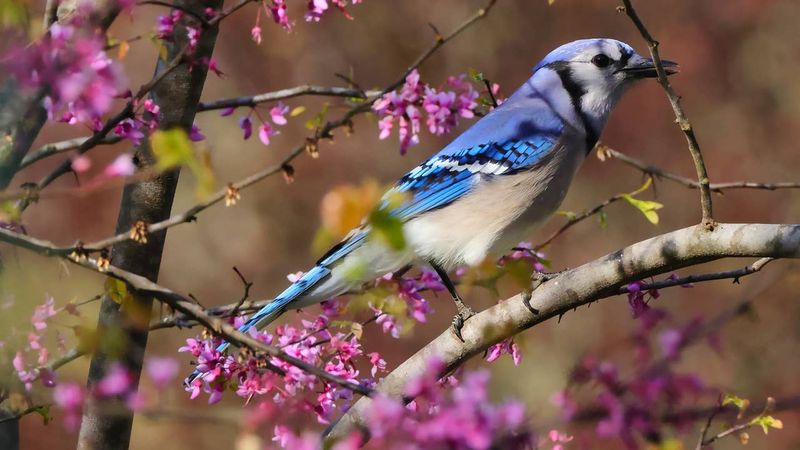
A sharp, carrying call from somewhere in the canopy does not always mean something threatening is nearby. Blue Jays have one of the more complex vocal repertoires of any common backyard bird.
Cornell Lab describes a wide range of Blue Jay sounds. These include familiar jeering calls, softer conversational notes used between birds, and mimicry of other species such as hawks.
None of these calls translate neatly into a single human-readable message.
The hawk mimicry is one of the more discussed aspects of Blue Jay vocalization. Jays can produce sounds that closely resemble the calls of Red-shouldered and Red-tailed Hawks.
Several possible functions have been proposed, including alerting other jays to potential predators or perhaps causing other birds to scatter from a feeding area.
No single explanation has been confirmed as the primary function, and treating any one hypothesis as settled fact would misrepresent what research currently supports.
Crest position can offer some behavioral context, though it should not be reduced to a simple formula. Cornell notes that a raised crest may accompany agitation or alertness, while a flattened crest can appear during calmer moments.
Context always matters more than one posture alone. At feeders, jays can displace smaller birds.
However, Project FeederWatch research shows that interactions vary considerably depending on the species present and the feeding-station setup. Loudness alone does not reliably indicate what a jay is responding to in any given moment.
8. Some Blue Jays Stay Local While Others Move When The Seasons Change
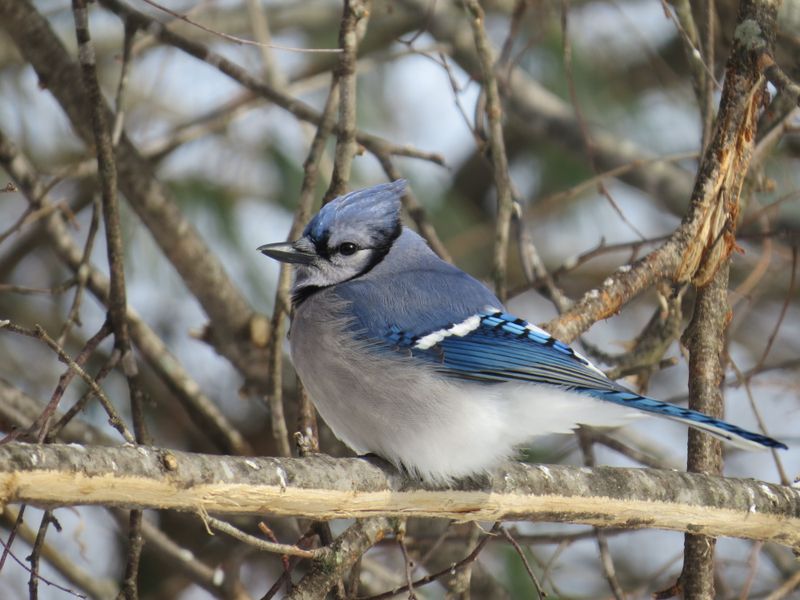
A loose group of jays moving through the neighborhood in October does not automatically mean a migration is underway. Blue Jay movement is genuinely complex and not fully understood.
Cornell Lab notes that some individuals remain within their range year round while others undertake seasonal movements. The species can be present in an area across all seasons even when some of the individuals using a yard have shifted elsewhere.
What triggers movement in some birds but not others is not precisely known. Factors like food availability and individual history may play a role, but no single cause has been confirmed as a universal driver.
Claiming that an acorn shortage always pushes jays south, or that every fall flock crossing a yard is migrating, would go beyond what current evidence supports.
Some groups seen in fall may be migrating, while others may simply be moving through their normal local range.
For yards in the region, this variability means that the birds appearing in winter may not be the same individuals seen in summer. A yard that provides reliable resources within habitat jays already use can receive repeated visits across multiple seasons.
The individual birds visiting may still shift without an obvious explanation. Seasonal changes in which individuals appear are a normal part of how this species operates across its range.
A useful property remains a useful property regardless of which specific birds happen to be passing through at any given time of year.