The Big Yellow Grasshoppers Taking Over Florida Yards And What Actually Stops Them
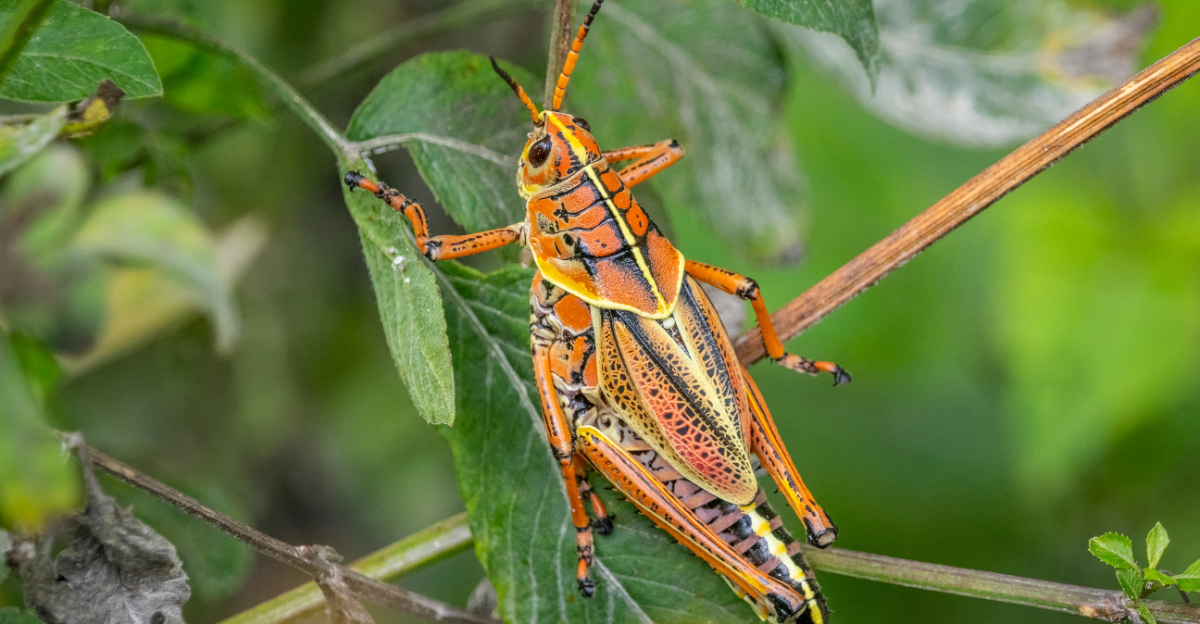
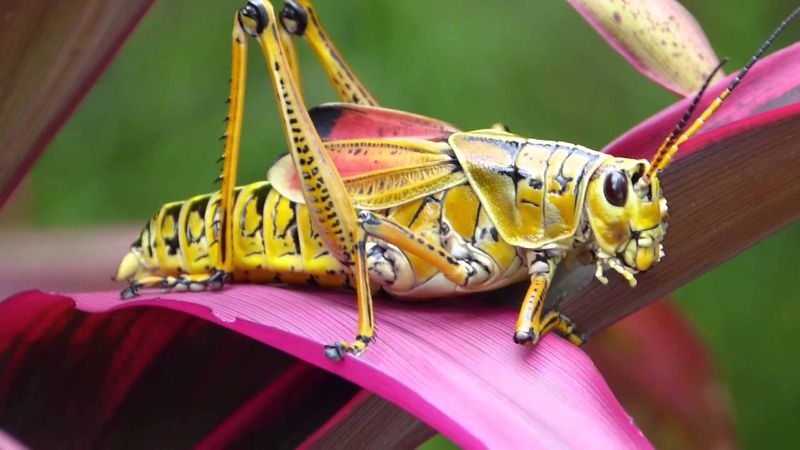
Florida’s eastern lubber grasshopper does not arrive quietly. Bright yellow, black trimmed, the size of a thumb, and completely unbothered by anything watching it eat through a garden bed in broad daylight.
Subtlety is not part of its strategy. Toxicity is.
Most predators will not touch them. Most sprays require direct contact and repeat applications that never quite keep pace with a population already established and moving.
The standard responses to a lubber problem tend to produce frustration more reliably than results. What actually stops them is more specific than what most gardeners try first.
The window for effective intervention is earlier in the season than most people act on it. By the time the large yellow adults are visible and moving through the yard, the easiest moment has already passed.
Florida lubber control is a timing problem as much as a method problem. Both matter.
Neither one works well without the other.
1. Those Giant Yellow Lubbers Are Tougher Than They Look
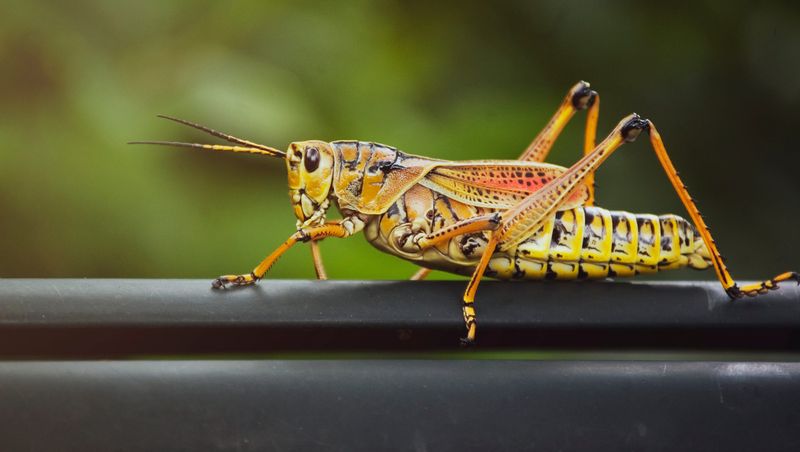
Walking across a Florida patio or climbing a garden fence post, a fully grown eastern lubber is hard to miss. Adults can reach nearly three inches in length, making them among the largest grasshoppers found in the southeastern United States.
Their coloration varies quite a bit, ranging from bright yellow with bold black markings to mostly dark forms with reddish or orange accents. That vivid pattern is not random.
It signals to potential predators that this insect carries chemical defenses, making it unpleasant to eat for many animals.
Unlike many grasshopper species, eastern lubbers are poor fliers. Their wings are too short for sustained flight, so they move mostly by walking slowly from plant to plant.
Their lumbering pace might make them seem easy to manage. However, their size and chemical makeup mean many common insecticides struggle to control mature adults effectively.
Repeated spraying of large adults can expose helpful insects and surrounding plants to unnecessary chemicals without producing satisfying results.
Seeing several large yellow adults in your yard usually means the most manageable window has already passed. Young lubbers are far more vulnerable than their giant parents.
The adults you notice now hatched weeks ago as small, clustered nymphs that were much easier to address. Understanding adult biology helps explain why control strategies must shift depending on the stage of the insect you are dealing with.
2. Black Nymph Clusters Are Your Best Chance To Get Ahead
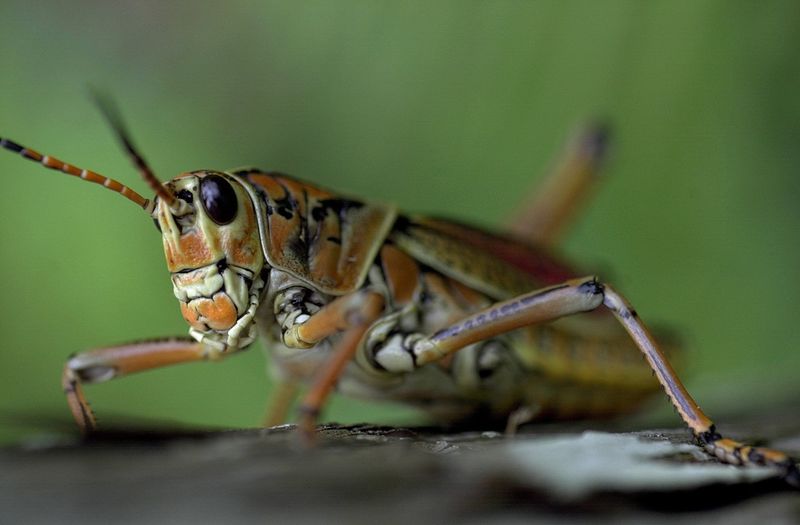
Young eastern lubbers look almost nothing like the yellow adults most Florida gardeners recognize.
Freshly emerged nymphs are primarily black with vivid yellow, orange, or reddish side stripes that make them surprisingly easy to spot once you know what to look for.
They often stay grouped together in noticeable clusters shortly after hatching, which is exactly what makes this stage so important for management.
A tight group of small nymphs on one plant or along a bed edge is far easier to address than a dozen fully grown adults scattered across multiple garden areas. UF/IFAS extension guidance emphasizes managing lubbers during their early immature stages.
Your Florida Garden Changes Every Week. Your Plan Should Too.
Gardening in Florida changes quickly throughout the season. Every Friday you’ll receive a simple weekly plan showing exactly what to plant, prune, fertilize, harvest, and protect so you never miss the right timing.
Waiting until they have grown large and dispersed makes control much harder. Before treating anything, though, take a moment to confirm identification.
Not every small black grasshopper nymph is an eastern lubber, and misidentification can lead to unnecessary treatment of beneficial insects.
Scouting should begin in late winter or early spring, especially near plants that lubbers have favored in previous seasons. Check along bed edges, low vegetation, and moist areas where egg masses may have been deposited nearby.
Once you find a cluster of confirmed young nymphs, physical removal or targeted spot treatment becomes much more practical. Those options are also more effective than waiting until the insects reach full adult size.
3. Hand Removal Works Better Once The Adults Get Huge
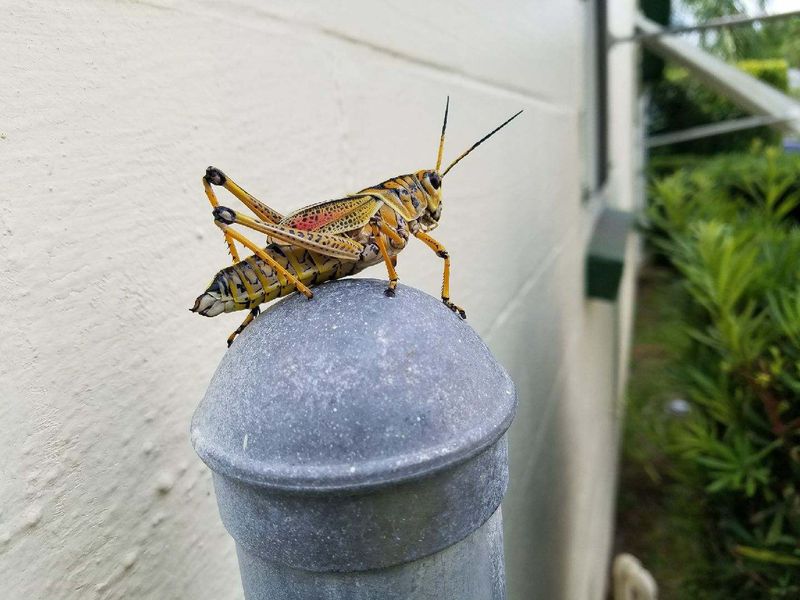
When mature lubbers are already roaming through your garden and sprays are proving disappointing, physical removal becomes one of the most practical tools available.
Picking adults off plants by hand, while wearing sturdy gloves, can be surprisingly effective when the number of insects is manageable.
Eastern lubbers move slowly, so collecting them from stems and foliage does not require much speed or special equipment.
A container with a secure lid works well for collection. Once removed, insects can be disposed of responsibly according to your local extension recommendations.
Avoid bare-handed handling if you are sensitive to the mild chemical secretions lubbers can release when disturbed. The process is not glamorous, but it works well for a moderate number of adults concentrated in one area.
It can be more practical than spraying repeatedly and hoping for better results.
One important detail to keep in mind is that hand removal is not a one-time fix. Additional adult lubbers can wander into a cleared area from nearby vegetation or neighboring properties over the course of several days or even weeks.
Checking your plants every few days gives you the best chance of keeping populations from rebuilding in a spot you have already cleared.
Staying consistent with inspections makes physical removal a genuinely useful part of a broader management routine rather than a frustrating temporary measure.
4. Amaryllis And Crinum Can Take The Heaviest Feeding
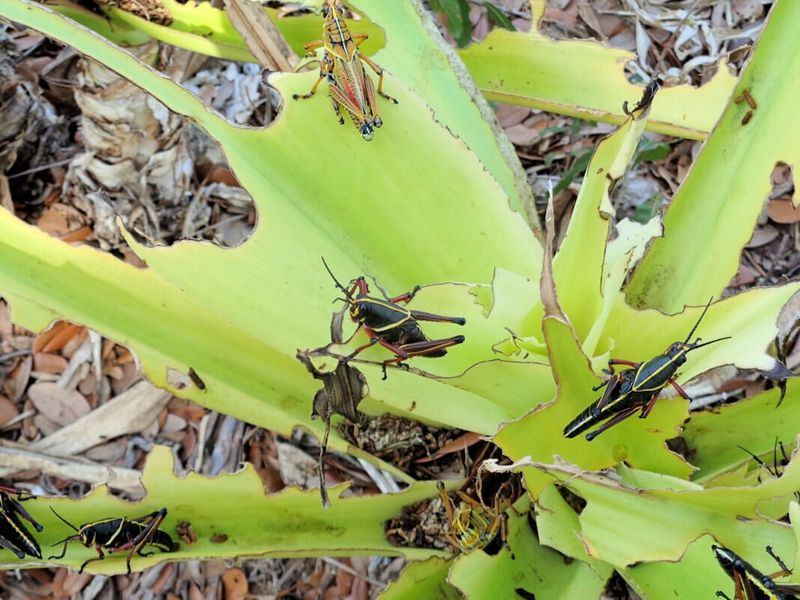
If you grow amaryllis, crinum, Amazon lily, or narcissus in your yard, those beds deserve your first and closest attention during lubber season. Plants in the amaryllis family are among the eastern lubber’s most consistently preferred hosts.
Concentrated feeding can remove a significant amount of leaf tissue in a short period. Florida gardeners who have watched a healthy amaryllis bed get reduced to ragged stubs know exactly how frustrating that kind of damage can be.
The chewing damage lubbers leave behind is fairly distinctive. Leaf edges become ragged and irregular, and in cases of heavy feeding, entire sections of foliage may disappear.
Established plants can often recover once lubbers are removed and feeding pressure stops, but repeated heavy damage over multiple seasons can weaken plants over time.
Protecting these favored hosts is where limited control effort will have the greatest practical value.
Eastern lubbers also feed on certain vegetables and ornamentals beyond the amaryllis family. Even so, starting your scouting at known preferred hosts gives you a reliable early warning system.
When you find feeding damage or spot insects on amaryllis or crinum early in the season, you can act before the problem spreads to other parts of the landscape.
Prioritizing your inspection time around these plants each spring pays off in a much more manageable situation throughout the rest of the season.
5. Spraying Mature Lubbers Often Delivers Disappointing Results
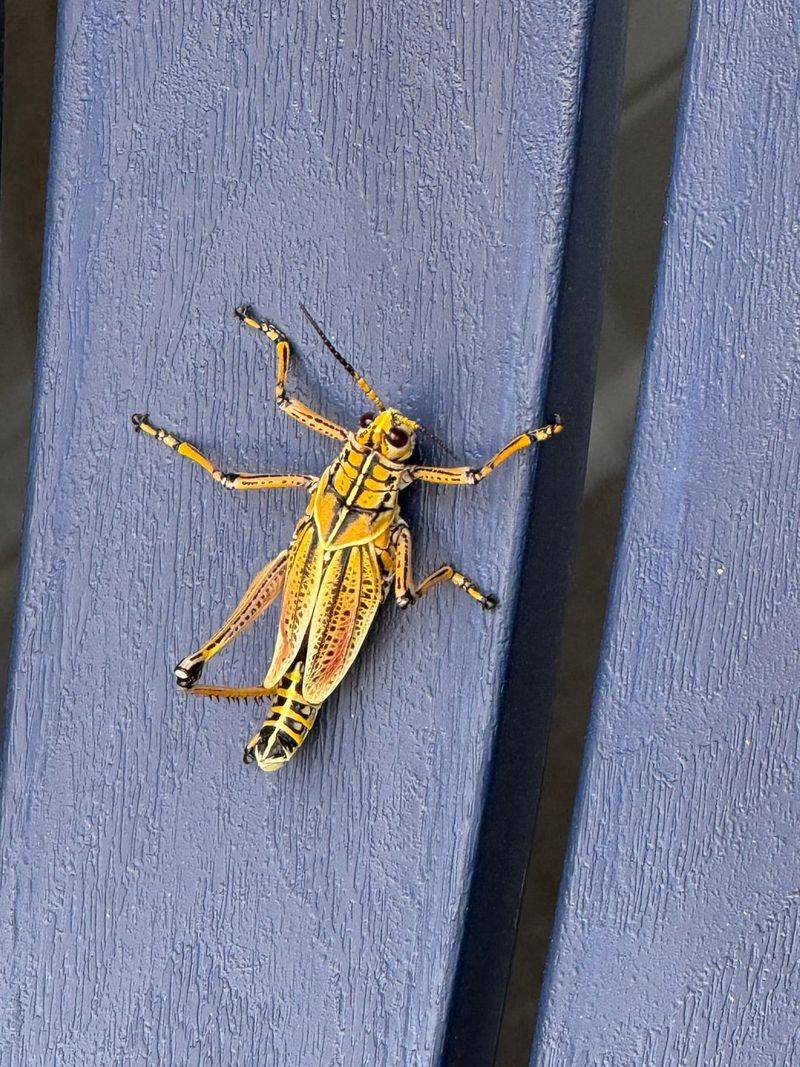
Reaching for a spray bottle when you spot giant yellow lubbers is a completely understandable reaction. Unfortunately, mature eastern lubbers are significantly harder to manage with insecticides than most people expect.
Their large body mass and chemical defenses make mature lubbers difficult to control. Standard contact insecticides often fail to produce the quick results Florida gardeners expect.
Some products may eventually affect adults, but the process is slow and unreliable compared to treating younger stages.
Spraying an entire landscape once adults appear also raises real concerns about non-target impacts. Broad applications can harm beneficial insects, including pollinators visiting nearby flowers.
That trade-off is especially hard to justify when the treatment is unlikely to work well against large lubbers. That trade-off is worth thinking about carefully before reaching for a product.
If chemical control is being considered, current UF/IFAS guidance points to treating small nymphs as the stage where products have the most reliable effect.
No product should be applied unless it is currently labeled for eastern lubbers and for the specific site where you plan to use it.
Off-label use creates legal and safety risks that simply are not worth taking when the target pest is already past the stage where chemical control works well.
Treating giant adults like ordinary small grasshoppers is a common mistake. It can waste effort and money while creating unnecessary chemical exposure in the surrounding landscape.
6. Catching Them Early Keeps One Garden Bed From Getting Overrun
Young lubbers do not stay clustered forever. As lubbers mature through their nymph stages, they begin spreading away from where they hatched.
They move into adjacent Florida beds, nearby shrubs, and surrounding vegetation. A group of nymphs that could have been managed in one focused effort becomes a much harder problem once the insects disperse across a wider area of the landscape.
Scouting early and consistently is the straightforward answer to this challenge. Check host plants like amaryllis and crinum, inspect bed edges, and look along moist low-growing vegetation where nymph groups tend to appear.
Areas where you found lubbers in a previous season are especially worth revisiting, since egg masses are often deposited in nearby soil. Finding a tight cluster of young nymphs before they spread gives you the most manageable situation possible.
Even a well-timed early effort will not guarantee that no lubbers appear later. Adults can wander in from neighboring habitat, and a few stragglers may have gone unnoticed during earlier scouting.
Repeated inspections throughout the season matter more than a single thorough check done once. The goal is not to eliminate every grasshopper in the neighborhood.
The goal is to prevent a concentrated group from quietly growing and spreading through your most valued planting beds before you have had a chance to respond.
7. Spot Treatments Make More Sense Than Spraying The Whole Yard
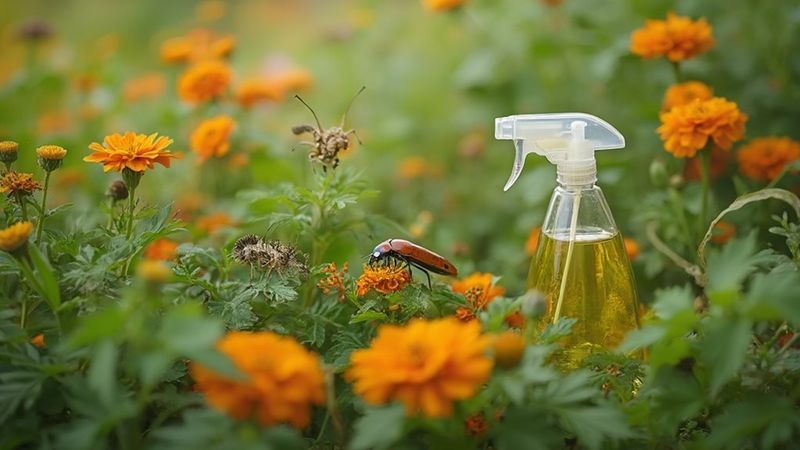
Treating every square foot of a yard because a few lubbers showed up near one flower bed is a bit like using a fire hose to water a single potted plant.
Blanket pesticide applications across an entire landscape are rarely justified for a localized pest, and eastern lubbers are no exception.
Concentrated feeding pressure on specific plants is what calls for a response, not the presence of a few wandering adults near the lawn edge.
Protecting pollinators and other helpful insects should factor into every control decision. Broad sprays applied across flowering plants or general garden areas can harm bees, parasitic wasps, and other organisms that contribute to a healthy yard.
Targeted management starts by identifying which plants are experiencing meaningful damage and confirming that eastern lubbers are responsible. Then you can decide whether the situation actually justifies a chemical response.
Physical removal is the preferred first option when numbers are manageable. When insecticide treatment is genuinely warranted, the product must be currently labeled for eastern lubbers and for the specific site being treated.
Always check current UF/IFAS recommendations and read the product label fully before applying anything. Managing a localized plant pest is very different from trying to eliminate every grasshopper outdoors.
Keeping that distinction in mind helps make control efforts more focused and realistic.
8. Next Season Starts With Finding The Young Lubbers First
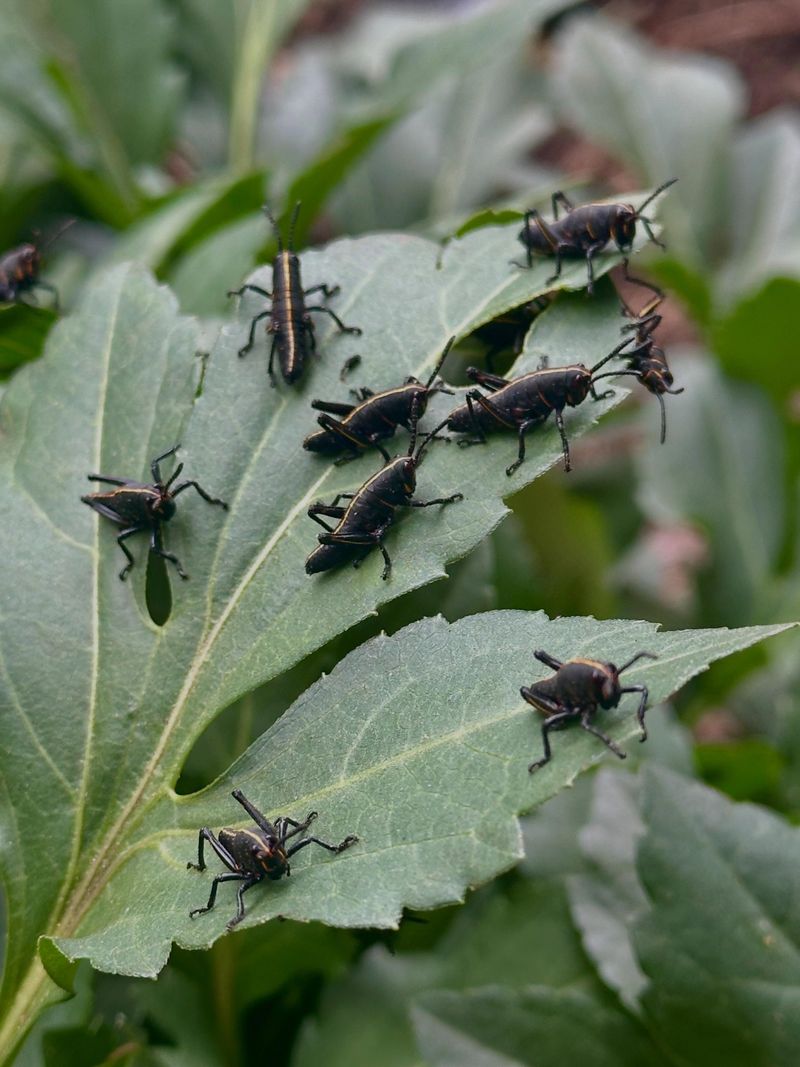
Eastern lubbers generally complete one generation per year. After mating, females deposit egg masses in the soil, and those eggs eventually hatch into the small black nymphs that start the whole cycle again.
Emergence timing varies across Florida and depends on seasonal temperatures. Staying observant in late winter and early spring is therefore more reliable than marking a single calendar date.
One of the most useful things you can do after dealing with lubbers this season is simply remember where they appeared. The areas where you found clusters of nymphs or heavy adult feeding are strong candidates for early scouting next year.
Females often deposit eggs in nearby soil, so new nymphs may emerge close to the same spots where adults were active. You do not need to dig through every bed searching for eggs.
That kind of disruptive effort is rarely worth the trade-off.
The central takeaway from every lubber season is the same. The most effective approach is not hunting for a stronger product to use against giant yellow adults.
The better approach is to check your garden early and recognize the small black clustered nymphs. Then act while the insects are still manageable.
A little attention paid in spring makes the rest of the growing season far less stressful for both the gardener and the garden.