The Heat-Proof Trees California Gardeners Wish They Had Planted Sooner
There is a special kind of regret that hits when a California heat wave arrives and your favorite tree suddenly looks like it wants to resign from the yard.
The leaves droop, the shade feels thinner, and you start eyeing every thriving tree on the block with a little envy. Garden jealousy is real.
Choosing trees for a hot California landscape can be trickier than it seems. A tree may look gorgeous at the nursery, grow beautifully for a few mild seasons, and then face conditions that test just how comfortable it really is in your yard.
By that point, replacing it is hardly a quick weekend project. That is why some trees earn serious appreciation once temperatures climb.
Gardeners who discover them often wish they had made those choices years earlier, especially when summer turns the landscape into a giant baking tray.
If you are planning new shade, reworking a struggling yard, or simply dreaming about a garden that handles brutal heat with less drama, a few standout trees deserve a closer look before the next scorcher rolls around.
1. Desert Willow Keeps Blooming Through Serious Heat
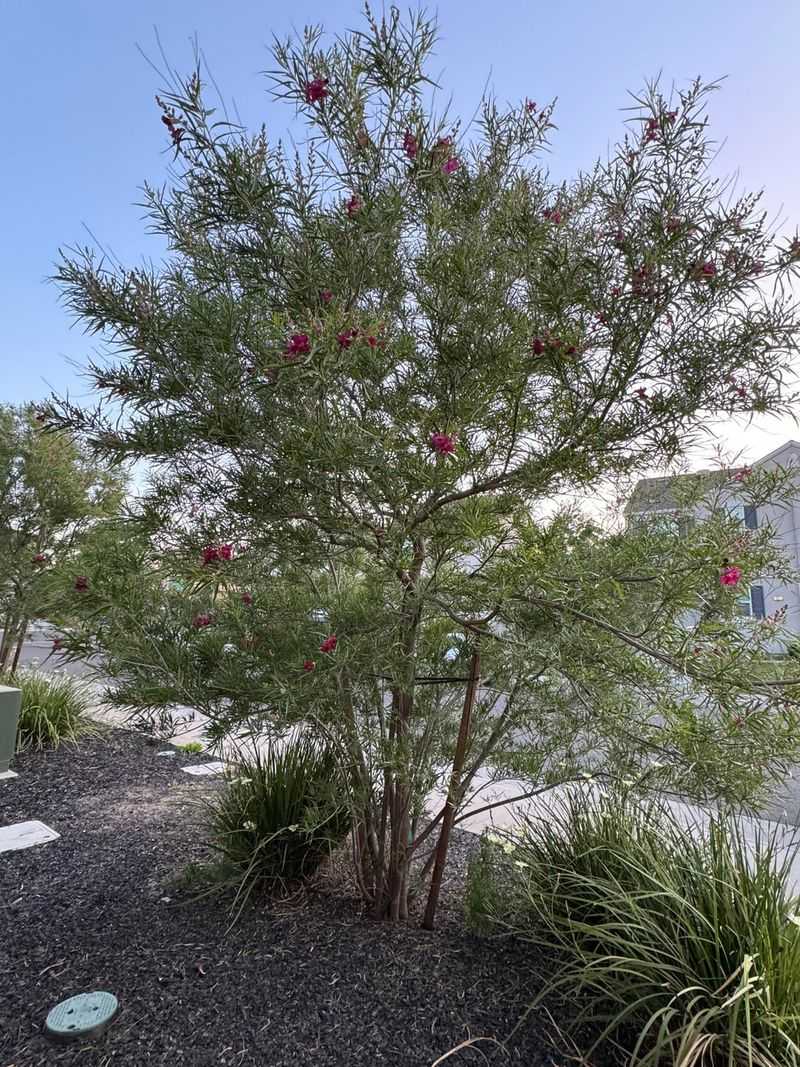
Few flowering trees put on a show quite like the Desert Willow. From late spring through early fall, it pushes out clusters of trumpet-shaped blooms in shades of pink, purple, white, and burgundy.
The flowers keep coming even when the thermometer refuses to drop. Hummingbirds absolutely love it, which makes the tree feel alive even on the hottest days.
Despite its name, this tree is not actually related to willows. It belongs to the same plant family as the Catalpa, and its long, narrow leaves just happen to look willow-like.
It is native to desert washes across the Southwest, which means it evolved to handle exactly the kind of heat most yards throw at it.
Mature trees reach about 15 to 25 feet tall, making them a solid choice for medium-sized yards. They prefer well-drained soil and do not like sitting in wet ground.
Once established, they get by on very little water. Pruning in late winter helps keep the shape tidy and encourages better blooming the following season. Gardeners who plant one often end up wanting a second.
2. Palo Verde Shrugs Off Hot Dry Summers
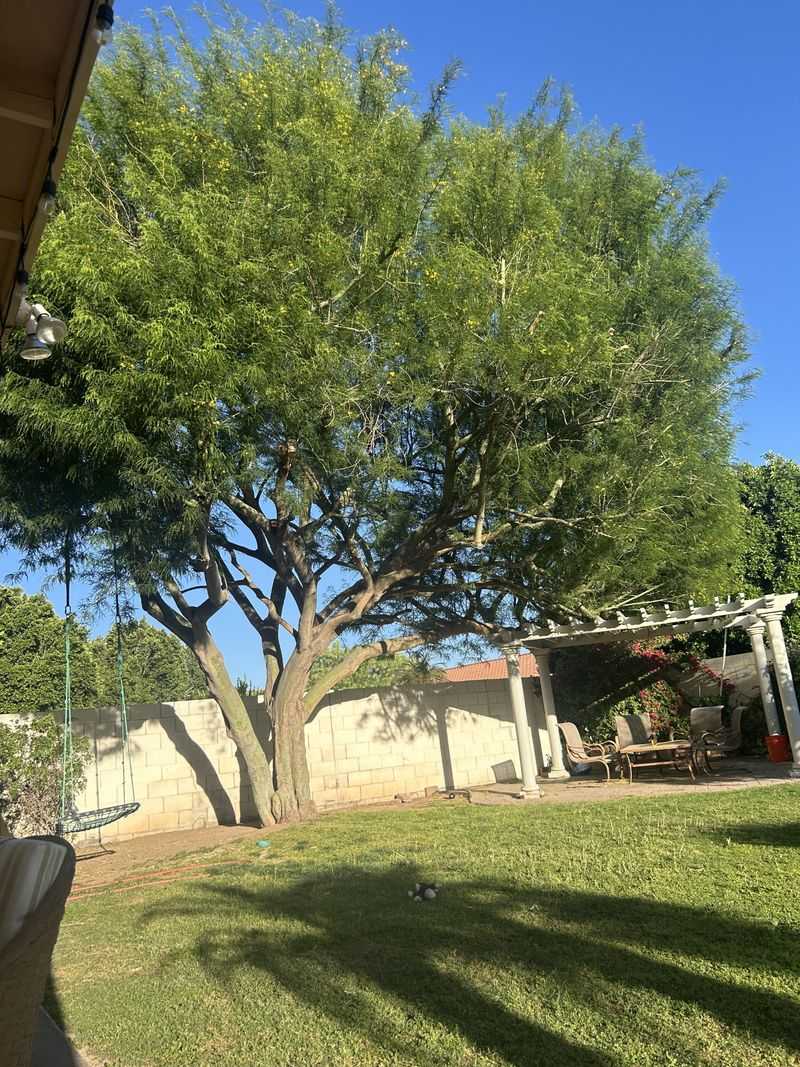
There is something almost magical about a tree that keeps photosynthesizing even after it drops all its leaves.
Palo Verde does exactly that, using its green bark to keep producing energy during the driest, hottest stretches of summer.
That bright green trunk is not just unusual-looking; it is a survival trick that has kept this tree thriving in desert conditions for thousands of years.
Every spring, Palo Verde explodes into a cloud of tiny yellow flowers that can cover the entire canopy. The display only lasts a few weeks, but it is stunning enough to stop people in their tracks.
After the flowers fade, the tree settles into a relaxed, open form that provides light, dappled shade without blocking every bit of breeze.
This tree handles poor, rocky soil with no complaints. It does not need rich compost or frequent fertilizing.
Your California Garden Changes Every Week. Your Plan Should Too.
Gardening in California changes quickly throughout the season. Every Friday you’ll receive a simple weekly plan showing exactly what to plant, prune, fertilize, harvest, and protect so you never miss the right timing.
Once established, deep, infrequent watering is all it really asks for. It grows at a moderate pace and typically reaches 20 to 30 feet at maturity.
Young trees benefit from some staking in windy spots, but older ones are very sturdy. It is one of the most low-effort, high-reward trees a dry-climate gardener can choose.
3. Shoestring Acacia Handles Heat With Very Little Fuss
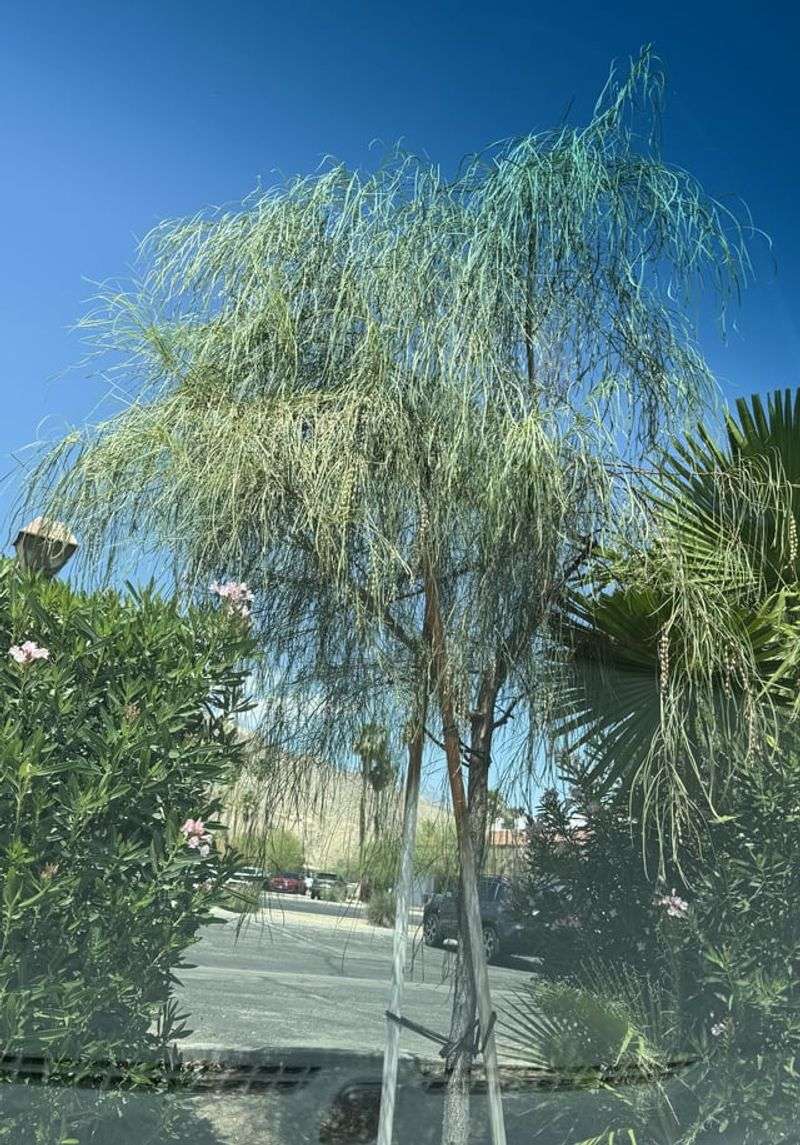
Long, thread-like leaves that hang like curtains give the Shoestring Acacia one of the most distinctive silhouettes in drought-tolerant landscaping.
The weeping form is elegant without being fussy, and it moves beautifully in even a light breeze.
Gardeners who want something that looks architectural and refined without requiring constant upkeep tend to fall hard for this tree.
Originally from Australia, this acacia has adapted remarkably well to hot, dry climates across the American Southwest. It grows fast, often putting on several feet of height in a single season under good conditions.
That speed makes it a popular choice for gardeners who want results without waiting years. It can reach 20 to 30 feet tall and spreads wide enough to cast real shade.
Small, pale yellow flower clusters appear in winter and early spring, adding a soft seasonal touch. The tree is evergreen, so it keeps its cool blue-green color year-round.
It prefers full sun and well-drained soil. Overwatering is one of the few ways to actually cause problems with this tree.
Once established, it is remarkably self-sufficient. Minimal pruning, minimal water, and minimal pest pressure make it a favorite for busy homeowners who still want a beautiful yard without spending every weekend on maintenance.
4. Chitalpa Brings Flowers Without Needing Constant Water
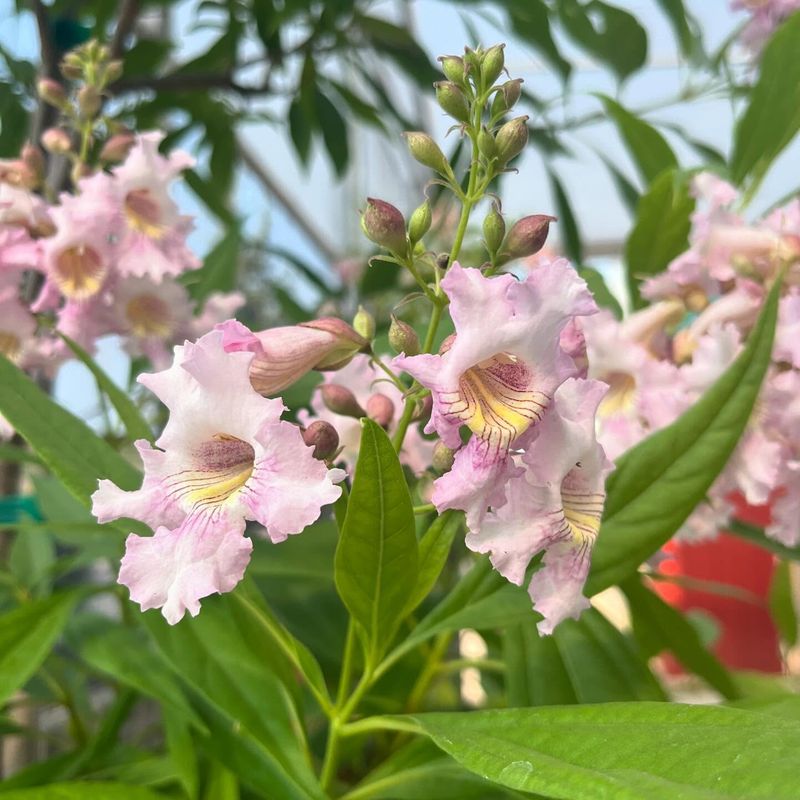
A cross between a Desert Willow and a Catalpa, the Chitalpa gets the best traits from both parents. It blooms heavily from late spring through summer, producing big clusters of ruffled, trumpet-shaped flowers in pink, white, or lavender.
The blossoms are showy enough to turn heads from across the street. And unlike many flowering trees, it keeps blooming even when temperatures climb past 100 degrees.
The Chitalpa grows into a rounded, medium-sized tree that typically tops out between 20 and 30 feet. Its canopy is dense enough to create meaningful shade, which makes it practical as well as pretty.
The leaves are long and narrow, giving it a slightly tropical look that feels unexpected in a drought-tolerant garden.
One of the biggest selling points is how little water it needs once it gets established. Deep watering every few weeks during summer is usually enough.
It performs best in full sun and prefers soil that drains well. It is not picky about soil type, which is a real bonus for yards with heavy clay or sandy ground.
Gardeners who have planted one often describe it as a tree that gives constantly and asks for almost nothing in return. That kind of trade-off is hard to beat in a hot, dry yard.
5. Texas Mountain Laurel Loves Hot Sunny Yards
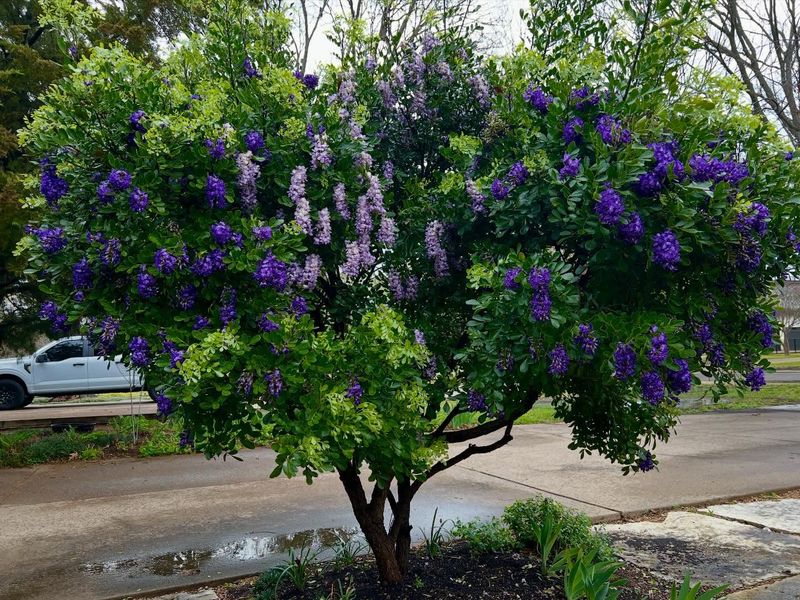
Few trees announce spring as boldly as the Texas Mountain Laurel. Its clusters of deep purple flowers smell exactly like grape soda, which sounds strange but is genuinely delightful.
The fragrance can carry across an entire yard on a warm afternoon. Neighbors will ask what that amazing smell is, and you will get to feel very proud of your plant choices.
This small to medium tree grows slowly, usually reaching 10 to 15 feet over many years. The slow growth might feel frustrating at first, but the payoff is a dense, evergreen canopy that looks polished year-round.
The glossy, dark green leaves stay on the tree through summer heat and winter cold alike. It is tough in a quiet, dignified way that earns more appreciation the longer you have it.
Texas Mountain Laurel thrives in rocky, alkaline soils that many other trees hate. It asks for very little water once established and actually struggles if overwatered.
Full sun is where it performs best. It has very few pest or disease problems, which keeps maintenance light.
The seeds inside its red pods are toxic, so it is worth keeping that in mind around young children and pets. Otherwise, it is one of the most rewarding low-water trees a hot-climate gardener can add to their landscape.
6. Chinese Pistache Powers Through Triple-Digit Weather
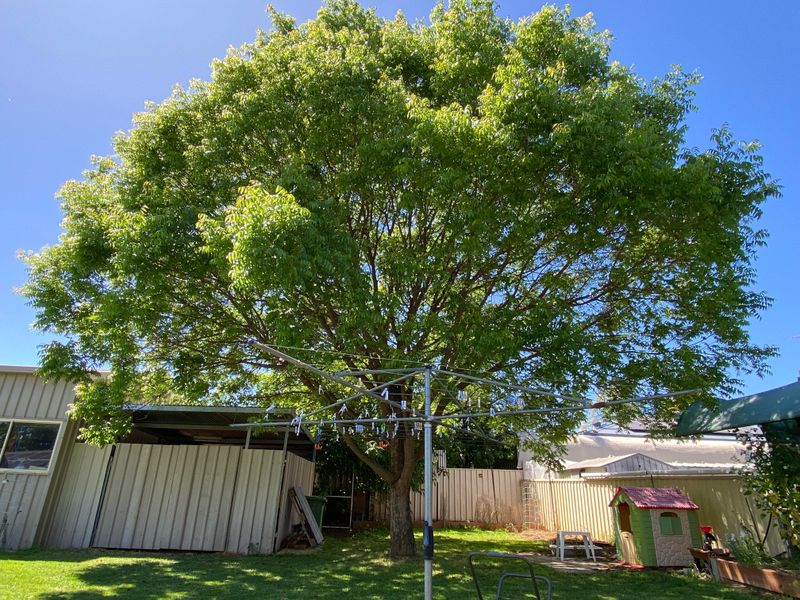
When most people think of fall color in hot, dry climates, they assume they are out of luck. Chinese Pistache proves that assumption completely wrong.
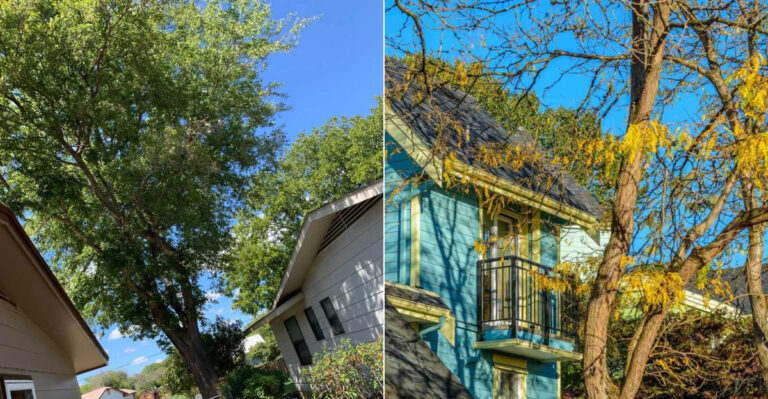
Come autumn, this tree lights up in shades of orange, red, and gold that rival the displays seen in much cooler parts of the country. It is genuinely one of the best fall-color trees for gardeners who deal with long, brutal summers.
During summer, the wide, spreading canopy stays a deep, healthy green. The tree handles triple-digit temperatures without wilting or looking stressed.
It grows at a moderate pace and eventually reaches 25 to 35 feet tall with an equally wide spread.
That size makes it a serious shade tree, the kind that can cool down a patio or a whole side of a house by several degrees.
Chinese Pistache is also impressively adaptable when it comes to soil. Clay, loam, sandy ground-it handles them all without complaint.
It does prefer well-drained spots, so low-lying areas that collect water are not ideal. Once established, it is highly drought-tolerant and rarely needs supplemental watering except during the driest stretches.
It has very few serious pest problems. Gardeners who plant one in a prominent spot in the yard tend to consider it one of the smartest decisions they ever made for their landscape.
7. Desert Museum Palo Verde Gives Fast Shade In Brutal Heat
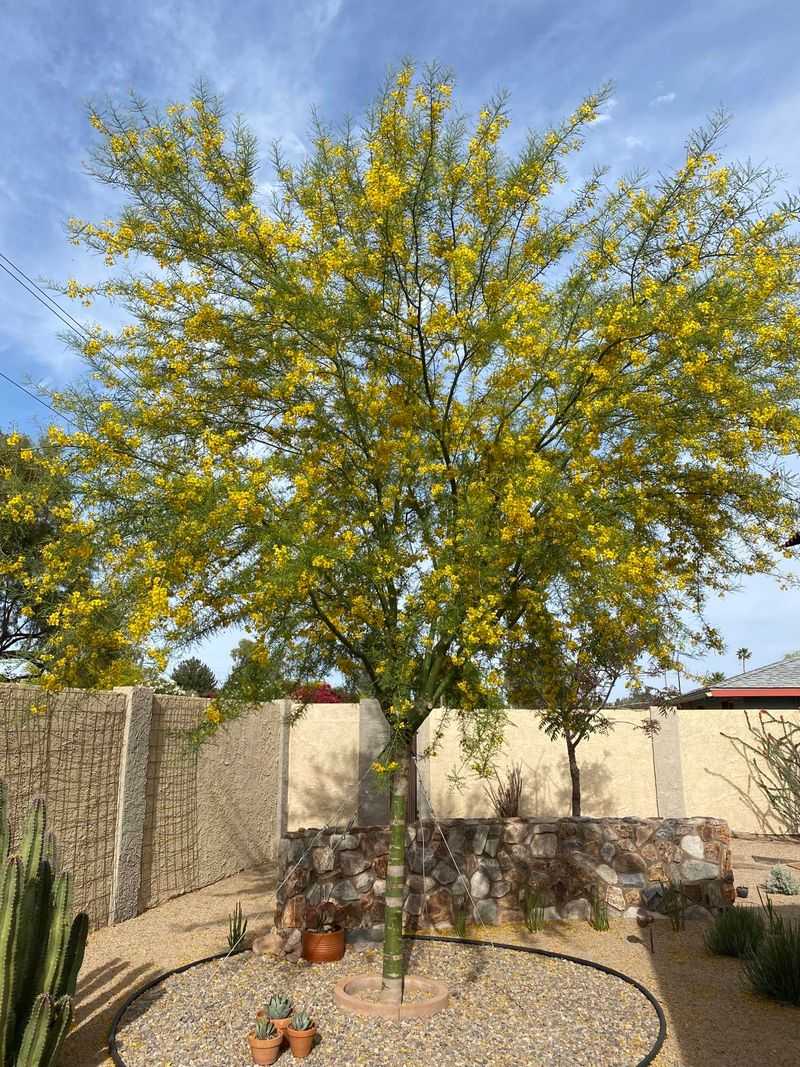
Speed matters when you are planting a shade tree in a yard that bakes all summer. Desert Museum Palo Verde is a hybrid variety that grows noticeably faster than its wild relatives, which already makes it stand out.
Under good conditions, it can add three to four feet of height per year. That kind of growth means you are not waiting a decade to finally sit in the shade you planted.
The tree produces an absolutely spectacular spring flower show. Bright yellow blooms cover the canopy so completely that the green bark and leaves almost disappear beneath them.
The display typically lasts several weeks. Unlike some Palo Verde varieties, Desert Museum has very few thorns, which makes it much friendlier to work around in a family yard.
It also drops fewer seed pods, which cuts down on cleanup. This hybrid was developed specifically for performance in hot, dry landscapes, and it shows. It handles reflected heat from pavement and walls without missing a beat.
Full sun and excellent drainage are the main requirements. Once established, it is highly drought-tolerant and rarely needs much fuss.
The open, airy canopy allows enough light through to grow other plants underneath, making it a practical choice for layered garden designs.
Gardeners across the Southwest have made it one of their most-planted trees for very good reasons.
8. Strawberry Tree Handles Heat Better Than Its Looks Suggest
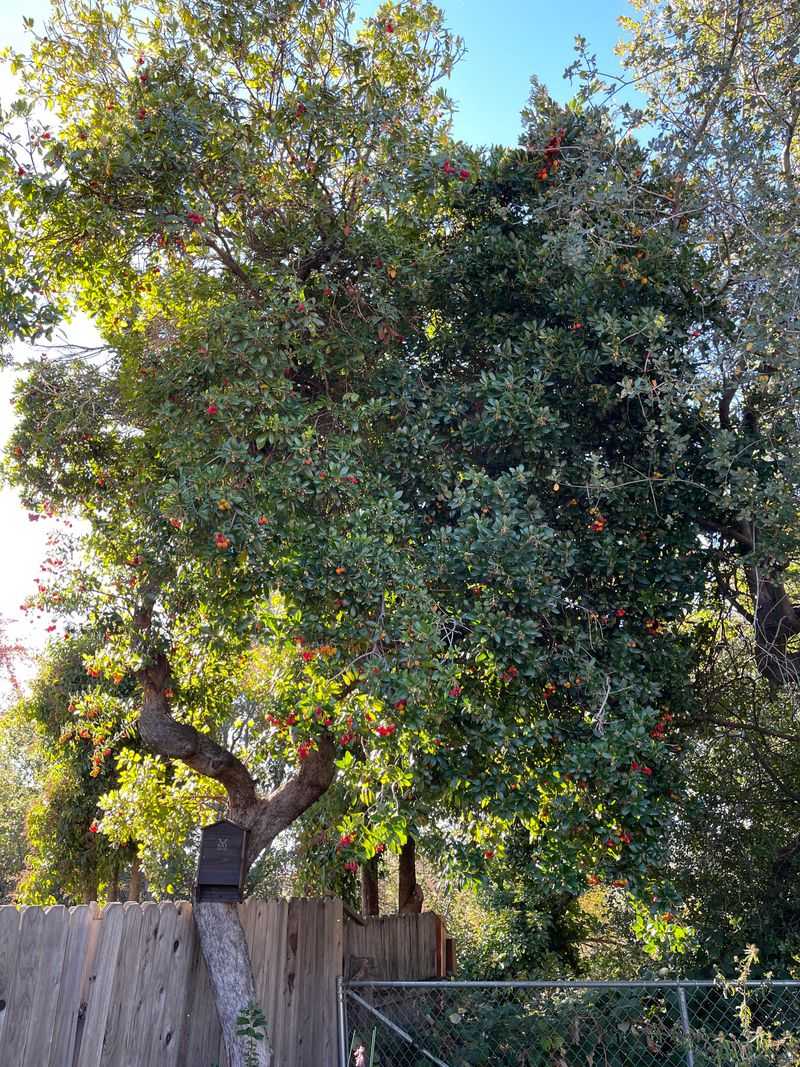
At first glance, the Strawberry Tree looks like it belongs in a lush, mild coastal garden. The glossy leaves, the peeling cinnamon-colored bark, and the clusters of small bell-shaped flowers all suggest something delicate.
But looks are deceiving here. This tree is tougher than it appears and handles heat, drought, and poor soil with a confidence that surprises even experienced gardeners.
The common name comes from the round, bumpy fruits that ripen in fall and winter. They start out yellow, then turn orange, then a rich red, often sitting on the tree at the same time as the new flowers.
The result is a tree that looks like it is decorated for the holidays. Birds love the fruits, which brings extra life to the yard during the cooler months.
Strawberry Tree grows slowly to a height of 10 to 25 feet, depending on the variety. It works well as a large shrub, a small tree, or even a screen when planted in a row.
It tolerates clay soil better than many drought-tolerant trees, which is a real advantage in yards where drainage is not great. Full sun to partial shade both work fine.
Once it gets through its first couple of summers with some extra water, it becomes quite independent. For gardeners in hot, dry regions of California, it is a surprisingly versatile and rewarding choice.