These Florida Garden Habits Bring In More Anoles And Fewer Pests
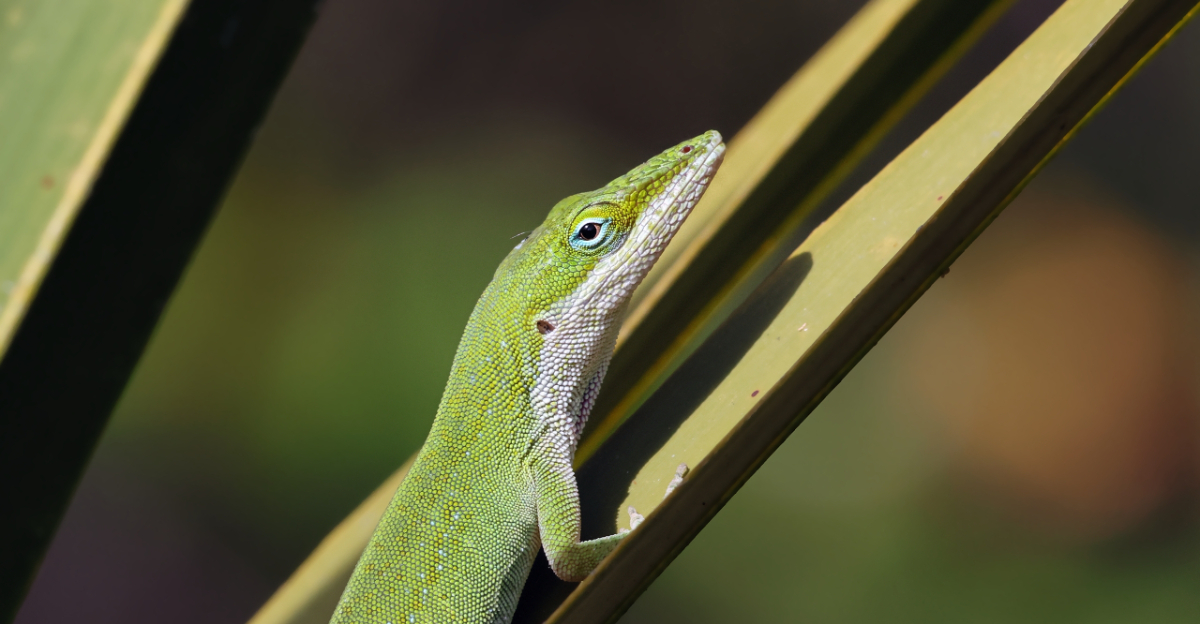
Native anoles are running pest control in Florida gardens right now and most yards are actively working against them without realizing it. Not the brown anoles taking over every fence post and patio chair.
The native green anoles. Smaller, faster, and quietly disappearing from Florida landscapes at a rate that tracks almost perfectly with certain garden habits that make their survival harder every season.
A yard that supports native anoles gets real pressure on the insects, small beetles, and soft-bodied pests that damage plants from the inside out. The trade is straightforward.
Give the anole what it needs and it handles a portion of the pest workload that no spray schedule fully covers. The habits that bring native anoles back are specific.
So are the ones pushing them out. Chances are the garden is doing more of the second than the first.
1. Turn Bare Lawn Into A Green Anole Hangout
A yard that stretches from fence to fence in unbroken turf can feel like a desert to a native green anole. Open lawn offers almost nowhere to hide, nothing to climb, and very little insect life worth chasing.
That does not mean every blade of grass needs to go.
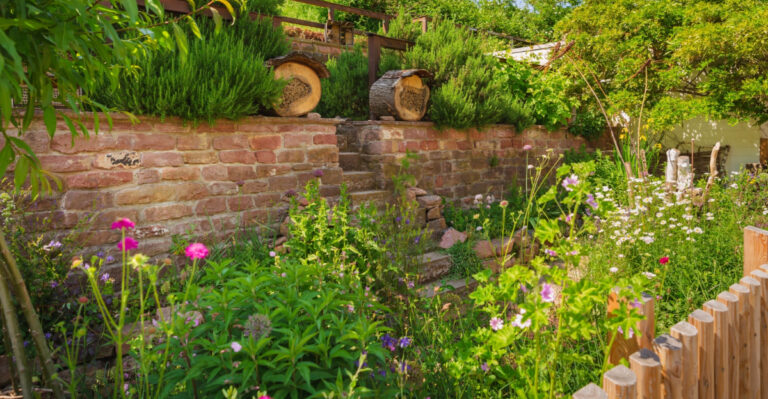
Small changes add up quickly. Planting a few shrubs along a fence line, adding a raised bed near the house, or tucking a small tree into a corner of the yard creates instant structure.
Each new planting becomes a potential foraging zone and a corridor that lets anoles move through the yard with cover nearby.
Anolis carolinensis is an agile climber that naturally prefers vegetated edges over wide open spaces. According to UF/IFAS, the native green anole is commonly found in shrubby vegetation, forest edges, and gardens with layered plant growth.
A yard with even a modest mix of planted beds and lawn gives these lizards far more to work with than turf alone.
Homeowners do not need a complete landscape overhaul. Replacing a strip of lawn near a wall with low shrubs or ornamental grasses is a realistic first step.
Every new planting adds a perch, a hiding spot, or a foraging area. Over time, those additions turn a plain yard into a landscape that native green anoles can actually use.
2. Give Green Anoles More Shrubs And Small Trees To Climb
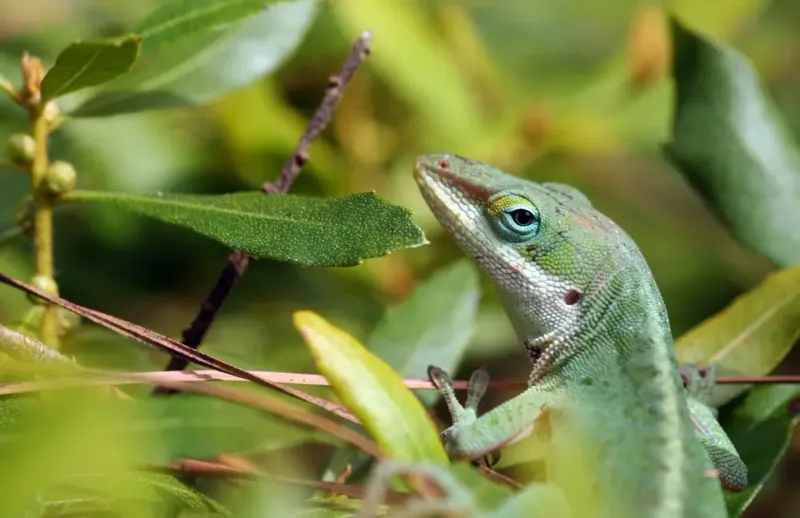
Woody plants do something in a garden that grass simply cannot. They create vertical real estate, and native green anoles are very good at using it.
Rough bark, branching stems, and dense foliage give Anolis carolinensis the grip points and sight lines it needs to hunt, rest, and watch for threats.
Research noted by UF/IFAS and the Florida Museum of Natural History shows that native green anoles tend to use higher perches. They also favor upper vegetation more than introduced brown anoles do.
Where brown anoles have moved into an area, native green anoles often shift their activity upward into shrubs and trees. Planting more woody vegetation gives the native species more of the elevated habitat it prefers.
Your Florida Garden Changes Every Week. Your Plan Should Too.
Gardening in Florida changes quickly throughout the season. Every Friday you’ll receive a simple weekly plan showing exactly what to plant, prune, fertilize, harvest, and protect so you never miss the right timing.
Good choices include native shrubs like beautyberry, wild coffee, and firebush, which also support insect life. Small trees such as native hollies or a young live oak add height and canopy without overwhelming a modest yard.
Even a few well-placed ornamental shrubs along a fence can create a useful climbing zone.
Shrubs and small trees do not need to be perfectly manicured to be useful. Slightly irregular growth with branching stems at different heights actually provides better structure.
A yard with a mix of woody plants at varying heights gives the native green anole far more options than a landscape of tightly trimmed hedges and open ground.
3. Let Native Plants Bring The Right Kind Of Bugs
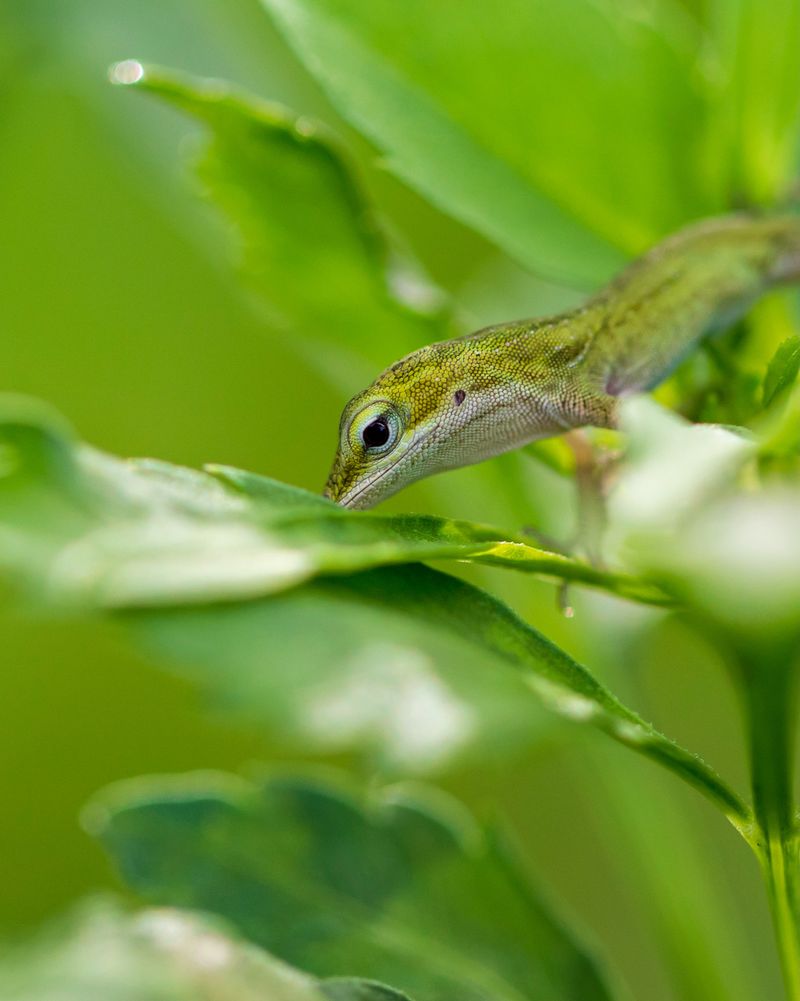
A garden full of native plants is essentially a buffet for insects, and insects are what keep native green anoles well-fed. Plants that evolved alongside local bugs tend to support far more insect diversity than ornamental plants from other parts of the world.
More insect variety means more food options for the lizards patrolling the garden.
UF/IFAS Extension notes that native plants provide food and habitat for native insects. Those insects, in turn, support insect-eating wildlife higher up the food chain.
Caterpillars, beetles, flies, and small moths all become potential prey for a foraging green anole. A yard planted with a mix of natives creates a living pantry that replenishes itself through the season.
Native options worth considering include firebush, which draws insects with its tubular flowers. Beautyberry is another option, with berries and foliage that support diverse insect populations.
Milkweed, wild blue indigo, and native asters also bring in a wide range of insects across different seasons. None of these plants requires much maintenance once established.
Treating every insect in the garden as a problem misses the bigger picture. Many of those bugs are harmless or genuinely beneficial.
They pollinate flowers, break down organic matter, and feed wildlife. A garden that supports a healthy insect community is not out of control.
It is working the way a productive, living landscape should work.
4. Skip Routine Spraying And Keep Natural Predators Working
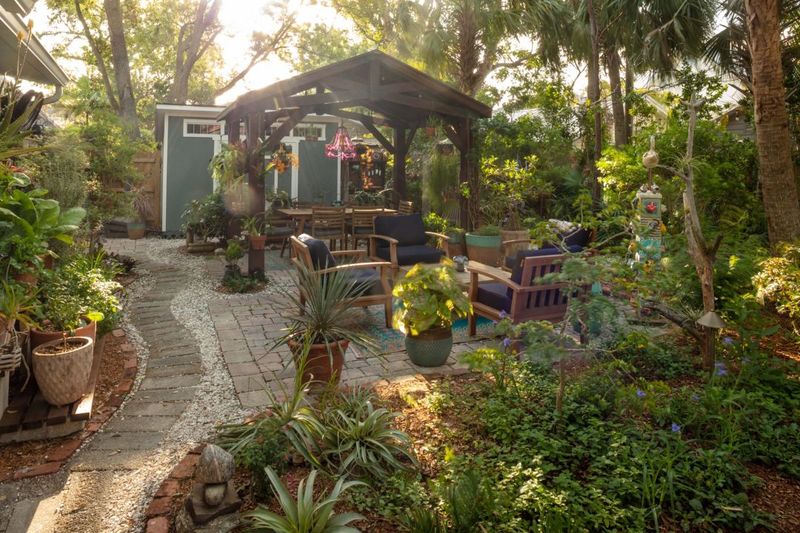
Grabbing a sprayer and coating the yard on a schedule feels productive, but routine broad-spectrum pesticide use can quietly hollow out a garden’s food web.
When insecticides reduce insect populations across the board, predators lose a significant part of their food supply.
That includes lizards, birds, and other animals that depend on insects.
UF/IFAS promotes integrated pest management, or IPM, as a smarter approach. IPM focuses on monitoring plants for actual problems, identifying the pest correctly, and choosing the most targeted treatment available.
Spot-treating a specific infestation causes far less collateral damage than spraying an entire yard preventively.
Broad-spectrum insecticides can affect non-target insects, including the beneficial ones that help manage pest populations naturally.
Reducing unnecessary pesticide applications preserves more of the insect life that native green anoles and other Florida backyard wildlife depend on.
That does not mean ignoring a serious plant pest problem. Genuine infestations can still be treated responsibly with targeted methods.
Checking plants regularly is far more effective than spraying on a calendar. Look for actual signs of pest damage before reaching for any product.
Many insect populations cycle naturally and do not require intervention. Keeping that cycle intact gives native predators, including green anoles, a steady supply of prey.
It also avoids the disruptions that routine chemical use can cause.
5. Build Layers Of Greenery From Ground Level To The Branches
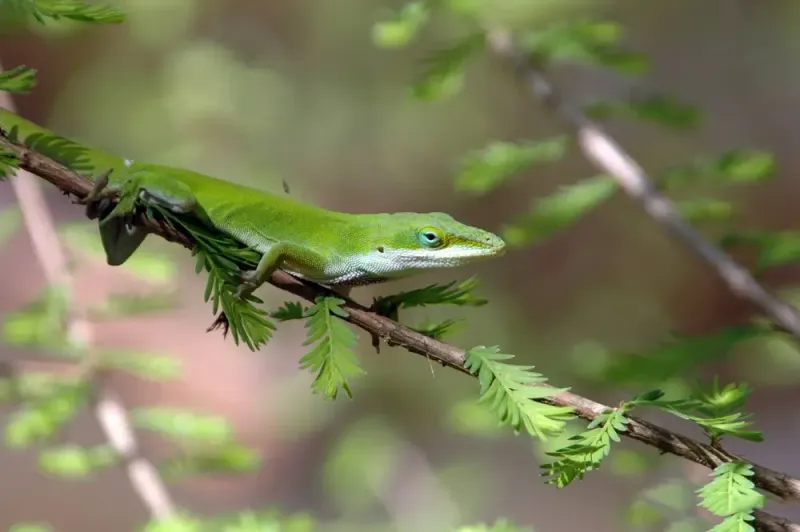
Two yards can have the same number of plants and still feel completely different to a native green anole. The difference is often vertical structure.
A garden that stacks greenery from the soil surface up through mid-level shrubs and into tree canopy creates a rich, three-dimensional habitat. A yard of isolated plants surrounded by turf offers far less.
Layering works because different heights serve different purposes. Ground-level plants like native ferns or low ornamentals provide cover for retreating quickly.
Mid-level shrubs offer foraging territory and shaded perches. Taller trees and their lower branches give native green anoles access to elevated zones where they can bask, survey territory, and spot prey below.
UF/IFAS gardening guidance emphasizes that structurally complex landscapes support more wildlife than simplified ones. A yard with distinct plant layers mimics the edge habitats where Anolis carolinensis is naturally most active.
Even a small yard can achieve meaningful layering with thoughtful plant placement rather than a massive plant collection.
Vines trained along a fence or trellis add another layer without taking up ground space. A native coral honeysuckle or a passion vine brings mid-air structure that connects ground-level cover to overhead branches.
Each layer added to a garden creates another useful zone for native green anoles. It can provide food, shelter, or a warm place to pause and watch the surroundings.
6. Leave Sunny Perches Beside Plenty Of Leafy Cover
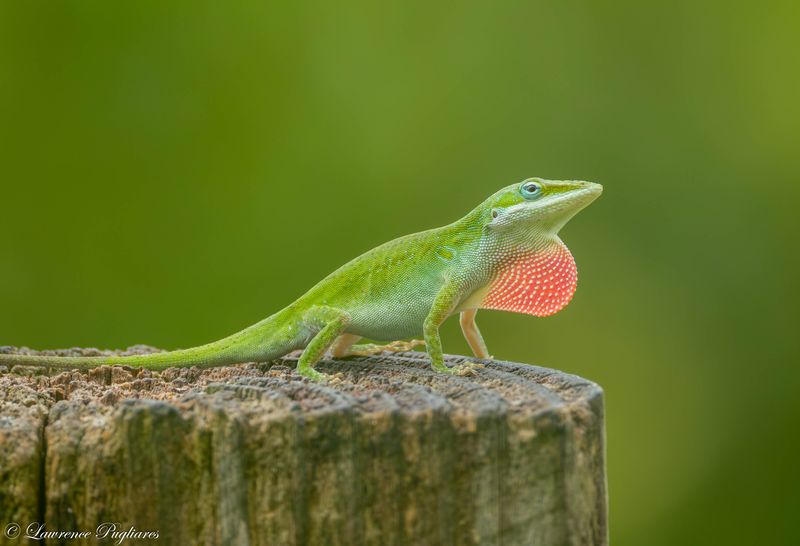
Spot a green anole long enough and a pattern becomes clear. It rarely sits in the open without an escape route nearby.
A sunny fence rail is a favorite perch, but the lizard almost always positions itself within a quick leap of dense foliage. That combination of exposure and cover is not a coincidence.
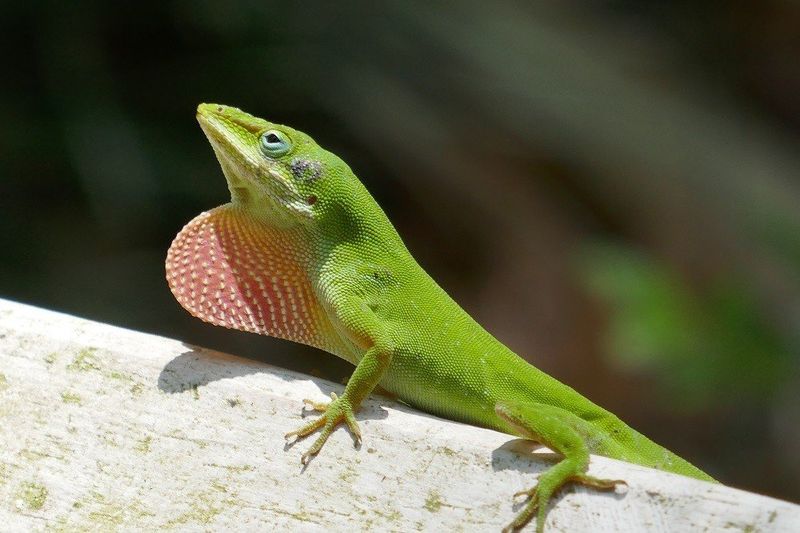
Like all reptiles, Anolis carolinensis is ectothermic, meaning it relies on external heat sources to regulate body temperature. Basking on a warm surface raises its body temperature so it can move, hunt, and react quickly.
According to the Florida Museum of Natural History, green anoles are active during warm daylight hours. They use exposed perches for thermoregulation and to display their colorful dewlap.
A garden that offers sunny spots directly beside leafy cover serves both needs at once. A wooden raised bed border next to a dense shrub works well.
A fence post near a firebush clump is another natural combination. Even a large, smooth-barked branch hanging into a sunny gap can become a preferred perch.
Gardeners do not need to build lizard furniture. Natural garden features already provide what anoles look for.
Leaving part of a fence unpainted or allowing a shrub to grow slightly past its tidy shape can create useful habitat. A stepping stone in a sunny gap near plantings can also provide a perch-and-cover combination that native green anoles may find on their own.
7. Keep A Few Insects Around Instead Of Wiping Out The Food Supply
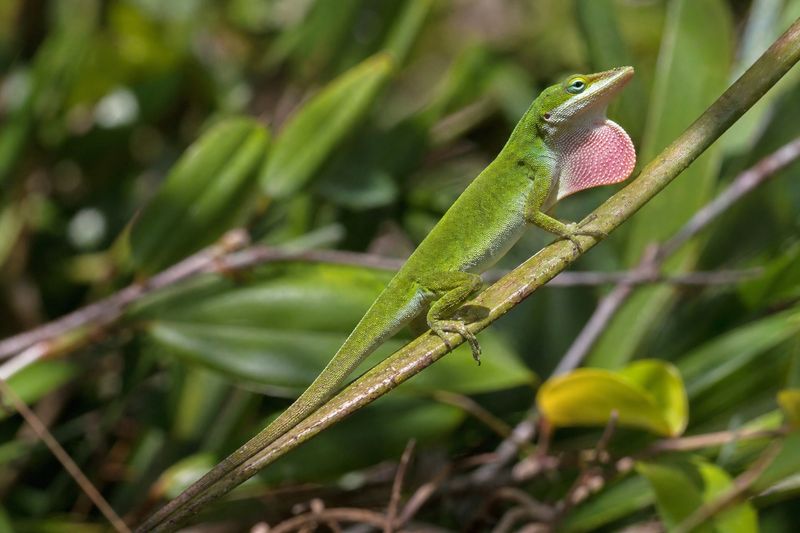
A perfectly clean garden with zero visible insects might look tidy, but it is not much of a habitat. Native green anoles are insectivores.
Their diet includes beetles, spiders, small moths, flies, and other invertebrates they encounter while moving through vegetation. A yard scrubbed of insect life offers them almost nothing.
According to UF/IFAS and the Florida Museum of Natural History, Anolis carolinensis feeds on a variety of small invertebrates. They are opportunistic hunters, taking what is available in their territory.
A garden with a diverse insect community gives them more options and supports more consistent activity in the yard.
Rethinking what a healthy garden looks like is a useful first step. A few aphids on a plant, a handful of beetles under a leaf, or moths drawn to evening flowers are not signs that a yard is failing.
They are signs that the garden food web is functioning. Targeted management can address genuine pest problems without wiping out every insect in the area.
Monitoring plants for actual damage is a far better guide than treating the yard on assumption. Many insect populations regulate themselves when natural predators are present.
Keeping that balance intact means native green anoles and other beneficial wildlife have a yard that consistently offers what they need. A living garden with some insect activity is a productive garden, not a neglected one.
8. Make The Whole Yard Work Harder For Native Green Anoles
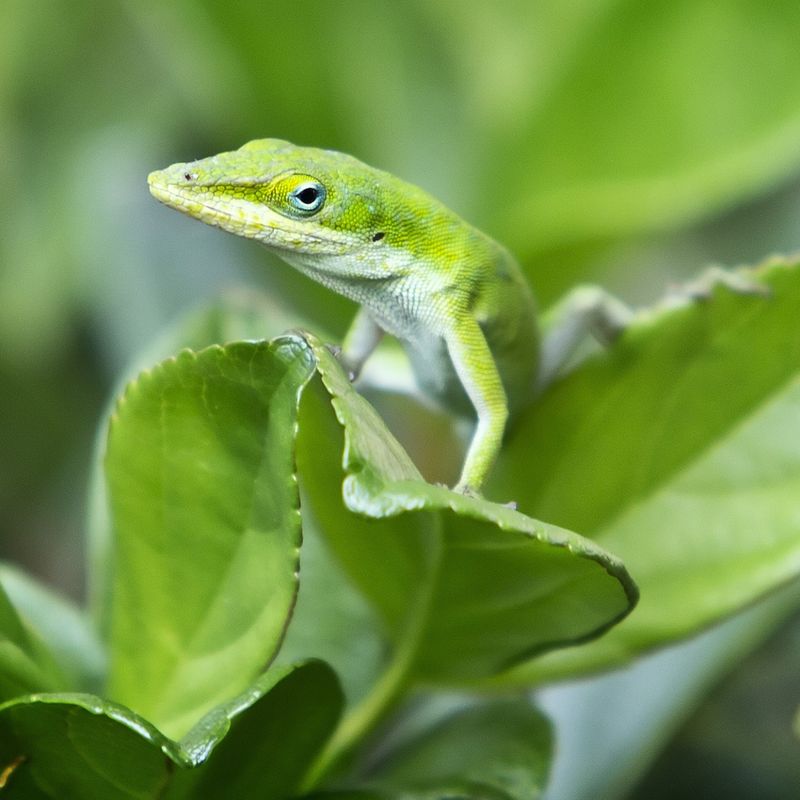
A single shrub or one pesticide-free season will not transform a yard overnight. Habitat improvement is cumulative.
Each plant added and each unnecessary spray skipped improves the habitat. Building more layers of greenery also creates a yard that native green anoles can use throughout the season.
Bringing the pieces together matters. Vegetation diversity feeds the insect community.
Vertical structure gives anoles places to climb and hunt at different heights. Sunny perches beside leafy cover meet their thermoregulation and safety needs at the same time.
Reduced pesticide use keeps prey available and the food web intact. None of these habits works as well in isolation as they do together.
Homeowners are not summoning lizards on demand. Anolis carolinensis will find a yard that meets its needs.
The goal is simply to make the yard worth finding. According to UF/IFAS, native green anoles are naturally present across much of Florida.
They are well-suited to suburban landscapes that provide adequate vegetation and insect life.
Capturing or relocating anoles is unnecessary and likely counterproductive. Let the habitat do the work.
Over time, several habitat improvements work together. Diverse plants, layered structure, thoughtful pest management, and a healthy insect population can create a yard where native green anoles live well.
That kind of garden does not just look good from the porch. It functions as a small, working piece of the larger natural world.