Corn Snakes Get Blamed Unfairly In Florida Gardens, Here’s The Truth
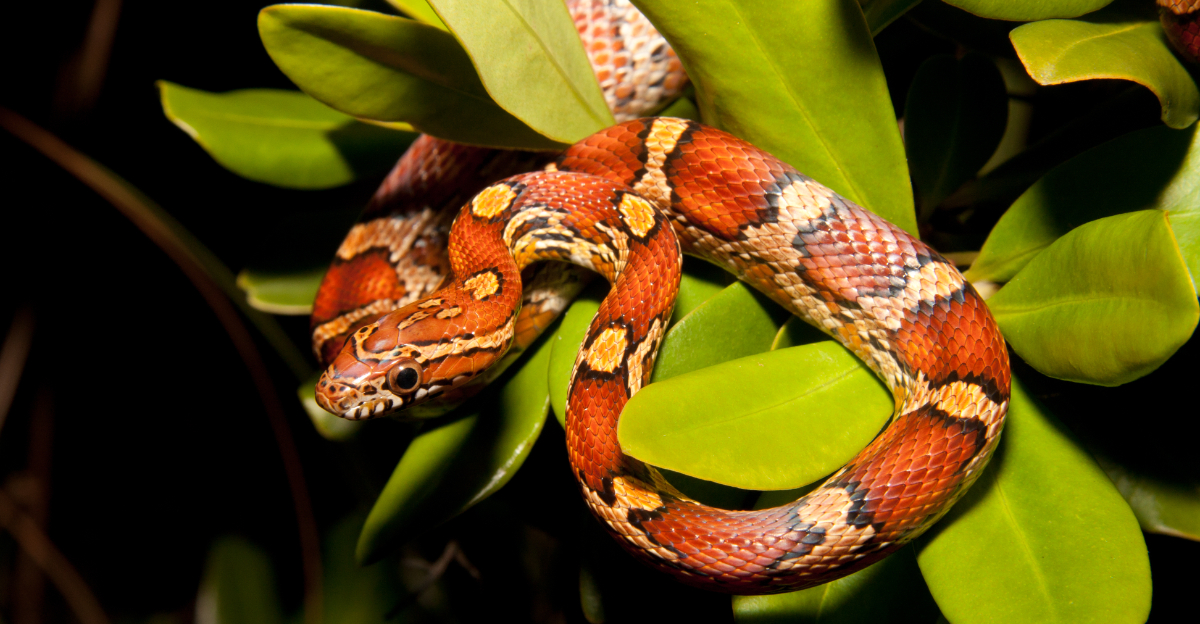
Corn snakes have a reputation problem in Florida gardens that the facts have never quite managed to fix. Something slithers through the bed, disappears before anyone gets a good look, and the corn snake gets the blame by default.
Wrong eggs, disturbed mulch, rattled pets. The list of accusations grows season after season without a single conviction that would hold up to scrutiny.
Here is what a corn snake is actually guilty of. Hunting the rats, mice, and lizards that cause real damage in a Florida garden while staying completely out of the way of everyone and everything that was never on its menu.
The garden that has one is running natural pest control on a schedule that never takes a day off. The garden that removed one is running it alone.
The corn snake did not do what it was accused of. It was too busy doing something useful.
1. That Bright Red Pattern Looks Scarier Than The Snake Really Is
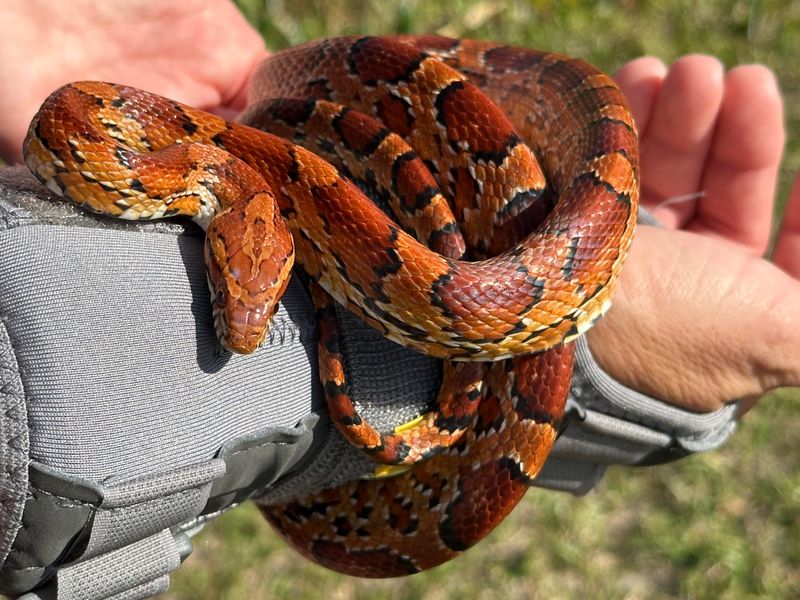
Bold colors do a lot of work in the animal world. Reddish-orange blotches outlined in black, set against a lighter orange or tan background, can look intense to someone who has never seen a corn snake up close before.
That pattern triggers an alarm response in most people, even though Pantherophis guttatus is completely nonvenomous and poses no venom risk whatsoever.
The confusion is understandable. Bright or contrasting markings are associated with danger in many species, so the brain makes a fast, cautious judgment.
A corn snake’s coloring varies quite a bit between individuals, ranging from pale orange to deep brick red, with some showing more brown or gray tones. That natural variation means two corn snakes in the same yard might look like different species to an untrained eye.
Identifying any unfamiliar snake by color or pattern alone is not a reliable method. Markings overlap across species, and lighting, age, and regional variation all affect how a snake looks in the field.
If identification matters for safety, the Florida Fish and Wildlife Conservation Commission and the Florida Museum of Natural History both offer authoritative resources.
The safest approach with any unrecognized snake is to keep a respectful distance and leave it alone.
Appreciating the pattern from a few feet away is far more rewarding than a rushed, close inspection.
2. A Corn Snake In The Garden Is Not Looking For Trouble
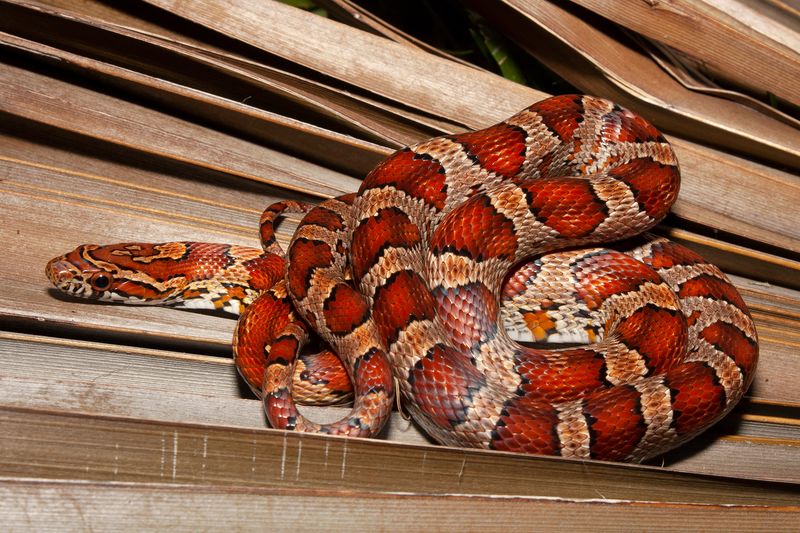
Most snake encounters in a backyard follow the same basic script. The snake is moving through, searching for food, or using a sheltered spot to rest.
It is not there because it noticed you, and it is certainly not planning to confront you. Corn snakes are solitary animals that generally avoid contact with people whenever possible.
A garden offers exactly what this species needs: cover from predators, warmth from sun-exposed soil or pavement, and the possibility of a meal nearby. None of that has anything to do with the homeowner.
When a corn snake appears near a person, it is almost always coincidence rather than intent.
Your Florida Garden Changes Every Week. Your Plan Should Too.
Gardening in Florida changes quickly throughout the season. Every Friday you’ll receive a simple weekly plan showing exactly what to plant, prune, fertilize, harvest, and protect so you never miss the right timing.
Defensive behavior gets misread as aggression surprisingly often. A corn snake that feels trapped may coil, hold its ground, or even strike toward whatever is threatening it.
That is a fear response, not a chase. Backing away slowly and giving the animal a clear path to leave is the most effective thing a person can do.
Chasing, cornering, or prodding the snake only extends the encounter and increases the chance that both parties have a bad experience.
Wildlife benefits most when people resist the urge to intervene and simply allow a native animal to go about its business undisturbed.
3. Rodents Are A Bigger Reason For Its Visit Than Your Plants
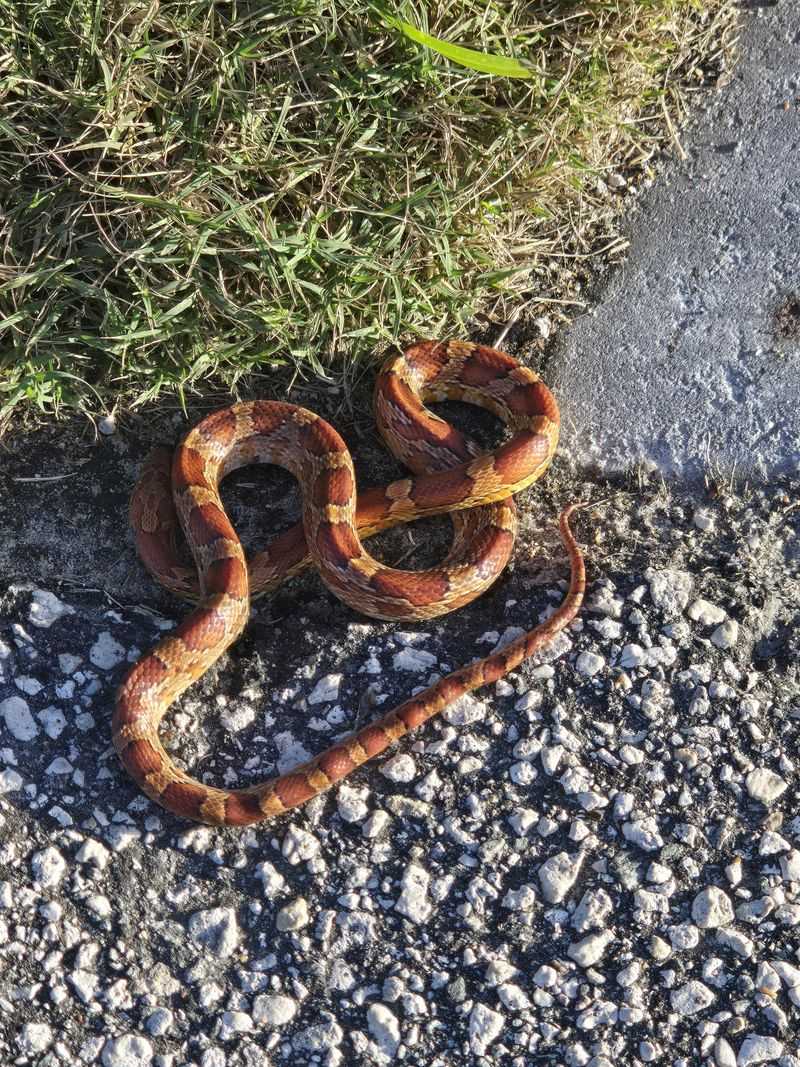
Your tomatoes are not the attraction. Neither are your flower beds, your compost pile, or your garden tools.
What draws a corn snake onto a property is far more likely to be the small mammals that share that space. According to information supported by university wildlife resources, corn snakes consume rodents, lizards, and other small prey as a regular part of their diet.
Sheds, garages, and storage areas that hold birdseed, pet food, or bulk grains can quietly support mouse and rat populations. Compost bins and wood piles create sheltered runways where small mammals travel and nest.
A corn snake following that food source into a yard is behaving exactly as its biology directs it to.
Spotting one corn snake does not mean you have a serious rodent problem. A single sighting is just a single data point.
What it does suggest is that the habitat around your property offers something useful to a predator. Checking storage areas for signs of rodent activity, such as droppings, gnaw marks on packaging, or shredded nesting material, is a reasonable follow-up step.
Keeping food stored in sealed containers and reducing clutter in outbuildings addresses the root of the issue more effectively than worrying about the snake itself.
4. Fence Rails And Tree Limbs Are Fair Game For This Climber
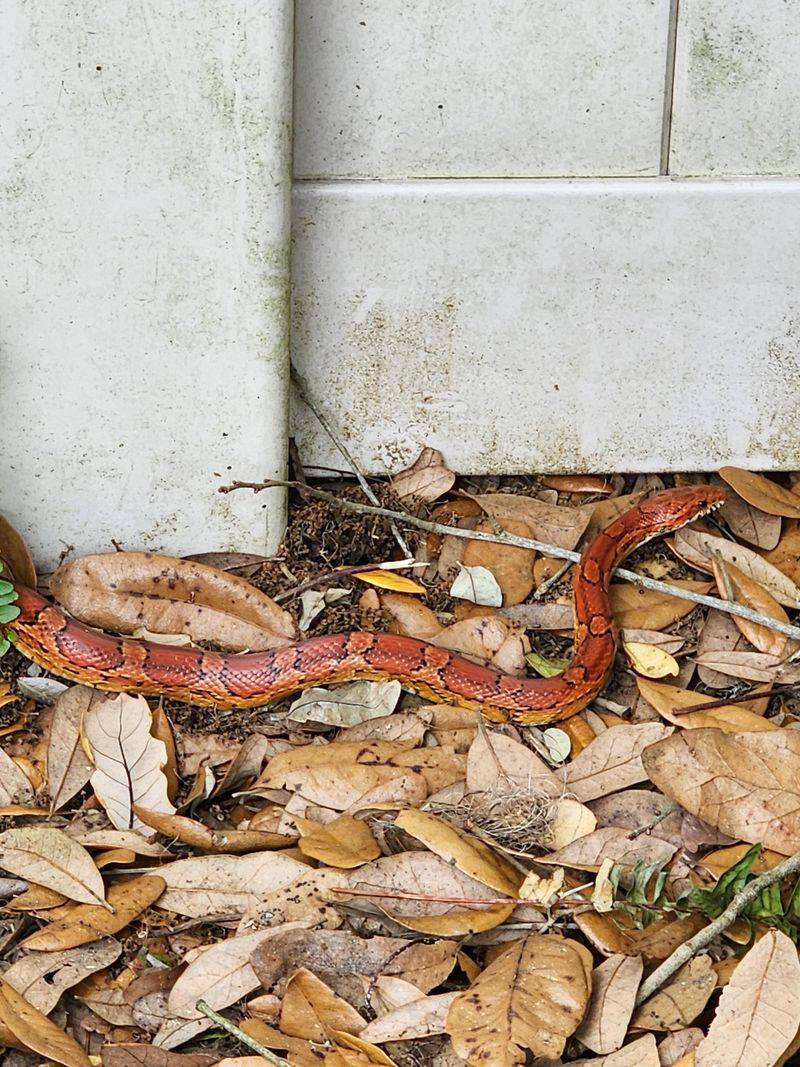
Finding a snake above the ground can feel even more startling than spotting one at your feet. A corn snake stretched across a fence rail or looped around a low tree branch is using the environment exactly as its body allows.
These snakes are capable climbers, and moving through elevated spaces is a normal part of how they navigate their habitat.
Rough surfaces like bark, wooden fencing, and stacked lumber give a corn snake the grip it needs to travel upward. Florida’s mix of trees, shrubs, fences, and outbuildings creates a varied landscape that this species can move through in multiple directions.
Elevation offers advantages: a better angle for spotting prey, access to bird eggs or nestlings in some cases, and shelter in dense vegetation.
Seeing one above ground is not a sign that something unusual is happening. Movement between ground level and elevated surfaces is part of how corn snakes use three-dimensional space in developed areas.
Homeowners who spot one on a fence or in a shrub sometimes assume the snake is trapped or lost, but it almost always knows exactly where it is going. Give the snake space and resist the urge to knock it down or move it.
That prevents unnecessary stress and reduces the chance of triggering a defensive response.
5. Tail Buzzing And Striking Are Defense Moves Not A Chase
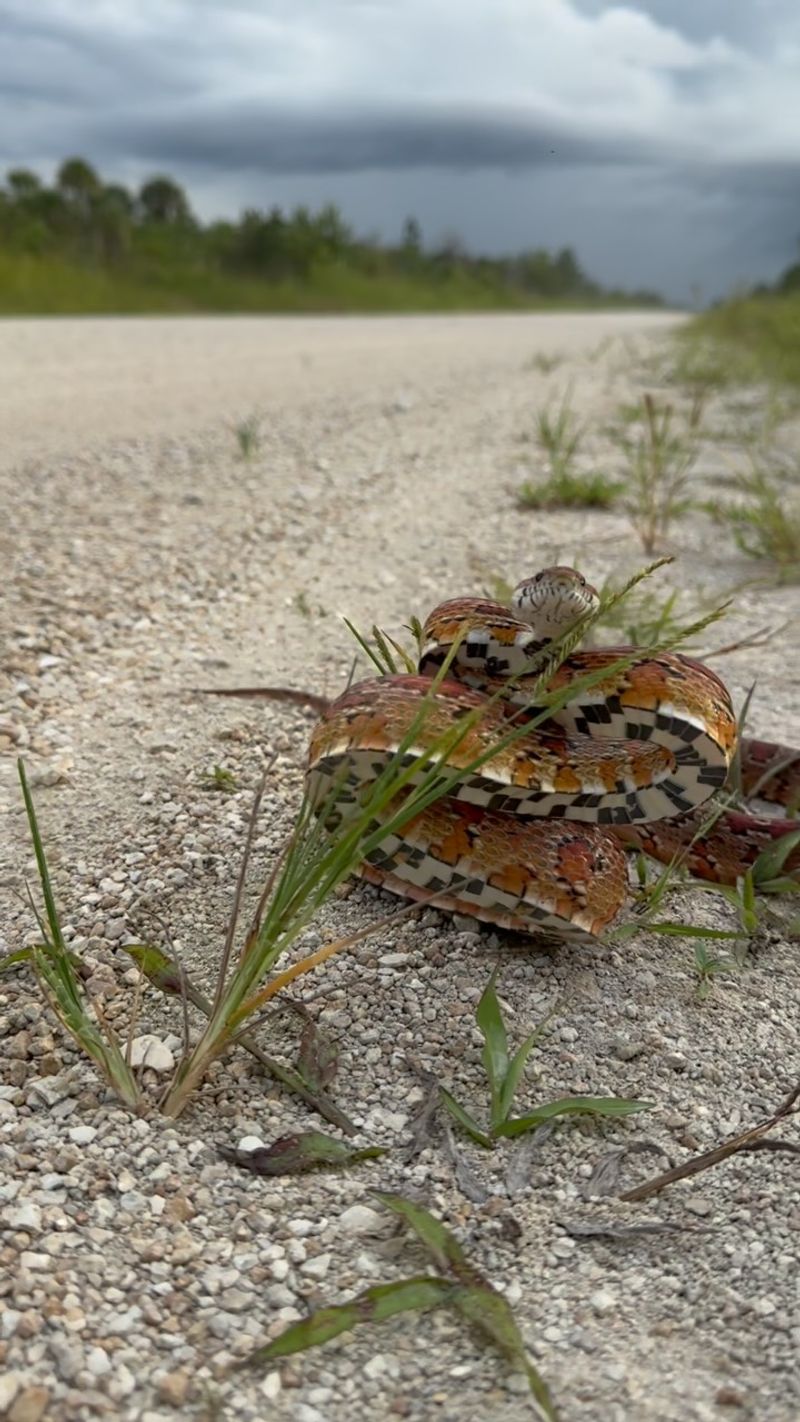
Watching a snake vibrate its tail against dry leaves can sound eerily like a rattlesnake. That buzzing noise is not accidental.
Corn snakes and several other nonvenomous species produce it as a warning signal when they feel cornered or threatened. The behavior is meant to discourage a predator, not to invite a confrontation.
A corn snake that coils tightly, flattens its body, or opens its mouth toward an approaching person is communicating one clear message: back off. Striking in that context is a last resort, not an opening move.
The snake would rather the threat disappear than spend energy on a physical encounter it did not choose.
People sometimes interpret these displays as proof the snake is dangerous or unusually aggressive. Neither is true.
A frightened animal defending itself is doing exactly what evolution shaped it to do. The appropriate response is to step back, give the snake several feet of clear space, and wait.
Without continued pressure, most corn snakes will settle down and move away on their own. Trying to pin, grab, or forcibly relocate a snake in Florida raises the risk of a defensive bite considerably.
Even a nonvenomous bite can break skin and cause irritation, so avoiding that outcome entirely is the smarter choice for everyone involved.
6. Garden Debris Can Give Snakes And Rodents The Same Hideout
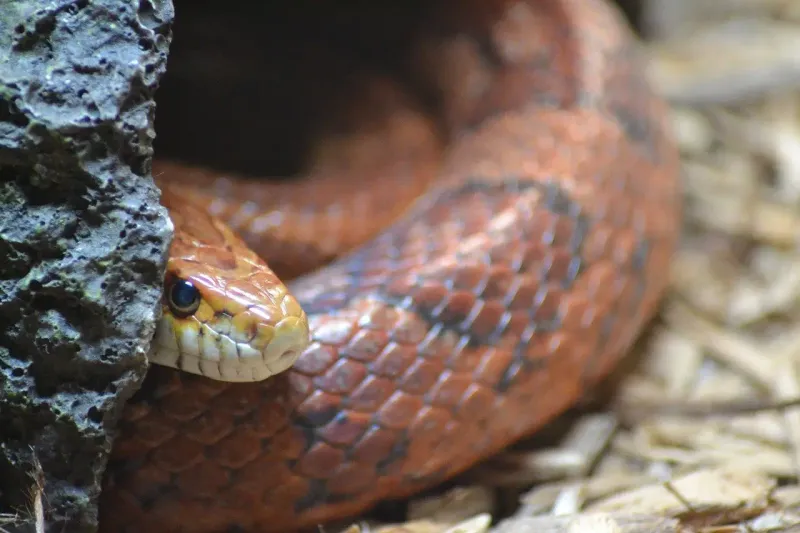
A loosely stacked woodpile near the back fence might look like a tidy storage solution, but from a small mammal’s perspective, it is a neighborhood.
Mice and rats seek out the same sheltered, undisturbed spaces that also make good resting spots for a predator following their trail.
The connection between clutter and wildlife activity in a yard runs both ways.
Dense leaf litter, old lumber, stacked bricks, tarps covering equipment, and gaps beneath outbuildings all create microhabitats that small mammals use regularly. Where prey concentrates, predators eventually appear.
That is not a cause for alarm, but it is useful information for a homeowner who wants to manage the situation thoughtfully.
Practical steps can reduce the appeal of a yard without stripping it of every natural feature. Stacking firewood at least a foot off the ground and away from the house limits easy nesting access.
Keeping storage areas organized and clearing out old debris removes the layered cover that small mammals prefer. Dense shrubs planted directly against a foundation can also create hidden runways.
None of this requires turning a Florida garden into a bare concrete pad. Modest changes to how materials are stored and how much clutter accumulates near structures can shift the habitat balance.
They can do so without harming the yard’s character or its value to native wildlife.
7. Repeat Sightings Can Point To A Rodent Buffet Nearby
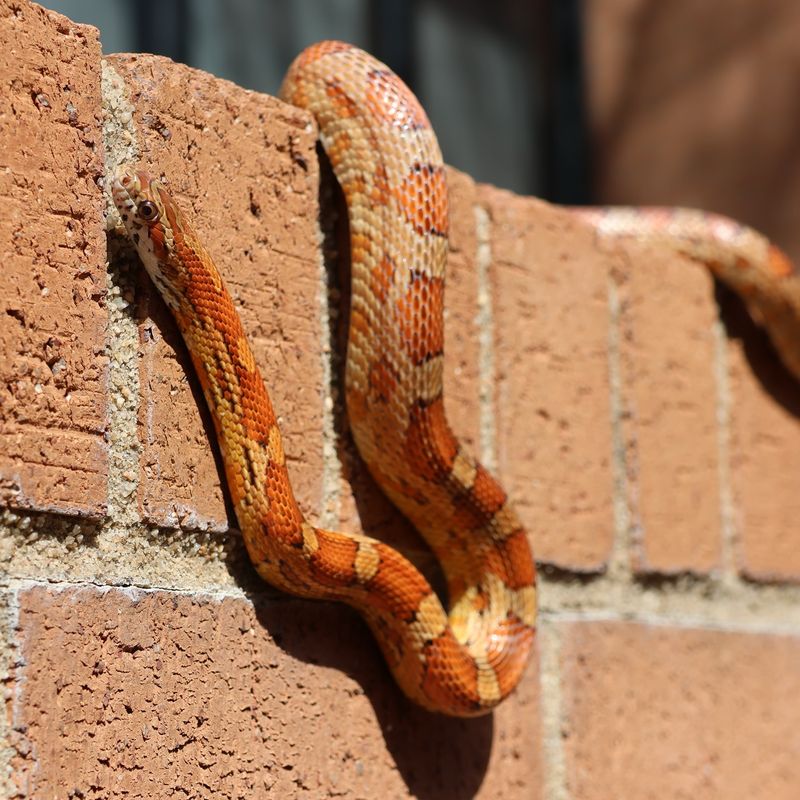
Seeing the same snake twice in a week near the same corner of your Florida yard is worth paying attention to. One sighting is a passing visit.
Repeated appearances around a specific structure suggest that something nearby is worth returning to. Rodent activity is the most common explanation supported by wildlife biology.
Checking for signs of small mammal presence is a reasonable next step. Look for dark, pellet-shaped droppings along walls or in storage areas.
Check food packaging in sheds or garages for gnaw marks. Listen for scratching sounds inside walls or under flooring at night.
Shredded insulation or paper tucked into a corner often points to active nesting nearby.
Addressing the food source is more effective than focusing on the snake. Switch to rodent-resistant bird feeders and seal gaps around pipes and foundation vents.
Storing bulk food in metal or heavy plastic containers also removes conditions that can sustain rodents near a building. When the food supply decreases, the activity that draws a predator to the same spot repeatedly tends to decrease as well.
Repeated corn snake sightings are a clue worth investigating, not a guarantee of a major infestation. Treat them as useful information rather than a reason for alarm, and the practical response becomes much clearer.