What Nobody Tells You About Gumbo Limbo Space Requirements In Florida
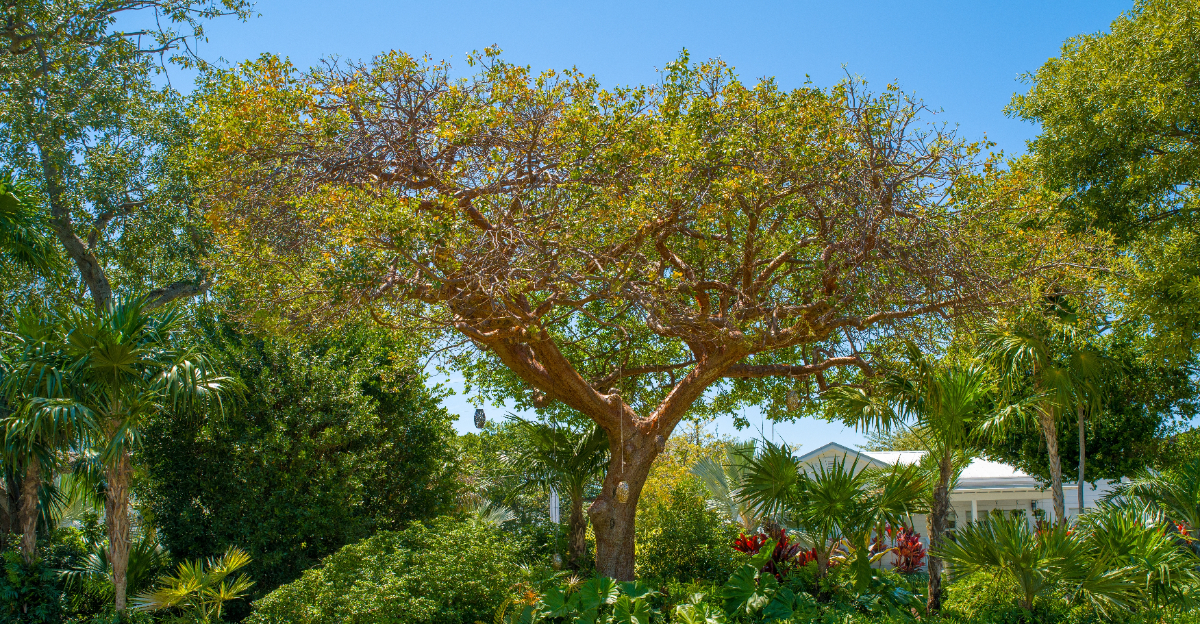
Gumbo limbo has a secret that the nursery tag never mentions and the planting guide glosses over in a single line. Not about the bark, not about the storm tolerance, not about the fast growth that makes it one of Florida’s most satisfying trees to watch establish.
About space. Specifically, how much of it this tree eventually decides belongs to it.
Florida yards have been making the same gumbo limbo mistake for decades. The tree goes in, it performs beautifully, everyone is happy for several years.
Then the tree starts having opinions about the driveway, the fence line, the neighbor’s airspace. The conversation that should have happened before planting arrives uninvited.
Gumbo limbo rewards the yards that planned for what it becomes. It punishes the ones that only planned for what it was at the nursery.
The difference between those two outcomes is one piece of information.
1. That Small Tree Can Get Wide Fast
Standing next to a three-gallon gumbo limbo at a nursery, most homeowners feel confident they have plenty of room. The tree barely reaches their shoulder, the canopy is tidy, and the whole thing could fit in a shopping cart.
That picture changes significantly once the tree settles into warm, moist south Florida soil and starts putting on real growth.
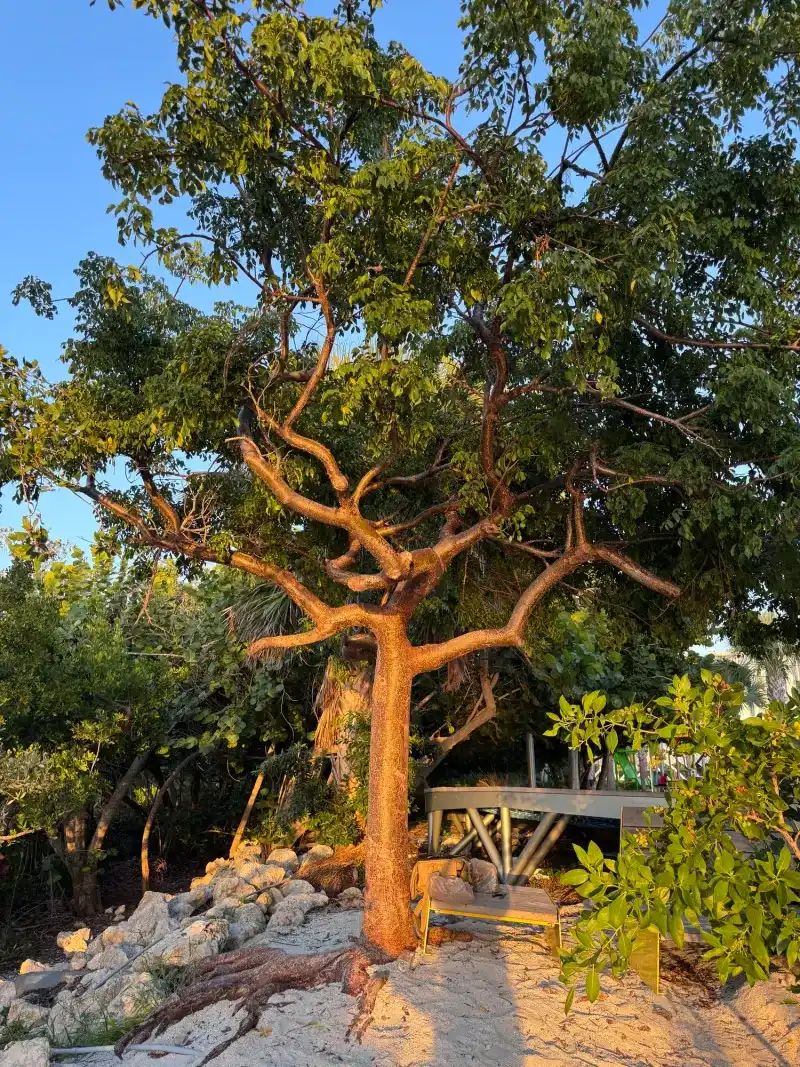
According to University of Florida IFAS Extension, gumbo limbo can reach around 60 feet tall. Many landscape specimens stay shorter depending on soil quality, available water, and site conditions.
Canopy spread can be equally impressive, often matching or approaching the tree’s height in open settings. A specimen with room to grow can cast shade across a surprisingly wide patch of ground.
Not every tree will hit the published maximum. Soil type, drainage, salt exposure, and pruning history all influence how large any individual tree becomes.
Still, planning around a modest estimate and getting a giant is a much harder problem to solve than planning generously from the start.
Judging long-term space by the size of a young nursery tree is one of the most common planting mistakes in residential landscaping. A little extra clearance at planting time costs almost nothing.
Reworking a patio, fence, or planting bed around a mature canopy costs considerably more.
2. The Canopy Needs More Room Than You Think
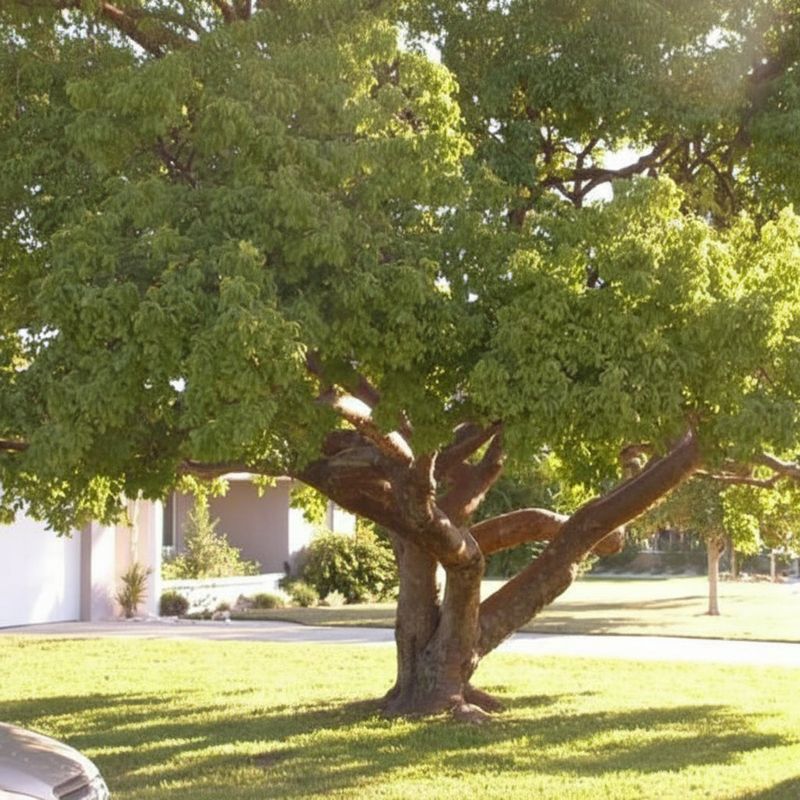
Height grabs attention, but canopy spread is what actually determines whether a gumbo limbo fits a given yard. A tree that grows 40 feet tall and nearly as wide can shade a patio and push branches toward a neighbor’s fence.
It may also arch over a pool or outdoor kitchen before the gradual spread becomes obvious.
Visualizing that spread around a five-foot nursery tree is genuinely difficult. Most homeowners look at the planting hole, look at the sapling, and feel good about the gap on every side.
What they are not picturing is a canopy that could eventually extend many feet in every direction from the trunk.
Structures closest to the planting site deserve careful thought. Roof overhangs, screen enclosures, fences, utility lines, and neighboring trees all represent potential conflict points as the crown expands.
Your Florida Garden Changes Every Week. Your Plan Should Too.
Gardening in Florida changes quickly throughout the season. Every Friday you’ll receive a simple weekly plan showing exactly what to plant, prune, fertilize, harvest, and protect so you never miss the right timing.
Property lines matter too, since branches that cross into a neighbor’s yard create their own set of conversations.
Outdoor living areas need special consideration. A generous canopy overhead can be a genuine asset in a warm climate, providing natural shade and shelter.
The goal is positioning the tree so that shade lands where it is welcome, not where it crowds a structure or forces constant corrective pruning. Measuring available space before planting, rather than after, makes that goal much easier to reach.
3. Large Surface Roots Need Breathing Space
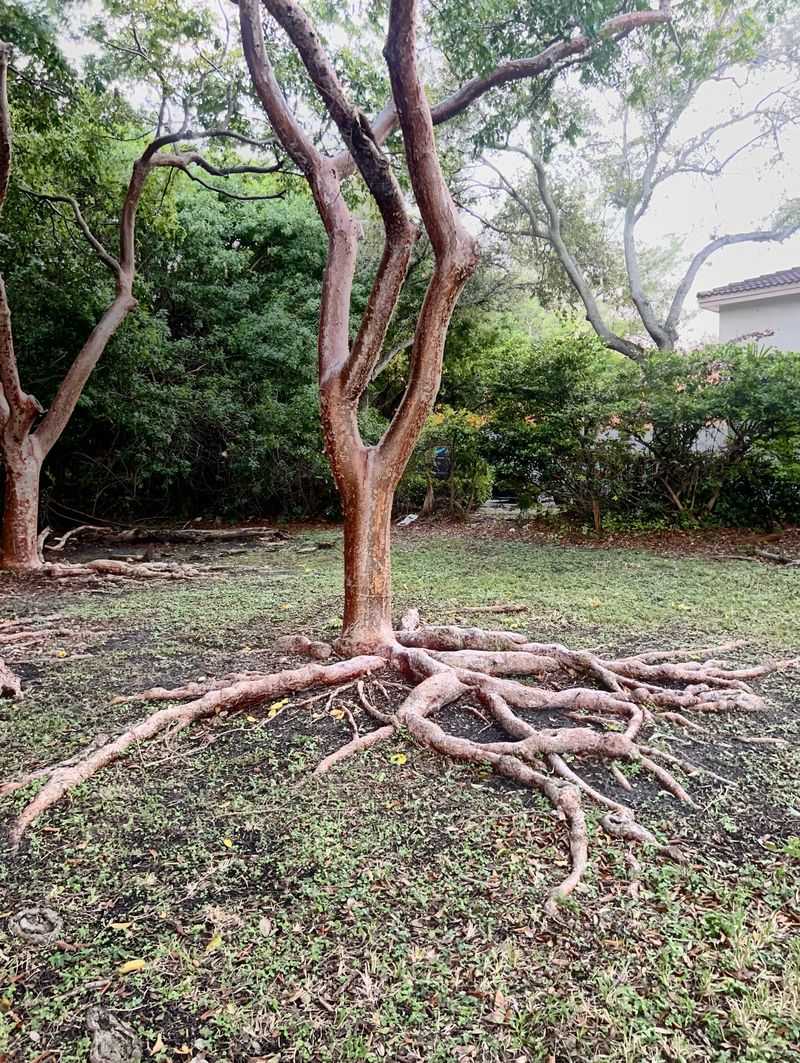
Walk around an established gumbo limbo and you may notice something surprising near its base. Thick, sometimes sinuous roots can rise to or near the soil surface as they spread outward.
UF/IFAS Extension notes that gumbo limbo can develop large surface roots, and that characteristic becomes more pronounced as the tree matures.
Surface roots are not a sign that something has gone wrong. They reflect how the species naturally anchors itself and draws resources in shallow, sometimes sandy or rocky soils common in south Florida.
The issue is practical: surface roots change the ground around the tree in ways that affect mowing, planting, and foot traffic.
Lawn grass struggles to compete with established surface roots. Mulching the root zone generously is a better long-term strategy, giving roots room to develop without repeated mechanical disturbance from mowers or string trimmers.
Digging in the root zone to install new plants or irrigation also becomes more complicated once roots are well established.
Hardscape placed close to the root zone deserves thought before the tree goes in the ground. Sufficient open soil around a large tree allows roots to develop in a way that reduces pressure on nearby paved surfaces.
Squeezing the tree into a tiny planting cutout surrounded by concrete limits rooting space. It may also concentrate root development where it creates the most conflict with existing surfaces.
4. Low Branches Can Steal Valuable Yard Space
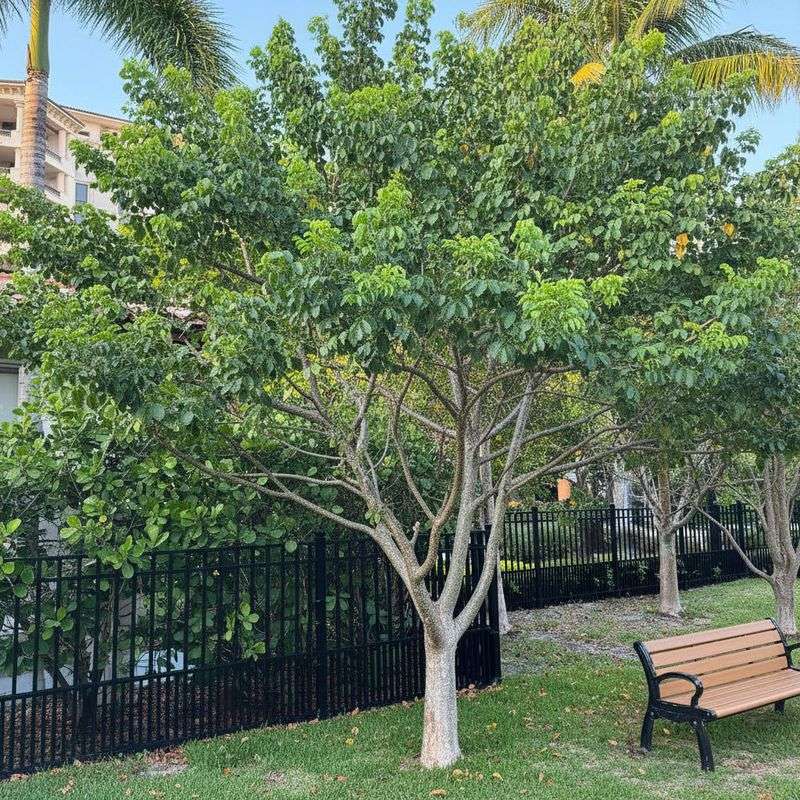
A gumbo limbo left without structural guidance tends to develop a broad, spreading crown. Its branches can droop toward the ground as they lengthen and gain weight.
In an open field or a large estate planting, that habit looks natural and graceful. In a typical residential yard, those same low branches can quietly claim a surprising amount of usable outdoor space.
UF/IFAS notes that occasional pruning to remove lower branches that droop toward the ground can be useful. That advice is not about forcing the tree into an unnatural shape.
It is about maintaining clearance where people actually need to walk, mow, park, or gather.
A branch at chest height looks harmless on a young tree. On a mature specimen, that same branch may extend fifteen or twenty feet from the trunk.
It can block a walkway, graze a parked car, or make lawn maintenance beneath the canopy awkward. The branch itself is not the problem.
Placement is.
Low branching becomes a real issue mainly when the tree is planted somewhere that people expect clear, open space underneath. A gumbo limbo positioned where its natural spread does not conflict with foot traffic or structures needs far less intervention.
Choosing a site with enough horizontal room for the canopy to develop naturally, including some low branching, is simpler than pruning reactively for years.
5. Tight Planting Spots Create Problems Later
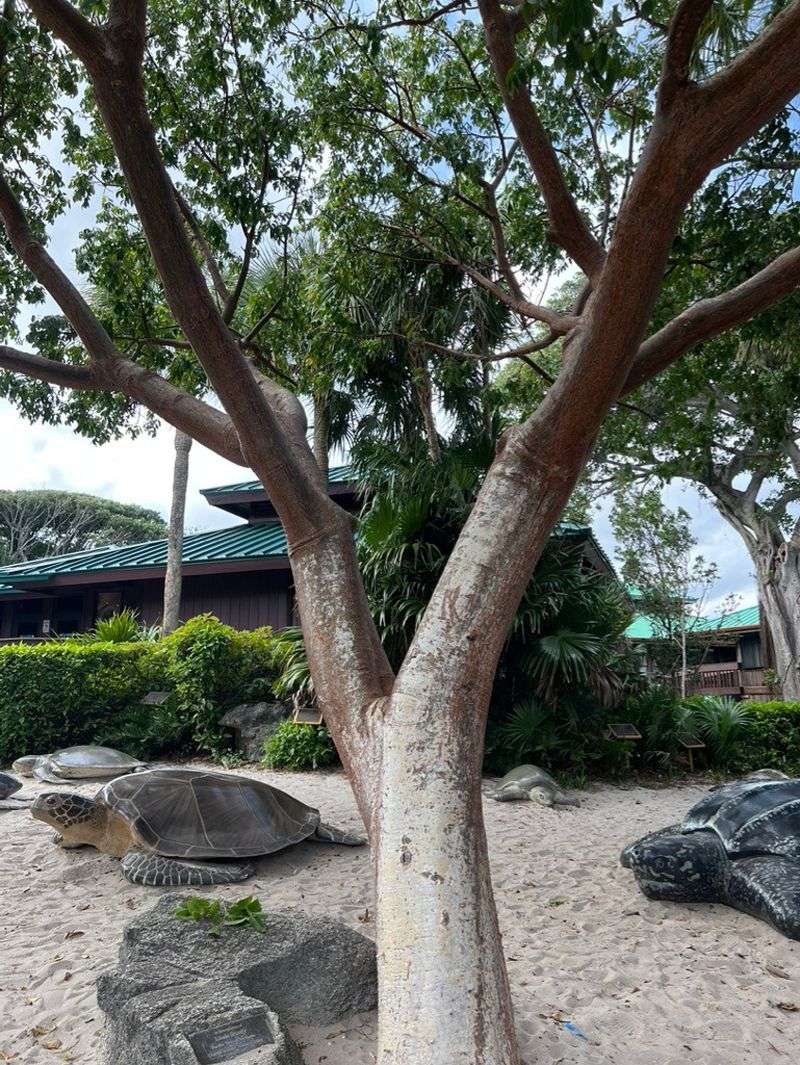
Narrow planting strips, small foundation beds, and cramped lawn islands share the same problem. They may look adequate for a young tree but were never designed to support a mature one.
A gumbo limbo tucked into a two-foot-wide bed between a wall and walkway may survive for years. But surviving and thriving in a well-suited location are very different outcomes.
UF/IFAS hurricane guidance emphasizes providing rooting space based on a tree’s mature dimensions. Large trees should not be treated as interchangeable when planning their space.
A large tree with a restricted root zone has fewer resources to draw on and less structural support than the same species grown in open soil.
Confined roots also tend to find their way toward the surface or into nearby voids, which can complicate maintenance of surrounding hardscape.
Foundation beds present a particular planning challenge. A narrow strip along a house wall may feel like a generous planting space when the tree is young.
Years later, the expanding canopy, rising surface roots, and low branches can make that same spot feel like a mistake that was locked in on planting day.
The question worth asking before any tree goes in the ground is not just whether the tree fits today. The more useful question is whether the site can reasonably accommodate the tree at the size it may reach in ten, fifteen, or twenty years.
6. Driveways And Walkways Need Extra Clearance
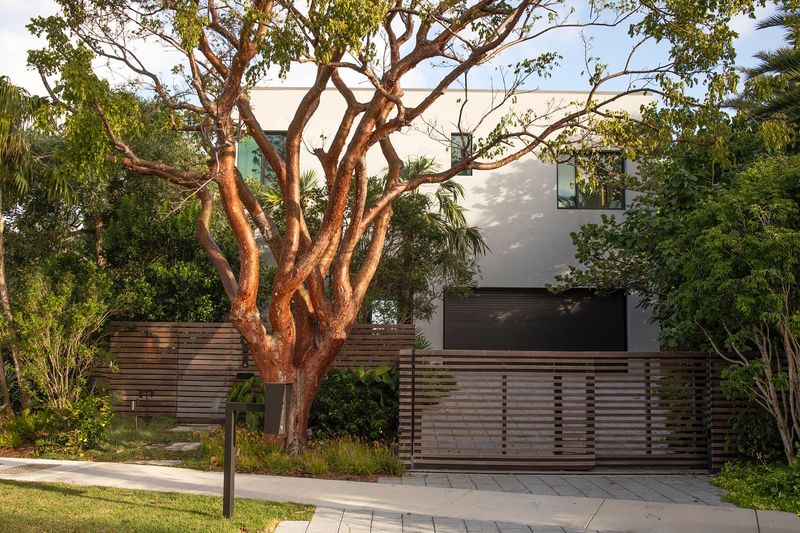
A gumbo limbo positioned close to a driveway or sidewalk can look perfectly reasonable when the tree is young and the pavement is new. As the tree matures and surface roots develop, the relationship between root zone and hardscape deserves ongoing attention.
UF/IFAS notes that gumbo limbo can form large surface roots, and any large tree planted near pavement warrants thoughtful siting from the start.
Root-to-pavement conflicts are not unique to gumbo limbo. Root-to-pavement conflicts are common with many substantial shade trees.
The outcome depends on available open soil, root development, and how close the pavement sits to the trunk. Giving the tree a generous buffer of open, uncompacted soil between the trunk and any paved surface is a straightforward way to reduce future friction.
No single planting distance can guarantee that pavement will never be affected, because too many variables are involved. Soil type, drainage, root competition from nearby plants, and the age and thickness of the pavement all play a role.
Claiming that gumbo limbo routinely damages driveways would overstate the case. Claiming that proximity to hardscape never matters would understate it.
Practical planning means looking at available rooting space, the mature size of the tree, and existing hardscape together before choosing a spot. A few extra feet of buffer at planting time is far less expensive than repairing or replacing pavement years later.
7. Early Training Keeps Lower Branches In Check
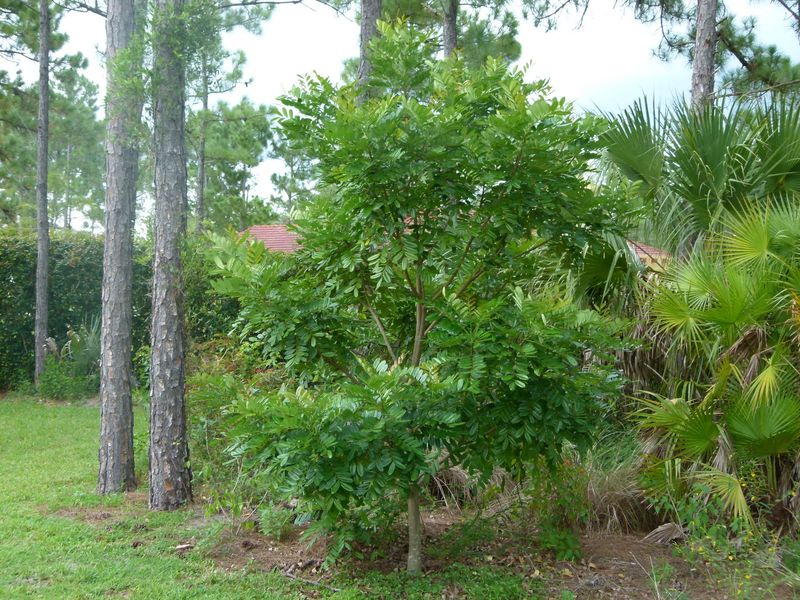
Structural pruning is most effective when a tree is still young enough that the cuts are small, the wounds close quickly, and the overall form can still be guided.
Waiting until a gumbo limbo matures before addressing its structure creates more difficult pruning conditions.
The limbs are larger, wounds close more slowly, and there are fewer options for redirecting the crown.
UF/IFAS notes that proper training and pruning can help develop a more uniform crown in gumbo limbo. Uniform does not mean unnatural.
Early training involves removing branches that cross, rub, or grow in problematic directions. Those branches may eventually conflict with structures, walkways, or usable space beneath the canopy.
A few well-timed cuts in the first several years of a tree’s life can shape its development in ways that reduce the need for major intervention later.
Topping is not a solution to an oversized canopy. Removing large portions of the crown stresses the tree and can produce weak regrowth.
It also fails to address the underlying problem: the tree was planted somewhere without adequate room to develop. Topping also tends to require repeat cutting as vigorous regrowth replaces what was removed.
Consistent, light structural pruning over the early years is far more effective than dramatic cuts later. An arborist familiar with Florida shade trees can help develop an appropriate pruning plan.
That plan can guide the crown, maintain clearance, and support the tree’s natural structure.
8. The Right Spot Saves Years Of Pruning
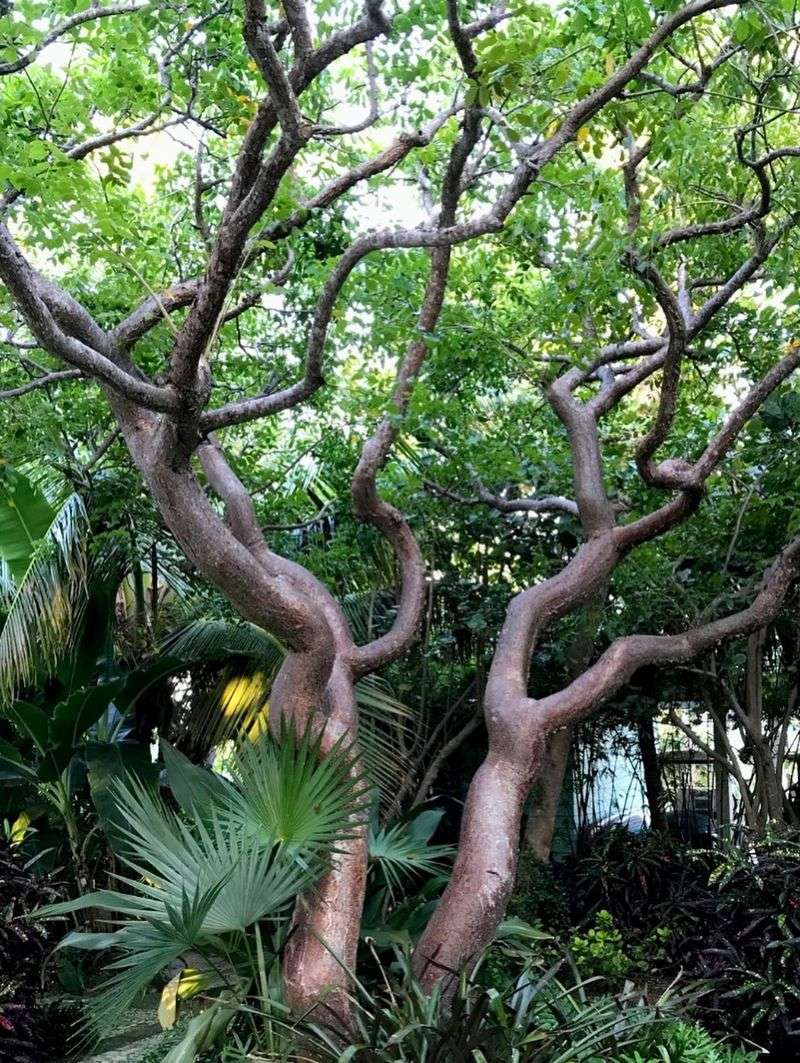
A well-sited gumbo limbo is genuinely low-demand once it is established. UF/IFAS describes the species as needing little attention once established, aside from occasional pruning where conditions require it.
That description assumes the tree was planted somewhere with enough room to develop naturally. Otherwise, constant intervention may be needed to prevent conflicts with structures or hardscape.
Bringing together everything covered in earlier sections, the common thread is space. Mature canopy spread, surface roots, low branches, and proximity to pavement all become easier to manage with proper siting.
Structural training is also simpler when the planting site was chosen for the mature tree rather than the young one.
A generous site also supports better wind resistance. A gumbo limbo with room to develop a broad, well-anchored root system is better equipped for storms.
Those conditions are a real part of life in the warmest areas of southern Florida. Confined roots and a cramped crown are not advantages in a high-wind event.
No existing tree that is thriving in a yard needs to be removed simply because it is large. Many gumbo limbos grow near structures for decades without causing problems, particularly when they were given adequate space from the start.
The strongest takeaway here is simple: choose a spot for the tree you will eventually have, not the small tree standing in a nursery container right now. That decision, made once and made well, pays dividends for decades.
9. Utility Lines And Overhead Clearance Matter Too
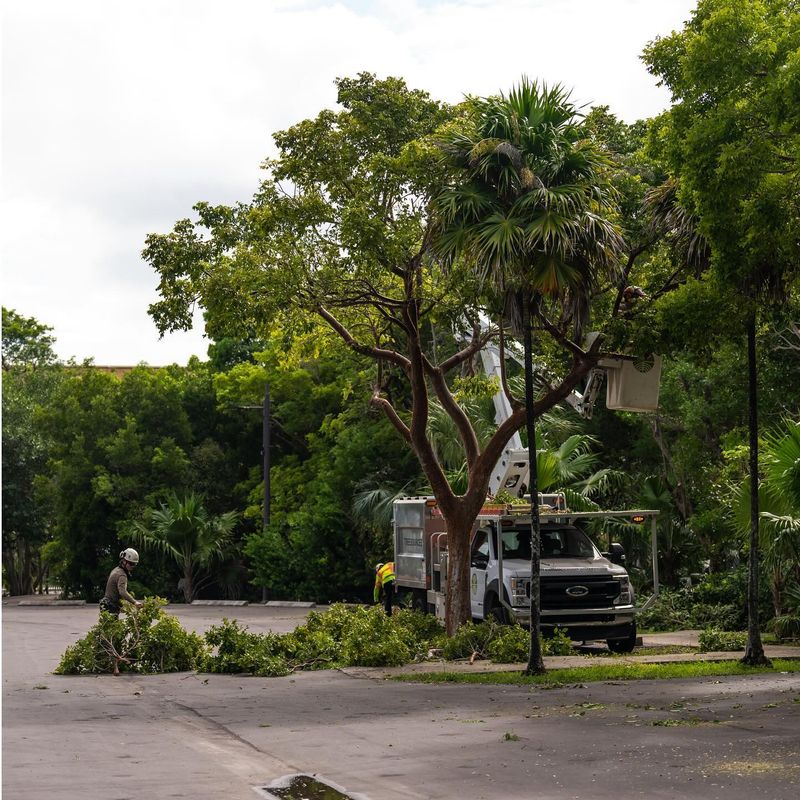
Vertical clearance is easy to overlook when a tree is young and the canopy sits well below any nearby power lines or roof overhangs. As gumbo limbo gains height, branches that once posed no concern can grow into utility line corridors and trigger utility company pruning.
That kind of reactive trimming rarely produces good results for the tree’s structure or appearance.
Utility pruning typically prioritizes line clearance over tree health or form. The result is often asymmetrical, with one side of the canopy heavily cut back while the other side continues to develop normally.
A tree subjected to repeated one-sided pruning can develop structural imbalances that create their own long-term concerns.
The most straightforward way to avoid that scenario is to keep large trees away from overhead utility lines entirely. Gumbo limbo, with its potential to reach significant heights in the right conditions, is not an ideal candidate for planting directly beneath power lines.
Smaller species are better suited to those confined corridors.
Roof overhangs and screen enclosures also represent vertical conflict points worth planning around. Branches that eventually contact a roof can cause surface damage and create pathways for moisture and pests.
Choosing a planting position that keeps the expected mature canopy clear of overhead structures reduces the likelihood of those problems developing. Measuring available vertical space, not just horizontal space, is part of making a well-informed planting decision.