The Meaning Behind Dropping Leaves On Your Texas Oak Trees This Summer
Walking out to find leaves dropping from your Texas oak trees in the middle of summer is one of those garden moments that can send a homeowner straight into worry mode. Oaks are supposed to be the tough ones.
The trees that handle Texas conditions better than almost anything else in the landscape. Seeing them drop leaves when they should be fully leafed out and thriving naturally raises the question of what’s going wrong.
But the answer is more nuanced than most people expect. Summer leaf drop on Texas oak trees is not always a sign that something is seriously wrong.
In many cases, it’s a completely normal response to specific seasonal conditions that oaks have been managing for thousands of years without any help from homeowners.
In other cases, it’s an early signal worth paying closer attention to before a manageable situation becomes a more significant tree health issue.
Knowing how to tell the difference is the most valuable thing any Texas oak owner can do when summer leaf drop appears.
Your Oak Is Protecting Itself From Drought
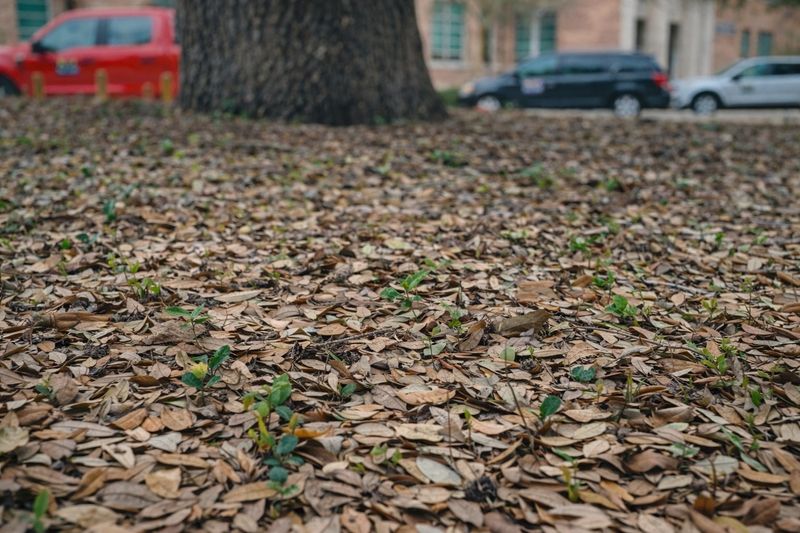
When the Texas heat cranks up and the rain stays away, your oak tree does something pretty smart. It starts dropping leaves on purpose.
Losing leaves reduces the amount of water the tree needs to keep going, so shedding some is actually a survival move, not a sign of failure.
Think of it like a car cutting power to less important systems when the battery runs low. The tree is conserving energy and moisture where it matters most.
You might notice leaves going yellow, brown, or crispy before they fall. That is the tree pulling nutrients back before letting them go.
Hot, dry summers in Texas put tremendous pressure on oak trees, especially those growing in sandy or rocky soils that drain quickly. Trees in full sun with no mulch around the base tend to feel drought stress sooner than shaded ones.
Watering deeply and slowly once or twice a week during dry stretches can make a big difference.
A slow drip hose placed around the drip line of the tree, not right at the trunk, helps water reach the roots where it is actually needed. Adding a few inches of wood chip mulch around the base helps the soil hold moisture longer.
Drought stress alone does not always cause permanent damage if you respond early and give the tree steady, deep hydration through the hottest months.
The Roots May Be Under Stress
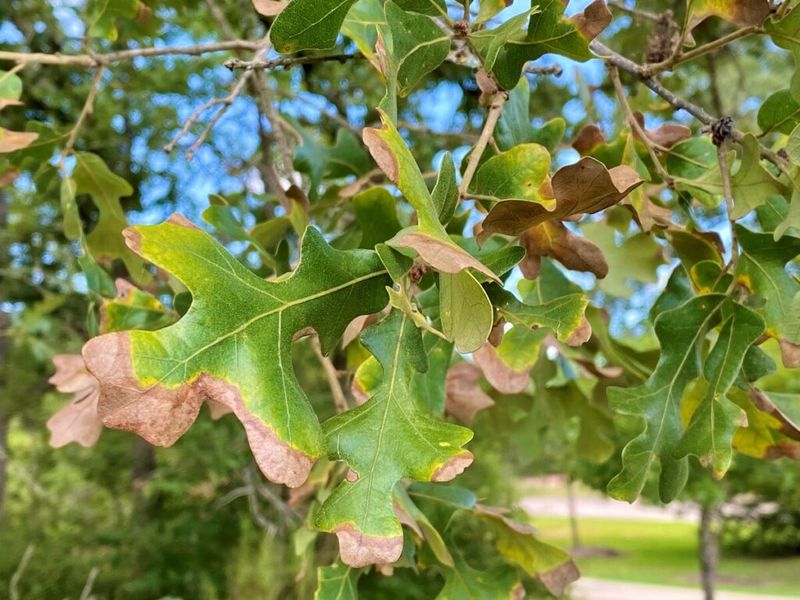
Root problems are sneaky. You might not see any sign of trouble above ground for months, or even years, after something damaged the roots below.
That is what makes this cause of leaf drop so easy to miss until the tree starts showing real symptoms.
Construction projects near your oak can be a major culprit. Trenching for pipes or cables, heavy equipment rolling over the soil, and grading work can all slice through roots or compact the soil so badly that roots struggle to breathe and absorb water.
Your Texas Garden Changes Every Week. Your Plan Should Too.
Gardening in Texas changes quickly throughout the season. Every Friday you’ll receive a simple weekly plan showing exactly what to plant, prune, fertilize, harvest, and protect so you never miss the right timing.
Even if the work happened last year, you might be seeing the results right now. Compacted soil squeezes out the air pockets that roots need to function. When roots cannot get oxygen, they weaken and stop doing their job.
The tree above starts to thin out, drop leaves early, and look generally stressed. Branches at the top of the canopy often show symptoms first.
If you think root stress is the issue, start by aerating the soil around the tree. A certified arborist can use an air spade to loosen compacted soil without cutting roots.
Avoid parking vehicles or placing heavy objects under the canopy. Keep foot traffic away from the root zone as much as possible.
The root zone of an oak extends far beyond the canopy edge, so protecting a wide area matters. With some care and time, stressed roots can recover, and the tree can bounce back stronger than before.
The Soil Could Be Staying Too Wet
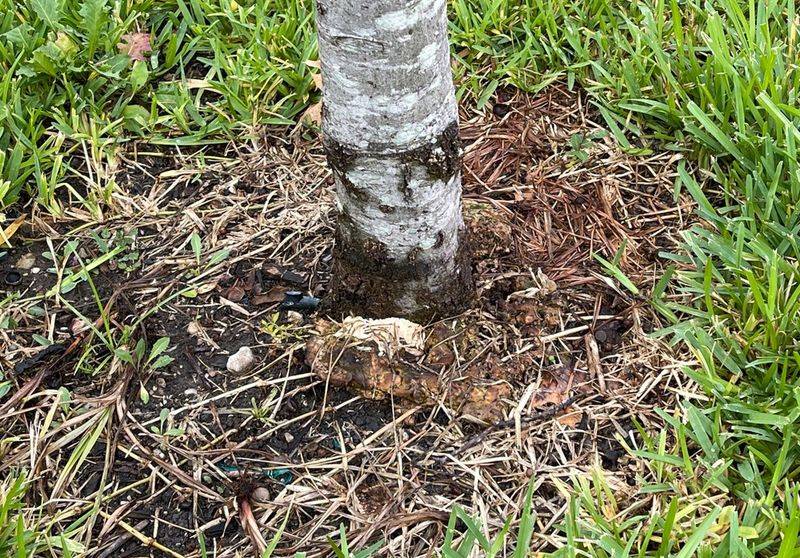
Most people assume that more water always means a healthier tree, but that is not true for oaks. Too much water sitting around the roots can be just as harmful as not enough.
Oak roots need oxygen to work properly, and soggy soil pushes that oxygen out. When roots sit in waterlogged soil for too long, they begin to break down.
You might notice leaves turning yellow, looking limp, or dropping off even when the weather has not been especially hot.
Branches may start to look thin or bare in spots. These signs often get mistaken for drought stress, which makes overwatering easy to overlook.
Poor yard drainage is a common problem in many Texas neighborhoods. Low spots in the lawn, clay-heavy soils, and sprinkler systems set to run too often can all lead to roots sitting in water longer than they should.
If your sprinklers run every day or every other day near your oak, that schedule is likely too frequent.
Check the soil before you water. Stick a screwdriver or a long stick about six inches into the ground near the drip line.
If it comes out with wet, muddy soil clinging to it, the tree does not need more water yet. Adjust your irrigation schedule to water deeply but less often, giving the soil time to dry out a bit between sessions.
If drainage is the real problem, a landscaping professional can help redirect water away from the root zone. Catching this early gives your tree a much better shot at a full recovery.
A Late-Summer Leaf Disease Could Be Developing
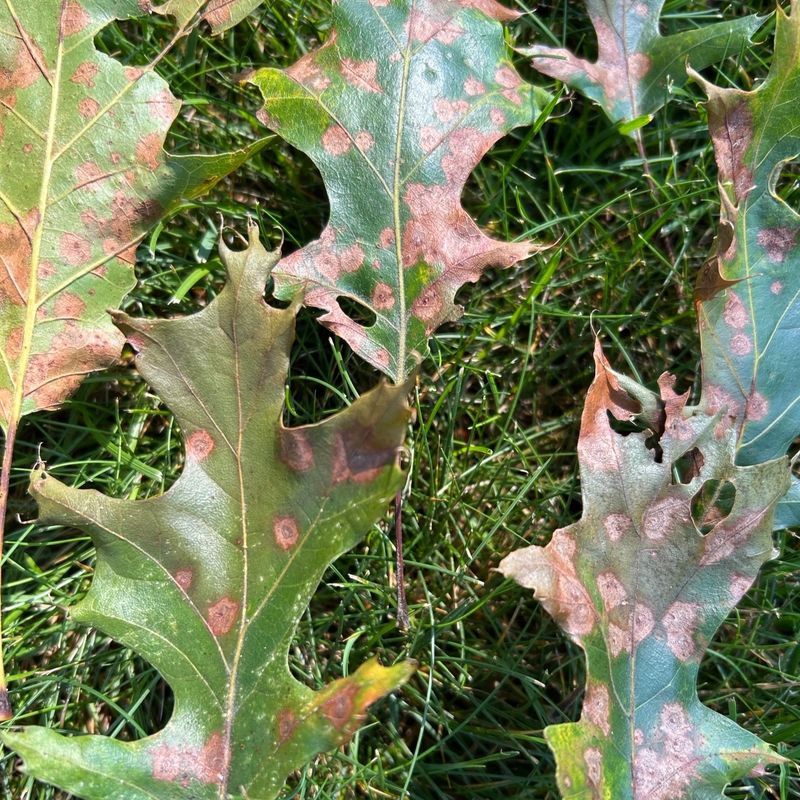
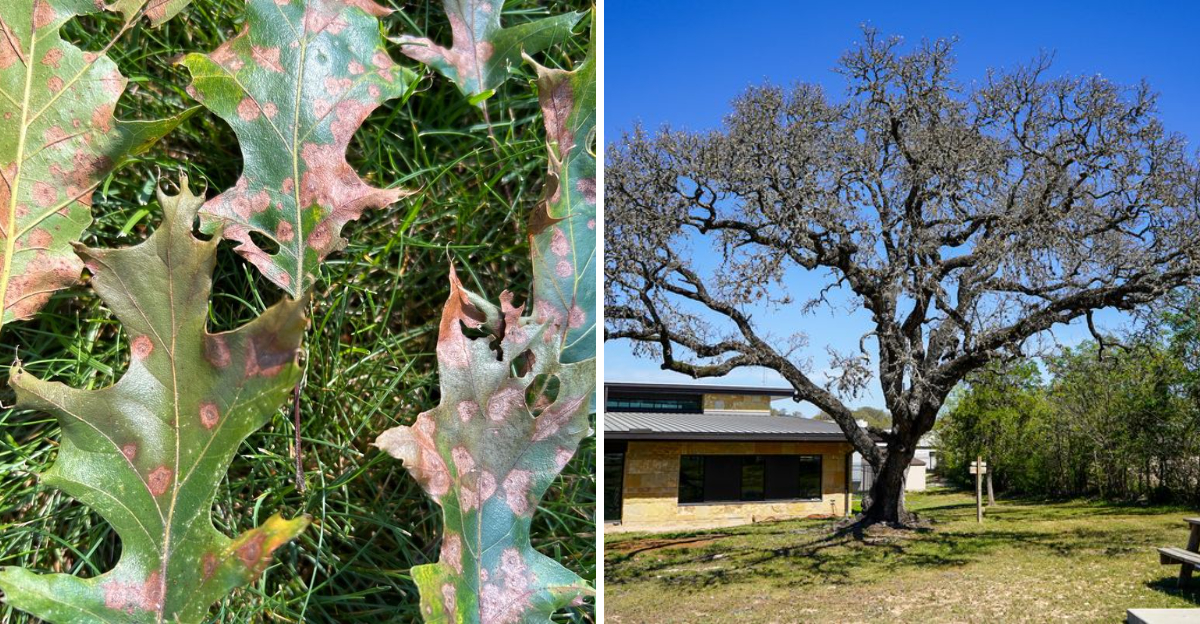
Late summer is prime time for certain fungal diseases to show up on Texas oak trees. One of the most common is Tubakia leaf spot, sometimes called Actinopelte leaf spot.
It tends to appear when warm temperatures combine with humid or rainy stretches, which is exactly what parts of Texas experience from July through September.
The signs are pretty easy to spot once you know what to look for. Look for small to medium brown spots on the leaves, often surrounded by a yellow or tan halo.
As the infection spreads, the spots grow larger and the leaves may begin dropping earlier than normal. Heavy defoliation can happen quickly once the disease gets a foothold in the canopy.
Tubakia is most common on red oaks and Texas oaks, though it can affect other species too. The fungus spreads through spores that travel on wind and water, so wet or rainy weather speeds things up.
Trees that are already stressed from drought or root problems tend to be hit harder than healthy, vigorous trees.
Raking up and removing fallen leaves helps reduce the number of spores available to reinfect the tree next season. Avoid overhead watering that wets the leaves, since moisture on leaf surfaces encourages fungal growth.
Fungicide treatments are sometimes used in severe cases, but a certified arborist should evaluate the tree first before any spraying begins.
Keeping your oak well-watered during dry spells and properly fertilized can help it fight off leaf diseases more effectively in future seasons.
Rapid Leaf Drop Could Signal Oak Wilt
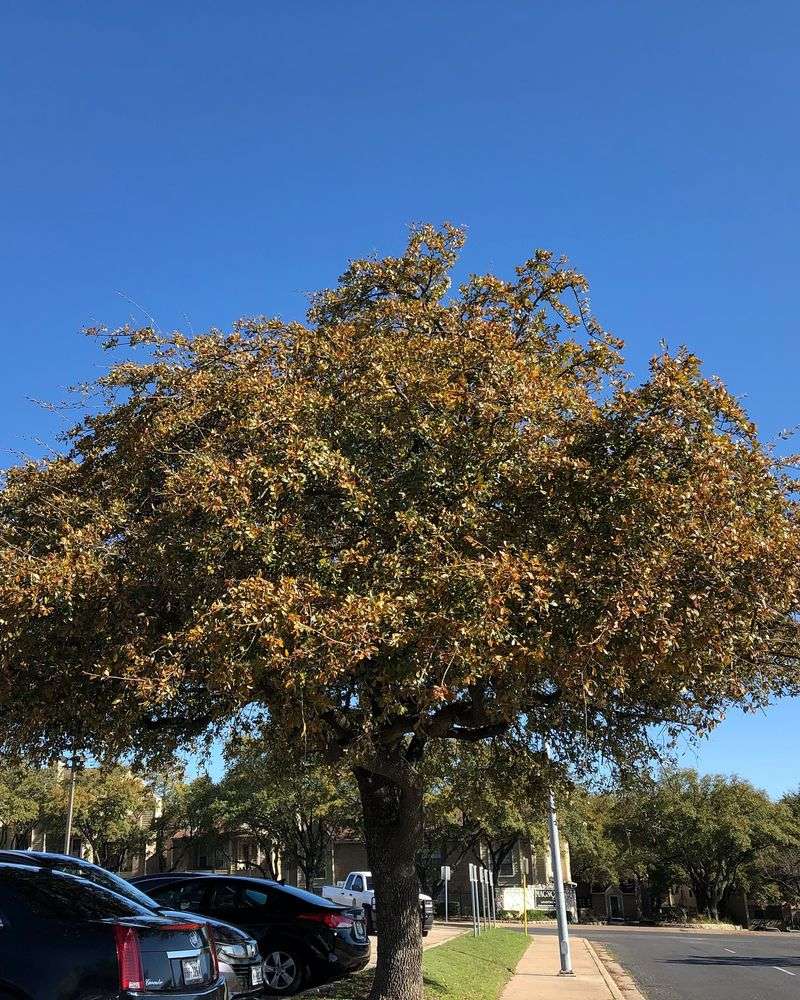
Oak wilt is one of the most serious tree diseases in Texas, and summer is when it tends to make itself very obvious.
If your oak is losing leaves fast, and we mean really fast, like large sections of the canopy going brown and bare within weeks, oak wilt should be on your radar.
Live oaks and red oaks are especially vulnerable. With live oaks, you might notice leaves turning pale green or yellow with brown tips and veins, then dropping rapidly.
Red oaks often show bronzing that starts at the leaf edges and moves inward before the leaves fall. Either way, the speed of decline is what sets oak wilt apart from other problems.
Oak wilt is caused by a fungus that spreads in two ways. It can travel underground through connected root systems between neighboring trees, or it can spread above ground through beetles attracted to fresh wounds on the tree.
That is why pruning oaks during certain times of year, especially spring, is strongly discouraged in Texas.
If you suspect oak wilt, do not wait. Contact a certified arborist or the Texas A&M Forest Service for guidance as soon as possible.
There are treatment options available, including fungicide injections and trenching to sever root connections between trees. Acting quickly gives you the best chance of saving the tree and protecting the oaks around it.
Oak wilt can move through a neighborhood quickly, so early action protects not just your tree but your neighbors’ trees as well.
Summer Leaf Drop Isn’t The Normal Live Oak Shed
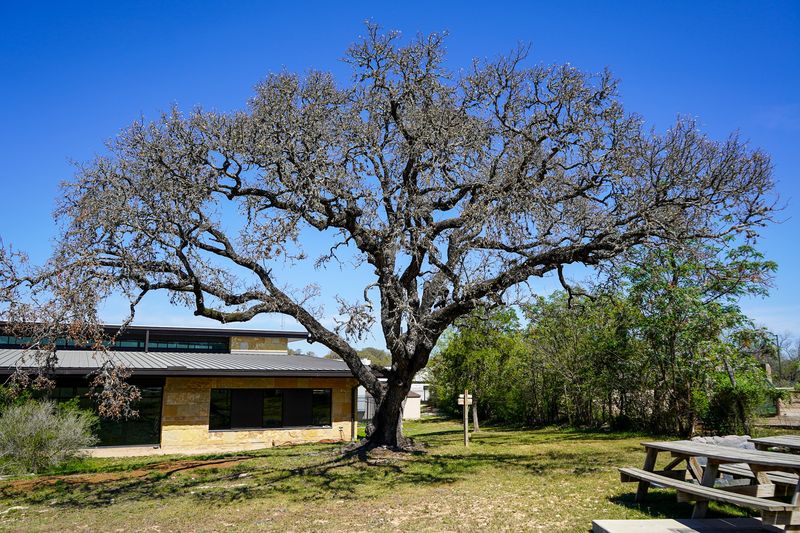
Live oaks have a reputation for being evergreen, but they do go through a natural leaf exchange every year. The catch is that it happens in late winter or early spring, not in the middle of summer.
If your live oak is dropping significant numbers of leaves in July or August, that is not the normal seasonal shed you might be thinking of.
During the natural spring leaf exchange, live oaks drop their old leaves and replace them with fresh new ones pretty quickly. The tree might look a little thin for a week or two, but it fills back in fast.
The whole process happens gradually and the tree never looks truly bare or sick. Summer leaf loss looks and feels very different from that.
When a live oak drops leaves heavily in summer, the causes are almost always connected to stress, root issues, disease, or something in the environment that is putting pressure on the tree.
Sometimes homeowners confuse the two events and assume their tree is just doing its natural thing. That assumption can lead to delayed action when the tree actually needs help.
A good rule of thumb is to pay attention to timing and quantity. A few leaves here and there in summer is not unusual.
A steady rain of leaves or large bare patches forming in the canopy during hot months is a different story. Take photos over a few days to track how quickly the leaf loss is progressing.
Sharing those photos with a local arborist gives them helpful information to work with when diagnosing what your tree needs.