These Native Pennsylvania Plants Thrive After Heavy Rain
Heavy rain in Pennsylvania has a way of revealing which plants belong and which ones are just visiting. A significant downpour can leave garden beds waterlogged, low spots sitting in standing water for days, and clay heavy soil so saturated that roots simply can’t breathe.
Most ornamental plants handle occasional wet conditions reasonably well, but sustained moisture after heavy rain pushes many of them past their comfortable limits. Native Pennsylvania plants grew up with this.
The rainfall patterns, the clay soils, the saturated low spots that stay wet long after the storm has passed. These plants evolved in the Pennsylvania landscape with all of it, and the ones adapted to wetter conditions don’t just survive heavy rain.
They use it. Some of them look their absolute best in the days following a significant rainfall, producing lush growth and vigorous bloom cycles that drier spells simply don’t trigger in the same way.
If your yard has areas that struggle after rain, the solution is rarely better drainage. It’s usually better plant selection.
1. Swamp Milkweed
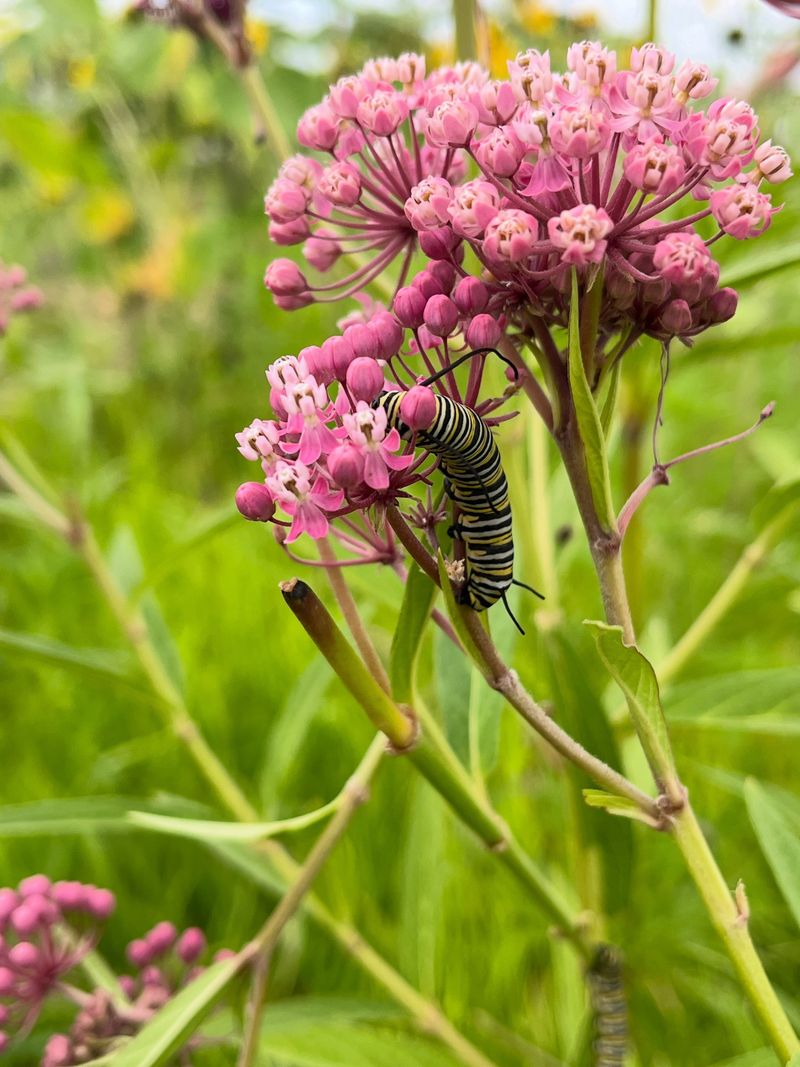
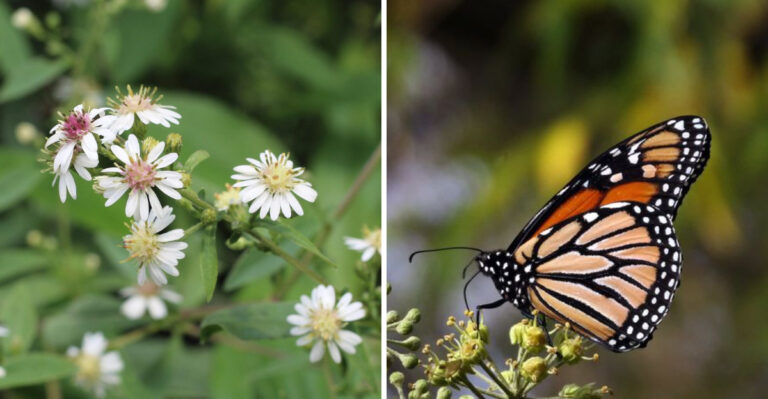
Few plants pull double duty quite like swamp milkweed. Not only does it handle soggy ground with ease, but it also plays a starring role in helping monarch butterflies survive their long migrations.
Planting it in your yard is like putting out a welcome sign for one of nature’s most beloved insects.
Swamp milkweed grows naturally along stream banks and wet meadows across Pennsylvania.
It thrives in moist to occasionally flooded soil, making it a great pick for low spots in your yard that stay wet after a big rainstorm. It can reach three to four feet tall, so it adds some nice height to a garden bed.
The flowers bloom in mid to late summer and come in a soft, rosy pink color. They grow in rounded clusters that look lovely and attract not just monarchs, but also bees and other pollinators.
If you want a yard full of buzzing, fluttering life, this plant delivers. One cool thing about swamp milkweed is that it spreads gradually over time. You plant it once, and it slowly fills in the space around it.
That means less work for you each season. It also grows back reliably every year since it is a perennial.
Give it full sun for the best results. It does not need fertilizer or much care once it gets established.
Just make sure it has access to consistent moisture, and it will reward you with beautiful blooms and a yard full of butterflies all summer long.
2. Cardinal Flower
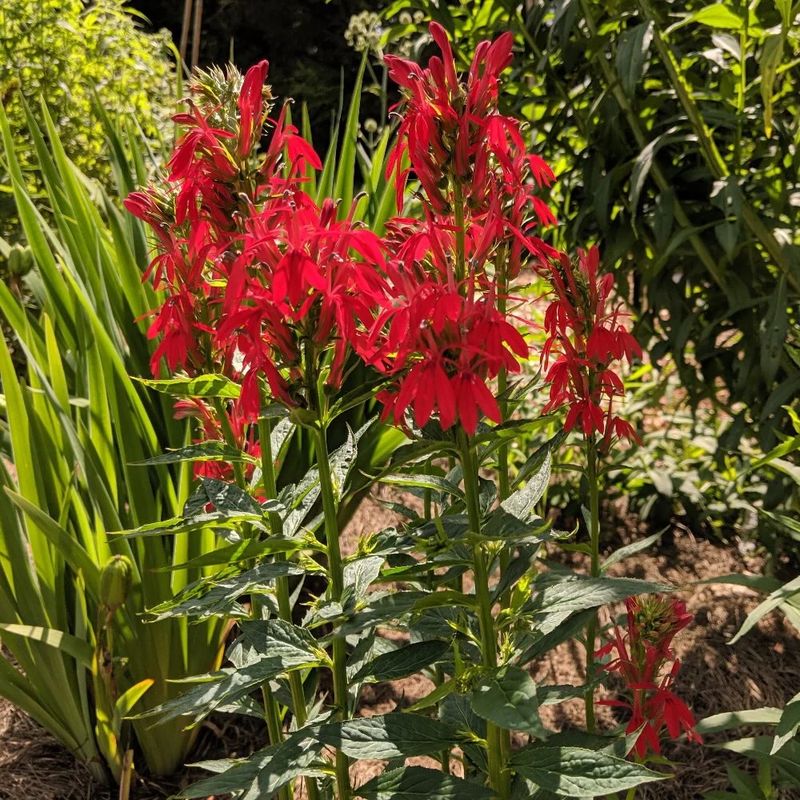
Imagine a flash of red so bright it almost looks like something is on fire in your garden. That is what you get with cardinal flower.
Its tall spikes of brilliant crimson blooms are hard to miss, and hummingbirds absolutely cannot resist them. If you have ever wanted to attract hummingbirds to your yard, this plant is your best bet.
Cardinal flower loves consistently moist ground and handles temporary flooding without complaint. In Pennsylvania, it naturally grows along stream banks, pond edges, and wet meadows.
Your Pennsylvania Garden Changes Every Week. Your Plan Should Too.
Gardening in Pennsylvania changes quickly throughout the season. Every Friday you’ll receive a simple weekly plan showing exactly what to plant, prune, fertilize, harvest, and protect so you never miss the right timing.
Low spots in your yard that collect rainwater are perfect locations for this plant to settle in and thrive.
It blooms in late summer, usually from July through September, which is great timing. Many garden plants have already finished flowering by then, so cardinal flower steps in and keeps your yard looking vibrant.
The red color is also striking against the green late-summer foliage around it. Cardinal flower is a short-lived perennial, but do not let that discourage you. It self-seeds freely, meaning new plants pop up on their own each year.
Over time, you can actually end up with more plants than you started with, which is a nice bonus.
Plant it in partial shade to full sun. It does best when the soil stays consistently moist, so avoid planting it on high, dry ground.
Pair it with other moisture-loving plants like swamp milkweed or blue flag iris for a rain garden that looks professionally designed but requires very little upkeep from you.
3. Blue Flag Iris
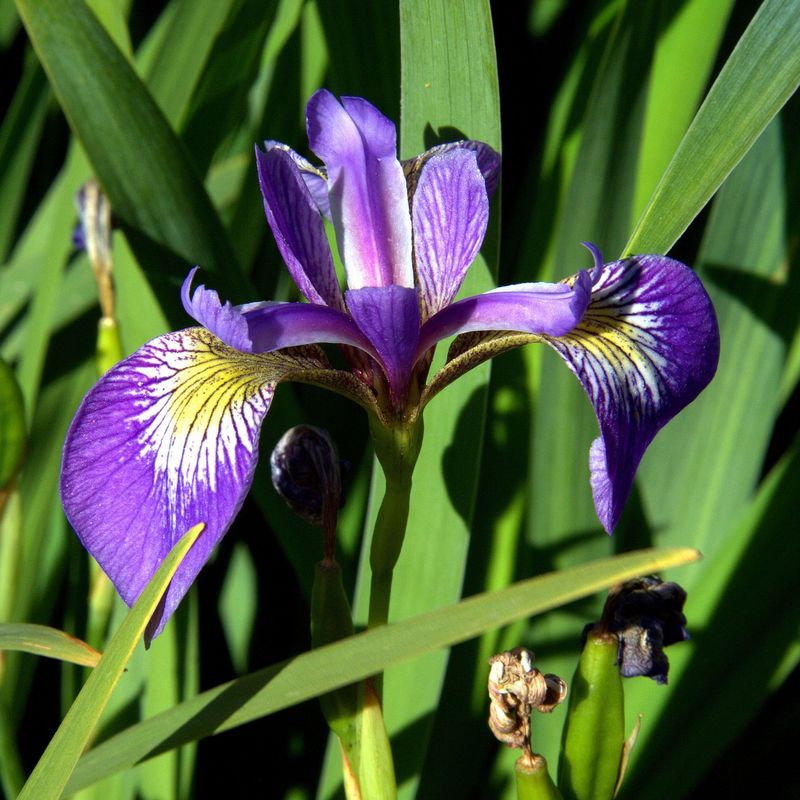
There is something almost magical about seeing blue flag iris in bloom. Its violet-blue flowers have delicate veining and a graceful shape that looks like something out of a painting.
You might expect a plant this pretty to be fussy, but blue flag iris is actually tough and surprisingly easy to grow in the right spot.
Naturally found in wet, boggy areas and along the edges of ponds and streams, blue flag iris is perfectly built for waterlogged soil. It is one of the best plants you can choose for a rain garden or for any low spot in your yard that stays wet long after the rain stops.
Standing water that would stress most plants is just fine for this one. The blooms appear in late spring to early summer, usually around May and June. They are a rich blue-violet color with yellow and white accents on the petals.
Bees and other pollinators visit the flowers regularly, so your garden gets both beauty and ecological value all at once.
Blue flag iris grows in clumps and spreads slowly over time. It reaches about two to three feet in height, which makes it a great mid-height plant for layered garden designs.
The tall, sword-shaped leaves also look attractive even when the plant is not in flower. Plant it in full sun to partial shade. Keep the soil moist or even wet.
You do not need to water it much after a rainy season because it stores energy well. It is a Pennsylvania native that earns its place in any water-wise garden with very little fuss.
4. Boneset
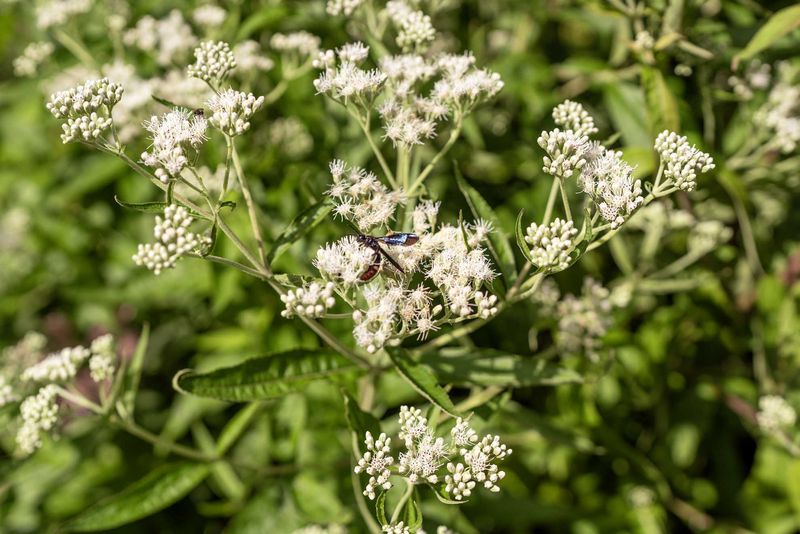
Boneset might not have the flashiest flowers in the garden, but it more than makes up for it with toughness and ecological value.
This plant is a powerhouse when it comes to supporting native bees, butterflies, and other beneficial insects. On a warm summer day, a boneset plant in full bloom can look like a tiny insect convention.
It performs exceptionally well in constantly moist soil and tolerates flooded conditions better than most garden perennials. That makes it a standout choice for wet areas of your yard that other plants struggle to handle.
In Pennsylvania, boneset grows naturally in swamps, wet meadows, and along stream edges, so it is already well-adapted to the local climate and rainfall patterns.
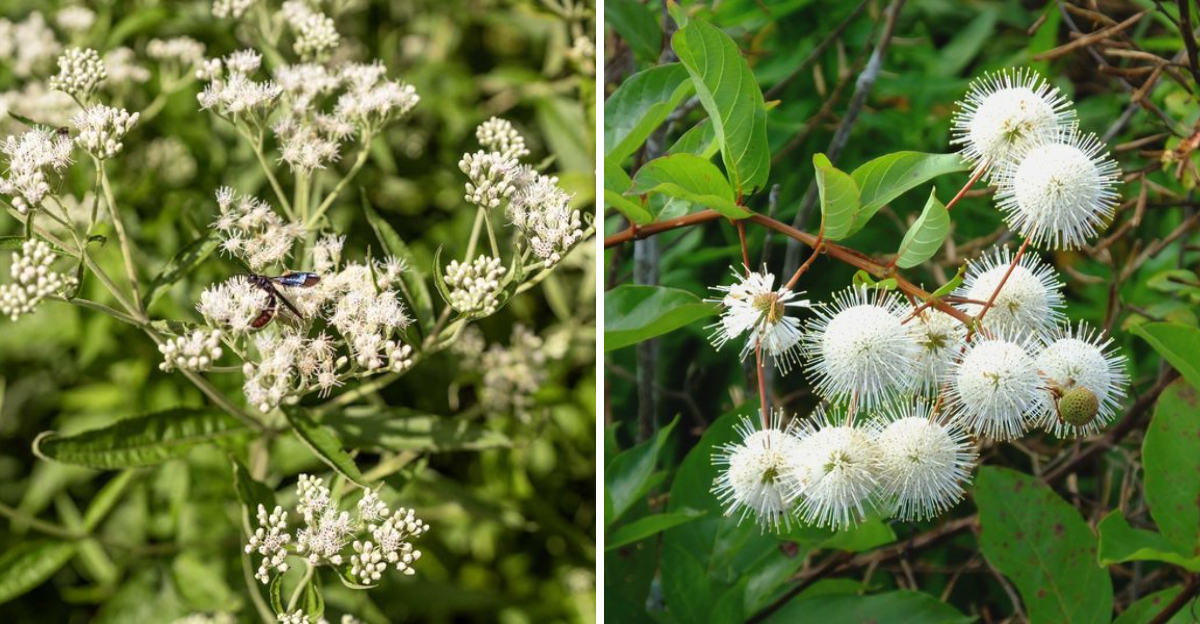
Boneset blooms in mid to late summer, producing clusters of small white flowers at the tops of its stems. The flowers are not individually showy, but together they create a soft, full look that blends beautifully with other native plants.
The leaves are long and wrap around the stem in a distinctive way that makes it easy to identify.
It can grow quite tall, sometimes reaching five or six feet in height. Because of this, boneset works well at the back of a garden bed where it can create a lush green backdrop for shorter plants in front of it.
It spreads naturally over time through both seeds and roots. Full sun to partial shade suits it well. Once established, boneset needs very little attention.
It is a reliable, low-maintenance native plant that earns its spot in any Pennsylvania rain garden with minimal effort required from you.
5. Joe-Pye Weed
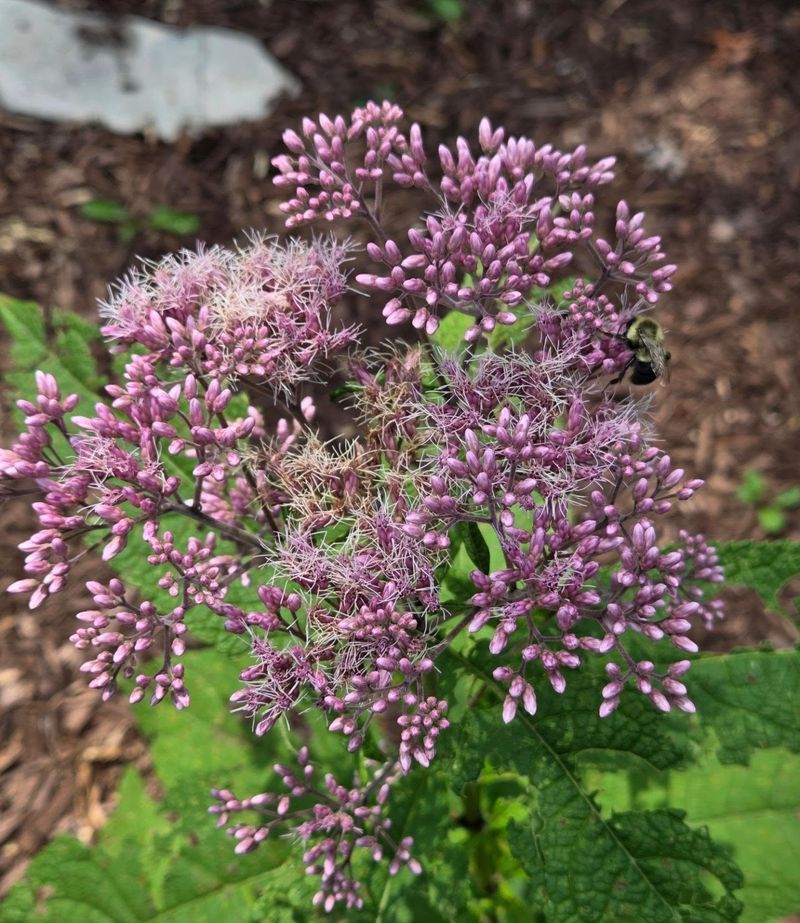
Walk past a patch of Joe-Pye weed in late summer and you will likely stop in your tracks. The towering stems topped with large, dusty pink-purple flower clusters are genuinely impressive.
Add to that the butterflies, bees, and skippers fluttering all around it, and you have one of the most alive-looking corners a garden can offer.
Joe-Pye weed handles wet soil and moisture-heavy summers like a champ. It naturally grows in moist meadows, stream banks, and woodland edges across Pennsylvania.
If your yard has a low area that stays damp for days after heavy rain, Joe-Pye weed will feel right at home there and reward you with stunning late-season color.
The plant blooms from late summer into early fall, which is a valuable time in the garden when many other plants are winding down. Its flowers are a magnet for monarch butterflies, swallowtails, and native bees.
Planting it supports local pollinator populations, which is always a good thing for your whole yard and neighborhood.
Joe-Pye weed is tall. Depending on the variety, it can reach five to seven feet in height. That makes it a dramatic focal point in larger garden spaces. It pairs well with shorter plants like boneset or cardinal flower planted in front of it for a layered, natural look.
Give it full sun to partial shade and keep the soil moist. It is a perennial that comes back reliably each year.
Once established, it spreads slowly and fills in nicely. It is a bold, beautiful, and ecologically generous plant that any Pennsylvania gardener should consider adding to their landscape.
6. Buttonbush
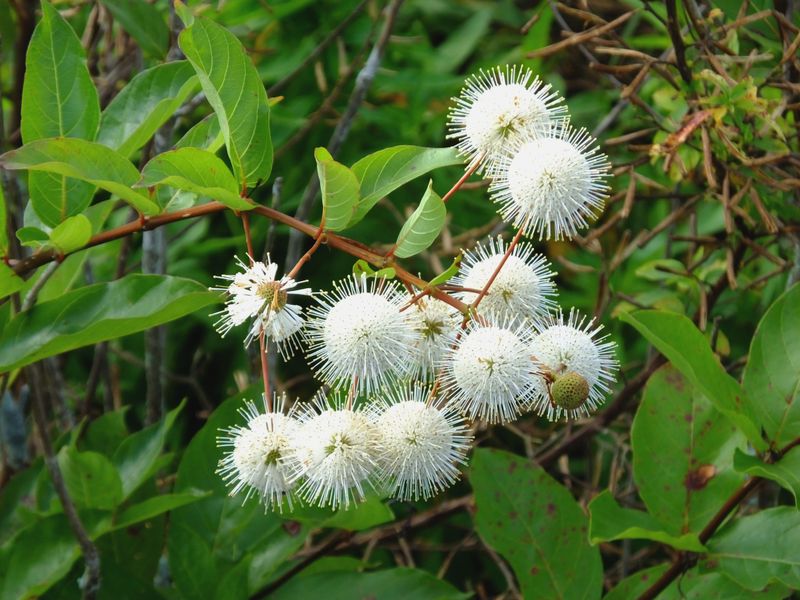
Buttonbush is one of those plants that makes people stop and ask, what is that? Its flowers are perfectly round, white, and spiky-looking, almost like little pincushions or something from a science fiction movie.
Once you see it in bloom, you will not forget it, and neither will the pollinators that flock to it in droves.
As a native shrub, buttonbush truly thrives in wet and periodically flooded locations. It can actually grow with its roots submerged in shallow water, which is something very few shrubs can handle.
That makes it an outstanding choice for rain gardens, pond edges, drainage swales, and any poorly drained area of your yard that gives other plants trouble.
Buttonbush blooms in summer, typically from June through August. The white spherical flowers attract bees, butterflies, and hummingbirds.
After the flowers fade, round reddish-brown seed balls form and stay on the shrub into winter. Waterfowl and songbirds eat those seeds, so buttonbush keeps giving even after the growing season ends.
It can grow anywhere from six to twelve feet tall depending on conditions, making it a substantial shrub that provides real structure and privacy in a wet area of your yard. It works well planted in groups or as a single specimen near a water feature.
Buttonbush prefers full sun to partial shade. It is remarkably low-maintenance once established.
You do not need to water it during rainy periods since it is already built for wet conditions. For Pennsylvania homeowners dealing with persistently soggy spots, buttonbush is one of the most practical and rewarding native shrubs available.
7. Red-Twig Dogwood
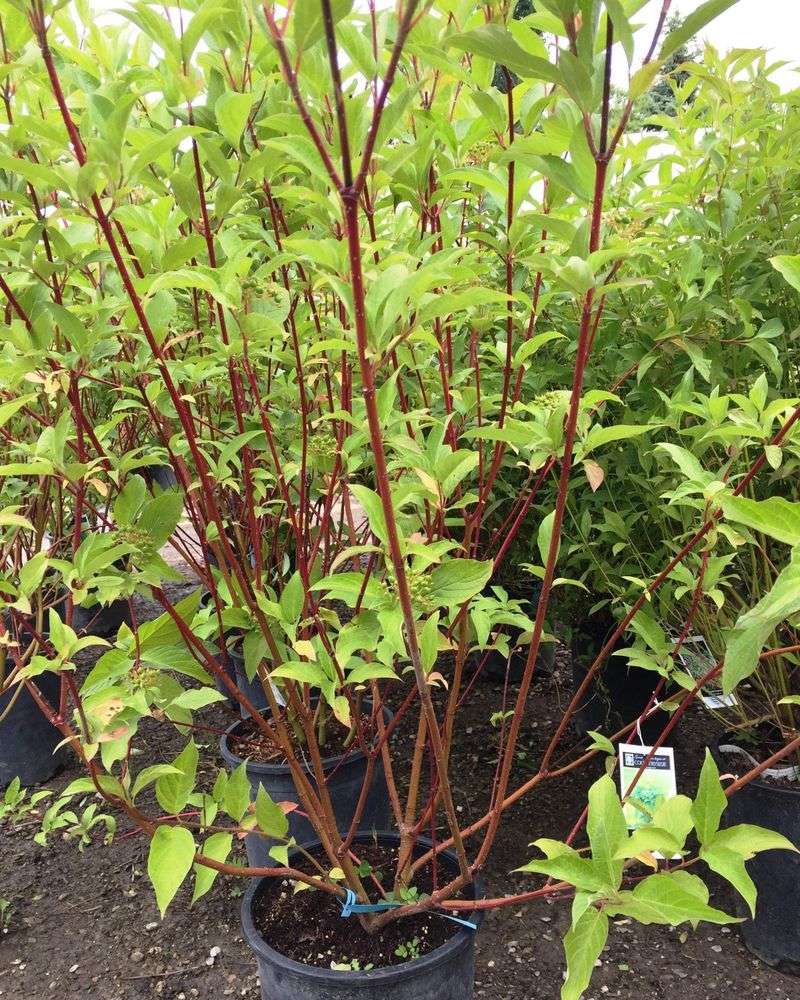
Most plants offer their best show in spring or summer, but red-twig dogwood saves one of its finest moments for winter.
When the leaves drop and the garden goes quiet, those brilliant red stems glow against the snow like something out of a holiday postcard. It is a plant that looks stunning in every season, which is a rare and valuable quality.
Red-twig dogwood prefers consistently moist soil and tolerates wet sites that would stress many other shrubs. Its roots are strong and wide-spreading, which means it also helps stabilize erosion-prone ground along stream banks or slopes that get saturated after heavy rain.
Planting it near a drainage area does double duty, looking beautiful while also protecting your soil.
In spring, small clusters of white flowers appear and attract pollinators. By late summer, white or pale blue berries form on the branches.
Birds love these berries, so expect robins, cedar waxwings, and other songbirds to visit your yard regularly once the fruit ripens.
The shrub typically grows six to nine feet tall and spreads outward over time. It works well as a hedge, a naturalized border planting, or a standalone specimen near a pond or rain garden.
The red stem color is most vivid on younger growth, so cutting back some stems every few years keeps the color looking its brightest.
Plant it in full sun to partial shade. It is cold-hardy, low-maintenance, and well-suited to Pennsylvania’s climate.
For gardeners who want year-round interest in a wet area, red-twig dogwood is a smart and beautiful native choice that keeps on giving through every season.