What It Means When A Cottonmouth Is Spotted Near A Florida Pond
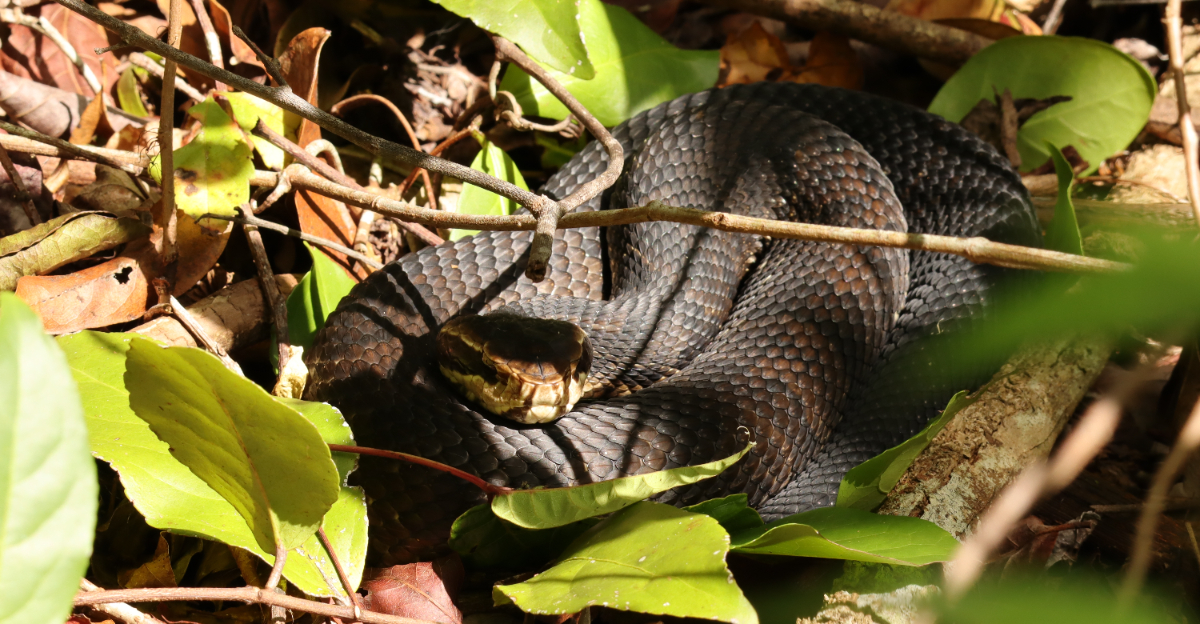
A cottonmouth at the edge of a Florida pond gets phones out before anyone’s confirmed what they’re actually looking at, and there’s a real chance they’re wrong.
Plenty of harmless water snakes flatten their heads and hold their ground the same way a cottonmouth does.
A good number of “cottonmouth sightings” around Florida ponds turn out to be something else entirely once someone gets close enough to check. When it is the real thing, that motionless standoff at the water’s edge isn’t aggression.
It’s a specific defensive display, and the snake staying put instead of swimming away tells you something most people read backward. A real cottonmouth near your pond is trying to say something specific.
Most people never stick around long enough to catch it.
1. That Pond Edge Is Classic Cottonmouth Territory
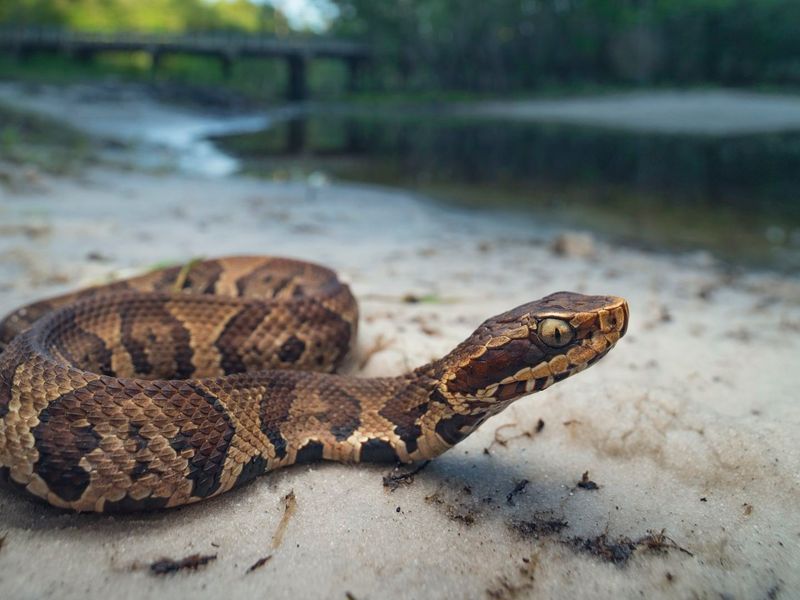
Muddy shorelines, shallow water, and tangled vegetation are not random backdrops for a cottonmouth sighting. They are exactly the kind of setting that makes a pond edge usable habitat for this species.
According to the Florida Museum of Natural History, the cottonmouth is also known as the water moccasin. It is strongly associated with aquatic and semi-aquatic environments across the southeastern United States.
Ponds, marshes, retention areas, wet ditches, canals, and lake margins all fall within the range of habitat types where cottonmouths may be found.
Shallow water provides foraging access, while dense shoreline grasses and low shrubs offer cover and a place to rest undisturbed.
The Fish and Wildlife Conservation Commission notes that cottonmouths occupy a wide variety of wetland types across the state.
That said, these snakes are not locked to the water’s edge at all times. They can travel across dry ground and move between wet areas, especially at night.
A sighting near a pond does not mean the snake lives permanently in that exact spot. The location itself simply offers conditions that make a visit plausible.
Wet edges, shallow banks, and nearby cover are what make a pond a reasonable place to find one passing through or pausing to rest.
2. Frogs And Fish Can Give One A Reason To Stay Nearby
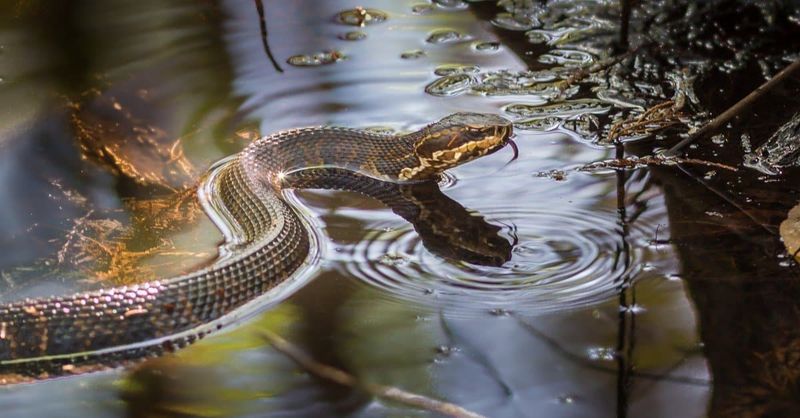
Watch a frog sitting motionless at the edge of a still pond, and you get a glimpse of why a cottonmouth might linger in that same spot. Food is a powerful reason for any predator to stay close to a particular area.
Cottonmouths are opportunistic hunters, which means they take advantage of whatever suitable prey happens to be available.
According to the Florida Museum of Natural History, their diet can include fish, frogs, salamanders, smaller snakes, lizards, small mammals, and birds.
A productive pond edge with a healthy frog population or shallow water full of small fish creates genuine feeding opportunities.
Warm, shallow water near vegetation is exactly where many of these prey animals spend time.
A pond that supports active amphibian and fish communities can make a cottonmouth’s visit worthwhile from a purely practical standpoint. That does not mean every pond automatically draws them in, or that a snake seen near water is guaranteed to stay.
Your Florida Garden Changes Every Week. Your Plan Should Too.
Gardening in Florida changes quickly throughout the season. Every Friday you’ll receive a simple weekly plan showing exactly what to plant, prune, fertilize, harvest, and protect so you never miss the right timing.
Prey availability is just one factor among several that influence where a snake spends its time. Seasonal shifts in prey activity can also affect when and where cottonmouths are more likely to show up.
Ponds that teem with frogs in spring and summer may simply offer more reason for a passing snake to slow down and investigate the shoreline.
3. Thick Pondside Cover Makes A Snake Harder To Notice
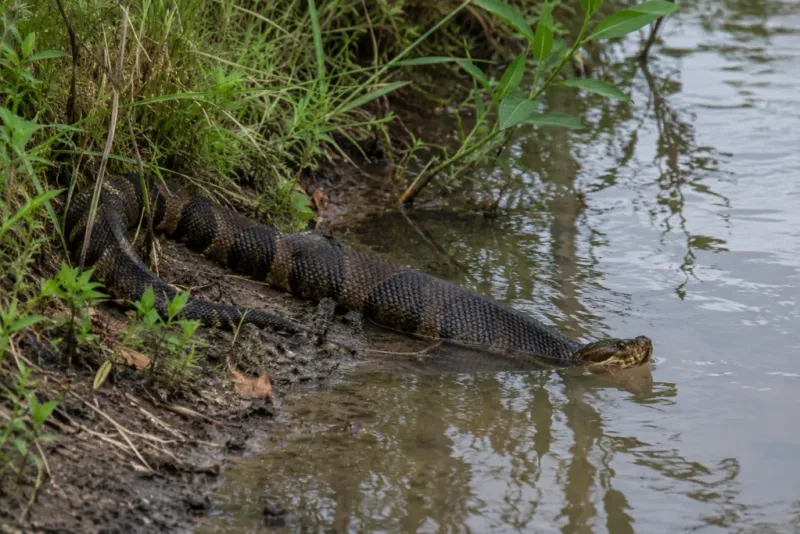
Tall grass bending over a muddy bank does more than look overgrown. Ground-level cover like dense shoreline vegetation, fallen plant debris, and low brush can make a snake nearly invisible to someone walking nearby.
A cottonmouth resting in thick grass beside a pond may go completely unnoticed until a person steps very close.
University of Florida IFAS Extension materials emphasize improving visibility to reduce surprise encounters. This matters most in areas where people regularly walk, sit, or work.
Clearing a narrow path of sight around a dock, a seating area, or a frequently used access point gives you a better chance of spotting any snake before getting too close. That applies to all snake species, not just venomous ones.
Stripping a pond edge completely bare is neither practical nor necessary. Shoreline vegetation plays a real role in water quality and provides habitat for birds, frogs, and other wildlife.
The goal is not to eliminate cover but to maintain clear sightlines in the spots where you actually spend time. Trimming back overgrowth around gates, paths, and sitting areas is a reasonable step.
Wearing closed-toe shoes near any pond edge is also a simple habit that reduces risk. Visibility and awareness, rather than drastic habitat removal, are the practical tools that matter most for reducing unexpected close encounters.
4. One Cottonmouth Does Not Mean The Pond Is Infested
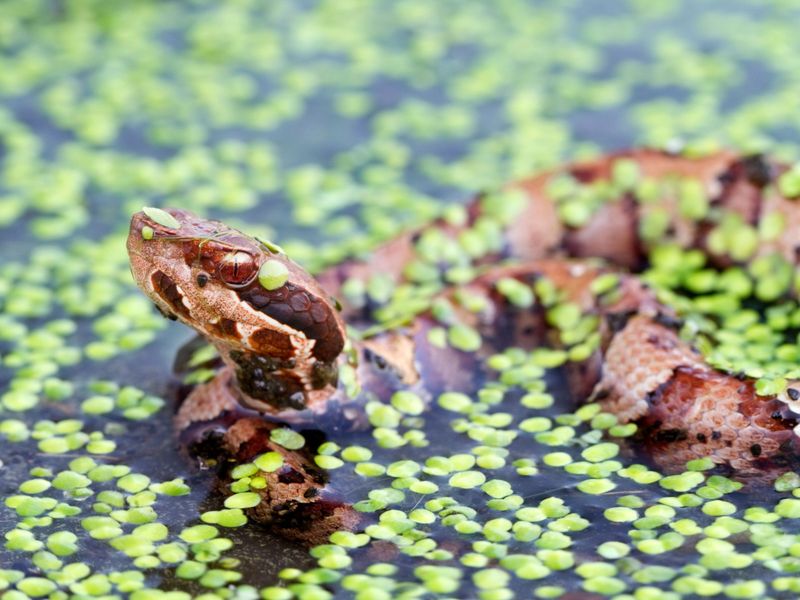
Spotting one snake near a pond can feel alarming, and it is natural to wonder how many more might be hiding nearby. However, a single sighting offers very limited information about overall snake activity on a property.
An individual cottonmouth may simply be resting, moving through the area, or pausing to hunt before continuing elsewhere.
Cottonmouths do not form colonies or dens in the way some people imagine. The Florida Fish and Wildlife Conservation Commission does not describe them as social animals that gather in large hidden groups around residential ponds.
One observation on one afternoon does not reveal breeding activity or signal that dozens of snakes are present just out of sight.
Snakes are mobile animals that move through landscapes in response to temperature, prey, water, and seasonal patterns. A cottonmouth seen near a pond on a Tuesday may not be there at all by the following weekend.
Treating a single sighting as a sign of infestation can lead to unnecessary panic and poor decisions. Staying calm and giving the snake room to move away is the most practical first response.
If sightings become frequent over several weeks, that is more meaningful information worth paying attention to. But one encounter on its own says surprisingly little about how many snakes actually use a given pond or yard on a regular basis.
5. The Snake You Saw May Not Be A Cottonmouth At All
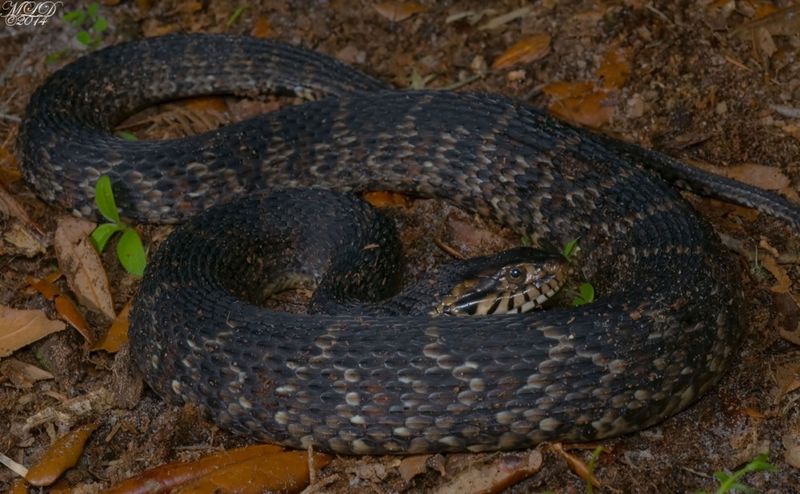
Not every thick, dark snake spotted near a pond is a cottonmouth. Several harmless watersnake species share similar habitats and can look strikingly similar at a glance, especially when seen briefly or from a distance.
Misidentification is extremely common, and even experienced observers sometimes need a second look.
The Florida banded watersnake and the brown watersnake are two non-venomous species that frequently get reported as cottonmouths.
According to the Florida Museum of Natural History, harmless watersnakes can flatten their heads into a more triangular shape when they feel threatened.
This defensive posture leads many people to assume they are looking at a venomous species. Head shape alone is not a reliable way to tell them apart, and approaching a snake to get a closer look at its features is never a good idea.
A clear photograph taken from a safe distance is far more useful than trying to observe scale patterns or eye shape up close. The Fish and Wildlife Conservation Commission and Florida Museum of Natural History both offer identification guides.
You can use them to compare snake images after a sighting. Reporting a sighting to a local wildlife agency or university extension office is a reasonable step if you want a confident identification.
Assume any unidentified snake near water deserves a wide berth until you know more, and let it move on without interference.
6. That White Mouth Is A Warning Not An Invitation To Chase
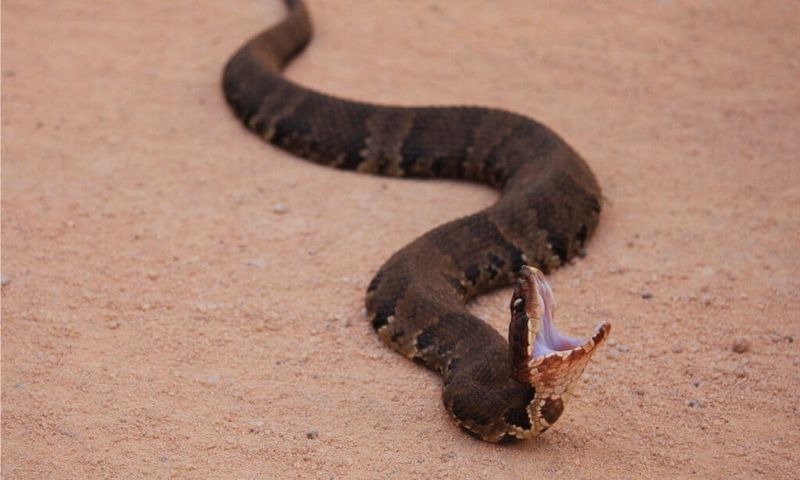
Few sights in a backyard are as striking as a snake holding its mouth wide open to reveal a pale, almost white interior.
That display is exactly where the name cottonmouth comes from, and it is one of the more recognizable defensive behaviors of any North American snake.
Seeing it can feel like a threat, but the snake is doing the opposite of attacking.
According to the Florida Museum of Natural History, this open-mouth posture is a defensive display. A cottonmouth that feels cornered or threatened may hold its position and gape rather than immediately fleeing.
This behavior signals discomfort and is meant to discourage a perceived threat from coming closer. It is not an invitation to engage or a sign that the snake is about to charge.
The widespread belief that cottonmouths routinely chase people is a myth that does not hold up against documented behavior. A snake may shift its body position as a person moves, but actively pursuing a human is not typical behavior.
The safest and most effective response to any gaping or defensive snake is to back away calmly and give the animal room to retreat on its own. Do not throw objects at it, attempt to move it with a stick, or try to herd it away.
Distance is the simplest and most reliable form of protection in that moment.
7. Repeated Sightings Can Point To Useful Habitat Around The Pond
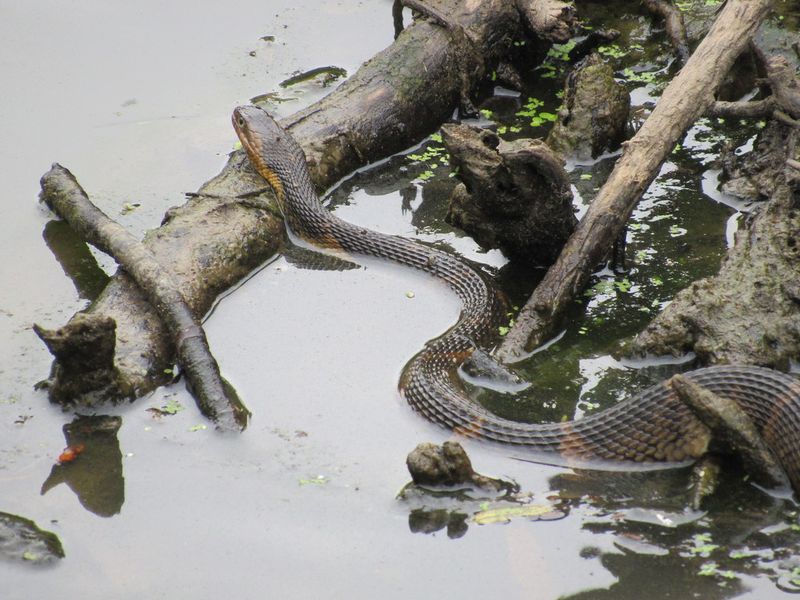
A single glimpse of a snake near a pond tells you relatively little. But if you or your neighbors spot a cottonmouth near the same pond several times across different weeks, that pattern becomes more informative.
Repeated encounters suggest the area consistently provides something the snake finds worth returning to.
Habitat quality is the most likely explanation. A pond edge with shallow water, active frogs, nearby brush, and low foot traffic offers several benefits to a cottonmouth.
Those conditions can give the snake multiple reasons to stay nearby. University of Florida IFAS Extension resources note that snakes tend to concentrate where key habitat needs overlap.
Those needs include food, water, shelter, and suitable temperatures. A pond that checks several of those boxes may see more activity than one that provides only one or two.
Repeated sightings are not proof that a large population has moved in. They are more accurately read as evidence that the habitat around that pond is productive.
Brush piles near the water, tall unmaintained grass along the bank, and an active prey community are all factors worth noting if encounters become a regular occurrence.
Address habitat conditions mainly in the areas where people spend time while leaving the broader pond ecosystem intact.
This is more measured than assuming the entire pond has become overrun. Patterns of activity give better information than a single moment of surprise.
8. Give The Pond Edge More Visibility And The Snake More Space
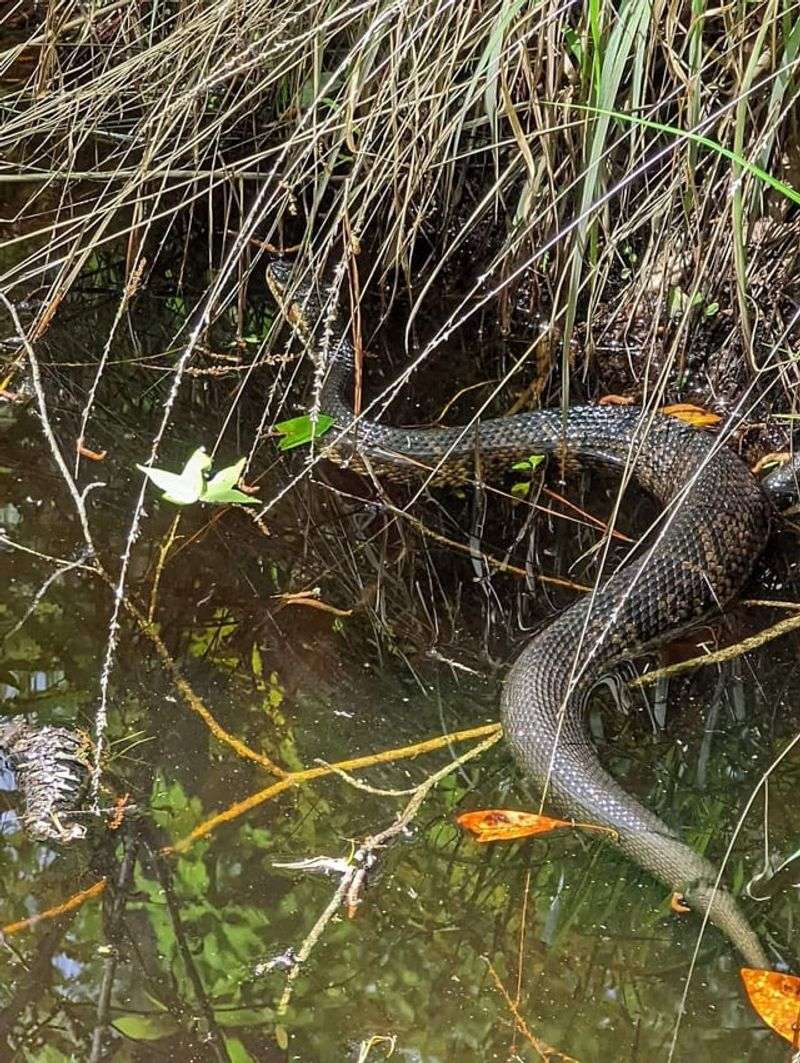
After a cottonmouth sighting, the most useful thing a homeowner can do is take a calm look at the pond edge and think about visibility. Not a wholesale clearing of the shoreline, but a practical assessment of the spots where people actually walk, sit, or reach down near the water.
Trimming back overgrown grass around a dock, a gate, or a garden path is a reasonable and proportionate response.
Avoiding clutter along frequently used paths also helps. Stacked wood, loose debris, and dense low vegetation near high-traffic areas can reduce visibility and create spots where any snake might rest undetected.
Wearing closed-toe shoes near pond edges is a simple habit that makes a real difference. Always watch where you place your hands and feet before stepping into vegetation or reaching near the water.
If you encounter any unidentified snake near a pond, give it plenty of space and do not attempt to handle, pin, trap, or relocate it yourself. Venomous-snake removal is a task for licensed wildlife professionals, not a DIY project.
Contact Florida Fish and Wildlife Conservation Commission or a licensed wildlife trapper if a snake poses an ongoing concern near a high-use area.
The central takeaway is straightforward: a cottonmouth near a pond usually reflects good wet habitat, available prey, and nearby cover.
It does not automatically mean the pond has a snake problem that needs to be solved.