What It Means When A Roseate Spoonbill Lands In Your Florida Yard
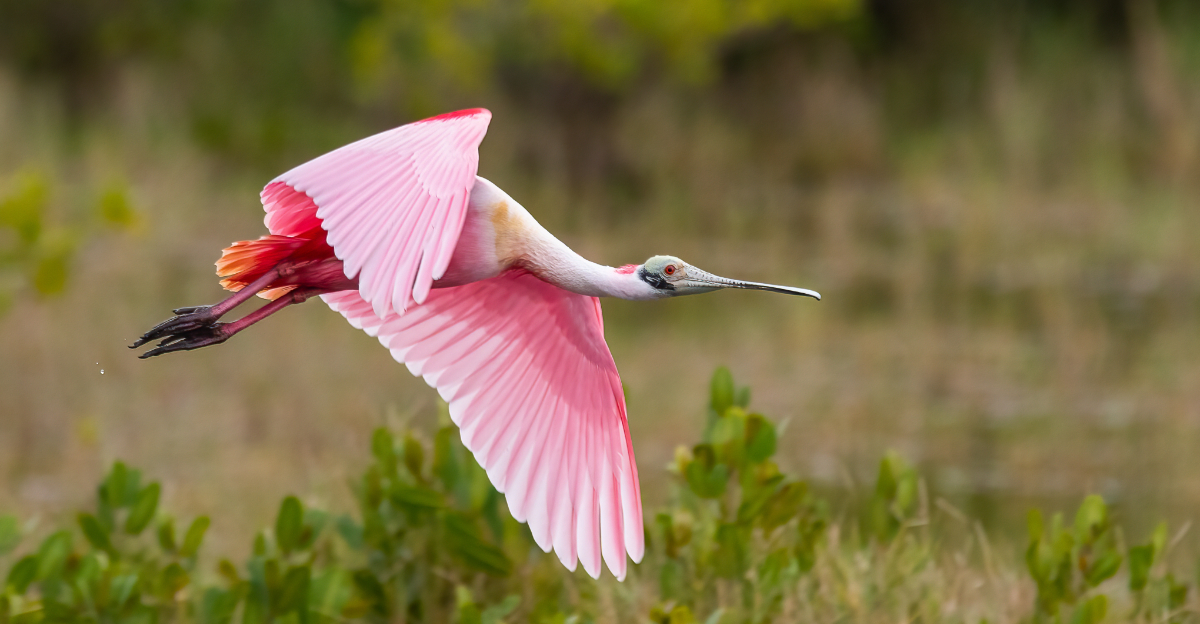
A bright pink bird just landed in your yard, and it isn’t a flamingo, no matter what your neighbor insists.
Roseate spoonbills carry that same shocking pink color, but everything else about them tells a different story, one tied to specific conditions in the water and land around your property.
Spotting one on your lawn instead of a marsh isn’t random, and it isn’t necessarily good news for the wetlands nearby either.
Their odd, spoon-shaped bill exists for a reason most people never think to ask about, and it explains exactly why this bird chose your yard over the hundreds of other properties in the area.
That flash of pink says more about your property than you’d expect from a single bird sighting.
1. That Pink Visitor Is Probably Following The Water
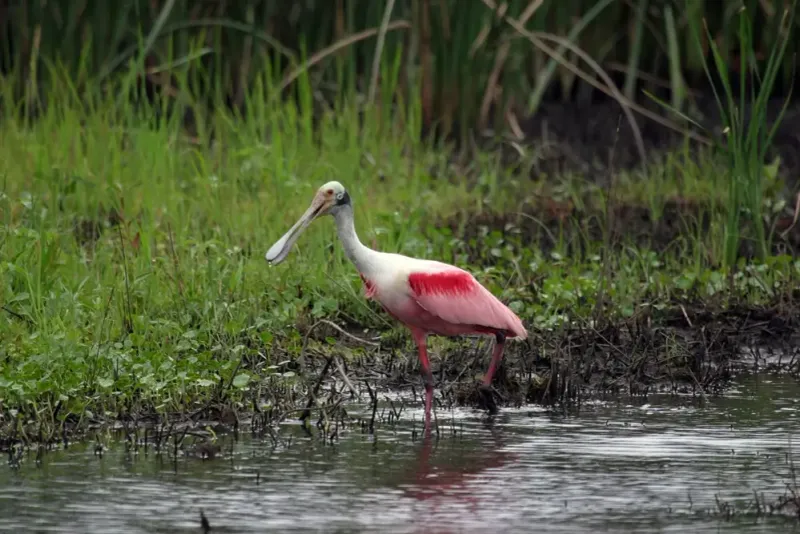
A flash of deep rose-pink near a backyard pond is enough to make anyone stop mid-step. Before wondering why the bird chose your property, consider what every roseate spoonbill needs most: shallow water with accessible prey.
Spoonbills are wading birds, not lawn birds. They belong to wetland edges, tidal flats, marsh fringes, and flooded drainage areas where water is shallow enough to wade and food is easy to reach.
Several water features can offer the conditions a foraging spoonbill needs. These include canals, retention ponds, flooded swales, and low marshy areas.
The bird is almost certainly passing through rather than settling in. Spoonbills move between feeding areas regularly, and a patch of shallow water near a home can serve as a convenient temporary stop.
The yard itself may not be the destination at all. The water is the draw, and the yard simply happens to sit beside it.
Watching where the bird focuses its attention tells you something useful. If it wades along the shoreline and sweeps its bill steadily, it found what it came for.
Once conditions shift or prey becomes scarce, the bird will move on to the next suitable spot along its route.
2. Your Yard May Be Closer To Spoonbill Habitat Than It Looks
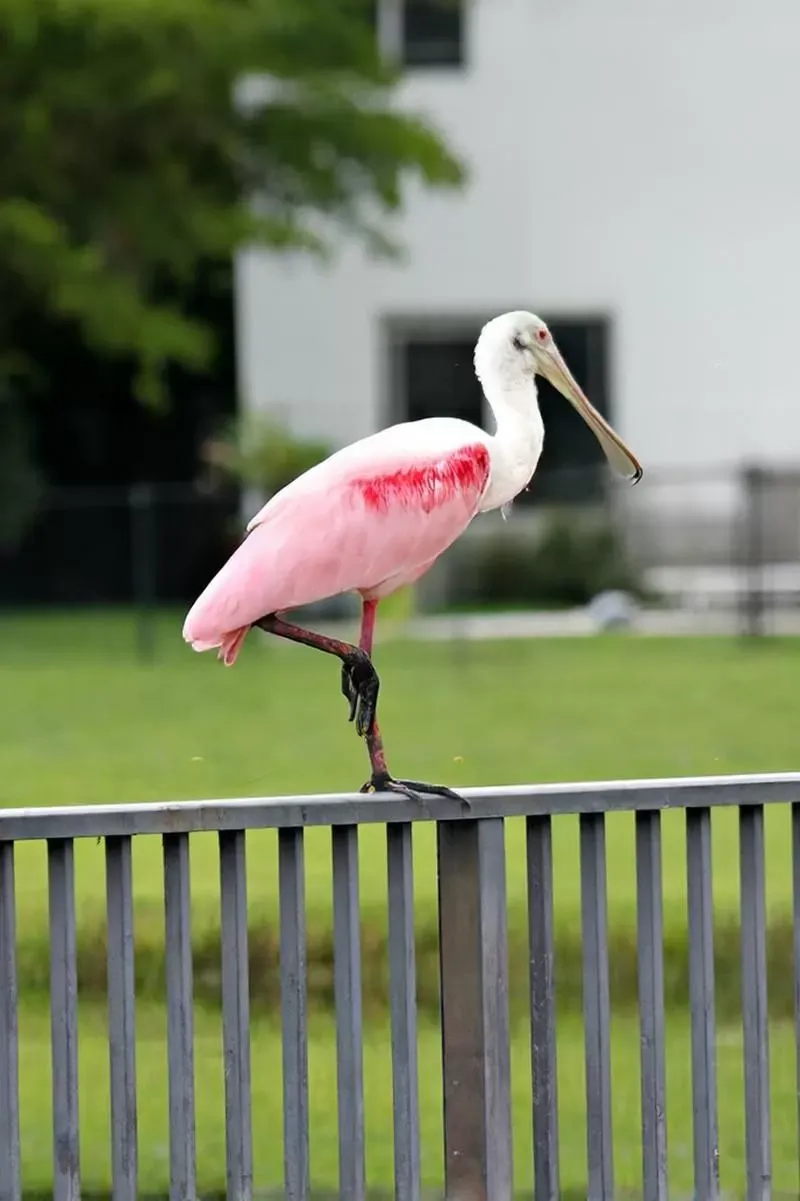
Suburban Florida neighborhoods are often built right alongside wetlands, lakes, canals, mangrove edges, and tidal creek systems. Many homeowners simply do not realize how close their property sits to functioning aquatic habitat.
A spoonbill appearing beside a house can reveal something about the broader landscape rather than the yard itself. South Florida and the Gulf Coast hold large areas of coastal marsh and mangrove forest that spoonbills use for feeding and nesting.
Inland areas also support suitable habitat along lake shores, river floodplains, and freshwater marshes. When a bird shows up near a home, it is often because the surrounding landscape includes one of these areas within a short flight.
Canals built for flood control and drainage are particularly common connectors. They link natural wetlands to developed areas and give wading birds a route into neighborhoods that would otherwise seem entirely urban.
A spoonbill following a canal system can end up far from any wild-looking marsh.
Your Florida Garden Changes Every Week. Your Plan Should Too.
Gardening in Florida changes quickly throughout the season. Every Friday you’ll receive a simple weekly plan showing exactly what to plant, prune, fertilize, harvest, and protect so you never miss the right timing.
Seeing one bird does not confirm that a thriving wetland exists just beyond the fence line. Habitat quality varies widely, and a single sighting is a small piece of a larger picture.
Still, the bird’s presence is a reasonable hint that water and some level of aquatic life are not far away from wherever you are standing.
3. Small Fish And Crustaceans Can Keep Them Searching Nearby
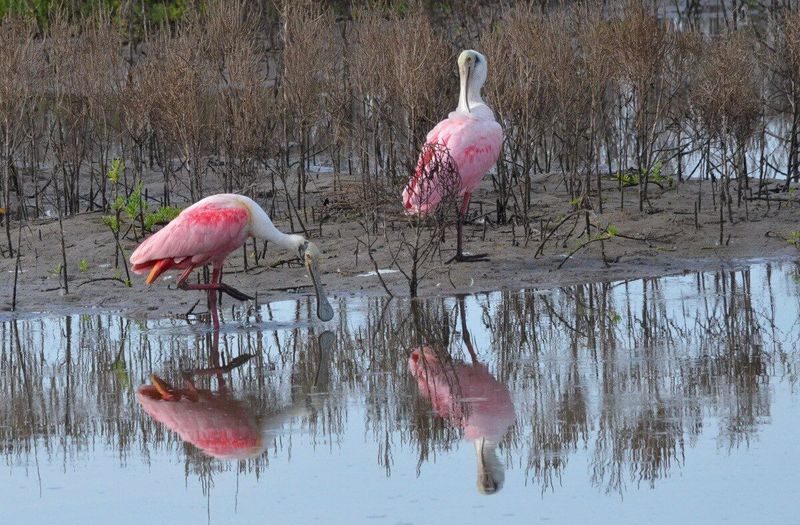
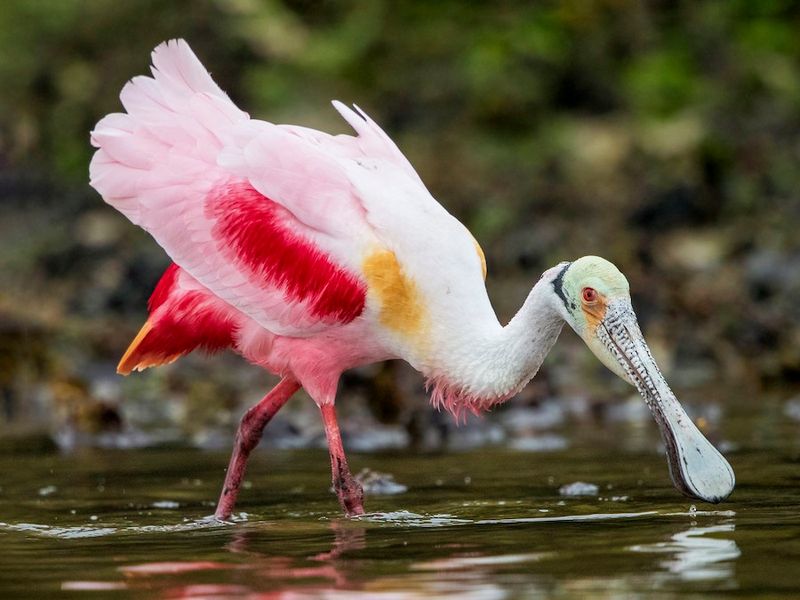
Watch a roseate spoonbill work a shallow shoreline and the feeding method becomes immediately obvious. The bird sweeps its uniquely flattened, spoon-shaped bill from side to side through the water in a steady arc, relying on touch rather than sight to detect prey.
According to sources including the Florida Museum of Natural History, spoonbills eat small fish, shrimp, crayfish, crabs, snails, and other aquatic invertebrates. They are tactile feeders, which means the bill snaps shut the moment it contacts something edible.
This technique works best in shallow, slightly turbid water where prey concentrations are high enough to make each sweep productive.
A retention pond, flooded yard depression, or canal edge stocked naturally with small fish and invertebrates can offer exactly what the bird is searching for. Prey availability is a primary driver of where spoonbills choose to forage on any given day.
Trying to attract spoonbills by adding food to a pond is unnecessary and unhelpful. Natural prey populations supported by healthy water are what draw the bird in.
If the water holds the right combination of depth and prey, a spoonbill may linger. If conditions shift or food runs low, it will move along without any help from the homeowner.
The foraging process is entirely self-directed.
4. A Backyard Visit Does Not Mean A Nest Is Nearby
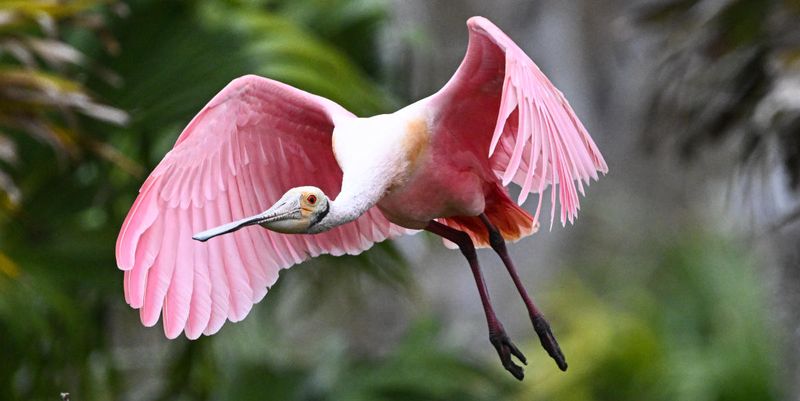
Spotting a spoonbill near home can feel significant, and it is easy to assume the bird must be breeding close by. In reality, a single feeding or resting visit says very little about where the bird nests.
Roseate spoonbills nest in colonies, typically in trees or shrubs over or near water. Mangroves are a well-documented nesting habitat along Florida’s coasts.
Colonial nesting sites are usually located in areas with significant protection from disturbance, well away from active residential areas. The U.S.
Fish and Wildlife Service and Florida Fish and Wildlife Conservation Commission both recognize the importance of protecting these sites from human interference.
A bird foraging near a home may have flown several miles from its nesting colony. Wading birds commonly travel meaningful distances between a nest site and preferred feeding areas.
The feeding location and the breeding location are often completely separate places.
Searching for a nest after seeing a spoonbill in the yard is not a good idea. Approaching a colonial nesting site can flush adult birds and expose eggs or young to heat and predators.
If you suspect a nesting colony nearby, report the location to the Florida Fish and Wildlife Conservation Commission. Let trained wildlife professionals handle any follow-up.
A single bird at a pond is simply a bird eating lunch.
5. One Spoonbill Can Be Part Of A Much Bigger Movement
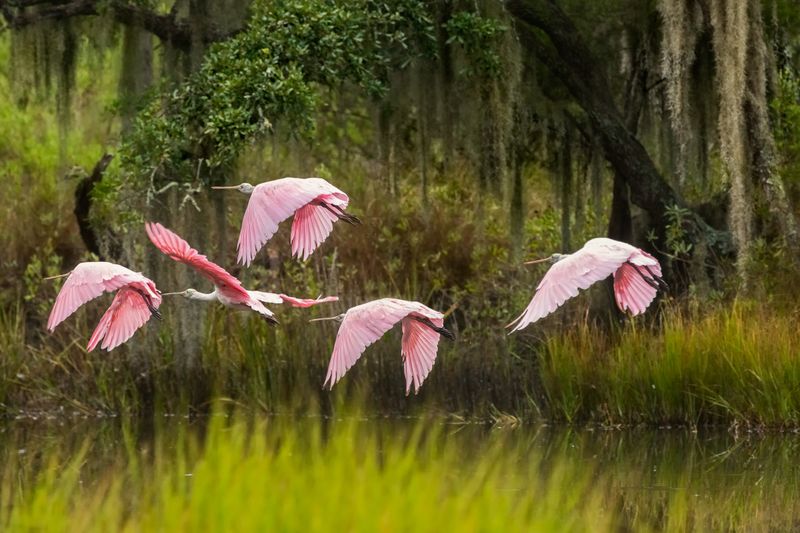
A spoonbill appearing one morning and vanishing by afternoon is not unusual behavior. Water conditions, food availability, weather patterns, and seasonal shifts all influence where wading birds show up from one day to the next.
Roseate spoonbills are not strictly migratory in the way some songbirds are, but they do move regularly among wetlands as local conditions change. Water levels are a key factor.
During dry periods, shrinking water concentrates prey and can make certain spots more attractive. Rising water from heavy rain can flood new areas and open up foraging opportunities in places that were dry just days before.
Post-breeding dispersal is another pattern worth knowing. After the nesting season ends, spoonbills, including young birds, spread out across a wider area in search of food.
This dispersal can bring spoonbills far from their core coastal range. They may appear in inland areas and suburban neighborhoods that rarely see them at other times of year.
A bird that shows up unexpectedly near a home may be one of many spoonbills moving through a regional network of wetlands, canals, and water bodies. Each individual is making short-term decisions based on where conditions look most favorable right now.
The yard visit is one small stop in a much larger pattern of movement across the surrounding water landscape.
6. That Incredible Pink Color Comes From What They Eat
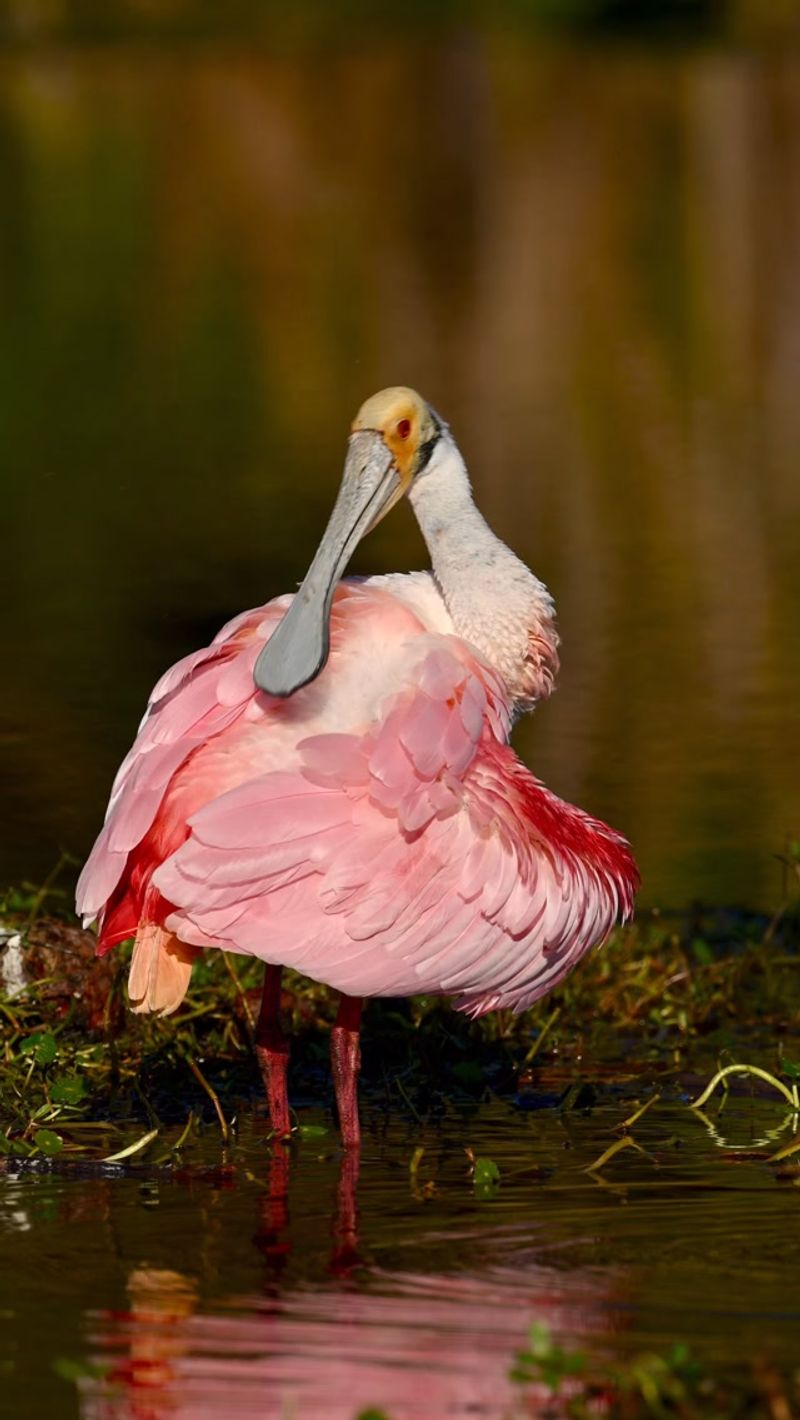
Few birds in North America carry color as bold as an adult roseate spoonbill. That saturated pink is not a genetic default.
It comes directly from the bird’s food.
Spoonbills obtain carotenoid pigments by consuming prey such as shrimp, crayfish, and certain small fish that carry these compounds in their tissues. The pigments are processed and deposited into growing feathers, producing the pink and reddish tones the bird is famous for.
Sources including ornithology references from major natural history institutions confirm that carotenoid-based coloration in birds is diet-dependent rather than fixed.
Younger spoonbills are noticeably paler than adults. Juvenile birds start with mostly white plumage and gradually develop more pink coloring as they mature and accumulate pigments over multiple years of feeding.
A pale pink bird near a home is likely a younger individual, while a richly colored bird with deep red shoulder patches is probably a breeding adult.
The color connects directly back to the aquatic food web. Healthy populations of small crustaceans and fish support birds that can develop full, rich plumage.
A brilliantly colored spoonbill is a visible sign that the bird has had consistent access to productive aquatic habitat and a prey-rich diet over a sustained period. No single food source is solely responsible.
The full diet working together over time produces that remarkable look.
7. Give A Visiting Spoonbill Space Instead Of Feeding It
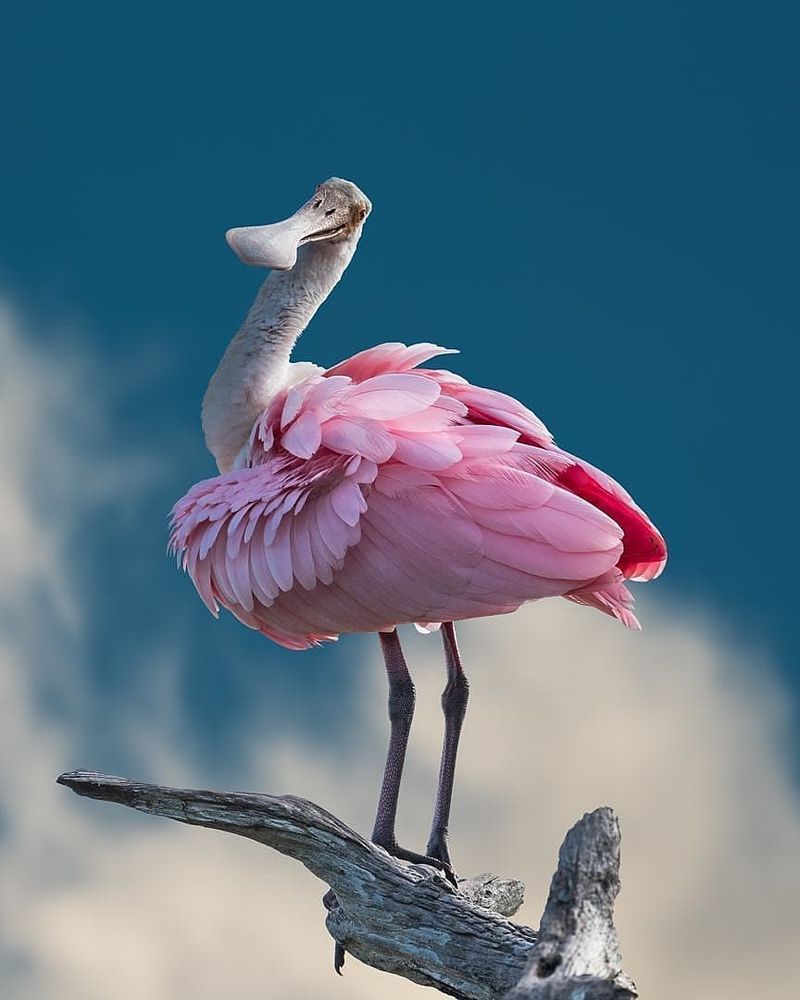
Standing quietly at a window and watching a spoonbill work a pond edge is one of the genuinely rewarding parts of living near Florida wetlands. Keeping that distance is also the most helpful thing a homeowner can do.
Spoonbills are wild birds that forage, rest, and travel on their own schedule. Moving toward the bird, making loud noises, or trying to get a closer look can flush it before it finishes feeding.
A startled bird burns energy it needs for foraging, and repeated disturbances at a site can discourage wading birds from returning.
Offering food is not necessary and can cause real problems. Wild spoonbills do not need supplemental feeding, and providing food can condition birds to associate people with food sources.
That change in behavior creates risks for both the bird and nearby residents. State and federal wildlife regulations also protect spoonbills, so interfering with them in any way beyond passive observation is not appropriate.
Pets should be kept indoors or on a leash while a spoonbill is present. Dogs and cats can startle or chase the bird unnecessarily.
Children should be encouraged to watch calmly from a distance rather than approach.
Binoculars or a phone camera with a zoom lens let you appreciate every detail of the bird’s plumage and feeding behavior without closing the gap. Let the bird do what it came to do, and it will leave on its own terms.
8. A Spoonbill Sighting Says More About Habitat Than Luck
After the bird has moved on and the excitement fades, what does the visit actually mean? Stripped of any mystery, the answer is fairly straightforward.
A roseate spoonbill near a home usually points to specific conditions in the surrounding environment. These may include shallow water, available prey, nearby wetlands or canals, or a useful stop along its feeding route.
The sighting reflects the landscape more than it reflects the yard.
As of the most recent Florida Fish and Wildlife Conservation Commission listings, the roseate spoonbill is a Species of Greatest Conservation Need in Florida.
The species rebounded from near-elimination in the early 20th century, but its long-term health still depends on intact wetland habitat and clean, productive water.
Seeing one near a home is a reminder that those habitats still function well enough to support the species in some areas.
Homeowners can support wading birds by focusing on water quality and native plantings near water features. Reducing chemical runoff also helps protect aquatic prey populations.
None of that guarantees another spoonbill visit, but it contributes to the broader habitat picture.
A spoonbill landing near a house is not delivering a message meant for the homeowner. It is simply a bird reading the landscape, following water, and looking for the next meal in a world shaped almost entirely by habitat.