Dollarweed Keeps Coming Back In The Same Soggy Corner Of Georgia Lawns
That stubborn patch of dollarweed may be telling you something important about your lawn. Pulling the leaves repeatedly will not change the conditions helping it return.
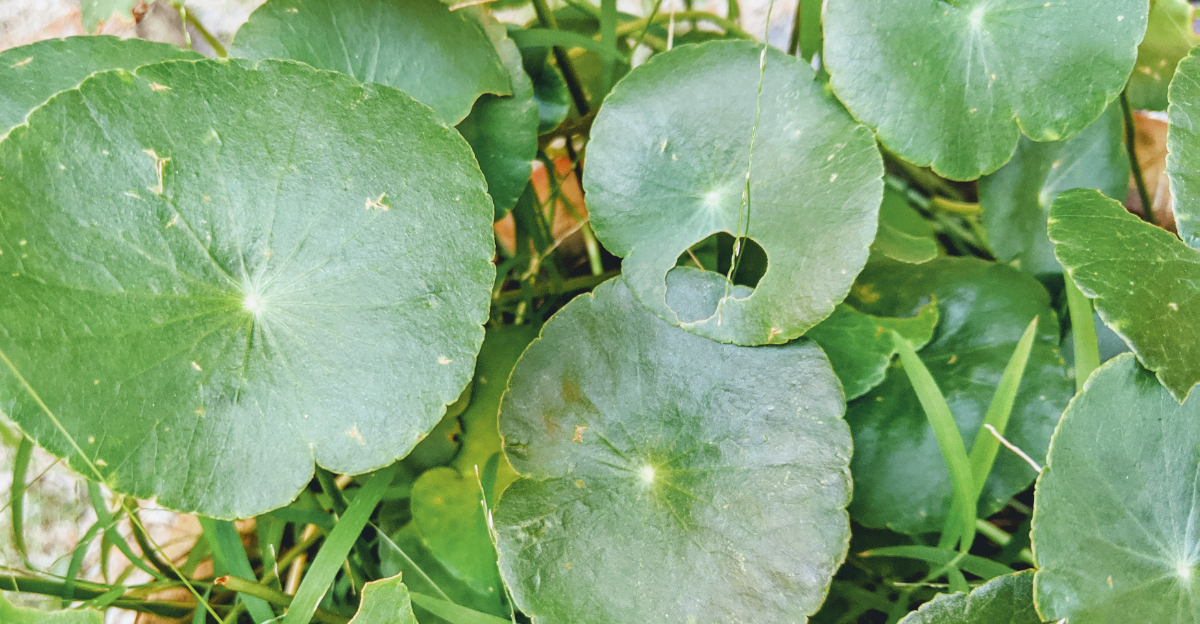
Georgia homeowners often notice this weed where the ground stays wetter than surrounding turf. Its round leaves can quickly become familiar when the same patch keeps filling back in.
Look closely at that soggy corner before reaching for another quick fix. Persistent moisture can give dollarweed exactly the kind of setting where it thrives.
Your lawn may need attention beyond removing what you can see above the soil. Until the underlying conditions change, the weed can remain difficult to manage.
Notice where water collects after irrigation or heavy rain. That pattern can reveal why one section keeps causing trouble.
Solving the moisture issue may be the most important part of getting lasting control.
1. That Soggy Corner Is Giving Dollarweed Exactly What It Likes
Dollarweed does not show up randomly. It targets spots that stay wet, and it does that job extremely well.
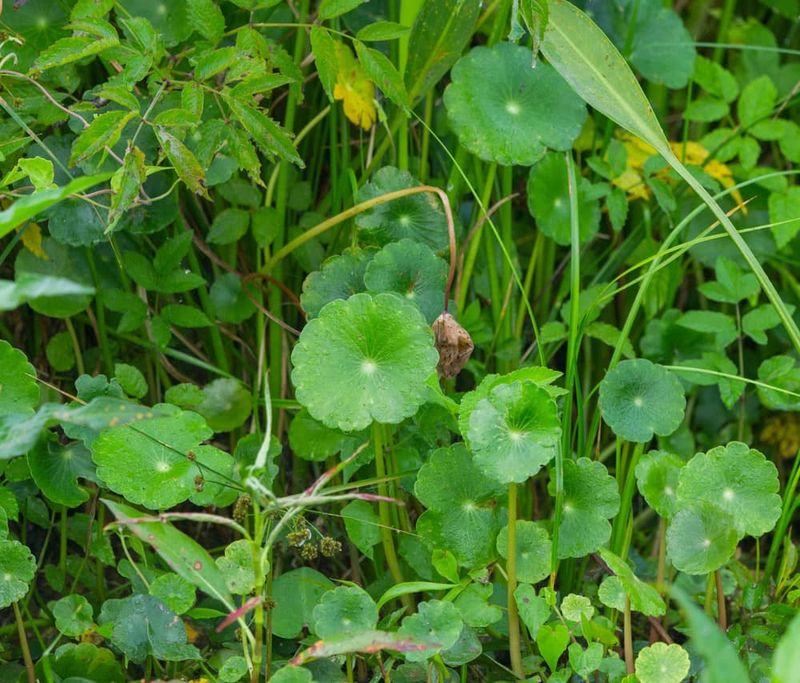
Round, shiny leaves and a love of saturated soil make it one of the most recognizable weeds in warm, humid yards.
Wet corners are not just convenient for dollarweed. They are ideal.
Soil that holds water for hours after rain creates the exact conditions this weed needs to root, spread, and come back season after season.
Warm temperatures combined with high moisture give dollarweed a real advantage over grass. Turf struggles to compete in waterlogged soil.
Dollarweed does not.
Shallow, spreading roots help it move fast across soft, wet ground.
Once it gets a foothold in a damp corner, it expands outward quickly and quietly.
Recognizing why that corner stays wet matters more than just spraying the leaves. Treating the weed without addressing the moisture is like mopping a floor while the faucet is still running.
Soggy corners in Georgia yards often stay damp due to clay soil, low elevation, or poor grading.
Any of those factors can turn a small patch of dollarweed into a recurring seasonal problem that frustrates even experienced lawn owners.
2. Poor Drainage May Be Keeping The Soil Too Wet
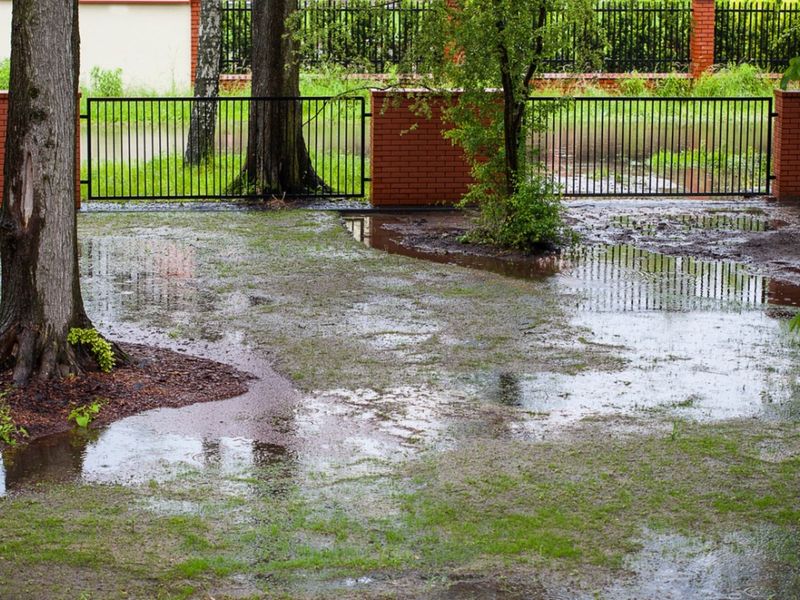
Clay soil is incredibly common across much of Georgia, and it holds water like a sponge that refuses to dry out. When rain falls on clay-heavy ground, water moves down slowly and pools near the surface for a long time.
Low spots in a yard make the problem worse.
Water flows naturally toward the lowest point, so any corner that sits slightly below the surrounding grade tends to collect runoff from everywhere else nearby.
Compacted soil blocks water from draining into deeper layers. Foot traffic, heavy equipment, and years of neglect can press soil particles so tightly together that drainage slows to almost nothing.
Dollarweed roots thrive in those conditions. Grass roots, on the other hand, begin to struggle when they sit in saturated soil for extended periods.
That imbalance gives dollarweed an opening.
Checking drainage is straightforward.
Dig a hole about a foot deep, fill it with water, and watch how fast it empties. If water is still sitting there after several hours, drainage is likely the core issue in that corner.
Your Georgia Garden Changes Every Week. Your Plan Should Too.
Gardening in Georgia changes quickly throughout the season. Every Friday you’ll receive a simple weekly plan showing exactly what to plant, prune, fertilize, harvest, and protect so you never miss the right timing.
French drains, soil amendments, or regrading can all help move water away from problem areas. None of these are quick fixes, but improving drainage addresses the root cause instead of just managing symptoms that keep returning every wet season.
3. Overwatering Can Make The Problem Even Worse
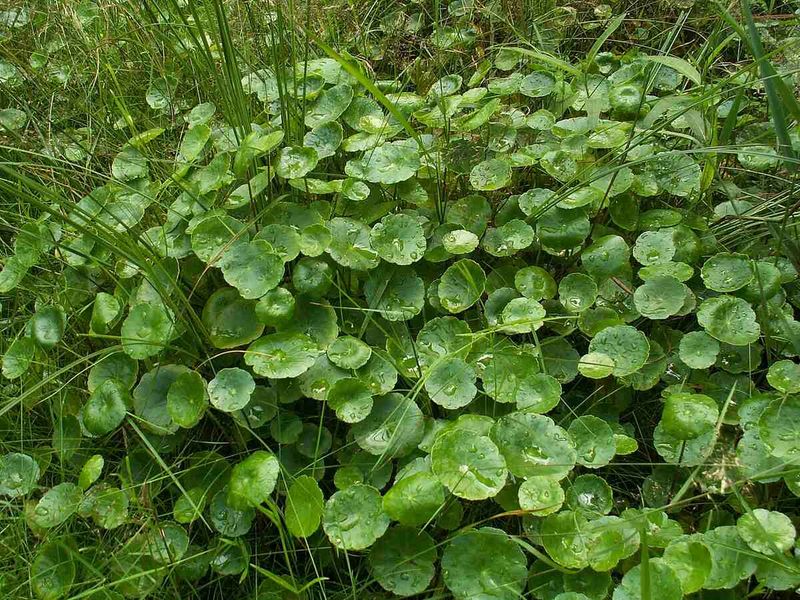
Watering too much is one of the easiest mistakes to make, and it quietly feeds dollarweed without most homeowners realizing it.
A schedule that runs regardless of recent rainfall is often the culprit behind a persistently wet corner.
Grass generally needs about one inch of water per week, including rain.
Watering on top of recent rainfall pushes total moisture well beyond what turf needs, and dollarweed takes full advantage of the excess.
Automatic irrigation systems are convenient, but they do not adjust for weather unless they have a rain sensor installed. Running them after a rainy week can saturate already damp areas and keep dollarweed conditions active longer than necessary.
Watering in the evening adds another layer of trouble. Moisture that sits on soil overnight does not evaporate quickly, which extends the damp window that dollarweed prefers.
Switching to morning watering gives the soil time to dry out during daylight hours.
Cutting irrigation frequency during rainy stretches can also reduce the chronic dampness that lets dollarweed maintain its grip.
Monitoring actual soil moisture before running sprinklers takes just a few seconds with a simple probe or even a finger test.
Letting soil dry slightly between watering sessions encourages deeper grass roots and creates conditions that are less hospitable to dollarweed over time.
4. Irrigation Leaks May Keep One Spot Constantly Damp
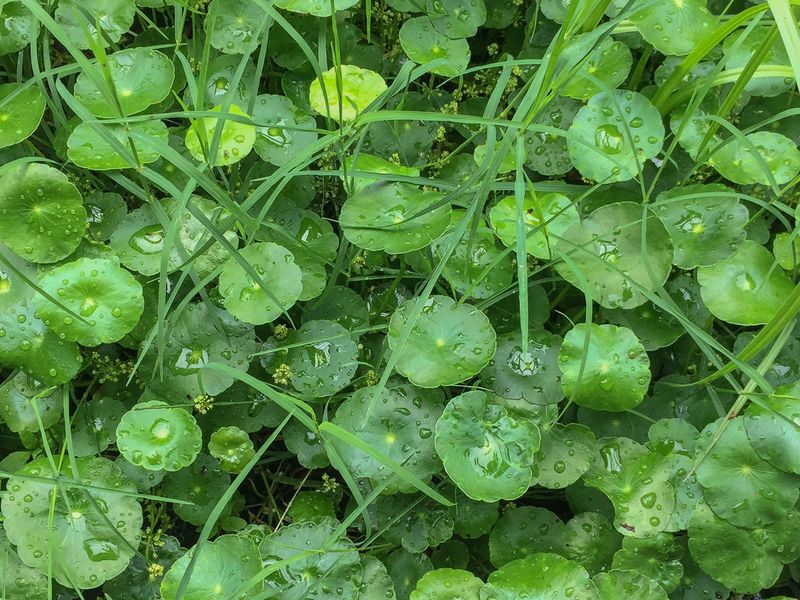
A leaking irrigation head can go unnoticed for weeks, quietly soaking one small area of the lawn day and night. That steady drip creates exactly the kind of persistent moisture that dollarweed needs to stay rooted and spread.
Leaks do not have to be dramatic to cause problems.
Even a slow seep from a cracked fitting or a stuck valve can keep six square feet of soil wetter than everything around it.
One good way to spot a leak is to check your water meter when all irrigation is off. If the dial is still moving, water is escaping somewhere in the system.
Walking the irrigation lines after a dry spell can reveal wet patches that have no obvious reason to be damp. Soft ground, bright green moss, or a concentrated patch of dollarweed in an otherwise dry area are all signs worth investigating.
Fixing a leaking head or cracked line is usually a simple repair.
Replacement heads are inexpensive at most hardware stores, and fixing even one small leak can change moisture levels in that corner noticeably.
Once the leak is repaired, give the area a week or two to dry out before treating the dollarweed. Applying herbicide to soil that is still saturated reduces effectiveness and may require a repeat application sooner than expected.
5. Underground Rhizomes And Tubers Help Dollarweed Return
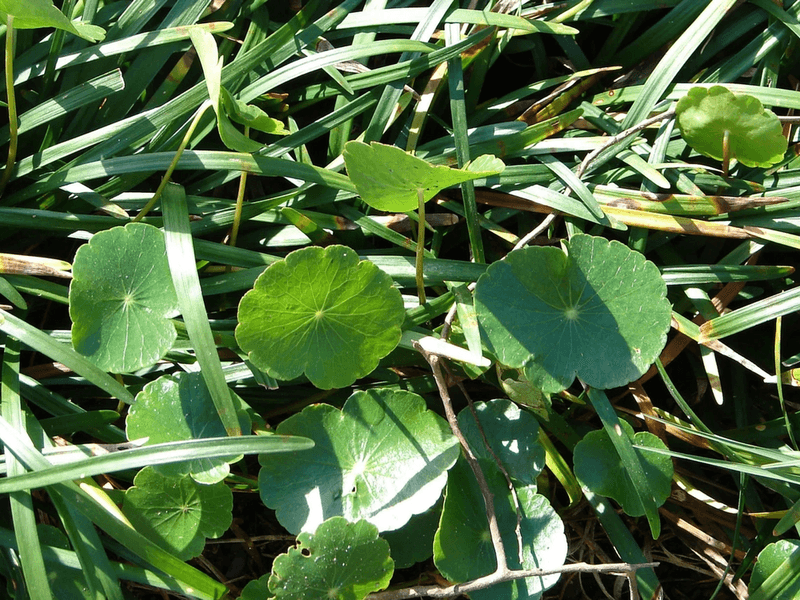
Pulling dollarweed by hand feels satisfying in the moment, but the plant has a backup plan hiding underground. Rhizomes and small tubers store energy and allow the plant to regrow even when the top growth is removed.
Rhizomes are horizontal underground stems that spread outward from the main plant. Tubers are small, rounded storage structures attached to those stems.
Both are capable of producing new growth when conditions are right.
Breaking a rhizome during hand-pulling does not stop regrowth.
Each piece left in the soil can potentially sprout again, especially in warm, moist conditions common in Southern yards during summer months.
Post-emergent herbicides labeled for dollarweed work by moving through the leaf tissue and into the root system.
Getting the product into the rhizomes and tubers is what stops regrowth, not just burning back the visible leaves.
Timing matters with herbicide applications. Treating actively growing plants on a warm day with no rain expected for 24 hours gives the product the best chance of moving fully into the underground structures.
Patience is essential when dealing with established patches. Even a well-timed treatment may not reach every tuber in the first round.
Repeated applications spaced a few weeks apart are often needed to work through a dense underground network without letting it recover between treatments.
6. Fixing The Moisture Problem Makes Control Much Easier
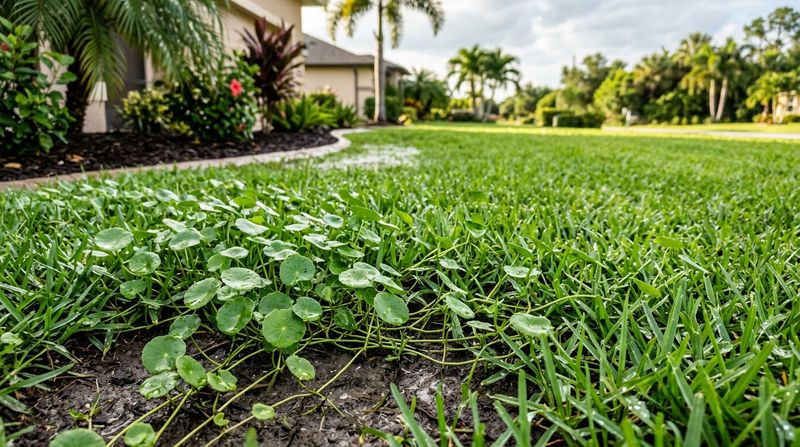
Herbicide alone rarely solves a dollarweed problem when the underlying moisture issue stays in place. Treating the weed without fixing what keeps that corner wet usually means the dollarweed comes right back within a season or two.
Improving drainage changes the environment itself.
Dollarweed can survive in drier soil, but it does not thrive there the way it does in saturated ground. Reducing moisture tilts the balance toward grass instead of weeds.
Adding organic matter like compost to clay-heavy soil can gradually improve its structure and help water move through more efficiently. It is not an overnight fix, but repeated applications over a few seasons can make a real difference.
Aerating compacted areas opens up channels in the soil and allows water to drain downward instead of pooling at the surface.
Core aeration is most effective in the fall for cool-season grasses and in late spring for warm-season varieties common across the South.
Regrading a low corner is a bigger project but may be the most effective long-term solution when water consistently flows toward one spot. Even a slight grade adjustment can redirect runoff away from the problem area.
Combining drainage improvements with proper herbicide timing gives the best chance of reducing dollarweed over multiple seasons. Neither approach alone tends to be as effective as using both together in a consistent lawn care routine.
7. Repeat Treatment May Be Needed For Established Patches
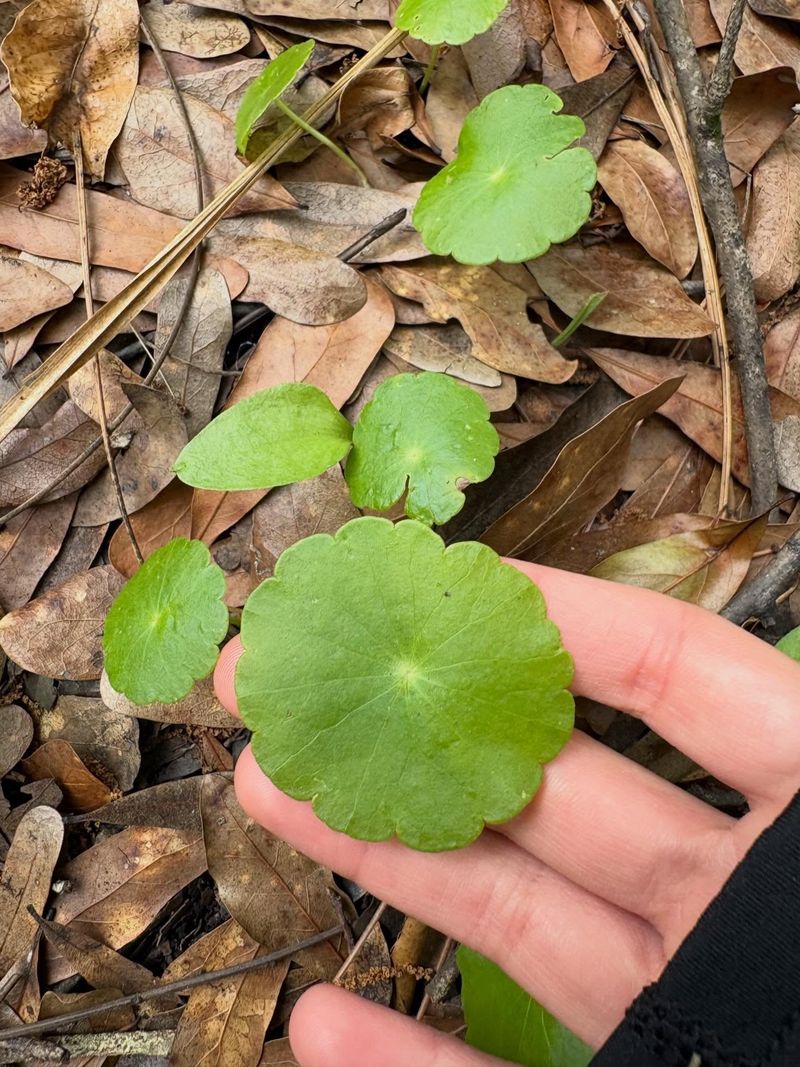
Established dollarweed patches do not respond to a single treatment the way a newly sprouted weed might. Underground tubers and rhizomes mean the plant has reserves, and one application often is not enough to work through all of them.
Expecting instant results leads to frustration and often to over-application.
Spraying more product than the label recommends does not speed up the process and can stress nearby turf without improving outcomes on the dollarweed.
Post-emergent herbicides labeled for dollarweed typically need to be reapplied every three to four weeks during the active growing season. Checking the product label for specific timing and rate instructions is essential before each application.
Keeping records of where and when you treated helps track progress.
If a patch shrinks after the second treatment but is not fully gone, that is a sign the approach is working and needs more time rather than a different product.
Conditions on the day of application affect results noticeably.
Windy days, recent rain, or temperatures above 90 degrees can all reduce how well the herbicide moves into the plant and reaches underground structures.
Staying consistent across an entire growing season is often what separates a managed problem from one that keeps returning.
Skipping treatments during busy weeks allows dollarweed to recover quickly, especially in warm, damp Southern summers where growth does not slow down for long.