How To Stop Powdery Mildew From Taking Over Your Georgia Zinnias After A Humid Rainy Weekend
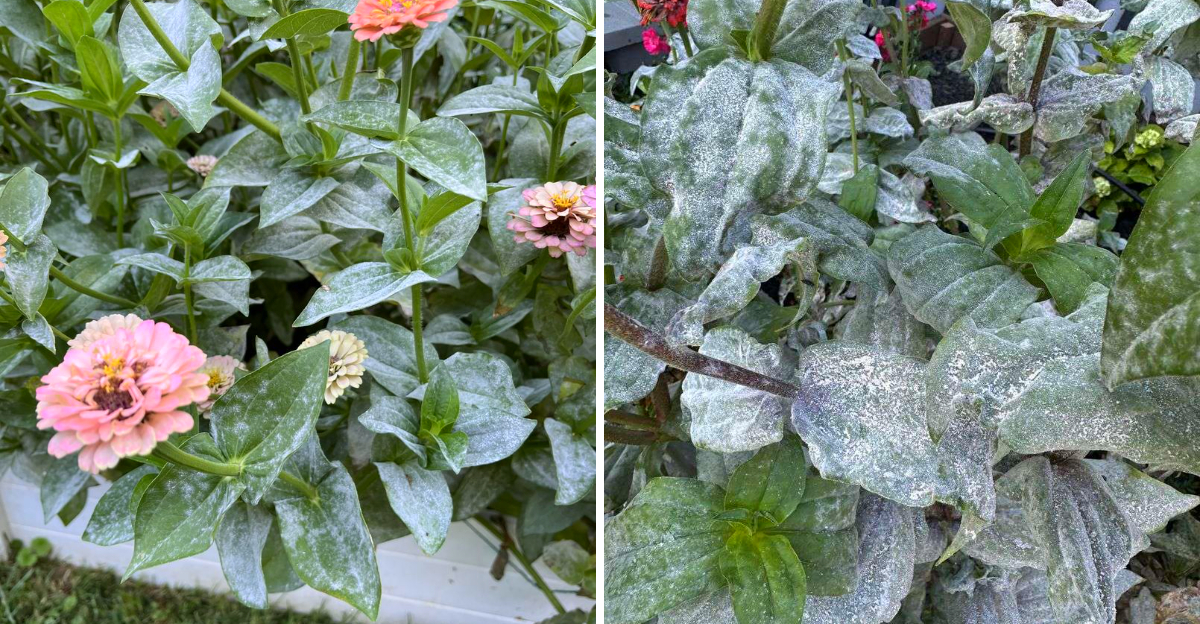
Powdery mildew has a talent for showing up on Georgia zinnias at the worst possible moment, right when the plants are looking their best and the garden is finally hitting its stride.
That white or grayish powdery coating on the leaves is hard to miss once it appears, and in Georgia’s warm, sticky summer humidity it can spread across a flower bed faster than most gardeners expect.
The frustrating part is that it often seems to arrive out of nowhere, especially after a muggy weekend where the air barely moved and everything felt damp for days.
Here’s something worth knowing though: rain itself isn’t actually what causes powdery mildew.
It’s the dense, poorly ventilated, high-humidity conditions that a rainy stretch creates that make zinnias vulnerable. Catching it early and adjusting a few care habits can make a real difference in how things go from here.
1. Catch Powdery Mildew Before It Spreads
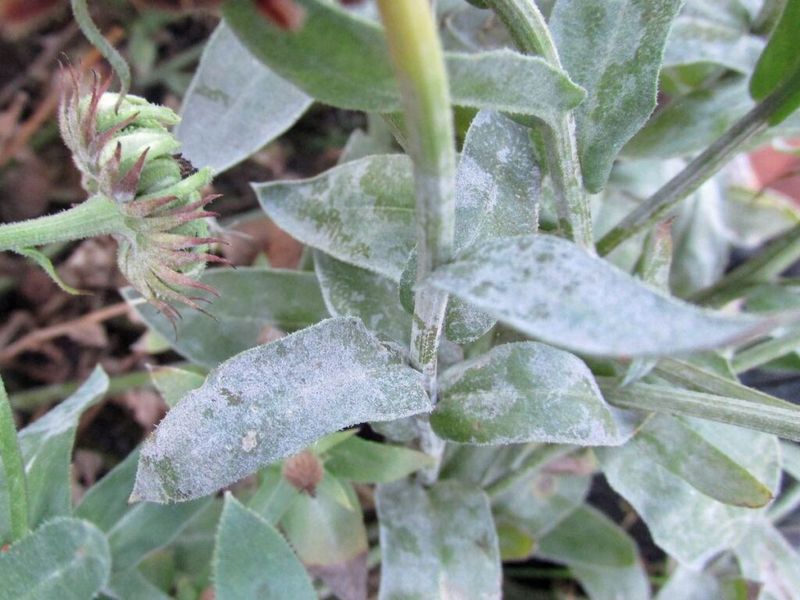
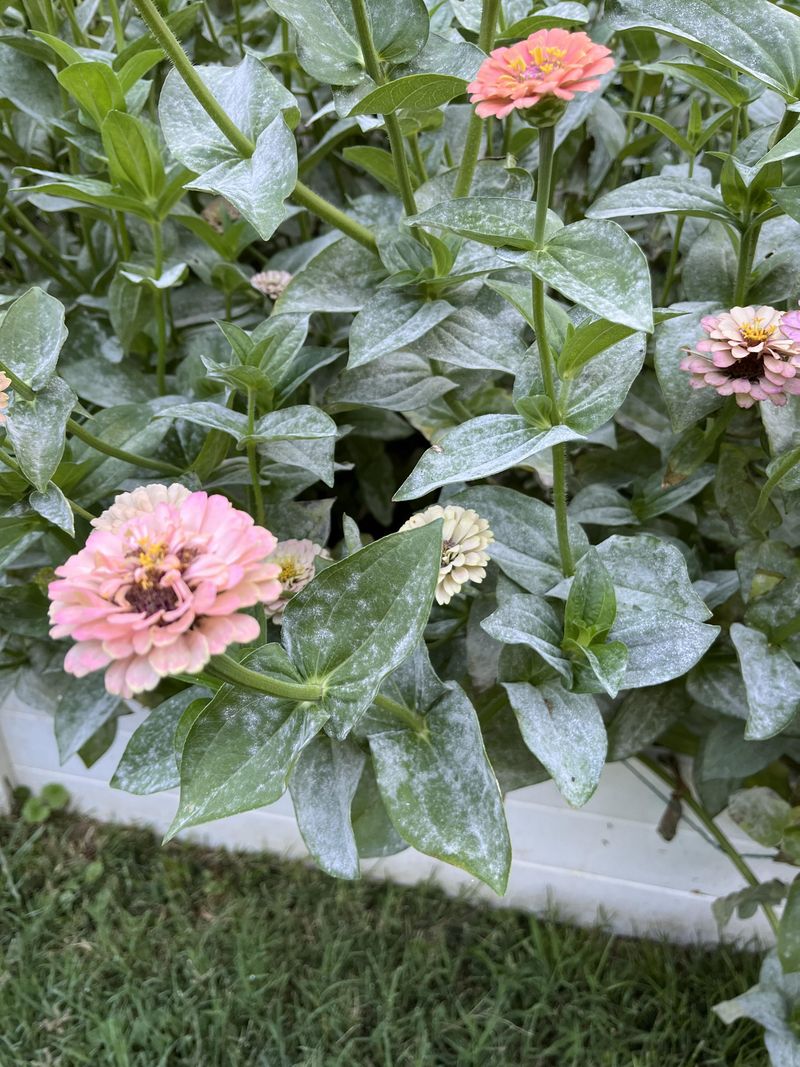
White or grayish powdery growth on zinnia leaves is often the first sign that powdery mildew has arrived in a Georgia flower bed. The patches may start small, appearing on upper leaf surfaces or along stems before spreading to other parts of the plant.
Catching these signs early, especially after a stretch of humid late-summer weather, gives you a much better chance of slowing how far the disease travels.
Walking through your garden within a day or two after a muggy Georgia weekend and looking closely at leaf surfaces can make a real difference.
Powdery mildew often begins on older, lower leaves before moving upward, so checking those areas first is a reasonable habit.
You do not need special equipment, just a few minutes and a careful eye for unusual pale coatings or dusty-looking spots.
Keep in mind that not every pale or discolored leaf signals powdery mildew. Other issues, including insect damage, nutrient deficiencies, or other leaf diseases, can create spots or pale patches that look somewhat similar.
If you are unsure what you are seeing, a local Georgia Cooperative Extension office can help you identify the problem before you treat for something that may not be there.
Acting on the right diagnosis early is far more useful than guessing and reacting to the wrong problem entirely.
2. Remove The Most Infected Leaves And Stems
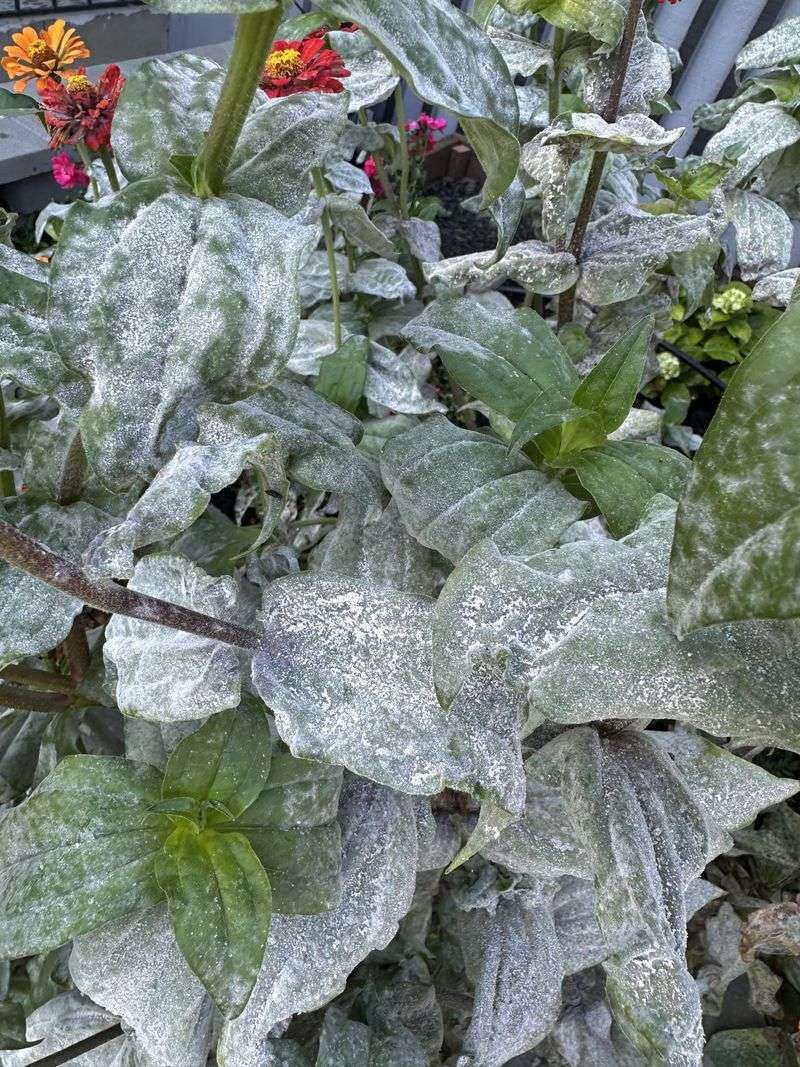
Heavily coated leaves covered in white powdery growth are not going to recover their original healthy appearance, and leaving them on the plant simply keeps that disease material close to healthier foliage.
Selectively removing the worst affected leaves and stems can reduce the amount of fungal material present and make conditions slightly less favorable for continued spread within the same plant or to nearby zinnias in a Georgia garden.
Focus on the portions of the plant that are most severely affected rather than stripping away large amounts of foliage that still looks reasonably healthy.
Removing too much at once can stress a zinnia and leave it less capable of supporting the blooms it is still trying to produce during Georgia’s long summer season.
Your Georgia Garden Changes Every Week. Your Plan Should Too.
Gardening in Georgia changes quickly throughout the season. Every Friday you’ll receive a simple weekly plan showing exactly what to plant, prune, fertilize, harvest, and protect so you never miss the right timing.
A measured approach works better than an aggressive one when infection has already progressed past the earliest stage.
Clean your pruning tools carefully between plants to avoid transferring fungal spores from one zinnia to the next. Wiping blades with a diluted disinfectant solution between cuts is a simple precaution worth taking.
Removing a few heavily infected leaves does not eliminate an established outbreak, but it can reduce disease pressure when combined with other management steps.
Think of it as one useful part of a broader response rather than a complete solution on its own, especially in the warm and humid growing conditions that summers routinely produce.
3. Give Crowded Zinnias More Breathing Room
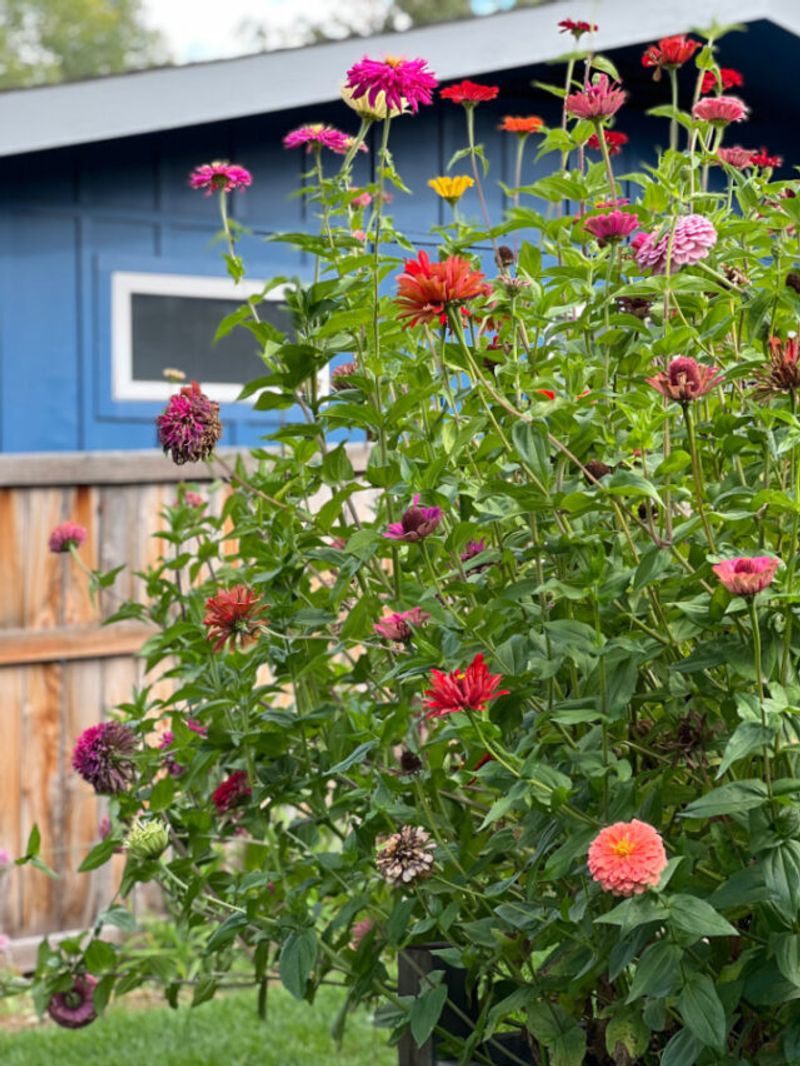
Packed flower beds might look lush and full when zinnias are young, but dense planting creates a micro-environment around the foliage where air moves slowly and humidity lingers longer than it should.
In Georgia’s already humid late-summer conditions, that kind of trapped moisture around leaves can make conditions noticeably more favorable for powdery mildew to continue developing after a rainy stretch.
If your current zinnia bed is clearly overcrowded, carefully thinning out some of the interior growth can improve how air circulates between plants.
Removing a few stems from the most congested areas opens up the canopy without leaving your zinnias exposed or significantly weakened.
The goal is better airflow, not a stripped-down plant, so approach thinning thoughtfully rather than cutting back large sections all at once.
For future garden beds, spacing zinnias according to the guidance on the seed packet or plant tag can help prevent this problem from building up again.
Many gardeners underestimate how large zinnias grow by midsummer, and what looked like reasonable spacing in spring can become a crowded tangle by August.
Taller zinnia varieties in particular benefit from extra room between plants.
Combining better spacing with other management practices gives the whole bed a stronger foundation for resisting disease pressure through the rest of Georgia’s warm growing season.
4. Give Zinnias The Sun They Prefer
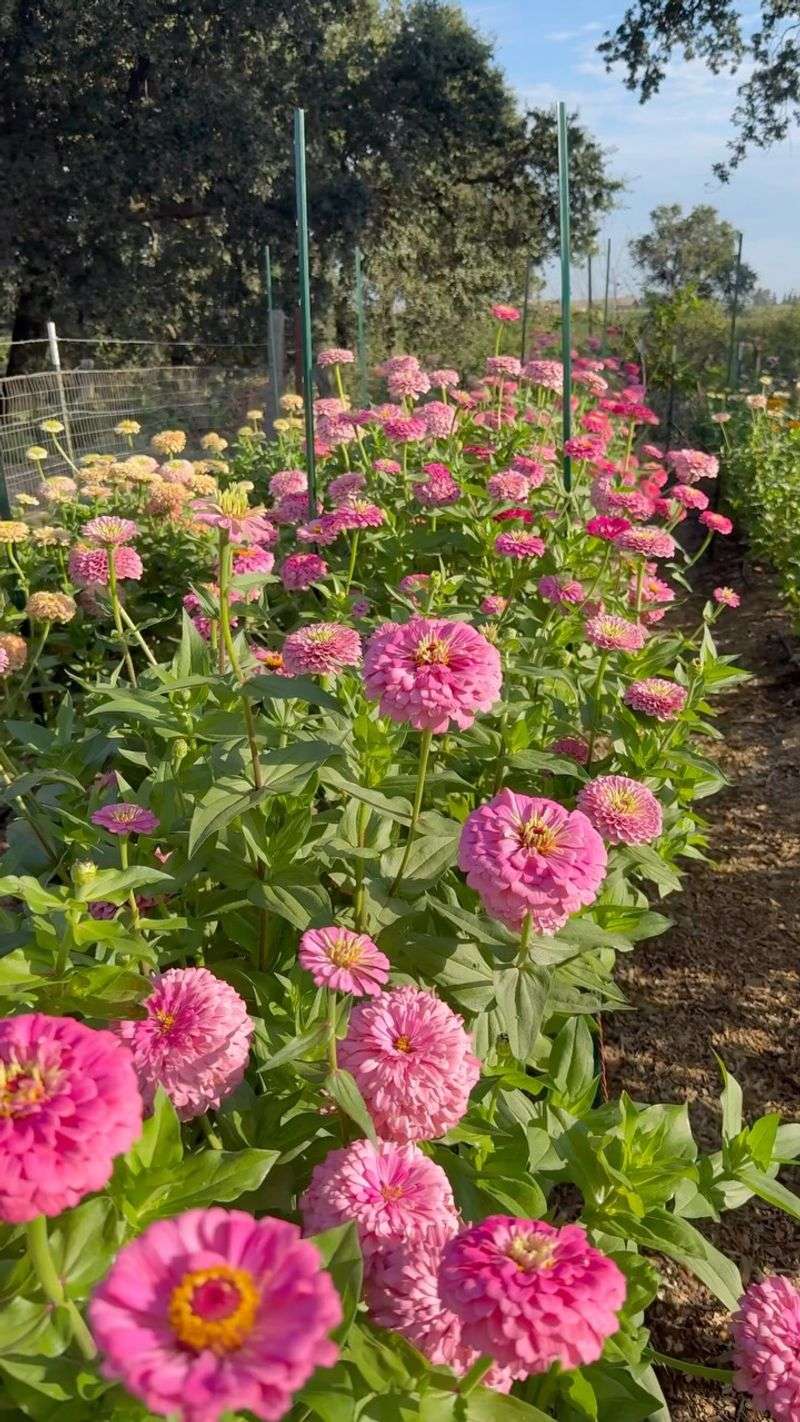
Zinnias are sun-loving plants that perform best when they receive full sun for most of the day, and a location that offers less than that can quietly set them up for more trouble during Georgia’s humid summers.
Shade slows the drying of foliage after rain or morning dew, and when leaves stay damp or humid longer than they should, the conditions around the plant become more favorable for continued fungal development.
If your zinnias are planted under the partial shade of a tree or near a fence that blocks afternoon sun, that reduced light exposure can combine with poor air movement to increase disease pressure over time.
Moving established plants mid-season is rarely practical, but noting which spots in your garden receive the most consistent sunlight can help you make better planting decisions next spring before the problem has a chance to develop.
Sunlight alone does not make a zinnia immune to powdery mildew. Even well-placed plants in full Georgia sun can develop infections during periods of high humidity and favorable temperatures.
What full sun does is create conditions where foliage dries more quickly and the plant can grow more vigorously overall, which makes it somewhat more capable of tolerating disease pressure without collapsing.
Think of sun exposure as one helpful piece of a broader management plan rather than a standalone fix for an active outbreak.
5. Water At The Soil Line When Possible
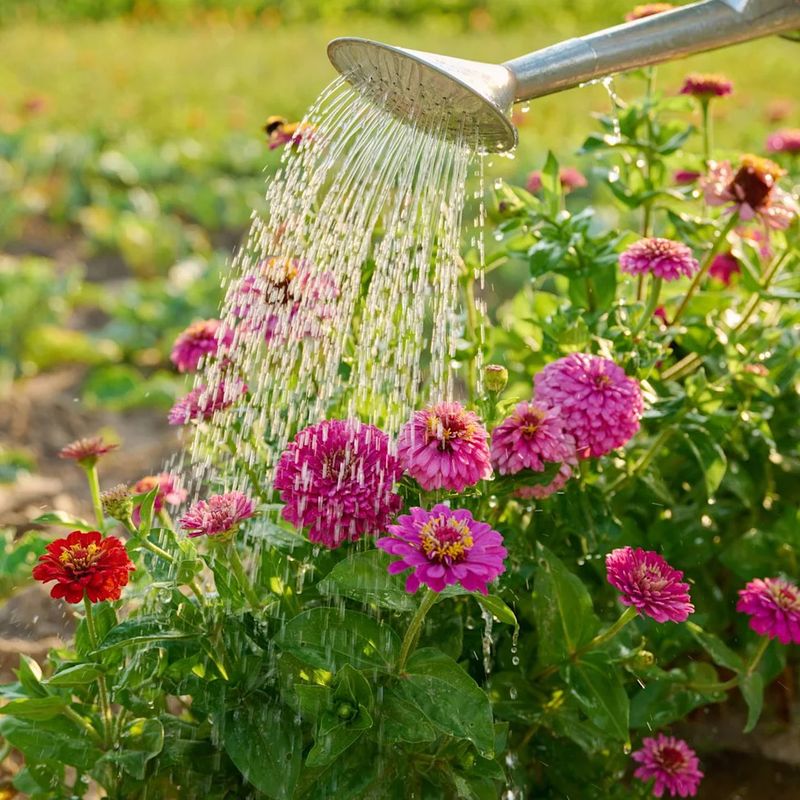
One common misunderstanding about powdery mildew is that it needs water sitting on leaves to infect a plant. Unlike some other fungal diseases, powdery mildew can spread and infect without free water on leaf surfaces.
High humidity and warm temperatures are the more important factors, which is why Georgia summers create such favorable conditions for outbreaks even without overhead irrigation being the culprit.
That said, watering at the soil line using a soaker hose or drip irrigation rather than overhead sprinklers is still a reasonable practice.
Keeping water directed toward the root zone rather than spraying across foliage avoids unnecessarily adding moisture to leaves or increasing humidity within a dense canopy.
After a rainy Georgia weekend when the soil may already be well saturated, checking moisture levels before adding more water can prevent overwatering and the additional humidity that comes with it.
Adjust your irrigation based on what the plants actually need rather than following a fixed schedule. Summers can shift quickly from wet spells to dry stretches, and zinnias do not benefit from waterlogged soil any more than they benefit from drought stress.
Letting the top inch or two of soil dry slightly between waterings is a reasonable general guideline, though local conditions, soil type, and recent rainfall should all factor into your decisions.
Good irrigation habits work best when paired with proper spacing, sanitation, and appropriate sun exposure.
6. Clear Away Infected Plant Debris
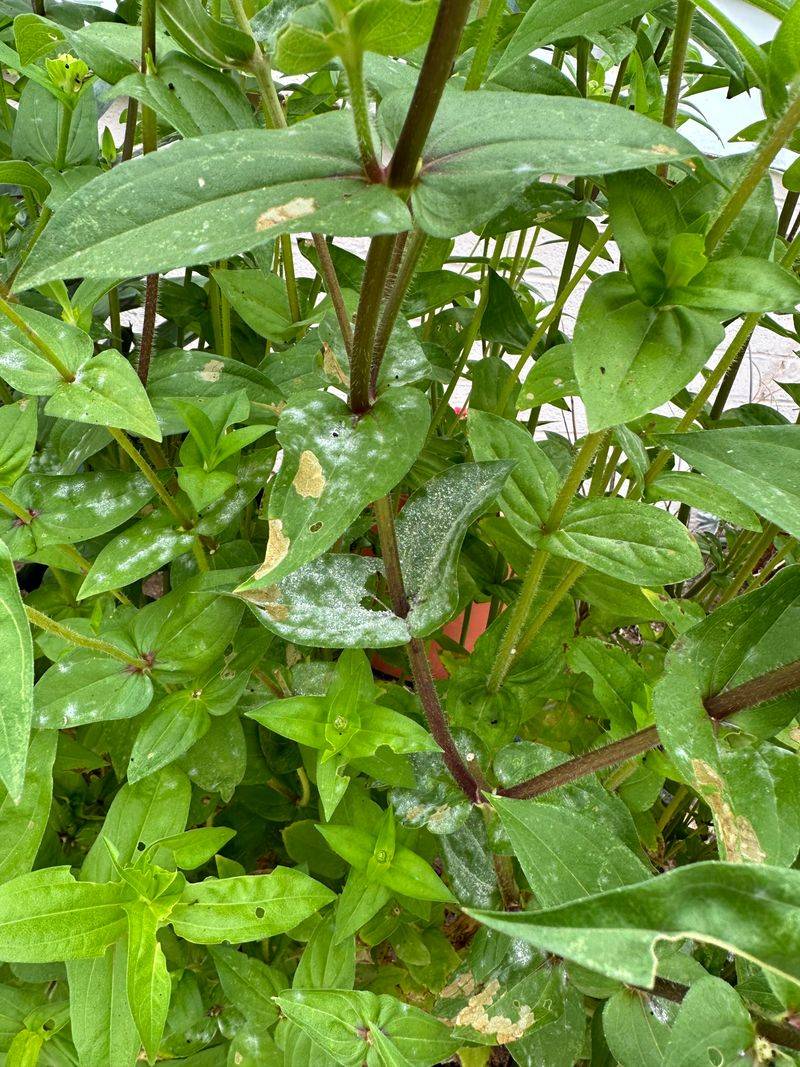
Fallen leaves covered in powdery mildew growth do not become harmless once they hit the ground.
Diseased plant material that accumulates at the base of your zinnias can remain a source of fungal spores that continue to contribute to disease pressure in the bed, especially when humid Georgia conditions keep the area warm and somewhat moist through the rest of the growing season.
Clearing away fallen, infected leaves and other heavily affected plant debris on a regular basis is a straightforward sanitation step that can help keep the bed cleaner as summer continues.
Use gloves when handling this material, and place it in a sealed bag for disposal rather than leaving it in an open pile near the garden.
Diseased zinnia debris should generally not be added to a home compost pile unless you are confident that your composting process consistently reaches temperatures high enough to break down fungal material, which many backyard setups do not reliably achieve.
Keeping the ground around your zinnias tidy does not stop powdery mildew on its own, but it removes one source of ongoing disease material from the growing area.
Combined with other steps like improving airflow, adjusting watering habits, and removing the most infected plant parts still on the stems, regular debris removal gives your Georgia zinnia bed a cleaner environment to work from as you manage an active outbreak through the rest of the season.
7. Treat Early If A Fungicide Is Needed
Fungicides work best as a protective measure, which means they are most useful when applied before infection has covered a large portion of the plant or when new growth is emerging and needs protection.
If powdery mildew has already spread significantly across your Georgia zinnias, a fungicide application will not make the existing white patches disappear or restore affected leaves to their original condition.
What it can do is help reduce further spread to healthier foliage that has not yet been affected.
When disease pressure is significant and cultural changes alone do not seem to be enough, choosing a fungicide labeled for powdery mildew on ornamentals and following the product label carefully is the appropriate path forward.
The label is a legal document that specifies how, when, and how often a product should be applied.
Some products require rotating between different modes of action to reduce the chance of the fungus developing resistance, and the label will indicate whether that applies to what you are using.
Not every mild case of powdery mildew on a zinnia bed warrants a fungicide application. If infection is limited and the plants are otherwise growing well, cultural changes may be sufficient to slow further development without adding a chemical treatment.
Avoid applying fungicides during very hot parts of the day or under weather conditions that the product label advises against. A local Georgia Extension office can help you evaluate whether treatment is warranted for your specific situation.
8. Choose More Resistant Zinnias Next Season
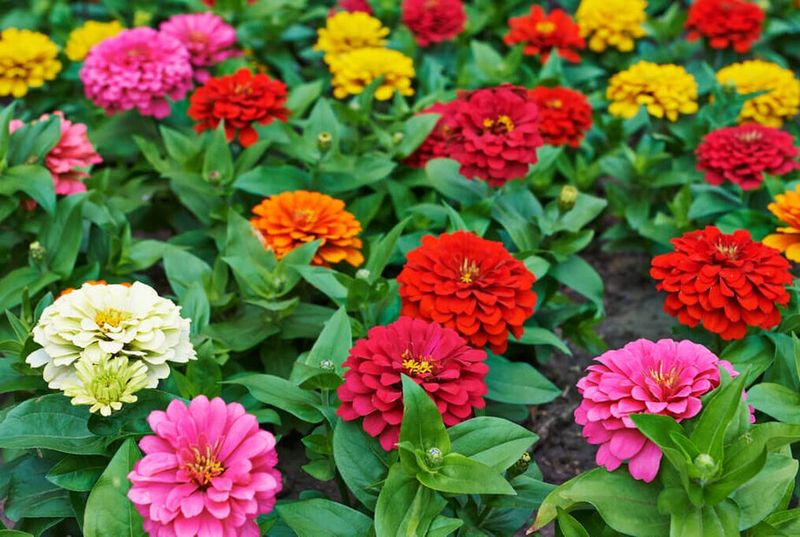
Selecting zinnia varieties with improved powdery mildew resistance is one of the most practical long-term strategies available to Georgia gardeners who deal with this disease year after year.
Resistance does not mean a plant is completely immune, but it does mean the variety is less susceptible and may show slower or less severe disease development under the same conditions that would heavily affect a more vulnerable type.
Zinnia angustifolia, sometimes called narrow-leaf zinnia, and hybrids developed from it have shown notably better tolerance to powdery mildew compared to many common Zinnia elegans varieties.
Some hybrid crosses between these two species have also demonstrated improved resistance while still producing the showy blooms that make zinnias popular in Georgia gardens.
Checking current seed catalogs, plant tags, and local Extension resources for varieties described as having improved disease tolerance can help you narrow down your choices before next planting season.
Cultivar selection works best as part of a broader strategy rather than a replacement for good garden practices. Even a resistant zinnia variety will benefit from proper spacing, full sun exposure, careful irrigation, and regular debris removal.
Combining a well-chosen variety with those cultural habits gives your garden a much stronger foundation for managing powdery mildew pressure over the long term.
Starting with better genetics and supporting them with smart care is a more reliable approach than relying on any single method to carry the whole load.