The One Thing Georgia Roses Need In August For Stronger Fall Flowers
Rose bushes never stop responding to the care they receive, even after the biggest flush of blooms has passed. August quietly shapes what those plants will be capable of later in the season.
Many flower gardens lose momentum before fall ever arrives. Healthy roses, however, still have plenty of potential left when they receive the attention they need.
This part of the growing season is easy to underestimate. A simple task completed at the right moment can influence how your plants perform over the coming weeks.
There is still plenty of growing time left in Georgia before cooler weather settles in. That makes August more important than many rose lovers realize.
Your roses are already preparing for what comes next. They will respond to what you do now.
A little effort today can help fill your garden with stronger, healthier blooms when fall arrives.
1. Low-Nitrogen Fertilizer Supports Stronger Fall Flowers
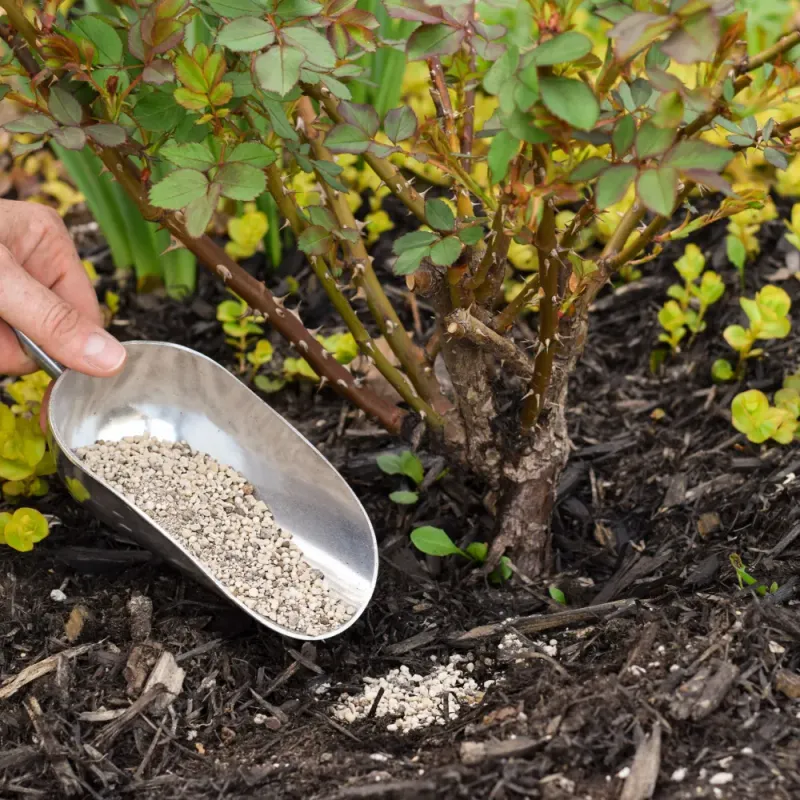
Forget the green, leafy look. What your roses actually need heading into fall is a fertilizer that pushes blooms, not foliage.
Low-nitrogen fertilizers have a smaller first number in the NPK ratio. That first number controls leaf and stem growth.
When it stays low, the plant shifts its energy toward producing flowers instead of putting out new green growth that will not survive the coming cooler months.
A fertilizer with higher phosphorus and potassium levels works better for late-season feeding. Phosphorus supports root strength and bud development.
Potassium helps the plant handle stress and improves overall hardiness heading into fall.
Look for a product specifically labeled for roses or flowering shrubs. These blends are usually formulated with the right balance for bloom production.
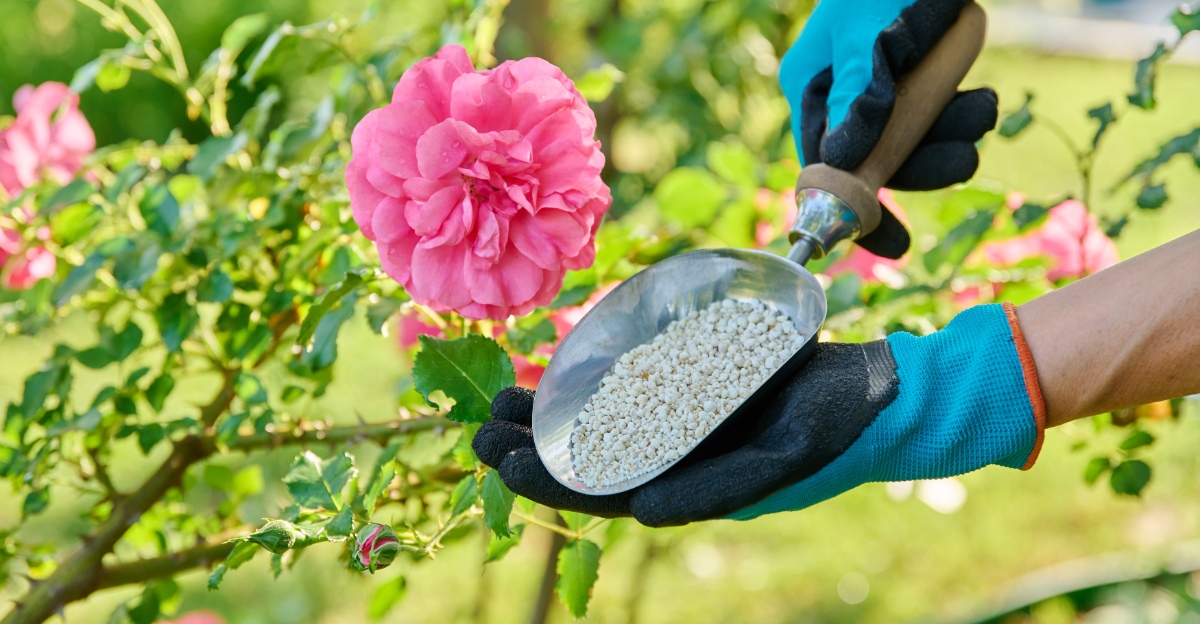
Granular slow-release options tend to work well in August because they feed steadily without shocking the plant.
Avoid general-purpose lawn fertilizers. Those are loaded with nitrogen, which is the last thing a rose needs right now.
A high-nitrogen feed in late summer pushes out soft new growth that becomes vulnerable as nights get cooler.
Choosing the right fertilizer formula is honestly the most important decision you will make for your roses this month.
2. August Is The Best Time For One Final Feeding
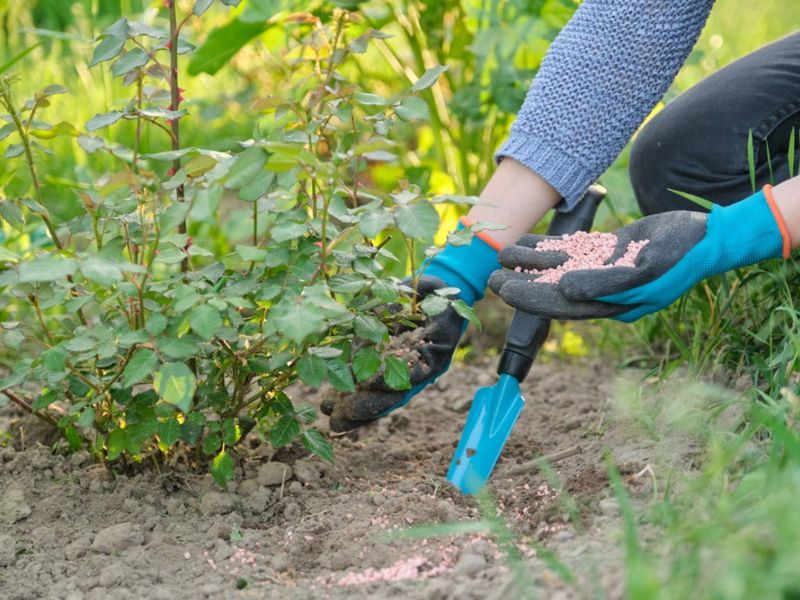
Timing a late-summer feeding sounds risky, but August actually hits a sweet spot for roses in warm Southern climates.
Roses in Georgia and similar regions often go through a mid-summer slowdown. Heat and humidity push them into a semi-dormant state where blooming slows and growth pauses.
That slowdown is actually useful. It signals that the plant is conserving energy.
Feeding in early to mid-August gives the plant nutrients just as it starts to come out of that rest period. Cooler nights in September trigger new bud activity, and a well-fed rose responds faster and more vigorously to that change.
Wait too long into September, and you risk pushing new growth that does not have enough time to harden before temperatures drop. Feed too early in July, and the extreme heat can stress roots that are already working hard to stay stable.
Your Georgia Garden Changes Every Week. Your Plan Should Too.
Gardening in Georgia changes quickly throughout the season. Every Friday you’ll receive a simple weekly plan showing exactly what to plant, prune, fertilize, harvest, and protect so you never miss the right timing.
Early August is the target window. Aim for the first two weeks of the month if possible.
That gives nutrients time to move through the soil and reach the roots before the plant kicks into its fall growth cycle.
Roses that get this one well-timed feeding tend to produce more buds per stem and show richer color in fall blooms.
3. Spread Fertilizer Evenly Around The Root Zone
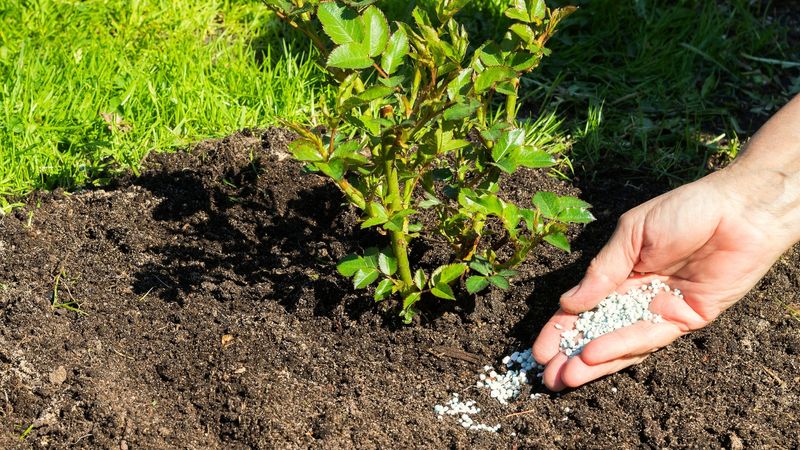
Dumping fertilizer in one spot does more harm than good. Spreading it evenly is what actually gets nutrients to the roots that need them.
Rose roots spread outward, not just straight down. The feeder roots, which are the ones that actually absorb nutrients, extend well beyond the base of the plant.
A good rule of thumb is to spread fertilizer out to the drip line, which is roughly where the outermost leaves and canes hang over.
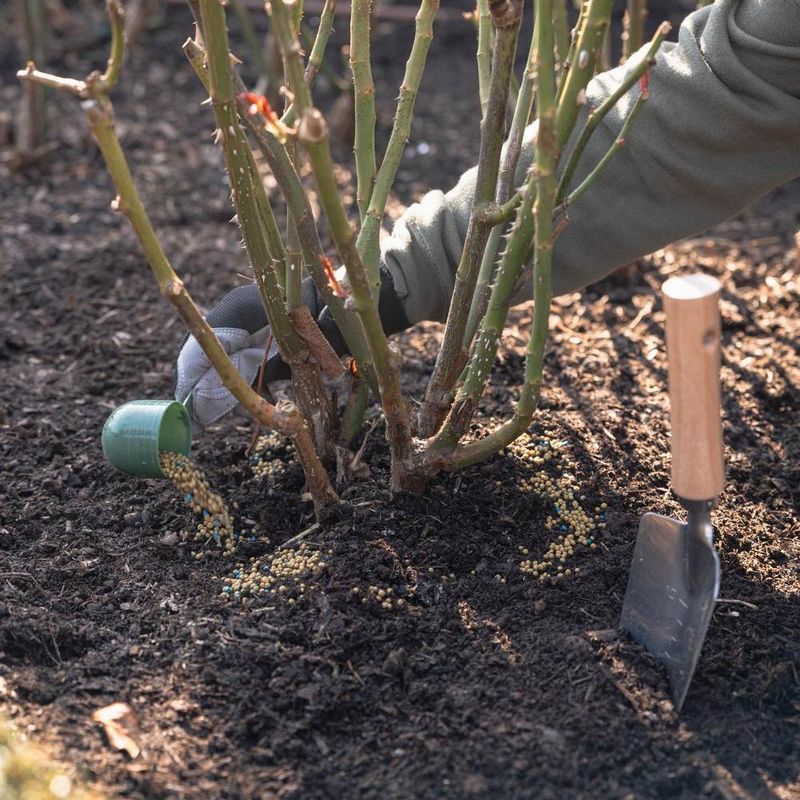
Scatter the granules in a wide, even circle. Work your way around the entire plant rather than concentrating product on one side.
Uneven application leads to uneven feeding, which can cause patchy growth and inconsistent blooming.
Use a measuring cup or a small scoop to portion out the correct amount before spreading. Eyeballing it often leads to over-application, especially near the base of the plant.
After spreading, gently scratch the granules into the top inch of soil with a hand rake or a gloved finger. This helps them break down faster and reduces the chance of runoff during watering or rain.
Covering the area with a light layer of mulch after feeding helps retain moisture and keeps the granules in place.
4. Keep Granules Several Inches Away From The Crown
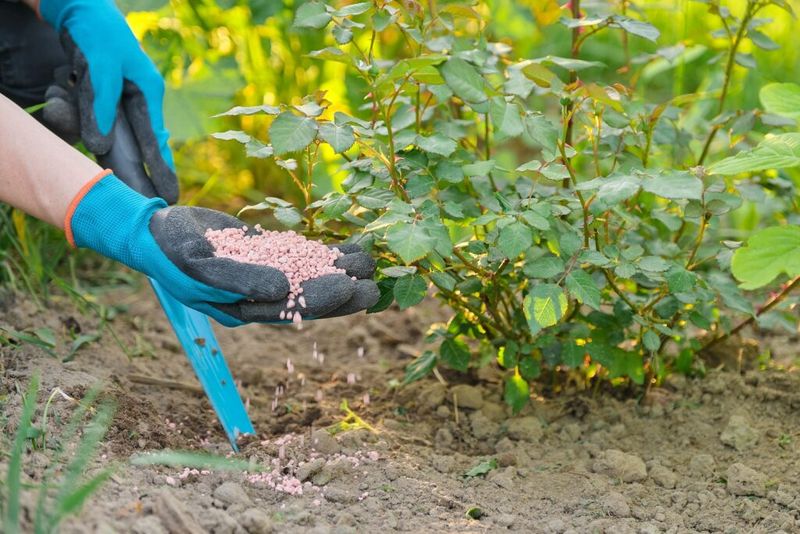
One of the easiest mistakes to make is piling fertilizer right up against the base of the rose. It looks thorough, but it can cause real problems.
The crown is the point where the canes meet the roots, usually at or just below soil level. Concentrated fertilizer pressing directly against the crown can cause salt burn.
That kind of damage weakens the plant right at its most vulnerable structural point.
Keep granules at least three to four inches away from the crown. A wider gap is fine.
What matters is that the product is not sitting directly against the woody base of the plant.
Salt buildup from fertilizer is more likely to cause issues during hot, dry stretches when there is not enough moisture to dilute it. August in the South can be unpredictable with rainfall, which makes this precaution especially worth taking.
If you accidentally apply granules too close, brush them back with a gloved hand before watering. Do not wait, because once water activates the fertilizer, the salts move into the soil immediately.
Maintaining that small buffer zone is a simple habit that protects the crown during a stressful time of year.
5. Water Thoroughly After Feeding To Protect The Roots
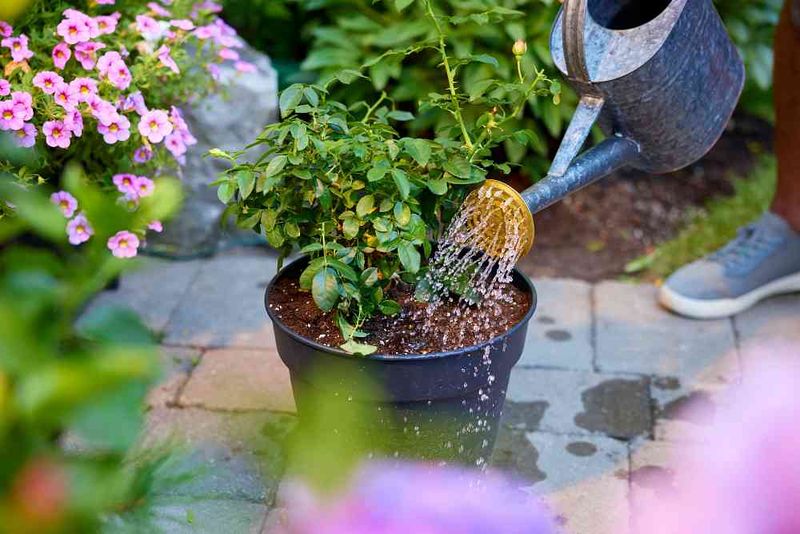
Watering after fertilizing is not optional. Skipping this step can set back a rose that was otherwise doing well.
Dry granules sitting on top of soil are concentrated. When roots contact undissolved fertilizer salts, the result is often salt burn, which pulls moisture out of root tissue and causes stress.
A deep, thorough watering right after application moves those granules into the soil and begins the dilution process.
Aim for slow, deep watering rather than a quick rinse. Water should penetrate several inches into the soil so nutrients move down toward the feeder roots.
A shallow sprinkle just wets the surface and does little to carry the fertilizer where it needs to go.
A soaker hose or a slow trickle from a garden hose works well for this. Let water run long enough that the soil feels moist several inches below the surface.
In heavy clay soils, which are common in parts of Georgia, this may take more time than expected.
Water again two to three days later if no rain falls. Consistent moisture in the days following fertilization helps the plant absorb nutrients more efficiently and reduces the risk of any localized salt concentration.
Well-watered roots after feeding recover faster from summer stress.
6. Too Much Nitrogen Produces Leaves Instead Of Blooms
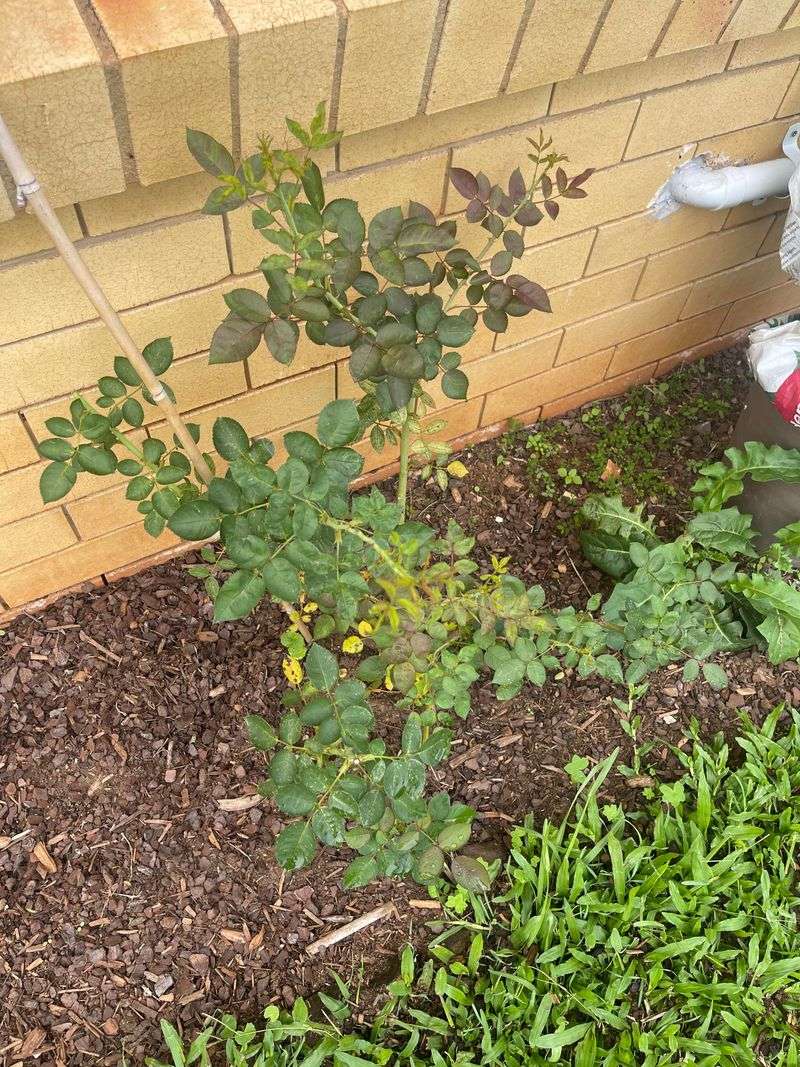
Lush green growth on a rose bush looks healthy at first glance. But heading into fall, a rose covered in new leaves and short on buds is a sign something went wrong with the feeding program.
Nitrogen is the nutrient that drives vegetative growth. Stems, leaves, and canes all respond quickly to a nitrogen boost.
That is useful in spring when you want the plant to fill out and establish strong structure. In August, that same response works against you.
Excess nitrogen in late summer pushes the plant to produce soft, leafy growth instead of directing energy toward bud formation. That new growth is also more vulnerable to fungal issues, which are already a concern in humid Southern summers.
Choosing a fertilizer with a low first number in the NPK ratio keeps nitrogen levels in check.
Some gardeners in warm climates skip nitrogen entirely in their August feeding and rely on phosphorus and potassium alone to support bloom development and root strength.
Read the label carefully before buying. Products marketed as bloom boosters or fall rose fertilizers tend to have the right ratio.
General all-purpose fertilizers often have nitrogen levels that are too high for late-season rose feeding.
7. Avoid Feeding Dry Soil During August Heat
Applying fertilizer to bone-dry soil in August is one of the quickest ways to stress a rose that is already working hard to stay stable in the heat.
Dry soil concentrates fertilizer salts near the surface. Without moisture to dilute and carry those nutrients downward, roots can be exposed to harsh chemical concentrations.
The result is often tip burn on leaves and stunted growth rather than the healthy boost you were aiming for.
Before spreading any fertilizer, check the soil moisture a few inches below the surface. If it feels dry and powdery, water the area first and wait until the soil is evenly moist before applying the product.
Pre-watering is especially important during heat waves. When soil temperatures run high, roots are already under pressure.
Adding concentrated fertilizer salts to that environment adds unnecessary stress at a time when the plant has limited capacity to respond.
A good practice is to water deeply the day before you plan to fertilize. That gives moisture time to penetrate fully without leaving the surface soggy.
Moist soil helps granules begin breaking down at a manageable pace instead of sitting in a concentrated patch.
Across warm Southern states, August soil can dry out faster than expected between rain events.