What Late Summer Storms Do To Alabama Fire Ant Mounds
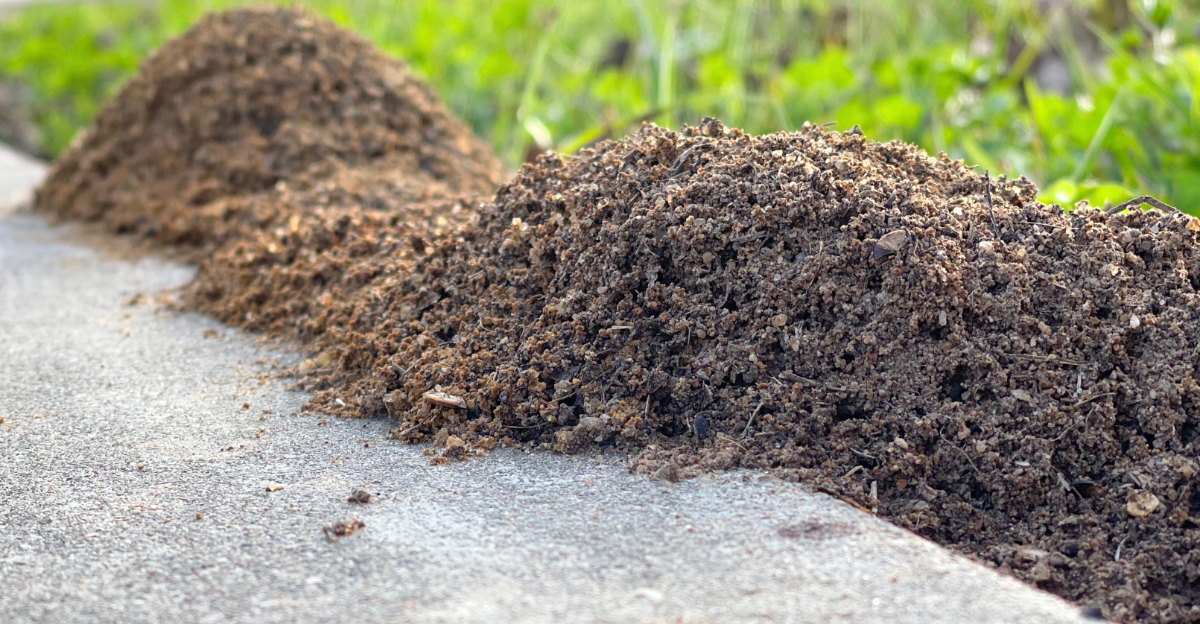
Rain pounds your Alabama lawn overnight, and dawn reveals a mound that wasn’t there before. Beneath that fresh dirt, an entire colony has already rewritten its plan.
Storms don’t scatter these insects the way you’d expect, they trigger a coordinated response few homeowners ever see. Colonies sense pressure changes before the first drop falls, moving eggs, workers, and queens toward higher ground.
Flooded tunnels push them into behavior that looks almost engineered, bodies linking together to keep the colony afloat. Alabama’s heat and heavy rainfall make this one of the most active zones for this behavior in the country.
Nothing about their reaction is random, and every movement inside that mound serves a purpose. Your yard becomes the stage for a survival strategy most people mistake for bad luck.
What happens underground in the hours after a storm decides whether that mound turns into a bigger problem for you. Ignore that first mound and the colony behind it will only grow larger, faster, and harder to stop.
Heavy Rain Pushes Colonies Upward And Outward Into Fresh Mounds
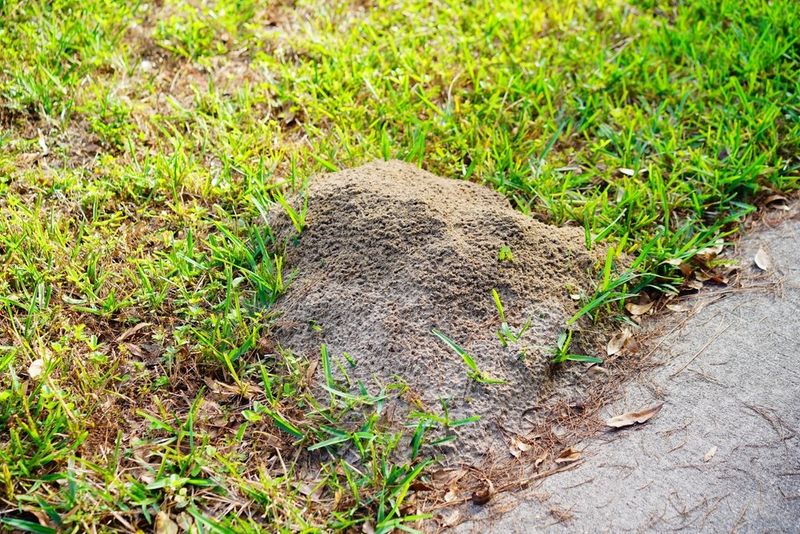
Rain hits hard, and fire ants move fast. When a storm dumps water into the soil, the colony below feels the pressure immediately.
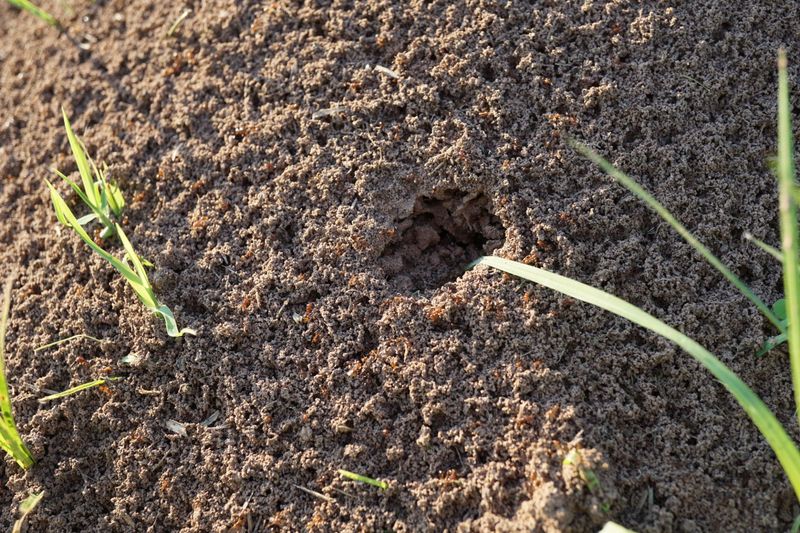
Worker ants begin relocating eggs, larvae, and the queen upward toward dry ground. The mound you see the next morning is not decorative.
It is a survival structure built in hours.
Solenopsis invicta, the red imported fire ant, is extraordinarily good at reading soil moisture. Colonies can sense rising water tables before the surface even looks wet.
That early-warning system gives them a head start on rebuilding.
The mound grows taller because the ants need air pockets for the brood to survive. Soft, freshly rained-on soil is also easier to tunnel through quickly.
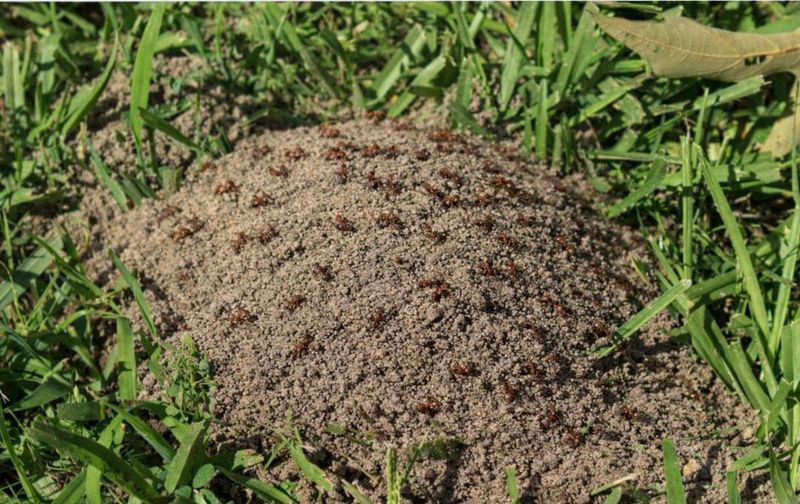
A colony that was invisible yesterday can produce a mound several inches tall by morning.
Lateral movement happens too. Some workers push outward rather than upward, creating satellite tunnels that branch away from the main structure.
This spreads the colony footprint across a wider patch of your yard.
Storms act like a reset button for the colony underneath your lawn. It gets reorganized, re-energized, and repositioned within hours.
Disturbing a post-storm mound without a plan just scatters the problem further into your lawn.
Why New Mounds Appear Overnight Across Alabama Lawns
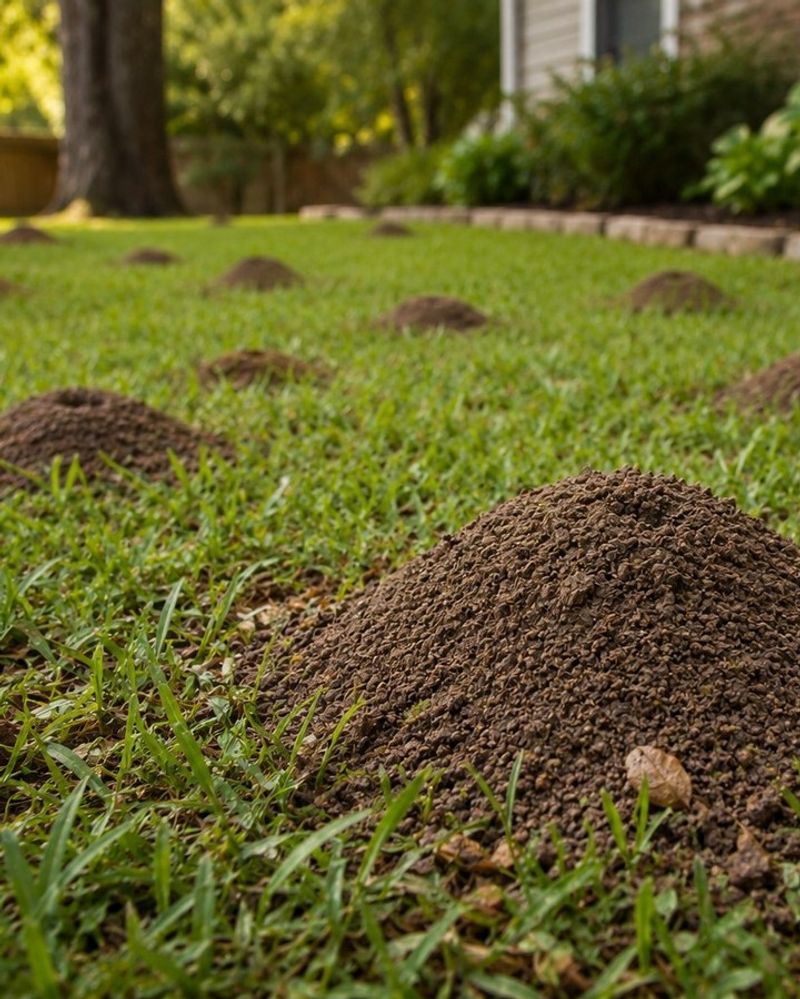
You mowed on Friday and the yard looked clean. Saturday morning after the storm, three new mounds dot the grass like uninvited guests.
That overnight appearance feels almost supernatural, but there is a straightforward explanation.
Storms don’t slow fire ant colonies down. Workers stay active around the clock when conditions demand it.
A single colony can contain up to 500,000 ants, and that workforce can rebuild a mound structure in just a few hours.
The soil in late summer Alabama is often dry and cracked before a storm hits. When rain soaks in, it creates fast-moving channels that flood tunnels without warning.
Ants respond to that flooding with immediate, coordinated construction above ground.
Your Alabama Garden Changes Every Week. Your Plan Should Too.
Gardening in Alabama changes quickly throughout the season. Every Friday you’ll receive a simple weekly plan showing exactly what to plant, prune, fertilize, harvest, and protect so you never miss the right timing.
Mounds also appear in spots that drain poorly, like low-lying patches near flower beds or along fence lines. Those areas collect water first and push colonies upward fastest.
Pay attention to where puddles form after rain. That is your fire ant forecast map.
Neighbors with untreated yards contribute to the problem too. Flooded colonies from adjacent properties can migrate across property lines during heavy rain events.
Your lawn becomes a destination, not just a habitat.
Spotting multiple fresh mounds after a storm means the colony pressure in your yard is high. Waiting for them to settle back down is a losing strategy.
Acting within 24 to 48 hours after the ground dries gives you the best window for treatment.
The Difference Between A Relocated Colony And A New One
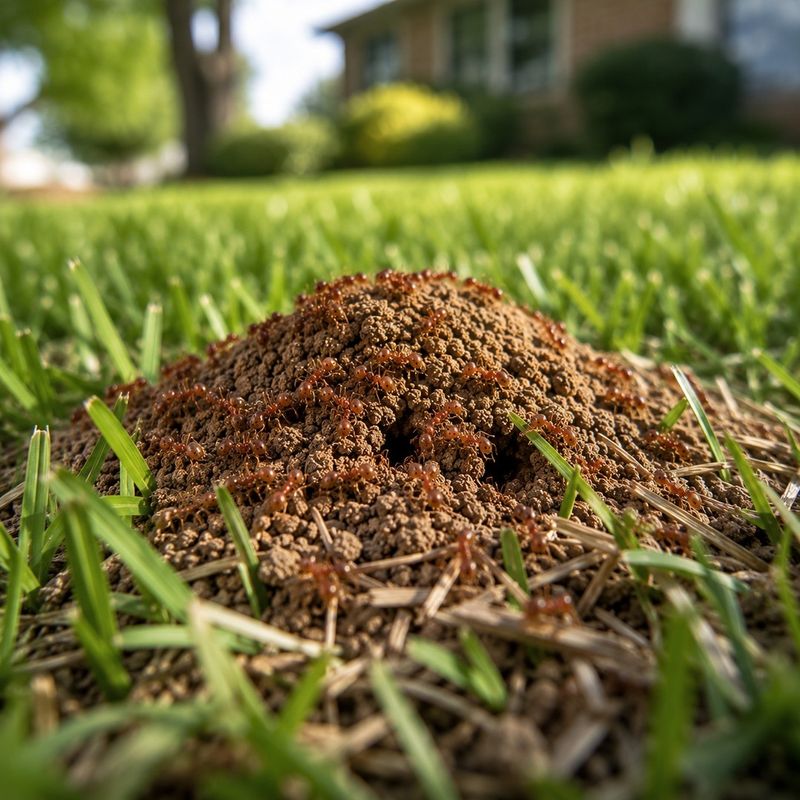
Not every mound you find after a storm is the same situation. Knowing whether you are dealing with a relocated colony or a brand-new one changes how you should respond.
A relocated colony is an existing group that simply moved to a new spot in your yard. The mound looks fresh but the population is already mature.
You will notice high ant activity on the surface almost immediately after the mound forms.
A new colony, on the other hand, starts from a single mated queen who lands after a nuptial flight. These flights often happen in warm, humid conditions following a storm.
New mounds from solo queens start small, maybe the size of a softball, and grow slowly over weeks.
The key visual difference is size and activity level. Relocated colonies produce large, active mounds quickly.
New queen-started mounds are compact and quiet at first. Poking either one with a stick will tell you a lot.
A relocated colony erupts with hundreds of workers in seconds.
Treatment timing matters differently for each type. Mature relocated colonies need a stronger, faster-acting approach because the population is already dense.
New mounds can sometimes be handled with targeted individual treatments before they grow into a bigger problem.
Late summer storms create both scenarios at once, which is why your yard can feel seriously overwhelmed after a big rain event.
Identifying what you are facing first makes your next move smarter and more effective.
How Rafting Behavior Spreads Ants After Flooding
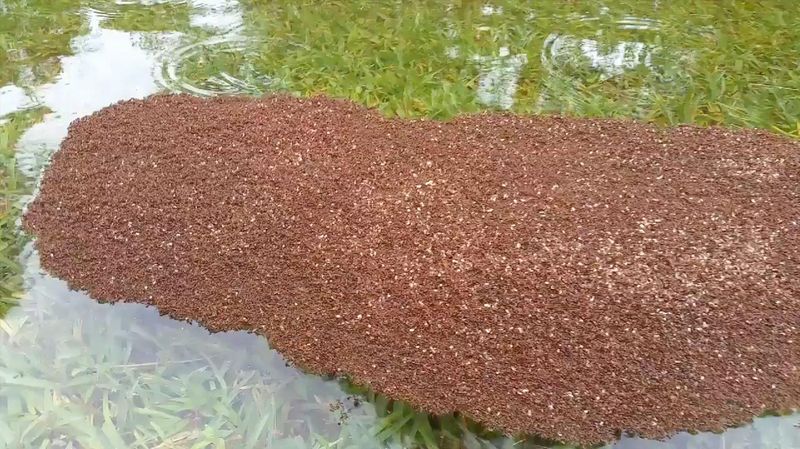
Few things in the insect world are as eerie as a fire ant raft. When floodwaters rise too fast for underground escape, colonies do something remarkable.
They form a living, floating mass and drift until they find dry land.
Worker ants link their legs and bodies together to create a buoyant structure. The queen and brood ride in the center, protected and elevated above the waterline.
The raft can stay afloat for days without breaking apart.
Rafts move with the current, which means flooding can carry fire ant colonies far from their original location. A colony that started in a neighbor’s yard could end up in your flower bed after a strong storm pushes water across the street.
Touching a fire ant raft is a serious mistake. The ants respond fast, not frantically.
They attack aggressively and in large numbers. Even wading through floodwater in an area with known fire ant activity carries real risk.
After waters recede, rafting colonies anchor to the first solid surface they contact. That surface might be a tree root, a garden border, or the edge of your porch.
Wherever they land, they start building immediately.
Rafting gives colonies free transportation across your property after a flood. It’s one more way storms reshape where fire ants end up in your yard.
Checking low spots and water edges after flooding is smart. You may find a colony that was never there before, ready to establish itself fast.
The Two Step Method Alabama Extension Recommends For Yard Wide Control
Alabama Cooperative Extension has a proven approach for managing fire ants at the yard level. It is called the Two Step Method, and it works by combining broadcast bait with targeted individual mound treatment.
Step one involves spreading bait granules across the entire lawn, not just near visible mounds. Fire ant workers forage widely, so broadcast bait catches colonies you cannot even see yet.
The bait is slow-acting by design, giving workers time to carry it back to the queen.
Timing matters for bait application. Ants forage most actively when soil temperatures are between 70 and 90 degrees Fahrenheit.
Late summer afternoons, after the ground has dried from a storm, are often ideal. Apply bait when rain is not expected for at least 24 hours.
Step two targets individual mounds that survive the bait phase or that are too close to structures for broadcast treatment. Products containing acephate, bifenthrin, or spinosad work well for direct mound treatment.
Follow label directions carefully for best results.
The two steps work together because no single method catches every colony. Bait handles the hidden populations.
Direct treatment handles the visible ones. Using both increases your overall success rate significantly.
Extension specialists suggest repeating the process in spring and again in late summer or early fall. Consistent timing with the seasons keeps populations low before they spike.
A yard-wide plan beats a mound-by-mound reaction every single time.
When Late Summer And Early Fall Baiting Works Best
Timing your bait application is just as important as choosing the right product. Fire ants are not equally active all year, and hitting them at peak foraging times makes every treatment count more.
Late summer into early fall is one of the two best windows for baiting in the South. Colonies are large and hungry after the summer growth season.
Workers are foraging aggressively to build up food stores before cooler weather slows them down.
Soil temperature is your most reliable guide. Use a simple probe thermometer to check a few inches below the surface.
Foraging drops off sharply once soil temps fall below 60 degrees, so act before that happens.
Morning applications work well when afternoon temperatures are still high. Ants that forage in the morning carry bait back before midday heat pushes them underground.
Evening applications can also be effective on warm nights after a storm has passed.
Check the bait package for freshness. Fire ant bait contains oils that attract foragers, and those oils go stale.
Old bait gets ignored. Buy a fresh bag each season and store unused portions in a sealed container away from heat.
Post-storm rain events tend to drive fire ant activity higher across Alabama lawns. That surge in foraging is your opportunity.
Applying fresh bait within two to three days after the ground dries puts treatment right in the path of hungry, active workers.