Those Big Yellow Grasshoppers In Texas Yards Have A Name And Here’s What Helps Control Them
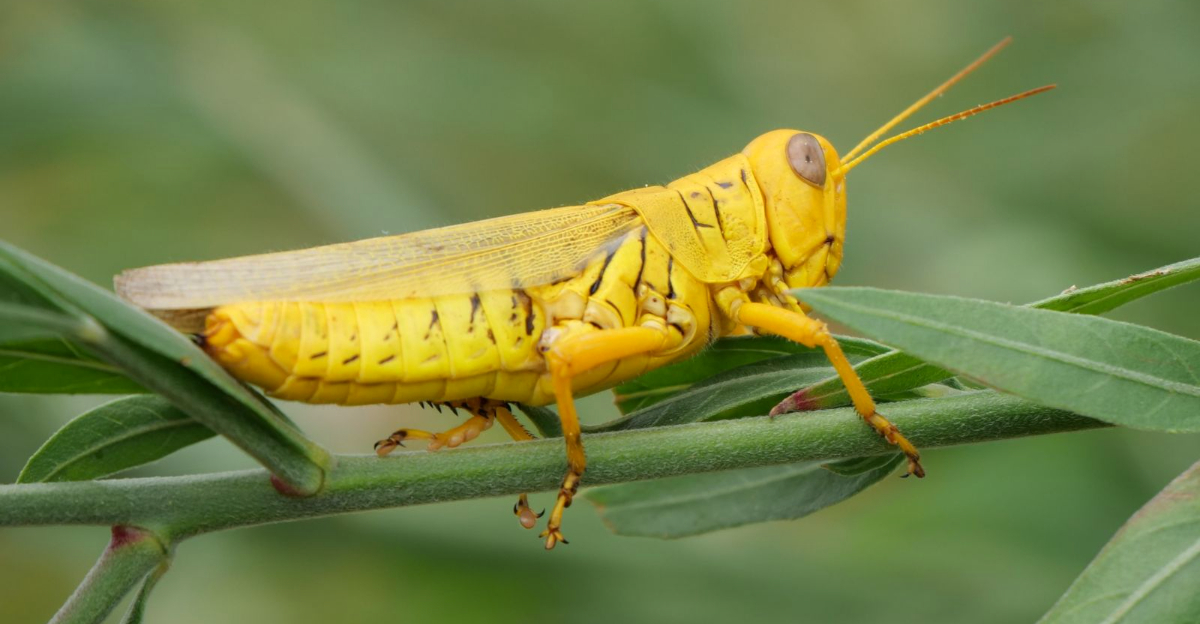
If something has been methodically working its way through your Texas garden this summer and leaving some seriously impressive damage behind, there is a decent chance a Differential Grasshopper is involved.
These are not your average small garden hoppers.
Adults can reach nearly one and three-quarter inches long, which puts them firmly in the category of insects you actually notice when they land on something.
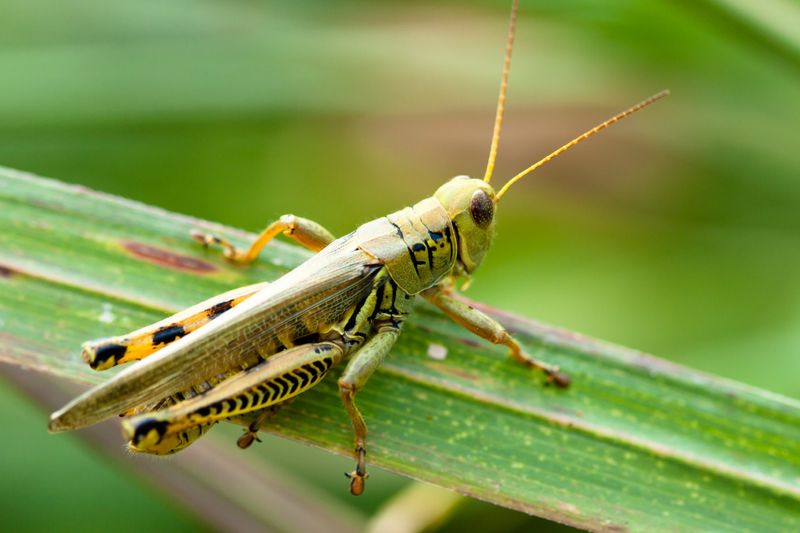
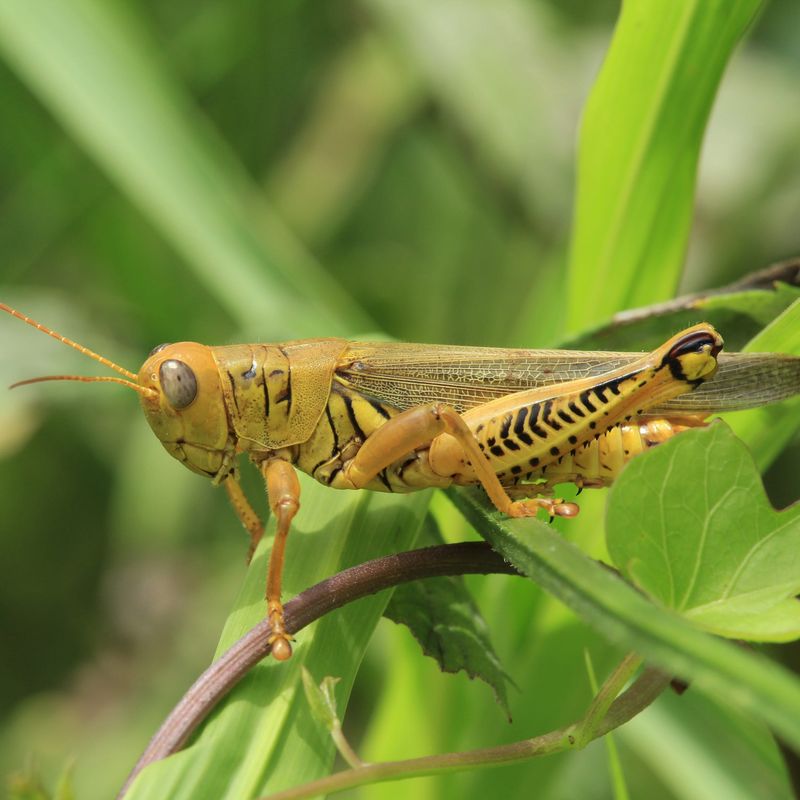
Yellowish-brown, bold, and remarkably unbothered by the heat, Differential Grasshopper (Melanoplus differentialis) tend to become much more visible during mid-summer, especially in irrigated yards sitting next to drying weeds and pastures.
That combination is basically a welcome sign for these insects. One important note though: Texas is home to many grasshopper species, so yellow coloring alone is not enough to confirm what you are dealing with.
The hind legs are where the real identification clues live.
1. Black Chevron Markings Help Confirm The Identification
Spotting a large grasshopper among your garden plants is one thing, but knowing exactly which species you are looking at takes a closer look.
The Differential Grasshopper has a few standout features that set it apart from the many other grasshopper species found across Texas.
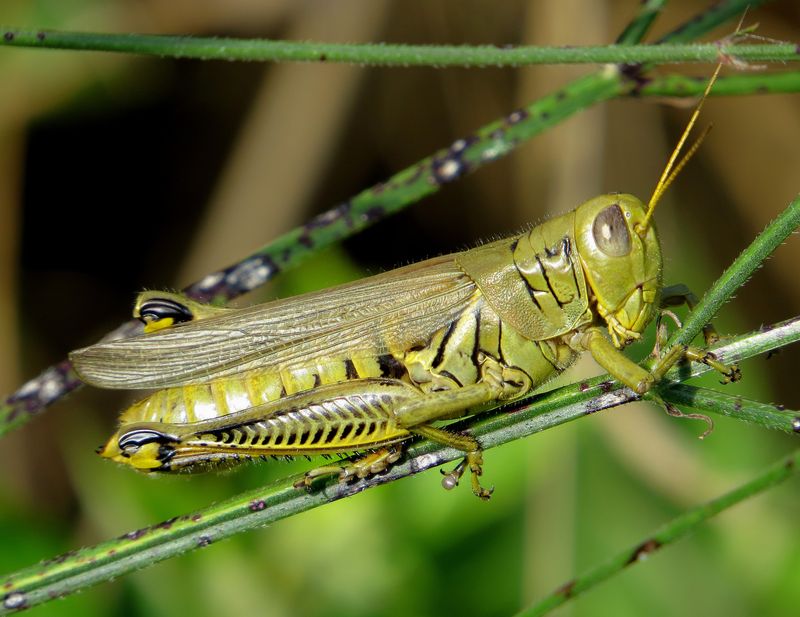
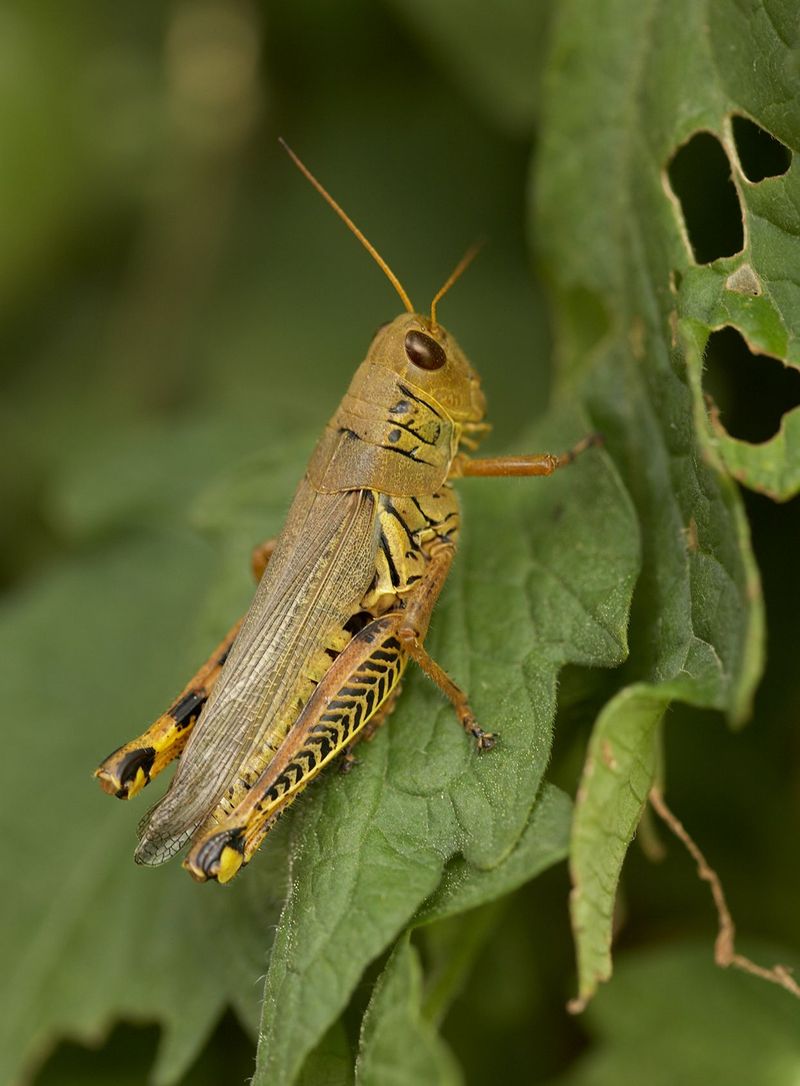
Adults are typically brown to olive-green and yellow, and they can reach about one and three-quarter inches in length, making them noticeably larger than many other common grasshoppers.
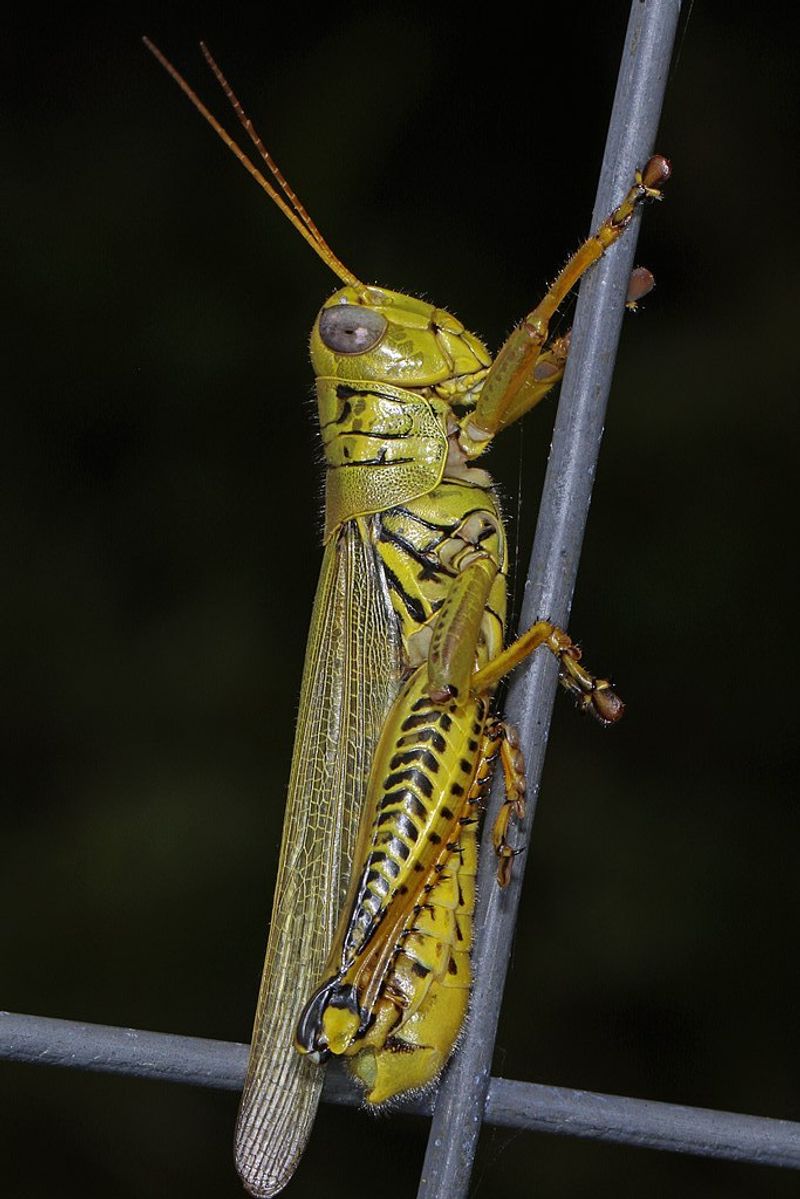
The most reliable identification clue is the pattern found on the hind legs. Differential grasshoppers have prominent black chevron-like markings on their enlarged hind femora, which are the thick upper sections of their back legs.
These bold, angular markings form a stacked pattern that is fairly distinctive once you know what to look for.
Some individuals can appear darker than the typical yellowish form, so color alone should not be the only factor used in identification. Photographs taken from multiple angles can be helpful, especially images that capture the hind leg clearly.
Regional resources such as Texas A&M AgriLife Extension publications or an online insect identification tool can also assist when uncertainty remains. If you are not fully confident in the identification, reaching out to a local county Extension office is a practical option.
Texas has dozens of grasshopper species, so using multiple characteristics together gives you a much better chance of accurate identification than relying on color alone.
2. Mid-Summer Adults Can Move Into Green Texas Yards
Around mid-July, something changes in many landscapes across the state. Grasshoppers that spent weeks developing as small, wingless nymphs in weedy fields and pastures begin reaching adulthood, and with adulthood comes the ability to fly.
That shift is one reason homeowners sometimes feel like large grasshoppers appeared almost overnight in their yards.
Texas A&M reports that adult Differential Grasshoppers generally begin appearing around mid-July, though the exact timing can vary depending on weather, location, and how the season has unfolded.
Warmer conditions and earlier spring green-up can push development along faster, while cooler or wetter periods may slow things down.
Your Texas Garden Changes Every Week. Your Plan Should Too.
Gardening in Texas changes quickly throughout the season. Every Friday you’ll receive a simple weekly plan showing exactly what to plant, prune, fertilize, harvest, and protect so you never miss the right timing.
The state is large and climatically diverse, so what happens in the Panhandle in July may differ considerably from what happens along the Gulf Coast or in Central Texas.
Young nymphs go through several developmental stages called instars before becoming fully winged adults. During those earlier stages, they tend to stay closer to where they hatched and feed on nearby vegetation.
Once they become adults with functional wings, their ability to move across the landscape increases considerably. That is when they can begin showing up in places, including well-maintained suburban yards and vegetable gardens, where they were not previously seen.
Understanding this life cycle shift helps explain why mid-summer often brings a noticeable uptick in grasshopper activity around homes and landscapes.
3. Drying Weeds Can Send Grasshoppers Toward Irrigated Plants
One of the more reliable patterns Texas gardeners notice each summer is the arrival of grasshoppers just as surrounding vegetation starts to dry out.
Roadsides, ditches, pastures, and field margins that were lush and green earlier in the season become brown and less palatable as summer heat intensifies.
When that happens, winged adult grasshoppers do not simply stay put and go hungry.
Irrigated yards, vegetable gardens, flower beds, and ornamental landscapes can become attractive destinations when surrounding vegetation dries up.
The green, well-watered plants found in a typical Texas backyard offer a reliable food source at a time when options elsewhere are shrinking.
This movement does not mean that irrigation is causing a grasshopper problem. The insects were already present in the surrounding landscape.
The green vegetation simply becomes more appealing by comparison when everything else around it dries out.
Homes situated near large weedy areas, rural farmland, pastures, or open fields tend to see more of this movement than properties in densely developed neighborhoods with less surrounding habitat.
Understanding this dynamic can help homeowners set realistic expectations.
Even a well-managed yard can receive grasshoppers from neighboring land during dry stretches of summer. The key insight is that what happens beyond the fence line often has a direct influence on how many grasshoppers end up feeding inside it.
Keeping that broader landscape picture in mind helps when deciding how to respond.
4. Adult Grasshoppers Can Cause The Most Noticeable Landscape Damage
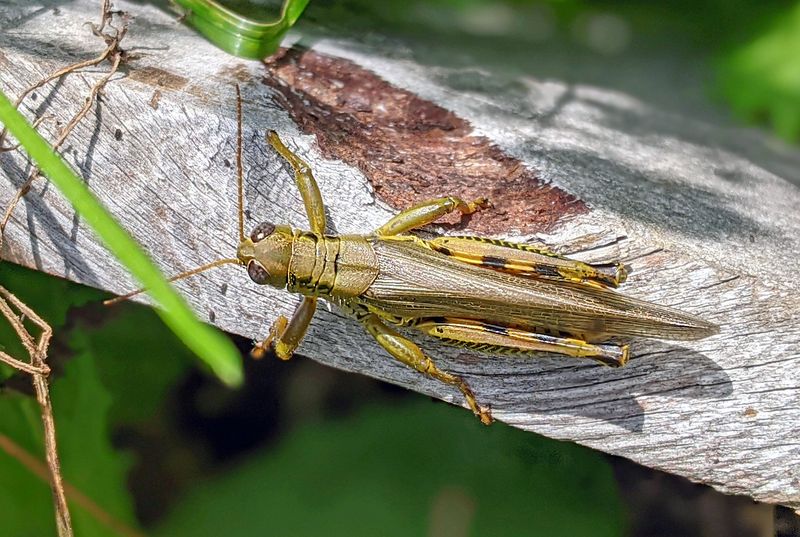
Chewed leaves, ragged edges on garden plants, and stems stripped of foliage are signs that grasshoppers have been feeding.
Adult Differential Grasshoppers are described by Texas A&M as strong feeders, and fully developed adults are particularly capable of moving into ornamental landscapes and vegetable gardens because of their ability to fly from surrounding areas.
Grasshoppers are not especially picky eaters. They can feed on a wide range of plant material, including leaves, soft stems, and flowers.
The amount of damage any yard experiences depends on several factors: how many grasshoppers are present, what plant species are growing, how close the yard is to larger breeding populations, and what weather conditions have been like throughout the season.
A yard near a large pasture or weedy field may experience more pressure than one surrounded by pavement and other developed land.
Serious grasshopper outbreaks are not a uniform experience across the state.
Texas A&M notes that the most substantial landscape problems tend to occur near large breeding areas such as farmland, pastures, weedy fields, rural communities, and urban-fringe areas where open habitat is plentiful.
Homeowners in those settings may notice heavier feeding than those in more urbanized neighborhoods. Feeding damage can range from minor cosmetic issues to more significant defoliation depending on grasshopper numbers and plant vulnerability.
Observing which plants are being targeted can help prioritize which ones may benefit most from protective measures.
5. Young Wingless Grasshoppers Are Easier To Manage
Catching a grasshopper problem early makes a genuine difference.
Young grasshopper nymphs, which are the wingless juvenile stages that develop through spring and early summer, have not yet gained the flight ability that makes adult grasshoppers so difficult to contain.
Because they cannot fly, nymphs tend to stay closer to where they hatched and feed on nearby vegetation rather than moving across the landscape.
Texas A&M guidance emphasizes the value of dealing with damaging grasshopper populations while the insects are still small and wingless. Younger grasshoppers may also be more susceptible to certain management measures than large, well-developed adults.
Smaller body size and less mobility mean that both physical removal and appropriately selected treatments may have more impact during the nymph stage than after the population has fully matured.
That said, early action is not a guarantee that a grasshopper problem will be eliminated entirely.
Population size, surrounding habitat, weather conditions, and the potential for adult reinvasion from neighboring land all influence how much any management effort can realistically accomplish.
Homeowners should view early management as an opportunity to reduce pressure while conditions are more favorable, rather than as a promise of complete control.
Monitoring your yard and nearby weedy areas starting in late spring can help you spot nymph activity before it develops into a larger, harder-to-manage adult population later in the season.
Timing truly matters with grasshopper management.
6. Early Weed Management Can Reduce Grasshopper-Friendly Habitat
Many grasshopper species, including the Differential Grasshopper, deposit their eggs in relatively undisturbed soil in areas like field margins, roadsides, weedy ditches, and patches of tall grass. After hatching, young nymphs feed on the vegetation growing nearby.
Reducing the amount of weedy, undisturbed habitat around a garden or yard can make the area less favorable for developing grasshopper populations over time.
Keeping grass mowed and managing weeds along fence lines, garden edges, and property borders before large populations have established is a reasonable preventive strategy. The key word there is preventive.
Weed management works best when it is done before grasshoppers have already concentrated in the vegetation.
Attempting to mow or remove vegetation that already contains large numbers of active grasshoppers can push those insects toward nearby garden plants instead of eliminating the problem.
Texas A&M specifically cautions about this possibility, noting that disturbing heavily occupied vegetation can cause grasshoppers to disperse into adjacent landscapes.
So while early, ongoing weed management around a property can reduce favorable habitat over the long term, last-minute removal of vegetation that is already crawling with grasshoppers is a different situation entirely.
Timing and context matter. A proactive approach started in late winter or early spring, before eggs have hatched and nymphs are actively feeding, gives this strategy its best chance of reducing grasshopper pressure around Texas gardens and landscapes.
7. Row Covers Can Protect Valuable Garden Plants
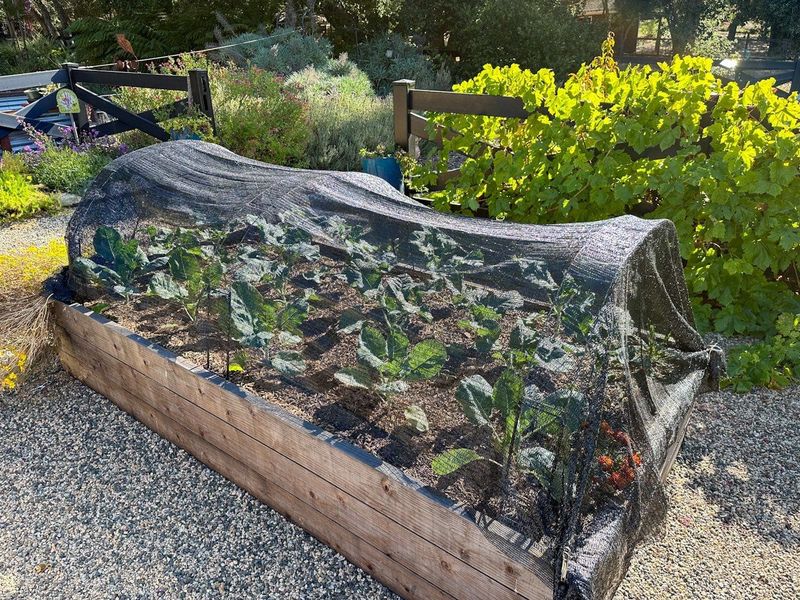
When a particular vegetable or ornamental plant is too valuable to risk losing to grasshopper feeding, a physical barrier can be one of the more straightforward protective options available.
Texas A&M recommends geotextile fabrics and similar row-cover materials as a way to reduce grasshopper access to vegetables and specimen plants during periods of high grasshopper activity.
The concept is simple: if a grasshopper cannot reach the plant, it cannot feed on it.
Row covers work best when they are installed in a way that actually prevents access, meaning the edges should be secured to the ground or to a frame so that insects cannot easily crawl underneath.
Gaps or loose edges can reduce the effectiveness of the cover considerably, especially when grasshopper pressure is high.
Plants that require insect pollination, such as squash, cucumbers, and many other fruiting vegetables, do need special consideration when covered.
Covers may need to be temporarily removed during flowering periods to allow pollinators to access the blooms, then replaced afterward.
Row covers are also not equally practical for every plant type or garden layout, and during a very heavy grasshopper season they may not provide complete protection on their own.
Still, for protecting a prize tomato plant, a young transplant, or a carefully tended flower bed, a properly installed row cover can meaningfully reduce the amount of feeding damage that occurs.
They are a practical, chemical-free option worth considering.
8. Late Control Gets Harder Once Grasshoppers Can Fly
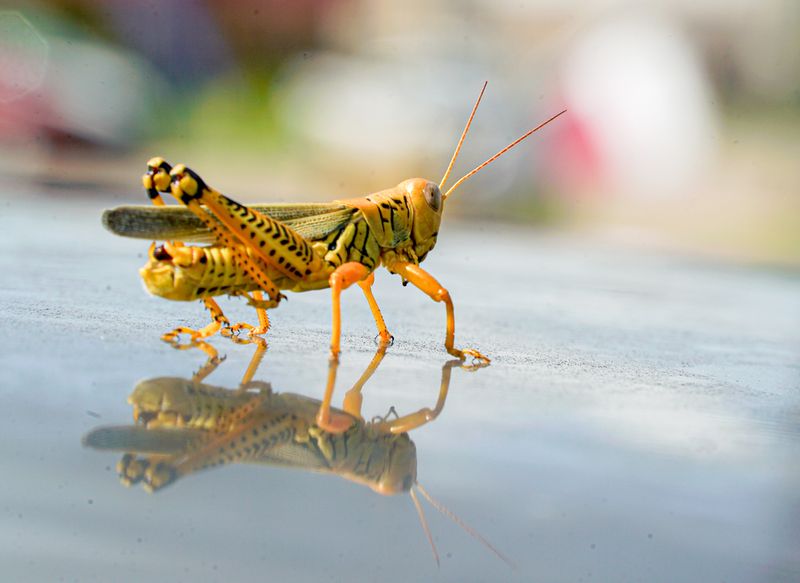
By the time adult Differential Grasshoppers are flying freely across a Texas landscape, managing them becomes a considerably more complicated task.
Adults can move into a yard from surrounding pastures, fields, and weedy areas, which means that even after reducing the grasshoppers already present in a yard, new ones can arrive from nearby land.
That ability to reinvade is one of the main reasons late-season control often produces less lasting results than homeowners expect.
Insecticides labeled for grasshopper management can be one tool in a broader management approach when plant damage justifies treatment.
Product selection must be appropriate for the specific site and plant type, and label directions must be followed carefully.
Current Texas A&M AgriLife guidance and the current product label should always be consulted before making any treatment decision, since pesticide registrations, formulations, and recommendations can change over time.
Older recommendations may no longer reflect what is currently available or registered for use.
Even with a well-timed insecticide application, reinvasion from surrounding land can limit how long the results hold.
Homeowners near large open areas, farmland, or extensive weedy habitat may find that adult grasshoppers continue moving into their yards throughout the rest of summer.
Combining multiple strategies, including physical barriers for the most valued plants, reduced weedy habitat around the property, and treatment when needed, tends to produce better outcomes than relying on any single approach.
Managing expectations is part of working with this insect in Texas.