Texas Trees With Roots Less Likely To Lift Pavers In Small Yards
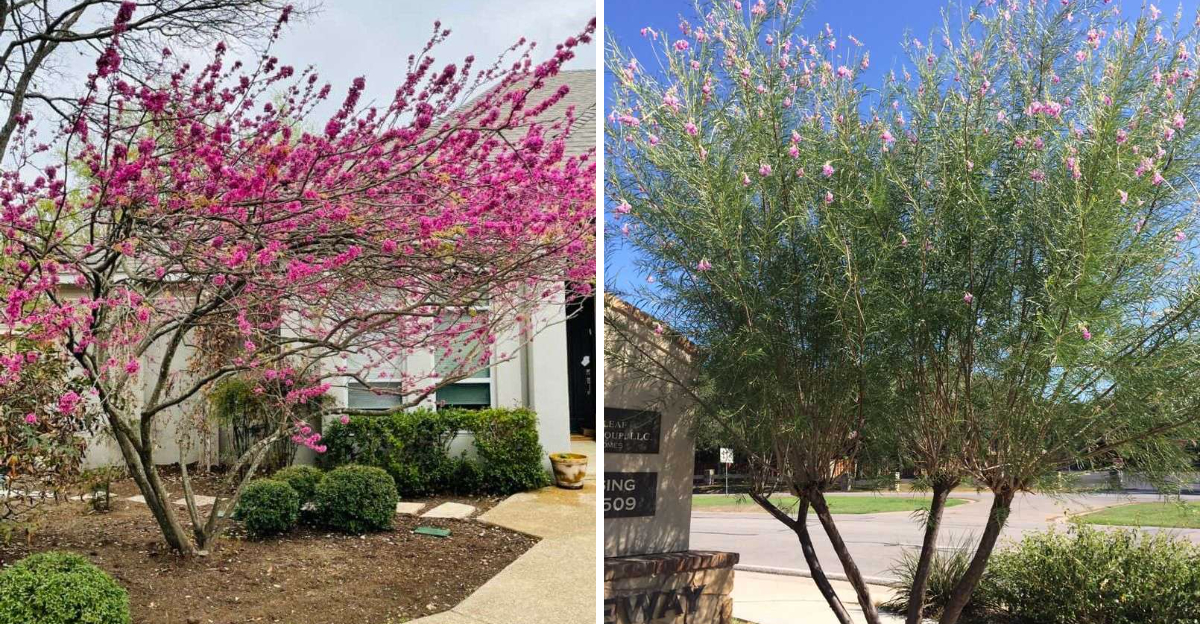
Planting a tree near pavers, walkways, or a patio in a small Texas yard requires thinking further ahead than most homeowners do at the time of planting. A young tree in a five gallon container looks completely manageable positioned next to a pathway or sitting area.
Ten years later, the same tree can be lifting pavers, cracking concrete, and creating a repair project that costs significantly more than the tree ever did.
Root behavior is one of the most important and most overlooked factors in tree selection for small Texas yards.
Not all tree roots are equally aggressive or equally damaging to hardscape. Some trees develop deep tap root systems that go down rather than out, reducing the surface competition with pavers and foundations.
Others are simply less vigorous in their lateral root spread at the scale most relevant to a small yard. Choosing trees with these characteristics from the start is far easier than managing the consequences of choosing wrong.
Here are the Texas trees whose root systems are least likely to create hardscape problems in small yard situations and why each one earns its place on this list.
1. Texas Mountain Laurel
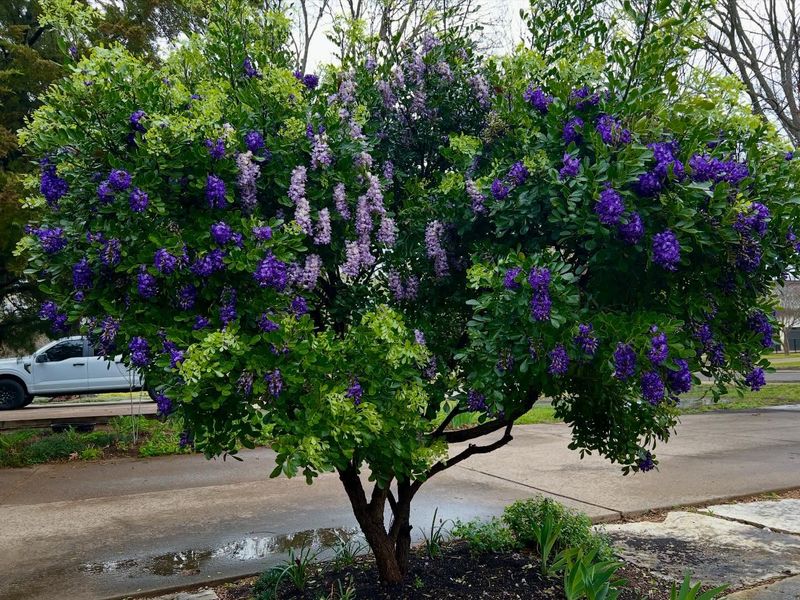
If you have ever walked past a Texas Mountain Laurel in bloom and caught a whiff of something that smells exactly like grape soda, you already know why people fall in love with this tree.
That incredible fragrance comes from the clusters of deep purple flowers that appear each spring. It is honestly one of the most memorable scents in any Texas garden.
Sophora secundiflora, its botanical name, is a slow-growing evergreen that rarely exceeds 15 feet in height, though many specimens stay closer to 10 feet for many years.
Because it grows slowly and stays compact, it is an excellent pick for tight spaces near patios, paths, and pavers.
Fast-growing trees tend to build root mass quickly, which raises the risk of hardscape damage. Texas Mountain Laurel sidesteps that problem almost entirely.
This tree thrives in rocky, alkaline soils, which happen to be common across much of central and west Texas.
It is extremely drought-tolerant once established and requires very little maintenance beyond occasional pruning to shape it. Full sun brings out the best flowering performance.
One thing to keep in mind is that the bright red seeds inside the seed pods are toxic, so planting away from areas where small children or pets play frequently is a smart move. That said, the seeds are hard-coated and not easily swallowed by accident.
For a low-maintenance, fragrant, and visually striking small tree that respects your hardscape, Texas Mountain Laurel is genuinely hard to beat in a compact Texas yard setting.
2. Texas Redbud
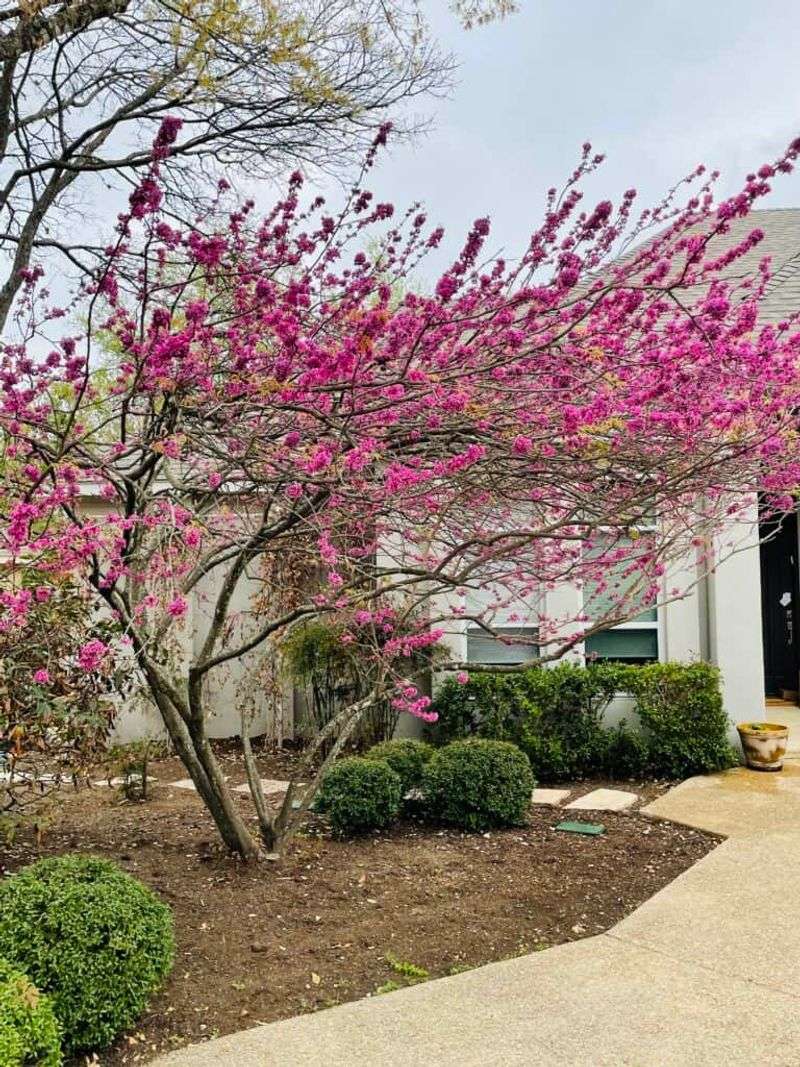
Few sights in a Texas spring are as cheerful as a Texas Redbud exploding into bright pink-purple blooms before its leaves even appear.
This small native tree has been winning over homeowners for generations, and for good reason. It feels like nature’s way of saying winter is finally over.
Texas Redbud (Cercis canadensis var. texensis) typically grows between 12 and 15 feet tall at maturity, making it a genuinely manageable choice for compact yards.
Your Texas Garden Changes Every Week. Your Plan Should Too.
Gardening in Texas changes quickly throughout the season. Every Friday you’ll receive a simple weekly plan showing exactly what to plant, prune, fertilize, harvest, and protect so you never miss the right timing.
Its root system tends to stay relatively shallow and non-aggressive compared to large shade trees like silver maples or willows.
That means your pavers, walkways, and patios are far less likely to get pushed around over time.
Planting it about 5 to 8 feet away from hardscape gives the roots comfortable room to spread without causing problems. Texas Redbud thrives in well-drained soil and handles heat and drought reasonably well once established.
It prefers a spot with full sun to partial shade, which makes it flexible for many backyard layouts.
Beyond its good behavior around pavers, this tree also feeds pollinators. Bees absolutely love the early spring flowers.
Birds are drawn to the seed pods that form later in the season. Gardeners often describe it as one of the most rewarding native trees they have ever planted.
Fall color is a bonus too, with leaves turning yellow before dropping. Overall, the Texas Redbud checks nearly every box for a small yard tree that looks great, supports local wildlife, and plays nicely with your hardscape investment.
3. Yaupon Holly
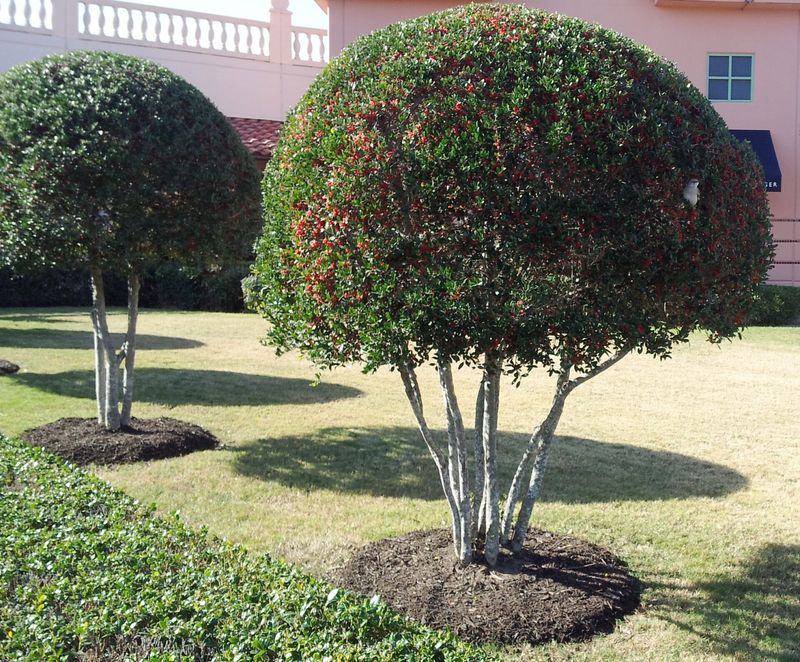
Yaupon Holly might just be the most underappreciated tree in Texas landscaping. Most people walk right past it without realizing how incredibly tough and versatile it actually is. Once you learn what it can do, it becomes hard to leave out of a small yard plan.
Texas A&M AgriLife Extension recommends Ilex vomitoria for a wide range of landscape conditions, and that endorsement is well earned. Yaupon Holly handles drought, poor soils, heat, and even occasional flooding better than most trees.
Its adaptability is genuinely impressive for a plant that also looks polished and attractive year-round.
When trained as a small tree rather than left as a shrub, Yaupon Holly typically reaches 15 to 20 feet, though it can be kept smaller with regular pruning.
Its root system is generally considered non-invasive, which makes it a responsible choice near pavers and poured concrete surfaces.
Planting it 4 to 6 feet from hardscape edges gives it adequate room without putting your landscape investment at risk.
Female plants produce bright red or yellow berries in fall and winter that birds absolutely go wild for. Mockingbirds, robins, and cedar waxwings are frequent visitors when the berries ripen.
That wildlife activity adds a lively, natural energy to even the smallest backyard spaces. Yaupon Holly also holds its deep green color through winter when many other plants look tired and dull.
For homeowners wanting year-round structure, seasonal color, and a root system that behaves around hardscape, this evergreen native checks every important box with room to spare.
4. Desert Willow
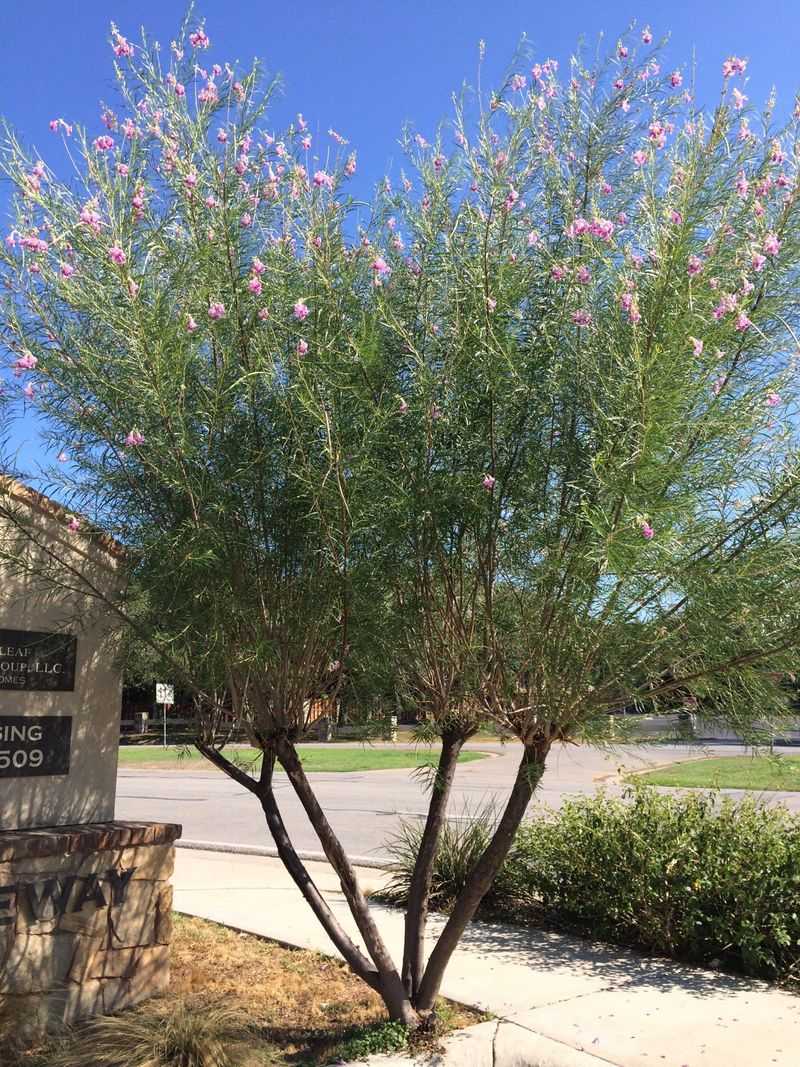
Desert Willow sounds like it might be a thirsty, fussy tree, but the reality is almost the opposite.
Chilopsis linearis is one of the most drought-tolerant small trees available to Texas homeowners, and it brings serious flower power to dry, hot spots where other trees struggle.
The trumpet-shaped blooms in shades of pink, lavender, and white keep coming from late spring all the way into fall.
Growing typically between 15 and 25 feet tall, Desert Willow fits comfortably in small to medium-sized yards. Its canopy stays relatively open and airy, which means it casts light shade rather than heavy shade.
That quality makes it easier to grow grass or ground covers beneath it without a constant battle against deep shade.
When placing Desert Willow near pavers or a patio, giving the trunk and root zone reasonable clearance is a smart practice. As the trunk matures and thickens over many years, surface roots can develop near the base.
A planting distance of at least 6 to 8 feet from pavers helps prevent any long-term lifting issues as the tree ages.
Hummingbirds are strongly attracted to the tubular flowers, making Desert Willow a favorite among wildlife gardeners across Texas. It requires almost no supplemental watering once established in well-drained soil, and it performs best in full sun locations.
One fun detail: Desert Willow is not actually related to true willows at all. It belongs to the Bignoniaceae family, the same group as trumpet vines.
That botanical surprise often catches even experienced gardeners off guard when they first learn about it.
5. Mexican Plum
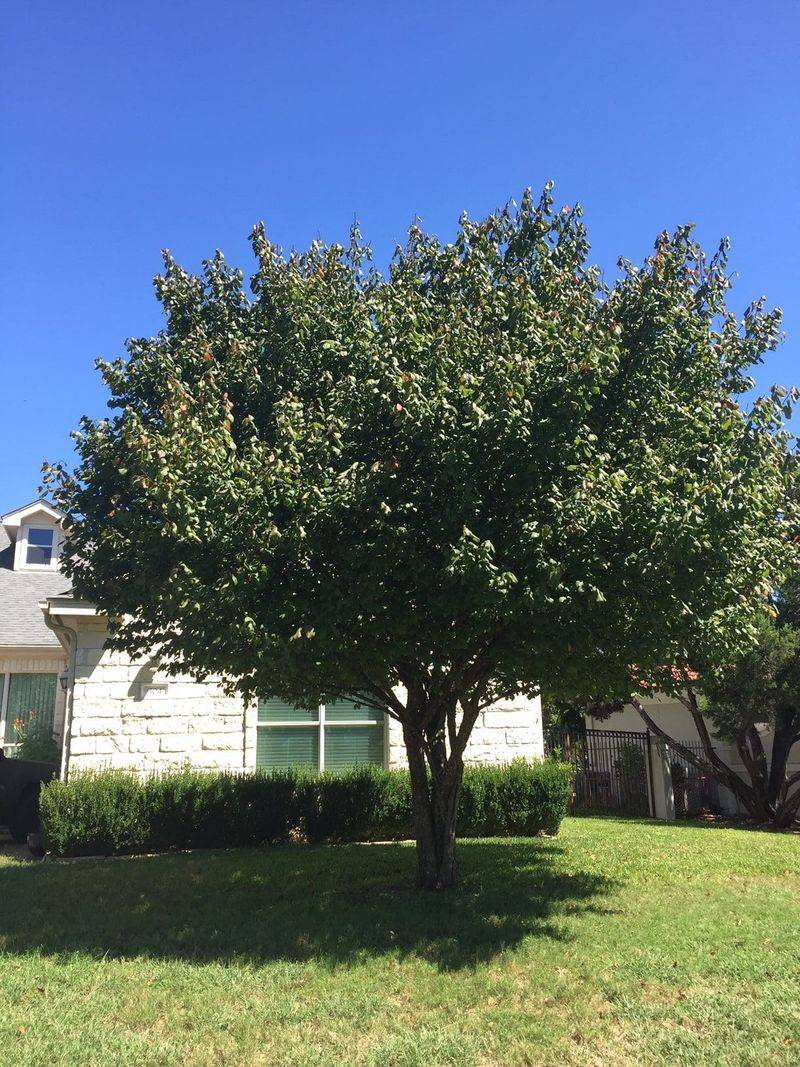
Walk through a Texas woodland in late February or early March and you might catch the sweet fragrance of Mexican Plum before you even see the tree.
Prunus mexicana bursts into clouds of white flowers while most other plants are still waking up from winter, making it one of the earliest and most welcome signs of the changing season.
Mexican Plum is a compact native tree that usually matures between 15 and 25 feet tall, though many specimens in residential gardens stay on the smaller end of that range.
Its naturally tidy growth habit and smaller mature size make it a practical fit for residential gardens where planting space around hardscape is limited.
The root system is generally considered non-aggressive, especially compared to fast-growing exotic species.
Placing Mexican Plum about 6 to 8 feet from pavers or walkways gives it room to establish without creating future problems.
It grows well in a variety of Texas soils, including rocky and clay-heavy ground, and it handles drought reasonably well once its root system has had a full growing season to develop.
The small plums that ripen in late summer are edible and attract a variety of wildlife, including birds and white-tailed deer. Some gardeners use the fruit to make jams and jellies, adding a practical kitchen garden element to what is already a beautiful ornamental tree.
Fall foliage brings another visual reward, with leaves shifting toward yellow and orange before dropping. Mexican Plum truly earns its place in a small Texas yard by delivering something interesting in nearly every season of the year.
6. Anacacho Orchid Tree
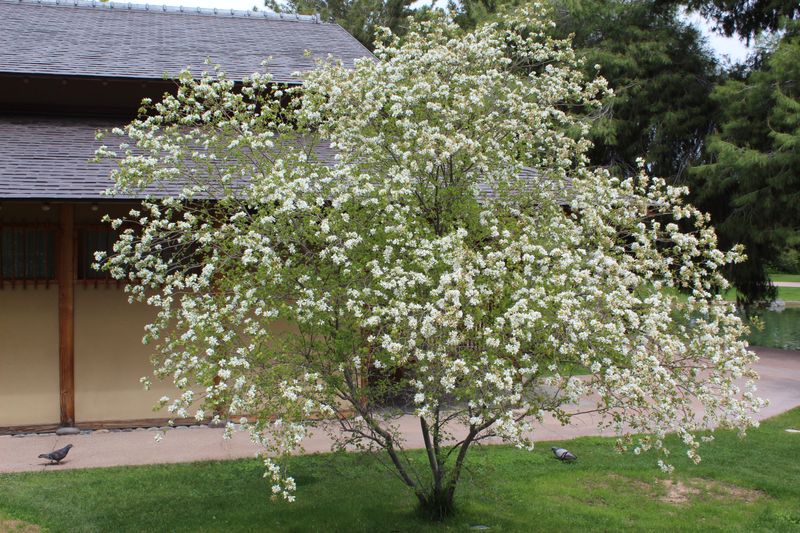
Not many trees can make a small Texas yard look like something out of a botanical garden, but the Anacacho Orchid Tree comes pretty close.
Bauhinia lunarioides is a Texas native that produces delicate white to pale pink flowers that genuinely resemble orchid blooms, which is exactly how it earned its charming common name.
This small tree typically grows between 8 and 12 feet tall, making it one of the most compact options on this list. That modest size is a real advantage when working with limited planting space around patios, paved paths, or other hardscape features.
Its root system is generally considered well-behaved, and its smaller overall size means the root mass stays proportionally contained compared to larger tree species.
Anacacho Orchid Tree is native to the limestone hills of southwest Texas and northern Mexico, which tells you a lot about its preferences. It loves well-drained, rocky, or sandy soils and handles drought conditions with impressive composure.
Full sun brings out the most abundant flowering, and spring is when the show really peaks, though sporadic blooms can appear at other times of year.
Planting it 4 to 6 feet from pavers is generally sufficient given its compact root zone and slower growth rate. It works beautifully as a focal point specimen near an outdoor seating area or along a paved garden path where its flowers can be appreciated up close.
Did you know the Anacacho Orchid Tree was only described to science in the mid-20th century? For such a showstopper, it stayed under the radar for a surprisingly long time before Texas gardeners began embracing it widely.
7. Wax Myrtle
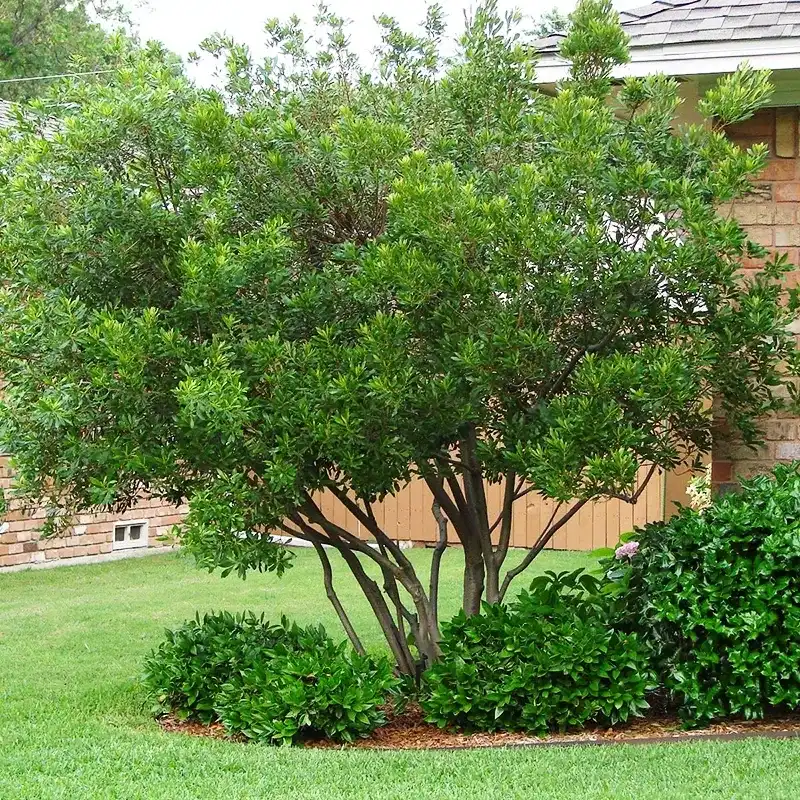
Wax Myrtle is the kind of tree that landscape professionals keep recommending because it simply works in so many different situations.
Morella cerifera, sometimes listed as Myrica cerifera, is an evergreen native that Texas A&M AgriLife Extension describes as highly adaptable to confined spaces, which makes it especially valuable for small yards with limited planting room around hardscape.
When grown as a small tree rather than a multi-stem shrub, Wax Myrtle can reach 10 to 15 feet in height.
Its root system is generally considered non-invasive, and its modest size keeps the overall root mass from becoming a problem near pavers, patios, or poured concrete surfaces.
Planting it about 4 to 6 feet from hardscape edges gives it comfortable growing room without putting your investment at risk.
One of the standout qualities of Wax Myrtle is its flexibility. It handles wet soils and dry soils, full sun and partial shade, and coastal conditions as well as inland Texas heat.
Very few native trees offer that kind of environmental range without showing stress or poor performance.
The aromatic foliage is another bonus. Rubbing a leaf releases a fresh, bay-like scent that many gardeners find pleasant.
The small, waxy, blue-gray berries that develop in fall and winter are a major food source for yellow-rumped warblers and other migratory birds passing through Texas.
For homeowners who want year-round green color, wildlife value, and a tree that fits neatly into a compact space without threatening nearby pavers, Wax Myrtle delivers reliable results season after season with very little fuss required.