Arizona Homeowners May Want To Leave Lizards Hunting Around Their Patios Alone
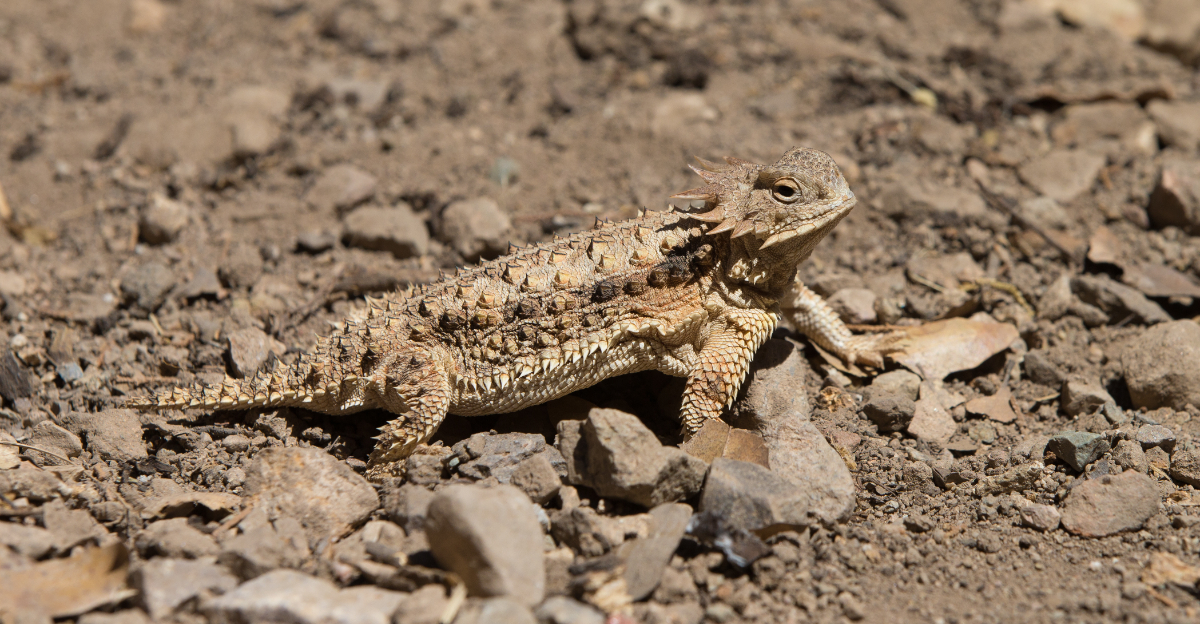
That little lizard darting across your patio may be doing more than searching for a sunny place. Before chasing it away, watch what it does when tiny insects move nearby.
Patios can become busy hunting grounds once evening activity picks up.
Many Arizona lizards feed on insects and other small creatures they find around homes. Their quick movements may look distracting, but those visits often have a purpose.
Give these small hunters room when they are simply passing through your outdoor space.
You might notice them waiting near walls, plants, or lights where prey becomes easier to find. That behavior can make your patio surprisingly useful to a hungry lizard.
Once you understand what keeps bringing them back, sharing that corner of the yard may suddenly feel much easier outside.
1. That Patio Visitor Is Probably Looking For Food
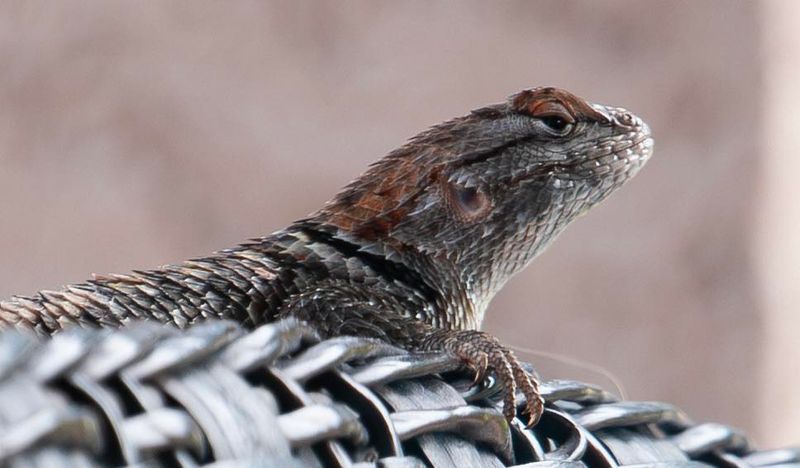
Spotting a lizard near your back door is not random. Patios and developed yard spaces tend to concentrate exactly what lizards are looking for: food.
When people build homes and plant gardens, they create conditions that attract insects. Cracks in concrete, potted soil, leaf litter, and mulch all give small bugs places to hide, breed, and move around.
Lizards pick up on this quickly.
Yard spaces with consistent moisture, shade, or organic debris tend to support more insect activity than open desert ground. A lizard patrolling your patio edge is likely following that activity rather than seeking out human contact.
Covered patios can also trap warmth and create sheltered microenvironments. Insects gravitate toward those conditions.
A lizard working the perimeter of your seating area is probably hunting a path where prey tends to show up.
Developed spaces often produce more reliable food access than open terrain. Patios with planters, bird feeders, or compost nearby may see more lizard traffic for that reason.
None of this means your yard has a pest problem. Insects are everywhere in warm climates, and lizards simply go where the hunting is reasonable.
Your patio happens to be a good place to look.
2. Insects And Other Arthropods Keep Them Hunting
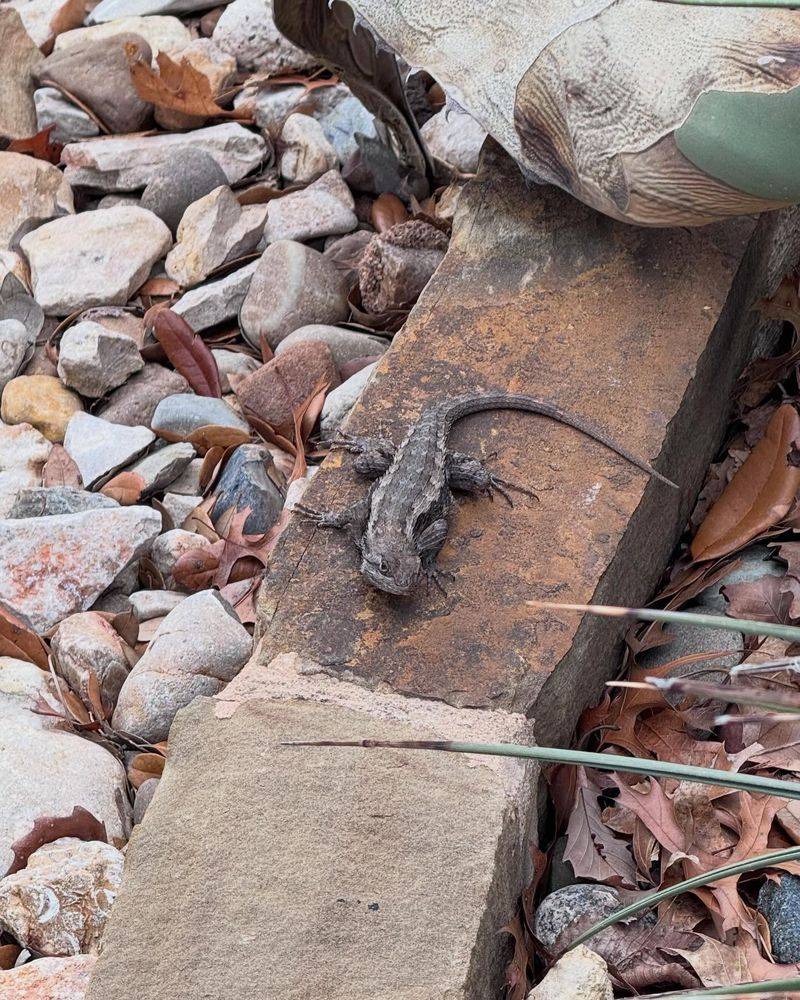
Lizards are not picky eaters, but most common yard species lean heavily on insects and other arthropods as a core part of their diet.
Beetles, ants, grasshoppers, and crickets are frequent targets. Spiders and small invertebrates also end up on the menu when available.
Species like the western fence lizard and the side-blotched lizard, both common across much of the Southwest, are well-known insect hunters.
Arthropods are abundant in warm climates, especially during spring and summer months when temperatures rise and insect populations expand. Lizards track those seasonal shifts and tend to be more active when prey is plentiful.
Worth noting: lizards do eat arthropods, but they are not pest control systems. They hunt opportunistically, targeting whatever is accessible at a given moment.
Some insects in your yard will go completely unnoticed by a passing lizard.
Certain species may also eat plant material or small invertebrates occasionally, though protein from arthropods tends to dominate. Each species has its own habits, and not all behave the same way.
Your Arizona Garden Changes Every Week. Your Plan Should Too.
Gardening in Arizona changes quickly throughout the season. Every Friday you’ll receive a simple weekly plan showing exactly what to plant, prune, fertilize, harvest, and protect so you never miss the right timing.
Watching a lizard hunt is genuinely interesting. They use quick bursts of movement, pausing between dashes to scan for prey.
That stop-and-go style is an efficient hunting strategy, not nervous behavior.
3. Patio Lights Can Bring The Hunt Closer To Home
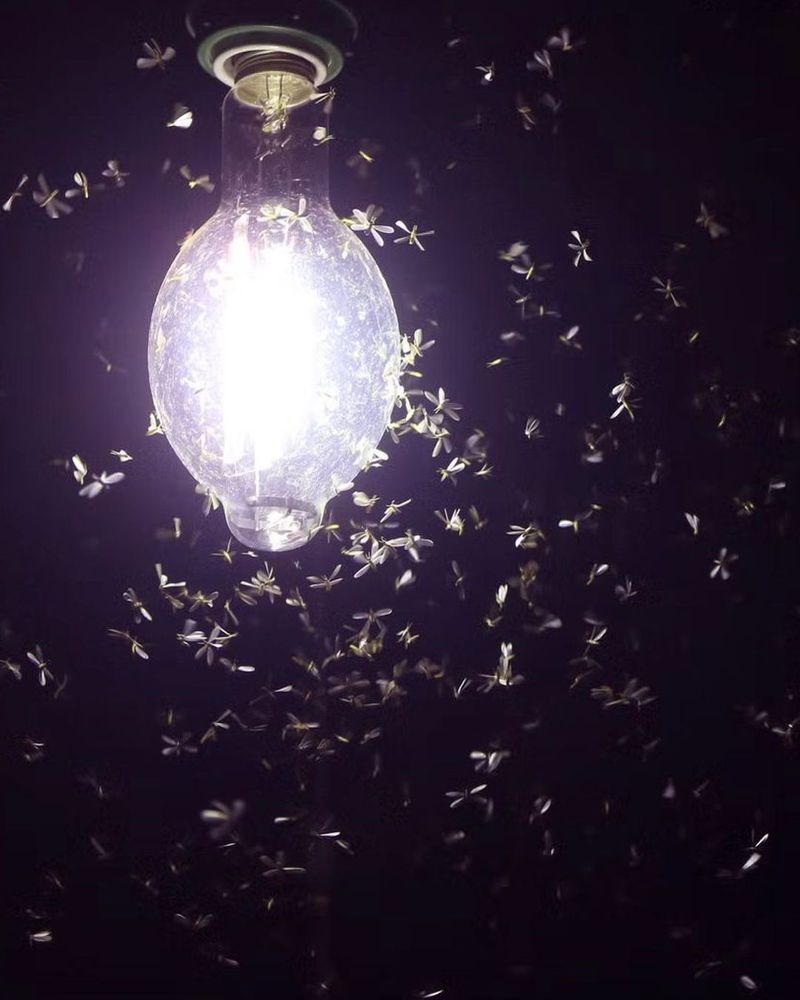
Outdoor lighting does more than help you see at night. Left on after dark, patio and wall-mounted lights quietly pull insects toward your home.
Moths, gnats, beetles, and other flying insects are drawn to artificial light sources. On warm nights, the area beneath a porch light can become surprisingly active with insect movement.
Lizards notice this.
Some species that are active during dawn and dusk will position themselves near lit surfaces where prey concentrates. A lizard sitting on a wall close to your outdoor light is not there by accident.
Insects gather, and the lizard follows.
This connection between lighting and lizard presence is pretty straightforward. More insects near a light source means more potential food.
A patient lizard near that source has less ground to cover when hunting.
Switching to yellow or amber bulbs may reduce the number of insects drawn to your lights at night. These wavelengths attract fewer flying insects than bright white or blue-toned bulbs.
That shift alone can affect what shows up near your patio after dark.
Motion-activated lights are another option. They limit the time your lights stay on and may reduce sustained insect gathering.
Either way, the lizard is simply responding to what the light creates, not to your presence specifically.
4. Warm Surfaces Give Lizards A Place To Bask
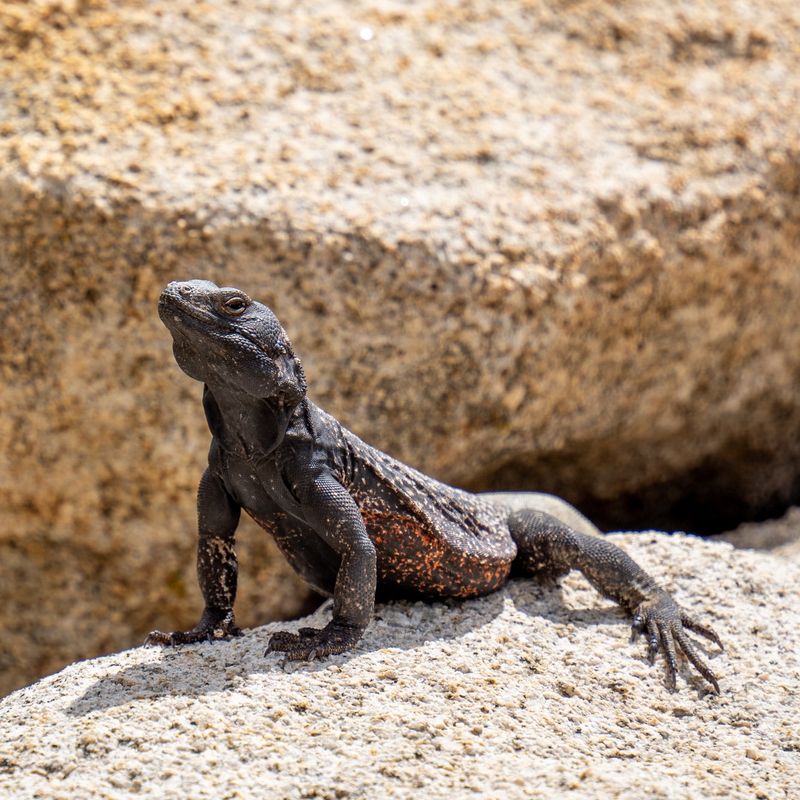
Lizards are ectotherms, which means their body temperature is regulated by their environment rather than generated internally the way mammals do it.
To get moving in the morning, a lizard needs warmth from an outside source. Concrete, brick, flagstone, and stucco walls all absorb heat from the sun and hold it for hours.
Patios built from these materials become ideal basking spots.
You might notice a lizard sitting very still on a sunny wall or flat rock surface early in the day. That stillness is purposeful.
The lizard is warming up before it can move efficiently enough to hunt or avoid threats.
Basking is not laziness. Without adequate body heat, a lizard’s muscles and reflexes are slower.
Warming up on a sun-soaked surface is essential to how the animal functions throughout the day.
Patio materials that hold heat well, such as dark stone or dense concrete, may attract lizards looking for a reliable warm-up spot. Shaded surfaces are less useful for this purpose and tend to see less lizard activity in the morning hours.
On very hot summer afternoons, the same lizard that basked on your wall at 8 a.m. may seek shade by midday. Thermal regulation goes both ways, and lizards move between warm and cool spots as needed throughout the day.
5. Most Would Rather Scurry Away Than Face You
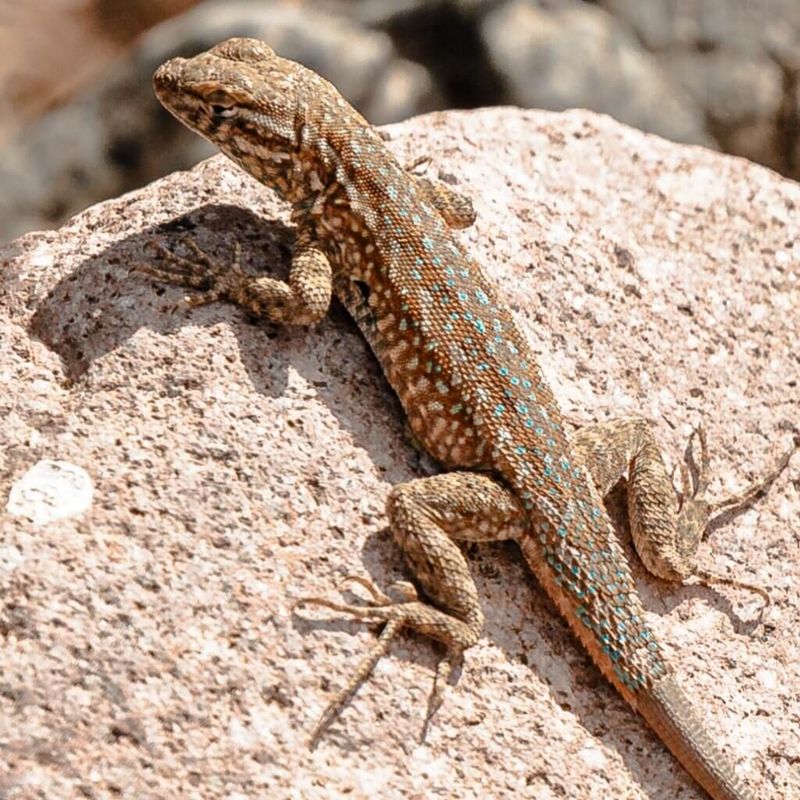
Walk toward a lizard on your patio and watch what happens. Almost without exception, it will move away fast.
Common yard lizards in the Southwest tend to be highly avoidant of humans. They rely on speed and cover rather than confrontation.
A lizard that runs under a pot or behind a wall when you approach is behaving exactly as expected for its species.
Avoidance is their default strategy. Lizards have evolved to treat anything larger than themselves as a potential threat.
That includes people, pets, and shadows moving across the ground. Sudden movements or loud sounds can trigger a quick retreat even from a distance.
This does not mean every lizard species behaves identically. Some may hold their ground longer before retreating, particularly if they feel cornered.
A few species display defensive postures when threatened. But the lizards most commonly seen in residential yards are generally quick to flee rather than engage.
Handling a wild lizard is stressful for the animal and rarely necessary. Even if a lizard seems calm, the experience of being grabbed is frightening for most small reptiles.
Watching from a distance is genuinely the better choice.
Giving lizards space means they are more likely to stay calm and continue their natural behavior nearby, which can be entertaining to watch without any risk to you or the animal.
6. Their Hunting Has A Place In The Local Food Web
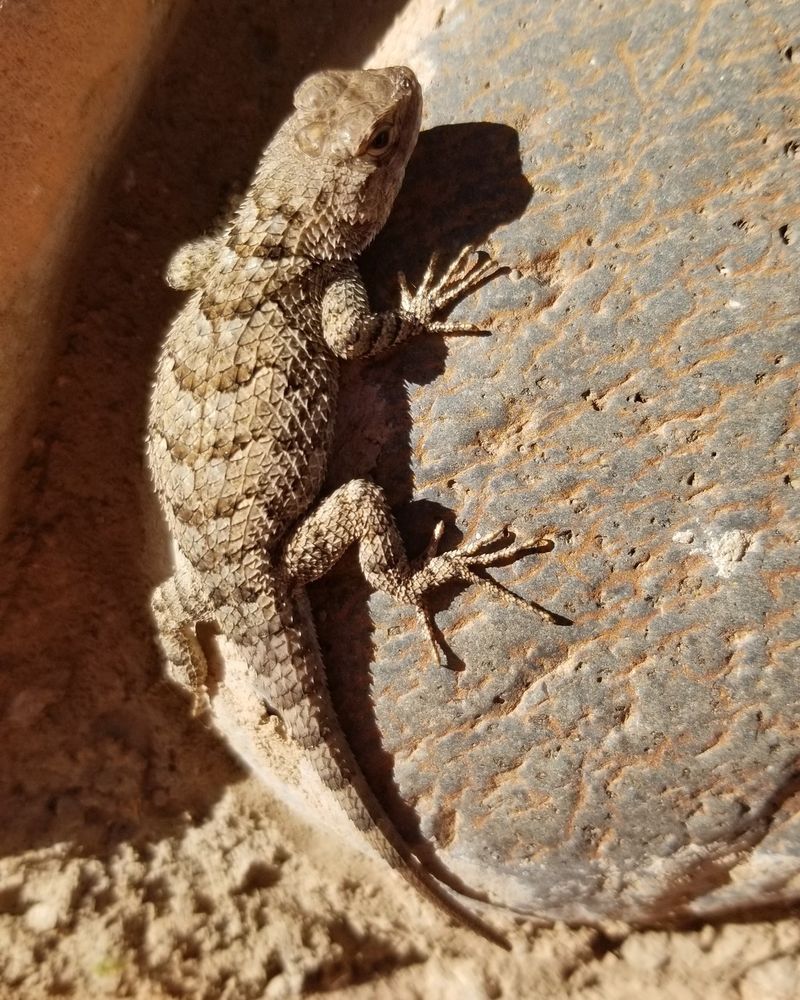
Lizards are not at the top of the food chain, and they are not at the bottom either. They sit in the middle, and that position matters.
By eating insects and arthropods, lizards help move energy through the local ecosystem. They consume prey and, in turn, become food for larger animals.
Hawks, roadrunners, snakes, and some mammals all include lizards in their diet when the opportunity arises.
Removing a mid-level predator from any ecosystem tends to create imbalances. Lizard populations help keep insect numbers from growing unchecked in some local areas, though the extent of that effect depends on many factors including lizard density and prey availability.
Backyard and patio spaces are not isolated from the broader environment. Wildlife moves through residential neighborhoods regularly, and the food relationships that exist in open desert spaces extend into developed areas as well.
A lizard hunting near your patio is participating in that larger system. It is consuming prey, avoiding predators, and contributing to the movement of energy through the local food web, even in a suburban setting.
Healthy lizard populations around homes in the Southwest can be a sign that the local ecosystem still has some functional balance. No single species carries the whole load, but each one plays a role that connects to others around it.
7. Leaving Them Alone Is Usually The Simplest Approach
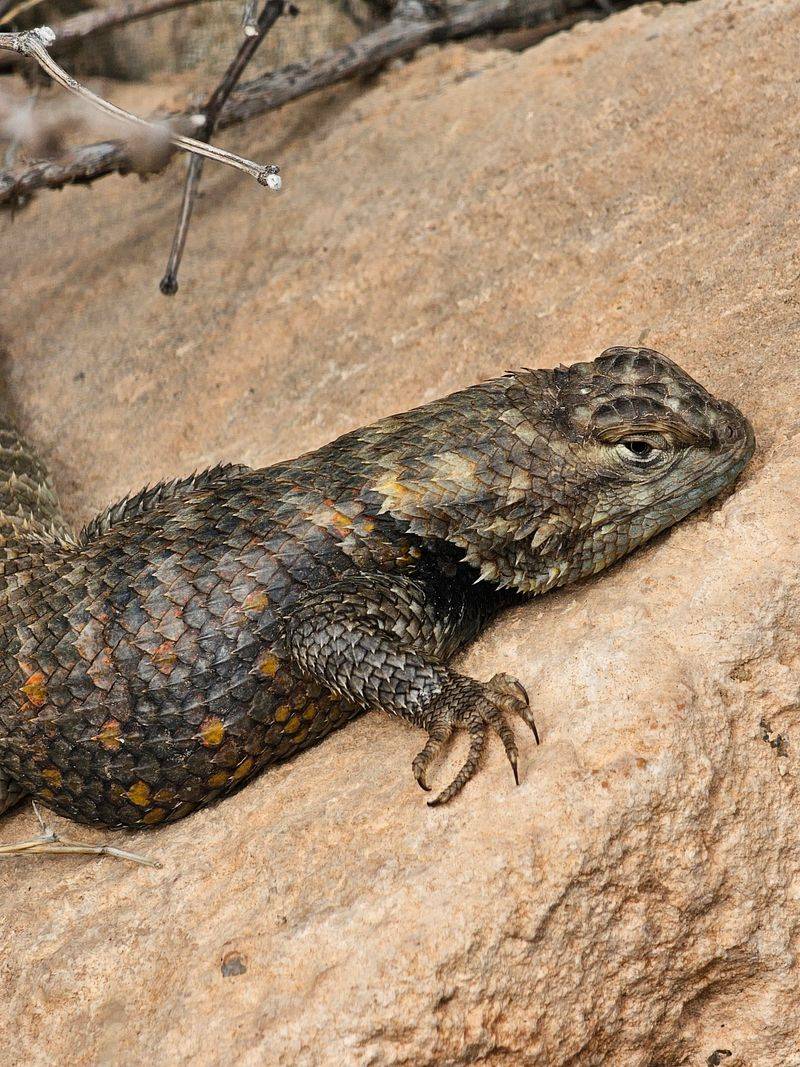
No action is often the right action when a lizard shows up on your patio. Common outdoor lizard species in Arizona generally do not need to be moved, handled, or chased off.
Lizards that visit patios are not nesting inside your home. They are not aggressive toward people under normal circumstances.
Chasing them away repeatedly tends to be more effort than it is worth, and it rarely keeps them from returning anyway.
If a lizard has wandered inside through an open door, the simplest approach is to open a door or window and let it find its way out.
Cornering or grabbing a lizard indoors can stress the animal and cause it to drop its tail, which is a defensive mechanism that harms the lizard even if it regrows over time.
Homeowners with pets should be aware that some dogs and cats will chase lizards. Most lizards escape quickly, but it is worth keeping an eye on interactions if you have curious pets in the yard.
Beyond those basic considerations, coexisting with lizards on your patio takes very little effort. Watching one hunt along your wall or warm itself on a flat stone is a small reminder that the natural world still operates right outside your back door.
You do not need to do anything special. Just let them go about their business.