These Native Texas Trees Feed Songbirds All Winter Long
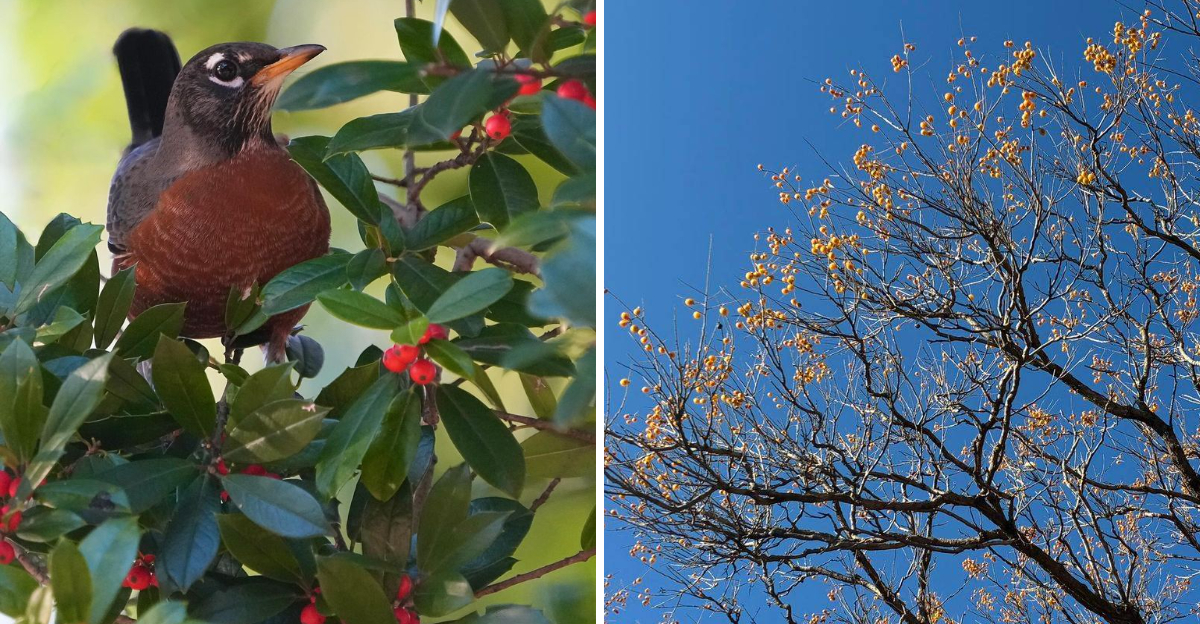
Winter in Texas is a quiet season for most gardens, but for the songbirds that stay through the colder months rather than migrating south, it’s one of the most demanding stretches of the year.
Natural food sources that were abundant through spring and summer have diminished, and the trees and shrubs that still hold fruit, seed, or insect resources through winter become genuinely critical for the birds depending on them.
Most ornamental trees contribute almost nothing during this period. Native trees are a different story entirely.
Texas native trees that produce and hold food resources through winter are among the most ecologically valuable plantings a Texas homeowner can make.
They support the bluebirds, cedar waxwings, mockingbirds, thrashers, and dozens of other species that rely on persistent fruit and seed through the cold months, and they do it without any supplemental feeding or ongoing maintenance from you.
The right native trees make your yard a destination for winter songbirds rather than just a place they pass through.
1. Yaupon Holly
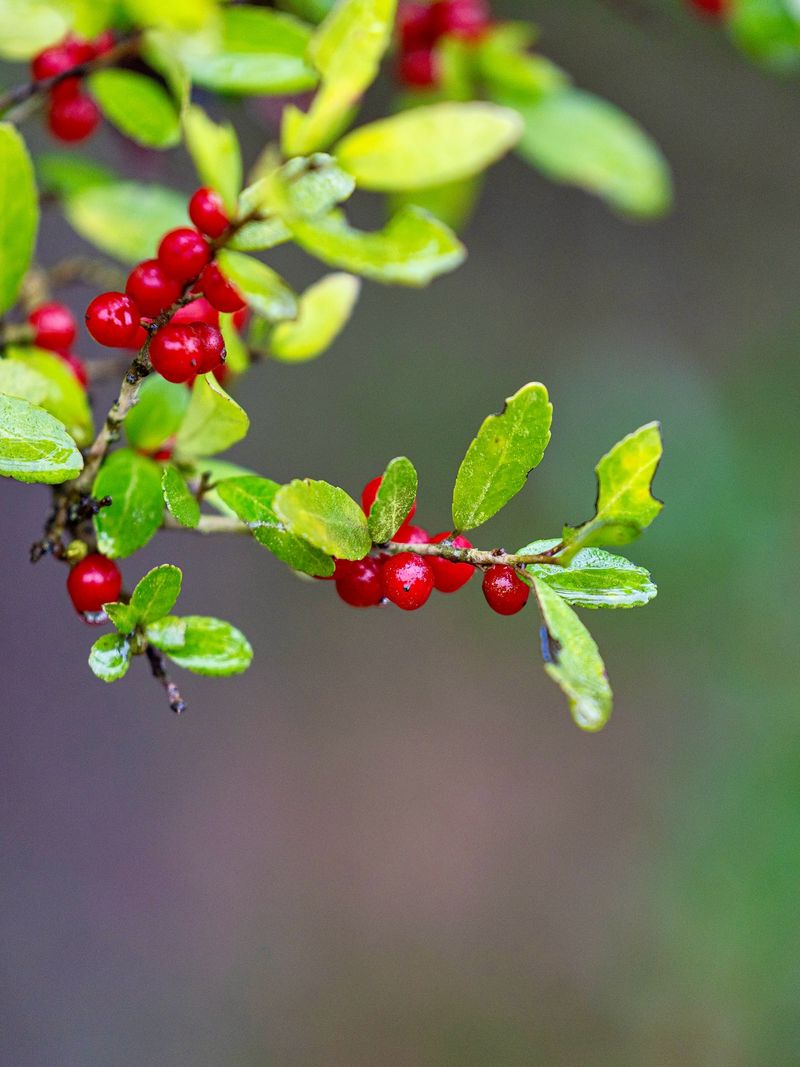
Few plants in Texas have a reputation quite like the Yaupon Holly. It is tough, adaptable, and one of the most reliable berry producers around.
Female trees are the real stars here, as they are the ones that grow those small, shiny red berries that birds absolutely love. The berries often stay on the branches well into winter, making this tree a critical food source when other options run low.
Robins, mockingbirds, and bluebirds are some of the most frequent visitors to Yaupon Holly trees. Cedar waxwings also flock to them in large, noisy groups.
Watching a wave of waxwings strip a holly tree in minutes is one of winter birdwatching’s best surprises. The berries are rich in energy, giving birds the fuel they need during cold snaps.
Yaupon Holly grows naturally across East Texas and parts of Central Texas. It thrives in a wide range of soils and does not need much water once it gets established.
You can find it growing along forest edges, creek banks, and even in urban landscapes. It stays green all year, which means it also offers shelter to birds during harsh weather.
Planting a female Yaupon Holly in your yard is one of the smartest moves you can make for local wildlife. Just make sure there is a male tree nearby to help with pollination.
Many nurseries sell both. Fun fact: Yaupon is the only native North American plant known to contain caffeine, though that is more a curiosity than a concern for the birds enjoying its fruit.
2. Possumhaw Holly
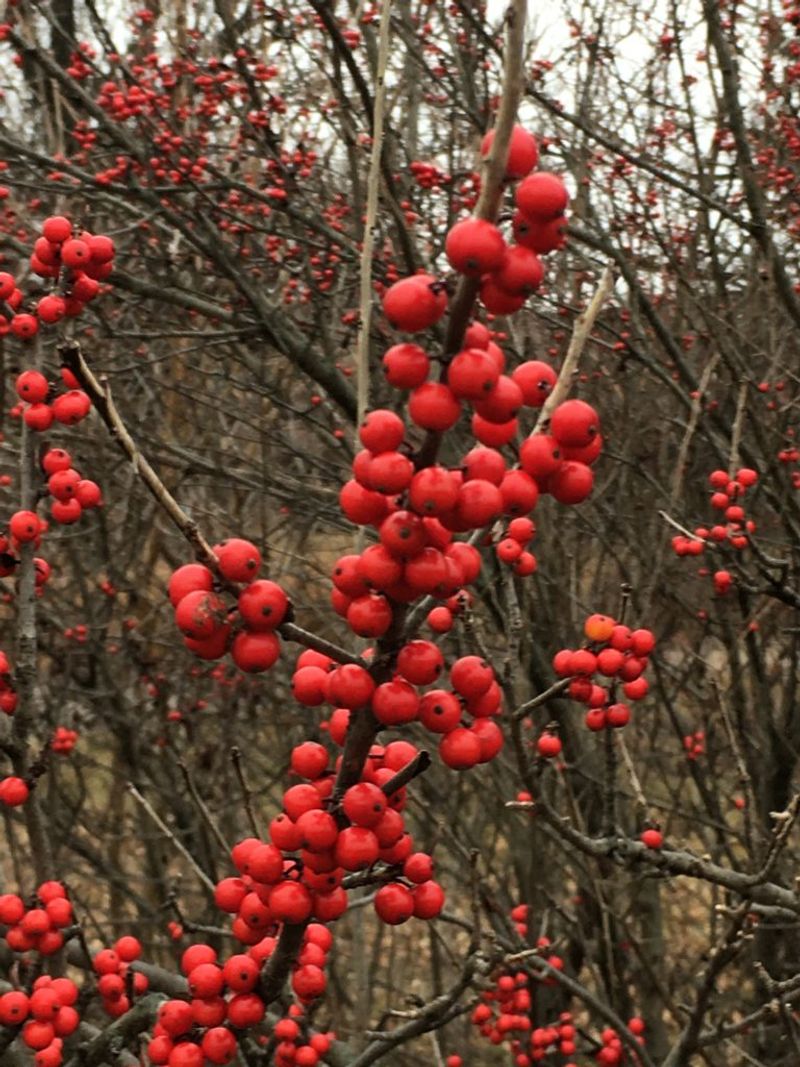
Possumhaw Holly has a look that stops people in their tracks. After its leaves drop in autumn, the branches stay loaded with clusters of bright red or orange berries.
Against a gray winter sky, a mature Possumhaw looks almost like a holiday decoration that nature put together herself. But this tree is far more than pretty scenery; it is a lifeline for birds when food gets scarce.
The berries ripen in late fall and can hang on the branches for months. This timing is perfect because it fills the gap when most other fruits and seeds have already been eaten or have rotted away.
Your Texas Garden Changes Every Week. Your Plan Should Too.
Gardening in Texas changes quickly throughout the season. Every Friday you’ll receive a simple weekly plan showing exactly what to plant, prune, fertilize, harvest, and protect so you never miss the right timing.
Cedar waxwings, robins, mockingbirds, and bluebirds are among the birds most often seen feeding on Possumhaw berries. Some birds will even return to the same tree repeatedly throughout the season.
Possumhaw Holly is a native shrub or small tree that grows naturally in creek bottoms, woodland edges, and open areas across Texas. It handles both wet and dry conditions better than many other plants.
Once established, it is remarkably low-maintenance, which makes it a great choice for home landscapes and wildlife gardens alike.
Like Yaupon Holly, Possumhaw is a female-only berry producer, so you will need a male plant close by to get fruit. Many Texas native plant nurseries carry both.
Planting several together creates a real winter buffet for local birds. The showy berries also add color to your yard during the dullest months of the year, making it a win for both birds and gardeners.
3. Eastern Redcedar
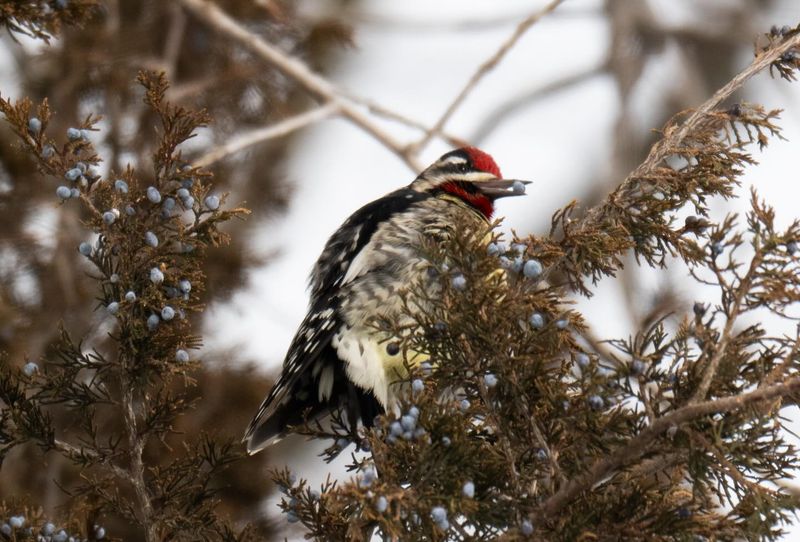
Eastern Redcedar is one of the most widespread trees in Texas, and birds have known about it for a long time. Female trees produce small, round, blue-gray cones that look a lot like berries.
These fleshy cones ripen in fall and often stay on the tree through much of winter. For fruit-eating birds, this is a major food source that covers a huge portion of the state.
Cedar waxwings practically have this tree written into their name, and for good reason. These sleek, masked birds travel in flocks and rely heavily on Eastern Redcedar fruit during winter migrations.
Robins, bluebirds, and mockingbirds also visit regularly. The dense, evergreen branches provide shelter too, giving birds a safe place to roost on cold or windy nights.
Eastern Redcedar grows in almost every region of Texas. It tolerates poor soils, drought, and rocky terrain without complaint.
You will find it on hillsides, pastures, fence lines, and along roadsides. Its toughness makes it one of the most dependable wildlife trees in the state, even if it sometimes gets a bad reputation from ranchers who see it as invasive in grasslands.
For backyard birders, having even one Eastern Redcedar on your property can draw in impressive flocks during winter. The tree also provides nesting sites in spring and summer, making it a year-round habitat plant.
If you already have one growing on your land, consider yourself lucky. These trees support more wildlife than most people realize, and their winter berries are a big reason why.
4. Ashe Juniper
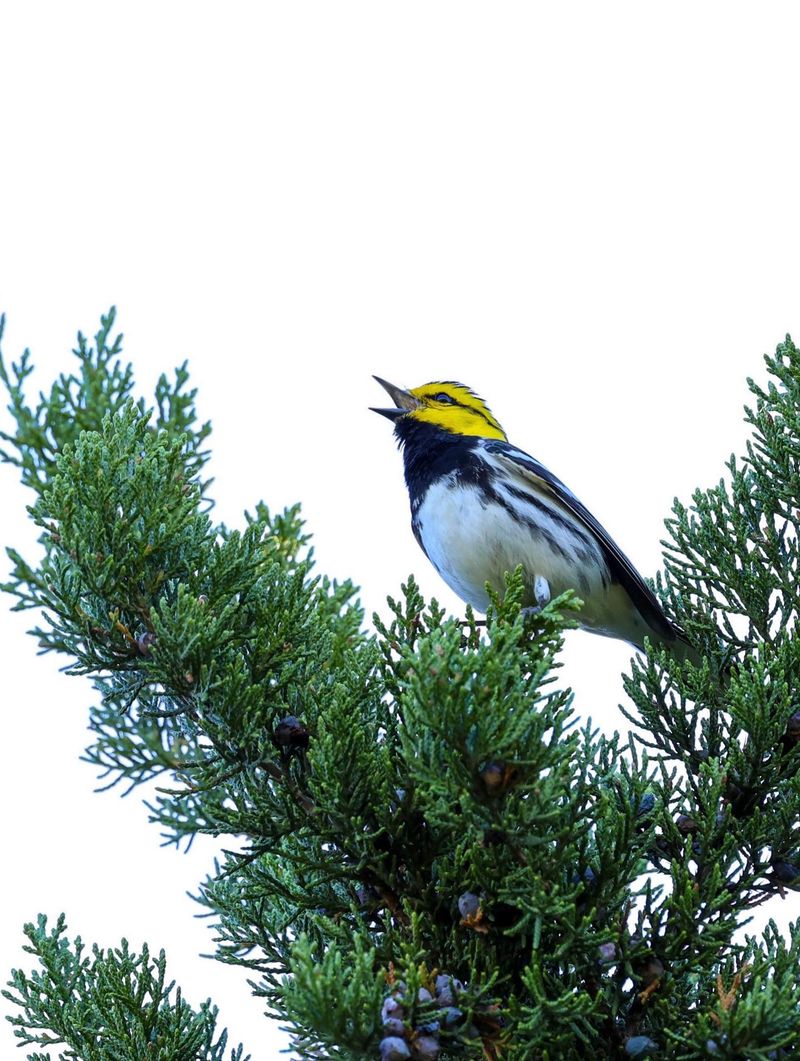
Out in the Texas Hill Country, Ashe Juniper is part of the landscape in a big way. Known locally as “cedar,” this tree covers millions of acres across Central Texas.
Female trees produce small, round, waxy blue fruits every year, and birds treat this crop like a winter grocery store. The fruit is packed with fat and carbohydrates, exactly what birds need when temperatures drop.
Bluebirds, robins, cedar waxwings, cardinals, and finches all feed on Ashe Juniper fruit. Some of these birds travel long distances specifically to find it.
The sheer abundance of Ashe Juniper across the Hill Country means that migrating flocks can count on finding food across a wide area. That reliability makes it one of the most important winter food sources in the region.
Ashe Juniper is also closely tied to one of Texas’s most beloved birds: the Golden-cheeked Warbler. While that species nests in the bark and does not eat the fruit, it shows just how important this tree is to the broader ecosystem.
Many other birds use the dense, evergreen canopy for shelter and nesting, making Ashe Juniper valuable in all seasons.
From a wildlife gardening standpoint, Ashe Juniper is tough to beat. It grows well in thin, rocky Hill Country soils and needs very little water.
If you live in Central Texas and want to support songbirds through winter, keeping or planting Ashe Juniper is one of the most effective things you can do. The birds will find it quickly, often within the first fruiting season.
5. Sugarberry
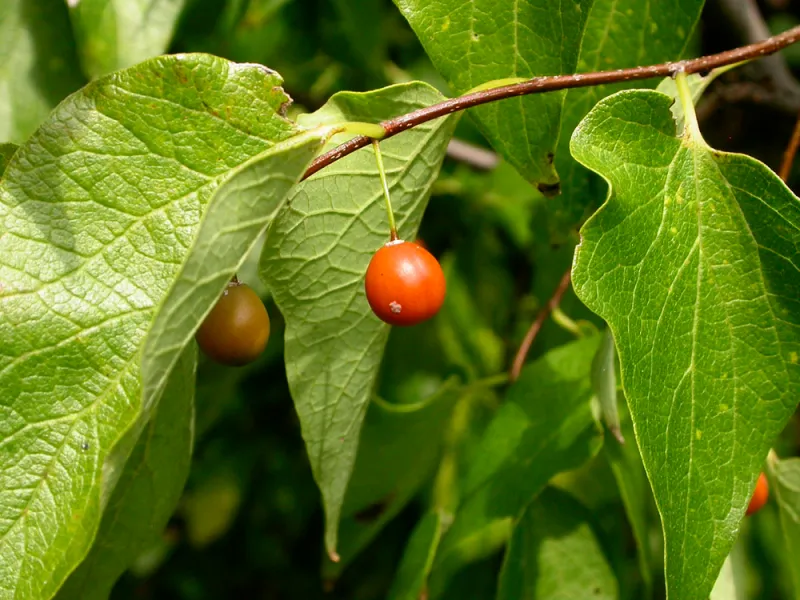
Sugarberry might not be the most famous tree on this list, but birds know exactly where to find it. Also called Texas hackberry in some areas, Sugarberry produces small, round fruits that turn reddish-brown or dark purple as they ripen in fall.
What makes this tree especially valuable is that the fruits can cling to the branches all the way through winter, giving birds a steady food supply for months.
Cedar waxwings are among the biggest fans of Sugarberry fruit. These birds will work through a tree methodically, eating fruit after fruit before moving on.
Robins, mockingbirds, and yellow-rumped warblers also visit regularly. The fruit is not flashy, but it is nutritious and available at exactly the right time of year, which is what matters most to a hungry bird.
Sugarberry grows naturally along creek bottoms, river floodplains, and forest edges across much of Texas. It is a medium-sized tree that adapts well to different soil types and moisture levels.
In urban areas, it often pops up on its own in fence lines and disturbed spots, carried there by birds that ate the fruit elsewhere. That is nature’s own way of spreading a good thing.
For gardeners interested in supporting local wildlife, Sugarberry is an underrated choice. It grows at a decent pace and does not need a lot of attention once it gets going.
The rough, corky bark also provides hiding spots for insects, which in turn attract insect-eating birds during warmer months. Planting one near a water source makes it even more attractive to visiting songbirds throughout the year.
6. American Holly
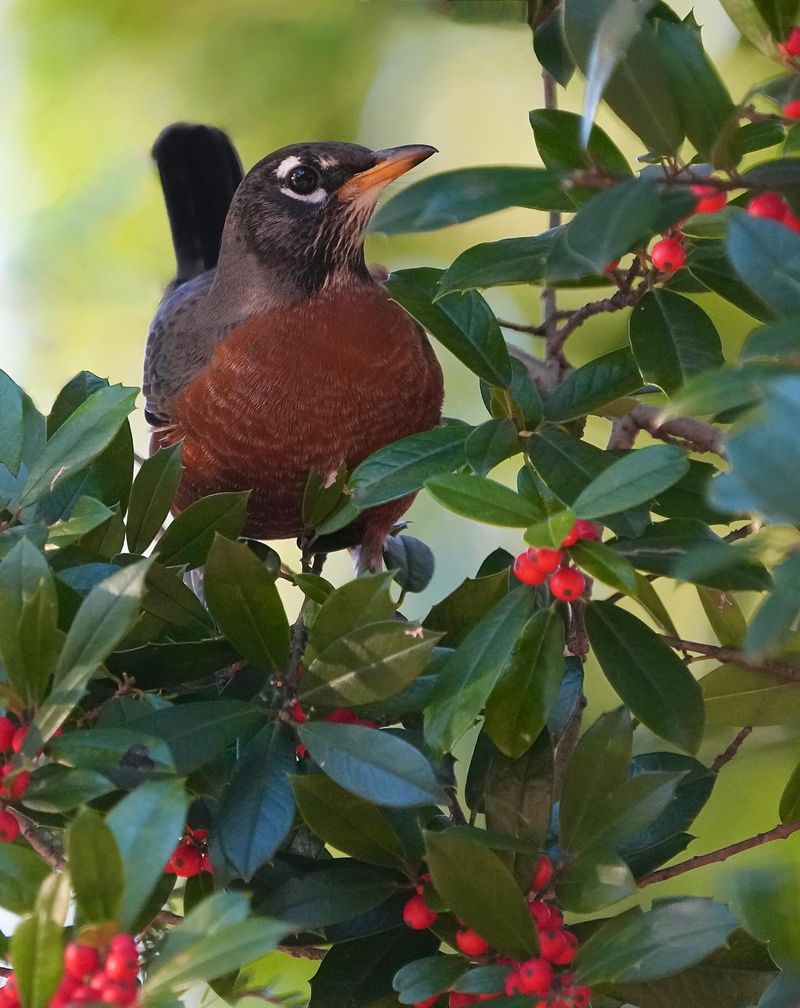
American Holly is one of those trees that feels like it was designed with winter in mind. The glossy, dark green leaves stay on the tree all year, and the bright red berries pop against that deep green background like tiny ornaments.
Female trees are the ones that produce berries, and when conditions are right, they can carry a heavy fruit load that lasts well into winter. It is hard to walk past one without stopping to look.
Birds feel the same way. Robins, bluebirds, hermit thrushes, and mockingbirds are drawn to American Holly berries during the cold season.
The fruit has a slightly bitter taste that most birds seem to prefer after it has gone through a frost or two, which softens the flavor and makes it more appealing. This natural timing means the berries are at peak attractiveness right when birds need food the most.
American Holly grows naturally in East Texas, where it thrives in moist, acidic soils near streams and in mixed forests. It is a slower-growing tree, but it lives for a long time and becomes more productive with age.
In the right spot, it can grow into a beautiful, full-sized tree that anchors a wildlife-friendly yard for decades.
Gardeners who plant American Holly are making a long-term investment in their local bird community. Pairing a female tree with a male pollinator nearby ensures good berry production each year.
The evergreen foliage also provides year-round cover for nesting birds and small animals. Few native trees offer this combination of beauty, shelter, and winter food all in one package.
7. Western Soapberry
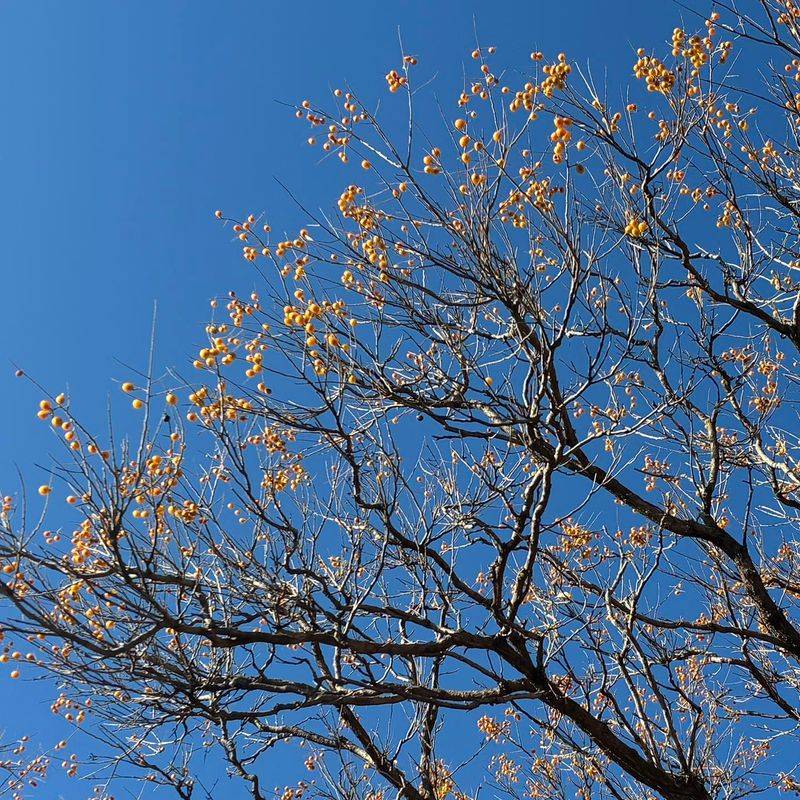
Western Soapberry has a look all its own in winter. After the leaves fall, the branches hold clusters of round, amber-colored fruits that glow almost translucent in the winter sun.
They look like tiny golden lanterns hanging from bare wood. Birds may not rush to them right away, but as the season progresses and other food sources run low, Western Soapberry becomes an important backup pantry for many species.
The fruits contain saponins, which are natural compounds that make them mildly toxic to humans but perfectly fine for birds. Many songbirds, including robins, bluebirds, and cedar waxwings, will eat the fruit and seeds as winter stretches on.
The persistent nature of the fruit is what makes this tree so useful. It stays on the branches long after other food sources have been exhausted, giving birds something to fall back on during the toughest part of the season.
Western Soapberry is native to Central and West Texas, where it grows in dry, rocky soils along creek banks and canyon edges. It is a medium-sized tree that handles heat and drought with ease.
Once established, it needs almost no supplemental watering, which makes it a smart, low-effort addition to any Texas landscape.
Historically, Native American tribes used the fruit’s soapy lather for washing, which is how the tree got its name. That is a fun piece of history that adds some personality to an already interesting plant.
For anyone wanting to add a tough, bird-friendly native tree to their yard, Western Soapberry delivers in a quiet but meaningful way every single winter season.