What To Do If You Spot A Venomous Saddleback Caterpillar In Your Georgia Yard
That strange caterpillar on your favorite plant deserves more caution than its size suggests. Those bright markings and unusual shape can make it tempting to inspect up close.
Saddleback caterpillars are found in Georgia, and their stinging spines can cause immediate pain when they touch bare skin. Knowing what you are looking at matters before you reach toward one.
Keep your hands away, and make sure children and pets do not investigate it either. Even brushing against those spines can leave you with an unpleasant reaction.
Your next move should be calm, careful, and based on where the caterpillar appears.
Not every sighting calls for the same response, especially when only one caterpillar is present.
Knowing how to handle the situation helps you protect yourself while making a sensible choice.
1. Bright Colors Make This Caterpillar Hard To Miss
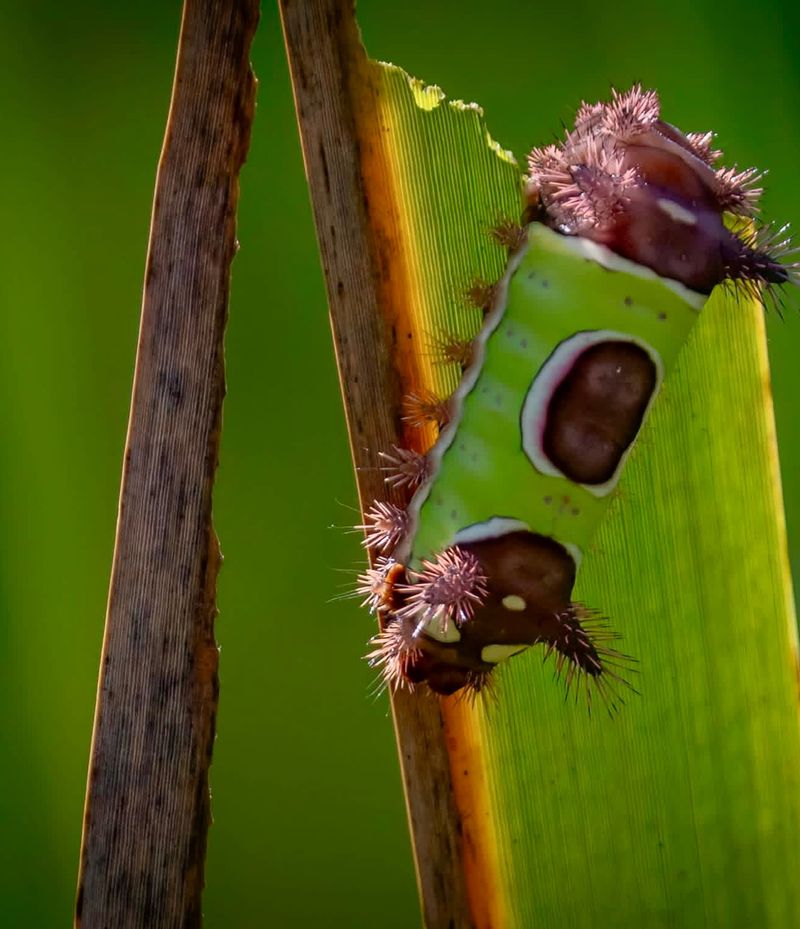
Neon green and brown together is not a common color combo in your average backyard. When you spot something that bright clinging to a leaf or stem, your eyes naturally stop on it.
That reaction is actually useful because the saddleback caterpillar wants to be seen.
Its bold colors are a warning signal to birds and other predators. Bright patterns in nature often mean “back off,” and this caterpillar is a textbook example of that.
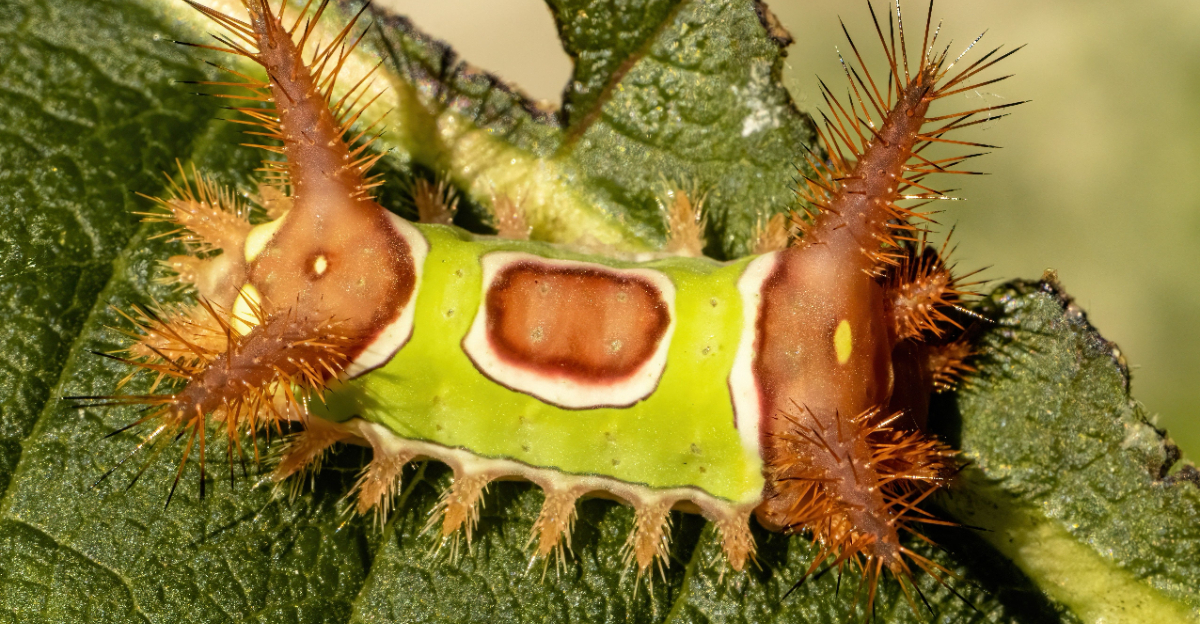
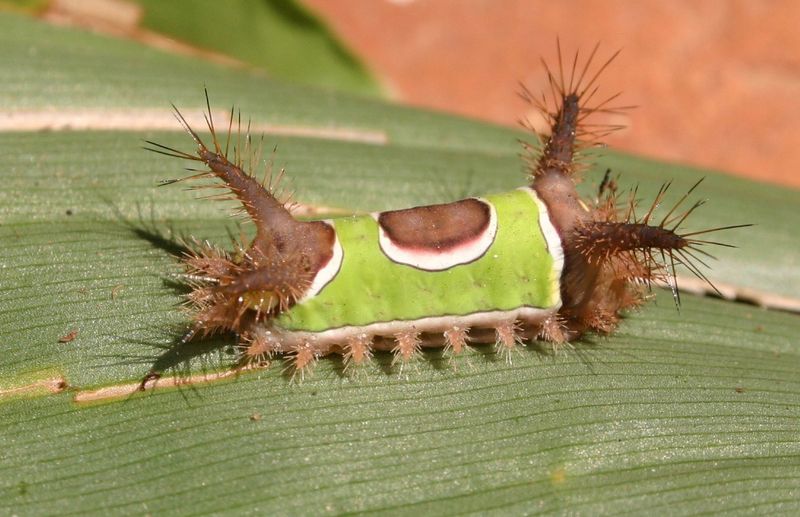
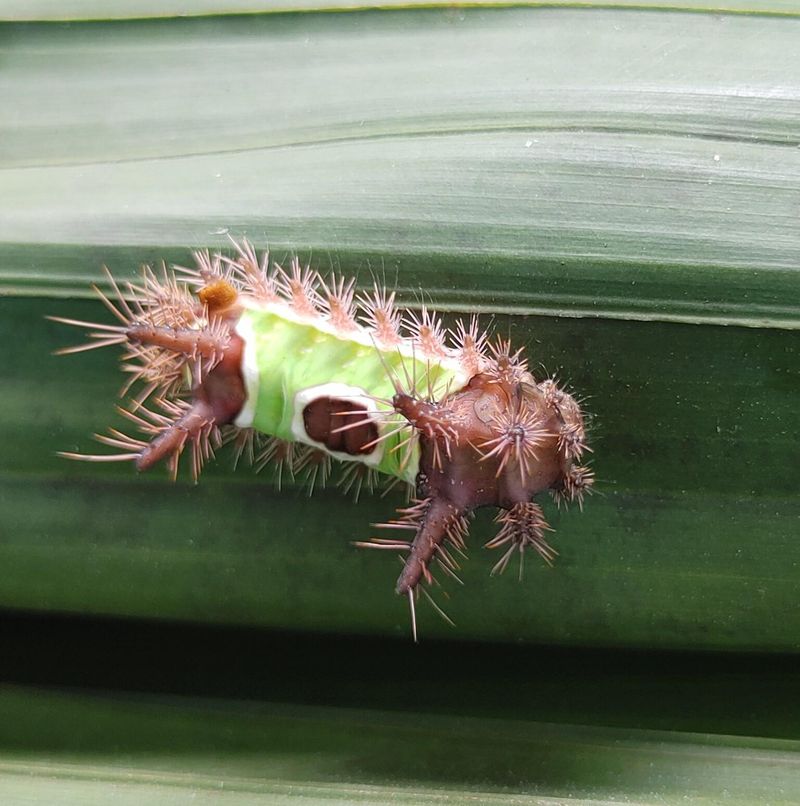
The vivid green patch on its back, surrounded by brown, with small white-edged circles, makes it look almost decorative.
Gardeners in Georgia often spot them between late summer and early fall. That is peak season when the caterpillar is fully grown and most visible.
Younger saddlebacks can be harder to notice because they are smaller and less vibrant.
Seeing one on a low-hanging branch or garden plant is not a reason to panic. It simply means you need to slow down and be deliberate about what you touch.
Your instinct to reach in and pull weeds or trim leaves could easily put your hand right next to one without you realizing it.
Bright coloring is the caterpillar’s first line of defense. Treat that visual cue as a heads-up rather than an invitation to get closer.
2. The Saddle-Shaped Mark Confirms What You Found
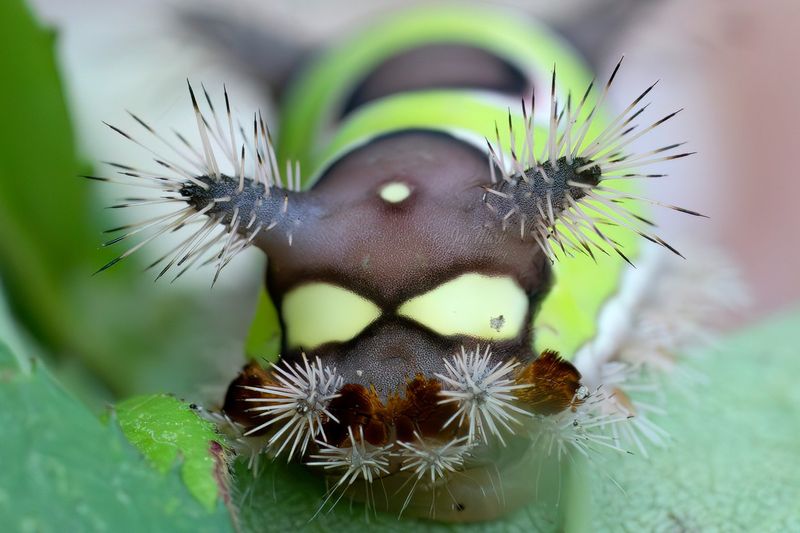
Not every fuzzy caterpillar you find is a saddleback, but one specific marking sets this one apart immediately. Look for an oval or oblong green patch right in the center of the back.
That patch is surrounded by brown and has a small white-edged oval in the middle of it.
Seen from above, the whole pattern looks like a tiny saddle sitting on the caterpillar’s back. That is exactly where the name comes from.
Once you know what that marking looks like, you will not confuse this species with anything else in your yard.
Along the sides and ends of the body, you will notice clusters of spines sticking outward. Those spines are hollow and connected to venom-producing glands underneath the skin.
Brushing against them is what causes the sting.
Identifying the caterpillar correctly matters before you decide what to do next. A fuzzy caterpillar without that saddle mark and without those spine clusters is likely harmless.
Your Georgia Garden Changes Every Week. Your Plan Should Too.
Gardening in Georgia changes quickly throughout the season. Every Friday you’ll receive a simple weekly plan showing exactly what to plant, prune, fertilize, harvest, and protect so you never miss the right timing.
Rushing to remove or relocate something that poses no risk is unnecessary and wastes your time.
Take a photo from a safe distance if you are not completely sure. Use a field guide or a free insect ID app to compare what you see.
Accurate identification is the smart first step before anything else.
3. Tiny Spines Make Touching It A Bad Idea
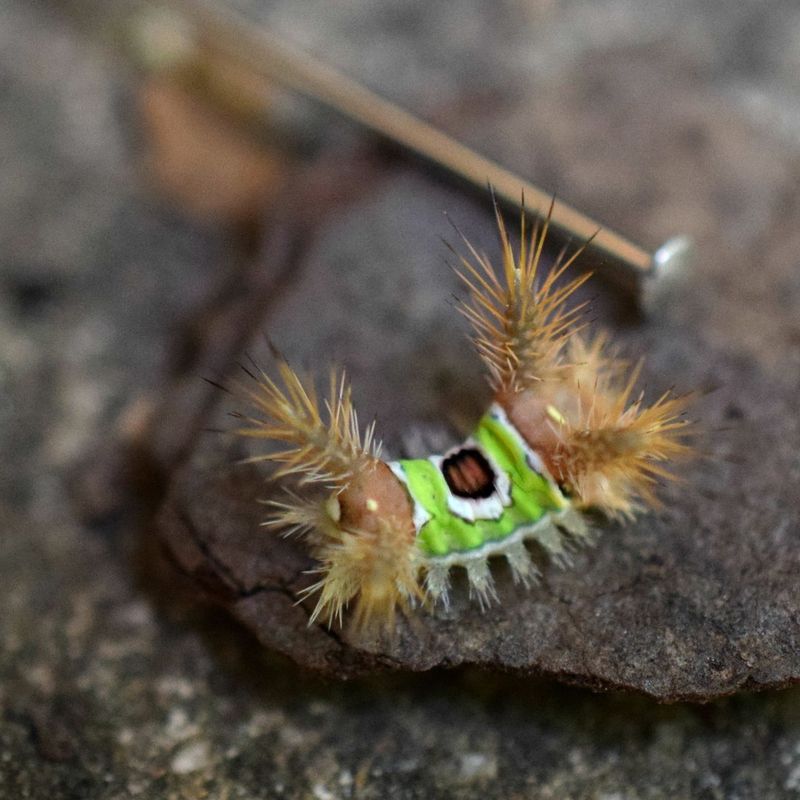
Those little spines covering the saddleback caterpillar are not just for show. Each one is a hollow tube connected to a gland that releases venom when the spine breaks the skin.
Even light contact is enough to trigger a reaction.
A sting from this caterpillar produces an immediate burning or stinging sensation. Redness, swelling, and a rash often follow within minutes.
In some cases, a person may feel nausea or experience swelling beyond the contact area, especially if they are more sensitive to insect venom.
Children are at higher risk simply because they are curious and less cautious around interesting-looking bugs. A caterpillar this colorful is practically an invitation for a child to reach out and grab it.
Make sure kids in your yard know to look but not touch anything they cannot identify.
Pets can also come into contact with the spines if they sniff or paw at the caterpillar. Watch for signs of irritation around your dog or cat’s nose or paws after they have been near garden plants.
Wearing gloves while gardening in Georgia during late summer reduces the risk significantly. Thick gloves will not prevent every possible contact, but they add a reliable layer of protection.
Never use bare hands to move leaves or stems without checking what might be resting underneath them first.
4. Most Sightings Do Not Require Any Control
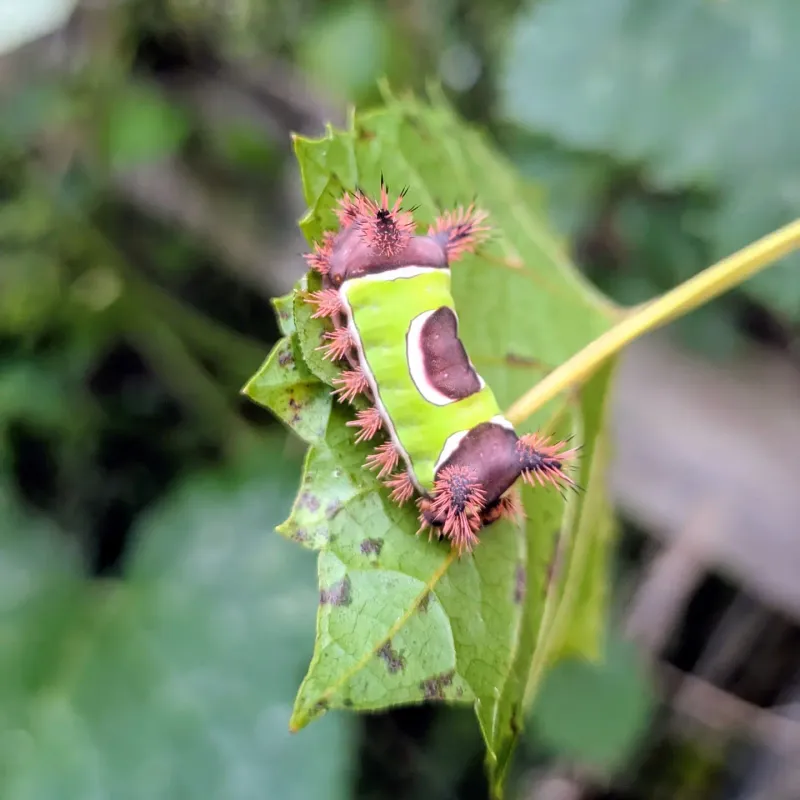
Finding one saddleback caterpillar in your yard does not mean your garden is under attack. Saddlebacks are generally solitary.
Spotting a single individual on a plant is common and does not signal an infestation worth treating.
These caterpillars feed on a wide variety of plants, including oaks, palms, roses, and corn. Light feeding damage on a few leaves rarely causes lasting harm to a healthy, established plant.
A small chewed patch on a leaf is cosmetic, not catastrophic.
Reaching for a pesticide spray every time you spot an insect can do more harm than good. Broad-spectrum sprays can reduce populations of beneficial insects like bees and predatory wasps that naturally keep pest populations in check.
Spraying without a real need upsets that balance.
In most cases, the best response is simply to observe and leave the caterpillar alone. It will eventually pupate and move on through its life cycle.
The threat window is relatively short because the caterpillar stage does not last indefinitely.
Homeowners in the Southeast often find that patience is the most practical approach when dealing with occasional caterpillar sightings. If you spot more than a handful on a single plant and see significant leaf damage, that is a different conversation.
But one or two caterpillars in a yard full of plants rarely warrant anything beyond awareness and caution.
5. Nearby Plants May Be Where It Has Been Feeding
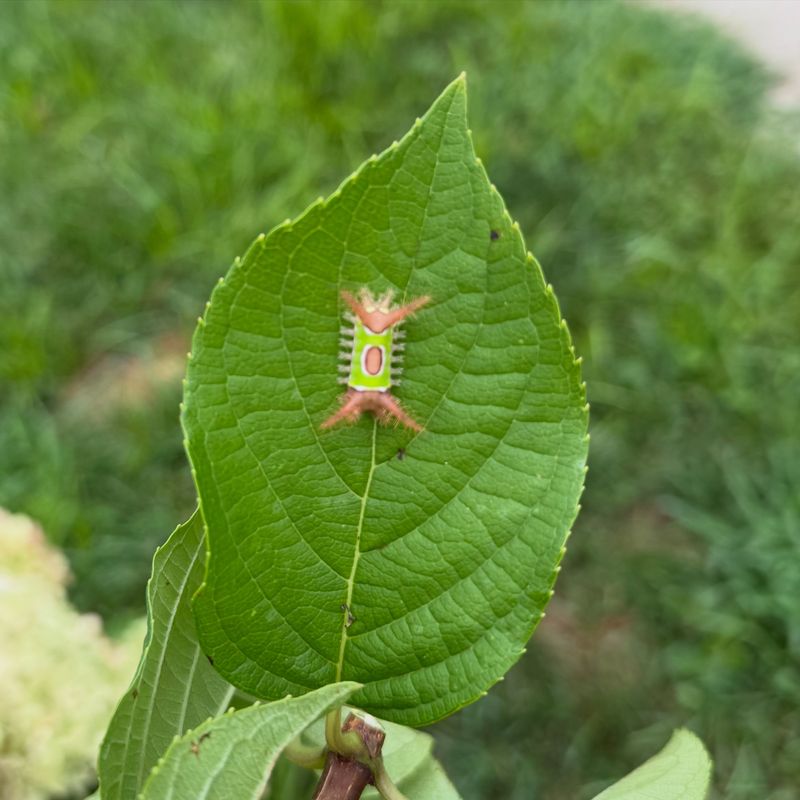
When you spot a saddleback caterpillar, check the surrounding plants carefully. Chewed leaf edges or small holes in foliage can reveal where it has been feeding before you noticed it.
That damage is usually minor but it helps you map out which plants to watch more closely.
Saddlebacks are known to feed on a broad range of host plants. Oaks, elms, roses, blueberries, and even some ornamental shrubs can serve as feeding sites.
Corn and other vegetable crops are occasionally targeted as well, so check your garden beds if you grow food plants.
Look on the undersides of leaves, not just the top surfaces. Caterpillars often rest on the underside where they are harder to spot and better sheltered from direct sun.
Running your hand under leaves without looking first is exactly the kind of move that leads to an accidental sting.
Feeding damage from a saddleback is rarely severe enough to threaten a plant’s overall health. A few ragged leaves do not represent a crisis.
Most plants recover on their own once the caterpillar moves on or completes its life cycle.
Keeping your garden tidy can reduce hiding spots for caterpillars in general. Clearing fallen leaves and checking plants regularly during late summer gives you an advantage.
Early awareness means you can take action before the situation becomes harder to manage.
6. Careful Removal Makes Sense In High-Traffic Spots
Sometimes leaving a caterpillar in place is not practical. If one is sitting on a plant right next to a frequently used walkway, a children’s play area, or a pet’s favorite resting spot, moving it makes sense.
The goal is to reduce the chance of an accidental sting.
Never use your bare hands for removal. Thick leather or rubber-coated gloves give you the best protection because they are harder for the spines to penetrate.
Even with gloves, avoid pressing the caterpillar directly against your skin.
A pair of long-handled tongs or a stick works well for nudging the caterpillar onto a sturdy leaf or into a container. Use a container with a lid if you plan to carry it farther away.
Relocate it to a wooded area or a low-traffic corner of your property where it can continue feeding without posing a risk.
Avoid flicking or shaking the caterpillar off a leaf with your hand. Quick movements can cause the spines to break off and become airborne, which creates a different kind of contact risk.
Slow and deliberate movements are safer for you and less stressful for the caterpillar.
After handling, wash your hands and gloves thoroughly with soap and water. Check your gloves for any embedded spines before storing them.
Taking these small steps after removal keeps the risk low and the situation fully under control.
7. Check Leaves Carefully Before Working Around Nearby Plants
Gardening without looking first is how most saddleback stings happen. Reaching into dense foliage, pulling weeds by hand, or trimming shrubs without checking is a quick way to brush against a caterpillar you never saw coming.
Slowing down before you start is the simplest prevention strategy.
Before grabbing any plant material, scan the leaves visually from a few angles. Check the tops and undersides of leaves, especially on plants you know are common feeding hosts.
Oak and rose plants in particular are worth a close look during late summer.
Use a small flashlight or your phone’s flashlight to see under dense leaf clusters. Natural light does not always reach the underside of thick foliage, and that is where caterpillars often rest.
A quick scan takes only a few seconds and can save you a lot of discomfort.
Long-sleeved shirts and gloves are your best physical protection while working in the yard. Bare arms brushing against a leaf where a caterpillar is resting is a common scenario that leads to stings.
Covering your skin is straightforward and effective.
Residents across Georgia who garden regularly tend to develop a habit of visual inspection over time. Once you have had a close call or know someone who has been stung, checking before touching becomes second nature.
Build that habit now and gardening stays enjoyable rather than risky.