The One Pruning Mistake Texans Make With Crape Myrtles In Fall
What if the most common fall gardening habit in Texas is quietly setting crape myrtles up to fail every single year?
Most Texans who grow crape myrtles do something in fall that feels completely responsible, the kind of tidy, proactive maintenance that seems like good plant care.
And yet this one habit is responsible for more crape myrtle problems than almost any other single decision homeowners make.
It happens in neighborhoods across the state every fall. Sometimes it starts early, before the tree has even finished its season, and once it begins it tends to repeat year after year because the damage it causes isn’t always obviously connected to the action that caused it.
Crape myrtles are forgiving plants in many ways. But they have a specific vulnerability to this particular fall mistake that compounds over time, affecting everything from winter hardiness and spring bloom production to the long term structure and health of the tree itself.
Understanding what the mistake is, why it’s so widespread, and what to do instead could be the most useful thing a Texas crape myrtle grower reads this fall.
Heavy Fall Pruning Can Trigger Tender New Growth
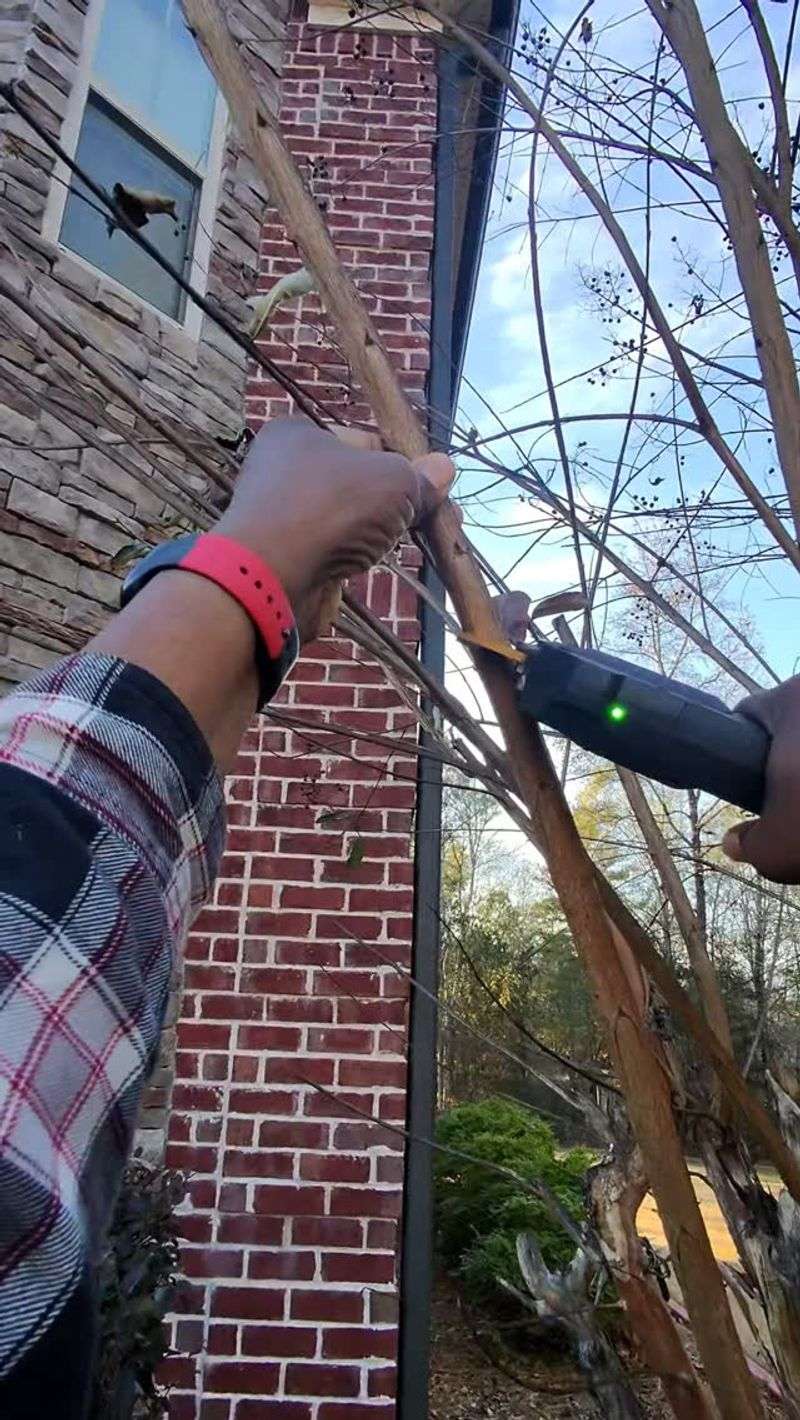
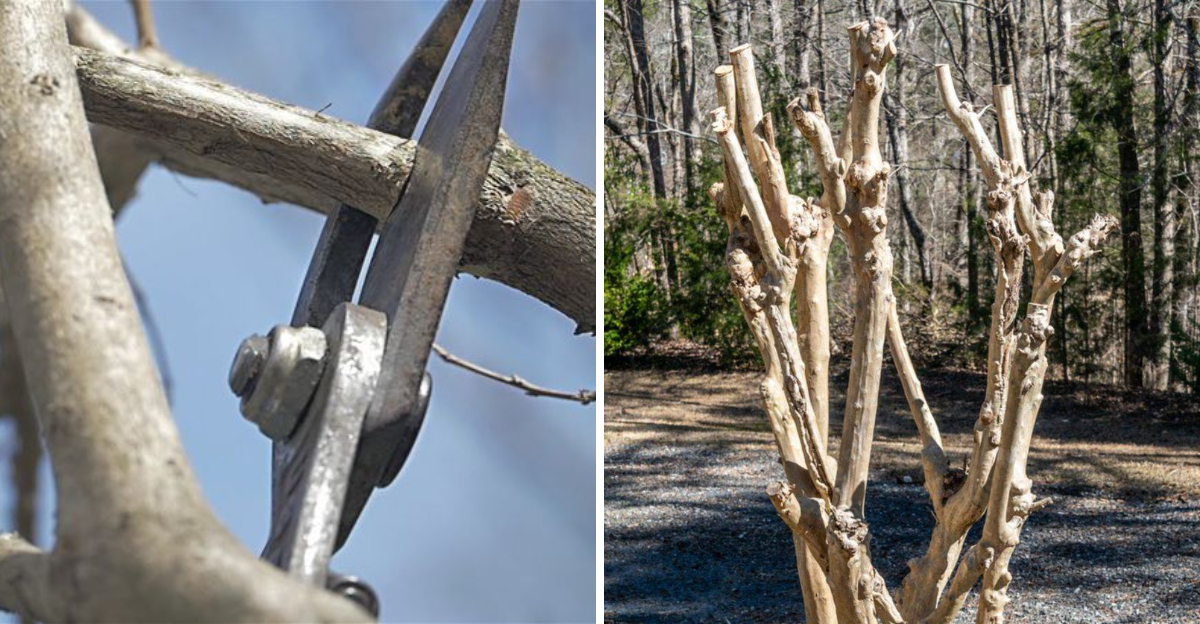
Most gardeners mean well when they grab their pruning shears in fall. They see the summer blooms fading and figure it is a great time to tidy things up. But with crape myrtles, heavy fall pruning can actually backfire in a big way.
When you make major cuts on a crape myrtle in fall, the tree gets a signal to push out new growth. That sounds fine, but here is the problem.
Those fresh, tender shoots are not ready to handle cold temperatures. They are soft, green, and vulnerable, and when a cold front rolls through Texas, that new growth can get seriously damaged.
Texas weather can be unpredictable. A warm October can quickly flip into a freezing November night.
If your tree has been tricked into growing new shoots by a heavy pruning session, those shoots have no time to harden off before the cold arrives.
Hardening off is the process where plant tissue toughens up to survive colder temperatures, and it simply cannot happen fast enough in fall.
The damaged shoots may turn brown and mushy after a freeze. While the tree itself will likely survive, the stress adds up over time.
Repeated fall pruning followed by cold damage weakens the tree season after season. You end up with a crape myrtle that never quite reaches its full potential.
A much better approach is to leave your crape myrtle alone in fall. Let it go dormant naturally.
The tree knows what it is doing, and giving it space to rest is one of the kindest things you can do for it before winter hits.
Topping Ruins The Tree’s Natural Structure
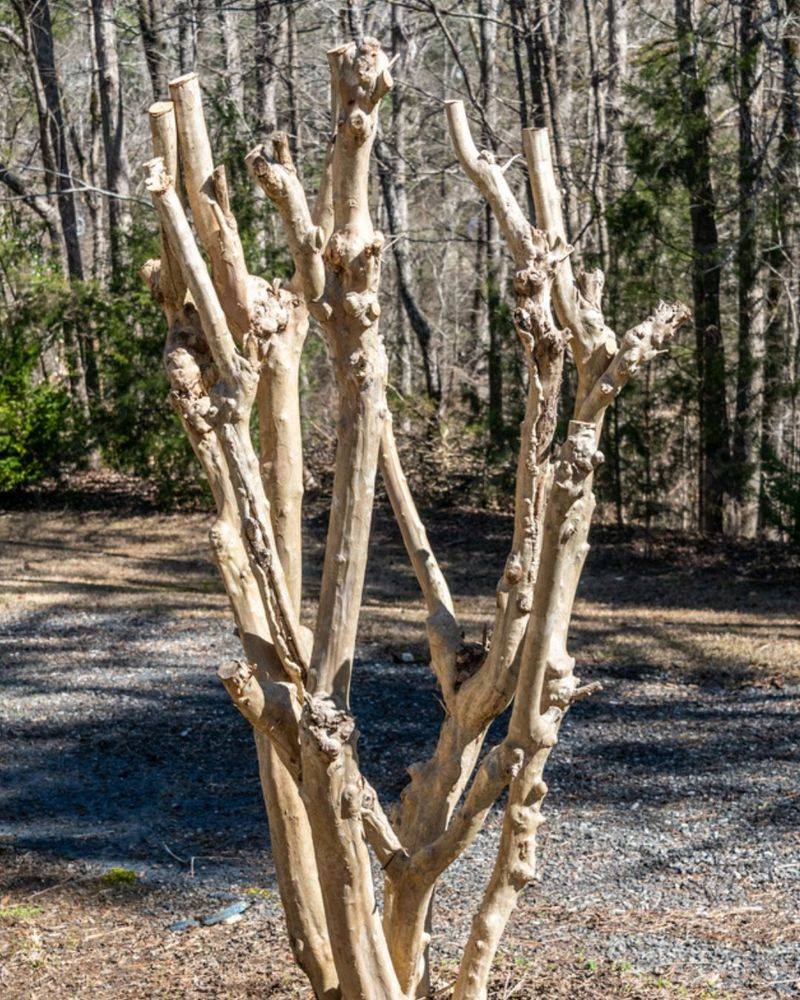
Walk through almost any Texas neighborhood in fall or late winter, and you will spot them. Crape myrtles chopped back to thick, ugly stubs with no branching left at all.
Your Texas Garden Changes Every Week. Your Plan Should Too.
Gardening in Texas changes quickly throughout the season. Every Friday you’ll receive a simple weekly plan showing exactly what to plant, prune, fertilize, harvest, and protect so you never miss the right timing.
Landscapers and homeowners do it every year, and it has earned a pretty harsh nickname among horticulturists: crape murder.
Topping a crape myrtle means cutting the main trunks or large branches back to short stubs. People do it because they think it makes the tree smaller or encourages more blooms.
But neither of those things is really true. What actually happens is the tree responds by sending out a burst of weak, fast-growing shoots from those cut points.
Those shoots are not strongly attached to the wood beneath them. Over time, they get heavy with leaves and flowers and can break off easily during storms.
Beyond the safety issue, topping completely wrecks the tree’s natural beauty. A healthy crape myrtle has graceful, arching branches and smooth, peeling bark that adds visual interest year-round.
Once you top it, that elegant structure is gone. What grows back looks bushy, crowded, and unnatural. No amount of future pruning can fully restore the original form.
Crape myrtles naturally develop into stunning multi-trunk trees with a vase-like shape. That shape is one of the biggest reasons people love them.
Topping trades all of that away for a stubby, stressed tree that has to work overtime just to recover each spring.
If you have been topping your crape myrtles for years, it is not too late to stop. Commit to a better pruning approach now, and your trees will slowly regain their natural grace over time.
Crape Myrtles Don’t Need Annual Hard Pruning
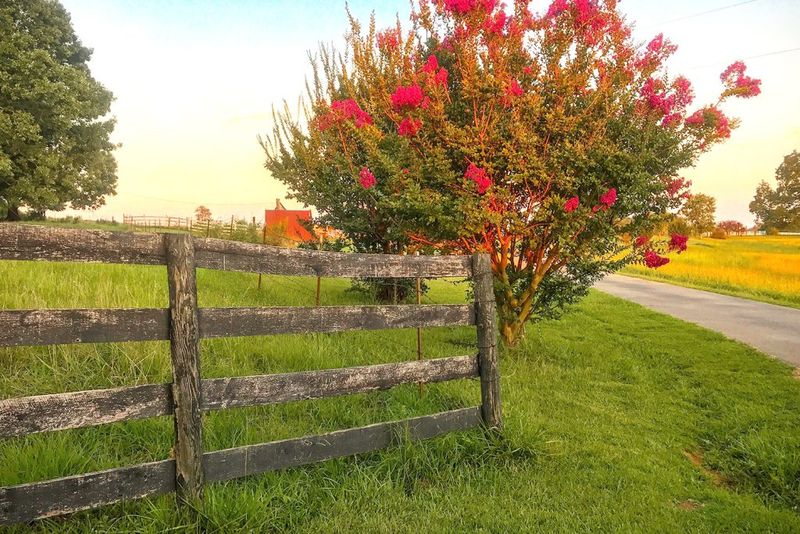
Here is something that surprises a lot of Texas gardeners: crape myrtles do not need to be cut back hard every single year. In fact, they bloom just fine without it.
The idea that you have to prune them hard to get good flowers is simply a myth that has been passed around for generations.
Crape myrtles bloom on new growth that they produce each spring. As long as the tree is healthy and has enough sunlight, it will push out fresh shoots and cover itself in flowers without any help from a pruning saw.
The natural branching structure of the tree is part of what makes it so beautiful. Each year, the canopy fills out a little more, the bark gets more interesting, and the overall form becomes more impressive.
Annual hard pruning actually works against all of that. Every time you cut the tree back severely, you reset its growth.
Instead of building on the progress from the year before, the tree has to start over. You end up with a tree that never quite grows into its full potential because it is always recovering.
Skipping the hard annual prune also saves you time and effort. Less work, better results, and a healthier tree.
That is a pretty good deal. If your crape myrtle is the right size for its spot and has a good natural shape, the best thing you can do is leave it mostly alone.
Light cleanup cuts, like removing seed pods or crossing twigs, are fine. But putting down the chainsaw and letting the tree do its thing is often the smartest move a Texas gardener can make.
Save Major Pruning For Late Winter
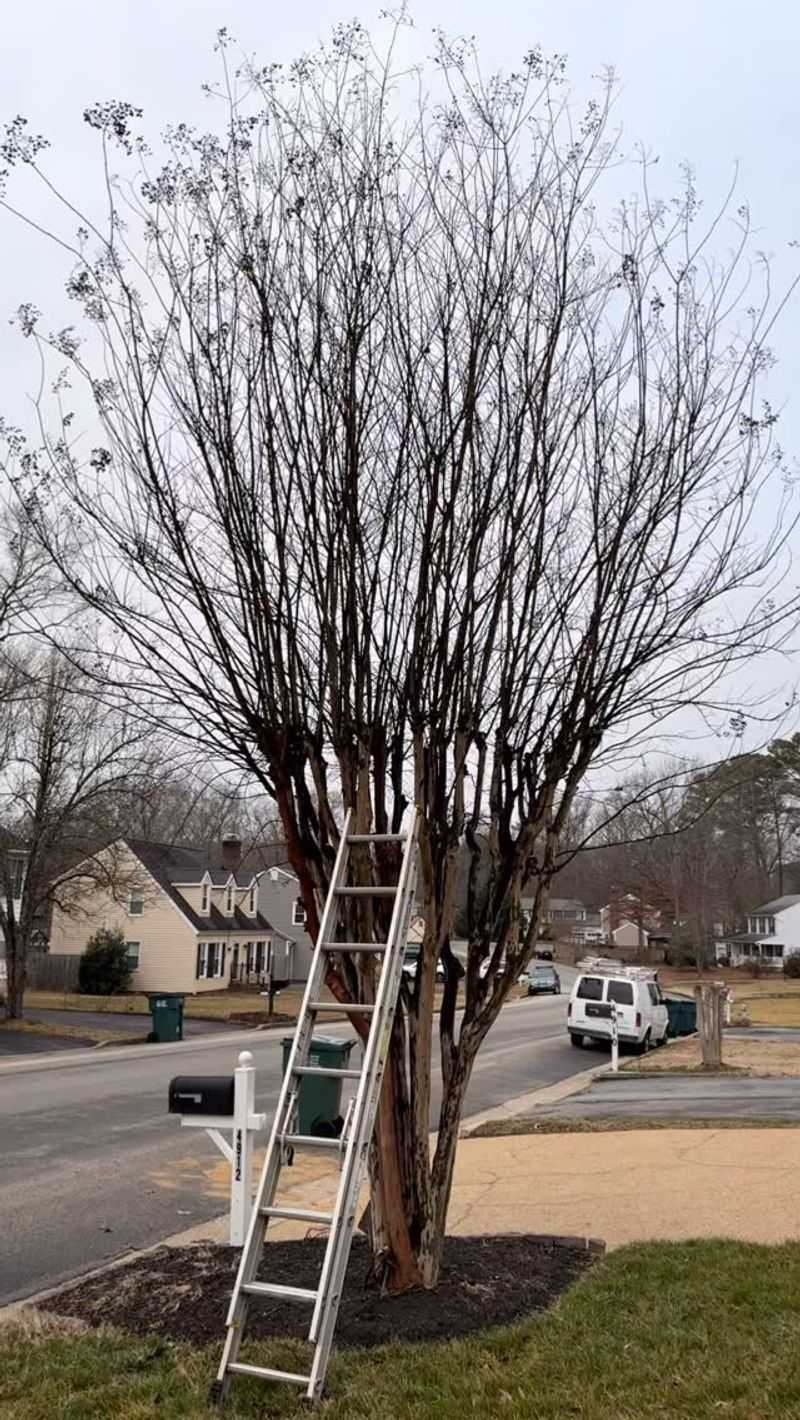
Timing really is everything when it comes to pruning crape myrtles. If you feel like your tree genuinely needs some shaping or size management, late winter is by far the best window to do it.
Aim for late February or early March in most parts of Texas, right before new buds start to swell.
At that point in the season, the tree has already been dormant through the coldest months. It has had its rest.
Pruning just before new growth begins means any cuts you make will heal quickly as the tree wakes up and starts pushing energy into fresh shoots. You are working with the tree’s natural cycle instead of against it.
Another big advantage of late-winter pruning is that you can see the tree’s structure clearly. Without leaves in the way, it is much easier to spot crossing branches, weak limbs, or areas where the canopy is getting too crowded.
You can make thoughtful, precise cuts rather than just hacking away and hoping for the best.
Crape myrtles bloom on new wood, meaning the fresh growth they produce in spring is what carries the summer flowers.
When you prune in late winter, you give the tree a full spring and early summer to grow those flowering shoots. The result is a full, healthy bloom season that makes the whole effort worthwhile.
Resist the urge to prune in fall just because the tree looks bare and dormant. Waiting until late winter protects the tree from cold damage and sets it up for its best possible performance come summer.
Patience pays off in a big way with crape myrtles.
Remove Only Problem Branches In Fall
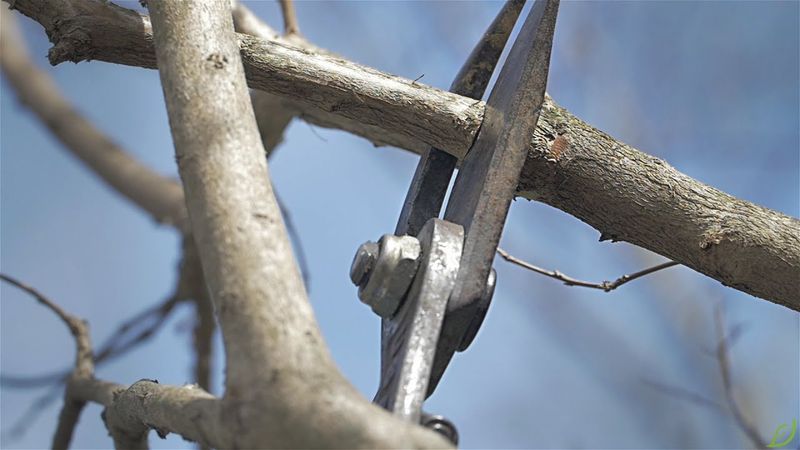
Fall is not the time for big pruning projects on crape myrtles, but that does not mean you have to ignore the tree completely. There are a few specific situations where a careful cut in fall is perfectly reasonable and even helpful.
Dry branches are a good example. If a branch is clearly gone, dry, and brittle with no signs of life, removing it in fall will not stress the tree.
You are not cutting live wood, so there is no risk of triggering unwanted new growth. Broken branches from summer storms are another case where a clean fall cut makes sense.
Leaving a jagged, damaged limb hanging can invite pests and disease into the tree over winter.
Badly crossing branches are worth addressing too, but only if they are rubbing against each other and causing visible damage. Constant rubbing creates wounds in the bark that can become entry points for insects or fungal problems.
Removing the offending branch before winter gives the wound a chance to seal up properly.
The key rule to follow in fall is simple: only remove what is clearly a problem. Do not get carried away.
If a branch looks healthy and is part of the tree’s natural structure, leave it alone. Healthy structural limbs are what give the tree its beautiful form and support its flowering canopy each summer.
Think of fall as a light maintenance season, not a renovation season. A quick walk around the tree to check for dry, broken, or rubbing branches is all you really need. Save the bigger decisions for late winter when you can see the full picture clearly.
Prune For Shape, Not Smaller Size
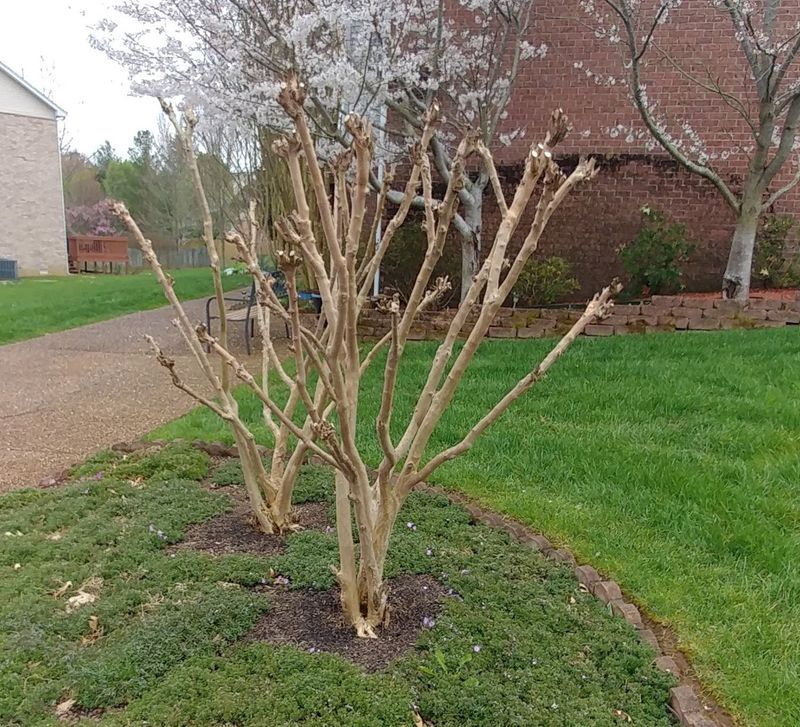
One of the most common reasons Texans over-prune their crape myrtles is that the tree has outgrown its space. When a large crape myrtle is planted under a power line or too close to a house, the temptation to keep cutting it down to size every year becomes almost irresistible.
But that approach creates a cycle of stress and ugly regrowth that never really solves the problem.
When you do prune, focus on improving the tree’s shape and airflow rather than just making it shorter. Look for branches that are crowded together in the center of the canopy.
Removing a few of those opens up the tree, lets light and air move through, and actually makes the whole canopy look fuller and more attractive. Those are the kinds of cuts that benefit the tree long-term.
Good pruning cuts follow the natural branching pattern of the tree. You remove a branch at its point of origin or cut back to a healthy side branch.
You never leave a stub, and you never cut through the middle of a healthy limb just to reduce height. That kind of cut leads straight to the bushy, knobby regrowth that makes topping look so bad.
If your crape myrtle constantly needs severe cutting to fit its location, that is a sign the wrong variety was planted in that spot.
Crape myrtles come in a wide range of sizes, from compact shrubs under five feet to towering trees over thirty feet tall. Choosing a variety that naturally fits the space is the real long-term solution.
Pruning for shape keeps your tree looking intentional, healthy, and beautiful without the constant battle of trying to force it into a size it was never meant to be.