These Texas Climbing Plants Attract Hummingbirds While Covering Your Fence
What if the fence running along the edge of your yard could pull in hummingbirds all season long while looking like something you actually planned?
Most fences in Texas are functional at best and forgettable at worst, but the right climbing plants turn that structure into something worth looking at and a genuine draw for one of the most entertaining visitors a Texas garden can attract.
Hummingbirds are predictable in what they seek out, and certain climbing plants speak directly to what those birds are looking for in terms of flower shape, color, and nectar availability.
Texas heat and sun exposure along a fence line are actually advantages here, because the climbing plants that attract hummingbirds most reliably tend to be the ones that love exactly those conditions.
Getting vertical in a Texas garden is one of the smarter moves a gardener can make, and when hummingbirds show up as a result, the fence stops being an afterthought and starts being a highlight.
1. Coral Honeysuckle
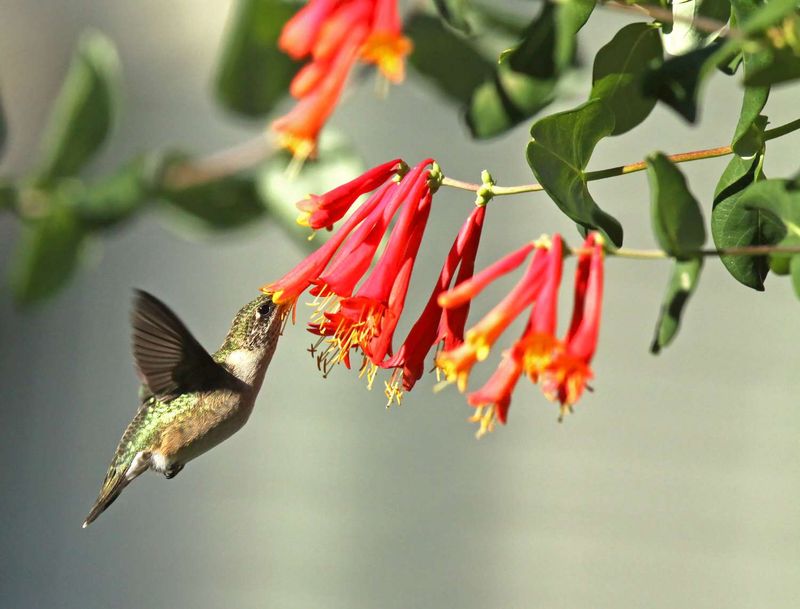
Few plants in Texas earn as many compliments as Coral Honeysuckle. With its clusters of brilliant red tubular flowers, this native vine looks like it was designed specifically with hummingbirds in mind.
And honestly, that is not far from the truth. The long, narrow blooms fit a hummingbird’s beak perfectly, making it one of the most reliable nectar sources you can plant.
Coral Honeysuckle, also known as Lonicera sempervirens, is a true Texas native. It grows vigorously along fences, trellises, and arbors without becoming invasive or hard to manage.
Unlike its Japanese cousin, Coral Honeysuckle plays nicely in the garden and does not take over everything around it. It blooms from spring all the way through fall, giving hummingbirds a consistent food source throughout the seasons.
Growing this vine is surprisingly easy. It prefers full sun to partial shade and handles Texas heat without much fuss.
Water it regularly during the first season to help it get established, and then it becomes quite drought tolerant. Pruning it lightly after the main bloom flush encourages fresh new growth and even more flowers.
One fun fact worth knowing is that Coral Honeysuckle also produces small red berries after blooming. Birds like finches and thrushes snack on these berries, so you are essentially creating a mini wildlife habitat right on your fence.
If you only plant one vine this season, make it this one. You will not regret watching hummingbirds visit it day after day.
2. Crossvine
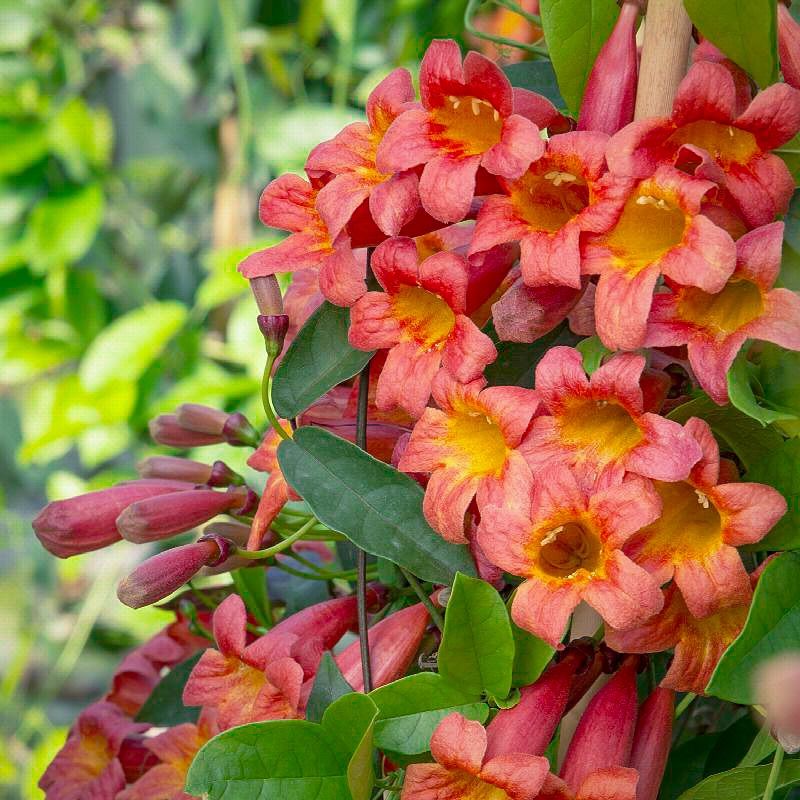
Speed matters when you want to cover a fence fast, and Crossvine delivers exactly that. This native Texas climber is one of the quickest-growing vines you will find, capable of spreading several feet in a single growing season.
If you have an ugly fence that needs a makeover sooner rather than later, Crossvine is your answer.
Bignonia capreolata, its scientific name, produces gorgeous trumpet-shaped flowers in shades of orange and yellow. Hummingbirds are drawn to these blooms like magnets.
The flowers appear in early spring and sometimes again in fall, giving your yard a burst of color when other plants are just waking up. That early bloom time is especially valuable because hummingbirds migrating through Texas in spring need reliable nectar sources.
Your Texas Garden Changes Every Week. Your Plan Should Too.
Gardening in Texas changes quickly throughout the season. Every Friday you’ll receive a simple weekly plan showing exactly what to plant, prune, fertilize, harvest, and protect so you never miss the right timing.
Crossvine uses tiny tendrils and adhesive pads to climb. It can grip wood, brick, and metal fences with ease.
This means it does not need a lot of help getting started. Just plant it near the base of your fence, give it some water, and watch it go.
It tolerates both sun and partial shade, making it flexible enough for different yard conditions.
Here is something cool about this plant: if you cut the stem, the cross-section shows a pattern that looks like a cross, which is exactly how it got its name. It is semi-evergreen in warmer parts of Texas, meaning it holds onto its leaves through mild winters.
That gives your fence year-round coverage and keeps things looking tidy even in the cooler months.
3. Trumpet Creeper
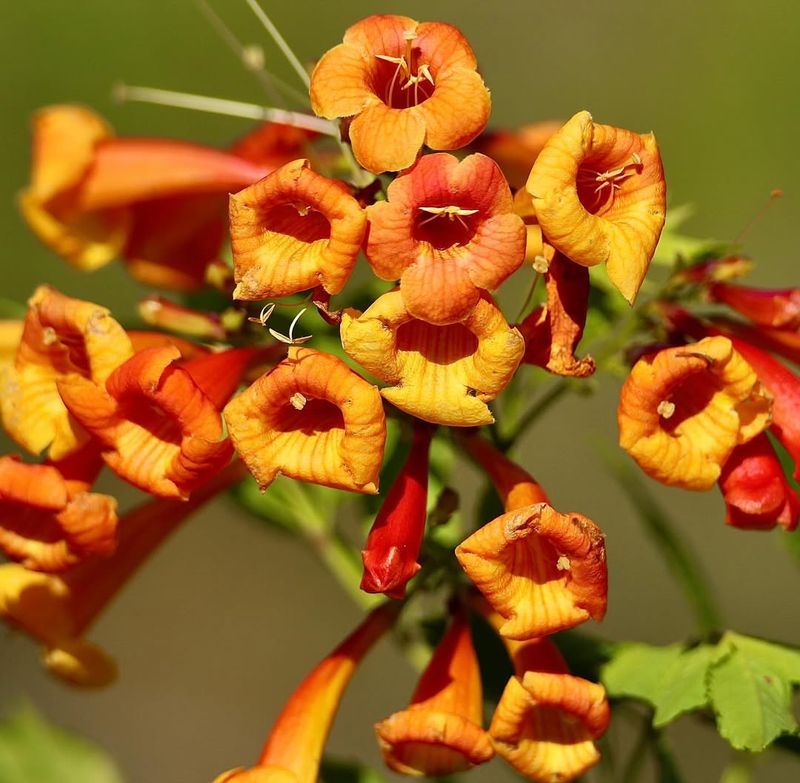
Walk past a fence covered in Trumpet Creeper on a summer afternoon and you might just spot a hummingbird hovering right at eye level. This vine produces some of the largest, most dramatic flowers of any climbing plant in Texas.
The blooms are a vivid orange-red and shaped like wide, flaring trumpets. They are impossible to miss, and hummingbirds feel the same way.
Campsis radicans is its botanical name, and it is a powerhouse grower. Once established, Trumpet Creeper can climb aggressively and cover a large fence section quickly.
This is great if you need serious coverage, but it does mean you should plan to prune it regularly. Cutting it back in late winter keeps it from spreading where you do not want it and actually encourages more blooms the following season.
This vine thrives in full sun and handles Texas summers with impressive toughness. It tolerates poor soil, heat, and even occasional drought once it gets going.
Planting it in well-drained soil and giving it a sturdy support structure will set it up for long-term success. A strong fence or trellis works best since mature vines can get quite heavy.
Trumpet Creeper blooms from June through September, which lines up perfectly with peak hummingbird activity in Texas. The flowers also attract orioles and large bumblebees, adding even more wildlife excitement to your yard.
One heads-up: some people experience mild skin irritation when handling the leaves, so wearing gloves while pruning is a smart habit to develop from the start.
4. Passionflower
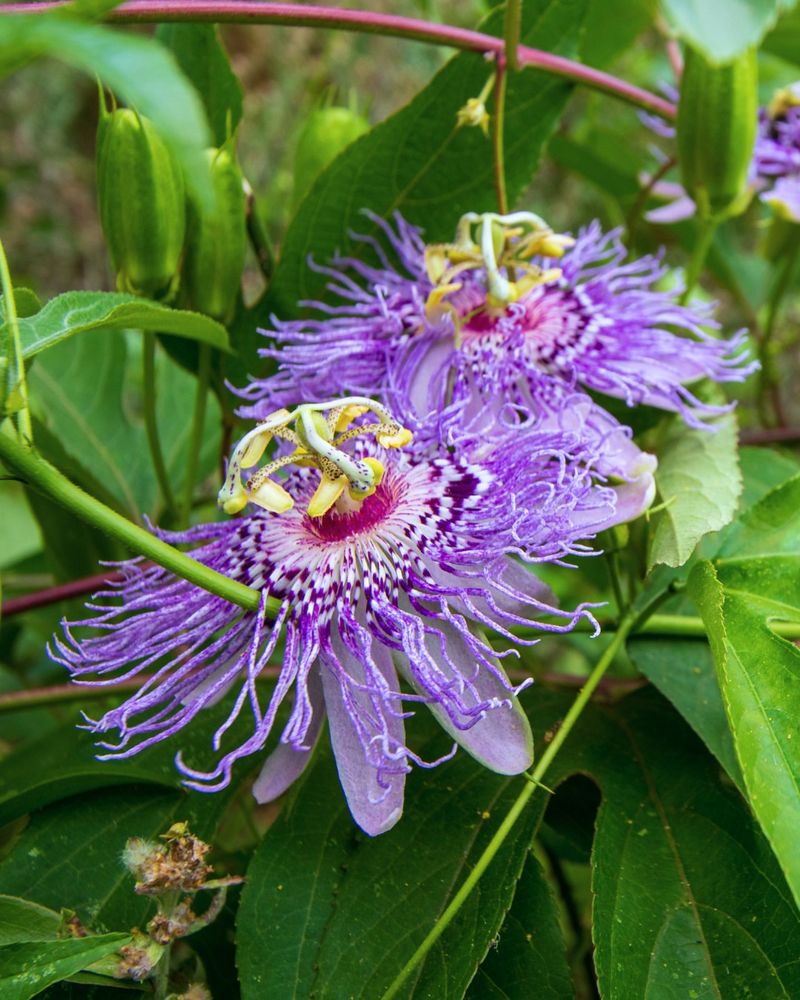
Nothing stops visitors in their tracks quite like a Passionflower in full bloom.
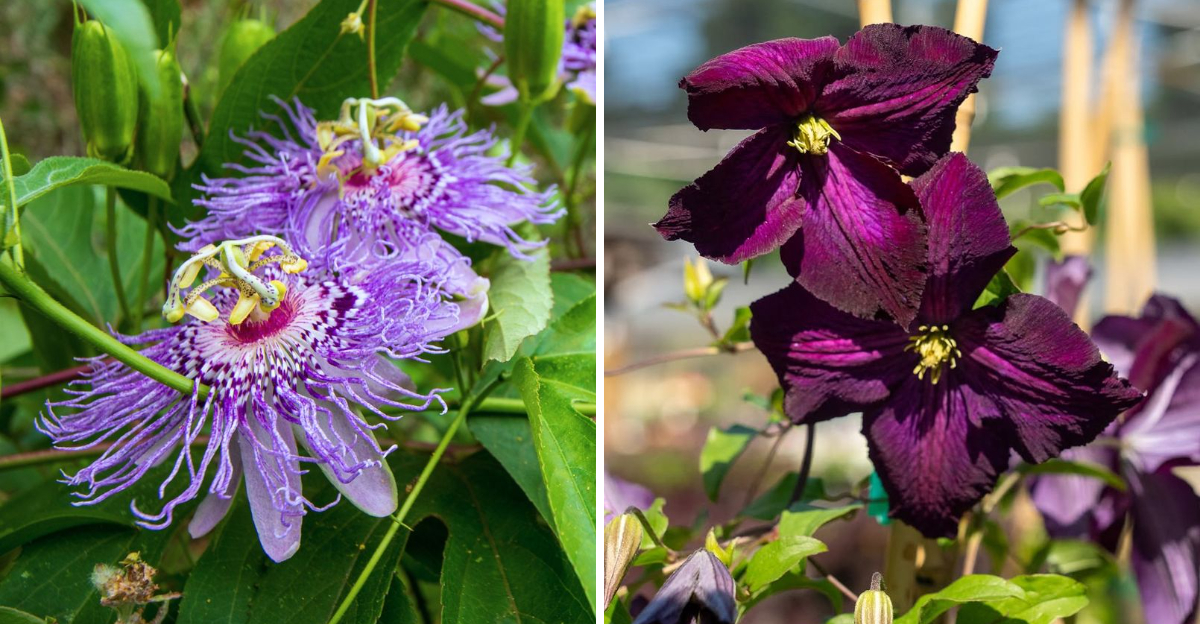
The flowers look almost too exotic to be real, with layers of fringed petals, bold purple and white coloring, and a complex center structure that seems to belong in a tropical rainforest rather than a Texas backyard.
But make no mistake, this plant is right at home in the Lone Star State. Passiflora incarnata, the native Texas Passionflower, grows with surprising enthusiasm along fences and trellises.
It spreads through underground runners, which means it can pop up in new spots around your yard over time.
Keeping an eye on it and pulling unwanted sprouts keeps it manageable without much effort. The reward for that small bit of maintenance is a fence covered in some of the most jaw-dropping flowers imaginable.
Hummingbirds visit Passionflower blooms regularly, drawn by the abundant nectar hidden inside those intricate petals. Bees and butterflies also love it, making your fence a buzzing hub of pollinator activity all summer long.
The plant produces small yellow-green fruits after blooming that are actually edible and have a mild, sweet flavor worth tasting.
Beyond the blooms, Passionflower serves as the host plant for Gulf Fritillary and Zebra Longwing butterflies. Their caterpillars munch on the leaves, which can look alarming but rarely causes lasting harm to a healthy vine.
Embracing that relationship means your garden supports the full butterfly life cycle, from egg to beautiful winged adult fluttering across your yard.
5. Scarlet Clematis
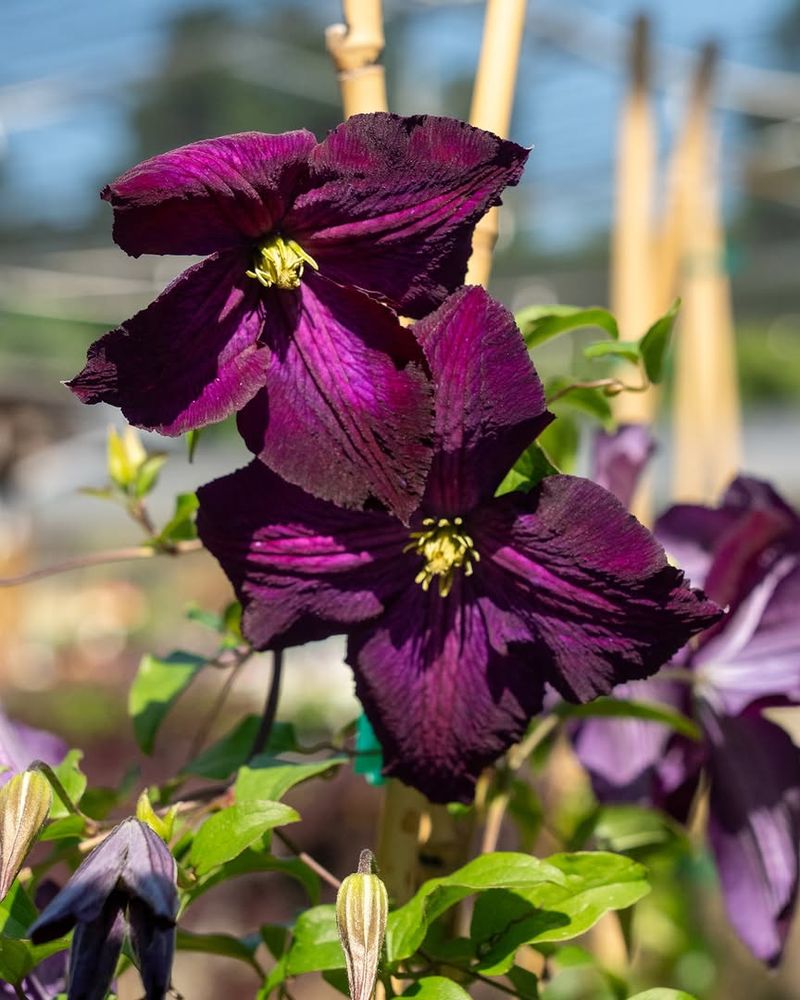
Scarlet Clematis is the quiet achiever of the Texas climbing plant world. While some vines grow thick and heavy, this one stays relatively slender and refined.
It weaves through fence rails with a light touch, adding splashes of vivid red without turning your yard into an overgrown jungle. For gardeners who want color and wildlife value without losing control of their space, this vine is a fantastic match.
Clematis texensis is native to Texas, which makes it naturally adapted to the local climate. It produces small, urn-shaped or star-shaped red flowers that hummingbirds find absolutely irresistible.
The blooms appear from late spring through summer, and because the vine stays somewhat compact, it works well even in smaller yards or along shorter fence sections. You do not need a massive garden to enjoy it.
Planting Scarlet Clematis successfully comes down to one classic rule: keep its roots cool and its head in the sun. Mulching around the base heavily helps retain moisture and keeps the soil temperature comfortable during hot Texas summers.
The vine itself loves full sun to light shade, and once established, it handles heat and moderate drought quite well.
After the flowers fade, Scarlet Clematis produces fluffy, silvery seed heads that add a soft, wispy texture to the fence through fall and winter. These seed heads catch the light beautifully and attract small birds looking for nesting material.
It is a plant that keeps giving long after the last bloom of the season has passed, making every inch of fence space count.
6. Carolina Jessamine
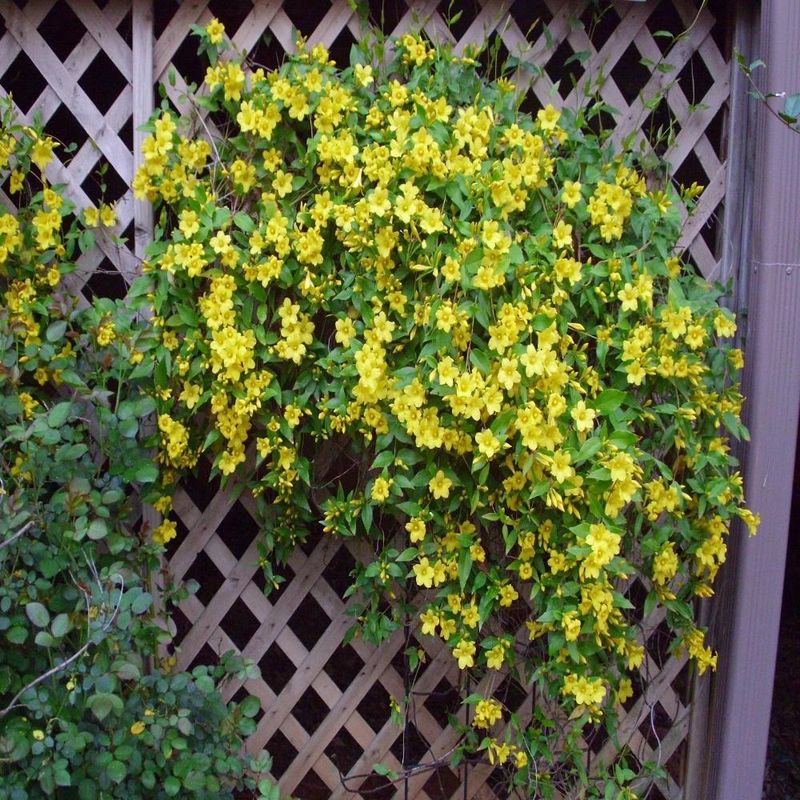
When the rest of the garden is still shaking off winter, Carolina Jessamine is already putting on a show. This cheerful vine bursts into bloom in late winter and early spring, covering fences in clusters of bright yellow, trumpet-shaped flowers.
The sweet fragrance drifts through the yard on warm afternoons, making it one of the most pleasant plants to have near a patio or walkway.
Gelsemium sempervirens is the botanical name, and it is widely loved across the South for good reason. It is an evergreen vine, meaning it holds its glossy dark green leaves year-round.
That gives your fence attractive coverage even during the months when nothing else is blooming. The combination of evergreen foliage and early spring flowers makes it one of the most versatile fence plants available in Texas.
Hummingbirds returning to Texas in early spring often rely on Carolina Jessamine as one of their first nectar sources of the season.
Planting it near a window or garden bench means you get a front-row seat to those early hummingbird visits before the yard fills up with summer activity.
It grows in full sun to partial shade and handles clay soils reasonably well, which is a bonus for many Texas gardeners.
One important note for households with children or pets: all parts of Carolina Jessamine are toxic if eaten. Planting it in a spot where curious hands and paws cannot easily reach it is a wise precaution.
With a little thoughtful placement, this vine rewards you with months of beauty, fragrance, and hummingbird activity from the very first warm days of the year.
7. Texas Dutchman’s Pipe
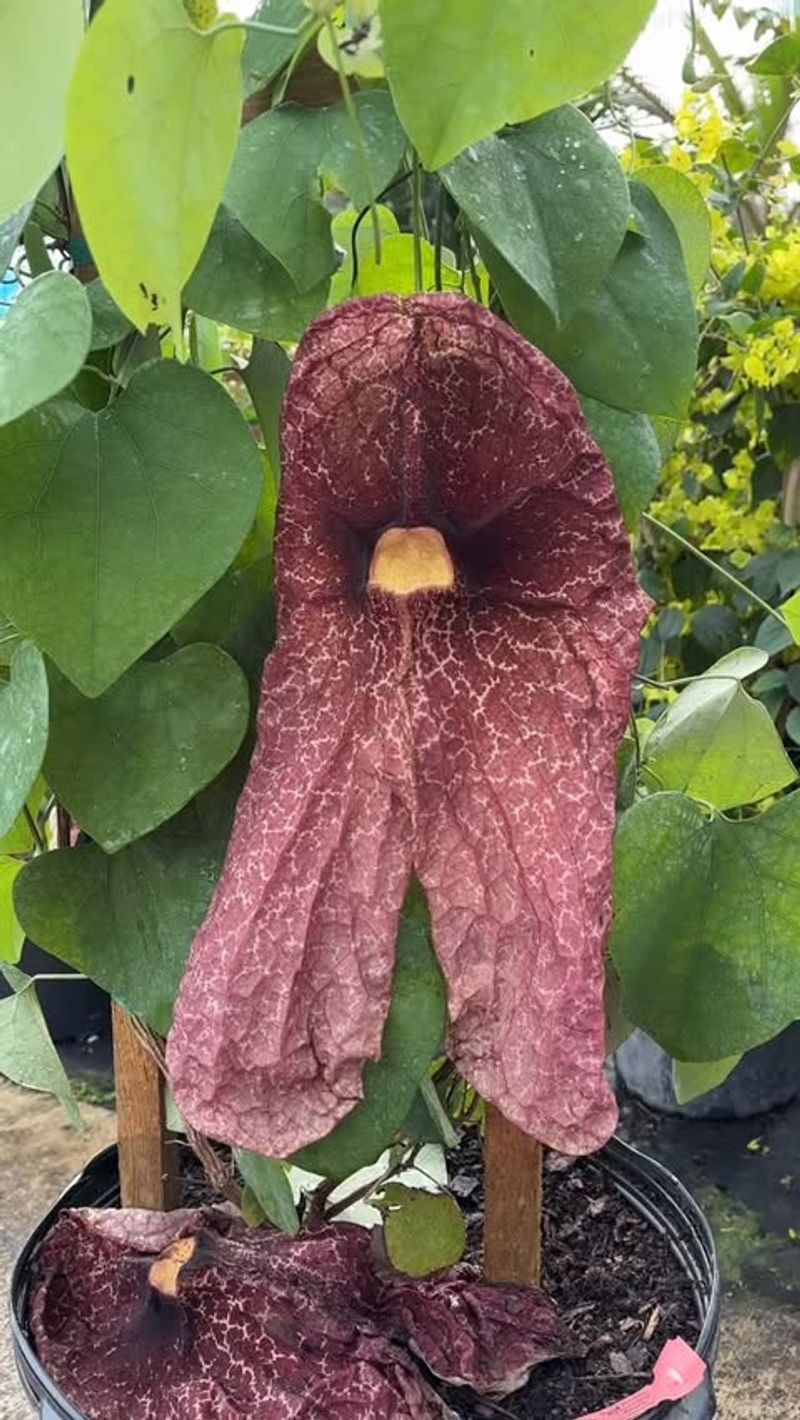
If you love the idea of a fence that looks like a living green wall, Texas Dutchman’s Pipe is exactly what you have been searching for. This native vine grows with tremendous energy, producing enormous heart-shaped leaves that overlap to create incredibly dense coverage.
Once it gets going, it can transform a bare fence into a lush, tropical-looking backdrop in just one or two seasons.
Aristolochia erecta produces fascinating curved flowers that look remarkably like old-fashioned smoking pipes, which is exactly how it earned its quirky name. The flowers are not the flashiest in the garden, but they serve a vital ecological purpose.
Texas Dutchman’s Pipe is the host plant for Pipevine Swallowtail butterflies, one of the most stunning butterflies in North America. Without this vine, those butterflies cannot complete their life cycle.
Hummingbirds appreciate this plant for the shelter and nesting habitat its thick foliage provides.
While the flowers themselves are not the primary hummingbird draw, the dense canopy of leaves creates protected spaces where hummingbirds feel safe resting and nesting near other nectar plants in the garden.
Pairing it with Coral Honeysuckle or Trumpet Creeper nearby creates a complete hummingbird-friendly zone.
Growing Texas Dutchman’s Pipe is straightforward in most parts of the state. It prefers partial shade to full sun and moist, well-drained soil. Give it a strong fence or trellis to climb and it will reward you generously.
Watching Pipevine Swallowtail caterpillars munch on the leaves and then emerge as breathtaking blue-black butterflies weeks later is one of the most magical experiences a Texas garden can offer.