September Is A Good Time To Divide Overcrowded Hostas In Georgia
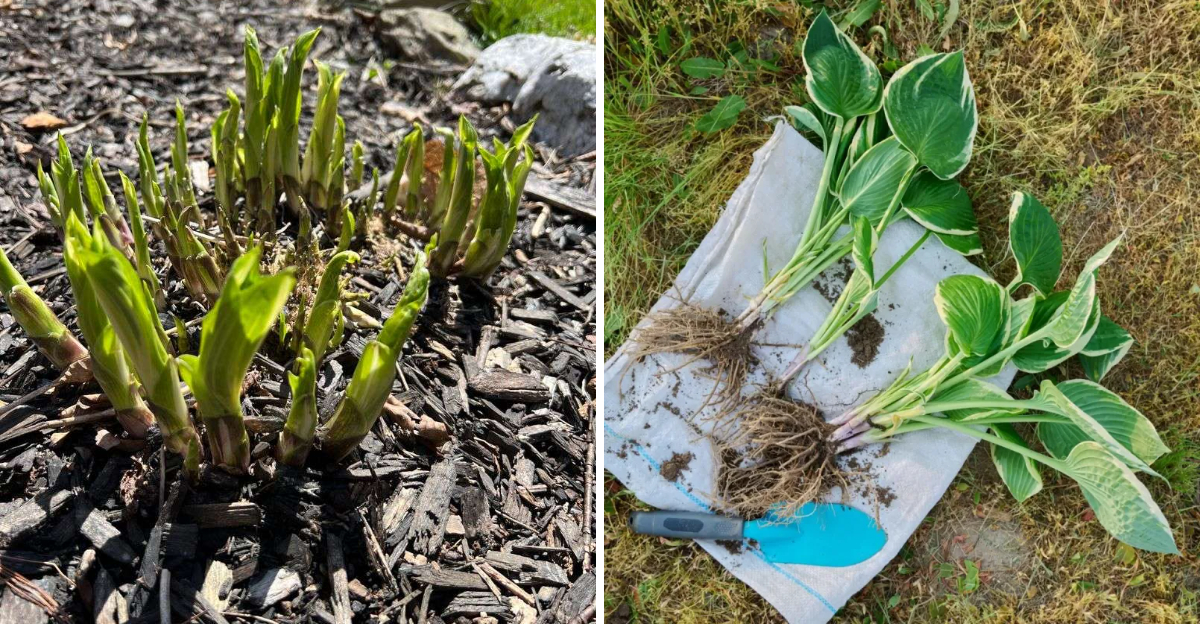
Crowded hostas usually tell you when they have run out of comfortable growing room. September gives you a useful chance to do something about it.
Instead of letting thick clumps compete for space, consider dividing plants that have become packed together. The change can give each section room to grow.
You may notice smaller leaves, tight centers, or plants pushing into their neighbors. Those clues can signal that division is worth considering this season.
Georgia’s early fall conditions can make the job easier on established hostas. Cooler temperatures reduce the intense summer stress surrounding garden work.
Do not grab a shovel and start splitting every hosta you see. Healthy plants need careful handling and enough time to settle afterward.
Learn when division makes sense and how to give separated hostas a strong fresh start.
1. Crowded Hostas Start Showing Signs They Need More Room
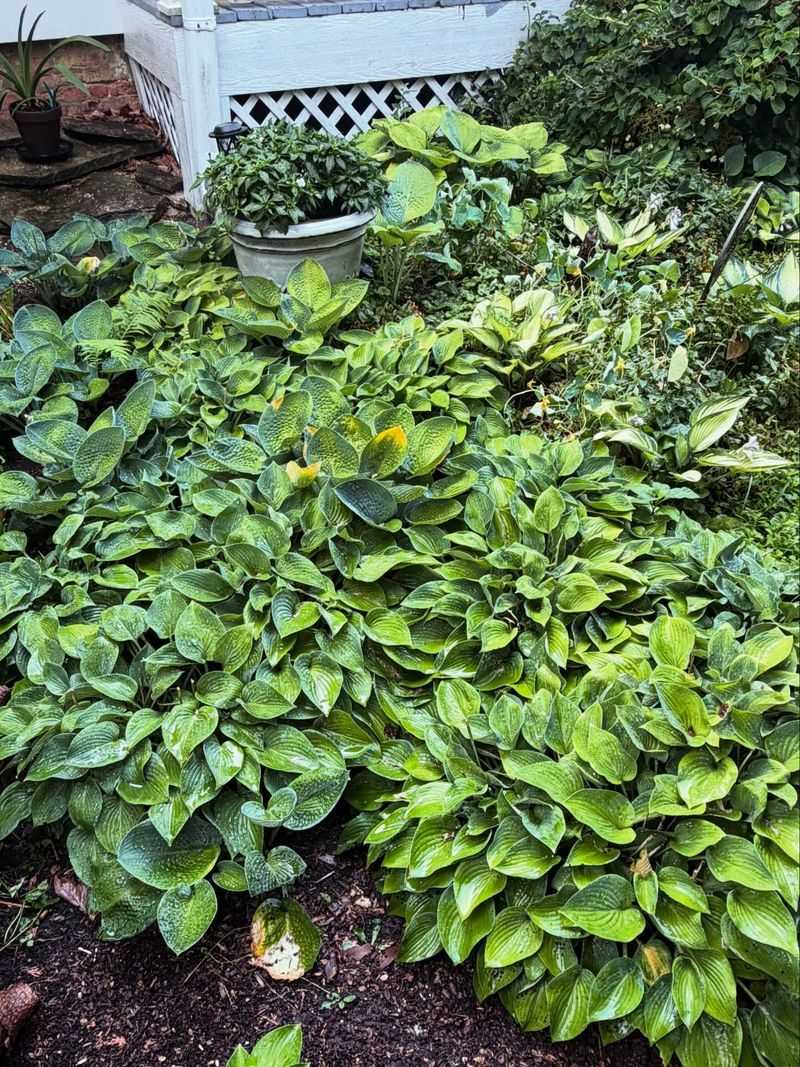
Yellowing leaves in the center of a hosta clump are one of the clearest signs something is off. When a hosta runs out of room, the inner leaves get shaded out and start looking pale or sad.
Outer leaves may still look fine, but the plant as a whole is struggling.
Crowded roots also compete for water and nutrients in the same patch of soil. Over time, that competition weakens the entire plant.
You might notice fewer new shoots coming up each spring, or the clump just stops expanding the way it used to.
Another easy sign to spot is when a hosta clump starts to look raised above the soil line. As roots pack tighter, they push upward.
That exposed root mass dries out faster and makes the plant more vulnerable during hot or dry stretches.
Some gardeners wait until a hosta looks completely exhausted before acting. A better approach is to divide before things get that bad.
If the clump is more than three feet wide or has obvious crowding in the center, that is a reasonable signal to act. September is a good time to step in and give your hostas some breathing room again.
2. September Gives You Another Chance To Divide Large Clumps
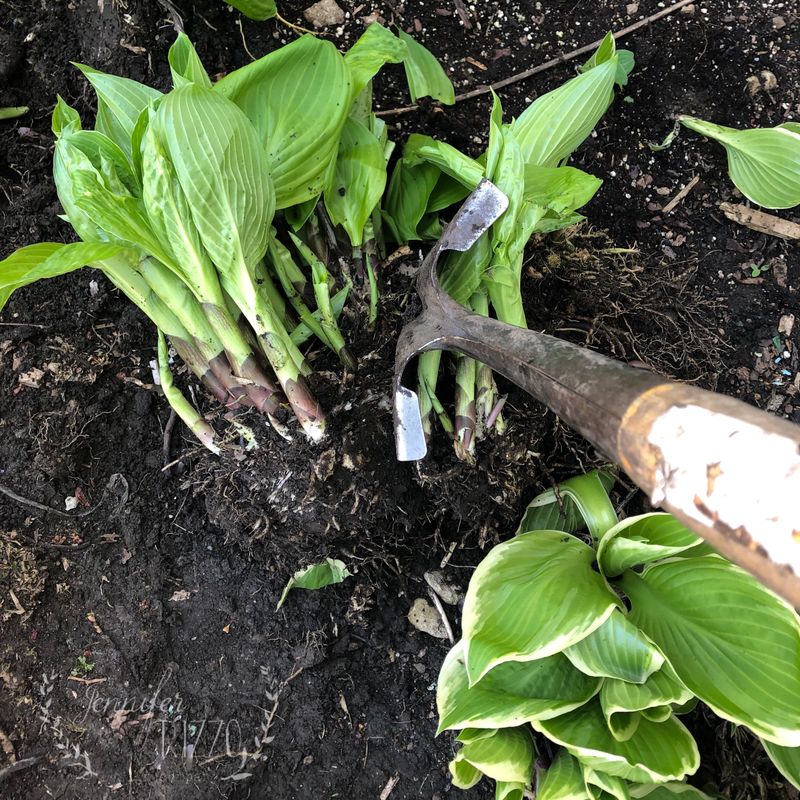
Not everyone catches the spring window for dividing hostas, and that is completely fine. September offers a solid second chance, especially in Georgia, where temperatures start dropping enough to reduce transplant stress.
Cooler nights make a real difference for roots trying to recover.
Splitting hostas in early fall gives them several weeks to get established before the ground cools significantly. Roots can still grow and anchor themselves when soil temperatures stay above 50 degrees Fahrenheit.
That recovery time matters a lot for how well the plant bounces back next year.
Spring division is often recommended first because plants are just waking up and have lots of energy. Fall division works well too, though it requires a bit more attention to watering in the weeks after planting.
Skipping watering during a dry September can set a newly divided hosta back noticeably.
Waiting until October or November in this region pushes things a little too close to cold weather. September hits a sweet spot where warmth lingers but brutal summer heat has mostly passed.
Your Georgia Garden Changes Every Week. Your Plan Should Too.
Gardening in Georgia changes quickly throughout the season. Every Friday you’ll receive a simple weekly plan showing exactly what to plant, prune, fertilize, harvest, and protect so you never miss the right timing.
If you missed spring and your hostas are still overcrowded, do not wait another full year. Get out there in September and make it happen.
Your plants will likely reward you with better growth and fuller foliage next season.
3. Lifting The Whole Plant Makes The Job Much Easier
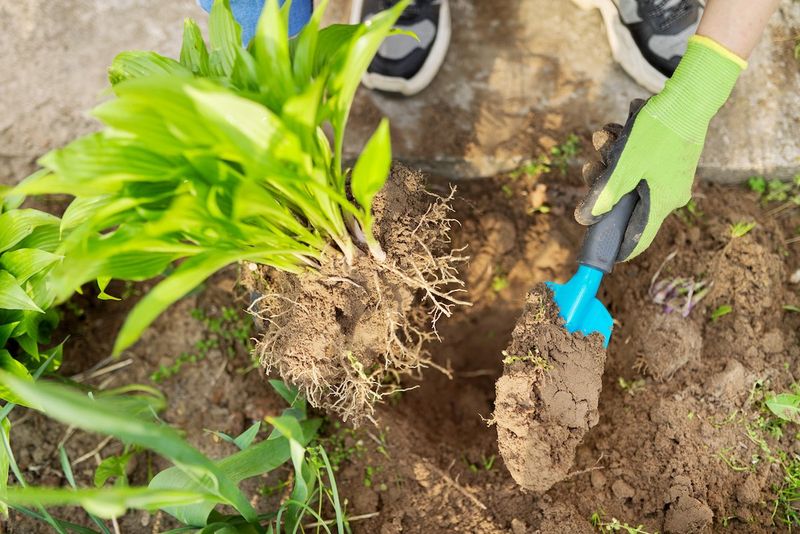
Trying to divide a hosta without lifting it first is a frustrating way to work. Cutting down into a clump while it sits in the ground often means missing roots, leaving uneven sections, and making more work for yourself overall.
A better method starts with digging a wide circle around the entire clump. Go out at least six to eight inches beyond the visible leaf edge so you capture most of the root system.
Slide a sharp spade or garden fork underneath and pry the whole thing up as one unit.
Once the plant is out of the ground, you can see exactly what you are working with. Roots become visible, clump sections become obvious, and splitting feels much more controlled.
Lay it on a flat surface like a tarp or patch of grass to make handling easier.
Large clumps can be surprisingly heavy. Having a second person nearby helps, especially with older plants that have been growing for years.
A wheelbarrow can also make moving a big lifted clump much less of a struggle.
Lifting the whole plant also lets you inspect root health before replanting. If any sections look soft or damaged, you can remove them before dividing.
Starting with a clear view of the whole root mass leads to cleaner cuts and better results overall.
4. Each New Section Needs Healthy Roots And New Growth
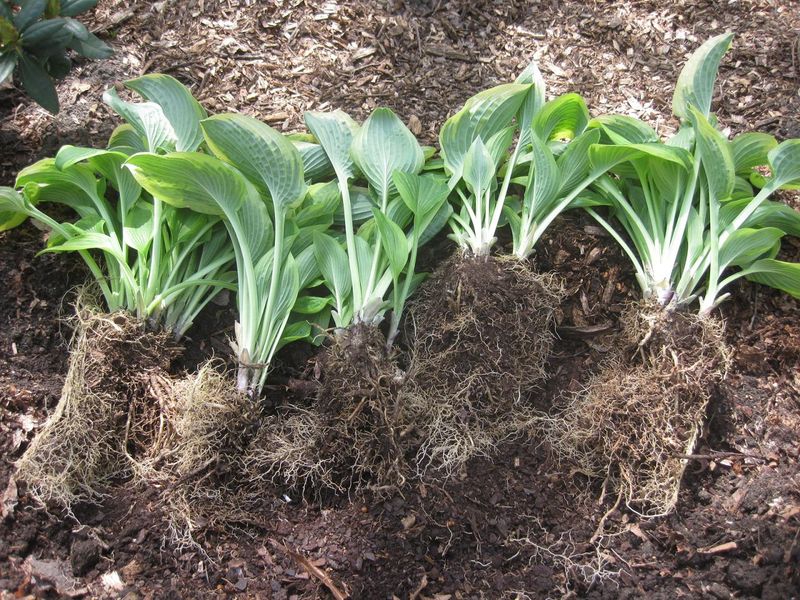
Not every piece of a divided hosta is worth replanting. Sections pulled from the outer edges of a clump tend to be the strongest.
Those outer pieces usually have firm roots and visible growth points, called eyes, which are the small buds that turn into new shoots next spring.
Avoid replanting sections that feel mushy or have very few roots attached. Those pieces may struggle to recover, especially heading into cooler months.
Focus your energy on the sections that look firm and healthy.
Each division should have at least two or three roots attached to give it a fighting chance. A single root with no visible eyes may struggle to establish and produce strong new growth.
Choosing quality sections over quantity leads to better results in the long run.
Use a sharp tool to make clean cuts between sections. A clean cut heals faster than a ragged tear.
Garden knives or old kitchen knives work well for this. Rinse the blade with water between cuts if you are working through a large clump.
Smaller sections with good roots will catch up over time, but they need a little extra patience. Larger sections with plenty of root mass tend to fill in faster.
Picking the right pieces before replanting is one of the most important steps in the whole division process.
5. Small Pieces Can Take Longer To Grow Full Again
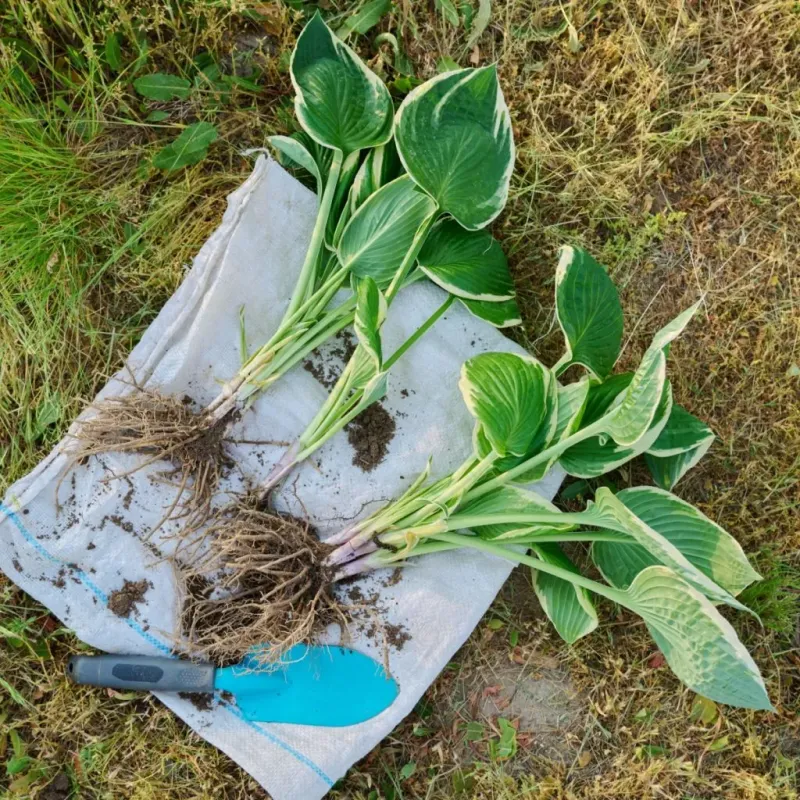
Smaller hosta divisions are not bad, but they do require realistic expectations. A tiny section with just one or two leaves will not look full and lush by next summer.
It may take two or three growing seasons before a small piece reaches an impressive size.
That slower pace is not a problem if you plan for it. Planting small divisions in a nursery area or less visible spot gives them time to bulk up before moving to a featured location.
Rushing a small plant into a prime spot often leads to disappointment.
Watering consistency matters more for small divisions than for larger ones. A bigger section has more stored energy and root mass to draw from during dry spells.
A tiny piece has very little buffer and can struggle quickly without regular moisture.
Mulching around small divisions helps retain soil moisture and regulates soil temperature as fall progresses. A two to three inch layer of mulch placed around, but not directly on top of, the plant works well.
Avoid piling mulch against the crown of the plant.
Patience is the main ingredient when working with small pieces. Some gardeners in the Southeast pot up tiny divisions and overwinter them in a sheltered spot before planting out in spring.
That approach gives small sections extra protection and a stronger start when warmer weather returns.
6. Replant Each Section With Enough Space Around It
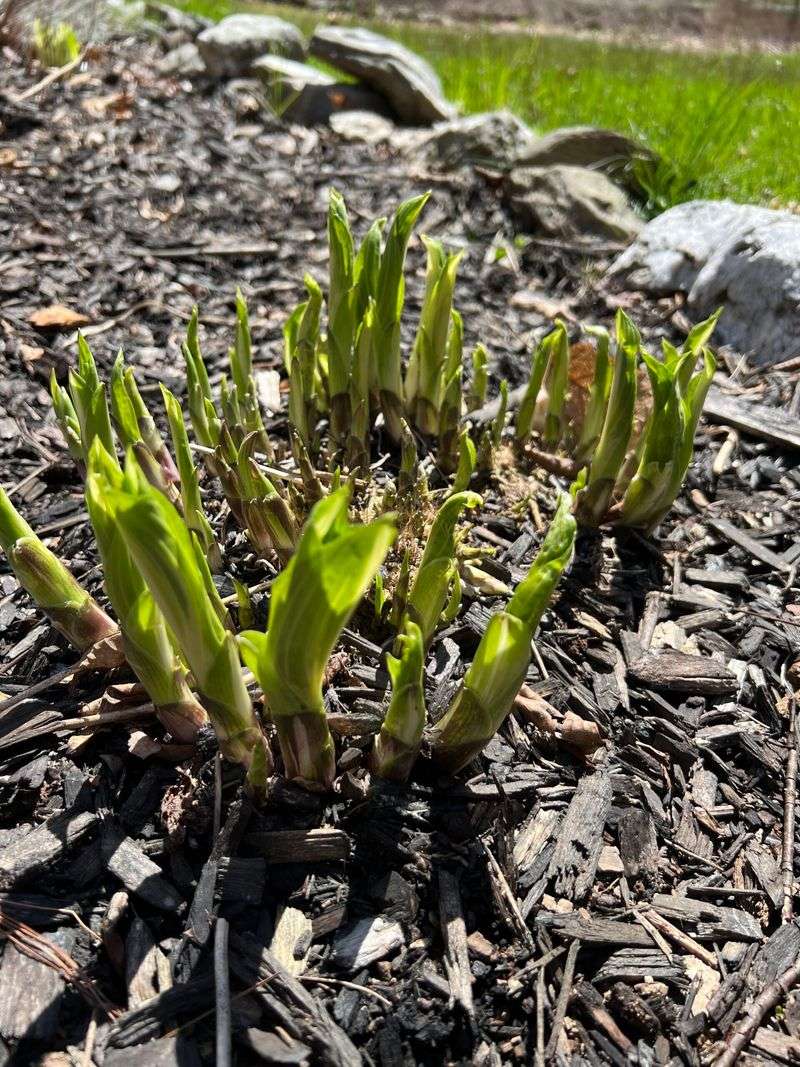
Giving each division enough room is one of the easiest things to get right, and one of the most commonly ignored. Planting hostas too close together just recreates the same crowding problem you started with.
Space them based on their expected mature size, not their current size.
Smaller hosta varieties may only need 18 to 24 inches between plants. Larger varieties can spread three feet or more across at full size.
Check the variety if you know it, or give generous spacing as a general rule when unsure.
Dig each planting hole wide enough to spread the roots out naturally. A cramped hole forces roots to circle or bunch, which slows establishment.
Wide, shallow holes work better for hostas than deep, narrow ones.
Set the crown of each division at or just slightly below the soil surface. Planting too deep can slow emergence next spring.
Planting too shallow leaves roots exposed and vulnerable to temperature swings.
Backfill with the native soil you removed, and press it down gently around the roots. Amended soil is fine to mix in, but hostas are fairly adaptable to average garden conditions.
In Georgia, where clay soil is common, loosening the surrounding area helps roots spread more easily as the plant grows into its new space over the coming seasons.
7. Water Well After Planting To Help Roots Settle In
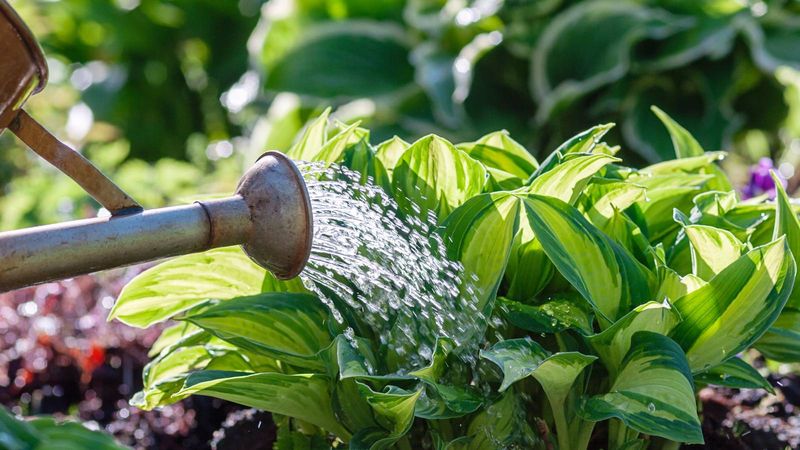
Right after replanting, water is the single most important thing you can give a divided hosta. Roots that just went through the stress of being cut and moved need moisture to reconnect with the surrounding soil.
Skipping that first deep watering is a mistake that shows up fast.
Soak the planting area thoroughly right after you finish. Water should reach several inches down into the soil, not just wet the surface.
A slow, deep soak works better than a quick spray.
Keep checking soil moisture over the following two to three weeks. September in the South can still bring dry stretches, and newly planted divisions have no established root system to pull from.
Check the soil an inch below the surface before watering again.
Avoid overwatering just as much as underwatering. Soggy soil around a fresh division can cause root problems.
Let the soil dry out slightly between waterings, but do not let it go bone dry either.
A layer of mulch after watering helps slow evaporation between rain events. It also keeps soil temperature more consistent as fall progresses.
Two to three inches of shredded leaves or bark mulch works well around hostas. Once established over the next few weeks, your divisions will need less frequent attention and can largely handle normal fall rainfall on their own.