Georgia Gardeners Spreading Fall Mulch Should Know About This Stinging Ant
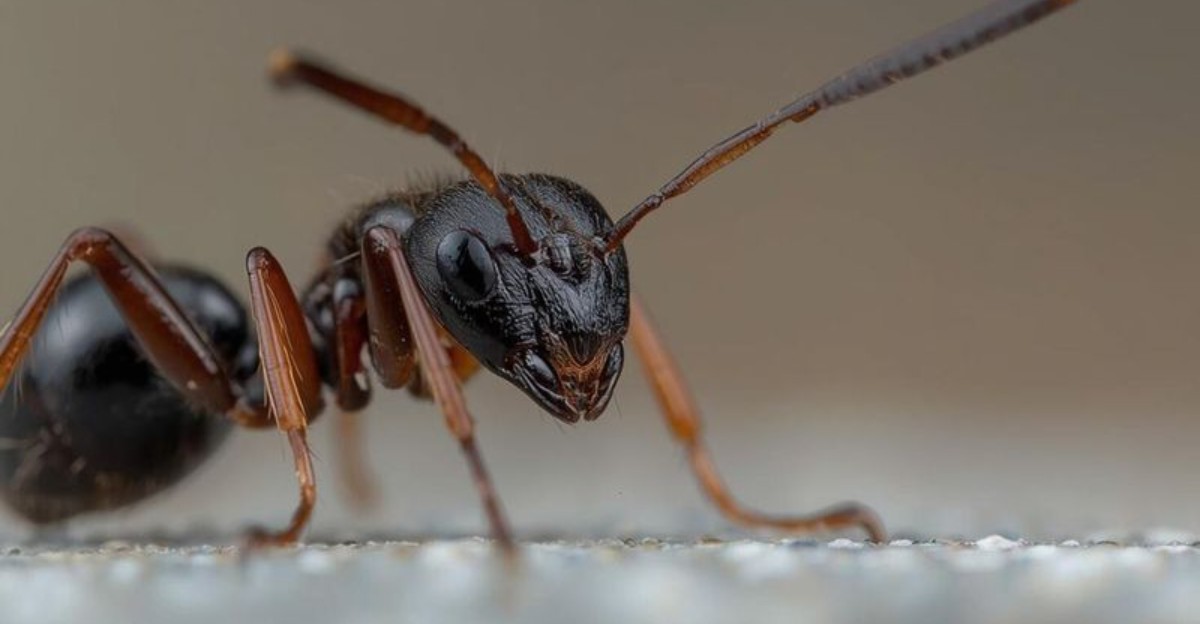
Spreading fresh mulch usually feels like the easy part of fall yard work. You grab a handful, toss it around the shrubs, and move on without much thought.
That habit can lead to a painful surprise if a certain ant has already moved into your garden beds.
This one does not build the tall mounds that make fire ants easy to spot. Instead, it tends to hide in damp mulch and leaf litter where you rarely look.
Its sting can hurt more than you might expect, and some sensitive homeowners react to it more strongly.
Across Georgia, it has been turning up in more yards and garden beds over the past several years.
Slip on a pair of gloves before digging into older mulch this season, especially around shady beds.
1. Not Every Garden Sting Comes From A Fire Ant
Most Georgia gardeners assume a sudden sting means fire ants are nearby. That guess is often right, but not every time.
Fire ants usually build loose, fluffy mounds in sunny lawns and open ground.
So when a sting happens deep in shady mulch with no mound in sight, it makes sense to look again. Something else may be living under that layer of bark or pine straw.
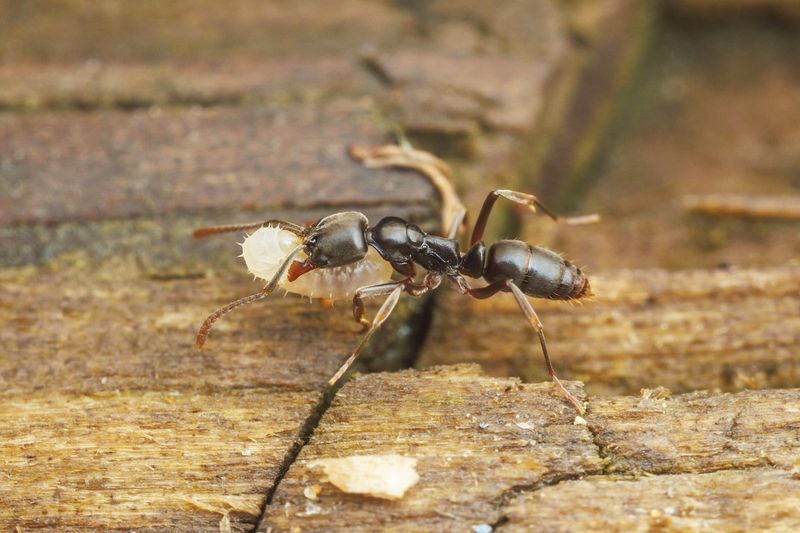
One likely suspect is the Asian needle ant, known by the scientific name Brachyponera chinensis.
Originally from East Asia, it has spread into parts of the eastern United States over the past several decades. Extension experts in the Southeast have reported it in many counties, especially in wooded and landscaped areas.
Unlike fire ants, these ants tend to stay hidden under things rather than piling up visible dirt.
You might find them only after you lift a board, flip a paver, or rake back old mulch. Their colonies are usually smaller and more scattered than fire ant colonies.
Knowing the difference matters, because the right response depends on which ant you are dealing with.
Treatments aimed at fire ant mounds may not work well on a hidden needle ant colony. Taking a closer look after a sting is a smart first step before spending money on any product.
2. This Dark Slender Ant Is Easy To Overlook In The Garden
Small, quiet, and dark, this ant rarely draws attention. You could weed beside one for an hour without noticing it.
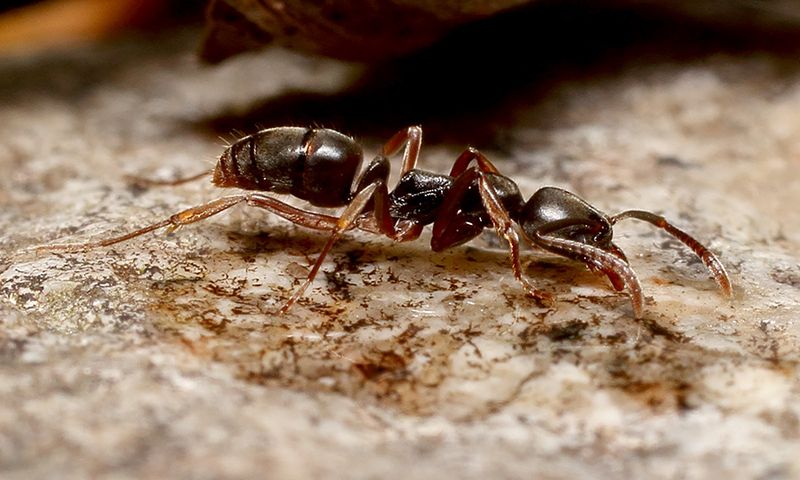
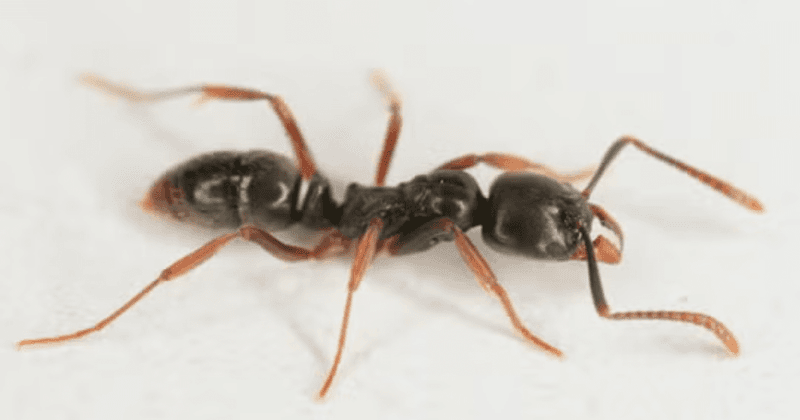
Workers are about one-fifth of an inch long, which is close to the size of a grain of rice.
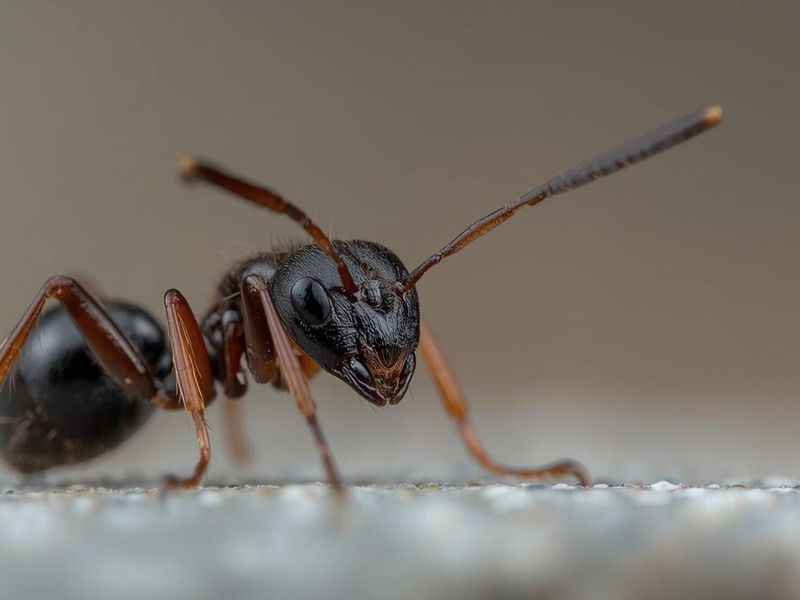
Their bodies are dark brown to nearly black, and the tips of the legs and antennae often look lighter, almost orange. Look closely and you will see a slim body with a single segment at the narrow waist.
Movement is another clue worth watching for.
Instead of marching in busy lines like sugar ants, needle ants often wander alone or in small numbers. They hunt termites and other small insects, so they poke around slowly through leaf litter and soft wood.
Because they look so plain, gardeners in Georgia sometimes mistake them for common black ants that do not sting.
Your Georgia Garden Changes Every Week. Your Plan Should Too.
Gardening in Georgia changes quickly throughout the season. Every Friday you’ll receive a simple weekly plan showing exactly what to plant, prune, fertilize, harvest, and protect so you never miss the right timing.
A cheap magnifying glass or your phone camera’s zoom can help a lot here. Snap a clear photo on a light background, like a white plastic lid, and compare it with trusted pictures.
If you are unsure, avoid handling the ant with bare fingers while you check.
Giving yourself a moment to identify it can save you from a painful surprise later in the season.
3. Colonies Often Shelter In Damp Mulch And Decaying Wood
Moisture is what draws them in. Shady, damp spots are where these ants seem most at home.
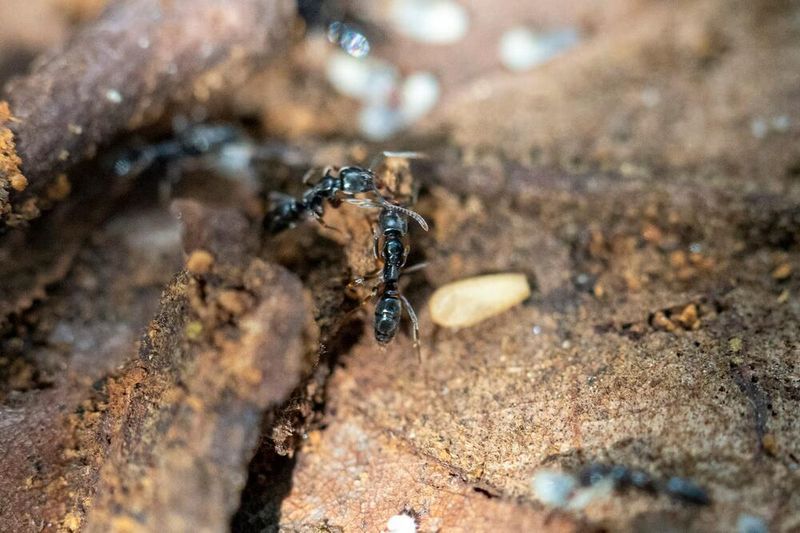
You are most likely to find colonies under rotting logs, in old stumps, beneath stones, or deep in thick layers of moist mulch.
Those same spots tend to hold termites, which are a favorite food for needle ants. So a soggy corner of the yard with soft wood nearby can be a perfect setup for them.
Fall chores in Georgia often send gardeners right into these places.
Clearing out a woodpile, pulling up a rotted border timber, or raking last year’s mulch can uncover a nest without warning. Colonies are often small, sometimes holding only dozens to a few hundred workers, though sizes can vary.
A little prep work before you start can make a real difference.
Try loosening old mulch with a rake first, then pausing to watch for scattering ants. If you see a cluster of dark ants and small white larvae, step back and give yourself time to decide what to do.
Keeping mulch around two to three inches deep, rather than piling it high, may reduce overly soggy spots.
Pulling mulch a few inches away from your home’s foundation is also a helpful habit.
4. Mulch And Other Landscaping Materials Can Help Them Spread
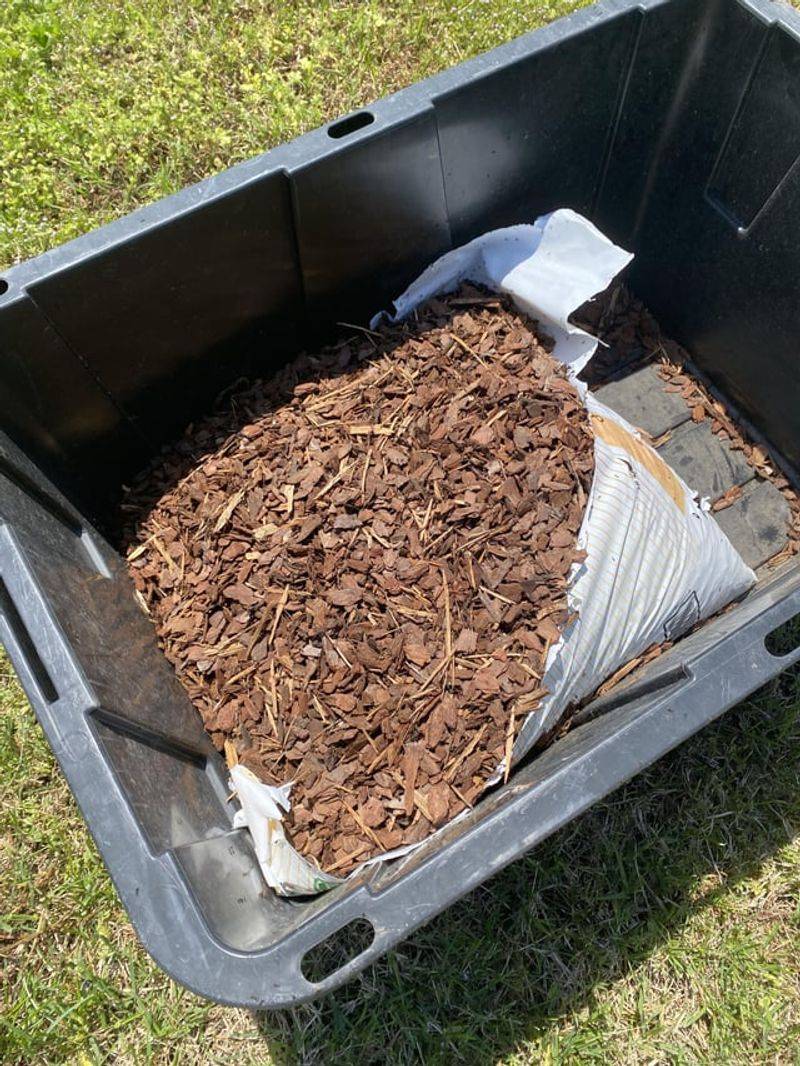
Ants rarely travel far on their own legs. Needle ant queens do not fly off in big mating swarms the way some other ants do.
That slow natural spread is one reason people are thought to play a big role in moving them around.
Colonies can hitch rides in bulk mulch, potted nursery plants, landscape timbers, firewood, and soil. A load dropped in your driveway could, in some cases, carry a small colony along with it.
Not every truckload or bag will have ants, of course.
Still, it helps to inspect materials before spreading them across your beds. Break open a pile edge with a shovel and watch it for a minute or two.
Potted plants deserve a quick look too, especially the bottom of the pot and the drainage holes.
Across Georgia, fall is a popular time to plant shrubs and trees, so nursery trips pick up this time of year. Lifting a plant from its container outside, away from your home, is a simple way to check the root ball.
If you share mulch or firewood with neighbors, mention anything unusual you spot.
Small steps like these will not stop every ant, but they can lower the odds of bringing one home.
5. Its Sting Can Cause Serious Allergic Reactions In Some People
Pain comes first, and it can be surprisingly sharp. People often describe the sting as burning or stinging, sometimes lasting longer than they expected.
Many stings cause only local pain, redness, and swelling that fade over time.
Some people, however, can have a serious allergic reaction called anaphylaxis. Medical reports have linked Asian needle ant stings to these reactions, and people with other insect sting allergies may face greater risk.
Knowing the warning signs helps you act quickly if something goes wrong.
Trouble breathing, swelling of the face or throat, hives spreading across the body, dizziness, or a racing heart call for emergency care right away. In Georgia, dialing 911 is the right move when these symptoms show up.
For milder stings, washing the area and using a cold pack may ease discomfort.
Over-the-counter pain relievers or anti-itch creams might help some people, but check labels and ask a pharmacist if you are unsure. Watch the spot for a day or two for signs of infection, like increasing warmth or pus.
Anyone with a known sting allergy should talk with a doctor about carrying prescribed epinephrine.
Keeping it nearby during yard work is a simple precaution that could matter a great deal.
6. Gloves And Garden Tools Reduce Direct Contact While Moving Mulch
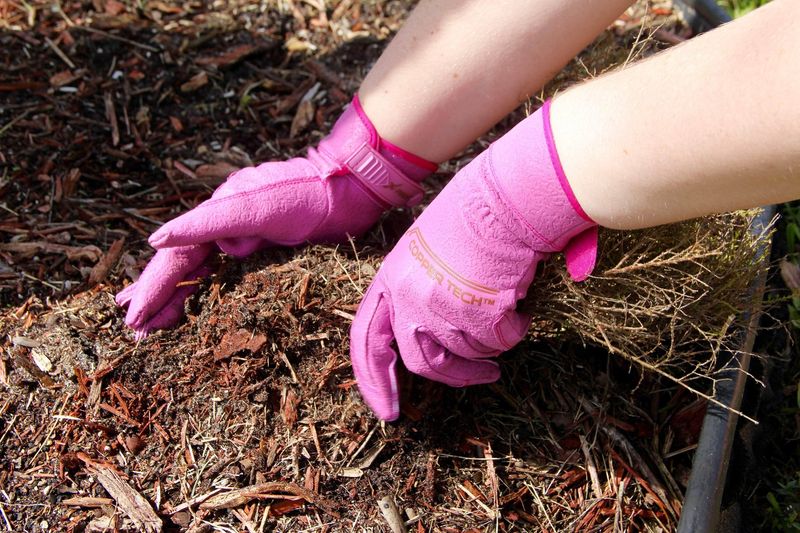
Bare hands and fresh mulch are a risky mix. A pair of sturdy gloves may be the easiest safety step you take all fall.
Leather or thick coated gloves offer more protection than thin cloth ones.
Needle ants have a stinger, and it can sometimes reach through lightweight fabric. Pairing gloves with long sleeves and tucking pant legs into socks adds another layer between you and the ants.
Tools do a lot of the work that fingers used to handle.
A pitchfork, rake, or flat shovel lets you lift and spread mulch without reaching into the pile. When you need to move a log or stone, roll it toward you with a tool so any ants scatter away from your body.
Wheelbarrows help too, since you can check each load before dumping it into a bed.
Georgia’s fall weather is often mild enough that long sleeves feel comfortable rather than stuffy. That makes this season a good time to build safer habits, before spring planting picks up again.
After finishing, shake out your gloves and clothing before heading inside.
Rinsing tools and storing gloves off the ground can also keep stray ants from riding along to your next project.
7. Confirm The Ant Before Deciding How To Manage The Colony
Guessing wastes time and money. A correct ID gives you a much better shot at choosing a plan that actually works.
Start by collecting a clear photo or a sample in a small sealed container, handled with tweezers or gloves.
Your local UGA Cooperative Extension office can often help identify insects or point you to someone who can. Extension agents across Georgia field pest questions regularly, and many services are free or low cost.
Once you know it is a needle ant, cultural changes are a sensible place to begin.
Reducing extra moisture, clearing rotting wood, and thinning thick mulch can make an area less inviting. Fixing leaky spigots and improving drainage near beds may help as well.
Baits and insecticides are sometimes used, but results can vary with the product, the season, and how hidden the colony is.
Always read and follow label directions, and keep products away from kids, pets, and nearby water. Some baits made for other ants may not appeal to needle ants, so asking an expert first is worthwhile.
For large problems or a household member with sting allergies, a licensed pest control professional is a reasonable option.
Either way, confirming the ant first keeps your next step focused and far more effective.