Shade Flowers That Keep Blooming In Michigan After Summer Heat Fades
As summer heat starts to fade across Michigan, plenty of gardeners assume their shady flower beds are done putting on a show for the year. It’s an easy conclusion to reach, especially after watching sun loving blooms wind down one by one.
But shade gardens have a surprising amount of life left in them if you know which flowers actually thrive once temperatures cool off.
Some of the most reliable bloomers for this stretch of the season are ones gardeners often overlook entirely, tucked away in catalogs or passed over at the nursery in favor of flashier summer picks.
Choosing the right varieties can keep your shady corners colorful well past the point when most people have given up on them. It’s less about fighting the changing season and more about working with it.
Once you know which flowers fit this window perfectly, your shade garden can stay just as lively in early fall as it was in July.
1. Toad Lily
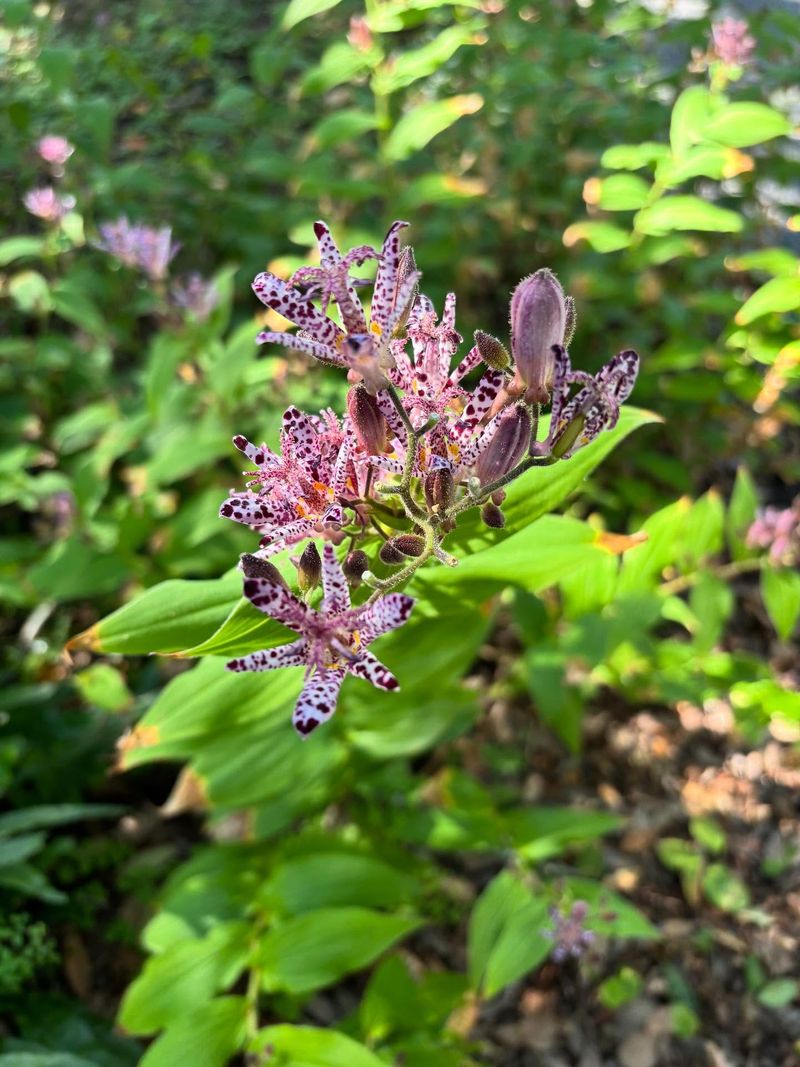
Hidden among the shadows, toad lily saves its magic for the time when most shade plants have called it quits. Its small flowers look like tiny orchids, covered in speckles of purple and white that reward anyone who leans in for a closer look.
Blooming from late summer into fall, this plant thrives in the cool, moist corners of a Michigan garden. It loves rich soil and steady shade, making it a great fit under trees where sunlight barely reaches.
The arching stems hold rows of blooms that open one after another over several weeks. Give it a spot protected from harsh afternoon rays and keep the soil damp, and it will thank you with color long after summer fades.
Toad lily also handles Michigan winters well, coming back stronger each year as the clump slowly spreads.
Here is a fun bit of history: toad lily comes from the woodlands of Asia, where gardeners have prized it for centuries. Despite the odd name, the flowers are anything but ugly, and pollinators enjoy them too.
Plant a few near a path or seating area so you can admire the detailed patterns up close. Mixing them with ferns or hostas creates a soft, layered look that feels like a peaceful forest.
For low effort and big late-season charm, toad lily earns its place in any shady bed. It proves that some of the prettiest flowers show up when you least expect them, adding surprise and beauty right when the garden needs it most.
2. Turtlehead
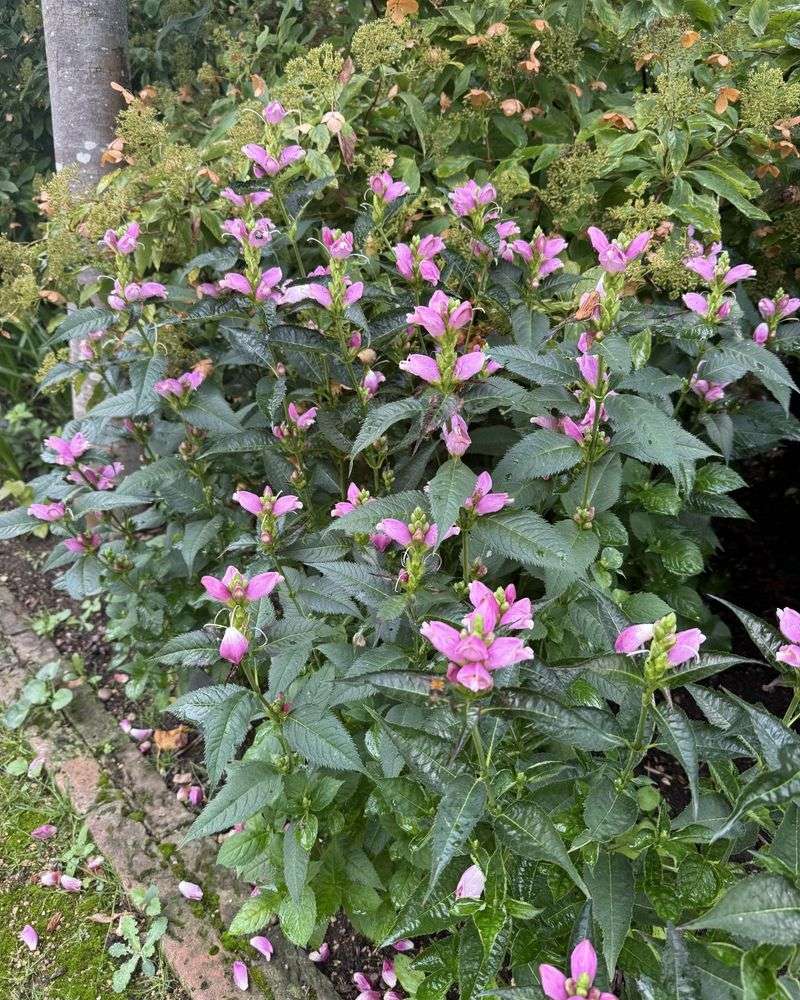
Ever seen a flower that looks like a tiny turtle with its mouth open? That playful shape gives turtlehead its name, and kids and adults alike get a kick out of spotting the resemblance.
This native beauty shines in late summer and early fall, filling shady Michigan gardens with clusters of pink or white blooms. It loves moisture, so it feels right at home near ponds, rain gardens, or damp woodland edges where other flowers might struggle.
Turtlehead grows in upright clumps that stand tall and neat without flopping over. Because it is native to the region, it handles Michigan weather with ease and needs very little fussing once it settles in.
Your Michigan Garden Changes Every Week. Your Plan Should Too.
Gardening in Michigan changes quickly throughout the season. Every Friday you’ll receive a simple weekly plan showing exactly what to plant, prune, fertilize, harvest, and protect so you never miss the right timing.
The sturdy stems and glossy green leaves look tidy even before the flowers arrive. Bees and butterflies adore these blooms, so planting turtlehead helps support local pollinators during a time when food can be harder to find.
That makes it a smart choice for anyone who wants both beauty and a garden buzzing with life.
Place it toward the middle or back of a shady bed where its height can add structure. Pair it with ferns, astilbe, or other moisture lovers for a lush, natural look that feels like a slice of the woods.
Keep the roots cool and the soil consistently damp, and turtlehead will reward you year after year.
It is one of those quiet, dependable plants that steps forward just as summer heat backs off, bringing charm and personality to spots that might otherwise sit empty.
3. Japanese Anemone
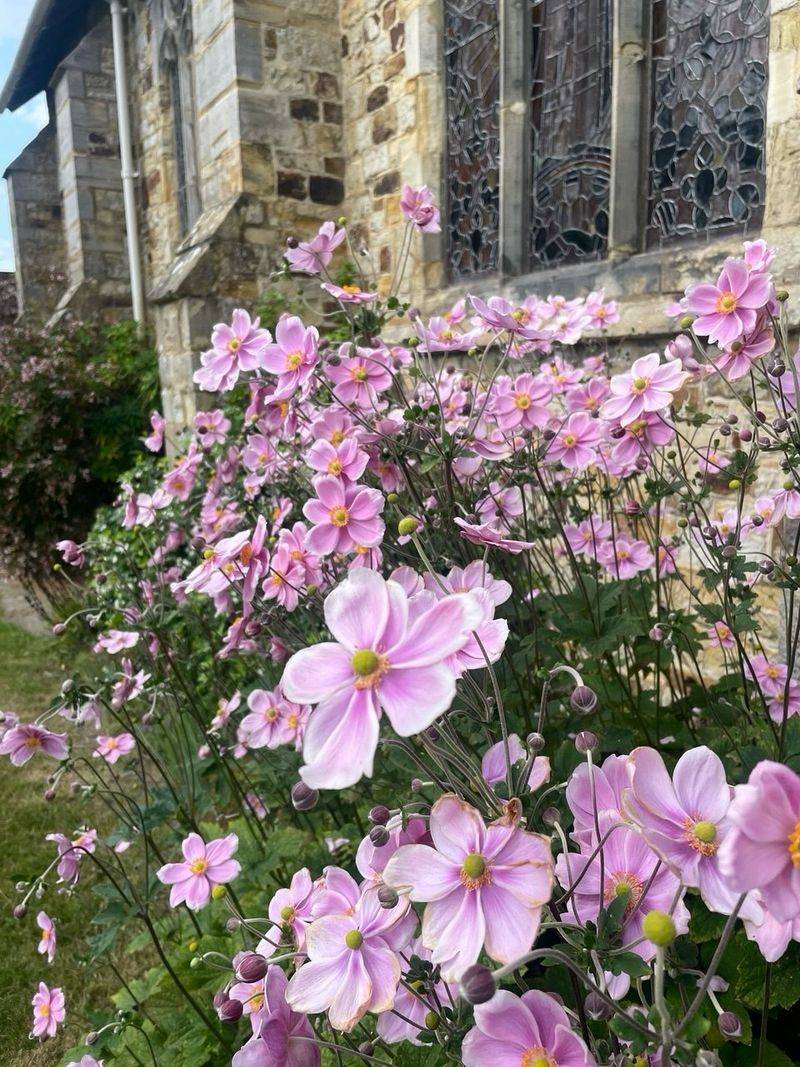
Picture delicate flowers floating on tall, slender stems, swaying gently with every breeze. That graceful movement makes Japanese anemone one of the most elegant additions to a fall garden.
Just as summer heat fades, this plant bursts into bloom with soft pink or crisp white petals surrounding a bright yellow center. The show can last for weeks, stretching color deep into autumn when many gardens are ready to rest.
Japanese anemone does best in part shade with steady moisture. Too much harsh afternoon sun can stress the plant, so a spot with morning light and afternoon cover works beautifully in Michigan. Rich, well-drained soil keeps it happy and full of blooms.
Give it a season or two to settle in, and it will spread into a generous patch that returns bigger every year. That slow spread means you get more flowers over time without spending a dime on new plants.
The tall stems make anemone perfect for the back of a shady border, where the blooms seem to dance above lower plants. Pair them with hostas and ferns for a layered look that feels both wild and refined.
Cutting a few stems for a vase brings that same soft charm indoors, and the flowers hold up nicely once cut. Just be sure to keep the roots cool and mulched through winter.
For gardeners craving elegance in the cooler months, Japanese anemone delivers grace and staying power. It turns quiet, shady corners into something that feels almost dreamy right when the rest of the yard slows down.
4. Coral Bells
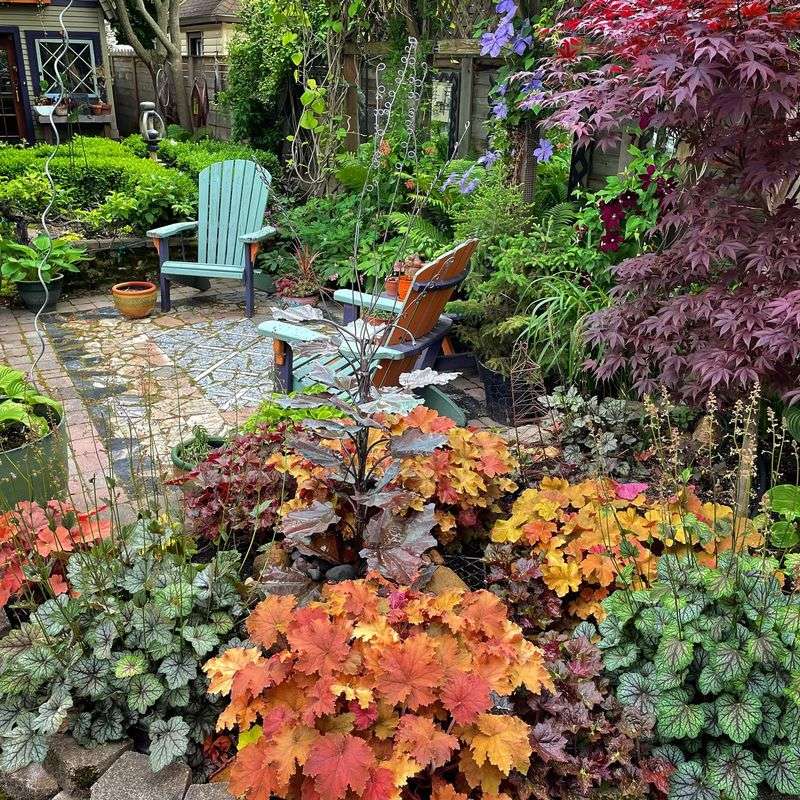
Talk about a plant that never stops showing off. Coral bells bring color to shady spots all season long, and the star of the show is often the leaves rather than the flowers.
These mounding plants come in a rainbow of foliage shades, from deep purple and burnt orange to lime green and silvery gray. That means your garden stays interesting even between blooms, which is a big win for shady corners that can feel dull.
When flowers do appear, they rise on thin stems as tiny bells that hummingbirds love to visit. Some varieties push out fresh blooms into late summer and early fall, stretching the display well past the peak heat.
Coral bells prefer part shade and soil that drains well but stays a little moist. In Michigan, they handle winters nicely and often keep some color even as the weather cools. A layer of mulch helps protect the roots and keeps them comfortable.
Because they stay compact, coral bells work great as edging along paths or tucked into containers on a shady porch. Mixing several leaf colors together creates a bold, eye-catching patchwork that feels fun and modern.
Trim off any tired leaves in spring, and give the clump a gentle divide every few years to keep it vigorous. That little bit of care rewards you with lush growth and steady color.
For gardeners who want beauty that lasts from spring through fall, coral bells are hard to beat. They prove that leaves can be just as thrilling as flowers, filling shade with lasting charm.
5. Woodland Aster
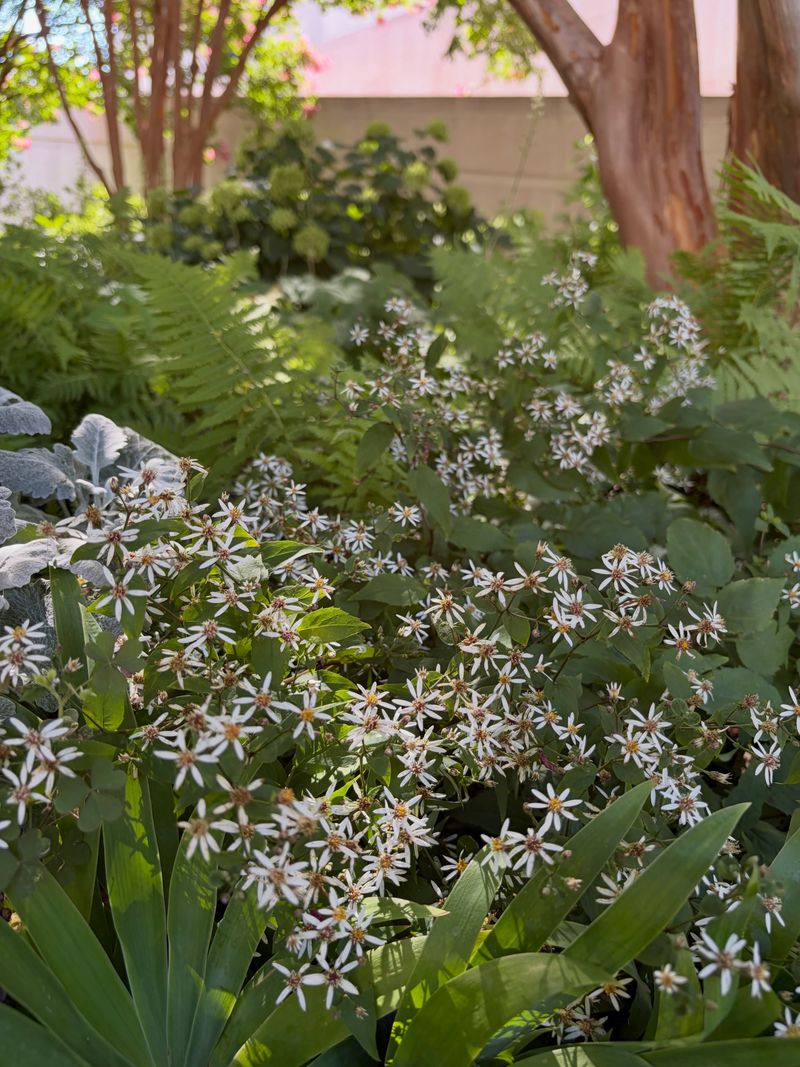
When the days grow shorter, woodland asters light up shady spots with clouds of small, starry flowers. These native gems put on their best show in fall, exactly when pollinators need a helping hand.
Bees and butterflies flock to the tiny white or pale purple blooms, gathering food before the cold sets in. That makes woodland aster more than pretty; it plays a real role in keeping local wildlife fed and busy.
Native to Michigan woodlands, this plant feels right at home under trees and along shaded edges. It handles dry shade better than many flowers, so those tricky spots beneath big trees finally have a solution.
The airy flowers seem to float above the foliage, giving the garden a soft, natural look. Plant several together for a gentle wave of color that mimics the way they grow in the wild.
Woodland aster asks for very little once it takes hold. It shrugs off tough conditions and returns faithfully each year, spreading slowly to fill in bare ground without becoming a bully.
Pair it with ferns, sedges, or other native plants for a low-care garden that supports the whole ecosystem. The combination looks effortless and stays lively deep into autumn.
Here is something neat: many asters were once grouped under one big family, but woodland types earned their own special place thanks to their shade tolerance. That toughness is exactly why gardeners treasure them.
For fall color that also does good, woodland aster is a smart, generous pick. It brings life and movement to shady corners just when everything else quiets down.
6. Astilbe
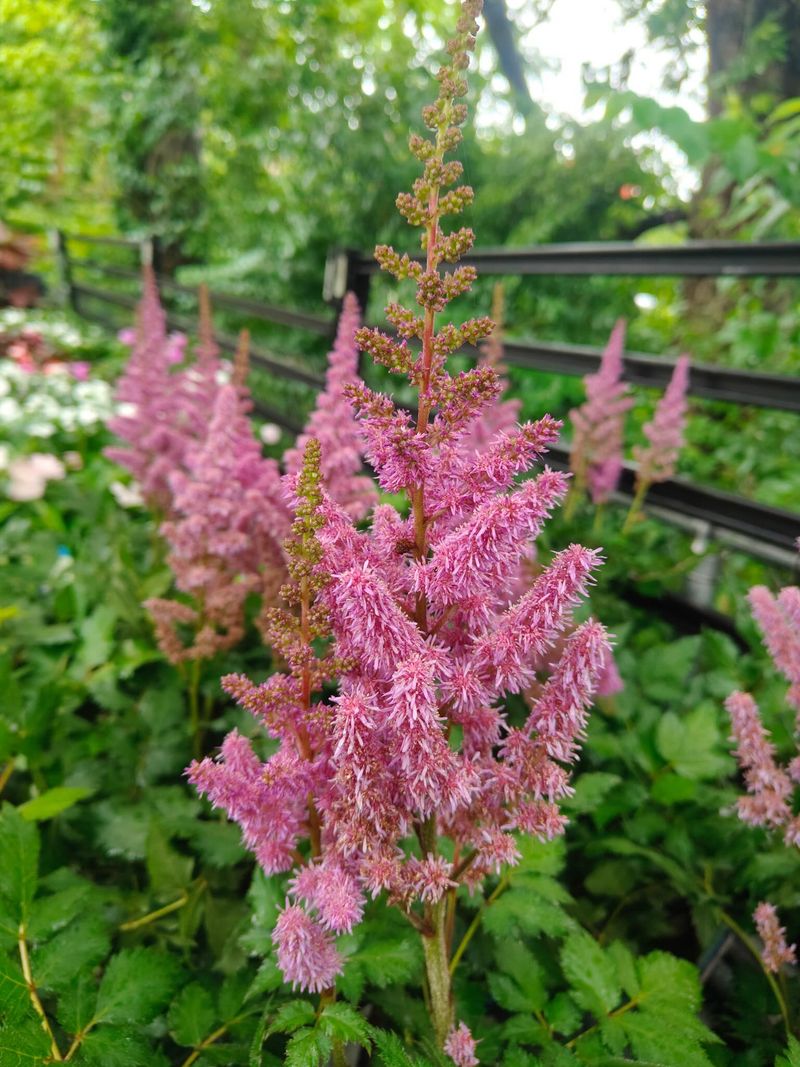
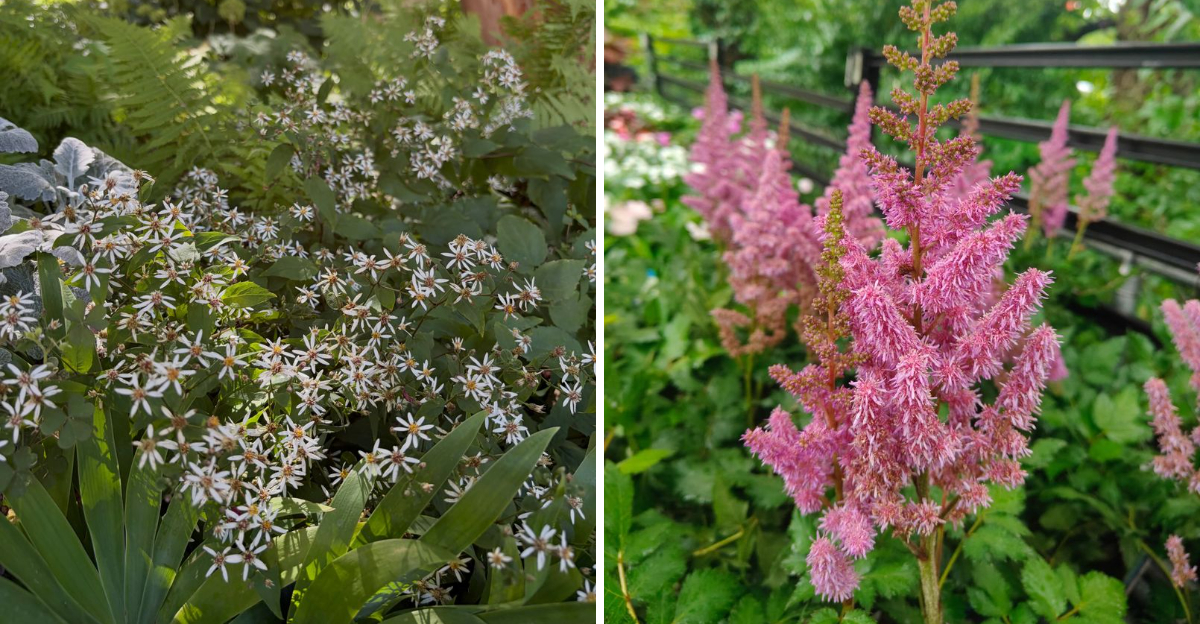
Soft, feathery plumes rising above lacy green leaves make astilbe look like it belongs in a fairy tale. This plant brings a fluffy burst of color to shady, damp corners where few other flowers thrive.
Astilbe loves moisture, so it shines in spots that stay cool and a little wet. In Michigan, that makes it a natural choice for low areas, rain gardens, or beds shaded by tall trees.
The plumes come in shades of pink, red, white, and lavender, standing tall like colorful feathers. While many bloom in early to mid summer, certain later varieties keep the flower show going toward the end of the season.
Even after the blooms fade, astilbe keeps earning its spot. The dried plumes hold their shape and add texture, while the fern-like foliage stays lush and green well into fall.
Give astilbe rich soil packed with organic matter, and keep it watered during dry stretches. Skipping water is the one thing that will make it sulk, so a layer of mulch really helps lock in moisture.
Plant it in groups for the biggest impact, letting those plumes rise together like a soft, colorful cloud. It pairs beautifully with hostas, ferns, and coral bells for a layered woodland feel.
Every few years, dividing the clumps keeps them healthy and full of blooms. That simple task also gives you free plants to spread around the yard.
For anyone with a shady, moist garden, astilbe offers gentle beauty and reliable texture that lasts. It fills quiet spaces with softness right through the cooling weeks of the season.
7. Hardy Geranium
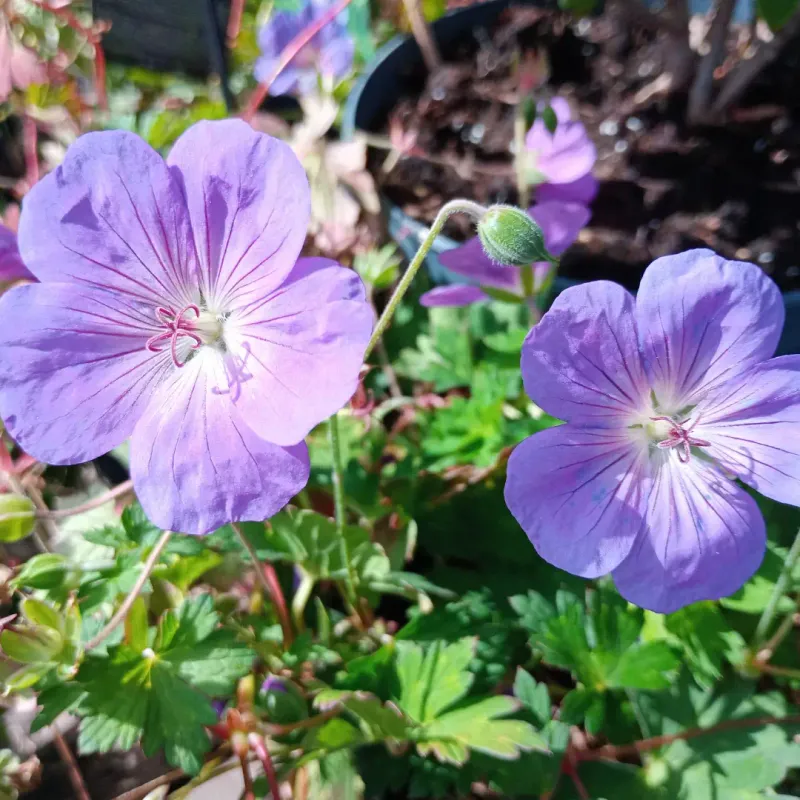
Not the potted geraniums you see on porches, hardy geraniums are tough little perennials that come back stronger each year. Their charm lies in how easygoing they are, filling shady beds with cheerful color and almost no fuss.
These plants often bloom in early summer, but here is the trick: many will flower again once the peak heat fades. A little care in the middle of the season can spark a whole second round of blooms.
The secret is cutting back tired, floppy growth after the first flush of flowers. Trimming the stems close to the ground encourages fresh leaves and a new wave of blossoms as cooler weather arrives.
Hardy geraniums come in shades of purple, pink, blue, and white, with cup-shaped flowers that pollinators enjoy. Their mounding shape also makes them great for filling gaps and softening the edges of a bed.
In Michigan, these plants handle cold winters like champs and return faithfully every spring. They tolerate a range of conditions, though part shade with decent soil keeps them happiest.
Use them as ground cover under taller shade plants, where their leaves crowd out weeds and keep the soil cool. That natural weed control saves you time and effort.
The foliage often turns lovely shades of red and orange in fall, adding one more layer of interest. So even after the blooms slow, the plant keeps giving.
For a low-care flower that rewards a quick trim with more color, hardy geranium is a dependable favorite that keeps shady gardens glowing well into autumn.