The September Task That Decides If Your Texas Peonies Bloom Next Spring
A peony in Houston can look perfect for six years and never produce a single flower.
Green, healthy, leafy, entirely uninterested in blooming.
Gardeners water it more. They fertilize. They move it to better light. Nothing changes.
Meanwhile the answer sits about three inches underground, where nobody thinks to look.
Here’s what makes this frustrating. Texas peonies face one obstacle nobody can fix, and that obstacle gets blamed for everything.
Warm winters are real. So is the fact that plenty of Texas peonies fail for a completely different reason that takes twenty minutes to correct.
One September task addresses it. The task is not complicated, it costs nothing, and most northern gardening advice actively steers you wrong on it.
Get it right and you’ve removed the biggest controllable barrier between your plant and spring flowers.
Get it wrong and it will not matter how well you do anything else.
Curious what’s buried too deep in your bed?
Check Your Planting Depth
Here it is, stated plainly.
Peonies planted too deep almost never bloom, regardless of how healthy the foliage looks above ground.
The growth points on the crown, called eyes, need to sit just barely below the soil surface.
Southern guidance places those eyes about one inch deep. In warm regions, shallower generally serves you better than deeper.
Northern sources sometimes recommend three or four inches, which suits Michigan and produces exactly the lush flowerless plant so many Texas gardeners describe.
That single discrepancy explains an enormous share of peony disappointment across the South.
September is the month to check, since early fall gives roots time to settle before winter if adjustment turns out to be necessary.
The inspection itself takes minutes. Brush a little soil away near the crown and look at where the eyes actually sit.
An inch or less means you’re fine. Two inches or more means the plant needs resetting.
Soil accumulation is worth mentioning too, since years of mulching can bury a correctly planted peony without anyone noticing.
That’s the task in full. Everything below covers why depth matters this much, how to do the job without damaging the plant, and what else deserves attention while you have access to the crown.
Twenty minutes of careful work against six more years of green leaves and no flowers is a reasonable trade by any measure.
Why Depth Decides Everything
Depth controls what the plant experiences underground, and that turns out to be the entire story.
Eyes sitting near the soil surface register temperature swings, cold periods, and warming trends directly. Eyes buried several inches down sit in soil that stays considerably more stable.
Stability sounds like a good thing and works against you here.
Peonies need to sense sustained cold before they will produce flower buds. Deep soil buffers that cold, so a buried crown may never register enough chilling to trigger the process.
Texas compounds the problem in an obvious way. Winters already run short on chill hours, so anything reducing what the plant perceives makes a marginal situation genuinely difficult.
Your Texas Garden Changes Every Week. Your Plan Should Too.
Gardening in Texas changes quickly throughout the season. Every Friday you’ll receive a simple weekly plan showing exactly what to plant, prune, fertilize, harvest, and protect so you never miss the right timing.
That’s why the same variety might flower reliably in Ohio at three inches deep and fail completely in Dallas at identical depth.
The plant is not sick, and the roots may be thriving. It simply never received the signal that winter happened.
Foliage keeps appearing because leaf production requires no chilling at all. Flower buds do.
So the gardener gets a healthy green mound year after year with absolutely nothing at the top.
Understanding this also explains why other interventions fail. More water, better light, and heavier feeding all address problems the plant does not have.
Depth is the one variable entirely within your control, which is precisely why it earns this much attention in a Texas garden.
How To Check Without Damaging Anything
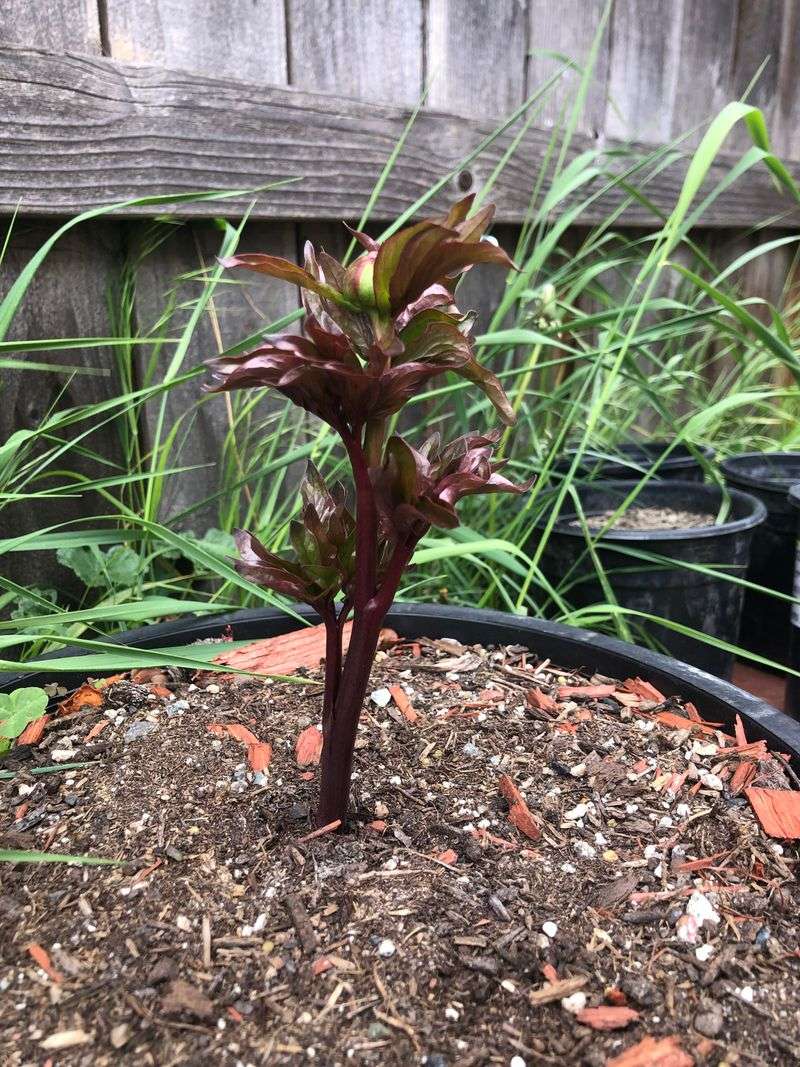
The inspection requires care, since the eyes you’re hunting for are exactly what you must not injure.
Work by hand rather than with a tool. Fingers feel resistance that a trowel simply slices through, and a damaged eye means one fewer potential flower.
Brush soil away gradually from one side of the crown, moving an inch or two at a time rather than excavating the whole thing.
Eyes appear as small pink or reddish buds sitting on the woody crown, often several clustered together in a group.
Measure from the top of those eyes up to the original soil surface. That number is your entire answer.
An inch or slightly less means leaving the plant alone. Two inches or more means resetting is warranted.
Timing helps here. Doing this in September rather than mid-winter means you can see stem bases and locate the crown without guessing.
Accumulated soil deserves checking specifically. Years of mulch breaking down raises grade slowly, and a peony planted correctly in 2015 may sit two inches deep today.
When that’s the cause, carefully removing excess soil and mulch sometimes solves the problem without lifting the plant at all.
Replace whatever you moved gently, water lightly, and note what you found.
Slow careful work beats efficiency on this particular job, since the whole point is protecting the structures that produce next spring’s flowers.
Resetting A Buried Peony Properly
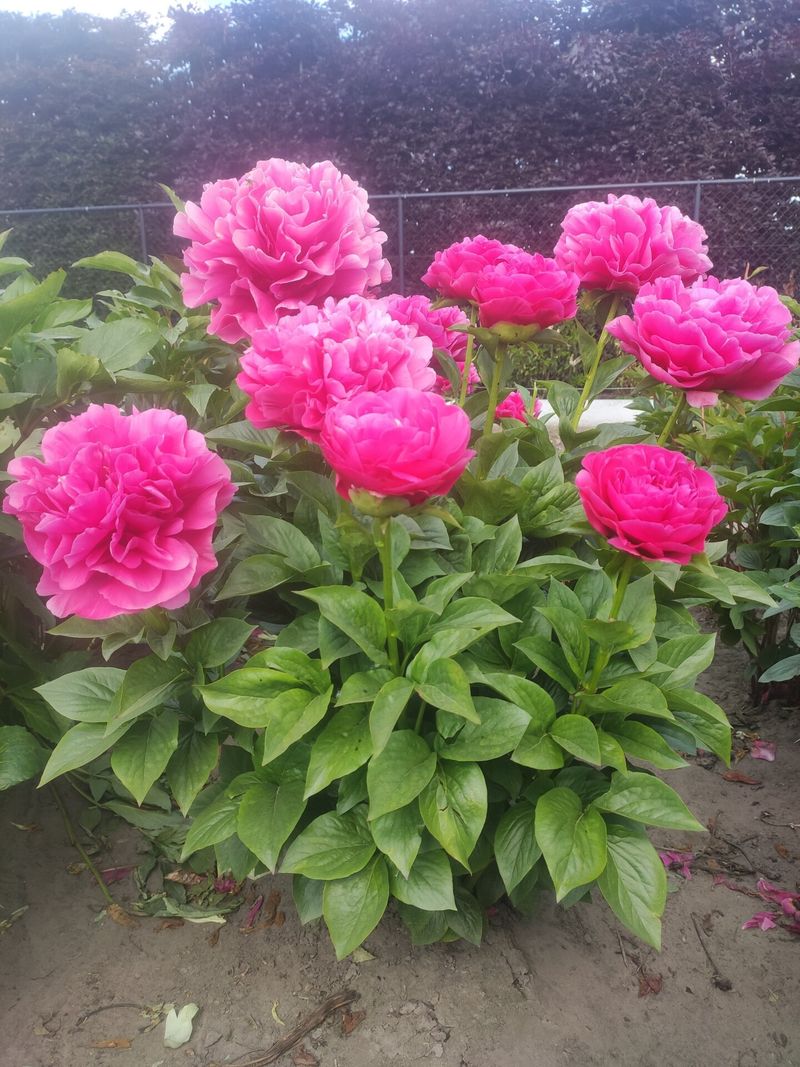
Lifting and replanting is straightforward and completely unforgiving of shortcuts.
Cut foliage back to a few inches first so the crown becomes visible and the plant is easier to handle.
Dig a wide circle well outside the root mass. Peony roots run thick and fleshy, and cutting through them costs you the energy stored for next year’s growth.
Lift the entire clump rather than attempting to adjust depth in place, which rarely works.
Rinse soil off with a hose so the eyes become fully visible. Guessing at depth with dirt still clinging to the crown is how plants end up buried a second time.
Prepare the new hole before setting the plant down, and work compost into the surrounding area if your soil runs heavy.
Position the crown so the eyes sit about one inch below the finished soil level.
Here’s the detail that catches people repeatedly. Backfilled soil settles over the following weeks, so a crown placed at exactly one inch often ends up deeper after a few rains.
Planting slightly high and allowing for settling compensates for that.
Firm soil gently around the roots without packing it hard, then water in thoroughly to eliminate air pockets.
Skip fertilizer entirely at planting time. The plant needs to establish roots rather than push growth, and feeding now works directly against that.
Getting The Site Right While You’re There
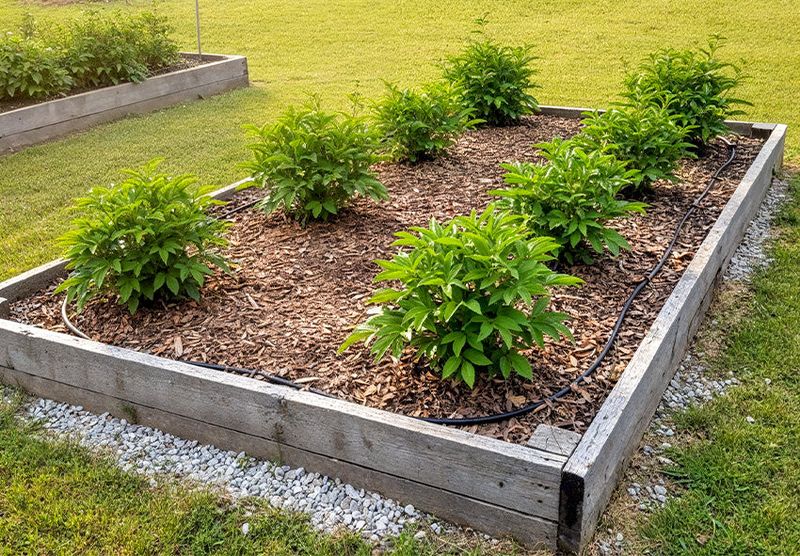
With the plant out of the ground anyway, the location itself deserves honest evaluation.
Drainage matters nearly as much as depth for peonies, and much of Texas serves up heavy clay that holds water like a sponge.
Wet soil around a peony crown produces rot, which ends any conversation about blooms permanently.
Watch how your bed behaves after a real rain. Water standing for hours near the crown identifies a problem worth solving before you replant.
Compost worked into the surrounding area loosens tight clay and improves how water moves through the root zone.
Raised beds and mounded soil both work well here. Lifting the crown above the surrounding grade keeps roots drier during soggy spells, which matters more in Houston than in Amarillo.
Sun exposure comes next. Peonies want full sun for good flowering, though some afternoon shade helps in the hottest parts of the state.
Soil pH suits peonies across much of Texas naturally, since they tolerate neutral to slightly alkaline conditions comfortably.
A soil test through your county extension office removes the guesswork on pH and nutrients for a modest fee.
One caution while amending. Avoid placing water-holding materials directly against the crown, since constant dampness at that exact spot invites the rot peonies simply cannot survive.
Balance is the goal, not maximum richness.
Leave The Plant Alone Afterward
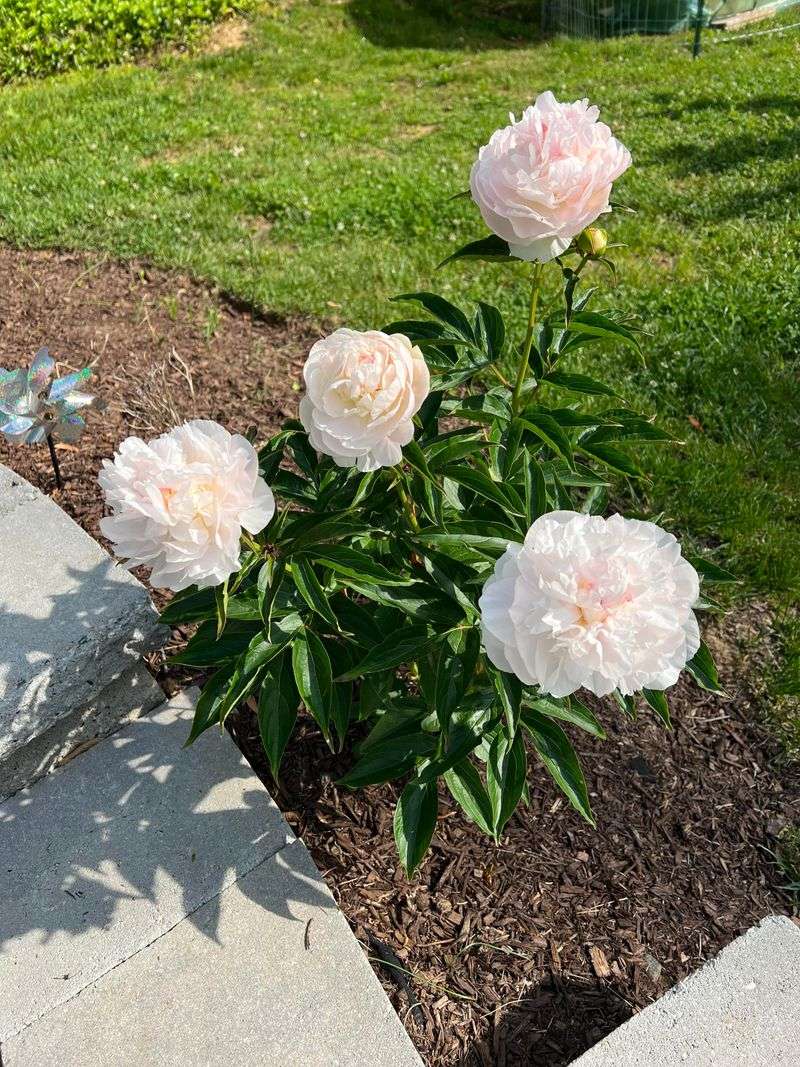
Peonies resent disturbance more than nearly any perennial you can grow in Texas.
Once reset at the correct depth, the plant needs time far more than it needs attention.
Recovery generally takes a season or two. Many peonies skip blooming the first spring after being moved, and sometimes the second one as well.
That silence is not failure. Root systems are rebuilding before the plant invests energy in flowers, which is exactly the sequence you want.
Division should happen only when genuinely necessary. A settled peony can hold the same spot for decades without any need for splitting.
Crowding, obvious decline, and correcting a burial problem are the legitimate reasons to dig one up.
If you do divide, keep three to five healthy eyes per section and replant immediately at that shallow depth peonies require.
Smaller divisions take considerably longer to reach flowering size, so generous pieces serve you better than maximizing plant count.
Resist repeated checking above all. Every disturbance resets the recovery clock, and curiosity has cost more Texas peonies than neglect ever did.
Mark the spot clearly so nothing gets planted or dug nearby next spring when the plant is invisible.
One correction done properly beats three years of well-meaning interference. Patience is genuinely the technique here, uncomfortable as that is for anyone who likes fixing things.