Stumble On This Arizona Native Plant And You’ve Struck Gold – Most Folks Walk Right Past It
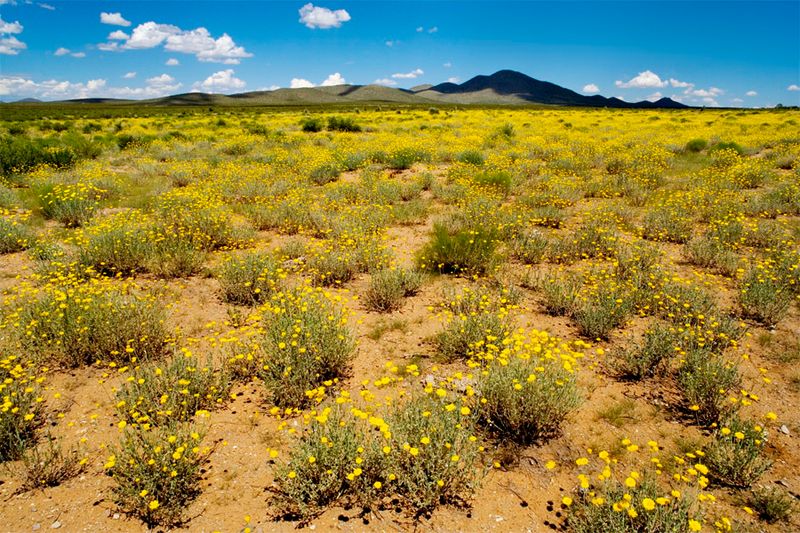
Tucked along Arizona roadsides, gravel washes, and sun-baked desert edges grows a small wildflower that seasoned low-desert gardeners quietly prize. Desert marigold, known scientifically as Baileya multiradiata, produces vivid yellow blooms that light up a Phoenix or Tucson yard from spring well into fall, all while asking for very little water once it settles in.
Its gray-woolly foliage and compact size can make it easy to miss at first glance, but once you know what you’re looking at, you’ll start spotting it everywhere. If you’ve been walking past this Arizona native without a second look, consider this your invitation to take one.
Arizona’s Easy-to-Overlook Gold Is Desert Marigold
Pull over on almost any Arizona highway between Phoenix and Tucson, and you’ll find it growing in the gravel shoulder without any help from a gardener: desert marigold, Baileya multiradiata, a native Arizona wildflower that earns every bit of the “gold” in its common name. The flowers are a true, saturated yellow, held on slender stems above the plant’s base, and they catch afternoon light in a way that makes a patch of them glow against pale caliche or brown gravel.
Yet the plant itself is easy to walk past, because outside of bloom the foliage is a soft gray-green, woolly in texture, and low to the ground.
In Arizona’s low-desert settings, including the Phoenix metro and the Tucson basin, the Arizona Native Plant Society describes desert marigold as native, low-water, heat-tolerant, drought-tolerant, and attractive to bees and butterflies. Those qualities together make it genuinely useful rather than just pretty.
The “gold” here is a metaphor for both the color of the blooms and the practical value of a plant that can deliver long-season color and pollinator resources without demanding a drip system running on overdrive.
Arizona gardeners who know it tend to tuck it into gravel beds, naturalized strips, and open borders where its understated structure fits the surrounding desert palette. The plant typically forms a low clump, and its small scale, generally between 4 and 16 inches tall, means it can disappear entirely among rocks or sparse desert scrub when it is not flowering.
How to Recognize Desert Marigold in Arizona
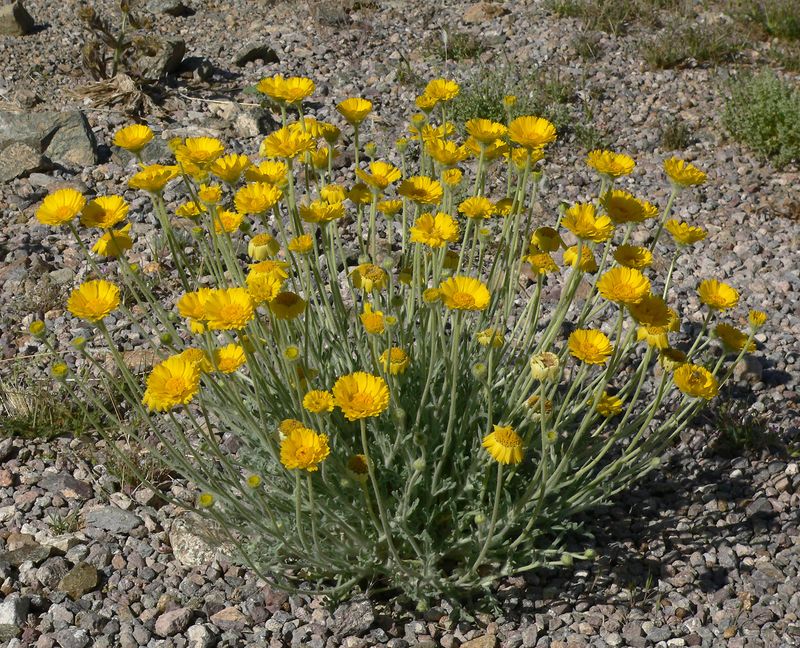
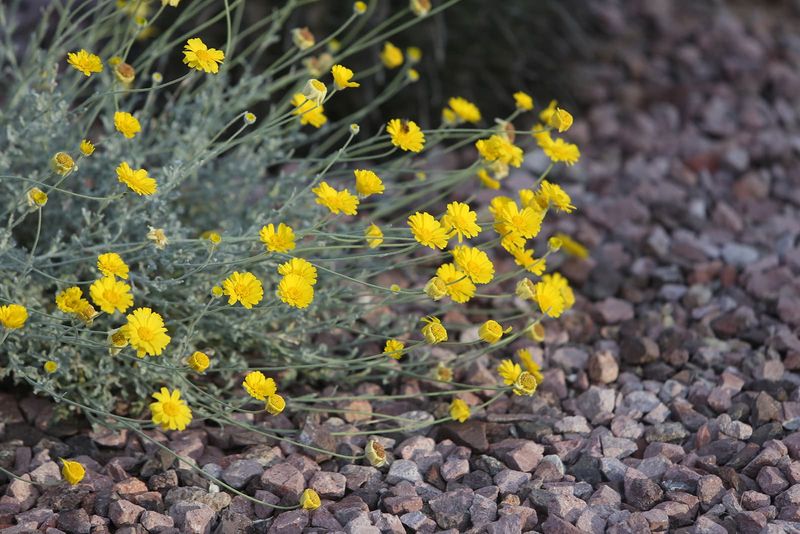
Knowing what to look for makes all the difference when you’re scanning an Arizona desert planting or a roadside wash. Desert marigold grows as a low mound of gray-green to silvery foliage that feels woolly or felted to the touch.
The flowers are the unmistakable part. Each bloom is a bright yellow daisy, with multiple ray petals surrounding a rounded yellow center, held on a slender stem that lifts it clearly above the basal foliage.
In an Arizona garden bed or naturalized strip, that combination of silver-gray base and yellow flowers rising above it creates a layered look that works well with other low-water natives like penstemon or desert zinnia.
Bloom timing in Arizona is notably long compared to many desert plants. The Arizona Native Plant Society lists the bloom period as March through October, while the Yavapai database extends it through November in some Arizona locations.
Your Arizona Garden Changes Every Week. Your Plan Should Too.
Gardening in Arizona changes quickly throughout the season. Every Friday you’ll receive a simple weekly plan showing exactly what to plant, prune, fertilize, harvest, and protect so you never miss the right timing.
Expect variation based on elevation, monsoon rainfall, sun exposure, and whether the plant receives any supplemental irrigation. In a low-desert Arizona yard that catches monsoon moisture and gets occasional deep watering, flowering can stretch through much of the warm season.
In a hotter, drier spot with no supplemental water, bloom may slow or pause during peak summer heat. The Arizona-Sonora Desert Museum notes that the plant’s woolly coating helps it handle Arizona’s intense solar radiation, which is part of why the foliage looks so different from typical garden annuals.
What Desert Marigold Adds to an Arizona Landscape
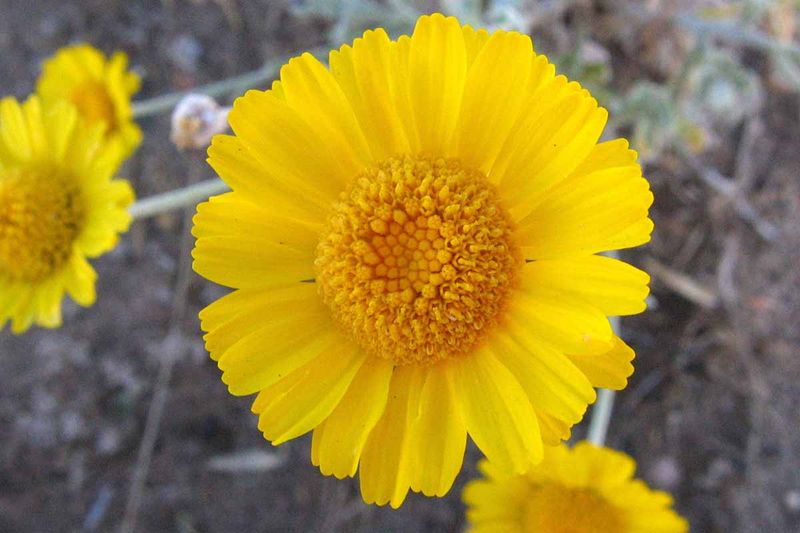
Beyond its color, desert marigold brings a cluster of practical benefits that fit the way many Arizona homeowners want their yards to function. Water savings top the list for good reason.
Once established in a suitable Arizona low-desert site, the plant is genuinely low-water and drought-tolerant, which means it can carry its weight in a yard designed around reduced irrigation rather than a conventional lawn schedule. That matters in Phoenix and Tucson, where water costs and conservation goals push homeowners toward plants that thrive on less.
Pollinator support is the other well-documented benefit. The USDA’s Arizona Plant Materials Center identifies desert marigold as a plant that attracts native bees and lists its uses as pollinator habitat, wildlife cover, erosion control, and restoration work.
The Arizona Native Plant Society adds bees and butterflies to the list of regular visitors. In a low-desert Arizona yard, those long-season yellow flowers can act as a reliable nectar source from early spring through fall, filling a gap when other plants have finished blooming or haven’t started yet.
One clarification matters here. Desert marigold supports pollinators and beneficial insects, and that is a real, meaningful contribution to a functional Arizona yard.
However, growing it will not repel scorpions, keep mosquitoes away, or serve as a stand-alone treatment for any household pest. If scorpion or mosquito management is a concern for your Arizona property, those require separate, targeted strategies.
Choose an Arizona Site That Drains Well
Site selection is where Arizona desert marigold plantings succeed or fail, and drainage is the single most important variable. USDA’s Arizona Plant Materials Center confirms that desert marigold can grow in sandy, gravelly, alkaline, caliche, clay, and loamy soils, which covers most of what Arizona low-desert gardeners encounter, but only when drainage is adequate.
A plant that tolerates alkaline caliche soil in a well-drained wash will struggle or rot in that same soil if water pools around its roots after monsoon rains.
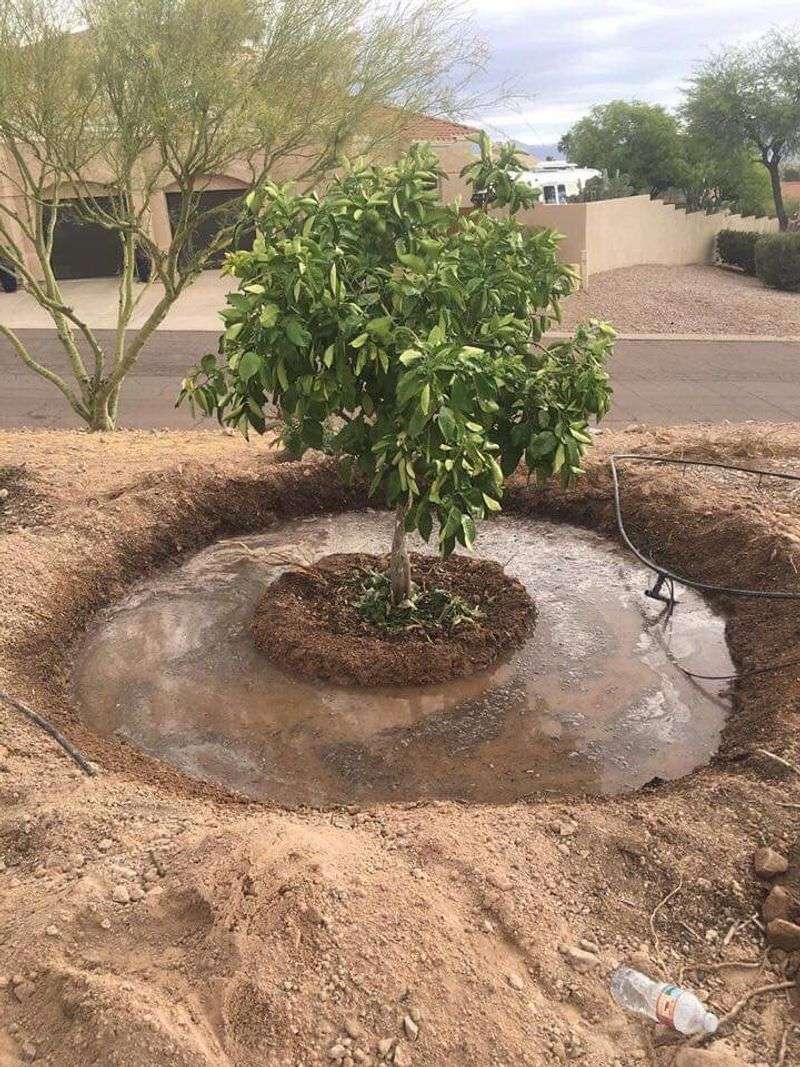
Before planting in any Arizona yard, do a simple drainage test. Dig a hole about a foot deep, fill it with water, and watch how quickly it drains.
If water sits for several hours, the site needs amendment or a different location. University of Arizona’s caliche guide recommends penetrating or removing solid caliche layers where practical, because an impermeable caliche pan beneath the soil surface can trap water and suffocate roots even when the surface appears dry.
Breaking through that layer with a soil auger or a pickaxe before planting gives roots a path downward and lets excess moisture escape.
Arizona’s climate zones vary considerably from the low-desert Phoenix and Tucson basins up through higher-elevation grasslands and mountain communities. The advice here targets low-desert Arizona specifically.
As for the plant’s natural growth habit, University of Arizona extension guidance notes that desert marigold reseeds but does not form a solid cover, so an open, naturalistic planting area suits it better than a tightly packed, uniform bed. A gravelly border, a dry wash edge, or an open patch between larger native shrubs gives it room to behave naturally without competing with dense plantings.
Start Desert Marigold From Seed in Arizona
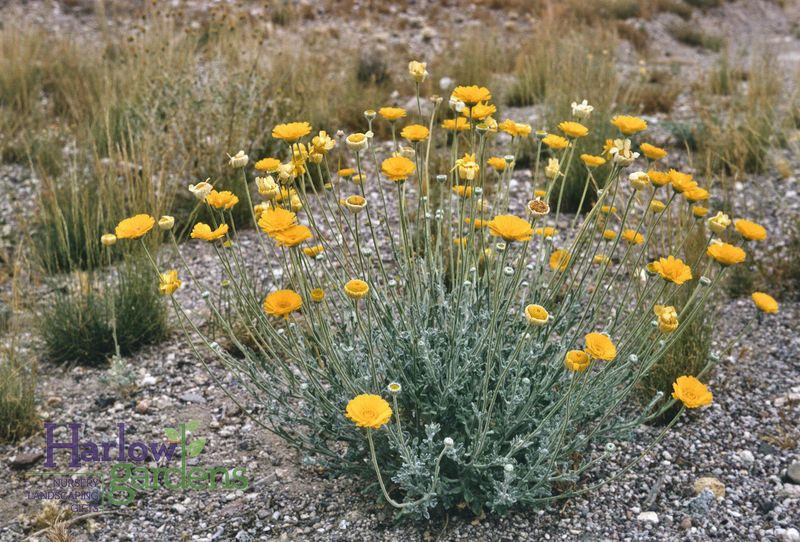
Starting desert marigold from seed in Arizona is straightforward when the timing matches the low-desert climate rather than a generic national planting calendar. For Phoenix- and Tucson-area gardeners, fall to early winter is the preferred sowing window.
University of Arizona’s October gardening guide for Pima County notes that annual flower seed sown in October can produce spring color, which aligns well with desert marigold’s cool-season germination preference. Sowing in fall lets seedlings establish during Arizona’s mild winter months and root in before summer heat arrives.
In areas of Arizona with more severe winter conditions, spring sowing is a reasonable alternative. The goal in either case is to give seeds a period of cooler, moist conditions during germination.
Stratification is not a guaranteed fix for every Arizona situation, but it is a low-effort technique worth trying, particularly if you are sowing in a spot that stays warm.
The actual sowing process in Arizona is simple. Clear the area of competing weeds, loosen the surface of a well-drained bed, and scatter seed across the prepared ground.
Desert marigold seed suppliers generally recommend a light covering of soil or fine gravel rather than deep burial, since the tiny seeds need light and warmth to sprout. Keep the seedbed consistently moist during germination, which typically means light, frequent watering until seedlings are visible.
Once young plants are a few inches tall, you can begin transitioning toward less frequent, deeper watering that encourages roots to go down rather than sideways.
Reduce Water After Establishment, Not Before
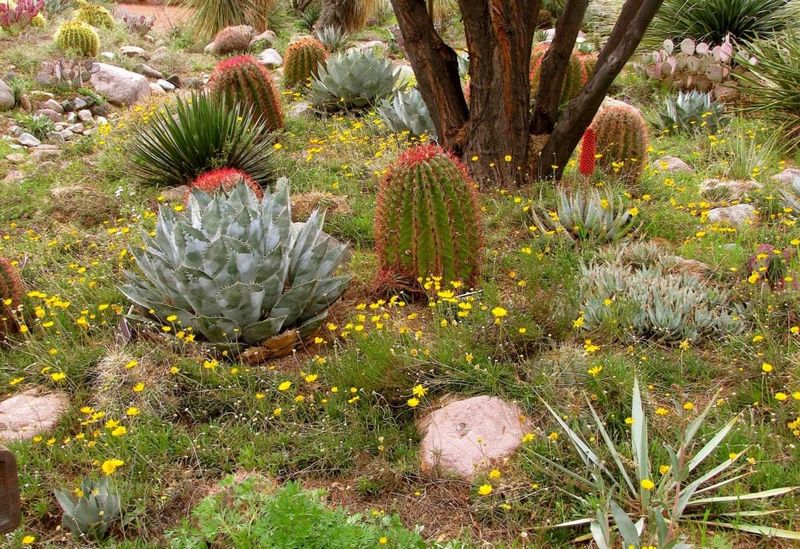
Newly planted desert marigold in Arizona is not yet drought-tolerant, even though the species earns that label once it matures. During the first weeks and months after planting or germination, roots are shallow and the plant depends on regular irrigation to survive Arizona’s heat.
Cutting water too soon during establishment is one of the most common reasons Arizona desert plants fail, so resist the temptation to treat a young plant the same way you would treat a three-year-old established specimen.
Once roots have spread and the plant shows signs of vigorous growth, the transition to reduced watering can begin. USDA’s Arizona Plant Materials Center advises intermittent watering during dry periods to maintain vigorous growth in established desert marigold, while specifically warning against overwatering.
Overwatering is a more realistic threat than underwatering for an established desert marigold growing in poorly drained Arizona soil. The Arizona-Sonora Desert Museum warns directly that excessive moisture can cause the plant to rot.
If a plant suddenly collapses or turns mushy at the base during or after monsoon season, waterlogged soil rather than heat is the likely culprit.
Let Arizona’s Reseeding Work Without Expecting a Carpet
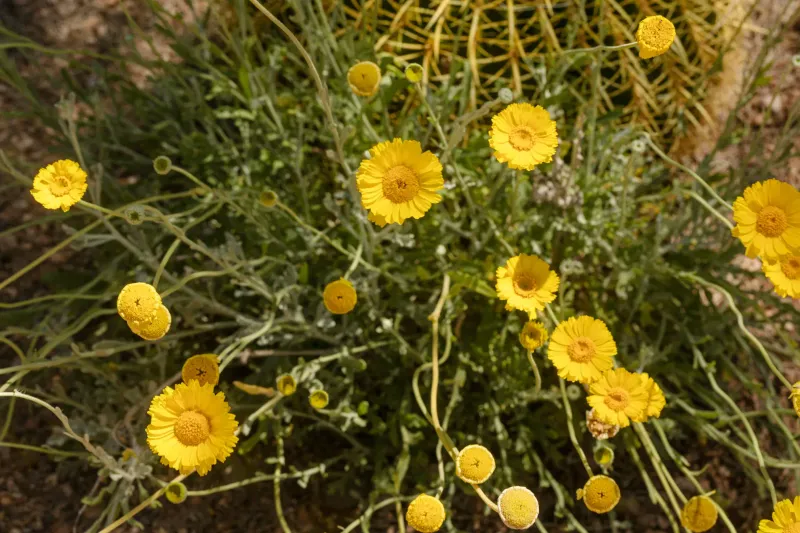
One of the more pleasant surprises desert marigold offers Arizona gardeners is its tendency to self-sow. After a plant flowers and sets seed, those seeds can germinate nearby and produce new plants the following season, gradually building a loose cluster in a suitable Arizona spot.
USDA’s Arizona Plant Materials Center classifies desert marigold as self-sown but not weedy or invasive, which is a useful distinction. It spreads gently rather than aggressively, making it well-suited to naturalized Arizona areas where some self-direction is welcome.
The catch is that self-sowing does not mean a dense, uniform groundcover will appear on its own. University of Arizona extension guidance is clear that desert marigold reseeds but does not form a solid cover, which matches the naturally open character of Arizona desert vegetation.
If your goal is a tight, carpet-like bed, this plant will disappoint. If your goal is a relaxed, wildlife-friendly Arizona planting that fills in organically over a few seasons, the reseeding habit is an asset.
Managing reseeding is optional and depends on your Arizona garden’s goals. Letting spent flowers mature fully and drop seed is the simplest approach and requires no effort.
Deadheading some flowers can extend bloom on individual plants and reduce seed spread if you want to limit where new plants appear. Thinning crowded seedlings in late fall or early spring keeps individual plants from competing for water and nutrients in a dry Arizona soil.
The University of Arizona’s Yavapai County plant database and the Arizona-Sonora Desert Museum both describe desert marigold as either annual or short-lived perennial, meaning individual plants may not persist for many years. Self-sowing is what sustains a population in an Arizona garden, not the indefinite survival of a single plant.
The Arizona Verdict: Value the Plant, Not the Myths
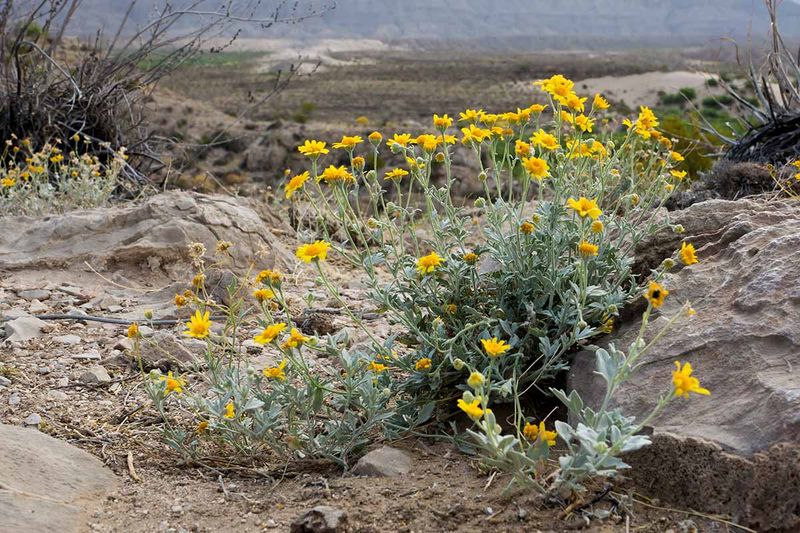
Desert marigold earns its place in low-desert Arizona yards that can offer suitable habitat, well-drained soil, and a willingness to work with the plant’s natural character rather than against it. The Arizona Native Plant Society and USDA’s Arizona Plant Materials Center both support its use for pollinator habitat, water-wise planting, and low-desert landscape color.
Those are real benefits, and they are enough to make it worth growing in a Phoenix or Tucson yard that needs long-season yellow blooms and native bee resources without a demanding irrigation schedule.
The limits matter just as much as the benefits. Establishment watering is non-negotiable for young plants.
Drainage problems, particularly from caliche or compacted Arizona soil, can cause rot even in a drought-tolerant species. Individual plants behave as annuals or short-lived perennials, so reseeding rather than plant longevity is what sustains a population.
Match desert marigold to your specific Arizona site rather than assuming it performs identically statewide. A gravelly, well-drained border in Tucson is not the same as a clay-heavy backyard in a Phoenix suburb, and both differ from higher-elevation Arizona gardens.
Get the drainage right, time your planting to Arizona’s fall window, and let reseeding do its work. The payoff is a genuinely native Arizona plant that lights up a low-water yard with gold every season it is happy.