Grow A New Arizona Banana Plant From A Rooted Sword Sucker Or Corm Section And See A Shoot In About Three Weeks
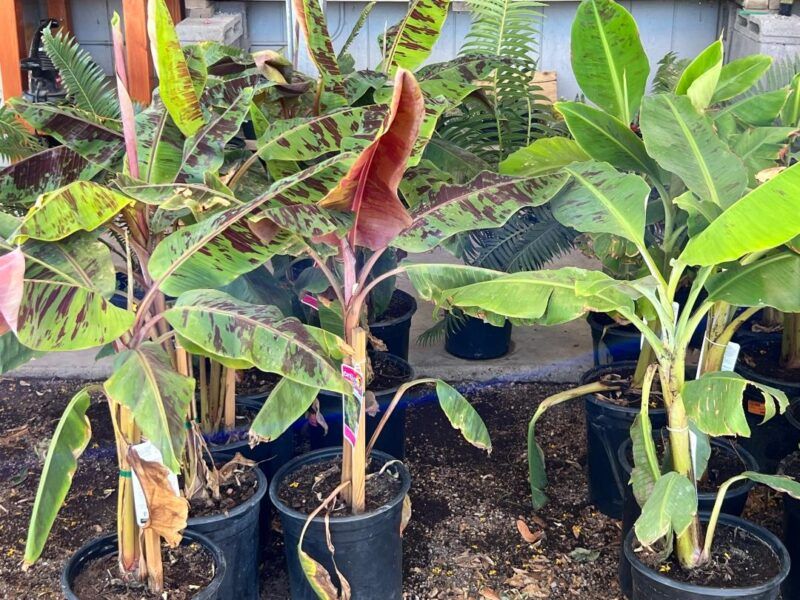
Plenty of gardeners in Phoenix, Mesa, Yuma, and Tucson have stared at a thick banana stalk and wondered whether chopping off a piece and sticking it in the ground could produce a brand-new plant. The idea sounds simple, but the biology works differently than most people expect, and a misunderstanding of how bananas actually grow can turn a promising experiment into a pile of rotting plant material.
The good news is that a real single-piece propagation method does exist for Arizona yards, it just starts with the right piece of the plant. Once you know what to cut and how to care for it in the low desert, visible new growth in roughly three weeks becomes a realistic goal rather than a marketing promise.
Why Arizona’s “Single Stem” Shortcut Usually Fails
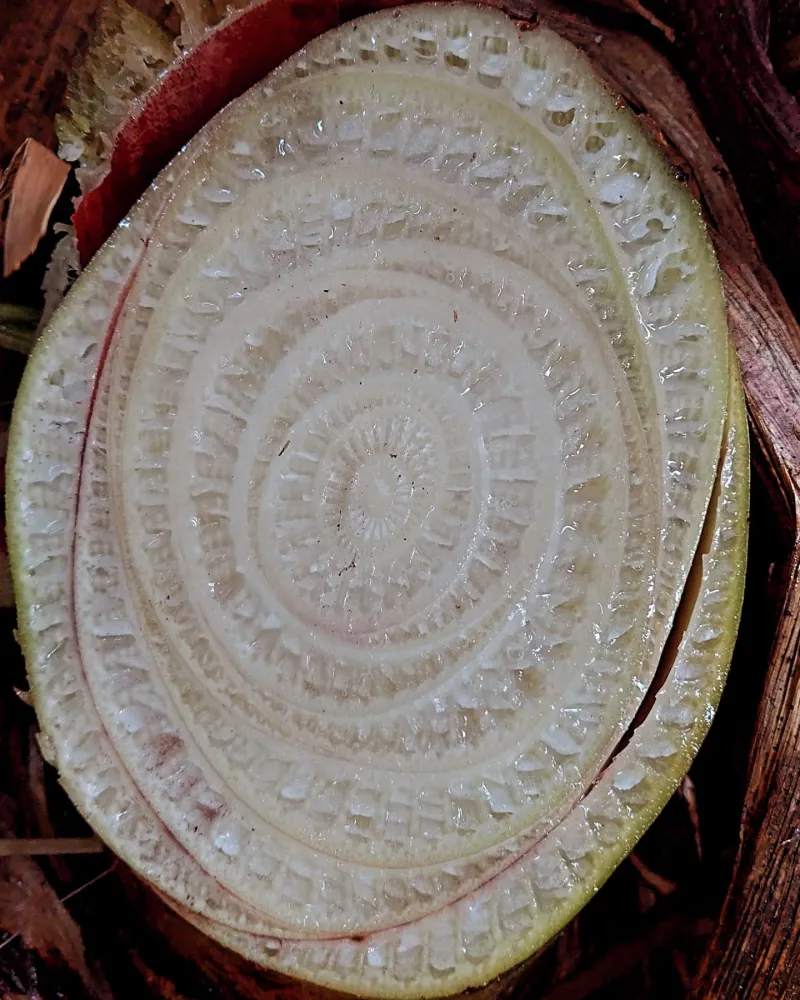
Grab a banana stalk from almost any Arizona yard and cut through it, and what you will find inside is not a woody core or a root-producing tissue. The tall column you see above ground, sometimes called the trunk, is actually a pseudostem: a dense bundle of tightly overlapping leaf bases that give the plant its upright shape.
The real growing engine of any banana plant sits underground. That structure is the corm, sometimes called the rhizome, and it holds the meristems that produce every new root, leaf, and sucker the plant will ever send up.
When you cut a banana stalk down to the ground in an Arizona yard, any regrowth you see afterward is coming from that original living corm still buried in the soil. The stalk you removed did not root or clone itself; the underground plant simply kept going.
A detached pseudostem section placed in water or buried in soil generally does not contain the tissue it would need to produce roots or a new shoot. This is the core reason the “single stem” shortcut so often fails, and it is not a problem specific to Arizona conditions.
The workable approach for Arizona homeowners is to start with a rooted sword sucker or a corm piece that carries a viable dormant bud, which is a fundamentally different starting point from cutting off a piece of trunk.
Arizona Banana Propagation Starts With a Corm and Living Bud
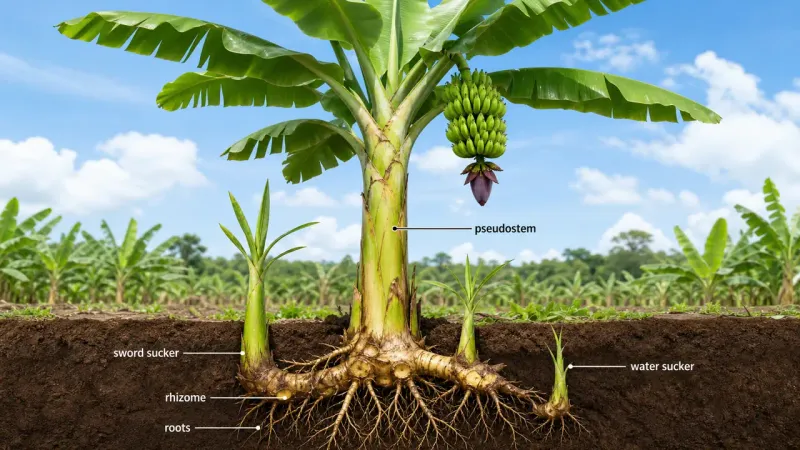
Most of the banana plant’s visible drama happens above ground, but the part that actually matters for propagation stays hidden beneath the surface of your Arizona soil. The corm is a compressed, starchy underground stem that anchors the entire plant and stores the energy needed to push up new growth.
Meristems inside the corm are the points where cell division happens, and those meristems are what produce every root, leaf, and sucker a banana plant generates over its lifetime.
A detached piece of pseudostem lacks those meristems entirely, which is why it cannot produce a new plant on its own. A sucker or a corm section that still carries a dormant lateral bud, however, contains exactly the tissue the plant needs to start over.
University of Florida IFAS banana propagation guidance identifies suckers and corm divisions as the standard homeowner propagation methods for this reason.
Your Arizona Garden Changes Every Week. Your Plan Should Too.
Gardening in Arizona changes quickly throughout the season. Every Friday you’ll receive a simple weekly plan showing exactly what to plant, prune, fertilize, harvest, and protect so you never miss the right timing.
For Arizona gardeners, two approaches are worth considering. The first is separating a rooted sword sucker directly from the mother plant, keeping as much attached corm and root tissue as possible during removal.
The second is preparing a corm section that has been cut to retain a visible, viable lateral bud.
Neither method is as quick or casual as pushing a stem cutting into the ground, but both give your Arizona banana experiment a genuine biological foundation to work from. Understanding that the corm is the source of all new growth, not the stalk, is the single most useful correction an Arizona gardener can make before picking up a shovel.
Choose an Arizona Propagation Piece That Can Grow
Before any cutting happens in your Arizona yard, the most important decision is which piece of plant material to take. Not every sucker or corm chunk is worth the effort, and starting with weak material almost always ends in failure, especially in Arizona’s unforgiving summer heat where a struggling propagule has very little margin for error.
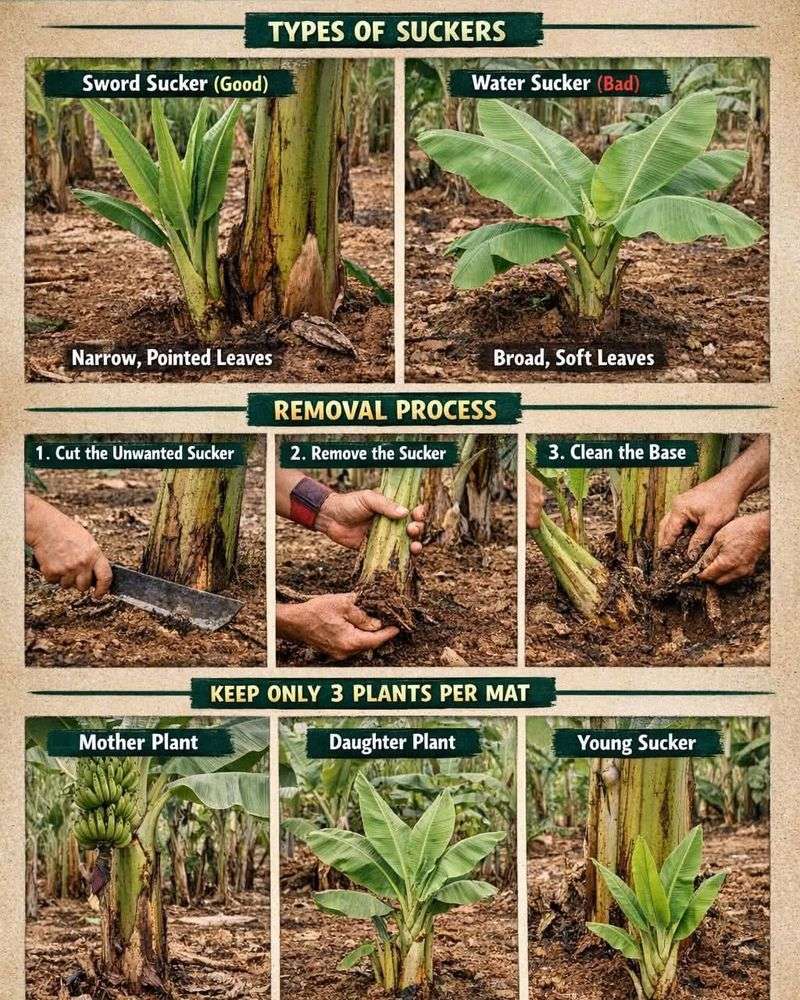
Sword suckers are the preferred choice for home propagation. They get their name from the narrow, pointed leaves that emerge early in their development, and they signal a stronger, more independent connection to the mother plant’s corm.
University of Florida IFAS guidance on banana propagation specifically recommends sword suckers over water suckers, which tend to be more loosely attached and produce weaker plants. Water suckers have broader, flatter early leaves and often indicate a sucker that developed under stress or in poor light.
When you locate a good sword sucker in your Arizona yard, look for one that has already developed its own visible corm connection at the base. The goal during separation is to take as much of that attached corm and root tissue as possible without tearing it away from the mother plant carelessly.
If you plan to work with a corm section instead, the piece must contain a firm, clearly visible lateral bud. A corm section without a viable bud is simply dead plant material waiting to rot in your Arizona soil.
Run through this reject checklist before committing to any piece: soft or mushy texture, dark or black interior tissue, visible pest damage or tunneling, foul smell, or heavy discoloration are all reasons to discard the material and find a healthier source. Healthy corm tissue should be firm, pale to cream-colored inside, and free of any off odor.
Prepare the Arizona Sucker or Corm With Clean Cuts
Preparation separates a successful Arizona banana propagation from one that rots in the first week. The process is not the same as taking a stem cutting from a tomato or a succulent.
Banana propagation from a sucker or corm section is closer to a surgical separation than a casual snip, and treating it that way from the start pays off quickly.
Start with clean tools. Wipe your blade with rubbing alcohol or a diluted bleach solution before making any cut, and clean it again between plants if you are working with multiple suckers.
Bananas can carry nematodes, fungal pathogens, and other problems that move easily on a contaminated blade. University of Hawaii banana propagation and IPM guidance lists sanitation as a foundational step, not an optional one.
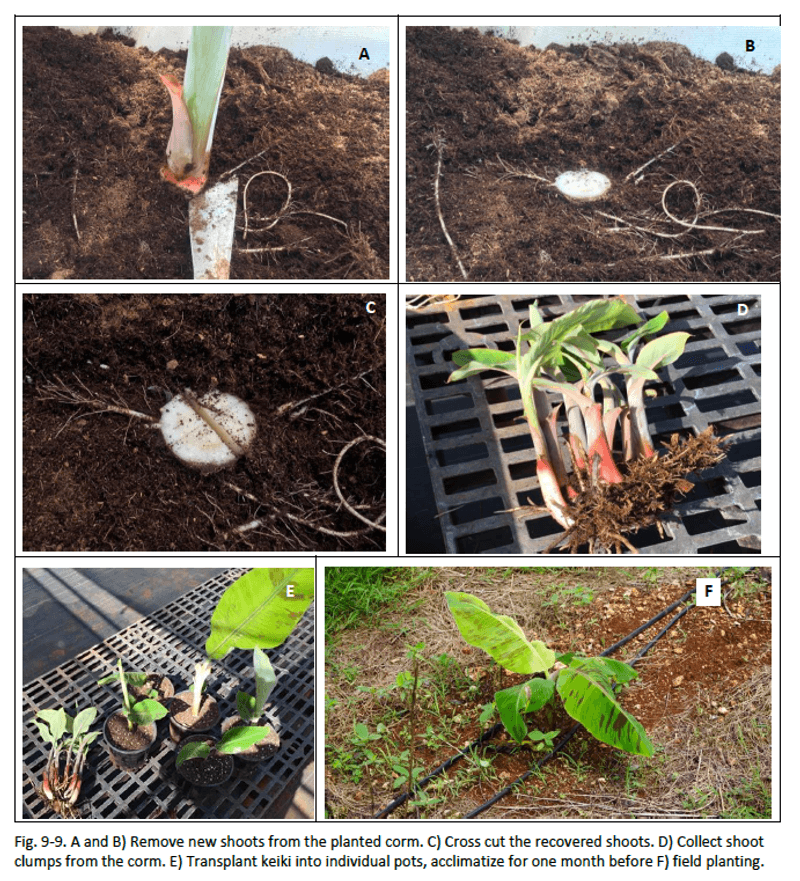
When separating a sword sucker, use a sharp spade or knife to cut between the sucker’s corm and the mother plant’s corm, angling the cut to keep as much sucker corm intact as possible. Brush or shake off excess Arizona soil from the corm and roots, then inspect the cut surfaces.
Trim away any soft, discolored, or damaged tissue before planting or placing the sucker in its establishment medium.
Corm macropropagation is a more involved technique that goes beyond simple separation. University of Hawaii macropropagation guidance describes the process as cleaning the corm, removing or damaging the main apical meristem to suppress dominant growth, making additional cuts to stimulate lateral buds, and placing the prepared corm in a clean moist medium such as coir or sawdust.
This is a deliberate multi-step process, not simply burying a corm chunk and waiting.
One point worth addressing directly: controlled research has tested benzylaminopurine and other plant hormones on prepared corm material in propagation chambers, and those studies recorded meaningful results. That does not mean generic household rooting powder applied to a detached pseudostem will produce comparable outcomes.
The hormone work in the research literature applies to properly prepared corm tissue under managed conditions, not to an ordinary banana stalk sitting in Arizona soil.
Give Arizona’s New Propagule Warmth, Moisture, and Shade
Arizona’s outdoor conditions are demanding enough for established plants, let alone a freshly separated banana propagule that has not yet developed an independent root system. Building a small protected environment for the first few weeks is not overcomplicating the process; it is the practical difference between a sucker that roots and one that desiccates in the desert heat.
Place the prepared sucker or corm section in a clean, moist medium rather than directly in your native Arizona soil to start. Coir, sawdust, or a well-draining potting mix all work better than compacted caliche-heavy ground for this early stage.
The medium should feel damp throughout but never waterlogged, because sitting in saturated soil invites rot just as reliably as drying out kills new root growth. Keep the container or propagation area consistently moist, checking it more frequently during Arizona’s hottest months when evaporation accelerates.
Shade matters more than most Arizona gardeners initially expect. Harsh afternoon sun in the low desert can exceed 110 degrees Fahrenheit at the soil surface, and a propagule without an established root system cannot replace lost moisture fast enough to survive that exposure.
Position the propagule where it receives morning sun and afternoon shade, either from a wall, a shade cloth, or a larger plant.
Research results from controlled propagation chambers, including studies that recorded shoot emergence in roughly two to five weeks, were produced under carefully managed humidity, temperature, and medium conditions. An exposed Arizona yard in July or August cannot replicate those variables.
Cultivar differences, corm size, bud viability, local heat, and how well you maintain moisture all shift the outcome. Treating the propagule like a patient in recovery rather than a planted seed gives it the best chance Arizona’s climate allows.
What Arizona Gardeners Can Actually See in 20 Days
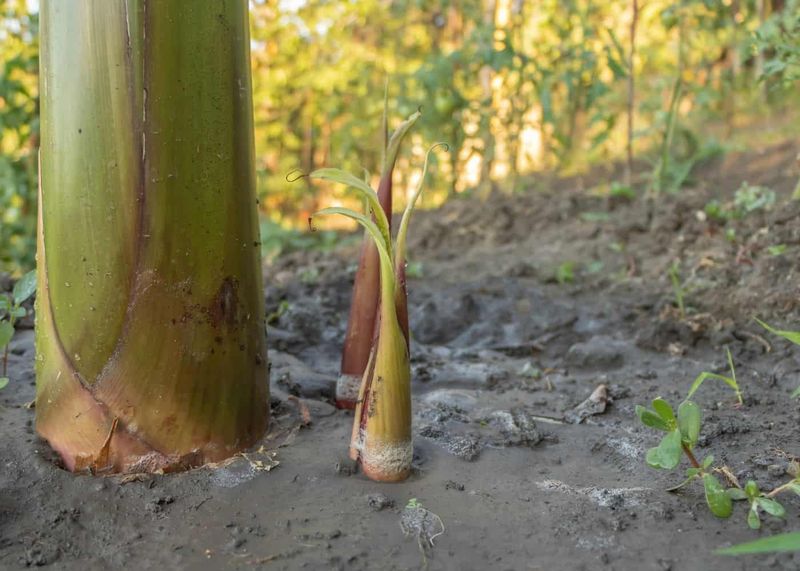
Research on banana corm propagation has produced some genuinely encouraging numbers, and Arizona gardeners deserve a straight account of what those numbers actually mean. One published study recorded first shoot emergence at approximately 15.9 days under a specific hormone treatment applied to prepared corm material in a controlled setting.
A separate study reported shoots appearing within three to four weeks following corm splitting under managed propagation conditions.
Those figures are real, but they come with context that changes how you should interpret them for your Arizona yard. An outdoor Arizona attempt in a pot or a garden bed does not reproduce those conditions, and the timeline will likely stretch longer, sometimes significantly, or the attempt may not succeed at all depending on corm quality, heat exposure, and moisture management.
A reasonable, honest expectation for a well-prepared sword sucker or viable corm section managed carefully in a protected Arizona location is that a shoot tip might become visible somewhere around three weeks under favorable conditions. Cooler months in Phoenix or Tucson, better bud viability, and more consistent moisture management all push results toward the faster end of that range.
Arizona’s intense summer heat and low ambient humidity push results toward the slower end or toward failure.
A shoot appearing at day 18 or day 25 in your Arizona yard means the bud is alive and responding, not that you have a new established plant ready for the landscape.
Move the Arizona Banana Only After Roots Strengthen
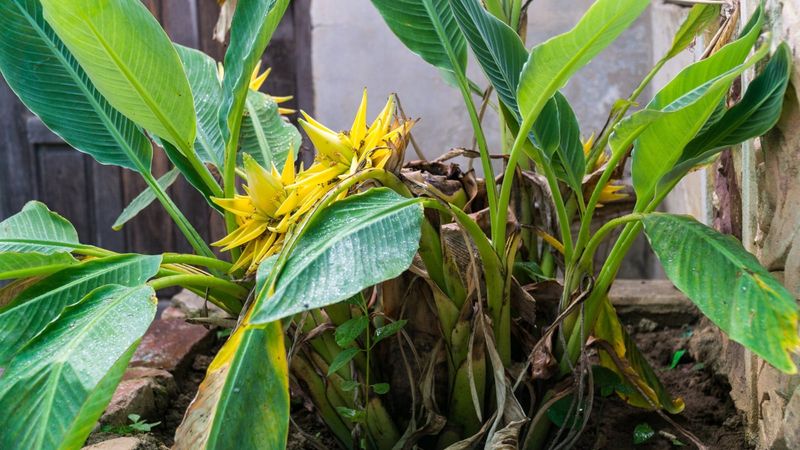
A shoot poking above the surface of your propagation medium is exciting, but moving a banana too early into an Arizona yard is one of the most common ways to lose the progress you have made. The young plant still needs time to develop a root system capable of supporting independent growth in Arizona’s demanding conditions before it goes into the ground.
Wait until the shoot has grown several inches and the propagule shows clear signs of rooting, meaning resistance when you gently tug on it or visible roots emerging from the bottom of a container. Hardening the plant before transplanting also reduces transplant shock.
Move the container to a spot with slightly more sun exposure over the course of a week or two before planting it in its permanent Arizona location.
Choose a planting spot that receives morning light and protection from the harshest afternoon sun, particularly during the first summer in the ground. A location near a south or west-facing wall can provide warmth in winter while a shade cloth or nearby tree provides afternoon relief in summer.
Water deeply and slowly after transplanting rather than applying frequent shallow sprinkles. Desert Tropicals guidance on Arizona banana culture recommends targeted, deep irrigation to encourage roots to follow moisture downward rather than staying shallow where Arizona soil dries fastest.
Drainage testing is not optional in Arizona. Dig a hole about 12 inches deep, fill it with water, and watch how quickly it drains.
If water is still sitting in the hole after an hour, you likely have a caliche layer or compacted soil restricting movement. If drainage is poor, break through the caliche layer with a breaker bar before planting, or build up a mounded planting area that keeps the corm above the drainage restriction rather than sitting in a water-trapping hole.
Protect the Arizona Plant From Heat, Frost, and False Expectations
Low-desert Arizona locations like Phoenix, Mesa, and Yuma give bananas a fighting chance that higher-elevation communities simply cannot match. Prescott, Flagstaff, and Sierra Vista face frost frequencies and growing-season lengths that make outdoor banana culture much harder or impractical.
University of Arizona Extension climate zone guidance makes clear that Arizona is not a single growing environment, and propagation and overwintering advice that applies in Phoenix does not transfer automatically to the rest of the state.
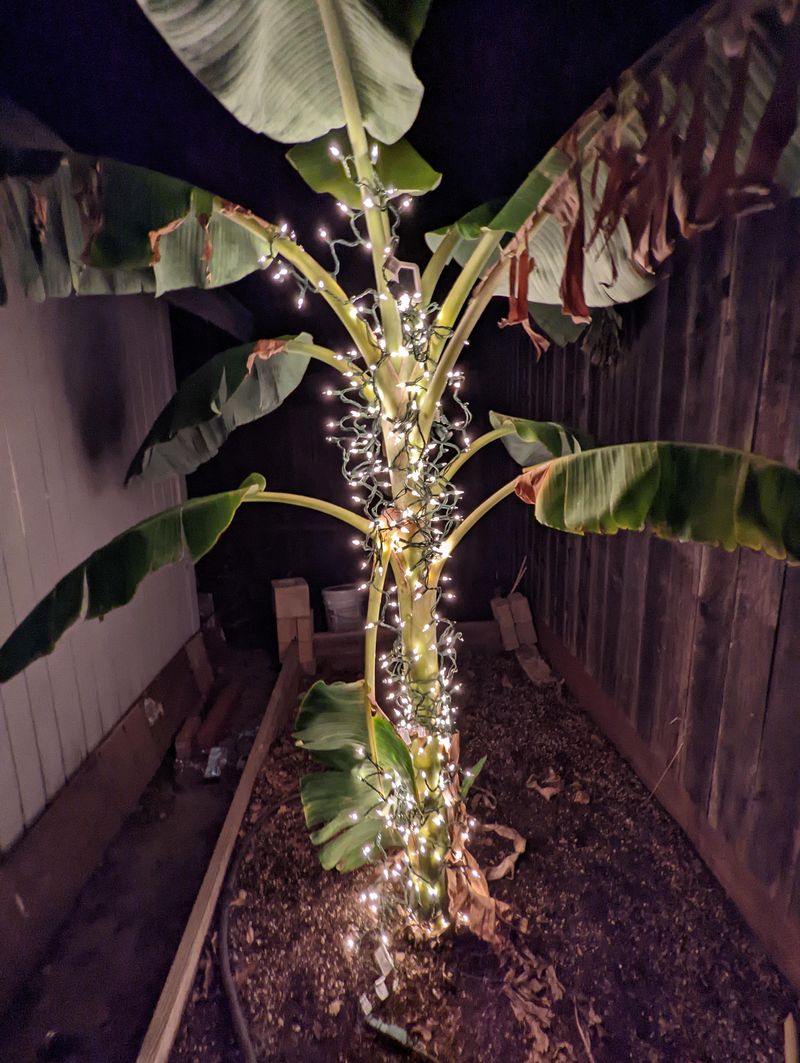
Even in the low desert, freezing nights happen. Cover in-ground bananas with frost cloth when temperatures are expected to drop near or below 32 degrees Fahrenheit, and move container plants to a sheltered spot such as a garage or covered patio.
Fruit production deserves its own honest conversation. A banana that survives an Arizona winter and pushes up new leaves from its corm has demonstrated cold hardiness, not fruiting readiness.
Reliable fruit production requires a long, largely uninterrupted period of warm growth, and a plant that dies back to the ground each winter and regrows from its corm may never develop far enough to flower and fruit consistently in Arizona. Vegetative survival and fruiting are separate achievements.
The clearest summary of what this propagation experiment can deliver: a healthy sword sucker or viable corm section, given a protected start, consistent moisture, shade from harsh afternoon sun, and clean preparation, may show a shoot in roughly three weeks under favorable Arizona conditions. That shoot is the beginning of a process, not the end of one.
A detached pseudostem buried in your Arizona yard remains unlikely to produce anything useful, and no amount of patience or rooting hormone changes the biology.