This Familiar Spinner Is Building A Massive Web, And It’s Right In Your Alabama Backyard
A sticky thread caught you off guard last August, and you froze. Few things surprise you like walking straight into that thread. Humid air across Alabama makes that thread stick to your skin.
Darkness let the builder work while you slept soundly. Silk poured from her body while you slept through it all. Instinct guided each twist, though you saw none of it.
Your porch rail and the crepe myrtle became her anchors. By morning, her web spanned wider than your arms reach. She hides at the center, watching you from the shadows. Backyards across Alabama hide dozens of these builders while you sleep.
Size alone makes her impossible for you to ignore. Speed defines her work, finished before you wake.
Curiosity should pull you toward learning her real identity. Understanding her habits changes how you see your backyard. You will not walk past her web the same way again.
Meet The Backyard Architect Behind The Golden Threads
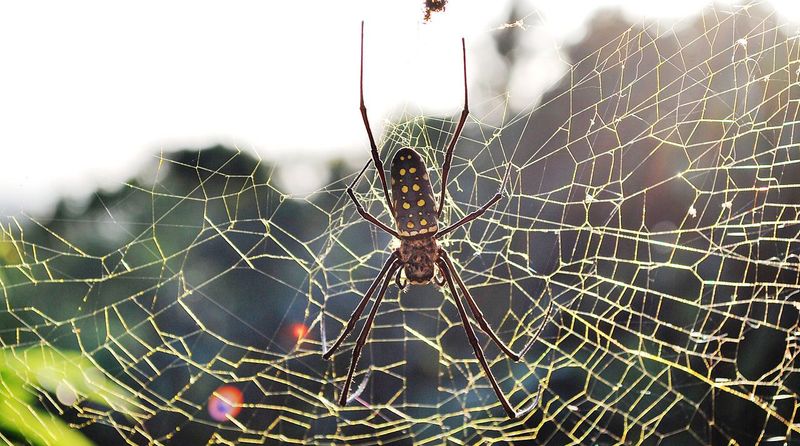
Hold a strand of this web up to morning sunlight and you will see why the name fits. The silk carries a warm yellow shimmer, almost like thin gold wire strung between branches.
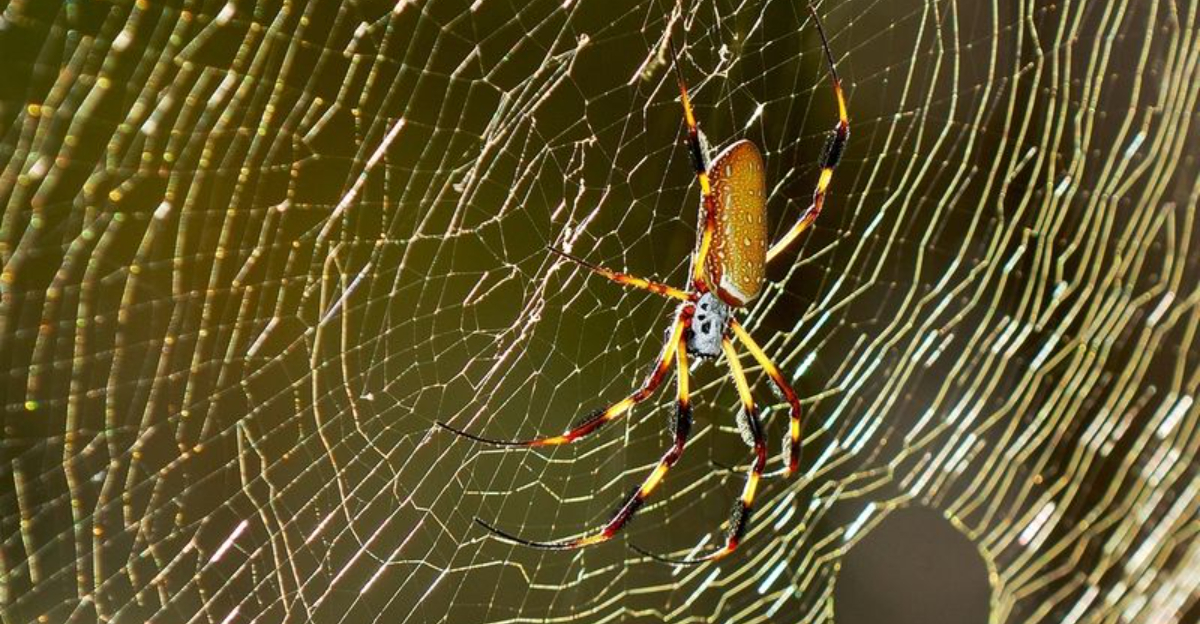
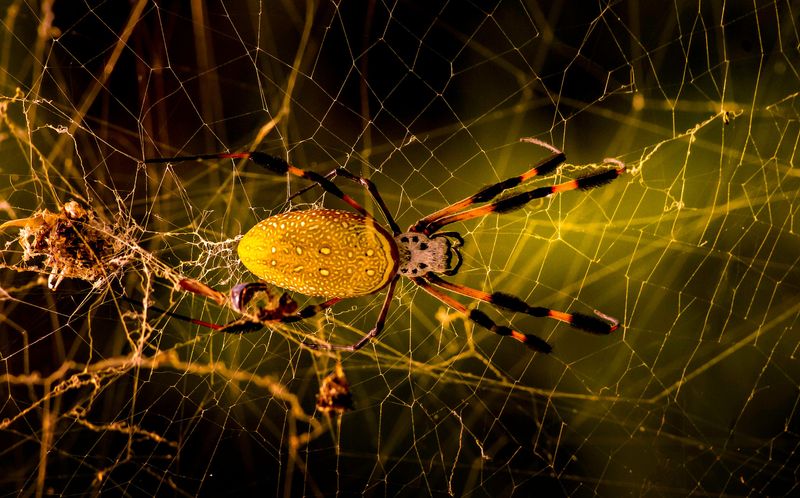
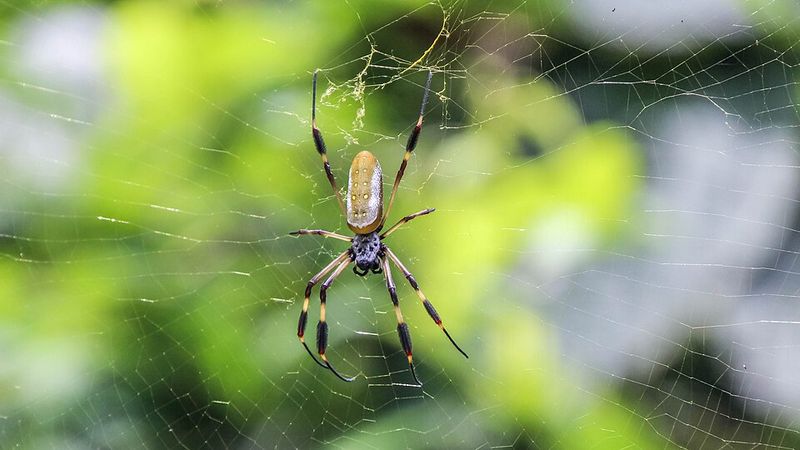
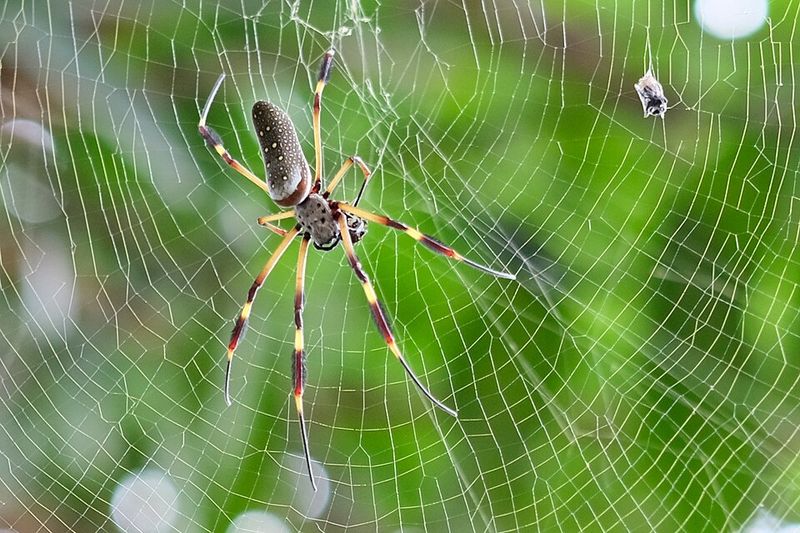
The spider responsible is Trichonephila clavipes, better known across the South as the golden silk orb-weaver or banana spider. Females stretch about three inches from leg tip to leg tip, with a silvery body, yellow spots, and dark leg segments wrapped in fuzzy tufts.
Those tufts are a handy clue. Few other spiders in Alabama wear little brushes of hair on their legs like leg warmers.
Males look almost like a different creature entirely. They are tiny, reddish brown, and often sit near the edge of a female’s web hoping to go unnoticed while she handles the hunting.
Alabama sits comfortably inside this spider’s range, which sweeps from Florida up through the Gulf states and along the coastal plain. Warm, humid summers suit them well, and shaded yards with trees and shrubs give them plenty of anchor points.
Folks often assume the golden color comes from something in the diet. It actually comes from pigments the spider adds to the silk itself, and researchers believe the shade helps attract insects in sunny spots while blending into shadow elsewhere.
Once you learn the silhouette, you start noticing them everywhere. Trail edges, garden fences, and the gap between two azaleas all make prime real estate.
Why Late Summer Brings The Web To Full Size
Here is the part that surprises people: the giant webs of September were built by spiders that hatched back in spring, no bigger than a grain of rice.
Growth happens in stages. Each time the spider outgrows its shell, it molts and comes out slightly larger, and the web gets rebuilt on a bigger scale to match.
By August and September, an adult female’s web, including its outer support lines, can occasionally stretch six feet or more.
The circular hunting portion often measures two to three feet across, framed by a messy scaffold of support lines called barrier webbing.
Your Alabama Garden Changes Every Week. Your Plan Should Too.
Gardening in Alabama changes quickly throughout the season. Every Friday you’ll receive a simple weekly plan showing exactly what to plant, prune, fertilize, harvest, and protect so you never miss the right timing.
Those tangled outer threads are not sloppy work. They catch flying debris, slow down birds, and give the spider a warning system before anything reaches the main structure.
Insect numbers peak in late summer too, which means more food and faster growth. A well-fed female keeps enlarging her setup as long as the weather cooperates.
Cooler nights in October and November signal the end of the season. Females produce egg sacs wrapped in yellowish silk, tucked onto bark or leaves, and the next generation waits out winter inside.
Understanding the timing helps with planning. If you mow a path or hang laundry along the same route each day, walk it in the morning during peak season and carry a stick held out in front of you. A quick wave clears the way without harming the builder.
Silk Strong Enough To Trap Small Prey
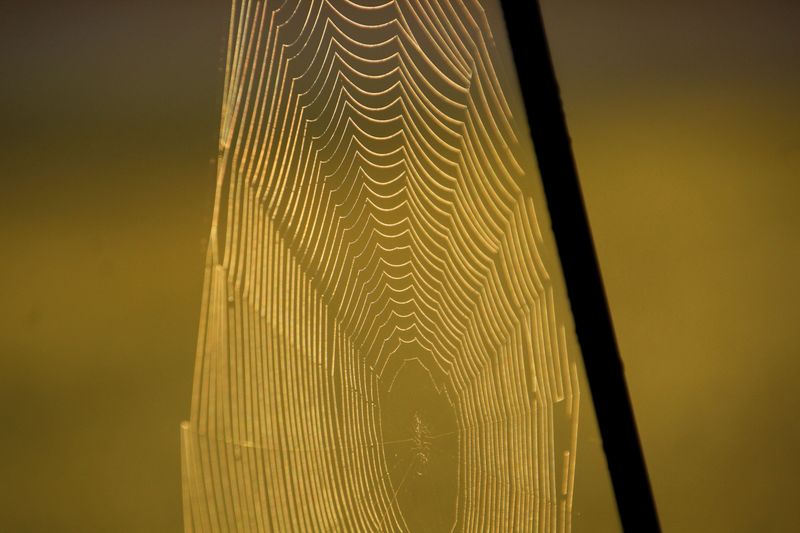
Scientists keep coming back to this silk for a reason. Ounce for ounce, the dragline fibers compare favorably to steel in tensile strength, and their elasticity allows them to absorb impact far better than most synthetic threads.
Researchers have measured golden orb silk as among the toughest natural fibers studied, absorbing impact without snapping. That toughness explains how a web made of hair-thin lines can stop a fast-flying beetle cold.
The strength shows up in odd stories. Small birds and even bats have occasionally been found tangled in these webs, though the spider rarely has much interest in something that size.
History offers a wild example. In the late 2000s, a team spent years collecting silk from more than a million golden orb-weavers in Madagascar to weave a shimmering golden cape, now one of the rarest textiles ever produced.
Wartime engineers once used spider silk for crosshairs in optical instruments because the strands were fine, straight, and reliable. Few manufactured materials at the time could match that thinness.
Modern labs are still chasing the recipe. Bioengineers study the protein sequences hoping to produce artificial versions for sutures, body armor, and lightweight cables.
For a homeowner, the practical takeaway is simple. Walking through one of these webs feels genuinely startling because the silk resists rather than parting instantly.
Brush it off with a leafy branch instead of your hands. The fibers cling stubbornly to skin and clothing, and picking them off strand by strand takes longer than you would expect.
The Truth About That Bite
Let us clear the air, because the nickname banana spider throws people off. That name gets tossed around for several unrelated species, including one medically significant South American wanderer that has no business in Alabama.
The golden silk orb-weaver is a different animal altogether. Its venom works on insects and poses little concern for humans.
Bites happen rarely, and usually only when someone squeezes or pins the spider against skin. Reports describe a sensation similar to a bee sting, with redness and mild soreness that fades within a day or so.
Temperament plays a big role here. These spiders would rather drop on a silk line and hide in the leaves than confront anything larger than a grasshopper.
Children and curious pets are generally fine. A dog nosing into a web will get a face full of silk and an annoyed spider heading the opposite direction.
If a bite does occur, wash the spot with soap and water, apply something cold, and watch for unusual swelling. Anyone with known allergies to insect stings should check in with a doctor as a precaution.
The bigger nuisance is the web itself. Nobody enjoys walking face-first into three feet of sticky architecture before coffee.
Relocating a spider works better than swatting. Slide a long stick under the center, let her grab hold, and carry her to a shrub away from foot traffic. She will rebuild overnight, and your shoulders stay silk-free.
Free Pest Patrol Working The Night Shift
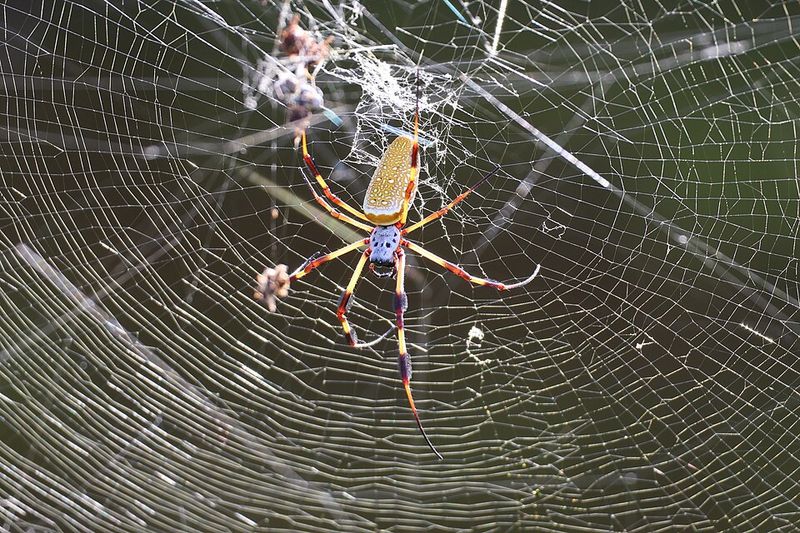
Think of her as a tenant who pays rent in mosquito control. A single mature female can trap and consume dozens of flying insects across a good week.
The menu covers a lot of ground. Mosquitoes, gnats, flies, moths, stink bugs, grasshoppers, and the occasional wasp all end up wrapped in silk.
Gardeners in Alabama tend to appreciate this once they connect the dots. Fewer squash bugs and fewer leaf-chewing moths mean healthier tomatoes and peppers without reaching for a spray bottle.
Placement tells you what she is after. Webs strung near porch lights catch the night-flying crowd drawn to the bulb, while webs at the edge of woods intercept whatever drifts along the tree line.
She hunts by feeling vibrations through the silk rather than by sight. A caught insect struggles, the threads tremble, and she moves in to wrap it before it works loose.
Leftovers sometimes hang along the upper web like a pantry. Storing wrapped prey lets her eat during stretches when hunting slows down.
Encouraging these spiders costs nothing. Skip broad insecticide applications, leave a few shrubs unpruned, and resist the urge to sweep every web off the eaves.
Balance matters in a yard. Predators like this one keep insect populations from swinging wildly, which saves you money and effort later in the season. Give her a corner of the garden and she handles the rest quietly.
Where To Spot One And How To Photograph It
Scouting these spiders is easier than it sounds once you know where to look. Shaded edges beat open lawns, since strong wind and full sun both work against a big orb web.
Try the gap between two trees along a creek, the underside of a deck railing, or the space above a azalea bed. Boat launches, hiking trails, and pine flatwoods across south Alabama practically guarantee sightings from July onward.
Morning light does wonders. Dew highlights the threads and the golden tint really glows when the sun hits at a low angle from behind the web.
Backlighting is the trick most people miss. Position yourself so the sun sits opposite you, then use a dark background such as shadowed woods to make the silk pop.
Phone cameras handle this well if you tap the screen to focus on the spider rather than the bright sky. Portrait mode blurs distracting branches nicely.
Keep a respectful distance of a foot or two. Bumping an anchor line sends her scrambling and can tear hours of work.
Windless mornings give the sharpest shots since the whole structure sways with the slightest breeze.
Bring a friend to hold a dark jacket behind the web if the background looks cluttered. It sounds silly, and it produces images that look professional.
Log your sightings on a nature app too. Community records help researchers track how far north these spiders are spreading each year.