Silent Maggot Damage Is Turning Up In Minnesota Apple Trees Just As Harvest Begins
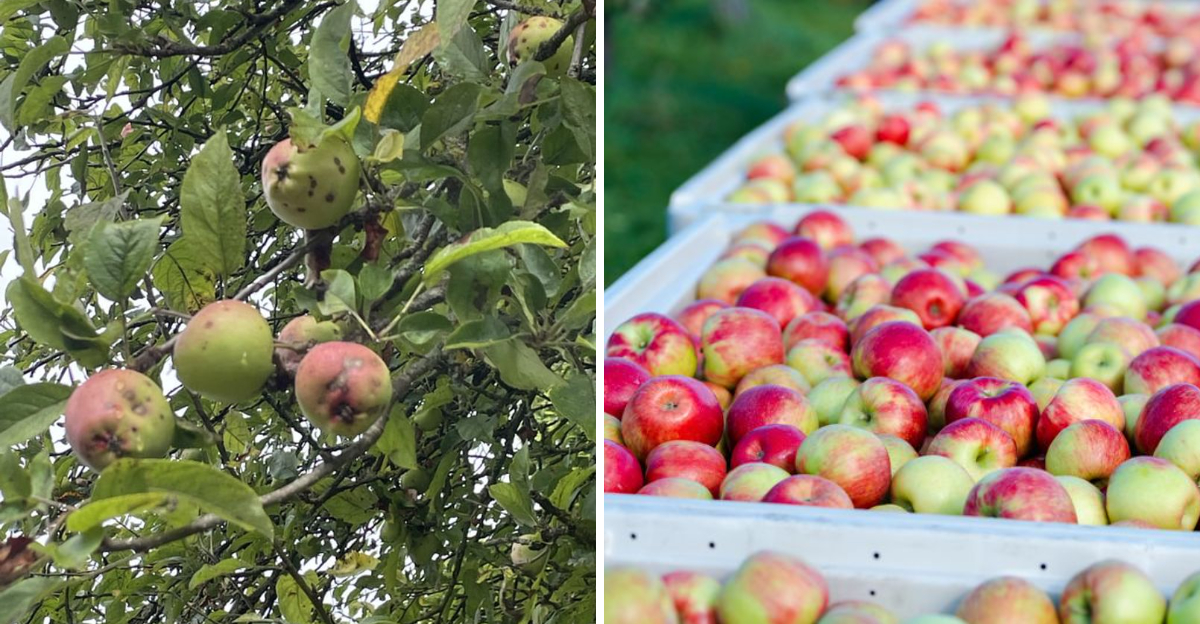
Quiet activity rarely announces itself before your entire harvest weakens. Minnesota growers keep discovering it the same way each September. Skin looks flawless while activity spreads quietly underneath, unnoticed.
Baskets fill quickly, and your confidence fills right alongside them. Sweetness masks the changes until your paring knife reveals it. Faint dimples show up early on the skin, barely noticeable.
Thin dark lines follow, tracing quiet paths beneath the surface. Texture softens early, weeks before your calendar expects it. These Minnesota summers give this visitor plenty of undisturbed, quiet time.
Farmers trade stories about baskets that smelled genuinely perfect outside. Answers wait patiently, hidden a slice away from full discovery. This visitor avoids detection until your harvest finally reveals the truth.
Your yard could already be quietly hosting it right now. Saving your harvest, already underway, demands quick, sharp action. You need to know what’s already hiding before it changes everything.
Dimpled Skin Hides A Bigger Story Inside
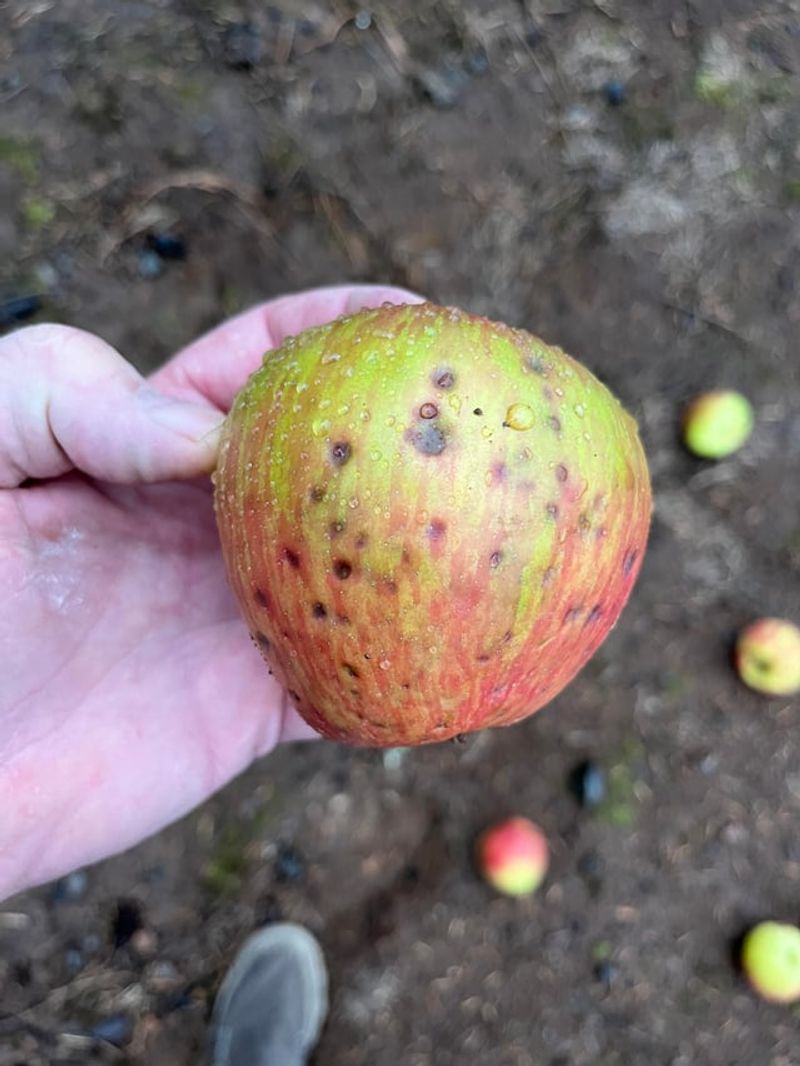
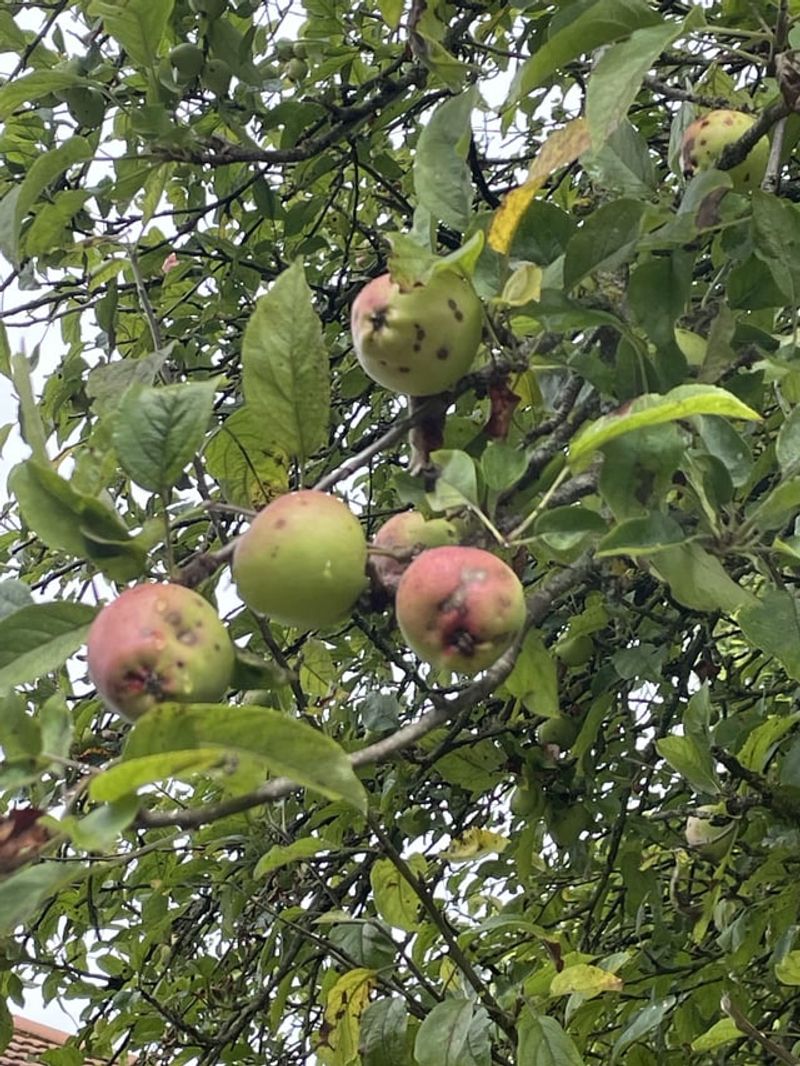
Run a thumb across a Honeycrisp in late August and you may feel small dents that were not there a week ago. Each dimple marks a spot where a female fly slipped her eggs just under the skin.
Those punctures heal over quickly, which is exactly why so many Minnesota gardeners walk right past them. The skin puckers a little, sometimes darkening to a rusty tone, and the apple keeps hanging there looking respectable.
Backyard trees usually show the pattern first, since they rarely get sprayed and often stand near untended crabapple or hawthorn. One tree can carry hundreds of egg sites while still filling a bowl with fruit that photographs beautifully.
Scouting costs you about five minutes. Hold fruit at eye level in bright, angled light so shadows settle into the dimples, then turn each apple slowly in your hand.
Kids at orchard field days spot these marks faster than adults do, mainly because they get their noses within inches of the fruit. Borrow the trick: pull twenty apples from different heights, line them up on a picnic table, and count how many carry pinprick scars.
Write down what you find. A notebook entry with the date, the tree, and the number of marked apples turns a vague worry into useful data. Photos on your phone work just as well.
Next season that page tells you whether your traps went up too late, and it gives your local extension office something concrete to work with when you call for advice.
Brown Trails In The Flesh
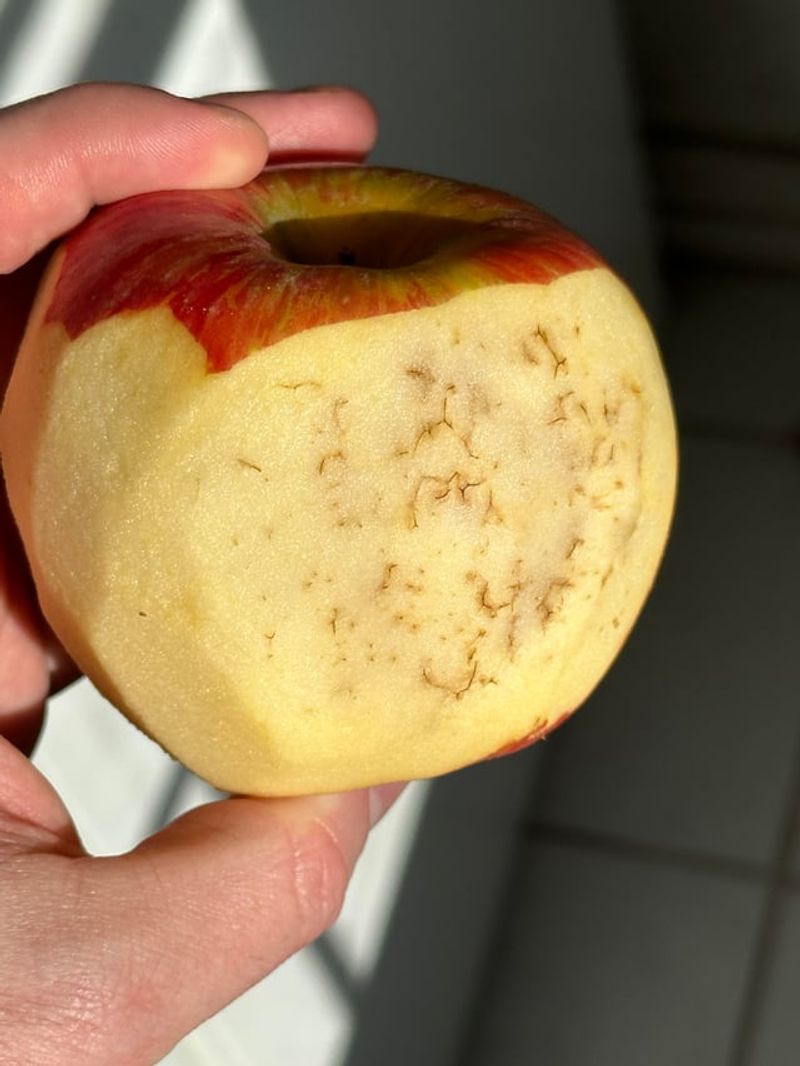
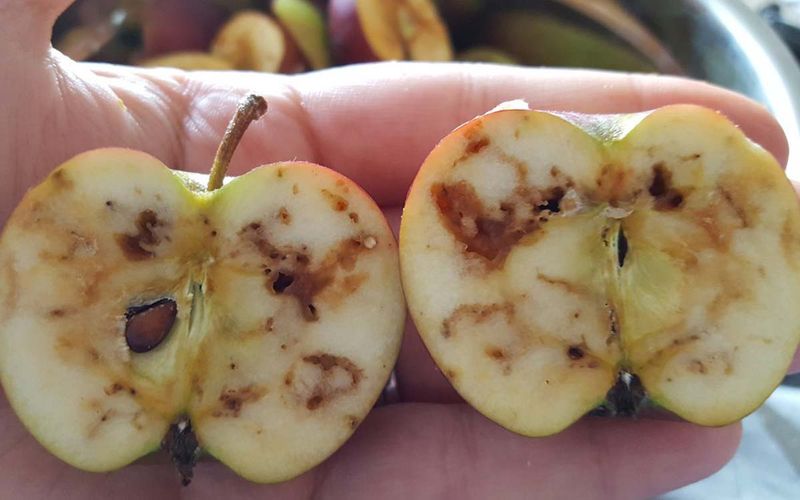
The knife tells the truth. Cut a suspicious apple from stem to blossom end, and you may find narrow brown trails winding through flesh that looked flawless from the outside.
Those winding tunnels come from cream colored larvae about a quarter inch long, working slowly through the fruit. Around the tunnels the tissue turns soft, brownish, and slightly wet, which growers sometimes call railroad worm damage.
Codling moth damage looks different, so comparing helps. That pest bores a wider tunnel straight toward the core and leaves crumbly brown material near a hole in the skin.
Your Minnesota Garden Changes Every Week. Your Plan Should Too.
Gardening in Minnesota changes quickly throughout the season. Every Friday you’ll receive a simple weekly plan showing exactly what to plant, prune, fertilize, harvest, and protect so you never miss the right timing.
Cut ten apples rather than one. Sampling across the tree, including the shady lower branches, gives a fairer picture of how much of your crop is affected.
Slice sideways too, cutting the apple in cross section like a wheel. Tunnels show up as dark specks scattered through the ring of flesh, and that view catches early feeding that a lengthwise cut can miss.
Fruit with light tunneling stays edible once you trim the brown parts away, which is worth remembering before anyone hauls a whole basket to the compost pile. Heavier infestations soften fast and pick up a fermented smell.
Keep a cutting board and paring knife in the orchard bag during picking season. Two minutes of slicing at the tree beats discovering the situation after you have already stacked forty pounds of fruit in the pantry.
Rinse the blade between apples so brown streaks do not travel from one sample to the next.
Flight Timing Lines Up With Minnesota Picking Season
Calendars matter more than luck here. In much of Minnesota, adult flies begin emerging from the soil in late June or early July, once summer heat has built up enough.
Egg laying picks up through July and August, which lines up neatly with the moment fruit starts to color. By the time Zestar and Honeycrisp reach picking size, the damage inside has had weeks to develop.
Rain shifts the schedule. Soaking storms in June soften the ground and can trigger a burst of emergence, so a wet early summer often means heavier pressure in September.
University of Minnesota Extension tracks degree days, a way of adding up daily warmth to predict insect activity. Following those updates beats guessing, and the reports are free to read online.
Late varieties take the hardest hit because they hang on the tree while flies stay active into September. Early apples sometimes slip through with fewer marks, simply because they come off before the busiest weeks.
Mark your own calendar in spring. Set a phone reminder for the third week of June to hang traps, then another for mid July to check them, since human memory drifts once garden season gets loud.
Neighbors matter as well. Flies travel a few hundred feet without trouble, so an abandoned tree down the block can supply your yard year after year, and a friendly conversation about shared timing pays off for both properties.
Photograph your trap counts and text them along, since numbers convince people faster than opinions.
Sticky Red Spheres Give You An Early Warning
Here is a trick that looks almost silly: a bright red ball, roughly baseball sized, hung in a tree and coated with sticky goo. Flies mistake it for a big ripe apple and land on it.
Adding a scent lure, usually a fruit volatile capsule, makes the sphere far more convincing. Hang traps at head height on the sunny outer edge of the canopy, and clear leaves within a foot or so.
For monitoring, one or two traps per tree tell you when flies arrive. For actual control on a backyard tree, growers often use several per tree, checking and re-coating them at two week intervals.
Yellow sticky panels serve a different purpose, catching young adults before egg laying begins. Pairing a yellow card with a red sphere gives you an earlier warning and a clearer sense of population size.
The goo is stubborn, so wear gloves and keep mineral oil or vegetable oil nearby for cleanup. Wooden spheres can be scraped, wiped, and reused for years, which softens the cost.
Count what sticks. Two or three flies on a trap within a week signals that eggs are going into your fruit right then, and that is your cue to act rather than wait.
Identify carefully before panicking. The adult is about the size of a housefly with dark bands across clear wings that form a rough letter F, and a white spot sits on its back. Plenty of harmless flies visit traps, so a hand lens helps you sort them out.
Cleaning Up Drops Breaks The Yearly Cycle
Ask an old orchardist what helps and you will probably hear one word: cleanup. Fallen fruit is where the next generation gets its start, because larvae leave the apple, burrow into the soil, and wait for next summer.
Gathering drops twice a week during August and September breaks that loop. Pick them up promptly, since larvae can exit within days of the fruit hitting the grass.
Where the fruit goes matters. Compost piles that stay cool often let larvae survive, so bagging drops for municipal yard waste, burying them deeply, or feeding them to livestock works better.
Chickens turn this chore into a bonus. A small flock under the tree scratches through fallen apples and cleans up larvae while producing eggs, which feels like a fair trade.
Do not forget the wild trees nearby. Crabapple and hawthorn along fence lines and alleys host the same insect, and dropping those neglected fruits into the cleanup routine cuts your local supply.
Plastic sandwich bags offer a low spray option for small trees. Slip one over each young apple in early to mid June, right after thinning, and staple or zip it shut around the stem.
Snip both bottom corners off first. That small opening lets water drain out, so the fruit does not rot inside its own bag.
Solid plastic matters here. Mesh or footie bags leave gaps wide enough for a female fly to reach through with her egg-laying tube, so they will not stop the damage the way a sealed bag does.
Bagging fifty apples takes an afternoon and a podcast, and the payoff shows up in October when you slice into clean flesh.
Peel the bag off at harvest, and neighbors tend to notice the odd plastic ornaments in your tree and ask questions, which is a nice way to spread the idea.
Sorting, Sauce, And Cold Storage
So the damage is already there and harvest has started. Good news: a marked apple is still food, and sorting smartly can rescue much of what is hanging on your tree.
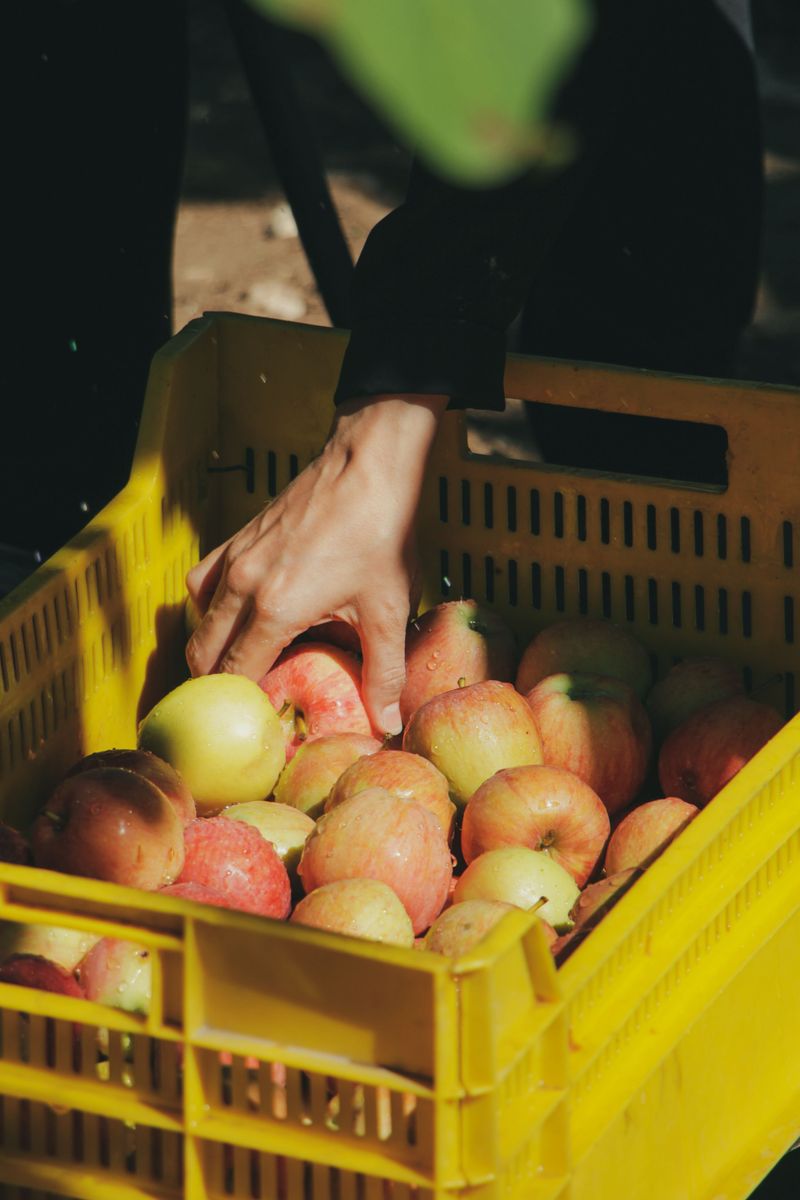
Sort into three bins as you pick: clean fruit for fresh eating and storage, lightly marked fruit for sauce or cider this week, and heavily tunneled fruit for the disposal bag.
Affected apples soften and spoil sooner, so keep them apart from your keepers. One breaking down in a crate can pass trouble to the fruit packed around it.
Sauce, butter, and cider handle trimmed fruit beautifully. Cut away brown tunnels, quarter the rest, and cook it down with cinnamon, then freeze or can the results for winter breakfasts.
Refrigeration slows larvae down, which buys you time. Chilling picked fruit at temperatures near freezing for a few weeks also reduces larvae inside, a trick commercial packers have used for ages.
Plan next season while the memory is fresh. Write down the varieties that got hit, the dates you noticed marks, and whether traps went up in time.
Consider thinning your fruit load in June as well, since fewer apples per branch means easier bagging and better sorting later. Talk to a local orchard about their spray timing, too, because their notes reflect the same weather your yard gets.
A single page harvest journal, tucked in the garage beside the pruners, turns this year’s frustration into next year’s advantage. Small steps add up fast.