Turn your Wisconsin kitchen scraps into indoor compost all winter with a simple worm bin
When Wisconsin winters lock down your outdoor compost pile under a foot of frozen ground, a small bin of red wiggler worms in your basement can keep a portion of your plant-based kitchen scraps out of the trash. Vermicomposting is a cool, contained process that relies on worms and microorganisms rather than the heat of a traditional compost pile, and it runs quietly indoors all season long.
The catch is that success depends on more than just keeping the bin above freezing, so understanding a few key conditions will save you a lot of frustration before your first Wisconsin winter with worms.
Wisconsin households can keep some scraps moving indoors
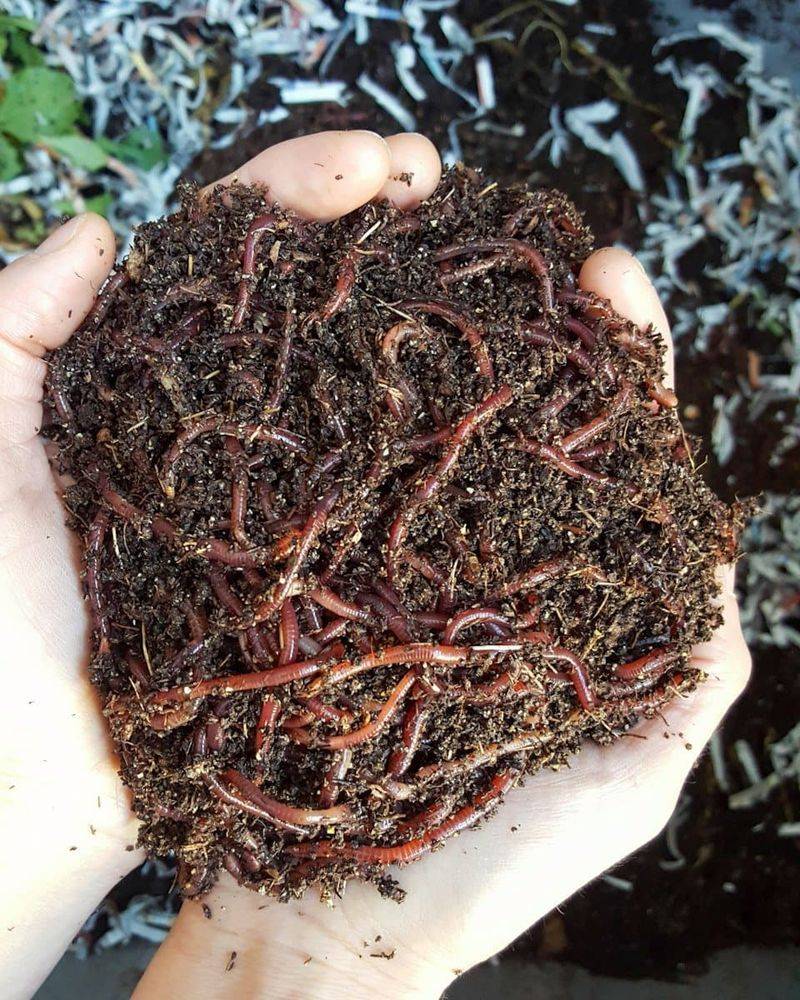
An indoor red-wiggler bin can handle a portion of suitable plant-based kitchen scraps in Wisconsin through the coldest months, including in an appropriate basement, but “all winter” does not mean every scrap disappears overnight. Still, processing speed varies by worm population, bedding temperature, food particle size, moisture levels and how much food is added at once.
Wisconsin residents should understand from the start that this is a cool, biological process, not a hot composting system. Unlike a traditional outdoor pile that can reach 130 to 160 degrees Fahrenheit, a worm bin stays at or near room temperature.
The materials a Wisconsin bin can accept are also narrower than many people expect. Meat, bones, dairy, fats, oils, pet waste and anything noncompostable belong nowhere near the bin.
What the system handles well is a modest, steady stream of clean plant-based scraps, and matching your feeding rate to your worm population is the single most important habit to build in Wisconsin before winter arrives.
Wisconsin’s basic bin needs the right worms and containment
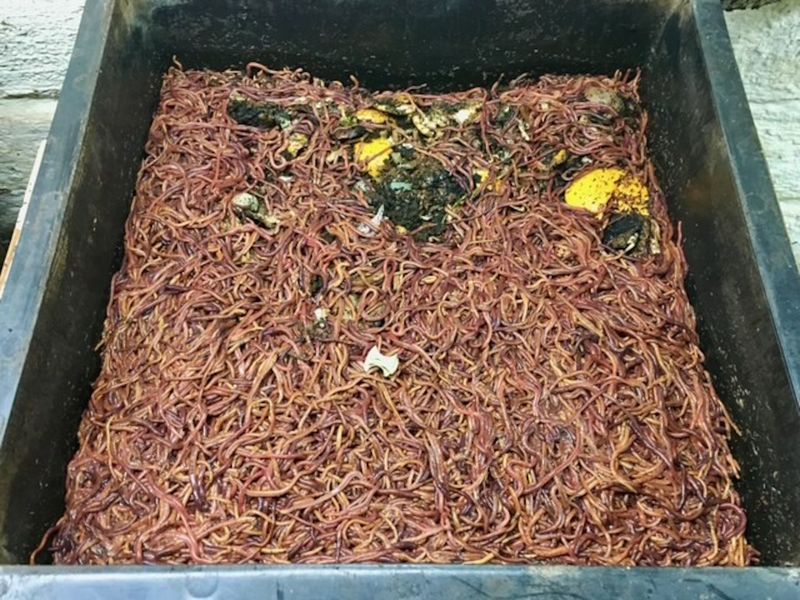
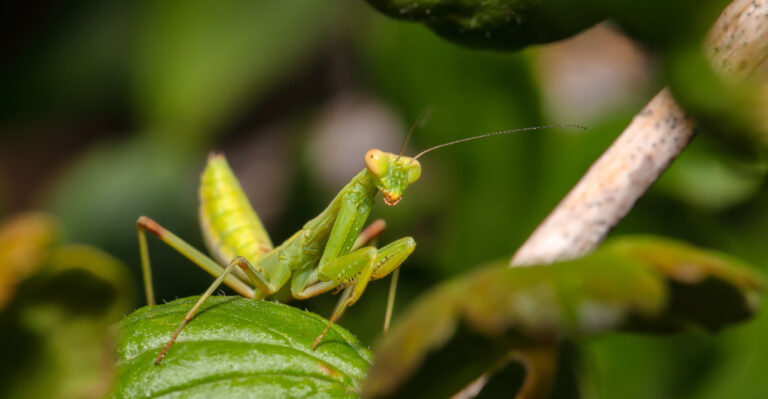
Red wigglers, scientifically known as Eisenia fetida, are the correct worm for a Wisconsin indoor composting bin. They are surface-dwelling worms that evolved to break down decomposing organic matter in the top few inches of soil and leaf litter, which makes them perfectly matched to the shallow conditions of an indoor bin.
Nightcrawlers are burrowing worms that need deep soil and are poorly suited to a confined, shallow container, so Wisconsin readers should not substitute them.
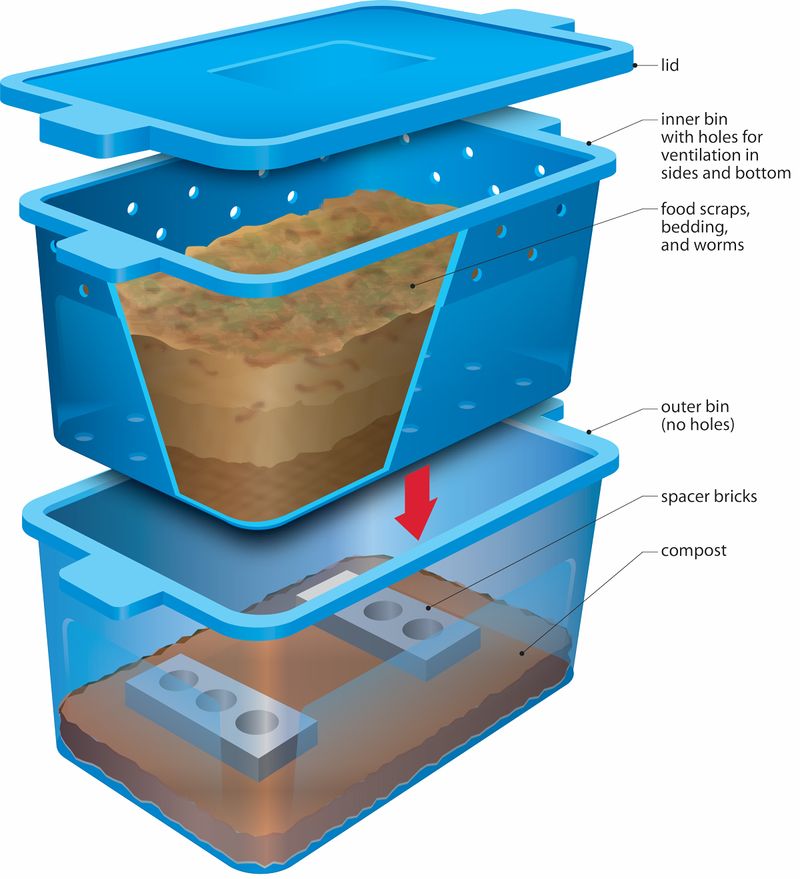
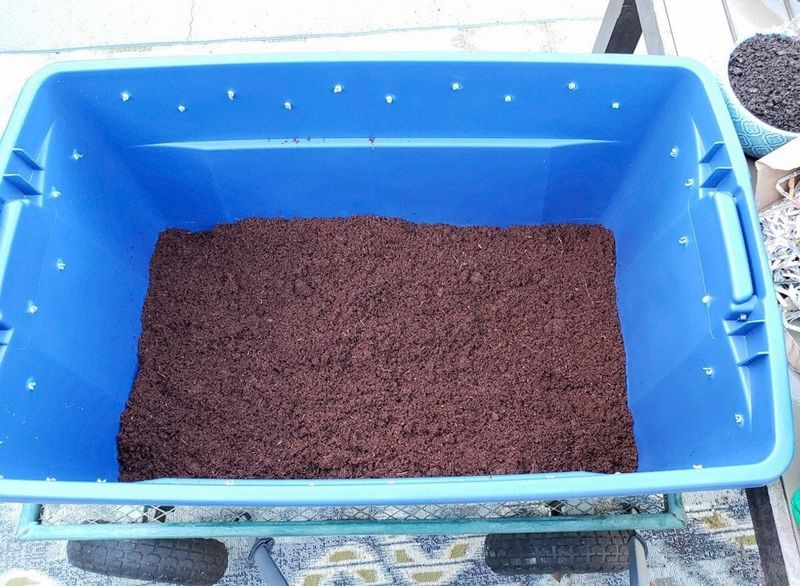
For the physical bin itself, Wisconsin DNR recommends a container less than 18 inches deep with substantial surface area, an opaque body to block light the worms dislike, a fitted lid to retain moisture and discourage pests, screened ventilation holes for airflow, and drainage holes at the bottom with a tray or catch basin beneath. Surface area matters more than depth because red wigglers work near the top of the bedding, not the bottom.
A bin roughly two feet by three feet is a common Wisconsin starting size for a small household.
Buy worms only from a reputable supplier who clearly identifies the species as Eisenia fetida, and never collect unidentified worms from a Wisconsin yard or garden.
Containment is not optional in Wisconsin. Keep the bin sealed, and never release live worms, potentially infested bedding or unfinished castings into forests, natural areas, parks or any unintended outdoor location.
Your Wisconsin Garden Changes Every Week. Your Plan Should Too.
Gardening in Wisconsin changes quickly throughout the season. Every Friday you’ll receive a simple weekly plan showing exactly what to plant, prune, fertilize, harvest, and protect so you never miss the right timing.
Finished, mature vermicompost may be used appropriately in gardens, containers and lawn beds, but the live worms and raw material inside an active bin must stay contained at all times.
Wisconsin winter success depends on the bedding temperature
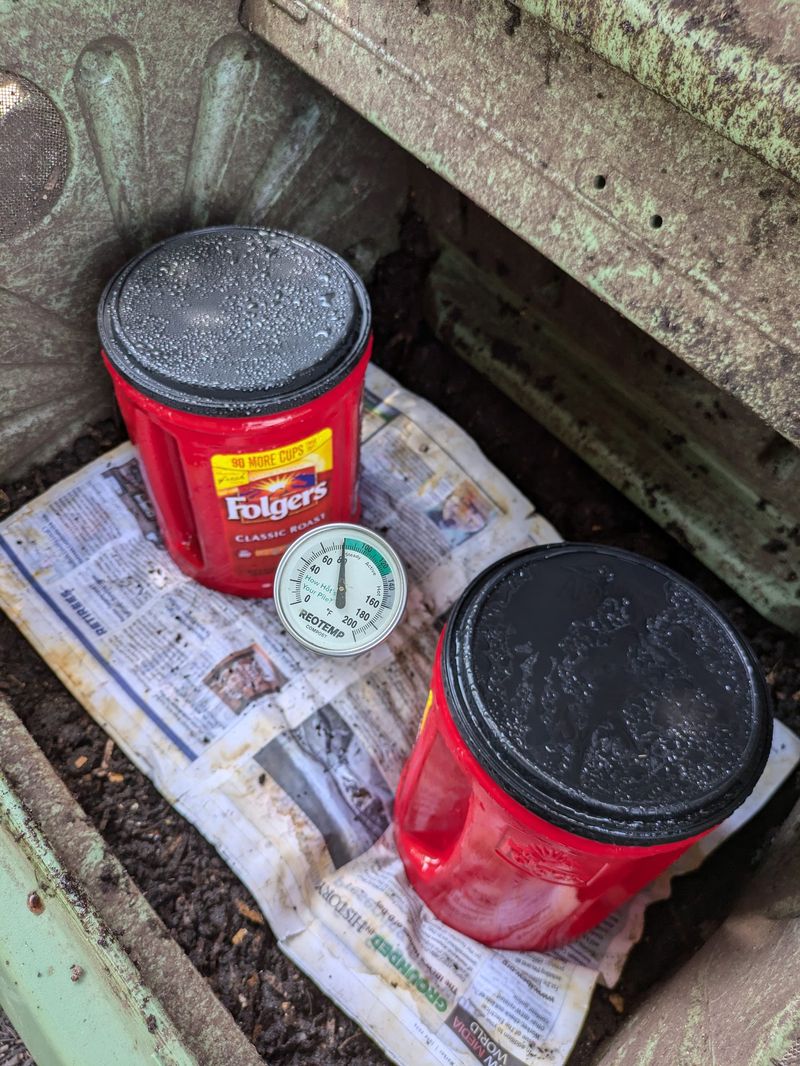
Temperature is the single biggest variable that separates a productive Wisconsin winter bin from a slow or failing one, and above-freezing air in the surrounding room is not enough of a guarantee on its own. Red wigglers perform best when their bedding stays between roughly 55 and 77 degrees Fahrenheit.
Below that range, activity and reproduction slow noticeably before conditions become fatal, meaning your Wisconsin bin may still be alive but processing scraps at a fraction of its warm-season pace.
Utah State Extension notes that the temperature inside the bedding can differ from the ambient air temperature in the room, so measuring the room alone gives Wisconsin residents an incomplete picture. Push a simple compost or soil thermometer several inches into the bedding and check it on a cold January morning before deciding whether the location is truly suitable.
A heated or semi-heated Wisconsin basement that holds 55 degrees or warmer at the bin level is likely a good candidate; an unheated garage, porch, mudroom or garden shed is not, because those spaces can drop well below freezing during a Wisconsin cold snap.
Iowa State Extension confirms that red wigglers do not go dormant the way some outdoor organisms do, but they do respond directly to temperature. A Wisconsin bin sitting at 45 degrees will show sluggish worms, slow decomposition and slower population growth compared to the same bin at 65 degrees.
If your basement consistently runs cold, consider placing the bin near a heat source, wrapping it with an insulating blanket or relocating it to a warmer interior room where bedding temperature can stay in the productive range throughout the Wisconsin winter.
Wisconsin bedding controls moisture, air and drainage
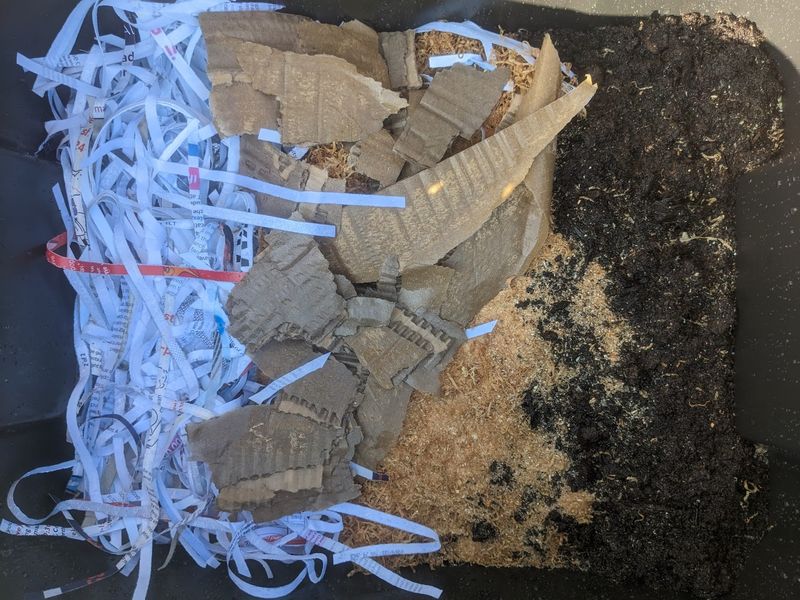
Bedding in a Wisconsin worm bin does far more than fill space. Shredded newspaper, cardboard or plain paper creates a loose, fibrous matrix that holds moisture evenly, maintains air pockets between particles and gives worms a place to retreat between feeding sessions.
Without adequate bedding, the bin compacts, airflow drops and anaerobic pockets form, producing the rotten smell that Wisconsin households most want to avoid.
The moisture target is damp but not saturated. Utah State Extension describes the right feel as similar to a well-wrung sponge: squeeze a handful and only a few drops should fall.
Wet fruit and vegetable scraps from a Wisconsin kitchen add a lot of moisture over time, so adding a layer of dry shredded paper on top of each feeding helps balance the moisture load and keeps the bin from turning soggy.
Ventilation and drainage work together in a Wisconsin bin. EPA guidance recommends screened air holes so worms can breathe and drainage holes at the bottom so excess liquid can leave the bedding rather than pooling beneath the worms.
A tray or catch basin underneath collects that liquid and prevents a mess on your Wisconsin basement floor.
Bedding also needs to be refreshed over time. As worms consume and process material, the fluffy structure breaks down and the ratio of castings to fresh bedding rises.
Wisconsin DNR recommends maintaining enough bedding depth and surface area so worms can always move through loose material. Adding fresh shredded paper when the bin starts to look dense or compact keeps airflow adequate and worm health stable through the long Wisconsin winter.
Wisconsin worms need selective, conservative feeding
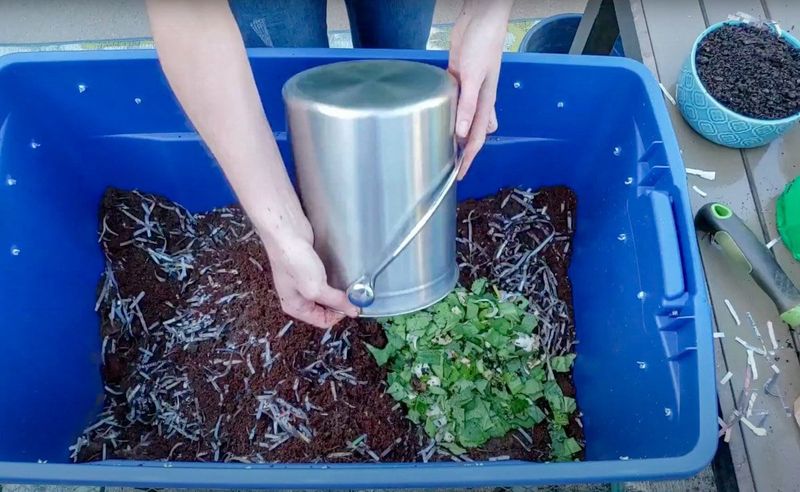
Feeding a Wisconsin worm bin well starts with knowing exactly what belongs inside. Suitable inputs include chopped fruit and vegetable scraps, coffee grounds along with their paper filters, tea bags with any staples or plastic tags removed, crushed eggshells and small amounts of plain bread or cooked grains without added salt, oil or sauce.
Chopping or tearing scraps into smaller pieces matters because smaller surface area means faster breakdown and less time for uneaten food to cause problems in a Wisconsin winter bin.
EPA guidance is clear about what to exclude: meat, bones, dairy products, fats, oils, pet waste and any noncompostable materials should never enter a household worm bin. These materials attract pests, generate strong odors and can introduce contaminants into the finished amendment.
Wisconsin households that produce a lot of meat or dairy scraps need a separate disposal method for those materials.
Beyond choosing the right scraps, Wisconsin residents need to pace their feeding carefully. Start with a small amount, roughly half a pound per week for a new bin, and add more only after the previous feeding has been mostly consumed.
Wisconsin DNR guidance ties bin size to household production, suggesting approximately two square feet of surface area per household member as a starting reference, while Oregon State Extension offers a rule of about one square foot per pound of weekly food waste. Both figures are starting points rather than guaranteed processing rates.
Always bury scraps under an inch or two of bedding rather than leaving them on the surface. Exposed food is the fastest route to fruit flies and odors in a Wisconsin home.
The worms’ actual consumption rate, not a fixed calendar schedule, should govern how often and how much Wisconsin residents feed their bin through winter.
Wisconsin bin problems reveal management mistakes
Odors, fruit flies and stressed worms are not random bad luck in a Wisconsin winter bin. Each problem points back to a specific management gap that Wisconsin residents can identify and fix without starting over.
A rotten or sulfurous smell almost always traces to overfeeding, uneaten food left exposed on the surface, excess moisture or poor airflow creating anaerobic pockets in the bedding.
EPA guidance on worm bin maintenance recommends pausing feeding when odors appear, burying any exposed food immediately, adding a generous layer of dry shredded paper to absorb excess moisture and checking that drainage holes are clear and functional. A well-managed Wisconsin bin should carry a mild, earthy smell similar to forest soil, not a sharp or rotten one.
Claiming a healthy bin will be completely odorless sets an unrealistic expectation; the more accurate promise is that proper management keeps odors very low and rarely noticeable.
Fruit flies in a Wisconsin home are a sign that scraps are sitting exposed or that the bin’s lid is not sealing well. Bury every feeding under bedding, check the lid fit and consider placing a layer of damp newspaper directly on top of the food before closing the bin.
Mites in large numbers usually signal overfeeding or excess moisture rather than a bin failure; reducing feeding and adding dry bedding typically brings mite populations back down.
Utah State Extension notes that worms crawling up the bin walls or clustering near the lid are signaling stress, often from unsuitable scraps, extreme moisture, poor air quality or temperature outside their comfortable range. In a Wisconsin winter, check the bedding temperature first, then review what was fed most recently and whether the bin has adequate drainage and ventilation before adding more food.
Wisconsin vermicompost becomes a limited soil amendment
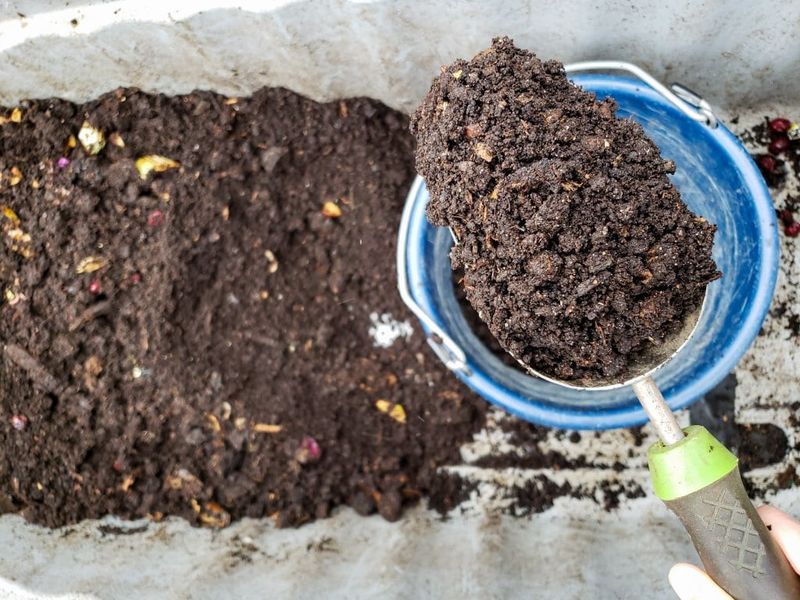
Harvesting finished material from a Wisconsin bin takes a little patience but no special equipment. Feed scraps to one side of the bin for two to three weeks, and the worms will gradually migrate toward the fresh food, leaving the darker, crumbly material on the other side mostly free of worms.
EPA describes a light-assisted method as well: dump the bin contents into a pile under a bright lamp, wait for the worms to burrow away from the light, and skim off the outer layer of finished material in stages over about twenty minutes.
That liquid should not be marketed or applied as a tested, pathogen-free fertilizer, especially not directly to edible plant parts. Wisconsin residents who notice significant liquid accumulating in the catch tray should treat it as a sign that the bin is too wet, not as a bonus product to collect.
Cornell University’s compost research program notes that vermicompost can offer benefits as a soil amendment, but results depend on feedstocks, maturity, application rate, plant species and growing conditions. Wisconsin readers should treat it as a useful soil amendment or fertilizer supplement for houseplants, containers, garden beds and lawns rather than a complete replacement for potting mix or a guaranteed plant-growth product.
A new Wisconsin bin may take several months before producing a meaningful harvest. Utah State Extension confirms that processing speed depends on worm population, temperature, food size and bin conditions, all of which are more variable in a Wisconsin winter than in warmer seasons.
Patience and consistent management through winter will produce a modest but genuinely useful amendment ready to apply when Wisconsin’s growing season returns. Wisconsin DNR confirms that finished vermicompost is appropriate for gardens, containers and lawn beds when applied as a supplement alongside other good soil practices.
Wisconsin’s practical winter rule is modest and contained
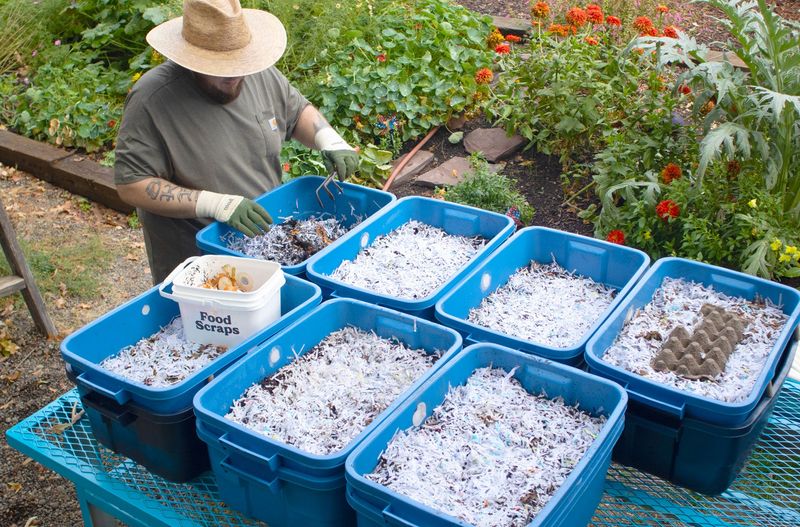
Running a worm bin through a Wisconsin winter comes down to a short operating contract: use clearly identified red wigglers, measure the actual bedding temperature with a thermometer, maintain damp and airy bedding, feed only suitable plant-based scraps at the pace your worms can handle and plan to use the harvest as a soil amendment in your Wisconsin garden or containers when spring arrives. EPA guidance and Wisconsin DNR resources both reinforce that a well-managed indoor bin is a practical, space-saving option for Wisconsin households with a reliably heated interior space.
Understand the limits before you start. The bin cannot accept every household waste stream, it does not provide dependable pathogen reduction, and it will not match the throughput of an outdoor pile during a warm Wisconsin summer.
Modest, realistic expectations protect both the worm population and the quality of the finished amendment.
Containment remains a Wisconsin-specific responsibility throughout the bin’s life. Wisconsin DNR’s guidance on invasive worms makes clear that live worms and potentially infested bedding or unfinished castings must never reach forests, natural areas or other unintended outdoor locations.
Finished, mature vermicompost may go into your Wisconsin garden beds, containers or lawn without concern. A quiet bin in a warm corner of your Wisconsin basement is a small but genuinely useful tool, and the worms do their best work when you simply stay out of their way.