The Root-Level Garden Pest Most Pennsylvania Gardeners Never See In Time
By early July your tomato cages were bowing under the weight of green fruit, and the rows looked like something out of a seed catalog. Then the vines stalled, the leaf edges went pale, and every basket you pulled in August felt lighter than it should.
You checked for hornworms, dabbed on neem oil, and doubled the watering schedule just in case. None of it explained why the plant three feet over kept thriving while yours just sat there.
The answer isn’t hiding in the leaves at all, and no nitrogen test will catch it. It’s sitting several inches under your boots, in a spot most Pennsylvania gardeners rarely bother to check twice.
Something microscopic has been feeding there since the soil first warmed in spring, and it has nothing to do with how much fertilizer you’re using. The fix is cheap, fast, and easier than guessing why your harvest keeps falling short.
The Tiny Soil Dweller Behind Stunted Pennsylvania Vegetables
Picture a roundworm so small that a hundred could line up across your fingernail. That is the northern root-knot nematode, Meloidogyne hapla, a microscopic soil dweller that has been quietly reshaping Pennsylvania gardens for decades.
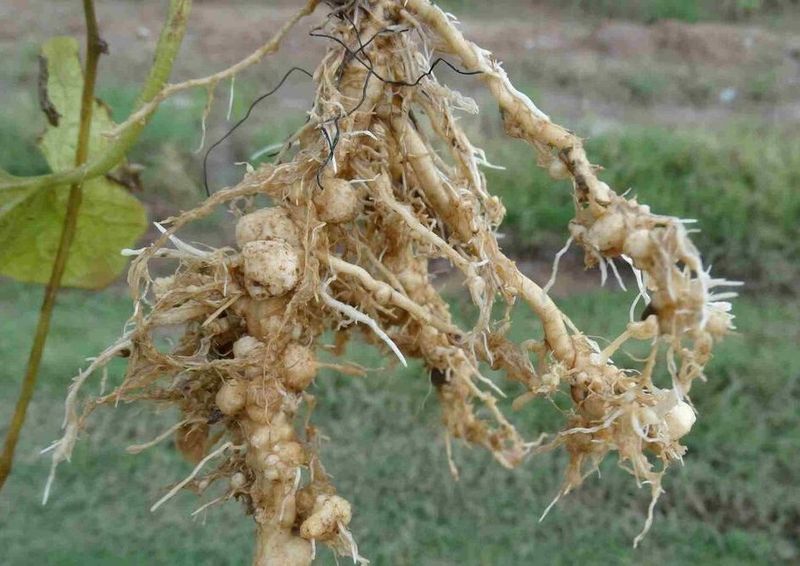
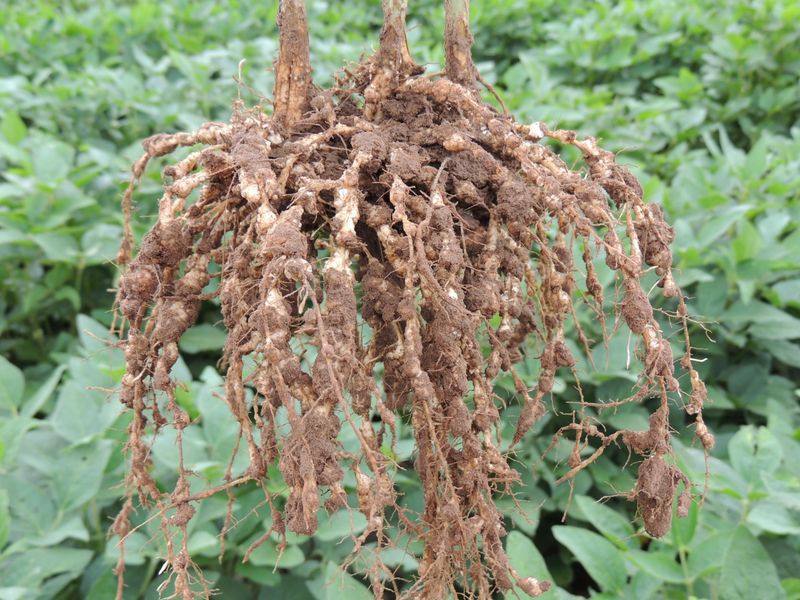
Females puncture young feeder roots, settle in, and release a chemical signal that tricks the plant into building oversized cells around them. Those swollen cells become the lumpy galls, or knots, that give the pest its name.
The plant ends up feeding a permanent houseguest instead of itself. Growth slows because energy that should go into leaves and fruit gets diverted into feeding the intruder instead.
Water and nutrients still move through the damaged roots, just poorly. A tomato with heavy galling may look fine in June and then wilt by two in the afternoon in August, even with a soaker hose running.
Carrots fork and twist. Lettuce sulks. Beans stall out at knee height while the row three feet away keeps climbing.
It tolerates cooler ground than its southern relatives, which is why it turns up in Lancaster County raised beds and Pittsburgh backyard plots alike.
One clue worth remembering is that damage tends to appear in patches rather than across a whole bed. That gives observant gardeners a real chance to catch them early.
The patchiness also fools people into blaming a bad seed lot or an uneven watering job.
Warm Soil And The Midsummer Population Surge
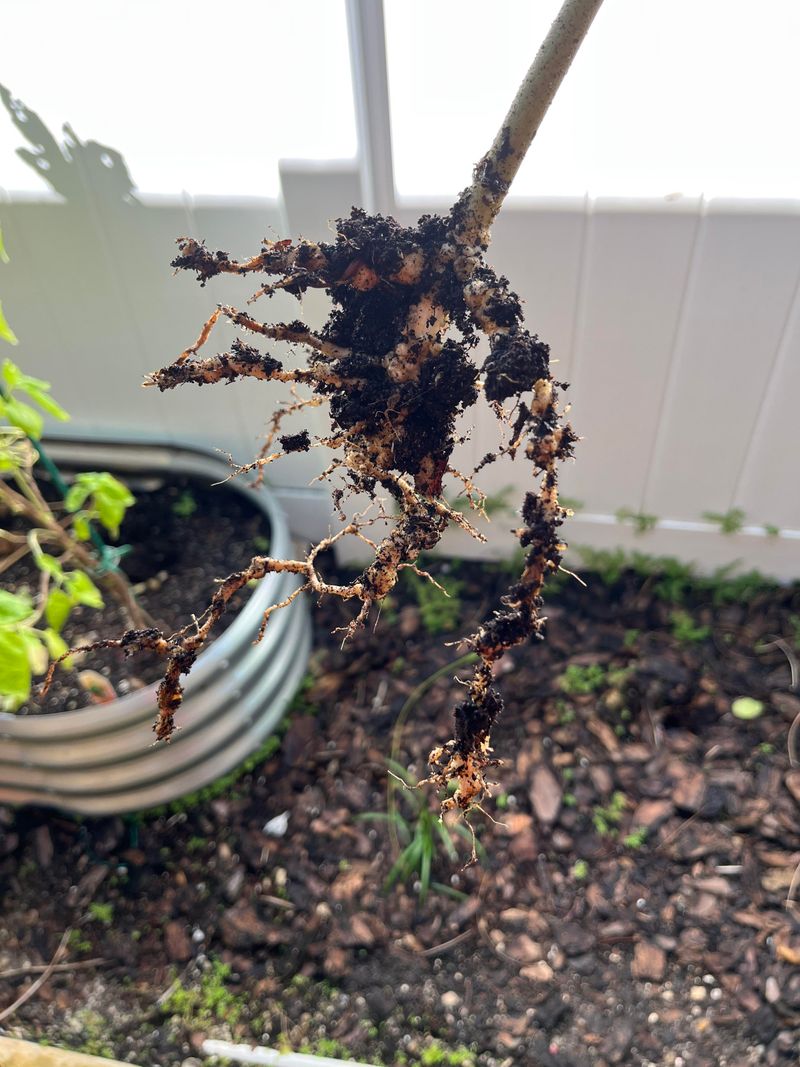
Timing explains a lot about why this pest slips past so many gardeners. Eggs sit tight through Pennsylvania winters inside a jelly-like sac attached to old root fragments, waiting for soil to warm past roughly 50 degrees.
Once May arrives and the ground climbs into the 60s, juveniles hatch and go hunting for tender root tips. A single female can lay several hundred eggs, and one generation can wrap up in about a month during hot weather.
That math matters. Two or three generations can stack up between Memorial Day and Labor Day, so a population that seemed harmless in spring becomes a serious drag on plants by August.
Your Pennsylvania Garden Changes Every Week. Your Plan Should Too.
Gardening in Pennsylvania changes quickly throughout the season. Every Friday you’ll receive a simple weekly plan showing exactly what to plant, prune, fertilize, harvest, and protect so you never miss the right timing.
Meanwhile the garden above ground is doing its best impression of health. Young transplants have small root systems and few feeding sites, so early damage stays modest and easy to overlook.
By the time heat and fruit load put real demand on the roots, the underground damage has already been done. Gardeners usually notice in the same two week window in late July or early August, right when the harvest should be peaking.
Cool wet summers slow the cycle somewhat, and a stretch of 90 degree days speeds it up. Gardens in Potter or Tioga County often see lighter pressure than beds in Chester County, simply because the soil spends fewer days in the sweet spot.
Marking the calendar helps more than you would think. If plants fade at the same point every summer, the soil clock is worth investigating.
Aboveground Clues Gardeners Usually Blame On Something Else
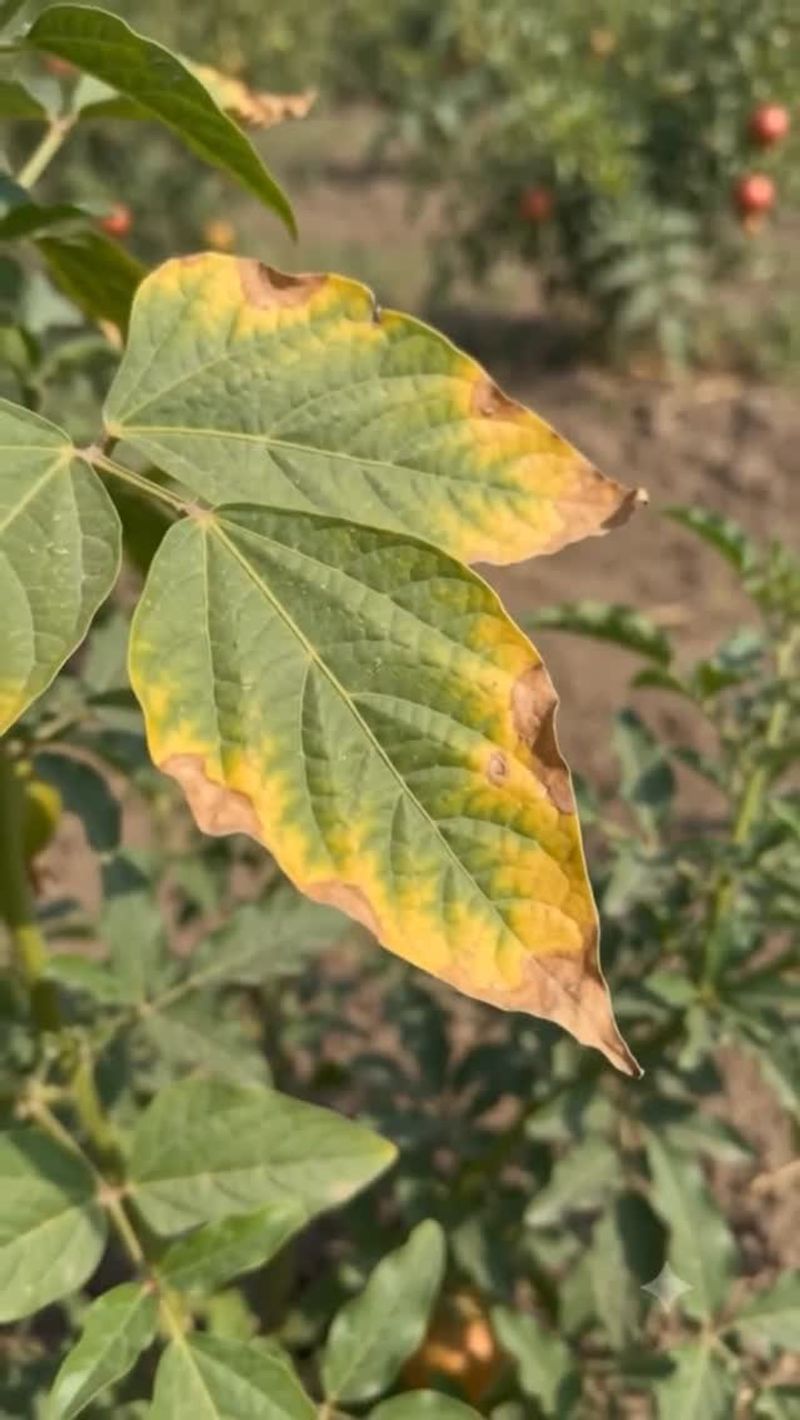
Misdiagnosis is the real culprit here. Yellowing lower leaves, afternoon wilting, and plants that look hungry no matter how much fertilizer they get all point toward a dozen possible causes.
Most gardeners reach for the obvious explanations first. They add nitrogen, water more often, pile on mulch, and squint at the foliage looking for blight spots.
Nothing improves, because the trouble sits eight inches down. Extra fertilizer can even backfire, since damaged roots struggle to take up the salts and the plant gets pushed further into stress.
A few patterns separate root feeding from leaf disease. Wilting that recovers overnight and returns each afternoon suggests a plumbing problem in the roots rather than an infection up top.
Affected plants also tend to shrink in stature instead of developing spots or lesions. Fruit stays small, flowering slows, and the whole plant looks like a scaled down version of what it should be.
Root crops tell the clearest story. Carrots come out stubby and branched, beets turn pebbly, and potatoes may show small bumps across the skin.
Weeds offer another hint. Chickweed, purslane, and dandelion in an infested bed often look unusually vigorous, since many broadleaf weeds host the pest without showing much strain.
Keeping a simple garden notebook pays off. Two seasons of notes showing the same corner of the same bed underperforming turns a vague suspicion into a solid lead worth digging into.
Dated photos of struggling plants make the pattern even easier to spot later.
Pulling A Plant And Reading The Roots
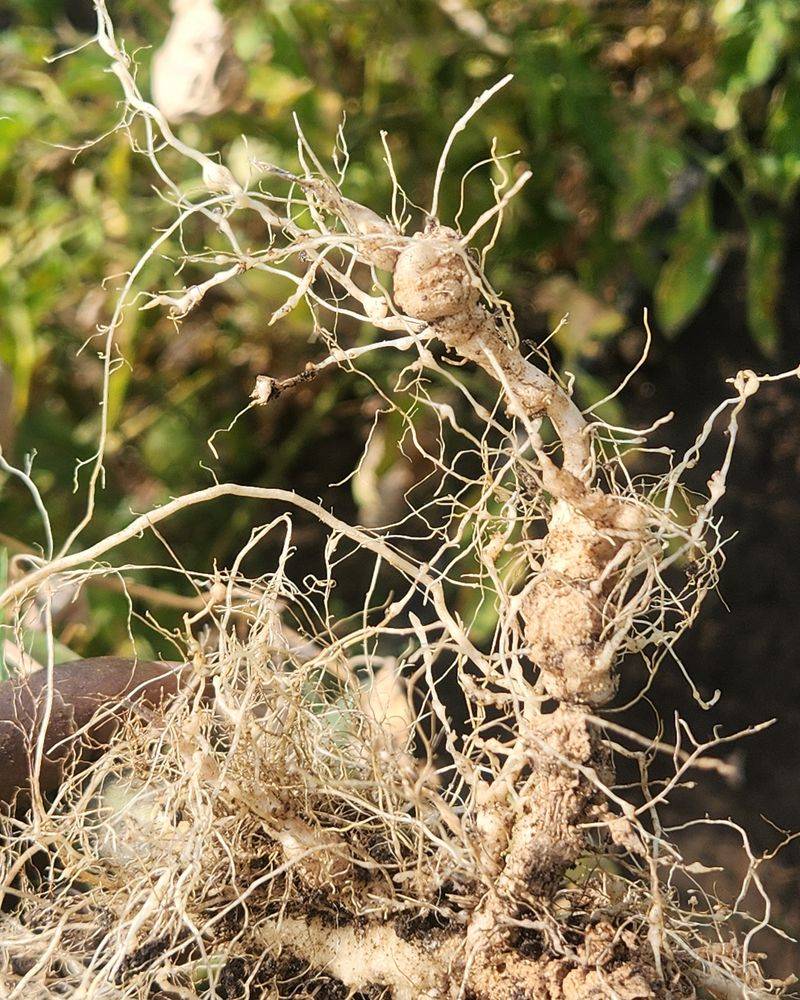
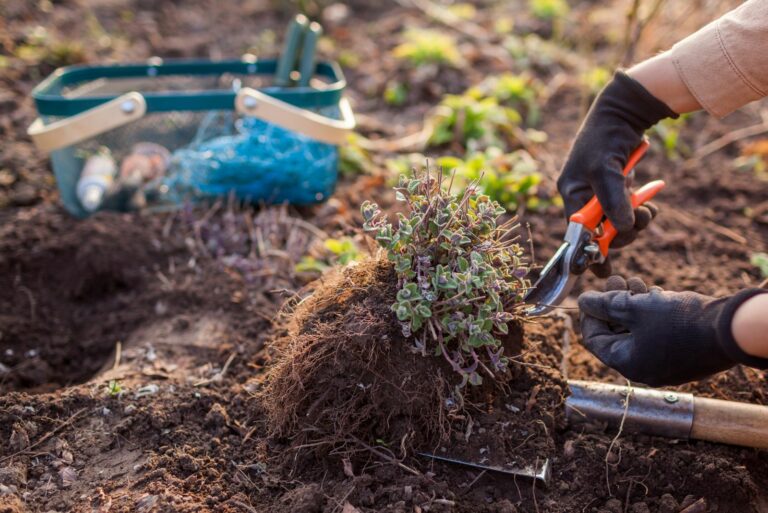
Confirmation takes about five minutes and one plant you don’t mind losing. Choose a struggling specimen at the edge of a bad patch, water the ground well, and lift the whole root system with a spading fork instead of yanking the stem.
Rinse the roots in a bucket of water so the soil falls away. Then study the fine feeder roots, ideally with reading glasses or a hand lens.
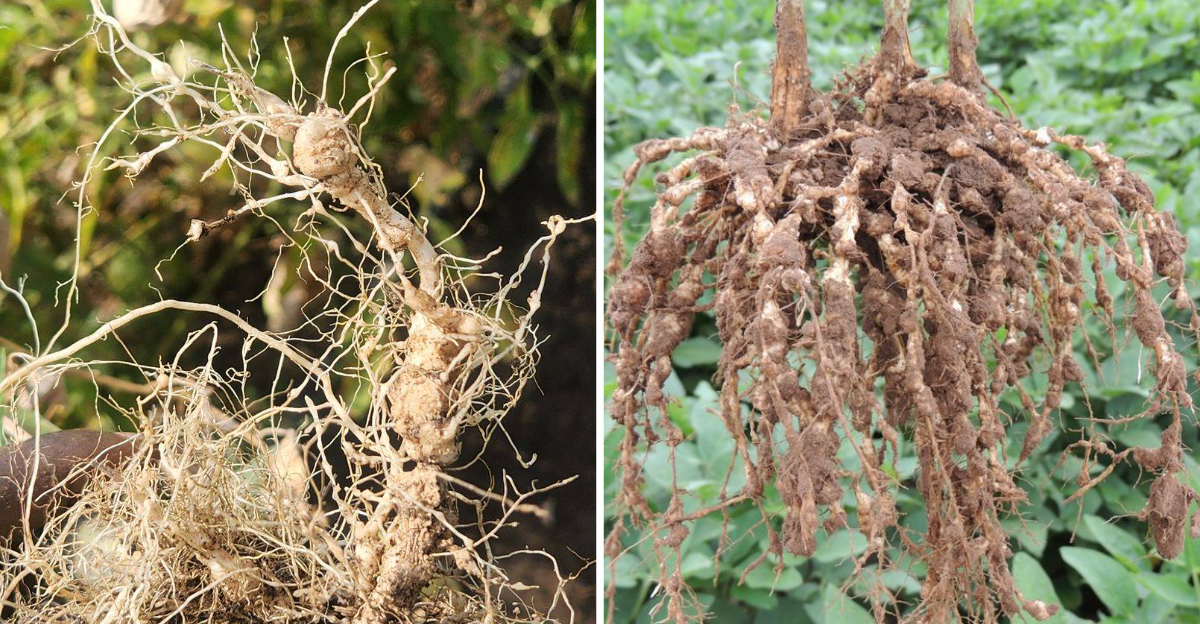
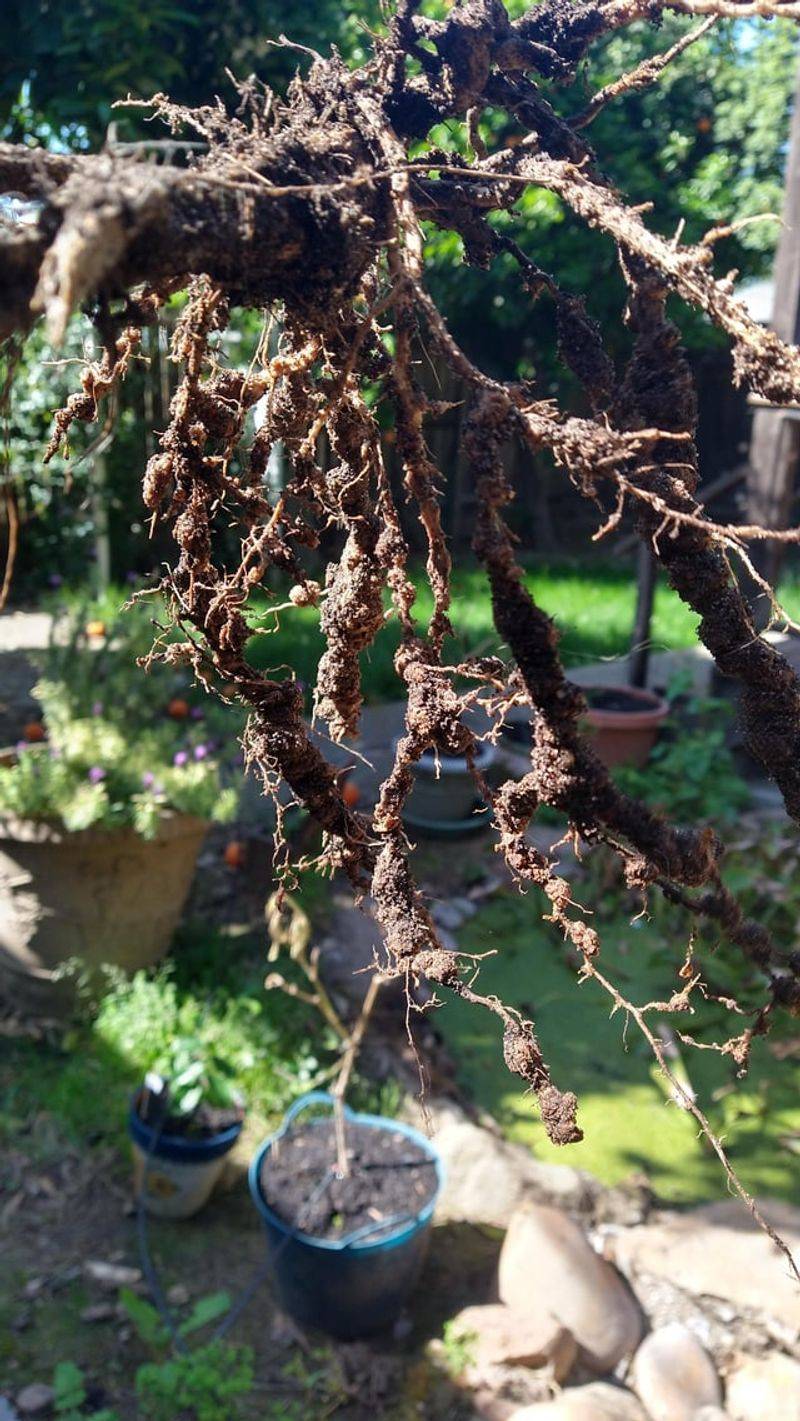
Galls appear as swellings that are part of the root itself, not lumps you can rub off. Sizes range from a pinhead to a marble, and heavy infections leave roots looking beaded or knotted like old rope.
One distinction saves confusion. Beans, peas, and clover form beneficial nitrogen nodules that cling to the outside of roots and pop off with a fingernail, while galls stay put because the root tissue grew around the intruder.
For certainty, Penn State Extension accepts soil samples for nematode assays through county offices. Collect roughly a pint of soil from the root zone of affected plants in late summer, keep it cool, and ship it promptly.
Fall sampling gives the most useful numbers because populations peak then. Results come back as counts per volume of soil, which helps you see if you face light pressure or a heavy load.
Testing costs a modest fee and saves years of guesswork. Knowing exactly what lives under the tomatoes turns a frustrating mystery into a soil problem with known solutions.
Bag the pulled roots for the trash rather than the compost pile.
Rotation, Cover Crops, And Soil Building As The Long Game
Here is the encouraging part. Populations respond well to a few unglamorous habits repeated over two or three seasons.
Rotation works best when it starts with a host list. Tomatoes, peppers, potatoes, carrots, lettuce, and beans support this pest, while sweet corn, small grains, onions, and most grasses do not.
Planting corn or a cereal grain in an infested bed for a full season starves juveniles that hatch and find nothing to feed on. Two seasons of nonhost crops can cut counts dramatically.
Cover crops add another layer of pressure. Certain marigold varieties, notably Tangerine and Single Gold, release compounds that interfere with reproduction when grown as a thick stand for at least two months.
Cereal rye and sorghum sudangrass also suppress populations while adding organic matter. Chopping and turning in sudangrass during late summer gives a double benefit for beds that need help.
Organic matter deserves credit too. Compost feeds fungi and predatory microbes that keep nematode numbers in check, and it improves water holding so stressed plants get more margin.
Tillage timing plays a role as well. Turning soil during a hot dry stretch in July exposes eggs and juveniles to heat and sunlight, trimming the population before fall arrives.
Solarization suits smaller beds nicely. Clear plastic stretched tight over moist soil for six to eight weeks in high summer heats the top layer enough to knock numbers back sharply.
Patience matters more than any product on a shelf. Steady pressure adds up quickly.
Resistant Varieties And A Stronger Garden Next Season
Seed catalogs hide a useful code in plain sight. The letter N after a tomato variety name signals resistance to root-knot nematodes, and breeders have worked it into dozens of dependable garden favorites.
Celebrity, Better Boy, Big Beef, and Park’s Whopper all carry it. Heirlooms like Brandywine generally do not, which is worth knowing before committing a problem bed to them.
Grafting gives another route for gardeners attached to heirloom flavor. A Cherokee Purple top grafted onto resistant rootstock delivers the taste along with a root system that shrugs off galling.
Raised beds filled with fresh soil provide a clean start for high value crops. Keep tools, boots, and transplants from infested ground away from them, since soil hitchhikes easily.
Container growing works for a handful of plants too. A half barrel of fresh potting mix can produce a fine harvest while the in-ground beds recover under a rotation plan.
Shopping for transplants deserves a second look as well. Check root balls at the nursery and pass on any with lumpy, swollen roots, no matter how lush the top growth appears.
The payoff shows up faster than most people expect. Beds that produced sad, stunted plants for three summers often bounce back after one nonhost season paired with a good compost program.
Gardeners who learn to read roots gain a quiet advantage. Once you know what a gall feels like between your fingers, you catch trouble in year one instead of year five, and that head start saves a whole season.