What It Really Means When A Hawk Circles Your Pennsylvania Backyard
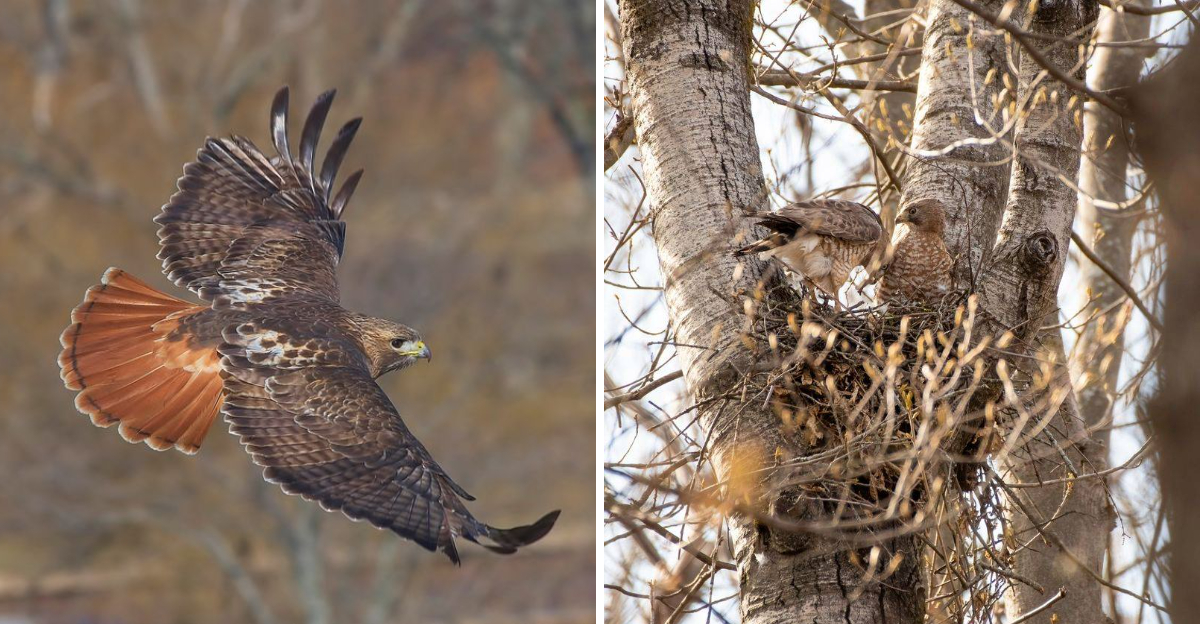
A hawk circling overhead is one of those sights that makes you stop whatever you’re doing and look up.
There’s something about the effortless, wide arcing circles that commands attention, and for most Pennsylvania homeowners, it prompts an immediate set of questions.
What is it looking for? Is it a threat to anything in the yard? And why is it circling here, over this specific yard, right now? Those are exactly the right questions to ask.
A hawk circling your Pennsylvania backyard is rarely random behavior. Hawks use thermals and elevated observation to survey territory and locate prey, and a bird that keeps circling a specific area is responding to something your yard is offering.
What that something is tells you more about your local ecosystem than most homeowners ever stop to consider.
Beyond the practical explanation, hawks circling overhead carry rich symbolic meaning across many cultural traditions, and for a lot of people, a hawk suddenly appearing and circling prompts a reflection that goes beyond simple curiosity about predator behavior.
1. Most Of The Time, It Is Hunting
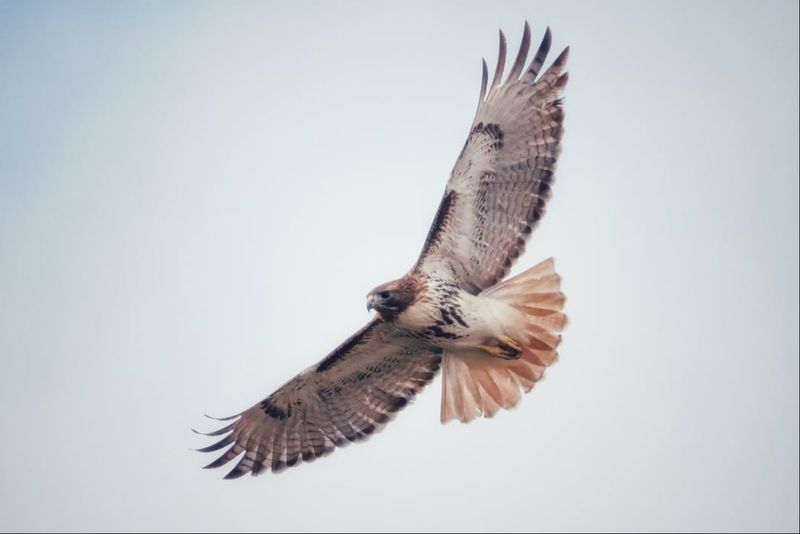
Hawks are built to hunt, and circling is one of their most effective strategies for spotting a meal. When you see a hawk slowly looping above your yard, there is a very good chance it has already spotted something moving below.
Their eyesight is remarkable, up to eight times sharper than a human’s, allowing them to detect a tiny mouse shifting through tall grass from hundreds of feet in the air.
Common backyard prey in Pennsylvania includes voles, shrews, chipmunks, and small songbirds. Even a slight rustle near your garden bed can be enough to draw a hawk into a slow, patient circle before it commits to a strike.
Red-tailed hawks and Cooper’s hawks are especially common in Pennsylvania yards and are skilled at this kind of aerial hunting.
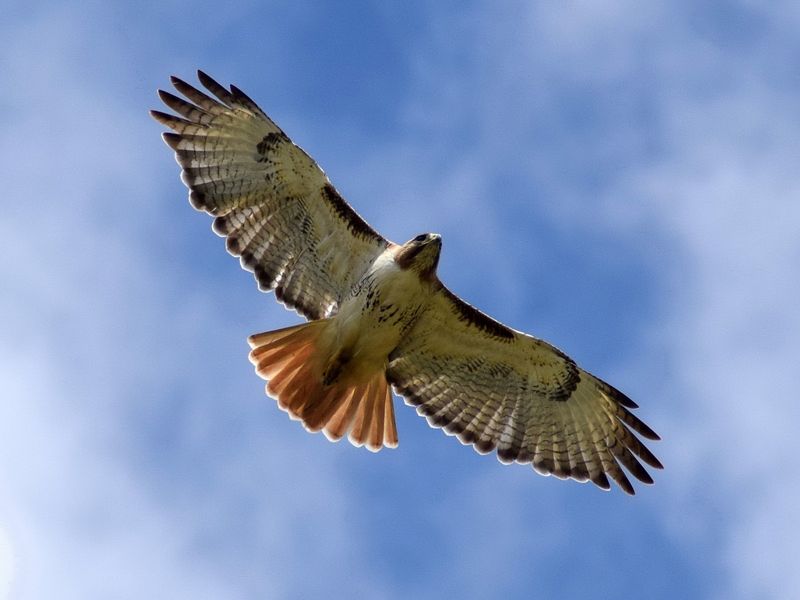
The circling behavior also helps the hawk use rising warm air currents, called thermals, to stay aloft with minimal energy while it watches and waits. It is a brilliant system that costs the bird almost no effort.
So if a hawk is circling your yard, your lawn and garden are likely hosting some small creatures that have caught its attention. Far from being a random visit, the hawk is working hard, and your yard just happens to be its hunting ground for the moment.
Watching this behavior closely is genuinely exciting once you realize how much skill and patience goes into every single pass.
2. It Is A Compliment To Your Yard’s Ecosystem
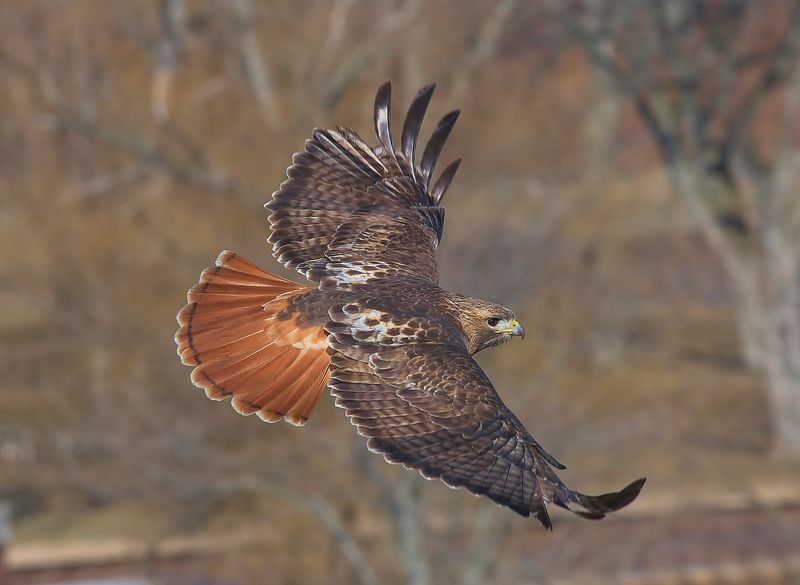
Not every backyard earns a visit from a hawk. Raptors are selective about where they spend their energy, and they only show up where the food supply is reliable and the environment feels right.
If a hawk is circling above your property, consider it a genuine sign that your yard supports a healthy, thriving ecosystem.
A yard that attracts hawks likely has healthy soil supporting insects and earthworms, which in turn attract small mammals and songbirds. That chain of life, from the ground up, is exactly what raptors depend on.
Your Pennsylvania Garden Changes Every Week. Your Plan Should Too.
Gardening in Pennsylvania changes quickly throughout the season. Every Friday you’ll receive a simple weekly plan showing exactly what to plant, prune, fertilize, harvest, and protect so you never miss the right timing.
Bird feeders, native plants, leaf piles, and brush borders all contribute to this kind of biodiversity. Many Pennsylvania homeowners work hard to create wildlife-friendly spaces, and a visiting hawk is one of the clearest signs that those efforts are paying off.
Ecologists often refer to hawks and other top predators as indicator species. Their presence signals that the lower levels of the food web are functioning well.
A yard with no insects, no small mammals, and no ground cover simply would not attract a hawk at all. So instead of feeling alarmed, feel proud.
Your yard is doing something right. It is supporting life at multiple levels, and a hawk has noticed.
Sharing your outdoor space with a bird that impressive is actually a milestone worth celebrating.
Many birdwatchers and naturalists spend years trying to attract raptors to their properties, so if one shows up on its own, your yard has earned a quiet but meaningful badge of honor from the natural world.
3. It Could Be Fall Migration, Not A Local Resident
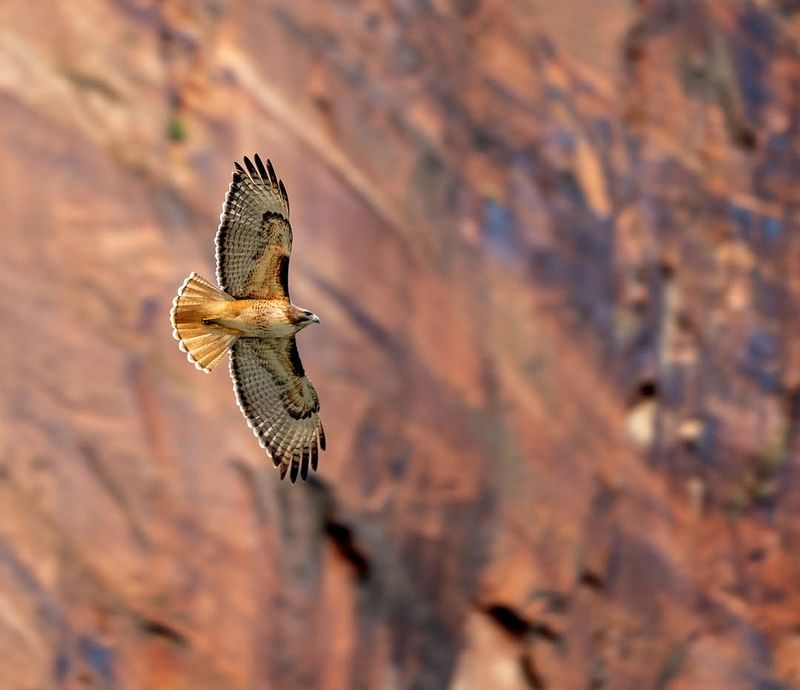
Pennsylvania holds a special place in the world of hawk watching. The state is home to Hawk Mountain Sanctuary in Kempton, one of the most famous raptor migration sites on Earth.
Every autumn, millions of birds of prey funnel along the Appalachian ridges as they travel south, and much of that traffic passes directly over Pennsylvania backyards.
Broad-winged hawks are especially dramatic during their September migration. These compact raptors gather by the thousands into swirling groups called kettles, riding thermals high into the sky before gliding south.
If you spot a circling hawk in mid-September and it seems to be gaining altitude rather than scanning the ground, there is a very real chance it is a migrating bird simply using your neighborhood’s warm air to get some lift before continuing its journey.
Sharp-shinned hawks, Cooper’s hawks, and ospreys are also regular Pennsylvania migrants during fall. The peak of migration typically runs from late August through November, depending on the species.
Keeping a pair of binoculars handy during those months is a great way to identify what you are seeing. Apps like Merlin Bird ID by Cornell Lab of Ornithology can help you name the species in seconds using just a photo or a description.
Migration season turns an ordinary backyard into a front-row seat for one of nature’s most impressive annual events. You do not need to travel to Hawk Mountain to witness it, though the sanctuary is absolutely worth a visit if you ever get the chance.
4. A Repeat Visitor Likely Means Nesting Or Territory Nearby
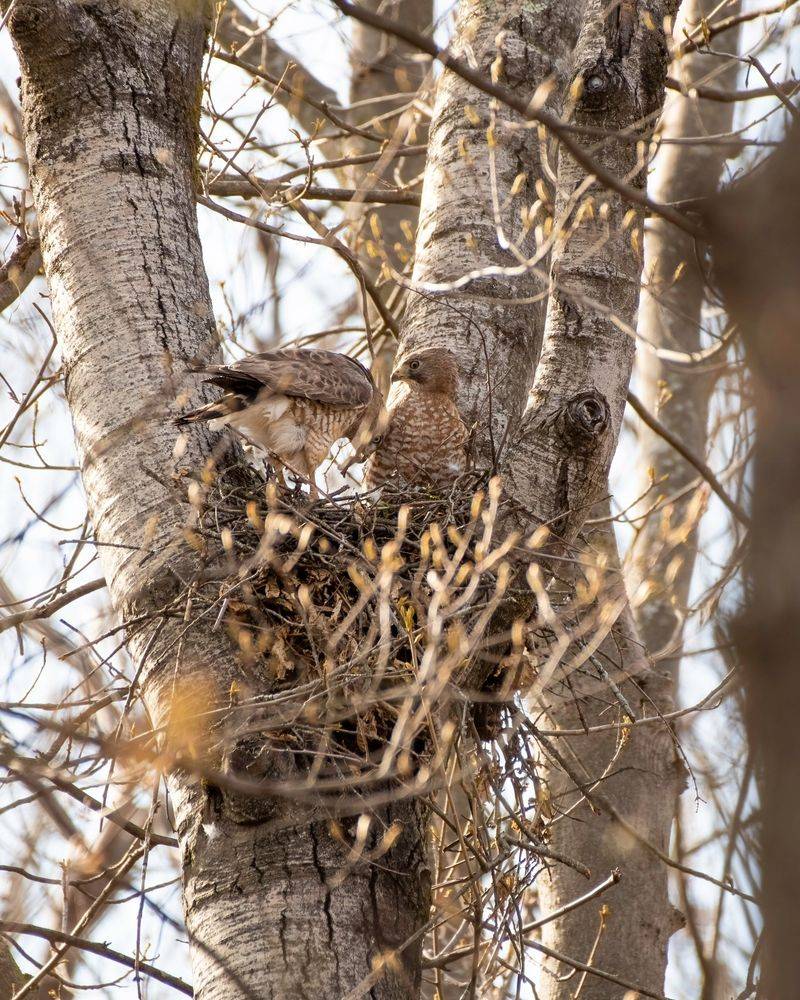
One hawk circling your yard once is interesting. The same hawk showing up every morning for a week is something else entirely.
Repeat visits from a hawk are a strong clue that the bird has established a territory nearby, and your yard falls within its regular patrol zone.
Hawks are deeply territorial creatures. Many species, including the red-tailed hawk, which is the most commonly spotted large hawk in Pennsylvania, form lifelong pair bonds and return to the same nesting territory year after year.
Some pairs even reuse the same nest for decades, adding new sticks and material each breeding season until the structure becomes enormous.
If there is a large tree within a few hundred yards of your home, there may already be an active or historic nest you have never noticed.
Nesting season in Pennsylvania typically runs from late winter through early summer, with eggs laid as early as March for some species. During this period, hawks become especially active around their territory, patrolling the edges and watching for threats or food sources.
A hawk circling your yard during spring could be a nesting parent keeping a close eye on the surrounding area. Watching for where the bird lands or disappears to can sometimes lead you right to the nest.
A spotting scope or binoculars aimed at tall trees in your neighborhood might reveal a surprisingly large platform nest that has been there all along, hidden in plain sight among the branches.
5. It May Be Doing You A Pest-Control Favor
Rodents are a common frustration for Pennsylvania gardeners and homeowners. Mice get into sheds, voles tunnel under garden beds and chew plant roots, and squirrels raid bird feeders and vegetable patches.
If you have been dealing with any of these problems, a circling hawk might actually be your best ally.
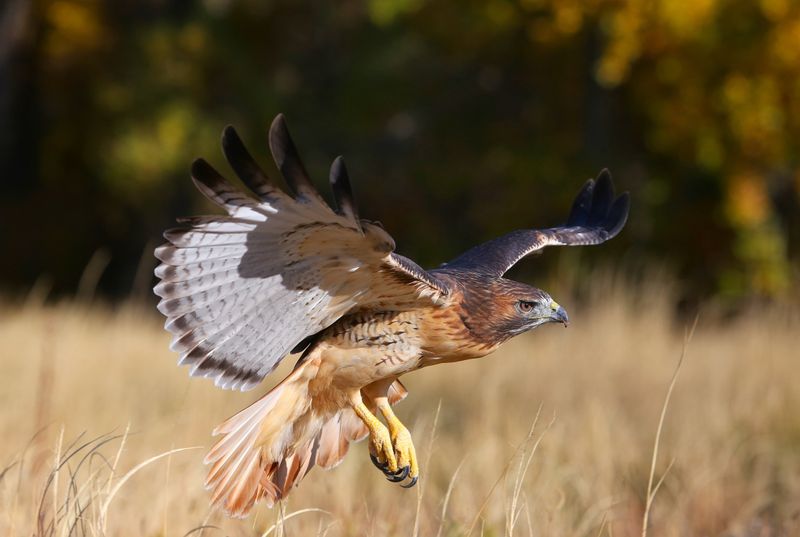
Hawks are natural pest controllers, and they are remarkably efficient at it. A single red-tailed hawk can consume hundreds of small rodents over the course of a year.
Unlike traps or chemical repellents, a resident hawk works continuously, patrolling the same area day after day without any effort on your part. Over time, a hawk that regularly hunts your yard can noticeably reduce local rodent activity in a completely natural way.
Some homeowners have reported a clear drop in mouse and vole sightings after a hawk began visiting regularly. The effect is not just about what the hawk actually catches.
Rodents are smart enough to sense predator presence, and they often change their movement patterns and reduce their activity when a hawk is nearby.
This behavioral response alone can protect your garden even on days when the hawk does not make a single catch.
Encouraging a hawk to stick around is easier than you might think. Avoid using rodenticides, since poisoned prey can harm or even be fatal to a hawk that eats it.
Keeping some open lawn area for hunting and leaving natural brush edges intact can make your yard more attractive to a resident raptor looking for a reliable, long-term food source.
6. Rarely, It Signals The Hawk Has Lost Its Natural Wariness
Most hawks are naturally cautious around people. They prefer to observe from a distance, circling high overhead or perching in tall trees well away from foot traffic.
So when a hawk starts behaving differently, lingering near porches, approaching people, or hovering unusually close to a home, it is worth paying attention.
A hawk that has lost some of its natural wariness around humans has usually learned to associate a specific yard with easy food.
Backyard bird feeders attract large numbers of small songbirds, and a Cooper’s hawk or sharp-shinned hawk can learn very quickly that a feeder is essentially a reliable buffet.
If a hawk keeps returning to the same spot near your feeder, it is not being friendly. It has learned a pattern and is taking advantage of it.
Small backyard pets, particularly very small rabbits, guinea pigs kept outdoors, or tiny toy-breed dogs, can occasionally attract the attention of larger hawks like red-tailed or red-shouldered hawks.
While attacks on pets are genuinely rare, a hawk that seems unusually bold and focused near a specific spot in your yard is a signal to stay alert.
Never try to trap, handle, or relocate a wild hawk yourself. Hawks are protected under the federal Migratory Bird Treaty Act, and interfering with them is illegal.
If a hawk’s behavior becomes a genuine concern, contact the Pennsylvania Game Commission or a licensed wildlife rehabilitator for guidance. Most bold hawks eventually move on once the easy food source disappears or the season changes.